
市场供需

Search documents
江苏索普: 江苏索普2025年第二季度主要经营数据的公告
Zheng Quan Zhi Xing· 2025-08-12 16:23
Group 1: Core Business Performance - The company reported production, sales, and revenue figures for its main products in Q2 2025, with acetic acid and its derivatives leading in production at 437,116.41 tons and revenue of 982.76 million yuan [1] - The sales volume for acetic acid and its derivatives was 378,101.68 tons, while methanol had a significantly lower sales volume of 35,279.89 tons, indicating a large gap between production and sales due to some intermediate products being used internally [1] Group 2: Price Changes of Main Products - The price of acetic acid ranged from 1,948 to 2,460 yuan per ton, showing a year-on-year decline due to market supply and demand factors [3] - Methanol prices increased, ranging from 1,947 to 2,636 yuan per ton, influenced by similar market conditions [3] - Other products like ion membrane alkali and sulfuric acid saw price increases, while dichlorobenzene prices decreased [3] Group 3: Raw Material Price Changes - The price of coal decreased, ranging from 554 to 657 yuan per ton, while ethanol prices increased, ranging from 4,770 to 5,212 yuan per ton [4] - Industrial salt prices remained unchanged at 283.19 yuan per ton, whereas sulfur prices increased, ranging from 1,381 to 2,025 yuan per ton [4] Group 4: Additional Information - All operational data provided is unaudited and serves as a reference for investors regarding the company's current operational status [1]

瑞达期货棉花(纱)产业日报-20250812
Rui Da Qi Huo· 2025-08-12 08:51
Report Summary 1. Report Industry Investment Rating No investment rating is provided in the report. 2. Core View of the Report Affected by the rise in the grain market and the decline in the good - quality rate of US cotton, US cotton rose slightly. Waiting for the USDA monthly supply - demand report. The joint statement of the China - US Stockholm economic and trade talks indicates that both sides have suspended the implementation of mutual 24% tariffs for another 90 days. Domestically, cotton is in a de - stocking state, and the supply is tight before the new cotton is on the market, with a firm basis. On the demand side, the off - season consumption characteristics of the textile industry are evident. Mainland textile enterprises have no profit, and the overall operating rate continues to decline. Enterprises' procurement of raw materials is mainly for rigid demand. In terms of new crops, China's total cotton planting area increased in 2025. High temperatures in Xinjiang in the next few days require attention to the impact of weather on new crop growth. Overall, although the current tight supply supports cotton prices, weak downstream demand and market expectations for quotas limit the upside space. It is expected to fluctuate in the short term. It is recommended to wait and see for now [2]. 3. Summary by Related Catalogs 3.1. Futures Market - Zhengzhou cotton's main contract closing price was 13,980 yuan/ton, up 300 yuan; cotton yarn's main contract closing price was 20,015 yuan/ton, up 225 yuan. - The net position of the top 20 in cotton futures was - 30,886 hands, a decrease of 6,095 hands; the net position of the top 20 in cotton yarn futures was - 175 hands, a decrease of 272 hands. - The main contract position of cotton was 412,957 hands, an increase of 166,751 hands; the main contract position of cotton yarn was 18,627 hands, an increase of 745 hands. - The cotton warehouse receipt quantity was 8,087 sheets, a decrease of 85 sheets; the cotton yarn warehouse receipt quantity was 74 sheets, a decrease of 1 sheet [2]. 3.2. Spot Market - The China Cotton Price Index (CCIndex:3128B) was 15,177 yuan/ton, up 16 yuan; the China Yarn Price Index for pure - cotton carded yarn 32 - count was 20,620 yuan/ton, unchanged. - The China Imported Cotton Price Index (FCIndexM:1% tariff) was 13,402 yuan/ton, up 17 yuan; the China Imported Cotton Price Index (FCIndexM:sliding - scale duty) was 14,226 yuan/ton, up 6 yuan. - The arrival price of the imported cotton yarn price index for pure - cotton carded yarn 32 - count was 22,149 yuan/ton, up 19 yuan; the arrival price of the imported cotton yarn price index for pure - cotton combed yarn 32 - count was 24,030 yuan/ton, up 21 yuan [2]. 3.3. Upstream Situation - The national cotton sown area was 2,838.3 thousand hectares, an increase of 48.3 thousand hectares; the national cotton output was 6.16 million tons, an increase of 0.54 million tons [2]. 3.4. Industry Situation - The cotton - yarn price difference was 5,443 yuan/ton, a decrease of 16 yuan. - The industrial inventory of cotton nationwide was 850,000 tons, an increase of 24,000 tons. - The monthly import volume of cotton was 30,000 tons, a decrease of 10,000 tons; the monthly import volume of cotton yarn was 110,000 tons, an increase of 10,000 tons. - The profit of imported cotton was 941 yuan/ton, a decrease of 41 yuan. - The commercial inventory of cotton nationwide was 2.8298 million tons, a decrease of 0.6289 million tons [2]. 3.5. Downstream Situation - The yarn inventory days were 23.86 days, an increase of 1.52 days; the inventory days of grey cloth were 35.46 days, an increase of 2.57 days. - The monthly cloth output was 2.779 billion meters, an increase of 0.109 billion meters; the monthly yarn output was 2.065 million tons, an increase of 0.114 million tons. - The monthly export value of clothing and clothing accessories was 1.5266714 billion US dollars, an increase of 0.1688977 billion US dollars; the monthly export value of textile yarns, fabrics and products was 1.2048207 billion US dollars, a decrease of 0.0583566 billion US dollars [2]. 3.6. Option Market - The implied volatility of cotton at - the - money call options was 13.48%, an increase of 4.81 percentage points; the implied volatility of cotton at - the - money put options was 13.48%, an increase of 4.81 percentage points. - The 20 - day historical volatility of cotton was 11.24%, an increase of 0.08 percentage points; the 60 - day historical volatility of cotton was 7.79%, an increase of 0.01 percentage points [2]. 3.7. Industry News - The joint statement of the China - US Stockholm economic and trade talks indicates that both sides have suspended the implementation of mutual 24% tariffs for another 90 days. - As of the week ending August 10, 2025, the good - quality rate of US cotton was 53%, down from 55% the previous week and up from 46% in the same period last year. - On Monday, the ICE cotton December contract rose 0.3%. On Tuesday, the cotton 2601 contract rose 0.79%, and the cotton yarn 2511 contract rose 1.52% [2].

市场供需双增 预计菜籽粕将持续震荡偏空
Jin Tou Wang· 2025-08-12 07:03
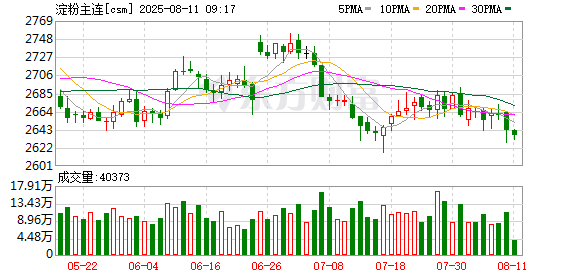
Core Viewpoint - The main futures contract for rapeseed meal experienced a sharp decline, reaching a low of 2617.00 yuan, with a current price of 2682.00 yuan, reflecting a drop of 1.94% [1] Group 1: Market Analysis - Chaos Tiancheng Futures suggests that short-term drivers are limited, and rapeseed meal may maintain a range-bound operation due to a relatively sufficient supply and a balanced demand-supply situation [2] - Ningzheng Futures anticipates that rapeseed meal prices will continue to experience a bearish trend in the short term, with stable import rhythms of raw materials and no significant positive news to support prices [3] - Zhonghui Futures notes that multiple factors are at play, with global rapeseed production recovering year-on-year, but there are risks of yield reductions for new crops. The domestic market shows a mixed inventory situation, with high levels of commercial stocks compared to last year [4] Group 2: Supply and Demand Dynamics - The demand from aquaculture provides some support for rapeseed meal prices, while limited arrivals of rapeseed at ports contribute to a tightening supply expectation [2] - The import of rapeseed from August to October is expected to be significantly lower year-on-year, compounded by a 100% import tariff on rapeseed meal, which supports prices despite the pressure from improved import profits [4] - The current market shows a significant substitution of soybean meal for rapeseed meal, indicating competitive dynamics in the feed market [4] Group 3: Future Considerations - Market participants should pay attention to changes in trade policies between China and Canada, as well as weather conditions affecting rapeseed planting, which could impact future prices [3][4] - The focus should also be on the adjustments in rapeseed data from the upcoming USDA report, which may influence market sentiment [4]
广发期货《黑色》日报-20250812
Guang Fa Qi Huo· 2025-08-12 02:33
1. Report Industry Investment Ratings There is no information about the report industry investment ratings in the provided content. 2. Core Views of the Report - **Steel**: Steel prices have strengthened again, with clear support levels for rebar and hot-rolled coils. Social inventory has increased significantly in the past two weeks due to positive arbitrage by futures-spot traders. Steel mills have few overstocked products as inventory has shifted from mills to traders. There are expectations of production restrictions in mid-to-late August. Short-term inventory pressure is not high, but off-season demand has low acceptance of high prices. The main contract is approaching the rollover period, and the price of the October contract may fluctuate at high levels. It is advisable to hold long positions and be cautious about chasing high prices [1]. - **Iron Ore**: The 09 contract of iron ore showed a volatile upward trend. Globally, iron ore shipments and arrivals at 45 ports have decreased. On the demand side, steel mills' profit margins are at a relatively high level, with a slight increase in maintenance volume and a slight decline in molten iron production, which remains at around 240,000 tons per day. Steel exports remain strong, maintaining short-term resilience in molten iron production. Terminal demand shows strong performance during the off-season but weakens month-on-month. In terms of inventory, port inventory has slightly increased, and steel mills' equity ore inventory has increased month-on-month. It is expected that molten iron production in August will remain high, with an average daily output of around 236,000 tons. Steel mills' improving profits support raw materials. There are also new supply-side policy expectations and production restriction expectations for Hebei steel mills before the September 3rd parade. It is recommended to go long on the 2601 contract on dips and conduct an arbitrage strategy of going long on coking coal 01 and short on iron ore 01 [4]. - **Coking Coal and Coke**: The coking coal futures showed a volatile upward trend, with intense price fluctuations recently. Spot auction prices are stable with a slight upward trend, and Mongolian coal prices are stable with an increase. The fifth round of coke price increases has been officially implemented, and the sixth round of price increases has been initiated. On the supply side, coal mine production has decreased month-on-month, and the market remains in short supply. Imported coal prices have rebounded this week after falling last week, and downstream users continue to replenish their inventories. On the demand side, coking plant operations are stable, and the high-level molten iron production of blast furnaces has slightly declined, with continuous downstream replenishment demand. It is expected that molten iron production in August will continue to decline slightly. In terms of inventory, coking plant inventory continues to decrease, port inventory has slightly increased, and steel mill inventory has decreased. It is recommended to go long on coking coal 2601 on dips and conduct an arbitrage strategy of coking coal 9 - 1 reverse spread [7]. 3. Summaries by Relevant Catalogs Steel - **Prices and Spreads**: Rebar and hot-rolled coil prices have increased, with different price levels and changes in different regions and contracts. For example, the spot price of rebar in East China is 3,360 yuan/ton, an increase of 20 yuan/ton from the previous value [1]. - **Cost and Profit**: The cost of steel billets and slabs has changed, and the profit of steel products has generally decreased. For example, the profit of East China hot-rolled coils has decreased by 23 yuan/ton [1]. - **Production**: The daily average molten iron production has slightly decreased, while the production of five major steel products has increased. Rebar production has increased significantly, with a 4.8% increase, and hot-rolled coil production has decreased by 2.4% [1]. - **Inventory**: The inventory of five major steel products has increased by 1.7%, the rebar inventory has increased by 1.9%, and the hot-rolled coil inventory has increased by 2.5% [1]. - **Trading and Demand**: Building material trading volume has decreased by 3.5%, the apparent demand for five major steel products has decreased by 0.7%, the apparent demand for rebar has increased by 3.6%, and the apparent demand for hot-rolled coils has decreased by 4.3% [1]. Iron Ore - **Prices and Spreads**: The warehouse receipt costs of various iron ore powders have increased, and the basis of the 09 contract has changed. For example, the warehouse receipt cost of PB powder has increased by 8.8 yuan/ton, and the basis of the 09 contract of PB powder has increased by 2.3 yuan/ton [4]. - **Supply**: The weekly arrivals at 45 ports have decreased by 5.0%, and the global weekly shipments have decreased by 0.5%. The monthly national import volume has increased by 8.0% [4]. - **Demand**: The weekly average daily molten iron production of 247 steel mills has decreased by 0.2%, the weekly average daily port clearance volume has increased by 6.3%, the monthly national pig iron production has decreased by 3.0%, and the monthly national crude steel production has decreased by 3.9% [4]. - **Inventory**: The 45-port inventory has decreased by 0.2%, the imported ore inventory of 247 steel mills has increased by 0.0%, and the inventory available days of 64 steel mills have decreased by 4.8% [4]. Coking Coal and Coke - **Prices and Spreads**: The prices of coking coal and coke futures have increased, and the basis and spreads have changed. For example, the 09 contract of coking coal has increased by 37 yuan/ton, and the 09 - 01 spread of coking coal has changed from -158 to -150 [7]. - **Supply**: The weekly production of coke has increased slightly, and the production of sample coal mines has decreased. For example, the daily average production of all-sample coking plants has increased by 0.3% [7]. - **Demand**: The weekly molten iron production of 247 steel mills has decreased by 0.2%, and the demand for coke remains supported [7]. - **Inventory**: Coke inventory has generally decreased, and coking coal inventory has changed differently. For example, the total coke inventory has decreased by 0.9%, and the coking coal inventory of all-sample coking plants has decreased by 0.5% [7].
建信期货聚烯烃日报-20250812
Jian Xin Qi Huo· 2025-08-12 02:03
Report Summary 1. Report Industry Investment Rating No investment rating information is provided in the report. 2. Core View - Futures are oscillating warmly, but the sentiment of the spot market is not significantly boosted. The prices of producers are mostly stable, and traders are mainly focused on active sales. Downstream procurement remains cautious, with purchases based on low - price and just - in - time needs. - The upstream device operating load continues to increase. Although the PP maintenance loss is still at a high level, the impact of maintenance is decreasing. With the approaching of new capacity release plans, the pressure of supply increase is gradually emerging. - The downstream factories are still affected by the off - season, and the willingness to stock up is low. It is expected that the demand will gradually emerge from the off - season in the second half of the month. - The cost - side support is somewhat differentiated. Coal prices are likely to rise, while oil prices may fall again. - The fundamental loose pattern will continue to restrict the upward space. With the release of new capacity and the expected stocking demand in the "Golden September" peak season in the second half of the month, the polyolefin prices may show a trend of bottom - building through oscillation followed by a rebound [4]. 3. Summary by Directory 3.1 Market Review and Outlook - **Futures Market**: The plastic 2509 contract closed at 7314 yuan/ton, up 20 yuan/ton (0.27%), with a trading volume of 176,000 lots and a decrease in positions. The PP main contract closed at 7095 yuan/ton, up 29 yuan (0.41%), with a decrease in positions. - **Supply**: The upstream device operating load is increasing. The impact of PP maintenance is decreasing, and new capacity release plans are approaching. For PE, new capacity has been put into operation in July, and more is expected in August. - **Demand**: Downstream factories are in the off - season, with low stocking willingness. It is expected that demand will improve in the second half of the month. - **Cost**: Coal prices are likely to rise, while oil prices may fall [4]. 3.2 Industry News - On August 11, 2025, the inventory level of major producers was 835,000 tons, a 12.08% increase from the previous working day, the same as the same period last year. - The PE market prices fluctuated slightly. The LLDPE prices in North, East, and South China were in the ranges of 7180 - 7410 yuan/ton, 7200 - 7650 yuan/ton, and 7320 - 7700 yuan/ton respectively [5]. 3.3 Data Overview - **Futures Market Data**: Tables show the opening, closing, highest, lowest prices, price changes, price change rates, open interest, and open interest changes of plastic and PP futures contracts [3]. - **Other Data**: Graphs present information such as L and PP basis, L - PP spread, and crude oil futures settlement prices. The mainstream price of propylene in the Shandong market increased by 245 yuan/ton to 6500 - 6580 yuan/ton. The PP market was slightly adjusted, with different price ranges in North, East, and South China [7][8].
玉米淀粉或先扬后抑 关注原料端走势变化
Qi Huo Ri Bao· 2025-08-11 01:16
Core Viewpoint - The corn starch market is experiencing low prices due to a combination of high inventory levels and reduced demand, with expectations of short-term price fluctuations followed by a long-term decline as raw material prices weaken [2][3][5]. Supply and Demand Analysis - Corn prices are at a five-year low, with the national standard second-grade corn price at 2300 RMB/ton, down 70 RMB/ton year-on-year, a decrease of approximately 2.95% [2]. - Corn starch prices are also at a five-year low, with the Shandong national standard first-grade corn starch price at 2890 RMB/ton, down 50 RMB/ton year-on-year, a decrease of about 1.70% [2]. - Domestic corn starch inventory increased by 8.47 million tons in the first seven months of the year, while production decreased by 830,400 tons, leading to a net supply increase of 7.68 million tons [3]. - Major corn starch enterprises have seen a decrease in delivery volume by 809,400 tons year-on-year, indicating lower consumption compared to previous years [3]. Consumption Trends - The summer season typically sees high consumption of starch sugar, with a year-on-year increase in corn starch consumption for starch sugar of 39,000 tons, totaling 1.95 million tons in the first seven months [4]. - The paper industry has maintained a higher operating rate, with corrugated paper and boxboard paper operating rates at 59.83% and 63.55%, respectively, both showing year-on-year increases [4]. - The price advantage of cassava starch is impacting corn starch consumption, as the price gap has narrowed to the lowest level in five years [4]. Future Outlook - As the peak stocking season approaches, there is an expectation of marginal improvement in demand, which may lead to a stronger price performance within a certain range [5]. - However, the long-term outlook remains bearish due to anticipated abundant corn production, which is expected to weaken prices [5].

《有色》日报-20250807
Guang Fa Qi Huo· 2025-08-07 02:29
1. Report Industry Investment Rating No relevant content found. 2. Core Views of the Report Copper - The path of interest rate cuts in the second half of the year remains unclear, inflation hasn't slowed due to tariffs, and employment is still weakening. Powell adopts a wait - and - see attitude towards the subsequent interest rate cut path. The result of Sino - US trade negotiations is an extension of 90 days, and the tariff result is yet to be further negotiated. The market's expectation of a 50% tariff on US electrolytic copper has failed, leading to a sharp decline in US copper prices and the end of the US - LME copper arbitrage. The upward momentum for non - US copper prices has ended. - During the traditional off - season, there is a stage of weak supply and demand. However, after the copper price drops, the spot trading improves marginally. The "tight mine supply + resilient demand" provides price support. - Without a clear interest rate cut path and significant improvement in interest rate cut expectations, the upward momentum of copper prices is insufficient. After the failure of the US copper tariff, the non - US electrolytic copper market shows a pattern of "loosening supply expectations and weak actual demand", and the spot contradictions are gradually resolved. Copper pricing returns to macro trading, and it may mainly fluctuate within a range. The main reference range is 77,000 - 79,000 [1]. Zinc - The zinc ore TC has risen to 3900 yuan/ton, but the global mine output growth in May and the domestic mine output growth in June are both lower than expected. - With TC entering an upward cycle and smelting profits being continuously repaired, smelters are highly motivated to resume production, and the smelter operating rate is stronger than the seasonal level. The supply of the mine end is gradually transmitted to the smelting end, and the domestic refined zinc output in July exceeded expectations. - The demand side is significantly suppressed by the rising disk price, and the downstream procurement enthusiasm is frustrated. The operating rates of the three primary processing industries are weak due to factors such as the rise and fall of ferrous metal prices and the off - season of demand. - The low spot premium and low inventory level provide price support, but the domestic social inventory may enter a replenishment cycle. In the short term, with the landing of domestic and foreign macro events, without substantial improvement in interest rate cut expectations and Sino - US economic macro expectations, the zinc price is expected to mainly fluctuate within a range, with the main reference range of 22,000 - 23,000 [4]. Aluminum - For alumina, the supply of bauxite in Guinea is expected to tighten due to the rainy - season barge transportation pressure, and the alumina futures warehouse receipt inventory is at a historical low, which supports the short - term price rebound and reduces the basis. However, the impact of "anti - involution" on the alumina industry is minimal except for the emotional aspect. The recovery of production capacity and new production due to profit repair will jointly increase the spot supply, and the market will remain slightly oversupplied. The future core driver lies in the continuous game between cost support and over - capacity. It is expected that the main contract will operate in the range of 3000 - 3400 in the short term. - For aluminum, yesterday's aluminum price remained volatile. In the off - season, the downstream procurement willingness is low, and the market discount continues to expand. The domestic consumption stimulus atmosphere is still strong, and the "anti - involution" has a certain supporting effect on the aluminum price, but the changes in the Fed's interest rate cut expectations and tariff events bring great uncertainty to the aluminum price. The domestic electrolytic aluminum operating capacity is stable, and the decrease in the molten aluminum ratio drives the inventory to bottom out. The demand side is weak, with weak construction and real - estate completion, declining household appliance exports, and weakening orders after the end of photovoltaic installations. Only the demand for new - energy vehicle lightweighting remains resilient. In the face of the pressure of inventory replenishment expectations, weakening demand, and macro disturbances, the aluminum price is expected to remain under pressure at high levels in the short term, with the main contract price in the range of 20,000 - 21,000 this month [7]. Aluminum Alloy - The aluminum alloy disk price follows the aluminum price and fluctuates. The market trading is mainly for hedging by spot - futures traders to shrink the aluminum - aluminum alloy price difference, and the terminal trading is sluggish. The social inventory in the main consumption areas has increased significantly, and areas such as Ningbo and Foshan are close to full storage. - On the supply side, due to the off - season, the output of new scrap aluminum is limited. The import price is inverted, and Thailand has stopped issuing licenses to recycling factories, resulting in a shortage of scrap aluminum supply in the current market, which provides certain cost support for recycled aluminum. - On the demand side, it is continuously suppressed by the traditional off - season. The orders in the terminal automotive industry are weak, and downstream die - casting enterprises generally have a bearish outlook on the market, maintaining a low - inventory rigid procurement strategy and having a strong willingness to bargain. The weak demand situation will continue to suppress the upward momentum of the price. It is expected that the disk will mainly fluctuate in a wide range, with the main reference range of 19,200 - 20,200 [8]. Tin - On the supply side, the actual supply of tin ore remains tight, and the smelting processing fee continues to be low. The domestic tin ore imports in June remained at a low level. The resumption of production in Myanmar is gradually advancing, and it is expected to start shipping around the end of August. - On the demand side, after the end of the photovoltaic installation rush, the orders for photovoltaic tin strips in the East China region have declined, and the operating rates of some producers have decreased. The electronic consumption in the South China region has entered the off - season, and the operating rates of soldering enterprises have declined significantly. Considering the impact of the US tariff policy on trade and the weakening influence of domestic consumption stimulus policies, the subsequent demand is expected to be weak. - Attention should be paid to the recovery of tin ore imports from Myanmar in August. If the supply recovers smoothly, there is a large downward space for the tin price, and a short - selling strategy on rallies is recommended. If the supply recovery is less than expected, the tin price is expected to continue to fluctuate at a high level [9]. Nickel - Macroscopically, the weak data on the US employment and factory orders have increased the market's expectation of the Fed to accelerate interest rate cuts. In China, during the policy window period of the meeting, seven departments including the central bank jointly issued a guiding opinion on financial support for new - type industrialization. - At the industrial level, yesterday's spot price continued to rise, and the premiums of various brands remained stable. The ore price is mainly stable. Philippine mines are mostly in the shipping stage. The mainstream transaction price of 1.3% nickel ore is mostly around CIF42, and that of 1.4% nickel ore is mostly around CIF50. The domestic iron mills mostly maintain reduced - load production, and the supply of nickel ore still needs time to recover, so nickel iron still has cost support. The demand for stainless steel is still weak, and steel mills are cautious in raw material procurement, and the terminal demand is relatively weak. In the new - energy sector, the downstream ternary materials have a low acceptance of high - priced nickel sulfate. Overseas inventory remains high, and domestic social and bonded - area inventories have increased. - In the short term, the macro situation is temporarily stable, and the fundamentals change little. The medium - term supply is expected to be loose, which restricts the upward space of the price. It is expected that the disk will mainly adjust within a range, with the main reference range of 118,000 - 126,000. Attention should be paid to changes in macro expectations [10]. Stainless Steel - Macroscopically, similar to nickel, the weak US data increases the expectation of Fed interest rate cuts, and China has introduced relevant policies. - At the industrial level, the ore price is mainly stable. The market negotiation range has shifted upward, and the nickel - iron quotation has risen to 930 - 940 yuan/nickel (including tax at the bottom of the hold). Iron mills are operating at a loss and reducing production, and steel mills are mostly in a wait - and - see attitude in raw material procurement. The chromium - iron price is weakly stable, and there is still a small room for callback in the spot price due to the decline in the procurement price of chromium - iron steel mills. The supply of stainless - steel mills has decreased due to maintenance, but the production reduction is less than expected, and the short - term market supply pressure is difficult to reduce. The terminal demand remains weak, and the traditional downstream is in the off - season, while the growth rate of the emerging downstream is generally expected to decline. Purchases are mainly for rigid - demand replenishment, and although the bargaining space for traders has increased, the trading volume is still difficult to increase. The social inventory of stainless steel is slowly decreasing, and the warehouse receipts continue to decrease. - In the short term, the disk is mainly driven by policies and macro - emotions. The short - term sentiment is temporarily stable, but the policy support still exists, and the spot demand on the fundamentals does not drive significantly. It is expected that the disk will mainly fluctuate within a range, with the main operating range of 12,600 - 13,200. Attention should be paid to policy directions and supply - demand rhythms [11]. Lithium Carbonate - Yesterday, the lithium carbonate disk rose overall. There was a lot of news about mine shutdowns, and the market's expectation of short - term production suspension has fermented. The mine - right approval is approaching the deadline, but the actual result has not been clearly determined. The uncertainty on the supply side will inject trading variables into the disk. - Fundamentally, the current supply - demand balance situation meets expectations. The upstream operating rate changes little, and although some production lines are under maintenance, the supply remains sufficient. The production data decreased last week, and the marginal growth rate of supply has slightly slowed down. The demand performance is stable, and the seasonal characteristics are fading. The battery cell orders are okay, and the material production scheduling data is more optimistic than the market expectation. However, due to the off - season and inventory pressure in the material industry chain, the actual demand has not been significantly boosted. - Recently, the market sentiment and news - related disturbances dominate the disk trend, and the trading core has shifted to the mine end. There are many matters to be verified in the news. The main price center is expected to fluctuate widely around 67,000 - 72,000. It is recommended to be cautious and wait and see for unilateral trading without a position. Attention should be paid to short - term news increments and supply adjustments [13][14]. 3. Summaries According to Relevant Catalogs Copper Price and Basis - SMM 1 electrolytic copper price decreased by 0.34% to 78,350 yuan/ton; SMM 1 electrolytic copper premium decreased by 30 yuan/ton to 100 yuan/ton. - The refined - scrap price difference decreased by 20.82% to 660 yuan/ton; LME 0 - 3 increased by 1.51 to - 49.25 dollars/ton; the import profit and loss increased by 120.22 to - 142 yuan/ton; the Shanghai - LME ratio remained unchanged at 8.15 [1]. Month - to - Month Spread - The spread of 2508 - 2509 remained unchanged at - 10 yuan/ton; the spread of 2509 - 2510 decreased by 10 yuan/ton to - 10 yuan/ton; the spread of 2510 - 2511 decreased by 10 yuan/ton to 10 yuan/ton [1]. Fundamental Data - In July, the electrolytic copper output was 117.43 million tons, a month - on - month increase of 3.47%; in June, the electrolytic copper import volume was 30.05 million tons, a month - on - month increase of 18.74%. - The import copper concentrate index increased by 0.54 to - 42.09 dollars/ton; the domestic mainstream port copper concentrate inventory decreased by 7.01% to 52.16 million tons. - The operating rate of electrolytic copper rod production increased by 2.36 to 71.73%; the operating rate of recycled copper rod production increased by 1.98 to 29.29%. - The domestic social inventory increased by 12.97% to 13 million tons; the bonded - area inventory decreased by 1.34% to 8.11 million tons; the SHFE inventory decreased by 1.20% to 7.25 million tons. - The LME inventory increased by 1.48% to 15.61 million tons; the COMEX inventory increased by 0.39% to 26.22 million short tons; the SHFE warehouse receipt decreased by 96.18% to 2.03 million tons [1]. Zinc Price and Related Indicators - SMM 0 zinc ingot price increased by 0.13% to 22,330 yuan/ton; the premium remained unchanged at - 20 yuan/ton. - The import profit and loss increased by 75.56 to - 1474 yuan/ton; the Shanghai - LME ratio increased by 0.01 to 8.07 [4]. Month - to - Month Spread - The spread of 2508 - 2509 decreased by 130 yuan/ton to - 25 yuan/ton; the spread of 2509 - 2510 increased by 145 yuan/ton to 10 yuan/ton; the spread of 2510 - 2511 increased by 5 yuan/ton to 10 yuan/ton; the spread of 2511 - 2512 increased by 20 yuan/ton to 35 yuan/ton [4]. Fundamental Data - In July, the refined zinc output was 60.28 million tons, a month - on - month increase of 3.03%; in June, the refined zinc import volume was 3.61 million tons, a month - on - month increase of 34.97%; the refined zinc export volume was 0.19 million tons, a month - on - month increase of 33.24%. - The galvanizing operating rate decreased by 2.65 to 56.77%; the die - casting zinc alloy operating rate decreased by 2.79 to 48.24%; the zinc oxide operating rate increased by 0.14 to 56.13%. - The seven - region social inventory of Chinese zinc ingots increased by 3.47% to 10.73 million tons; the LME inventory decreased by 3.79% to 9.7 million tons [4]. Aluminum Price and Spread - SMM A00 aluminum price increased by 0.54% to 20,630 yuan/ton; the premium remained unchanged at - 40 yuan/ton. - The import profit and loss increased by 39.9 to - 1294 yuan/ton; the Shanghai - LME ratio increased by 0.02 to 8.03. - The spread of 2508 - 2509 decreased by 10 yuan/ton to 30 yuan/ton; the spread of 2509 - 2510 increased by 15 yuan/ton to 45 yuan/ton; the spread of 2510 - 2511 increased by 5 yuan/ton to 45 yuan/ton [7]. Fundamental Data - In July, the alumina output was 765.02 million tons, a month - on - month increase of 5.40%; the electrolytic aluminum output was 372.14 million tons, a month - on - month increase of 3.11%. In June, the electrolytic aluminum import volume was 19.24 million tons, a month - on - month decrease of 3.1 million tons; the electrolytic aluminum export volume was 1.96 million tons, a month - on - month decrease of 1.3 million tons. - The aluminum profile operating rate decreased by 0.99% to 50.00%; the aluminum cable operating rate increased by 0.32% to 61.80%; the aluminum plate and strip operating rate remained unchanged at 63.20%; the aluminum foil operating rate decreased by 1.01% to 68.90%; the primary aluminum alloy operating rate increased by 1.11% to 54.60%. - The domestic electrolytic aluminum social inventory increased by 5.82% to 56.40 million tons; the LME inventory increased by 0.41% to 46.8 million tons [7]. Aluminum Alloy Price and Spread - The prices of SMM aluminum alloy ADC15, SMM East China ADC12, SMM South China ADC12, SMM Northeast ADC12 increased by 0.50% to 20,150 yuan/ton; the price of SMM Southwest ADC12 increased by 0.50% to 20,300 yuan/ton. - The spread of 2511 - 2512 increased by 25 yuan/ton to 20 yuan/ton; the spread of 2512 - 2601 decreased by 15 yuan/ton to 10 yuan/ton;
Mosaic(MOS) - 2025 Q2 - Earnings Call Transcript
2025-08-06 16:02
Financial Data and Key Metrics Changes - The company generated net income of $411 million and adjusted EBITDA of $566 million in Q2 2025, compared to a net loss of $162 million and adjusted EBITDA of $584 million in the same quarter of 2024 [7][25][26] - The dollar lost value against most currencies, contributing positively to net income by $220 million [26] - The company expects EBITDA from the Mosaic Fertilizantes segment to increase due to strong demand and limited supply [12][33] Business Line Data and Key Metrics Changes - Phosphate production guidance for the third quarter is set at 1.8 million to 2 million tons, with annual guidance now at 6.9 million to 7.2 million tons [11][36] - Potash production guidance has been increased to 9.3 million to 9.5 million tons due to strong global demand [12][36] - The Biosciences segment's revenues more than doubled in the first half compared to the previous year, with expectations to contribute positively to adjusted EBITDA starting in Q4 [13][14] Market Data and Key Metrics Changes - The global phosphate market remains tight, with strong demand and limited supply expected to continue into 2026 [9][21] - In North America, import supply of phosphate is down around 20% year-over-year due to tariffs, which is expected to keep domestic demand strong [20][71] - Brazilian demand for fertilizers is resilient despite higher prices, with expectations for record shipments this year [21][24] Company Strategy and Development Direction - The company is focusing on improving operating performance and enhancing reliability in its phosphate production business [5][6] - The new Pomeranci facility adds 1 million tons of distribution capacity, reinforcing the company's market presence in Brazil [13] - The company aims to achieve $250 million in cost reductions by 2026 through various operational efficiencies [35][89] Management Comments on Operating Environment and Future Outlook - Management expressed confidence in a strong second half of 2025, driven by improved production volumes and favorable market conditions [6][36] - The company does not anticipate a price reset in the second half of the year, which has occurred in previous years [8] - Management highlighted the importance of market access as a competitive advantage, especially in the context of tight supply and strong demand [6][13] Other Important Information - The company is making progress on capital allocation, expecting stronger free cash flow in the second half of the year to pay down debt and return capital to shareholders [15] - The company has achieved significant cost reductions in its operations, with plans to extend these efforts further [35] Q&A Session All Questions and Answers Question: Can you parse out the noise from what has actually changed from your Investor Day for better or worse? - Management acknowledged the market's negative reaction and clarified that while there were extraordinary expenses, the underlying performance remains strong [40][41] Question: What was your run rate roughly in July and how are we trending in August and September? - Management indicated that July's run rate was not as expected due to delays but expressed optimism for August and September based on encouraging numbers [48][53] Question: How do the $50 million idle and turnaround one-off costs in Q2 ramp down? - Management provided a general annualized cost range for phosphates but noted the variability in turnaround costs [56][60] Question: What has Mosaic done to harden the assets against potential weather disruptions? - The company has implemented various measures to prepare for hurricane season, including hardening assets and ensuring compliance with regulatory requirements [64][66] Question: Can you talk about how tariffs have raised the costs of imports of phosphates into the United States? - Management explained that imports of phosphate face a 10% tariff, impacting the market dynamics and supporting domestic prices [70][71] Question: Can you elaborate on the government's reduction in support for farmer financing of input costs? - Management noted that while the first half of the market was strong, the summer season for soybeans is slower, which may impact demand [93][98]

纯苯、苯乙烯周报:短期逢高空,压缩利润-20250803
Guo Tai Jun An Qi Huo· 2025-08-03 08:22
1. Report Industry Investment Rating - Not provided in the content 2. Core Viewpoints of the Report - The market should focus on compressing the profit position of styrene. Pure benzene supply and demand are both increasing, while styrene supply is increasing and demand is decreasing. Currently, styrene is in a pattern of high production, high profit, and high inventory, and it is mainly considered for short - selling. The port inventory of styrene is in an accelerated accumulation stage. The downstream operating rate of pure benzene is gradually recovering, and the industry is gradually entering the inventory replenishment stage. The short - term market still has support at 5600 - 5700. [3] 3. Summary According to Related Catalogs 3.1 Pure Benzene and Styrene Market Supply - Domestic pure benzene: The planned maintenance loss in July was about 90,000 tons, which decreased to 40,000 tons in August, and the planned maintenance in September was 70,000 tons. New pure benzene plants will be put into operation intensively from July to September. [3] - Imported pure benzene: The price of pure benzene in the US has stabilized and rebounded. The profit of STDP plants is negative, and the output rate is still decreasing. The profit of US styrene has been squeezed from a high level, but the operating rate has recovered from 50% in June to nearly 65% - 70% in July. The arbitrage window for styrene from the US to Europe has closed, and the incremental demand in August is expected to come from South America. [3] Demand - Styrene: There has been a large increase in supply recently. New plants such as Jingbo Petrochemical (680,000 tons, put into operation in early August) and Jilin Petrochemical (600,000 tons, put into operation on September 20) are about to be launched. [3] - Caprolactam: It was in a state of increasing load in July, and some plants plan to reduce the load after August. A new 300,000 - ton plant of Hengyi in Guangxi Qinzhou is planned to be put into operation in October. [3] - Phenol: Zhenhai Refining & Chemical's 400,000 - ton plant was put into operation in July, Jilin Petrochemical's plant will be put into operation in late August, and Shandong Ruilin plans to put it into operation in October. [3] - Aniline: Some plants such as Jinmao Aluminum and Chemical, Shandong Huatai, and Jiangsu Fuqiang have recently restarted, and Wanhua Chemical (Fujian)'s new plant has been put into operation and is currently operating at a low load. Yantai Wanhua plans to conduct rotational maintenance from August to September. [3] - 3S hard plastics downstream of styrene: EPS and PS have clearly entered the summer off - season, with continuous inventory accumulation and reduced operating rates. The overall demand for ABS remains medium - high and shows resilience. [3] Valuation - The reasonable valuation of pure benzene 2603 is 6000 yuan/ton. The current styrene futures price structure has turned to contango, and the largest structural opportunity this year is approaching the end. [3] Strategy - Unilateral: Short on rallies. - Inter - period: Temporarily take profit on cash - and - carry arbitrage and reverse cash - and - carry arbitrage in the futures market. - Inter - commodity: Buy BZ03 and sell EB09, and take profit on the position of compressing profit temporarily. [3] 3.2 Pure Benzene Delivery Standards - The overall delivery settings are uniform. The benchmark delivery areas are Jiangsu, Zhejiang, and Shanghai. Different regions have different premium and discount settings. [5] Production Capacity - The production capacity of pure benzene before 2005 was 3.26 million tons, accounting for 12%. [20] Market Situation in 2025 - In the first half of 2025, the price continued to decline, mainly due to pre - Spring Festival market over - speculation and the non - implementation of downstream production capacity expansion expectations. In the second half of the year, domestic supply continued to increase, but it gradually entered the de - stocking pattern. From January to May 2025, the total output of pure benzene was 8.97 million tons, a year - on - year increase of 6%. It is expected that the apparent demand for pure benzene in 2025 will be 31.39 million tons, a year - on - year increase of 8.9%. [30] 3.3 Styrene Production Capacity - The production capacity of styrene before 2005 was 1.12 million tons, accounting for 5%. [21] Market Situation in 2025 - The global styrene output contracted in the first half of 2025. Currently, styrene is in a pattern of high inventory, medium - level profit (recently compressed). [70][76] Future Outlook - Pay attention to the issue of the price ratio between aromatics and olefins. Styrene in the far - month should not have profit. [69][81] 3.4 Downstream Products of Pure Benzene Phenol - It is expected that the apparent demand for phenol in 2025 will be 6 million tons, a year - on - year increase of 7%. [52] Caprolactam - It is expected that the apparent demand for caprolactam in 2025 will be about 7 million tons, a year - on - year increase of 7%. [55] Adipic Acid - The annual apparent demand for adipic acid is about 1.9 million tons, a year - on - year decrease of 7%. [57] Aniline - It is expected that the apparent demand for aniline in 2025 will remain at 3.61 million tons, a year - on - year decrease of 8%. [61]
纯碱SA2509:7月涨66元/吨,8月预计稳中有降
Sou Hu Cai Jing· 2025-08-02 06:48
Core Insights - The main contract price for soda ash (SA2509) fluctuated between 1158 and 1457 CNY/ton in July, closing at 1247 CNY/ton with a weekly increase of 5.59% [1] - Soda ash production reached 3.1639 million tons in July, a month-on-month increase of 30,800 tons, representing a growth rate of 0.98% [1] - The capacity utilization rate for soda ash companies was 81.95% in July, down by 1.91% from the previous month [1] - Total inventory of soda ash manufacturers at the end of July was 1.7958 million tons, an increase of 27,000 tons, or 1.53% month-on-month [1] Market Trends - In August, the domestic soda ash market is expected to stabilize initially before weakening, with new price transactions slowing down and a forecast of stable to declining prices [1] - Supply of soda ash is expected to increase post-maintenance, leading to ample availability, while downstream demand remains weak with a focus on essential needs, resulting in decreased high-price transactions and weakened purchasing intentions [1] - The sentiment in the market has shifted from a strong rebound in July to a return to fundamentals, with traders advised to monitor inventory changes and downstream demand [1]