滞胀风险

Search documents
研究所晨会观点精萃-20250610
Dong Hai Qi Huo· 2025-06-10 06:42
Industry Investment Rating - No information provided in the report. Core Viewpoints - The global risk appetite has generally increased due to the easing of trade tensions and better-than-expected US non-farm payroll data. In China, although May exports were slightly lower than expected, the trade surplus was higher than expected, and the first meeting of the China-US economic and trade consultation mechanism continued, releasing positive signals, which boosted domestic risk appetite in the short term [3][4]. - Different asset classes have different trends and investment suggestions. For example, the stock index is expected to be volatile in the short term, and it is advisable to be cautiously long; treasury bonds are expected to be volatile at a high level, and it is advisable to wait and see; different commodity sectors also have corresponding trends and investment suggestions [3]. Summary by Related Catalogs Macro Finance - **Global and Domestic Situation**: Overseas, the hope of easing trade tensions and better-than-expected US non-farm payroll data alleviated concerns about an impending economic slowdown, increasing global risk appetite. In China, May exports were slightly lower than expected, but the trade surplus was higher than expected, and the first meeting of the China-US economic and trade consultation mechanism continued, releasing positive signals, which boosted domestic risk appetite in the short term [3]. - **Asset Performance and Suggestions**: The stock index is expected to be volatile in the short term, and it is advisable to be cautiously long; treasury bonds are expected to be volatile at a high level, and it is advisable to wait and see. Among commodities, black commodities are expected to rebound at a low level in the short term, and it is advisable to wait and see; non-ferrous metals are expected to rebound with fluctuations in the short term, and it is advisable to be cautiously long; energy and chemical products are expected to rebound with fluctuations in the short term, and it is advisable to be long; precious metals are expected to be volatile at a high level, and it is advisable to be long [3]. Stock Index - **Market Performance**: Driven by sectors such as biomedicine, football concepts, and rare earths, the domestic stock market continued to rise slightly [4]. - **Fundamentals and Suggestions**: China's May exports were slightly lower than expected, but the trade surplus was higher than expected, and the first meeting of the China-US economic and trade consultation mechanism continued, releasing positive signals, which boosted domestic risk appetite in the short term. The market's trading logic mainly focuses on changes in US trade policies and the progress of trade negotiations. It is advisable to be cautiously long in the short term [4]. Precious Metals - **Market Performance**: Gold rose slightly due to the weakening dollar, and silver maintained a strong upward trend. - **Fundamentals and Suggestions**: May's non-farm payrolls exceeded expectations, but there were concerns in employment data. The ISM manufacturing PMI was at a low level, and inflation expectations remained high, accumulating stagflation risks. There is still uncertainty in the trade situation. Silver has a demand for technical breakthrough and catch-up growth, and the gold-silver ratio may be repaired. Gold is expected to be volatile at a high level, and it is advisable to buy on dips. Pay attention to the weekly CPI price index to judge the Fed's policy path [5]. Energy and Chemical - **Crude Oil**: Oil prices continued to rise on Monday as the new round of China-US trade negotiations brought the possibility of easing global trade tensions. The market is also closely watching the progress of US-Iran negotiations. Oil prices are expected to continue to fluctuate slightly stronger in the short term [6][7]. - **Asphalt**: Oil prices rose slightly, and asphalt prices followed suit. Demand has recovered to a certain extent, but the recovery amplitude is still limited. The basis in major consumption areas has declined significantly, and the futures structure has weakened following the spot. Inventory destocking has stagnated recently, and it is advisable to continue to follow the high-level fluctuations of crude oil in the short term [7]. - **PX**: PTA's start-up has increased slightly recently, and the demand for PX will increase in the future. The supply pattern will remain tight, but the PX price has declined recently, and it is expected to maintain a weak and volatile pattern in the short term [7]. - **PTA**: The basis of PTA remains high, but the monthly spread has declined significantly. The supply of the upstream of the polyester end will increase in the short term, and the pattern of downstream load reduction is unlikely to change. The basis has probably reached a stage high recently [7]. - **Ethylene Glycol**: The visible inventory of ethylene glycol has not been significantly destocked, and the cost pricing logic still exerts pressure on the futures market. The supply of ethylene glycol will increase significantly in the future, and the downstream start-up has decreased month-on-month. It is expected to maintain a volatile pattern recently [8]. - **Short Fiber**: Short fiber generally maintains a weak and volatile pattern. The recovery speed of terminal orders is significantly lower than expected, and the price of short fiber has begun to weaken. It is expected to continue to operate weakly and volatile in the short term [8]. - **Methanol**: The market price of methanol at the port maintains a volatile trend, and the basis has strengthened slightly. The inventory in the inland and at the port has increased simultaneously. It is expected to oscillate and repair in the short term, and the price still has room to decline in the medium and long term [8]. - **PP**: The domestic market quotation of PP is mainly stable, and the inventory has increased after the holiday. The fundamentals are deteriorating, and the futures price is expected to be under pressure and the center of gravity will move down [9]. - **LLDPE**: The price of the polyethylene market has been adjusted, and the inventory has increased. The production expectation suppresses the price, and the price center of gravity is expected to move down [9][10]. Non-ferrous Metals - **Copper**: The China-US negotiation has entered a deep stage, and it is difficult to exceed expectations greatly. The copper mine supply is relatively tight, but the production of electrolytic copper is at a high level. The demand is approaching the off-season, and there is a risk of marginal decline in demand. It is expected to be volatile in the short term [11]. - **Aluminum**: The inventory of aluminum ingots has continued to decline significantly, but the market expectation is weak. The demand may weaken marginally, and the inventory destocking will slow down or even accumulate [11]. - **Tin**: The supply of tin ore is tight in the domestic real market, and the production rate has declined. The demand is in the off-season, and the inventory has decreased. The resumption of production in Myanmar's Wa State may be delayed, and the tin price is expected to continue to repair in the short term, but the upside space is under pressure [12]. Agricultural Products - **US Soybeans**: Overnight, the net selling of CBOT grain commodity funds increased. The meteorological conditions in the US soybean producing areas are good, and the sowing progress is fast. The USDA's June supply and demand report may have a neutral impact on the market. Pay attention to the end-of-month report on the estimated soybean planting area [13]. - **Soybean and Rapeseed Meal**: China's soybean imports in May increased significantly year-on-year. The pressure of concentrated arrivals of domestic imports has been realized, and the inventory of soybeans and soybean meal has been quickly repaired. Both soybean meal and rapeseed meal lack a stable upward driving force [13][14]. - **Soybean and Rapeseed Oil**: The opening of oil mills has returned to normal, and the inventory of soybean oil has continued to rise. The supply of rapeseed oil in the spot market has increased. Pay attention to changes in China-Canada trade policies [15]. - **Palm Oil**: The energy market is under pressure to decline in the medium and long term, and the external油脂 market is under pressure. The domestic import profit is inverted, and the inventory is low. The inventory has increased slightly recently [15]. - **Live Pigs**: As the incremental supply of group farms and the expectation of weight reduction and pressure release in the market are gradually realized, pig prices may continue to be weakly adjusted. There may be a supplementary increase in the near-month contract [16]. - **Corn**: The corn market is affected by wheat policies and is quoted strongly. The short-term upward pressure on the spot and futures prices still exists, but after the wheat harvest, the corn demand will return, and it is still an easy-to-rise and difficult-to-fall market [16].
研究所晨会观点精萃:美国非农数据好于预期,提振全球风险偏好-20250609
Dong Hai Qi Huo· 2025-06-09 03:00
Report Industry Investment Ratings - Not provided in the given content Core Viewpoints - The better-than-expected US non-farm payroll data eases market concerns about an impending economic slowdown, leading to a rebound in the US dollar index and US Treasury yields, and an increase in global risk appetite. The improvement in China's May PMI data and positive signals from the Sino-US leaders' call boost domestic risk appetite in the short term [3]. - For different asset classes, the report provides short - term outlooks: stocks may be short - term volatile with a suggestion of cautious long positions; bonds may be at a short - term high with a cautious wait - and - see approach; different commodity sectors have their own short - term trends and corresponding trading suggestions [3]. Summary by Related Catalogs Macro - Finance - **Overseas**: In May, the US non - farm payroll employment increased by 139,000, higher than the expected 130,000. Employment growth continued to slow under the influence of trade policy uncertainties, and the unemployment rate remained at a low of 4.2% for the third consecutive month. The better - than - expected data led to a rebound in the US dollar index and US Treasury yields and an increase in global risk appetite [3]. - **Domestic**: China's May PMI data improved, indicating continued expansion of overall economic output and accelerated economic growth, which helps boost domestic risk appetite in the short term. The Sino - US leaders' call released positive signals and also boosted domestic risk appetite [3]. - **Asset Outlook**: Stocks may be short - term volatile, with a suggestion of cautious long positions; bonds may be at a short - term high, with a cautious wait - and - see approach; different commodity sectors have their own short - term trends and corresponding trading suggestions [3]. Stock Index - Driven by sectors such as metals, communication services, and trade, the domestic stock market continued to rise slightly. The improvement in China's May PMI data and positive signals from the Sino - US leaders' call boost domestic risk appetite in the short term. The short - term trading logic focuses on US trade policy changes and trade negotiation progress. It is recommended to be short - term cautious and go long [4]. Precious Metals - Last week, the precious metals market showed a significant divergence, with silver strongly breaking through and driving the gold - silver ratio to quickly decline. Employment data concerns increased market volatility. There are still uncertainties in trade negotiations. Silver has a technical breakthrough and catch - up demand, and the gold - silver ratio may be repaired. Gold is expected to remain in a high - level shock, and a callback - buying strategy is recommended [5]. Energy and Chemicals - **Crude Oil**: The Canadian wildfires and decent US employment data led to a slight increase in oil prices. The impact of OPEC+ production increase remains at the long - term structural level, and oil prices are expected to remain stable in the near term and may weaken in the long term [6][7]. - **Asphalt**: Oil prices are consolidating, and the asphalt market is in a narrow - range shock. Demand has recovered to a limited extent, and the inventory de - stocking has stagnated. It will continue to fluctuate at a high level following crude oil in the short term [7]. - **PX**: PTA's operating rate has slightly increased, and PX demand will rise later. The supply will be tight in the future, but it will maintain a short - term shock pattern [7]. - **PTA**: Supply is expected to continue to increase in June. The downstream demand is in a negative feedback state, and it may shift to slight inventory accumulation. It is recommended to be bearish on high prices [7]. - **Ethylene Glycol**: After the speculation on ethane imports was falsified, and with the coal price just showing signs of bottoming out, the cost - pricing logic still exerts pressure on the market. Supply will increase significantly, and it may maintain a shock pattern in the near term [8]. - **Short Fibre**: It generally maintains a weak shock pattern. Terminal orders have recovered slower than expected, and downstream operating rates are expected to decrease. It will continue to operate in a shock in the short term [8]. - **Methanol**: Inventories in the inland and ports are rising. The port inventory accumulation process may slow down. Supply is loose, and demand is fair. It is expected to shock and repair in the short term, and prices may decline in the medium - to - long term [8]. - **PP**: Production is increasing, downstream operating rates are slightly falling, and inventories are rising significantly. The fundamentals are deteriorating, and prices are expected to be under pressure [8]. - **LLDPE**: Plants are restarting, downstream operating rates are slightly falling, and inventories are rising. The price is expected to move down due to the production - expansion expectation [9]. Non - Ferrous Metals - **Copper**: The Sino - US leaders' call restarts the negotiation, but the possibility of continued overly optimistic results is low, and attention may return to high - tariff risks. The copper ore supply is relatively tight, production is high, and demand may decline marginally. It will be in a short - term shock [10][11]. - **Aluminum**: Supply is rigid, production is high, and imports have increased significantly. Demand may decline marginally, but there is still an effect of export rush. There is no major substantial negative news in the short term [11]. - **Tin**: The supply of domestic tin ore is tight, and the resumption of production in Myanmar's Wa State may be delayed. Demand is in a seasonal off - peak, and inventories have decreased. Tin prices may continue to repair in the short term, but the upside is limited [12].
贸易风险缓和,金价高位震荡,黄金ETF华夏(518850)回调后仍具上行潜力丨黄金早参
Sou Hu Cai Jing· 2025-06-09 01:15
Group 1 - The core viewpoint indicates that trade risks are mixed, with geopolitical and trade risks continuing to support precious metals in the market [1][2] - As of June 6, COMEX gold futures rose by 0.47% to $3331.0 per ounce, while the gold ETF Huaxia (518850) fell by 0.04% on the day but increased by 1.51% weekly [1] - The U.S. economic data showed a mixed picture, with May ADP employment increasing by only 37,000, and the ISM non-manufacturing index dropping to 49.9, indicating a slowdown in economic momentum [1] Group 2 - The U.S. non-farm payrolls for May added 139,000 jobs, exceeding expectations, and the unemployment rate remained at 4.2%, suggesting economic resilience [1] - The Federal Reserve's outlook on interest rate cuts has been adjusted, with expectations for cuts in 2025 reduced from three to two times, influenced by ongoing inflation concerns due to tariffs [1] - The trade tensions escalated with Trump's announcement of a 50% increase in steel and aluminum tariffs, prompting fears of global trade friction, although there were signs of negotiation progress between the U.S. and other countries [2]
美国5月非农尚可,黄金冲高回落
Dong Zheng Qi Huo· 2025-06-08 12:45
Report Industry Investment Rating - The investment rating for gold is "Bearish" [1] Core Viewpoints - The price of gold first rose and then fell this week. The short - term tariff issue is moving towards easing, and the market trading logic has changed, which is bearish for gold. The US economic data is mixed, and the short - term monetary policy is cautious, lacking positive factors for the gold price. Gold is still in a volatile range, and attention should be paid to the callback pressure brought by the phased recovery of market risk appetite [2][3][4] Summary by Directory 1. Gold High - Frequency Data Weekly Changes - The on - shore basis (spot - futures) decreased by 2.6% to - 3.68 yuan/gram; the internal - external futures price difference (internal - external) increased by 157.2% to 13.80 yuan/gram. The Shanghai Futures Exchange gold inventory increased by 3.5% to 17,847 kilograms, while the COMEX gold inventory decreased by 1.73% to 38,117,334 ounces. The SPDR ETF holding volume increased by 0.43% to 934.21 tons, and the CFTC gold speculative net long position increased by 11.3% to 130,505 lots. The US Treasury bond yield increased by 2.3% to 4.51%, and the US dollar index decreased by 0.24% to 99.2 [10] 2. Financial Market - Related Data Tracking 2.1 US Financial Market - The US dollar index fell 0.14% to 99.2, the US Treasury bond yield was 4.5%, the S&P 500 index rose 1.5%, the VIX index dropped to 16.77, the US overnight secured financing rate was 4.29%, the oil price rose 6.9%, and the US inflation expectation was 2.31%. The real interest rate rose to 2.19%, and the gold price rose 0.6% [2][9][16][20] 2.2 Global Financial Market - Stocks, Bonds, Currencies, and Commodities - Developed - country stock markets mostly rose, with the S&P 500 rising 1.5%. Developing - country stock markets showed mixed performance, with the Shanghai Composite Index rising 1.13%. US and German bonds rebounded, with a US - German spread of 1.93%. The UK Treasury bond yield was 4.64%, and the Japanese bond yield was 1.46%. The euro rose 0.43%, the British pound rose 0.51%, the Japanese yen fell 0.58%, and the Swiss franc rose slightly by 0.01%. Non - US currencies mostly appreciated [24][29][32] 3. Gold Trading - Level Data Tracking - The gold speculative net long position slightly increased to 130,000 lots, and the SPDR gold ETF holding volume slightly increased to 934 tons. The RMB appreciated, and the Shanghai gold premium narrowed. Gold rose slightly, silver rose sharply, and the gold - silver ratio dropped to 92 [37][39] 4. Weekly Economic Calendar - Monday: China's May CPI and import - export data, US May New York Fed inflation expectation; Tuesday: US May NFIB small - business confidence index, China's May financial data; Wednesday: US May CPI; Thursday: US May PPI and initial jobless claims, 10 - year US Treasury bond auction; Friday: US June University of Michigan consumer confidence and inflation expectation [40]
近期涨幅已超黄金!仍具备较大补涨空间→
Sou Hu Cai Jing· 2025-06-08 12:35
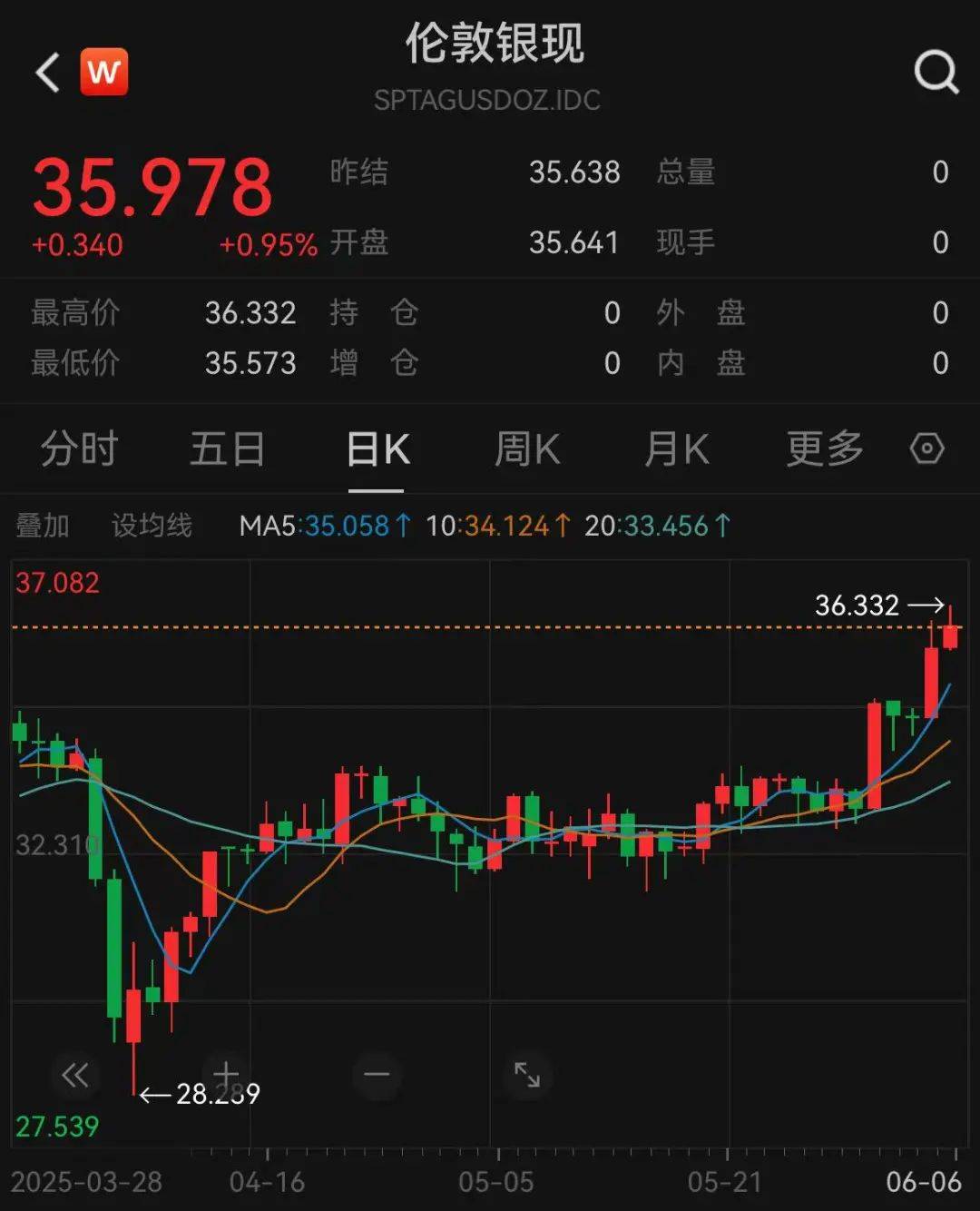
金价高位震荡,白银狂飙。 市场普遍分析认为,随着关税政策的调整,全球贸易格局面临重塑,金属市场的供应链稳定性受到冲击。投资者为了规避可能的风险,将资金转移至相对 稳定且具有避险属性的贵金属市场,白银作为其中的重要一员,自然成了资金流入的方向。这种基于宏观政策变动引发的市场行为,直接推动了白银价格 近日,贵金属市场上演了一场令人瞩目的行情。 现货白银价格大幅飙升,一度涨幅超过4.5%,突破关键的36美元/盎司整数关口,达到了自2012年2月以来的最高水平。尽管在收盘时价格有所回落,但仍 收报于35.63美元/盎司。 今年以来,现货白银累计涨幅已达约24%,展现出强劲的上升势头。投资白银的时机到了吗?后市会怎么走? 白银价格涨幅超过黄金 市场数据显示,本周现货黄金价格累计上涨约0.6%,而现货白银的累计涨幅却超过9%,站上35美元/盎司关口,其间更是一度突破36美元/盎司关口,为 2012年2月以来首次。 有分析人士表示,这种分化主要由金银比修复逻辑、白银特有属性及市场情绪共振驱动所致。最近一段时间,金银价格比一度升至1比100,相当于1盎司 黄金可以换100盎司白银,已经远远高于历史均值,这一极端比值暗示要么白 ...

【UNFX课堂】美国5月非农前瞻:就业市场寒意渐浓,降息预期再受考验
Sou Hu Cai Jing· 2025-06-06 03:41
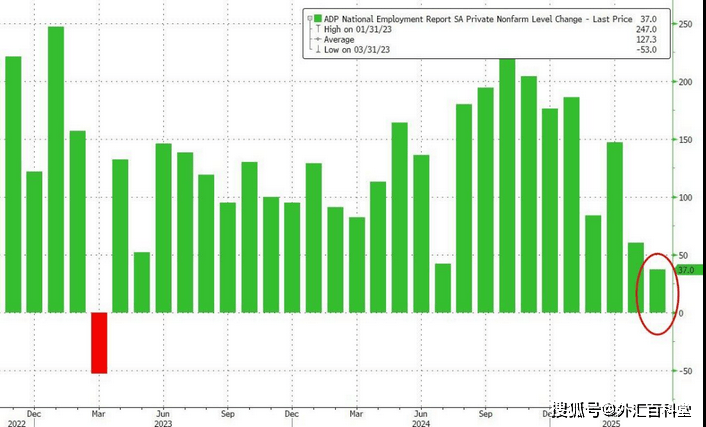
Core Viewpoint - The upcoming US May non-farm payroll report is anticipated to reveal significant cooling in the labor market, as indicated by a series of concerning leading indicators, particularly the disappointing ADP employment data [1][3]. Employment Data - The ADP report for May showed only 37,000 new jobs added, far below the expected 114,000, marking the lowest figure since March 2023 and the largest deviation from expectations in nearly three years [1][3]. - Job losses were noted in the goods-producing sector, with a decrease of 2,000 positions, while the service sector saw a modest increase of 36,000 jobs, primarily driven by leisure and hospitality (+38,000) and finance (+20,000) [3]. - Small businesses (fewer than 50 employees) were particularly affected, losing 13,000 jobs, reflecting the direct impact of macroeconomic policy uncertainty on these vulnerable entities [3]. Economic Indicators - Initial jobless claims rose to 247,000, exceeding expectations and reaching an eight-month high, with the four-week moving average also at its highest since November 2021, suggesting prolonged unemployment durations [4]. - The ISM non-manufacturing PMI unexpectedly fell to 49.9 in May, indicating contraction in business activity for the first time since mid-2022, attributed to policy uncertainties affecting order delays [4]. Policy Uncertainty - Current policy uncertainties, especially regarding tariffs, are seen as a core factor contributing to the unclear economic outlook, with potential cost increases looming if negotiations fail [5]. - The upcoming non-farm payroll report is crucial for understanding structural changes in employment, particularly in the goods-producing sector, small businesses, and temporary jobs [5]. Market Reactions - Market consensus for new non-farm jobs has dropped to 130,000 from a previous 177,000, with some institutions predicting as low as 125,000 [7]. - The unemployment rate is expected to remain at 4.2%, but a rise to 4.3% or higher could signal recession risks [7]. - Average hourly wage growth is projected to slightly increase to 0.3%, raising concerns about a potential wage-inflation spiral due to high labor costs and declining productivity [7]. Short-term Volatility - The release of employment data is likely to cause significant volatility in stock, bond, and currency markets, similar to the reactions following the ADP data release [8]. - Current interest rate futures reflect expectations of at least two rate cuts by the Federal Reserve this year, with increased bets on a September rate cut if unemployment rises significantly [8].
黄金跳水!价格击穿3400美元/盎司
Sou Hu Cai Jing· 2025-06-05 15:00
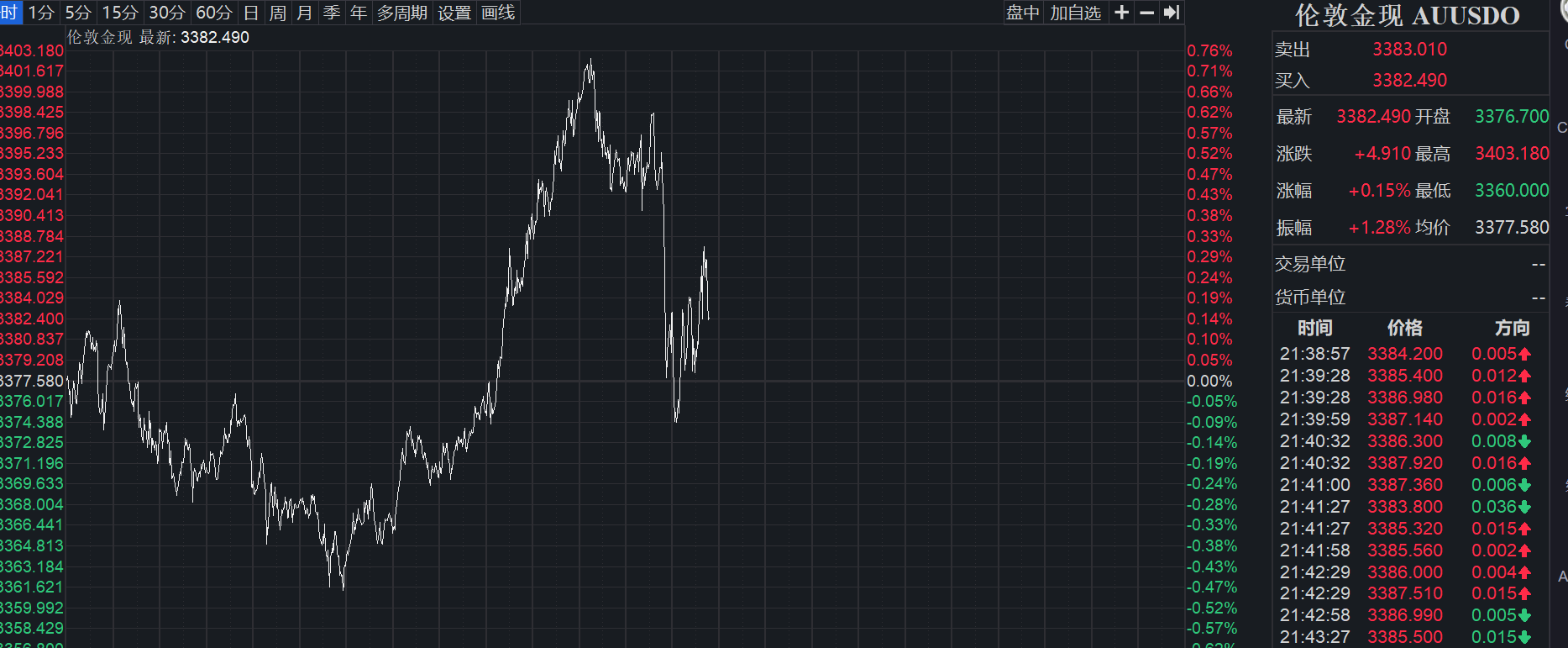
今年以来黄金表现强劲,出乎不少机构的预料,现货黄金盘中一度触及3499.45美元/吨,年内涨幅逼近30%。华尔街虽然连续"撕报告",但是仍然难赶上黄 金的上涨幅度。 道富环球投资管理对金价最新的中期走势持乐观态度,认为在多种策略性因素及结构性因素推动下,金价前景仍然乐观。该行预期今年金价下限将会到更高 水平,由原本的每盎司2000美元,上升至3000美元。今年余下时间,黄金市场将过渡到3000美元以上的波动区间,预期未来12至24个月内,可测试4000至 5000美元。 道富环球指出,金价上行受五大主题支撑,分别是(1)黄金ETF流入金额潜在上升;(2)中国买入黄金的消费者增加;(3)央行对黄金需求保持强劲; (4)替代性货币需求及全球债务上升,支持金价上涨;(5)美联储仍会减息。 此外,一些策略性因素如贸易政策的不确定性、经济衰退风险也在推动金价。 21世纪经济报道记者 叶麦穗 广州报道黄金盘中跳水,盘中已经跌破3400美元/盎司。 道富环球表示,基准情境下,虽然包括中美在内的高关税税率已下降,但贸易政策的不确定性,加上地缘政治紧张局势仍会在今年余下时间占主导地位,同 时通胀压力仍在,限制美联储减息空间。 ...


张尧浠:中东局势升级、金价维持三角形趋势调整待攀升
Sou Hu Cai Jing· 2025-06-01 23:56
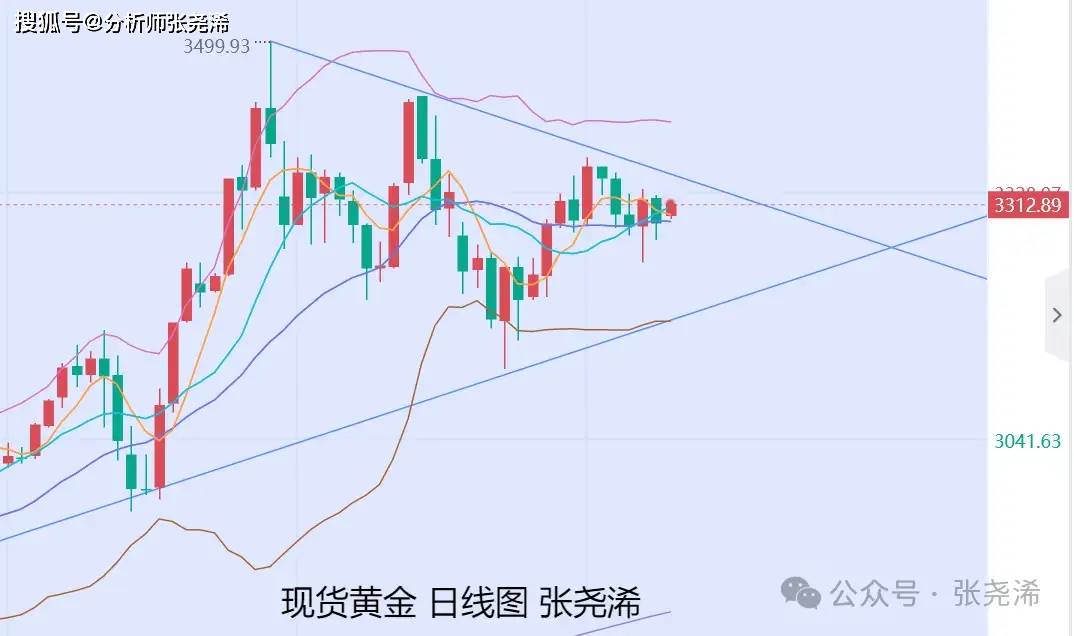
Core Viewpoint - The gold market is experiencing a triangular trend adjustment, with potential for future price increases despite recent fluctuations and geopolitical tensions [1][7]. Price Movement Summary - Gold prices opened the week at $3354.98, reached a high of $3356.39, and fell to a low of $3245.36, closing at $3291.93, down $65.77 or 1.96% from the previous week's close of $3357.70, with a weekly range of $112.34 [1][3]. - The price is supported by the 10-week moving average, indicating potential for a rebound [1][9]. Market Influences - The U.S. dollar index initially strengthened but later retreated, impacting gold prices [3]. - Concerns over international trade and a decrease in pessimism regarding the U.S. economy contributed to the recent price movements [3][7]. - Geopolitical risks, including conflicts in the Middle East, continue to influence market sentiment and gold prices [3][7]. Technical Analysis - The monthly chart indicates that gold prices have been in a volatile adjustment phase without breaking below the 5-month moving average, suggesting a potential for continued wide-ranging fluctuations [8]. - The weekly chart shows that despite recent weakness, gold closed above the 10-week moving average, maintaining a bullish outlook [9]. - The daily chart indicates that gold is positioned above the expansion line, with potential to test resistance near $3500 [11]. Economic Indicators - Upcoming economic data releases, including the U.S. manufacturing PMI and construction spending, are expected to influence market sentiment and gold price movements [5][7]. - The Federal Reserve's concerns about stagflation and economic recession risks may lead to expectations of interest rate cuts, which could support gold prices [7].
特朗普拟启动全球15%关税,贸易市场或再现波澜
Sou Hu Cai Jing· 2025-05-30 09:52
一、关税博弈升级:白宫绕过国会启动"替代方案" 当地时间5月29日,特朗普政府在联邦巡回上诉法院暂时恢复关税政策后,紧急推出"PlanB"——拟在150天内对全球进口商品征收15%统一关税,覆盖汽 车、电子、机械等核心品类。这一政策通过援引《1962年贸易扩展法》第232条款,以"国家安全"为由绕过国会授权,直接对进口商品实施全面加税。 根据白宫声明,该计划将分阶段实施:第一阶段(6月1日-9月30日)对钢铁、铝制品征收25%关税;第二阶段(10月1日-12月31日)将税率扩展至汽车及 零部件、半导体等关键领域,最终实现15%统一关税。此举旨在回应国际贸易法院对《国际紧急经济权力法》(IEEPA)的裁决,避免重蹈4月2日"对等 关税"被暂停的覆辙。 值得注意的是,特朗普政府在声明中特别强调,若贸易伙伴在60天内未达成"对等关税协议",将额外加征10%惩罚性关税。这一"胡萝卜加大棒"策略已引 发欧盟、日本等主要贸易伙伴的强烈反弹。欧盟委员会发言人表示,将立即启动WTO争端解决程序,并考虑对美农产品、飞机等实施报复性关税。 二、经济数据疲软叠加政策不确定性,黄金避险属性凸显 地缘方面,特朗普政府威胁于6月1日对欧 ...

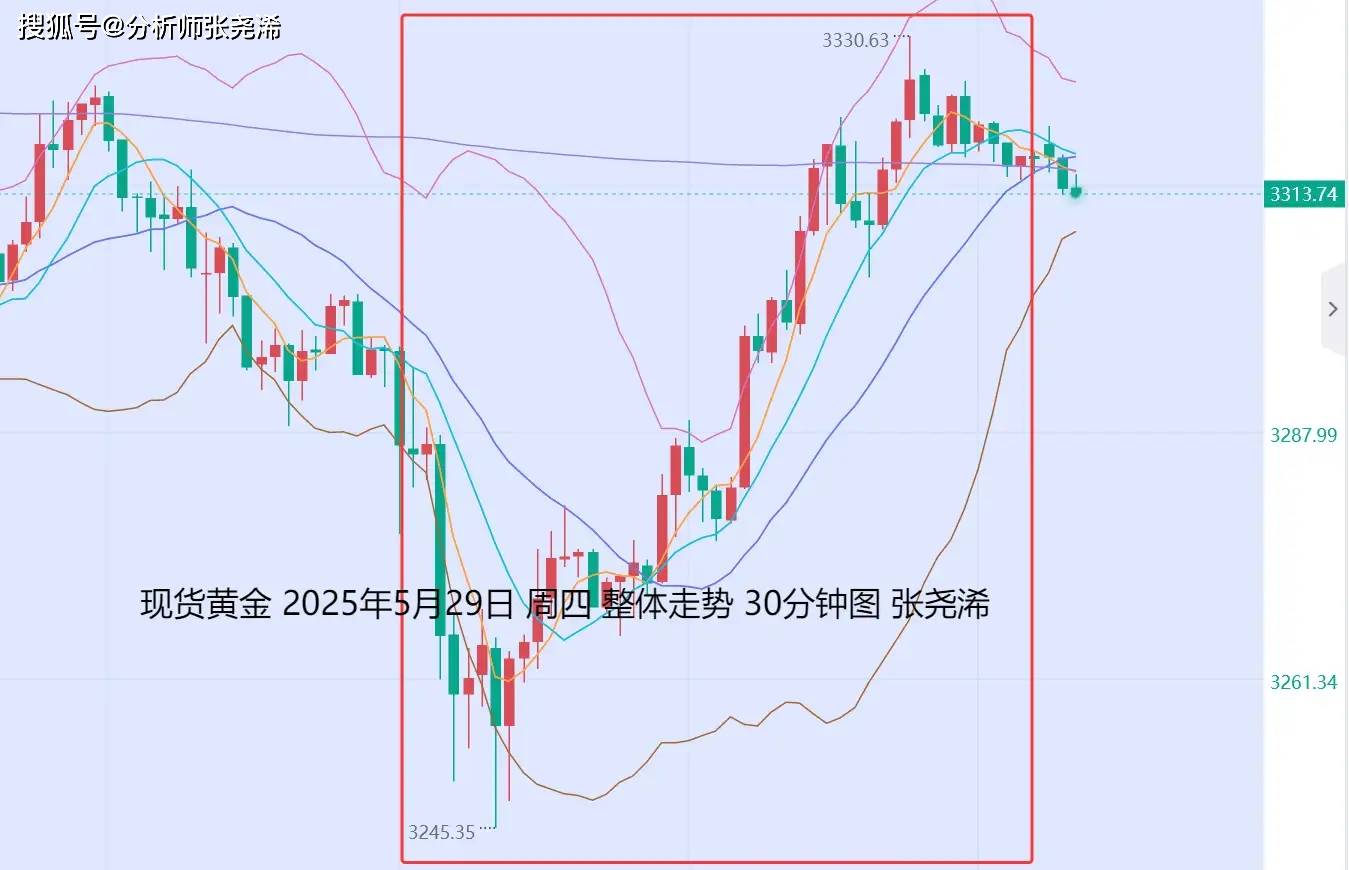
张尧浠:初请疲软提升滞胀风险、金价触底回升前景仍偏强
Sou Hu Cai Jing· 2025-05-29 23:48
Core Viewpoint - International gold prices experienced fluctuations, initially declining before rebounding, indicating a short-term bullish trend, but still facing resistance from a downward trend line [1][3][5]. Price Movement Summary - Gold opened at $3287.32 per ounce, dropped to a low of $3245.36, then rose to a high of $3330.38, closing at $3317.46, with a daily range of $85.02 and a gain of $30.14, or 0.92% [1]. - The market anticipates that any pullback could present a buying opportunity due to the recent recovery pattern [3]. Influencing Factors Summary - Technical pressures and a U.S. court ruling against President Trump's tariffs initially pressured gold prices, but support from buying interest and concerns over stagflation and recession risks led to a rebound [3][7]. - The dollar index showed weakness, which typically supports gold prices, while U.S. Treasury yields had limited impact on gold [5][7]. Economic Indicators Summary - Upcoming economic data releases, including the U.S. core PCE price index and consumer confidence indices, are expected to influence market sentiment, with a general outlook leaning towards initial bullishness followed by potential bearishness [5][12]. Technical Analysis Summary - Monthly charts indicate that gold prices are in a volatile adjustment phase, maintaining above the May moving average, suggesting a continued bullish trend if historical highs are not breached [10][12]. - Weekly charts show a rebound above the 5-week moving average, indicating strengthened bullish momentum and potential for further gains towards $3500 [12]. - Daily charts reveal a bullish triangle pattern, suggesting that any further declines could be seen as buying opportunities [14].