
经济转型

Search documents
中航证券首席经济学家董忠云:经济积极转型、资本市场改革下A股或持续走强
Zheng Quan Ri Bao Wang· 2025-07-25 11:05
Group 1 - The A-share market is experiencing a high profit effect, with the Shanghai Composite Index reaching new highs for the year, driven by increased market activity and a daily trading volume of approximately 1.9 trillion yuan [1] - Various funding types, including margin financing, newly issued active equity funds, insurance capital stakes, and foreign capital net purchases, are showing improvement, indicating a consensus among major investors regarding the positive outlook for A-shares [1] - The 20th Central Committee's third plenary session has laid out a systematic deployment for comprehensive deepening of reforms, establishing a framework for China's economic transformation and setting the stage for a potential economic bull market [1][2] Group 2 - Historical data shows that markets often stabilize and experience upward trends following the third plenary sessions, with average increases of 29.53%, 49.47%, and 45.23% over 1, 3, and 5 years respectively after previous sessions [2] - The current economic transformation is expected to shift from traditional sectors like real estate and infrastructure to new economic drivers such as technological innovation and domestic consumption [2][3] Group 3 - The 2025 government work report emphasizes boosting consumption and investment efficiency, with a focus on expanding domestic demand and developing a modern industrial system [3] - Policies aimed at reducing overcapacity and enhancing industrial productivity are being implemented, which are crucial for the current economic transformation [3][4] Group 4 - The effectiveness of previous policies is becoming evident, with improvements in financial data and increased confidence in the market, as seen in the rise of various resource prices and industry indices [4] - The upcoming "14th Five-Year Plan" conclusion and the "15th Five-Year Plan" preparation are expected to drive market optimism, with a focus on stabilizing and activating the capital market and promoting technological innovation in private enterprises [5][6]
上半年信贷总量增长结构优化 金融精准滴灌重点领域
Zheng Quan Ri Bao· 2025-07-23 17:19
Core Insights - The People's Bank of China reported a stable growth in total loans, indicating enhanced economic recovery momentum [1][2] - The structure of loans is optimizing, with significant increases in loans to small and micro enterprises, agricultural loans, and loans supporting technological innovation [1][3] Loan Growth Overview - As of the end of Q2 2025, the total balance of RMB loans reached 268.56 trillion yuan, a year-on-year increase of 7.1%, with an addition of 12.92 trillion yuan in the first half of the year [1] - Corporate loans accounted for 89% of the new loans, with an increase of 11.5 trillion yuan, highlighting the strong demand from enterprises [2] Sector-Specific Loan Trends - Green loans reached a balance of 42.39 trillion yuan, growing by 14.4% since the beginning of the year, with an increase of 5.35 trillion yuan in the first half [3] - Loans to technology-based small and medium-sized enterprises (SMEs) increased significantly, with a loan balance of 3.46 trillion yuan, reflecting a year-on-year growth of 22.9% [3] Future Outlook - The loan growth rate is expected to remain stable, with further optimization in structure, particularly in technology and green sectors [4] - The central bank is anticipated to enhance financial support for the real economy, with new loan disbursements expected to maintain a rapid growth trend [4][5]
金信期货:金信期货日刊-20250723
Jin Xin Qi Huo· 2025-07-23 08:58
Report Industry Investment Rating No information provided in the content. Core Viewpoints - Based on historical patterns and the current policy - economic environment, it is likely that a dual - bull market for stocks and commodities will reappear from 2025 to 2026. Commodities will lead the way first, and the stock market will experience a full - scale upsurge after profit realization. In the context of the "Fed rate - cut cycle" and the "initiation of the restocking cycle", future commodity demand may shift from a structural recovery to a full - scale expansion, driving up the prices of non - ferrous metals, crude oil, and energy - chemical products. The stock market is currently in the early stage of a bull market and is about to transition to a subsequent profit - driven stage. In the second half of 2025, the Shanghai Composite Index is expected to break through 4,000 points and rise at an accelerated pace. If the "anti - involution" reform can effectively address the negative feedback of insufficient domestic demand and over - capacity, Chinese assets may undergo a systematic revaluation comparable to that in 2007 [21]. Summary According to Relevant Catalogs 2005 - 2007 Double - Bull Market Characteristics - **Stock Market Evolution Path**: In June 2005, the Shanghai Composite Index hit a historical low of 998 points. Then, catalyzed by the split - share structure reform policy, it rebounded to 1,300 points and entered a six - month sideways oscillation period. Starting in 2006, driven by over - heated economy and excessive liquidity, the index started an epic rally, reaching a historical peak of 6,124 points in October 2007, with a cumulative increase of 513.6% [5]. - **Commodity Leading Start**: The commodity market started half a year earlier than the stock market. In the summer of 2006, against the backdrop of accelerated global industrialization (especially high infrastructure and real - estate investment in China) and a weakening US dollar, the prices of industrial products such as copper, zinc, and crude oil entered a bull market first. During the 2004 - 2006 interest - rate hike cycle, the price of copper increased by 144.3%, crude oil by 105.6%, and the precious metal gold by 39.1% [5]. - **Core Driving Logic**: This market was essentially driven by both "fundamentals + liquidity". The split - share structure reform removed institutional constraints, high - speed economic growth boosted corporate profits, and a surge in trade surplus and RMB appreciation expectations led to excessive liquidity, jointly driving up asset prices [8]. Similarities and Differences between the Current Market and the 2005 - 2007 Cycle Similarities - **Policy - Driven Starting Point**: Both bull markets started with major institutional reforms. In 2005, the split - share structure reform solved the problem of non - tradable shares. The current round focuses on the "anti - involution" policy, targeting over - capacity and low - price competition to promote supply - side clearance [12]. - **Sideways Accumulation Phase**: The stock market experienced a long - term oscillation after the initial policy stimulus. In 2005, it traded sideways at 1,300 points for half a year. In the current round, after the policy bottom was established in September 2024, it traded sideways for about eight months until the commodity bull market spread to the cyclical sectors of the stock market in June 2025 [12]. - **Commodities Leading the Stock Market**: Commodities reacted earlier than the stock market. In 2006, the commodity market started half a year earlier than the stock market. Since June 2025, ultra - oversold commodities such as coking coal, polysilicon, and lithium carbonate have rebounded significantly, with a much faster increase rate than the stock market [12]. Differences - **Policy Focus Shift**: In 2005, the focus was on demand stimulation (real - estate marketization + export tax rebates). The current round focuses on supply optimization (a unified national market + elimination of backward production capacity), and the covered industries have expanded from traditional steel and coal to emerging fields such as photovoltaics and lithium - ion batteries [13]. - **Economic Structure Transformation**: In 2005, the economy relied on investment and exports. Currently, it needs to rely on manufacturing upgrading and consumption recovery under the downward pressure of the real - estate market [14]. Policy Analysis - **2005 Reform**: The split - share structure reform in 2005 solved the historical problem of non - tradable shares, achieved a fully tradable market, and attracted large - scale entry of foreign and domestic funds, laying a liquidity foundation for the bull market. Meanwhile, "monetization of shantytown renovation" digested real - estate inventory, and infrastructure investment grew at an average annual rate of over 20%, directly boosting the demand for commodities such as steel and non - ferrous metals [17]. - **2024 - 2025 "Anti - Involution"**: The policy core from 2024 to 2025 has shifted to solving "involution - type over - capacity". Its framework has evolved from a concept to a systematic governance approach. The deep - seated logic is to break the vicious cycle of "increasing volume without increasing revenue". In July 2024, the Political Bureau meeting first proposed preventing "involution - type vicious competition", focusing on industry self - discipline. In July 2025, the meeting of the Central Financial and Economic Affairs Commission upgraded it to "legally governing low - price disorderly competition and promoting the orderly exit of backward production capacity", targeting local protectionism and the bundling of investment - promotion interests, which has a significant impact on both traditional industries led by steel and cement and emerging industries led by photovoltaics and new - energy vehicles [18]. Commodity - to - Stock Market Conduction Logic - **2006 - 2007**: Commodities started first in 2006. Driven by the resonance of China's accelerated industrialization and the global inventory - replenishment cycle, the supply and demand of metals such as copper and aluminum and crude oil tightened. The price of copper rose from $2,980 to $7,280 (a 144.3% increase), and crude oil rose from $35.76 to $73.52 (a 105.6% increase). The stock market reacted later in 2007. The rise in commodity prices boosted corporate profits, with the profit growth rate of resource - related listed companies exceeding 100%, leading to a rally in cyclical stocks. The average increase of the non - ferrous metals sector was 400 - 500%, and coal stocks rose by more than 300%, and the rally spread to other sectors [19]. - **2025 Market**: The current commodity bull market started in June this year, earlier than the overall start of the stock market, but has significantly spread to relevant A - share sectors. Recently, coking coal, coke, soda ash, polysilicon, lithium carbonate, etc. have led the gains. The price of coking coal has rebounded by more than 50% from the bottom, and the price of polysilicon has broken through 50,000 yuan/ton from around 30,000 yuan/ton. The main driving factors include a reversal of policy expectations, industry losses forcing change, and the release of restocking demand. Since June, the cyclical sectors have responded to the rise in commodity prices first, showing a "commodity - mapped" increase [20]. Investment Recommendations - Build long - term positions in long - cycle scarce commodities such as copper, aluminum, and silver and hold them for the long term. - Build long - term positions in stock - index futures or other stock - related assets and hold them across years for the long term [23].
前海开源国企精选混合发起A:2025年第二季度利润37.38万元 净值增长率2.48%
Sou Hu Cai Jing· 2025-07-22 08:45
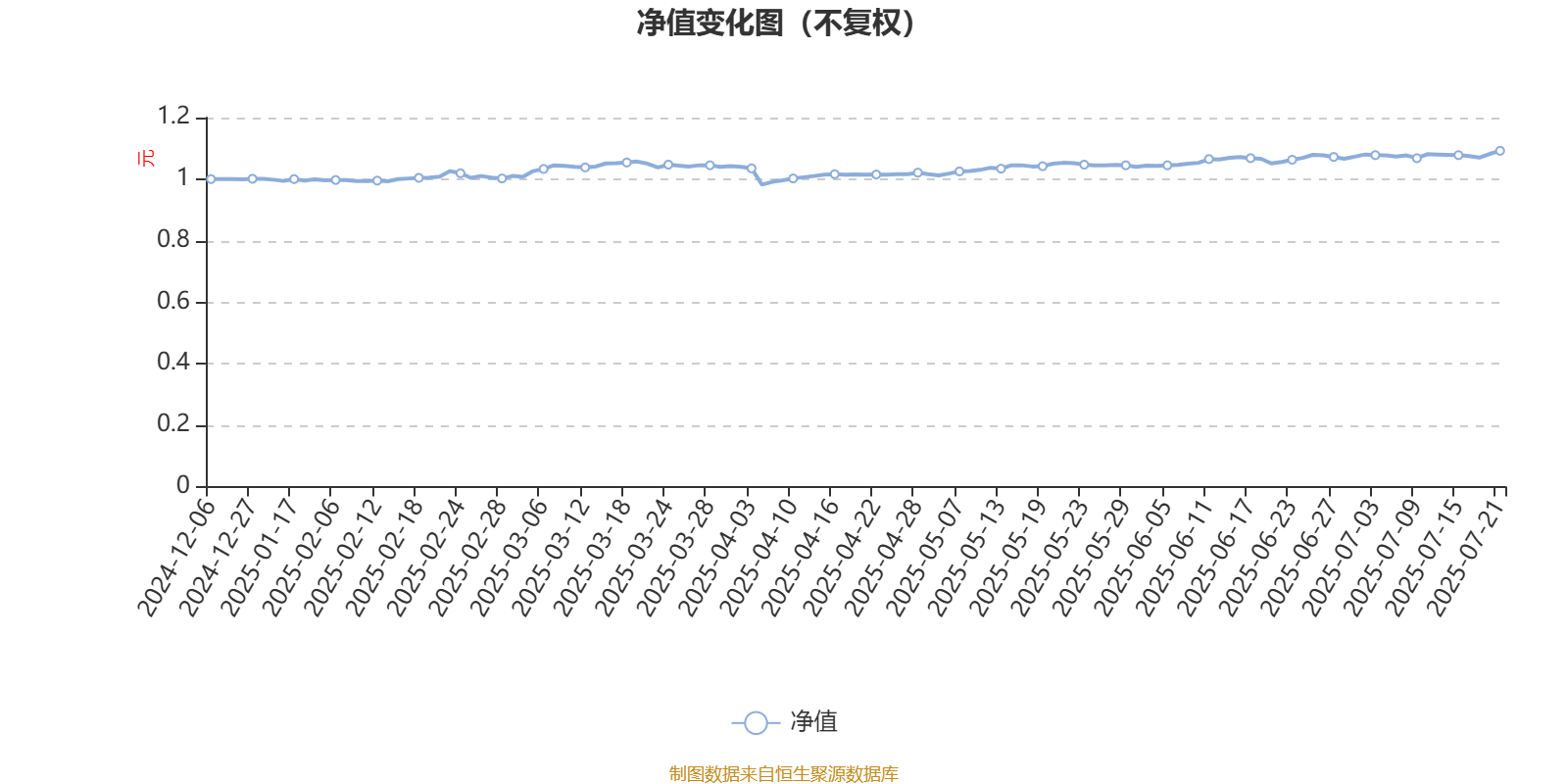
Group 1 - The core viewpoint of the article highlights the performance and strategy of the AI Fund Qianhai Kaiyuan State-owned Enterprise Selected Mixed Fund A, which reported a profit of 373,800 yuan in Q2 2025, with a net asset value growth rate of 2.48% [3] - As of July 21, 2025, the fund's unit net value was 1.092 yuan, and the fund manager, Tian Wei, oversees seven funds, with the highest one-year growth rate of 25.73% for the Qianhai Kaiyuan Hong Kong and Shanghai Consumer Theme Mixed A fund [3][4] - The fund management indicated that their investment strategy during the tariff war focused on companies with strong business resilience, low valuations, and excellent shareholder returns, which helped mitigate risks from the market during the tariff war's early phase [3] Group 2 - Looking ahead, the market's concerns about external pressures on the Chinese economy are expected to decrease, with more focus on internal economic changes, despite ongoing pressures in traditional sectors like real estate [4] - The fund's high concentration in holdings is noted, with the top ten stocks as of Q2 2025 including China Mobile, China Construction Bank, and others, indicating a strategic preference for quality state-owned enterprises [4]

"以不变应万变"?景顺长城新兴成长A二季度持仓未动,四年亏损238亿收费22亿,垫底百亿权益类基金
Xin Lang Ji Jin· 2025-07-22 08:26
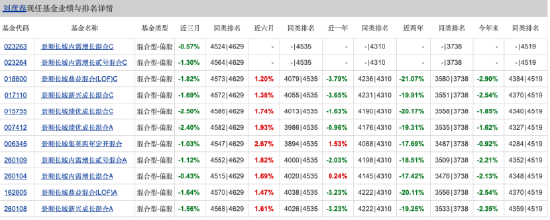
Core Insights - The article discusses the performance and investment strategies of Liu Yanchun, a fund manager overseeing several large-scale funds, particularly focusing on the second quarter of 2025 and the challenges faced by his flagship fund, Invesco Great Wall Emerging Growth A [1][5]. Fund Performance - Liu Yanchun manages six funds with a total scale of 36.43 billion yuan, but all have shown poor performance, with year-to-date returns mostly negative and rankings in the bottom 10%-5% of their categories [1][2]. - The flagship fund, Invesco Great Wall Emerging Growth A, has declined by 2.35% year-to-date and 5.46% in the second quarter, ranking at the bottom among its peers [1][2]. - Over the past two years, the fund has experienced a drop of over 19%, with specific declines of 20.11% for Invesco Great Wall Dingyi Mixed A and 19.31% for Invesco Great Wall Performance Growth Mixed A [1][2]. Investment Strategy - The fund's top ten holdings remain unchanged, focusing on leading companies in consumption and healthcare, including Haida Group, Kweichow Moutai, and Mindray Medical [3]. - Despite maintaining these positions, the fund has reduced its stakes in several key holdings, including Haida Group and Kweichow Moutai, indicating a cautious approach amid market volatility [3]. Economic Outlook - Liu Yanchun highlights the uneven resilience of the Chinese economy, with strong manufacturing and export performance but pressure on prices, leading to a "price for volume" scenario [5][6]. - The real estate sector continues to be a significant drag on investment, which remains in double-digit negative growth, compounded by cautious local government actions [6]. - There is an expectation of a shift in policy focus towards long-term transformation and high-quality development, with a warning about potential impacts from overseas monetary easing on China's export structure and capital market liquidity [7]. Market Sentiment - Despite ongoing challenges such as weak domestic demand and prolonged low prices, there is a growing confidence in the prospects for economic transformation, with expectations that the real estate sector's negative impact will diminish over time [7][8]. - The fund manager expresses a commitment to the equity market, particularly favoring high-quality companies that may experience valuation compression in the short term, emphasizing the importance of a company's competitive edge and management capabilities for long-term value [8].
策略周评 | 预期好转,市场趋势向好
Sou Hu Cai Jing· 2025-07-21 03:42
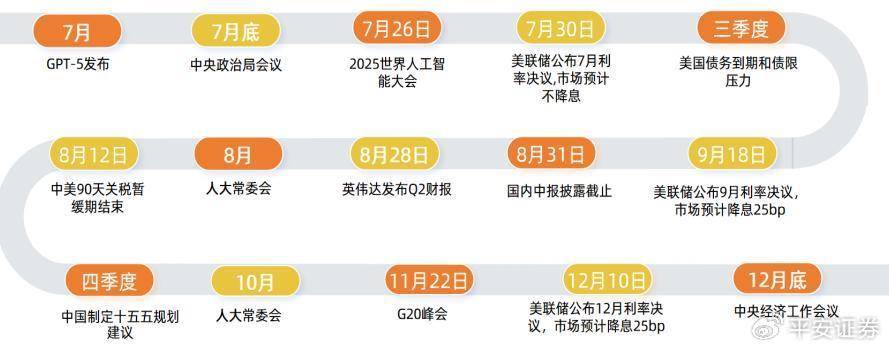
Market Overview - Global stock markets experienced a broad recovery, with domestic equities outperforming overseas markets, particularly in the Hong Kong and ChiNext indices, as the Shanghai Composite Index stabilized above 3500 points [1][16] - The market sentiment improved due to easing tensions between China and the U.S., leading to positive expectations for negotiations and a rise in incremental capital inflows driven by enhanced profitability from mid-year earnings reports [1][16] - The overall pre-announcement profit rate for companies reporting mid-year results reached 44%, indicating structural improvements in earnings, particularly in the TMT, utilities, and transportation sectors [1][16] Economic Data Insights - In June, new social financing increased by 4.2 trillion yuan, showing a year-on-year increase of 0.9 trillion yuan, with a balance growth rate of 8.9% [5] - The GDP growth rate for Q2 was 5.2%, slightly below the previous quarter's 5.4%, while industrial output in June rose by 6.8%, exceeding expectations [7][8] - Retail sales in June totaled 42.287 billion yuan, growing by 4.8% year-on-year, indicating a slight decline in domestic demand compared to previous months [9][10] Sector Performance and Strategy - The technology sector is expected to benefit from improved market sentiment and structural reforms, with the "new quality productivity" becoming a long-term focus, particularly in the context of AI advancements [2][17] - Financial sectors are likely to attract new capital due to increased long-term assessments by insurance companies, while consumer leaders are positioned for recovery amid low valuations and supportive domestic policies [2][17] - The Hong Kong market is anticipated to perform better than A-shares in the second half of the year, driven by strong earnings from technology leaders and high dividend yields attracting institutional investments [18] International Market Dynamics - U.S. stock markets showed resilience with the S&P 500 and Nasdaq reaching new highs, supported by strong earnings in the financial and technology sectors, despite some volatility due to speculation around Federal Reserve policies [19] - The U.S. inflation data indicated a moderate rise, with the core CPI at 2.9%, suggesting that tariff impacts on inflation have yet to be fully realized [11][12] - The bond market remains stable, with short-term yields outperforming long-term ones, as the market anticipates a potential rate cut by the Federal Reserve in September [21]
创大盘ETF: 招商创业板大盘交易型开放式指数证券投资基金2025年第2季度报告
Zheng Quan Zhi Xing· 2025-07-17 12:24
Core Viewpoint - The report highlights the performance and investment strategy of the招商创业板大盘交易型开放式指数证券投资基金 for the second quarter of 2025, indicating a net asset value growth of 5.31% compared to the benchmark growth of 4.13% during the same period [14]. Fund Overview - The fund is a trading open-ended index fund, primarily tracking the创业板大盘指数, with a total fund share of 267,863,172.00 shares at the end of the reporting period [2][20]. - The fund aims to minimize tracking deviation and error, with an expected daily tracking deviation of no more than 0.2% and an annual tracking error of no more than 2% [2]. Investment Strategy - The fund employs a full replication method to construct an index investment portfolio based on the composition and weight of the underlying index [2]. - The management strategy includes macroeconomic analysis and risk management principles, focusing on interest rate expectations and asset allocation strategies to manage bond investments [3][4]. Financial Performance - The fund's net asset value growth rate for the past three months was 5.31%, while the benchmark's growth rate was 4.13% [14]. - Over the past year, the fund achieved a return of 35.21%, outperforming the benchmark return of 31.82% [10]. Asset Allocation - As of the end of the reporting period, the fund's assets were primarily allocated to stocks (99.26%), with a minimal allocation to bonds (0.02%) [15]. - The manufacturing sector represented the largest portion of the fund's investments, accounting for 70.45% of the total asset value [15]. Shareholder Activity - The total subscription during the reporting period was 70,000,000.00 shares, while total redemptions amounted to 112,000,000.00 shares, resulting in a decrease in total fund shares [20]. Compliance and Governance - The fund management adheres to relevant laws and regulations, ensuring compliance in all trading activities and maintaining a fair investment decision-making process [12][13].


“杭州六小龙”两位创始人成香港特首智囊!
新浪财经· 2025-07-14 00:16
Group 1 - The article discusses the first meeting of the new Chief Executive's Advisory Group in Hong Kong, which took place from July 9 to 11, 2023, focusing on the Chief Executive's Policy Address and overall development of Hong Kong [1][2] - The new members of the Advisory Group include Dr. Zhu Min, former Vice President of the International Monetary Fund, and founders of two tech companies from Hangzhou, indicating a shift towards a younger and more tech-focused representation [2][6] - The meetings emphasized Hong Kong's unique advantages as an international financial center and its role as a gateway for mainland companies to go public [2][9] Group 2 - The Advisory Group is structured into three main themes: high-quality and sustainable economic development, innovation and entrepreneurship, and regional and global collaboration [9] - The article highlights the recent increase in IPO activities in Hong Kong, with 42 IPOs completed in the first half of 2025, raising over 1,070 million HKD, marking a 22% increase compared to the previous year [10] - There is a growing interest from companies in Southeast Asia and the Middle East to list in Hong Kong, reflecting the positive market sentiment and effective promotional efforts [11][12]

金融市场分析周报-20250711
AVIC Securities· 2025-07-11 03:46
Economic Indicators - China's manufacturing PMI for June is at 49.7%, a slight increase of 0.2 percentage points from the previous month[7] - Non-manufacturing PMI for June stands at 50.5%, also up by 0.2 percentage points[9] - Comprehensive PMI output index for June is 50.7%, rising by 0.3 percentage points compared to May[7] Market Analysis - The Shanghai Composite Index increased by 1.40%, while the Shenzhen Component Index rose by 1.25% during the week[5] - The average daily trading volume decreased to 14,413.96 billion CNY, down by 452.78 billion CNY from the previous week[25] - Financial sector stocks showed strong performance, with a 1.86% increase, while the technology sector faced a decline of 1.28%[5] Monetary Policy and Liquidity - The central bank conducted a net withdrawal of 13,753 billion CNY this week, with a total of 65,522 billion CNY in reverse repos executed[12] - The average weighted repo rate for overnight transactions fell to 1.3606%[12] - The liquidity environment is expected to remain stable in the upcoming week, with limited seasonal impacts anticipated[13] Bond Market Insights - The yield on 10-year government bonds decreased by 0.5 basis points to 1.641%[14] - Credit bond yields across various maturities have generally declined, with 1-year AAA-rated bonds yielding 1.6791%[21] - The net financing amount for credit bonds increased by 851.22 billion CNY, indicating a recovery in the market[17] Investment Outlook - The "Big and Beautiful" U.S. policy is expected to accelerate the weak dollar cycle, potentially leading global capital to seek refuge in Chinese assets[29] - The A-share market is anticipated to experience a gradual upward trend as the economy transitions, with a focus on technology and military sectors for investment opportunities[29] - Risks include potential tightening of monetary policy and unexpected economic recovery that could lead to a significant rebound in bond yields[30]
供需协同促进物价合理运行
Jing Ji Ri Bao· 2025-07-10 22:04
Core Viewpoint - The article emphasizes the need for a coordinated approach to stabilize market expectations, expand effective demand, and foster innovation to return prices to a reasonable range amid improving supply-demand balance [1][3][4]. Group 1: Price Trends - In June, the national Consumer Price Index (CPI) rose by 0.1% year-on-year after four consecutive months of decline, while the core CPI increased by 0.7%, marking the highest growth in nearly 14 months [1]. - Despite the marginal improvement, the overall price level remains low, with a cumulative CPI decline of 0.1% in the first half of the year [2]. Group 2: Economic Environment - The current low price levels are seen as a phase in the economic transformation process, influenced by both cyclical and structural factors, as well as short-term and long-term issues [2]. - External factors such as geopolitical tensions and increased tariffs from the U.S. have contributed to global economic slowdown and uncertainty in external demand, impacting domestic prices [2]. Group 3: Policy Recommendations - To stabilize expectations, it is crucial to break the negative cycle of "price decline—demand contraction" by providing clear and continuous policy signals, including a moderately loose monetary policy [3]. - Expanding effective demand is essential for economic recovery, which involves enhancing residents' income and consumption capabilities, as well as improving social security systems [4]. - Promoting innovation is necessary to avoid low-level price competition, encouraging a shift from price wars to competition based on technology and service [4].