
美林时钟

Search documents
2025年中信保诚基金投资者服务活动第7站:经济增速放缓就没有行情?你可能误解了A股的节奏
Xin Lang Cai Jing· 2025-12-09 08:53
Core Viewpoint - The article emphasizes that economic slowdown does not necessarily equate to a lack of investment opportunities in the stock market, highlighting historical instances where significant market rallies occurred during periods of economic challenges [3][4][14]. Group 1: Historical Market Performance - Historical data shows that major market uptrends in A-shares often occurred during economic slowdowns, such as from 1995 to 2001, 2013 to 2015, and 2019 to 2021, indicating a disconnect between economic growth rates and stock market performance [6][15]. - The A-share market has shown a strong recovery since late September 2024, with the Shanghai Composite Index rebounding from low levels and achieving new highs, supported by favorable policies [3][4][14]. Group 2: Policy Support and Market Dynamics - Recent policy measures aimed at boosting the capital market include encouraging long-term funds to enter the market and promoting consumer confidence, which are expected to enhance market vitality [4][14]. - The current market environment is characterized by a "slow bull" trend, driven by policy support rather than solely economic growth [4][14]. Group 3: Investment Opportunities and Trends - The article identifies two significant structural changes in China: aging population and declining birth rates, which are creating new investment opportunities, particularly in healthcare and technology sectors [5][15][16]. - The healthcare sector is highlighted as having strong demand due to the prevalence of chronic diseases among the elderly, with policies encouraging the development of health insurance products for this demographic [16]. Group 4: Market Segmentation and Investment Strategies - Different market segments are expected to perform variably based on fundamentals, policies, and investor preferences, with some previously popular sectors likely to experience only moderate growth in the current market phase [8][17]. - Investment strategies should consider asset allocation models like the "Merrill Lynch Clock," adjusting portfolios according to economic phases, and employing dollar-cost averaging as a method to manage market volatility [17].


章俊把脉2026:中国资产配置迎加减乘除新逻辑
2 1 Shi Ji Jing Ji Bao Dao· 2025-11-26 13:33
Core Viewpoint - The report emphasizes that China is at a pivotal moment characterized by "two changes and one leap," highlighting the global transformation and domestic economic transition towards new productive forces, particularly driven by artificial intelligence [1][2]. Group 1: Global Economic Context - The "3D challenges" of aging population, debt crisis, and de-globalization are reshaping the global economic landscape, with significant implications for government and market relationships [2]. - The global economy is expected to experience a "divergence and convergence" trend, with a narrowing growth gap between developed and emerging markets, particularly as the U.S. and China show signs of economic structural convergence [4][5]. Group 2: Domestic Economic Outlook - For 2026, China's economic growth is projected at around 5%, driven by increased domestic demand and a series of supply-side reforms aimed at addressing imbalances in the economy [6]. - The "new stage supply-side structural reform" will focus on reducing excess capacity, increasing leverage through fiscal measures, and accelerating the development of artificial intelligence and the digital economy [6][7]. Group 3: Investment Opportunities - The report suggests that the capital market is entering a historic revaluation opportunity, moving away from traditional cyclical thinking towards a new financial cycle focused on new productive forces [8]. - The shift in asset allocation from real estate to financial assets is expected to provide liquidity to the A-share market, with a notable increase in residents' willingness to invest in stocks and financial products [8].
【招银研究|资本市场专题】跨资产比较的分析框架——跨资产比较系列之一
招商银行研究· 2025-11-20 10:38
Group 1 - Cross-asset comparison is a systematic decision-making method aimed at scientifically comparing different types of assets, such as stocks, bonds, and commodities, to assess their relative attractiveness [9][10]. - The relative performance between different asset classes is often more important than the selection of individual securities within a single asset class, as evidenced by empirical studies showing that asset allocation strategies explain a significant portion of portfolio performance [13][16]. - The framework for cross-asset comparison provides a unified metric to measure all assets, reducing cognitive costs associated with understanding and comparing new assets [19][20]. Group 2 - The long-term growth trend of intrinsic value is crucial for understanding the sources of long-term investment returns, with structural factors being key drivers [5][45]. - Predictions for the long-term expected returns of various asset classes over the next 3-5 years indicate that A-shares are expected to see an increase in return levels, while domestic bond assets are expected to decline significantly [6][70]. - The expected annualized return for A-shares is projected at 4.3%, compared to 2.0% for interest rate bonds, highlighting the relative attractiveness of equity assets over fixed income [98]. Group 3 - The analysis framework incorporates macroeconomic factors such as liquidity, economic growth, inflation, and valuation, which are essential for understanding asset price movements [25][91]. - Market prices oscillate around their intrinsic value, and extreme valuation levels often signal significant investment opportunities or potential risks [5][77]. - The dynamic nature of risk management is emphasized, as traditional asset allocation strategies may expose portfolios to risks during specific macroeconomic conditions [31][86]. Group 4 - The article discusses the importance of understanding long-term structural factors that influence asset values, such as technological advancements and demographic changes [45][51]. - The expected returns and risks of major asset classes are assessed based on historical data and forward-looking analyses, with a focus on the underlying cash flow generation of assets [58][68]. - The framework for assessing market sentiment and cyclical fluctuations is integrated into the analysis, allowing for tactical timing strategies in asset allocation [77][95].

金融产品每周见:如何构建含有预期的多资产配置组合?-20251118
Shenwan Hongyuan Securities· 2025-11-18 12:13
Quantitative Models and Construction Methods 1. Model Name: Mean-Variance Model - **Model Construction Idea**: The model determines the optimal portfolio by balancing expected returns and risks, based on the mean and variance of asset returns[8] - **Model Construction Process**: 1. Define the portfolio return as a random variable 2. Use the expected return ($E[R]$) and variance ($Var[R]$) to measure the portfolio's performance 3. Solve the optimization problem to maximize expected return for a given level of risk or minimize risk for a given level of return - Formula: $ \text{Minimize: } \sigma_p^2 = \sum_{i=1}^n \sum_{j=1}^n w_i w_j \sigma_{ij} $ $ \text{Subject to: } \sum_{i=1}^n w_i = 1 $ Where $w_i$ is the weight of asset $i$, $\sigma_{ij}$ is the covariance between assets $i$ and $j$[8] - **Model Evaluation**: Flexible in adjusting portfolios based on expected returns and risks, but struggles to incorporate new market dynamics and subjective views[8] 2. Model Name: Black-Litterman Model - **Model Construction Idea**: Combines the Bayesian framework with the mean-variance model to incorporate subjective views into the portfolio optimization process[8] - **Model Construction Process**: 1. Start with a prior distribution of expected returns based on market equilibrium 2. Incorporate subjective views as additional constraints 3. Use the Bayesian approach to update the prior distribution with subjective views to form a posterior distribution - Formula: $ \Pi = \tau \Sigma w_{mkt} $ $ E[R] = \left( \tau \Sigma^{-1} + P^T \Omega^{-1} P \right)^{-1} \left( \tau \Sigma^{-1} \Pi + P^T \Omega^{-1} Q \right) $ Where $\Pi$ is the implied equilibrium return, $\tau$ is a scaling factor, $\Sigma$ is the covariance matrix, $w_{mkt}$ is the market portfolio weights, $P$ is the view matrix, $\Omega$ is the uncertainty matrix, and $Q$ is the view vector[8] - **Model Evaluation**: Flexible and allows integration of subjective views, but requires strong assumptions about return distributions and is computationally complex[8] 3. Model Name: Risk Parity Model - **Model Construction Idea**: Focuses on balancing the risk contribution of each asset in the portfolio rather than their weights[7] - **Model Construction Process**: 1. Calculate the risk contribution of each asset: $RC_i = w_i \cdot \sigma_i \cdot \rho_{i,p}$ 2. Adjust weights to equalize the risk contributions across all assets - Formula: $ RC_i = w_i \cdot \sigma_i \cdot \rho_{i,p} $ Where $RC_i$ is the risk contribution of asset $i$, $w_i$ is the weight of asset $i$, $\sigma_i$ is the standard deviation of asset $i$, and $\rho_{i,p}$ is the correlation between asset $i$ and the portfolio[7] - **Model Evaluation**: Enhances risk control and can incorporate multiple risk dimensions, but lacks a mechanism to optimize returns and may struggle with unrecognized risks[7] 4. Model Name: All-Weather Model (Bridgewater) - **Model Construction Idea**: Aims to achieve stable performance across all economic environments by focusing on risk parity under growth and inflation sensitivity[11] - **Model Construction Process**: 1. Classify assets based on their sensitivity to growth and inflation 2. Allocate weights to achieve risk parity across these dimensions - Formula: Not explicitly provided, but the model emphasizes balancing risk rather than returns[11] - **Model Evaluation**: Stable allocation structure with a focus on low-risk assets, but may underperform in specific market conditions due to its heavy reliance on bonds and cash[15] --- Model Backtesting Results 1. Mean-Variance Model - **Maximum Drawdown**: Exceeded 4% in some periods (e.g., 2018-2019), but quickly recovered[57] - **Sharpe Ratio**: Higher than benchmarks in optimistic scenarios, demonstrating strong risk-adjusted returns[57] 2. Black-Litterman Model - **Maximum Drawdown**: Similar to the mean-variance model, with better adaptability to subjective views[57] - **Sharpe Ratio**: Improved compared to the mean-variance model due to the integration of subjective views[57] 3. Risk Parity Model - **Maximum Drawdown**: Generally lower than the mean-variance model, reflecting its focus on risk control[57] - **Sharpe Ratio**: Moderate, as the model does not explicitly optimize returns[57] 4. All-Weather Model - **Maximum Drawdown**: Comparable to fixed-ratio models, with a focus on stability[15] - **Sharpe Ratio**: Similar to benchmarks, reflecting its conservative allocation[15] --- Quantitative Factors and Construction Methods 1. Factor Name: Monthly Frequency Slicing - **Factor Construction Idea**: Use historical slices of monthly data to reflect maximum drawdown and market sentiment[41] - **Factor Construction Process**: 1. Extract rolling 20-day returns for each year 2. Use the bottom 20% quantile to estimate pessimistic scenarios and maximum drawdown - Formula: $ \text{Max Drawdown} = \text{Min} \left( \frac{P_t - P_{peak}}{P_{peak}} \right) $ Where $P_t$ is the price at time $t$, and $P_{peak}$ is the peak price[41] - **Factor Evaluation**: Effective in capturing extreme market conditions, but limited in predicting long-term trends[41] 2. Factor Name: BootStrap State Space - **Factor Construction Idea**: Use BootStrap sampling to create a state space of asset returns under different scenarios[45] - **Factor Construction Process**: 1. Sample historical data with replacement to create new sequences 2. Calculate return distributions for pessimistic, neutral, and optimistic scenarios - Formula: $ F = B - \alpha \cdot C $ Where $F$ is the objective function, $B$ is the expected return under risk constraints, $C$ is the penalty for exceeding risk constraints, and $\alpha$ is the penalty parameter[50] - **Factor Evaluation**: Provides a robust framework for scenario analysis, but computationally intensive[45] --- Factor Backtesting Results 1. Monthly Frequency Slicing - **Maximum Drawdown**: Successfully captured extreme drawdowns in historical data, with 90% coverage for A-shares and Hong Kong stocks[40] - **Sharpe Ratio**: Not explicitly provided, but the factor is more focused on risk control[40] 2. BootStrap State Space - **Maximum Drawdown**: Achieved a 4% maximum drawdown target in most scenarios, with only minor deviations in extreme conditions[57] - **Sharpe Ratio**: Optimized under different scenarios, with higher ratios in optimistic environments[57]

中金2026年展望 | 大类资产:乘势而上
中金点睛· 2025-11-17 00:08
Group 1 - The core viewpoint of the article emphasizes the need to maintain an overweight position in gold and Chinese technology stocks while reducing exposure to commodities and dollar assets as the market trends evolve in 2026 [2][8] - The article identifies four key factors that could potentially alter the bullish trends of stocks and gold in 2026: economic growth turning, tightening policies, high valuations, and geopolitical shocks [4][42] - Historical analysis shows that the U.S. stock market has a long bullish phase, while Chinese stocks experience more frequent bull-bear switches, making the timing of market tops more critical for Chinese stocks [3][10] Group 2 - The article outlines the importance of accurately interpreting economic and policy signals to predict market tops, noting that signals from economic and policy dimensions are generally more reliable than those from liquidity, earnings, and valuation [14][28] - For gold, the article highlights that the key determinant for its market top is the Federal Reserve's policy, with historical data showing that four out of five gold bull markets peaked when the Fed began tightening [31][32] - The current economic environment is characterized by a weak recovery in China and a potential stagflation scenario in the U.S., which could support the continuation of the stock bull market while posing risks to the gold bull market [44]

2026年固定收益年度投资策略:新时代,新生态,再平衡
ZHESHANG SECURITIES· 2025-11-14 11:41
Asset Allocation - The investment research framework has evolved from the traditional Merrill Lynch clock to a Chinese-style monetary credit model, reflecting significant changes in China's economic development model and the diminishing role of investment in driving economic growth [12] - In the new era, liquidity is identified as a core factor influencing asset prices, with the monetary cycle remaining highly relevant. Additionally, international factors, exemplified by US-China relations, significantly impact export engines and cross-border capital flows, becoming crucial for capturing asset price changes [12] Historical Review of Stock and Bond Performance - The report reviews stock and bond performance since 2018, highlighting that in 2018, macroeconomic fundamentals were weak, leading to significant stock market declines while bonds provided good coupon returns. In 2019, equity markets experienced volatility, and bonds continued to offer protection [18] - The analysis indicates that from 2020 to 2025, equity markets have shown resilience driven by technology stocks and structural bull markets, while bonds have entered a bull market phase characterized by declining yields [18] Long-term Bond Market Trends - Historical data shows that each bond bull market corresponds with a downward trend in 10-year government bond yields, driven by the interplay of "debt bulls" and "asset scarcity" [20] - The current bond bull market has seen 10-year government bond yields reach new lows, indicating a significant shift in the bond market landscape [21] Equity Market Trends - The equity market is believed to be in a long-term upward trend, with the current phase identified as the third wave of a five-wave cycle. This phase is expected to last longer than previous cycles, indicating a gradual upward movement [25] - The report draws parallels with Japan's experience, noting that after the economic bubble burst in the 1990s, the Japanese stock market entered a long-term upward channel, supported by structural reforms and monetary easing [29] Core Investment Themes - The report emphasizes a bullish outlook on A-shares and Hong Kong stocks, driven by stable US-China relations and a supportive global monetary environment. It suggests that technology stocks will lead the market in the next 5-10 years [36] - The bond market is expected to maintain a volatile environment, with a focus on coupon strategies as interest rates are projected to fluctuate between 1.7% and 2.0% [36]
全网收听超6万,这期干货满满的配置话题访谈,说了什么?
中泰证券资管· 2025-11-14 07:02
Core Viewpoint - The podcast episode titled "When the Big Cycle Fails, Where is the New Macro Coordinate?" hosted by fund manager Tang Jun from Zhongtai Asset Management has gained significant attention, with over 60,000 listeners in a week, indicating a strong interest among investors in learning about macroeconomic frameworks and investment strategies [2][5]. Group 1: Framework Construction - The background and reasons for the effectiveness and ineffectiveness of the Merrill Clock are discussed [5]. - The "Credit-Money" framework is introduced, explaining how to describe the current macroeconomic state based on this framework [5]. - The current macroeconomic state leads to specific asset allocation conclusions [5]. Group 2: Allocation and Portfolio Construction - The distinction between active and passive allocation is made, highlighting the problems that active allocation can solve [9]. - Preparations required for engaging in active allocation are outlined [9]. - The role of FOF (Fund of Funds) in addressing specific issues is examined [9]. - The execution of strategic and tactical layers in investment is discussed [9]. Group 3: Reflections on Human Nature - The importance of understanding human behavior in the context of investment allocation is emphasized, inviting listeners to engage in a professional and rigorous intellectual exchange [6]. Group 4: Risk and Return Concepts - The concept of risk budgeting and how to construct a portfolio within a given risk budget is explained [9]. - The notion of return streams and which assets can represent different return streams is analyzed, drawing lessons from Bridgewater's practices [9]. - The significance of having a framework in investment decision-making is highlighted [9]. - The meaning of logic in investment and the application of probabilistic thinking in market timing are discussed [9].

中泰资管天团 | 唐军:配置是个“体力活”
中泰证券资管· 2025-11-06 11:39
Core Viewpoint - Asset allocation is a complex and multi-dimensional task, often referred to as "physical labor" due to the extensive research required to achieve effective configurations [1][2][27]. Group 1: Passive vs. Active Allocation - Passive allocation, which relies on diversification to reduce volatility, faces challenges in practice, particularly for domestic investors due to limited asset classes and the poor performance of key assets like A-shares [5][9][27]. - Active allocation aims to enhance returns beyond passive strategies by making informed predictions about expected returns, addressing the shortcomings of passive allocation [2][27]. Group 2: Issues with Passive Allocation - Determining expected returns using historical data can lead to "chasing performance," where investors favor assets that have recently performed well, skewing allocation models [5][9]. - The correlation between assets is not stable; for instance, the historical negative correlation between U.S. stocks and bonds has weakened since the 2008 financial crisis, impacting the effectiveness of diversification [6][9]. - The performance of passive allocation is heavily dependent on the underlying assets' returns and their correlations, which can be problematic in markets with limited asset classes [9][27]. Group 3: The Complexity of Active Allocation - Active allocation involves timing decisions, which many investors find challenging, leading to skepticism about its feasibility [17][19]. - While achieving a high accuracy rate in timing is difficult, even a modest success rate can significantly enhance investment returns when combined with sound risk management [18][19]. - The macroeconomic drivers influencing asset performance can change, necessitating continuous adjustments to research frameworks and strategies [21][27]. Group 4: Multi-Dimensional Decision Making - Effective asset allocation requires multiple low-correlation return streams to improve the probability of successful outcomes, as relying on a single asset is often insufficient [22][23]. - A structured decision-making framework that incorporates both strategic and tactical allocations can enhance the robustness of investment strategies [23][24]. - Strict risk budgeting is essential to ensure that asset allocations align with the overall risk tolerance of the portfolio, preventing forced liquidations during market fluctuations [24][25].

四季度债券或占优,关注十年国债ETF(511260)
Mei Ri Jing Ji Xin Wen· 2025-10-24 09:21
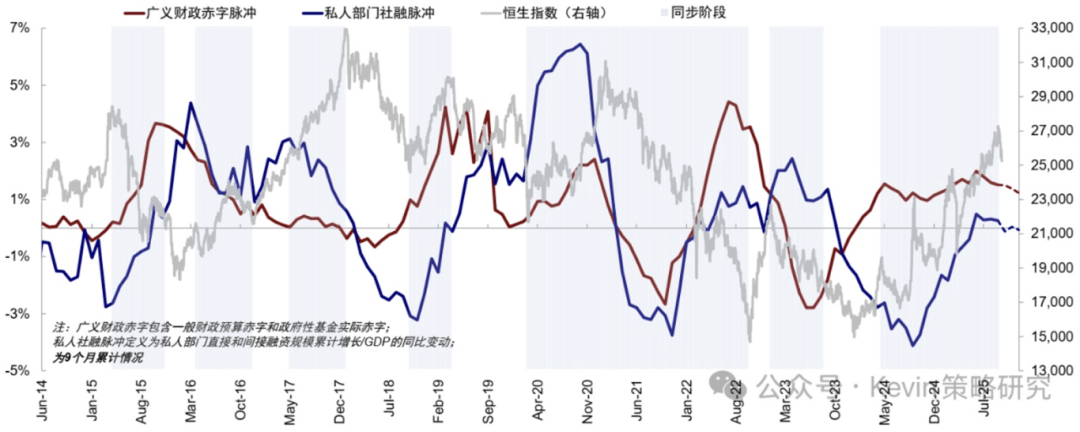
Core Viewpoint - The recent interplay of growth, dividend, and gold reflects a macroeconomic transition between old and new driving forces, with structural changes taking precedence over overall economic shifts [1] Group 1: Macroeconomic Environment - The coexistence of overall price decline and the robust development of AI indicates a complex macroeconomic landscape [1] - The framework of the Merrill Lynch clock is deemed less applicable to the current macro environment, suggesting analysis through the lens of "credit expansion" driven by growth and inflation [1] - Credit expansion is categorized into government credit expansion (fiscal deficit pulse) and endogenous credit expansion (private sector social financing pulse) [1] Group 2: Credit Cycle and Bond Market - Due to the high base effect from last year's fourth quarter and ineffective recovery of private credit, the credit cycle in China may trend towards volatility or weakness [1] - If the fourth quarter shows weak credit conditions, bonds may outperform other asset classes [1] - The recent performance of the ten-year government bond ETF (511260) and the overall bond market is viewed more optimistically compared to the third quarter, with a recommendation for investors to pay attention [3][11] Group 3: Bond Market Analysis - The fundamental analysis remains a core dimension for bond evaluation, emphasizing the importance of avoiding significant timing errors in a strong trend environment [5] - Historical trends indicate that significant increases in ten-year government bond yields are closely linked to fundamental and policy influences [6] - The current liquidity easing policy from the central bank is clear, with recent increases in easing measures [9] Group 4: Central Bank Actions and Market Expectations - There is caution regarding the potential for the central bank to restart government bond purchases, as this is seen as unpredictable policy behavior [10] - The logic that increased short-term bond purchases by major banks directly implies central bank intervention is considered flawed [10] - The increase in short-term government bond allocations by major banks may be driven by their own duration management needs rather than a direct correlation with central bank actions [10]
资产配置方法论系列一:重新审视美林时钟和货币信用模型
ZHESHANG SECURITIES· 2025-10-23 05:12
Report Industry Investment Rating No investment rating information is provided in the report. Core Viewpoints - The currency-credit model is significant for asset allocation in a specific historical period, but with the internal transformation of the economic development model, a new way of thinking and investment framework is needed to view the new market trends of the bond and equity markets [1][3][31]. - The Merrill Lynch Investment Clock has limitations in practical application, and the Chinese version - the currency-credit model - has emerged, but it also faces the problem of weakened applicability due to economic changes [1][2][28]. Summary by Directory 1. Reexamine the Merrill Lynch Investment Clock and the Currency-Credit Model - **Merrill Lynch Investment Clock**: It is a typical framework for asset allocation, dividing the macro - economy into four quadrants based on growth and inflation. However, it has limitations such as low data frequency, time lag, and difficulty in accurately grasping cycle inflection points in real - world trading [1][11][12]. - **Growth and Inflation Cyclical Weakening in China**: Since 2012, the cyclical nature of China's economic growth (GDP) and inflation (CPI) has significantly weakened, causing the classic Merrill Lynch Investment Clock to be "ill - adapted" to the Chinese market [13]. - **Currency - Credit Model**: It is a Chinese - version of the Merrill Lynch Investment Clock, dividing the macro - economy from the currency and credit dimensions. It corresponds to the four stages of the Merrill Lynch Investment Clock and presents different asset performance in different stages. It innovatively incorporates liquidity factors into asset pricing [2][15][22]. - **Differences in Asset Pricing Logic**: The Merrill Lynch Investment Clock follows a top - down macro logic, while the currency - credit model uses the credit cycle to reflect the macro - economy and incorporates the currency cycle for a more comprehensive asset pricing [22]. - **Applicability Differences**: The Merrill Lynch Investment Clock is more suitable for the relatively mature capital markets in Europe and the United States, while the currency - credit model is more adaptable to the domestic investment environment. For example, the currency - credit model can better explain the 2015 equity market bull market [23]. - **Limitations of the Currency - Credit Model**: Due to the transformation of China's economic growth model, the currency - credit model may face weakened applicability. After 2008, investment became a key driver, and credit cycles were important. After 2020, consumption gradually replaced the credit cycle as an important indicator of economic prosperity [28][29].