
贸易争端

Search documents
中美暂停加征关税90天 货运激增再现 企业掀“抢运潮”
智通财经网· 2025-05-12 22:22
Group 1 - The temporary trade agreement between the US and China has led to a surge in trans-Pacific shipping as companies rush to transport goods before potential tariff increases [1][2] - The average tariffs on Chinese products will be reduced to 30% by the US, while China will lower tariffs on US products to 10%, stimulating stock market gains and a decline in safe-haven assets [1][2] - The number of ships traveling from China to the US has increased from 41 to 51, indicating a recovery in shipping activity [1] Group 2 - The pause in tariffs has created a window for companies to stock up on inventory, leading to increased shipping volumes, particularly at major ports on the US West Coast [2][3] - There are challenges in returning shipping capacity to California routes as some vessels have been redirected to Europe, Southeast Asia, or Latin America [3] - Analysts believe the current easing of tensions may pave the way for a more permanent trade agreement, reducing supply chain disruption risks ahead of the back-to-school and holiday shopping seasons [3]
美部分主要港口来自中国船舶零抵港
news flash· 2025-05-12 14:52
美部分主要港口来自中国船舶零抵港 智通财经5月12日电,受美国政府关税政策影响,美国多个港口货运量锐减。据美国媒体报道,在美国 西海岸的主要港口,已经出现了来自中国的抵港船舶数量为零的情况,运货卡车司机的生计也受到影 响。西雅图港务局长指出,全世界没有任何一个国家能比美国从开放和自由的市场中获益更大的了,而 如今这场美国主动挑起的贸易争端却在冲击美国自身经济。 (CCTV国际时讯) ...

PTA:原料强势支撑下,PTA偏暖震荡,MEG:供需格局尚可,MEG短期延续低位反弹
Zheng Xin Qi Huo· 2025-05-12 07:31
Group 1: Report Summary - The report is a polyester weekly report from Zhengxin Futures, dated May 12, 2025, focusing on the PTA and MEG markets [2] - It analyzes the cost, supply, demand, and inventory aspects of the polyester industry chain and provides investment strategies and key points to watch [6] Group 2: Industry Investment Rating - No industry investment rating is provided in the report Group 3: Core Views - PTA is expected to have a warm and oscillating trend in the short - term due to strong raw material PX performance and continuous de - stocking, despite some relief in the tight supply - demand pattern [6] - MEG is likely to continue its rebound in the short - term as the supply - demand pattern is favorable with expected declines in both domestic production and imports and high polyester开工率 [6] Group 4: Summary by Directory 4.1 Upstream Industry Analysis - **Market Review**: International oil prices fell due to OPEC+ increasing production and positive signals from US - Iran negotiations. PX had a narrow - range repair due to poor cost support, continuous de - stocking of downstream PTA, low processing fees, and declining capacity utilization. As of May 9, Asian PX closed at $786/ton CFR China, up $40/ton from April 30 [18] - **PX开工率**: The weekly average PX capacity utilization rate was 81.94%, a 4.5% increase from last week. Some devices had restarts, but there were also load - reducing situations such as catalyst replacement and planned maintenance [21] - **PX Processing Fees**: As of May 9, the PX - naphtha price difference was $216.7/ton, up $34.42/ton from April 30. Low previous processing fees and non - planned load reduction promoted the repair of processing fees [23] 4.2 PTA Fundamental Analysis - **Market Review**: After the holiday, PTA opened slightly lower, then the international oil price rebounded, and with supply reduction from device maintenance and a warming commodity sentiment, the PTA price center strengthened. As of May 9, the PTA spot price was 4,720 yuan/ton, and the spot basis was 2509 + 155 [26] - **PTA Capacity Utilization**: The weekly average PTA capacity utilization rate dropped to 74.48%, a 2.53% decrease from the previous week. In May, there are more planned device maintenance and some planned restarts, with an expected decline in capacity utilization [30] - **Supply - Demand Balance and Processing Fees**: Multiple device maintenance led to supply reduction and continuous de - stocking of the balance sheet, causing a significant increase in PTA processing fees. Next week, with device restarts, processing fees are expected to decline slightly [33] - **Inventory Expectation**: In May, with many PTA device maintenance plans and a co - existence of maintenance and restart in the polyester end, the supply - demand will continue the de - stocking pattern [34][36] 4.3 MEG Fundamental Analysis - **Market Review**: Affected by the sharp drop in crude oil during the holiday, MEG opened lower after the holiday. With the improvement of the macro - situation, the market rebounded from the low level and fluctuated around 4,300 yuan/ton. As of May 9, the closing price in Zhangjiagang was 4,300 yuan/ton, and the delivered price in the South China market was 4,390 yuan/ton [39] - **MEG Capacity Utilization**: The total domestic MEG capacity utilization rate this week was 63.46%, a 0.47% increase from the previous week. There are multiple device maintenance and new device start - up plans in May, with most restarts concentrated around the end of the month [42] - **Port Inventory**: As of May 8, the total MEG port inventory in the main ports of East China was 69.2 tons, an increase of 1.6 tons from May 6. The arrival was okay, but the shipment was dull, leading to a slight increase in inventory [47] - **Production Profits**: Due to the slight increase in the MEG price and different declines in raw material prices, the sample profits of all MEG production processes increased. As of May 9, the profit of naphtha - based MEG was - $105.8/ton, up $19.55/ton from last week; the coal - based profit was - 203.58 yuan/ton, up 43.32 yuan/ton from last week [50] 4.4 Downstream Demand Analysis - **Polyester Capacity Utilization**: The weekly average polyester capacity utilization rate was 91.49%, a 0.1% decrease from the previous week. Although some devices increased their loads, the overall production and capacity utilization declined slightly due to previous maintenance [53] - **Polyester Production**: In May, with a co - existence of maintenance and restart and a higher restart capacity than the maintenance capacity, the monthly polyester production is expected to increase slightly [56] - **Capacity Utilization of Different Products**: The weekly average capacity utilization rate of polyester filament was 92%, a 0.28% decrease from the previous week; that of polyester staple fiber was 86.94%, a 0.26% increase; that of fiber - grade polyester chips was 85.75%, a 2.99% decrease [59] - **Polyester Product Inventory**: After the holiday, the market trading was average, and the finished - product inventory of polyester filament factories gradually accumulated [60] - **Polyester Cash Flow**: With the expected increase in the cost side, the polyester cash flow may be further compressed, with local cash flow repair for some products and compression for DTY [63] - **Weaving Industry**: As of May 8, the comprehensive starting rate of chemical fiber weaving in the Jiangsu and Zhejiang regions was 60.82%, a 5.73% increase from the previous period. The average order days of terminal weaving were 10.17 days, an increase of 0.48 days from last week. However, foreign trade orders were sporadic, and there is a risk of a decline in the starting rate in the future [67] 4.5 Polyester Industry Chain Fundamental Summary - **Cost Side**: International oil prices fell, and PX had a narrow - range repair due to factors such as downstream de - stocking and low processing fees [69] - **Supply Side**: The PTA capacity utilization rate decreased, and the MEG capacity utilization rate increased slightly [69] - **Demand Side**: The polyester capacity utilization rate decreased slightly, and the weaving starting rate increased, but the order situation was not optimistic [69] - **Inventory**: PTA maintained a tight supply - demand balance, and MEG port inventory increased slightly [69]
华联期货周报:贸易争端反复,期价震荡反弹-20250512
Hua Lian Qi Huo· 2025-05-12 03:29
1. Report Industry Investment Rating - Not provided in the content 2. Core Viewpoints of the Report - **Macro**: In the first four months of 2025, China's total goods trade import and export value was 14.14 trillion yuan, a year - on - year increase of 2.4%. Exports were 8.39 trillion yuan, up 7.5%, and imports were 5.75 trillion yuan, down 4.2%. The central bank announced ten policy measures, including a 0.5 - percentage - point cut in the reserve requirement ratio, a 0.1 - percentage - point cut in policy interest rates, and a 0.25 - percentage - point cut in the interest rates of structural monetary policy tools and provident fund loans, and the establishment of a 500 - billion - yuan "service consumption and elderly care re - loan" [8]. - **Supply**: In 2025, the RKAB approval quota for nickel ore provides sufficient raw material for smelters, but there is uncertainty about whether the quota in Indonesia can increase as scheduled. In April 2025, China's ferronickel production decreased slightly, while Indonesia's ferronickel production continued to decline from a high level. The operating rate of nickel sulfate enterprises increased slightly, and the output in March increased slightly month - on - month. In April 2025, the total domestic refined nickel production was 36,450 tons, a slight month - on - month decrease [8]. - **Demand**: In March, the demand for stainless steel recovered, but the domestic stainless steel inventory was still high, exceeding 1 million tons among 78 sample enterprises. In the new energy industry chain, the market share of ternary batteries declined, and the output of ternary materials rebounded from a low level in March. In April, demand was expected to be affected by trade disputes [8]. - **Inventory**: Last week, LME nickel inventory decreased slightly month - on - month, as did the SHFE inventory. The social inventory of refined nickel was 42,806 tons, a decrease from the previous week [8]. - **Viewpoint**: In the short term, the RKAB approval quota in 2025 provides sufficient raw materials for smelters. However, there is uncertainty about the increase of the RKAB quota in Indonesia, and policy risks remain. The Indonesian government has raised the privilege use fee for nickel resources, increasing supply - side costs. Recently, macro - trade frictions have greatly affected demand expectations, and Shanghai nickel will fluctuate [8]. - **Strategy**: Due to the repeated macro - trade dispute policies in the short term, short - term trading is recommended for the SHFE nickel 2507 contract. Later, attention should be paid to changes in the mine end, stainless steel production, and trade disputes [8]. 3. Summary by Relevant Catalogs 3.1产业链结构 (Industrial Chain Structure) - The nickel industry chain includes nickel ore (laterite nickel ore, sulfide nickel ore), wet - process intermediates, ferronickel, high - grade nickel matte, nickel sulfate, electrolytic nickel, and their downstream products such as stainless steel, batteries, electroplating, and alloys [10] 3.2期现市场 (Spot and Futures Markets) - The report presents the LME nickel premium and discount (spot/3 months, in US dollars per ton) and the SHFE electrolytic nickel main contract basis (in yuan per ton) [12] 3.3供应端 (Supply Side) - **Nickel Ore**: In 2024, China's imports of Philippine nickel ore declined significantly. In December 2024, China imported 36.5763 million tons of nickel ore, a 21.7% year - on - year decrease. In January, February, and March 2025, imports were 911,900 tons, 1.146 million tons, and 1.535 million tons respectively [20]. - **Nickel Pig Iron**: In 2024, Indonesia's ferronickel production was 1.5138 million nickel tons, a 5.9% year - on - year increase. In March 2025, the output was 152,300 tons, with a month - on - month increase in supply. In 2024, domestic ferronickel production was 296,400 nickel tons, a 20.9% year - on - year decrease. In April 2025, the output was 21,600 tons, with a month - on - month decrease in supply. From January to March 2025, China's ferronickel imports were 929,000 tons, 909,000 tons, and 1.013 million tons respectively, with year - on - year increases of 4.4%, 23.4%, and 60% respectively. In March 2025, the nickel pig iron inventory was 19,800 tons [23][26]. - **Refined Nickel**: With the continuous release of electrowinning nickel production capacity, the supply of pure nickel continued to expand in 2024. In April 2025, the total domestic refined nickel production was 36,450 tons, and the apparent consumption in March 2025 was 29,837.1 tons [31]. - **Nickel Imports and Exports**: From January to March 2025, China's nickel imports were 234,000 tons, 185,000 tons, and 219,000 tons respectively, showing a decline from a high level. From January to February 2025, China's exports were 17,000 tons, 23,000 tons, and 16,000 tons respectively [34]. 3.4中间品 (Intermediate Products) - **Wet - Process Intermediates**: According to MYSTEEL research, in March 2025, the output of Indonesian MHP (nickel - cobalt hydroxide) was 37,700 tons, with a month - on - month increase [39]. - **High - Grade Nickel Matte**: The growth rate of Indonesia's high - grade nickel matte production was relatively under pressure this year. In 2024, the output was 267,000 tons, an 8.54% year - on - year increase. In January, February, and March 2025, the output was 26,300 tons, 21,200 tons, and 16,700 tons respectively. From the project planning perspective, there are many planned production capacities for intermediate products from 2025 to 2027, and the long - term supply concern for intermediate products is relatively limited [43]. - **Nickel Sulfate**: In 2024, the output of nickel sulfate was 386,100 nickel tons, a 0.44% year - on - year increase. In March 2025, the output was 34,571.6 tons, with a month - on - month increase. From January to February 2025, the imports of nickel sulfate were 14,021.9 tons, 16,421.4 tons, and 18,380 tons respectively [46]. 3.5需求端 (Demand Side) - **Stainless Steel Demand**: In 2024, the release of stainless steel production capacity was relatively slow. The output of 43 stainless steel sample enterprises was 38.2582 million tons, a 7.43% year - on - year increase. In April 2025, the stainless steel output was 3.5025 million tons, recovering to a high level. The latest total social inventory of stainless steel was 1,061,548 tons, a month - on - month increase [50]. - **Cathode Material Demand**: In 2024, the output of ternary precursors was 773,100 tons, a 1.5% year - on - year decrease. From the perspective of the power battery structure, the market share of ternary batteries has shrunk to nearly 20% in terms of both output and installed capacity. In 2025, driven by the trade - in policy, the growth of total terminal demand still has inertia. In March 2025, the output of ternary cathode materials was 60,800 tons, rising from a low level [54]. 3.6库存端 (Inventory Side) - **Social and Bonded - Area Inventory**: As of May 2, 2025, the social inventory of refined nickel was 42,806 tons, a slight decrease from the previous week [61]. - **Exchange Inventory**: As of May 7, 2025, the LME nickel inventory was 200,082 tons, a slight month - on - month decrease. As of May 8, 2025, the SHFE inventory was 23,564 tons, also a slight month - on - month decrease [65].
火药味爆棚!欧盟向美国“亮剑”:宣布千亿报复清单
Jin Shi Shu Ju· 2025-05-08 15:07
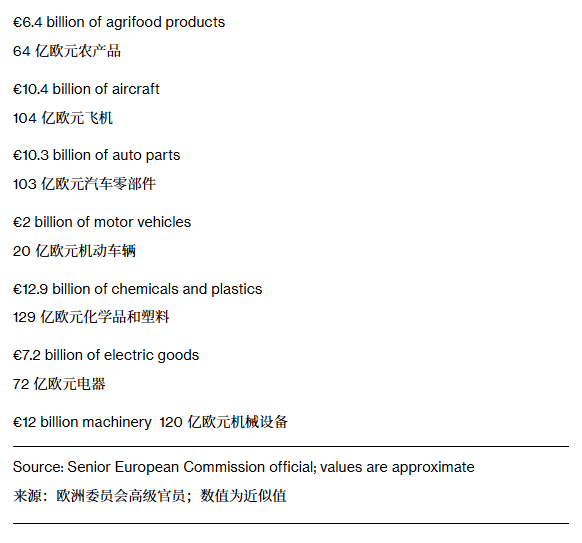
欧盟执行机构周四表示,将就美国"对等"关税政策以及对汽车和汽车零部件征收关税的问题向世界贸易 组织(WTO)申诉。 欧盟目前正寻求通过谈判达成协议,以避免特朗普对欧盟对美所有进口商品征收20%的"对等"关税。特 朗普还对所有进口汽车征收25%的关税,对许多欧洲汽车制造商造成冲击,以及对钢铁和铝征收25%的 关税。 周四公布的欧盟清单中还包括众多飞机和汽车零部件,这将影响波音等美国公司。 欧盟委员会进一步表示,已就针对价值950亿欧元(1074亿美元)美国进口商品的反制措施启动了公众 咨询,如果未与华盛顿达成贸易协议,将予以实施。 清单包含数百种农产品和工业品,以及波旁威士忌、龙舌兰酒和其他烈酒——这是这两大贸易伙伴之间 的一个痛点,美国总统特朗普3月曾威胁对欧盟酒精进口征收200%的关税,未宣布具体的报复性关税税 率。 欧盟委员会在一份声明中表示:"欧盟明确认为,这些(美国)关税公然违反了世贸组织的基本规则。 因此,欧盟的目标是重申国际协定规则的重要性,任何世贸组织成员,包括美国,都不能单方面无视这 些规则。"争端将采取正式提出磋商请求的形式。 除了拟议的关税外,欧盟委员会还将就限制欧盟向美国出口价值44亿欧 ...

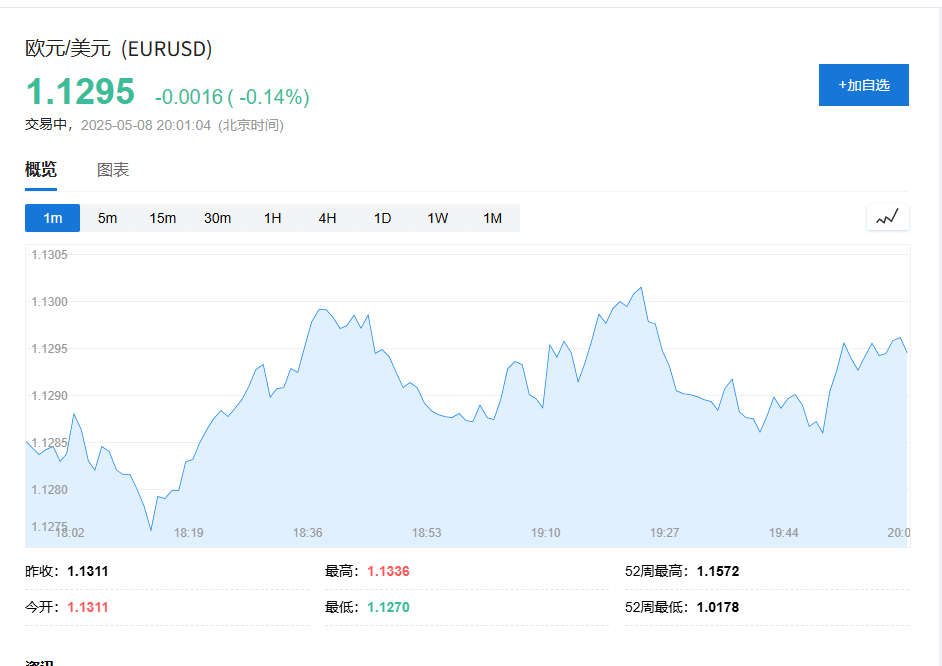
欧元兑美元短线波动不大,报道称欧盟提议如果谈判失败,对价值950亿欧元的美国商品采取关税措施
news flash· 2025-05-08 12:09
Group 1 - The euro to dollar exchange rate shows little short-term volatility, currently at 1.1296 [1] - The European Union proposed tariffs on $95 billion worth of U.S. goods if negotiations fail [1] - The EU's tariff plan includes aircraft, automobiles, and bourbon whiskey [1] Group 2 - The EU is considering export restrictions on $4.4 billion worth of scrap metal and chemicals to the U.S. [1] - The tariff plan also covers meat, fish, and agricultural products [1] - The EU will initiate a dispute resolution process against the U.S. regarding automotive and reciprocal tariff issues at the World Trade Organization [1]
美银对黄金信心爆棚:金价下半年有望冲击4000美元!
Jin Shi Shu Ju· 2025-05-08 06:56
美国银行的大宗商品分析师们不再小心翼翼,他们对黄金前景的看法变得非常激进。 分析师们表示:"到目前为止,贸易争端主要通过扰乱供应链和削弱信心来影响经济。巧合的是,美元 也随着这些情况的发展而下跌......我们仍然认为,黄金最终可能成为比美国国债风险更低的投资选择。" 尽管美国总统特朗普将他的全球关税政策描述为减少政府债务的策略,但美国银行的经济学家们认为, 关税并不是可靠的收入来源,并且随着经济增长放缓和消费者价格上涨,关税往往会引发经济不确定 性。 经济学家们表示:"关税是特朗普政策工具包中的一个重要部分,但不幸的是,它们也影响了通胀预 期。这让美联储陷入了困境:经济活动的放缓,加上总体价格水平的上行压力,意味着实际利率将保持 在较低水平——这也对黄金价格起到了支撑作用。" 虽然美国银行认为今年夏天之后黄金价格有达到4000美元的可能性,但分析师们也指出,价格处于高位 对珠宝需求产生了压力,短期内黄金价格似乎在3000美元上方获得了有力支撑。 分析师们表示:"就目前的资金流向而言,黄金价格可以稳定在每盎司3000美元以上,但不会超过3500 美元。" 在周三发布的一份报告中,由迈克尔・维德默(Michae ...
国新国证期货早报-20250508
Guo Xin Guo Zheng Qi Huo· 2025-05-08 01:37
客服产品系列•日评 【胶】沪胶周三冲高回落。受泰国宣布推迟开割 1 个月的消息影响期价震荡走高,后因泰胶农团体希望政府 方面与中方就泰橡胶出口零关税展开谈判的消息打击期价震荡回落。因空头打压沪胶夜盘震荡小幅走低。泰国橡 胶管理局突然宣布将 2025 年度橡胶开割季向后推迟 1 个月,预计泰国延迟开割季的决定将会是天然橡胶供应量 减少 20 万吨。目前老挝、缅甸和柬埔寨出产的橡胶出口到中国还享受 0%关税待遇,而泰国却没有,泰胶农团体 请务必阅读正文之后的免责声明部分 1 编辑:国新国证期货 国新国证期货早报 2025 年 5 月 8 日 星期四 品种观点: 【股指期货】 周三(5 月 7 日)A 股三大指数集体收涨,沪指涨 0.80%,收报 3342.67 点;深证成指涨 0.22%, 收报 10104.13 点;创业板指涨 0.51%,收报 1996.51 点。沪深两市成交额达到 14683 亿,较昨日放量 1321 亿。 沪深 300 指数 5 月 7 日强势震荡,收盘 3831.63,环比上涨 23.09。 【焦炭 焦煤】5 月 7 日焦炭加权指数弱势整理,收盘价 1509.4 元,环比下跌 10.2。 ...
5月7日主题复盘 | 军工大涨,地产、化工再度活跃
Xuan Gu Bao· 2025-05-07 08:21
一、行情回顾 市场全天高开回落,深成指、创业板指午后一度翻绿。军工板块集体爆发,晨曦航空、航天长峰、成飞集成、利君股份等近20股涨停。化工股再度走强,阳 煤化工、湖北宜化、中毅达、丹化科技等涨停。地产股盘中拉升,天保基建、三湘印象涨停。下跌方面,创新药概念走低,百济神州跌近8%。个股涨多跌 少,沪深京三市超3200股飘红,今日成交1.51万亿。 二、当日热点 1.军工 军工板块今日大涨,润贝航科、航天长峰、华伍股份等多股涨停。 据央视新闻7日报道,巴基斯坦与印度在巴控克什米尔发生交火。 | 股票名称 | | 最新价 = | 涨跌幅 = | 涨停时间 = | 换手率 = | 流通市值 = | | | --- | --- | --- | --- | --- | --- | --- | --- | | 润贝航科 | 12天7板 | 47.26 | +10.01% | 09:35:33 | 13.65% | 12.86亿 | 公司为主要航空公 | | 001316.SZ | | | | | | | 重要航材分销商, | | 航天长峰 | | | | | | | 公司的研究项目中 现、识别异常目标 | | 600855 ...

为何业绩预报是关键的市场风险
Sou Hu Cai Jing· 2025-05-05 13:27
第一季度财报季总体进展顺利,因为这是特朗普关税政策产生影响之前的最后一个季度。 根据巴克莱银行的数据,标普 500 指数(^GSPC)成分股公司本季度的盈利同比增长 7.9%。盈利超出 预期的平均幅度为 10.2%,而长期平均超出预期幅度为 5.2%。 苹果(AAPL)、字母表公司(GOOG, GOOGL)和微软(MSFT)等家喻户晓的公司,其业绩令华尔 街印象深刻。 但标普 500 指数成分股公司是否能够实现预计 10% 的每股收益增长率仍存疑问,它们的估值前景同样 如此。 考克斯警告称:"我认为让很多华尔街人士担忧的是,感觉最糟糕的情况还在后头。" 从企业高管到普通消费者,每个人都在担心关税带来的影响,投资者在寻找合理估值的过程中,股票市 场也随之大幅波动。 在 4 月初的 "解放日" 之后,股票市场大幅下跌,并在 4 月 7 日触底,随后随着财报陆续公布,股票市 场在当月反弹回升。 可口可乐(KO)董事长兼首席执行官詹姆斯・昆西告诉索齐,谨慎的消费者在超市的购买量有所减 少。 昆西解释道:"疲软就集中在这个方面,我认为这在一定程度上表明了低收入消费者面临的一些购买力 压力,以及一些地缘政治因素的影响。" ...