
股债跷跷板

Search documents
宁证期货今日早评-20250826
Ning Zheng Qi Huo· 2025-08-26 01:46
Report Industry Investment Ratings No information provided. Core Views of the Report - The report provides short - term evaluations and trading suggestions for various commodities including methanol, gold, iron ore, etc., analyzing their supply - demand situations, price trends, and market factors [1][2][4] Summaries by Commodity Methanol - The market price in Jiangsu Taicang is 2297 yuan/ton, up 2 yuan/ton; the weekly capacity utilization rate is 83.76%, up 1.36%; downstream total capacity utilization rate is 72.81%, up 1.04% weekly. The port inventory and production enterprise inventory are increasing. It is expected to run in a short - term shock, with support at 2410. It is recommended to wait and see or do short - term long [1] Gold - Tariff disturbances still exist. After Powell's speech at the Jackson Hole meeting, the market started the interest - rate cut expectation. The short - term gold has a rebound demand, may be shock - bullish in the short - term and bearish in the medium - term. Pay attention to the seesaw effect between the US dollar and gold [2] Iron Ore - The inventory of 45 ports is 13845.20 tons, up 25.93 tons; the daily dispatch volume is 325.74 tons, down 8.93 tons. The current price may run in a shock adjustment. Focus on the implementation of environmental protection restrictions in the north [4] Coke - Mainstream coke enterprises launched the 8th price increase. Supply has increased slightly but is limited by high costs. Demand is strong as steel mills' profits are good. After the price increase, production will increase slightly. With the upcoming parade production restrictions, the supply - demand contradiction is not prominent in the short - term, and the futures price is still supported [4] Rebar - In the high - temperature and rainy season, the downstream construction progress is slow, but the temporary production restriction expectation and the "double - coke" futures increase boost the market sentiment. The steel price may run in a shock in the short - term [5] Soda Ash - The mainstream price is 1297 yuan/ton, showing a weak shock. The weekly output is 77.14 tons, up 1.33%; the manufacturer's inventory is up 0.9%. The domestic soda ash market is weak and volatile. It is expected to run in a shock, with support at 1300. It is recommended to wait and see [6] Polypropylene - The mainstream price is 7010 yuan/ton, up 9 yuan/ton; the capacity utilization rate is 80.46%, up 1.15%; the downstream average start - up rate is 49.53%, up 0.18 percentage points weekly. The commercial inventory is 80.06 tons, down 2.68 tons. It is expected to run in a shock, with support at 7065. It is recommended to wait and see or do short - term long on dips [7] Live Pigs - The price is stable and weak. The supply is strong and the demand is weak, but there is support from storage sentiment and school - starting stockpiling. Short - term long positions can be held, with support at 13700 for the LH2511 contract. Farmers can choose to sell for hedging according to the slaughter rhythm [9] Palm Oil - Malaysia's exports from August 1 - 25 increased by 10.9%. The inventory in key domestic areas decreased by 5.70% weekly. The domestic demand is restricted by the soybean - palm oil price difference. It is expected to run in a shock in the short - term [10] Soybeans - The port inventory is 889.8 tons, down 2.80 tons weekly. The domestic soybean price is fluctuating slightly and is weak and stable in the short - term due to the upcoming new - bean supply increase and limited demand [10] Crude Oil - India's imports in July decreased by 8.7%. There are talks about the Russia - Ukraine issue and the Iran nuclear issue. It may increase production in the fourth quarter. The price has rebounded. It is recommended to do short - term long for now [11] Rubber - The supply in Thailand and domestic areas is affected by rain, while that in Cote d'Ivoire is normal. The demand from the domestic tire industry is weak. It is in a situation of weak supply and demand. It is recommended to wait and see or do short - term long cautiously around 15500 [12] Asphalt - Supply is shrinking, with the output down 4 tons to 54.8 tons and the capacity utilization rate down 2.2 percentage points to 30.7%. Demand is weak. It is recommended to use a band - trading strategy and not to chase high in the short - term [13] Short - term Treasury Bonds - The central bank's continuous liquidity injection is beneficial to short - term bonds. The stock market has limited upward momentum in the short - term, which is beneficial to the bond market. It is recommended to do intraday operations on short - term bonds and short long - term bonds [13] Silver - The issue of Trump removing Cook from the Federal Reserve needs continuous observation. The Fed's independence is challenged. After Powell's speech, the market has an interest - rate cut expectation. The silver price is shock - bullish [14]
股债跷跷板依然主导,关注长端债券机会
Ning Zheng Qi Huo· 2025-08-25 11:48
Group 1: Report Industry Investment Rating - The industry investment rating is "oscillating bearish, pay attention to the stock-bond seesaw" [5] Group 2: Core Viewpoints of the Report - The stock-bond seesaw remains the dominant factor, and attention should be paid to long-term bond opportunities. The main policy tone in the second half of the year is a proactive fiscal policy and a moderately loose monetary policy. Although counter-cyclical adjustments such as promoting consumption and major project construction may continue to be introduced, the incremental policies exceeding market expectations may be limited. Liquidity is expected to be loose, which may intensify stock market fluctuations and short-term bond market volatility, making short-term bond market operations more difficult. The supply-demand contradiction in the long-term bond market may be more prominent, with more obvious negative factors [2][3][4] Group 3: Summary by Relevant Catalogs Chapter 1: Market Review - The stock-bond seesaw logic has led the long-term bond market to effectively break below the 60-day moving average, and this logic may continue to dominate the bond market. However, in the context of loose liquidity, this logic becomes less obvious, making market operations difficult. The Politburo meeting in July set the policy tone for the second half of the year, and the stock-bond seesaw remains the main logic in the bond market [10] Chapter 2: Overview of Important News - The central bank will implement a moderately loose monetary policy in the next stage and maintain ample liquidity. In August, the central bank will conduct a 6000 billion yuan MLF operation, with a net investment of 3000 billion yuan, and a 3000 billion yuan outright reverse repurchase net investment, resulting in a total net investment of 6000 billion yuan in medium-term liquidity for the month. A new policy-based financial instrument worth 500 billion yuan will be launched, focusing on emerging industries and infrastructure. The central bank has increased the re-lending quota for supporting agriculture and small businesses by 100 billion yuan. In July, China's total goods trade import and export value reached 3.91 trillion yuan, a year-on-year increase of 6.7%. In July, M2 increased by about 8.8% year-on-year, M1 by about 5.6%, and M0 by about 11.8% [13][15] Chapter 3: Analysis of Important Influencing Factors 3.1 Economic Fundamentals - In July, China's official manufacturing PMI was 49.3, a month-on-month decrease of 0.4 percentage points, and the comprehensive PMI output index was 50.2, a decrease of 0.5 percentage points. The official non-manufacturing PMI was 50.1, a month-on-month decrease of 0.4 percentage points. China's Q2 GDP increased by 5.2% year-on-year and 1.1% quarter-on-quarter, both exceeding expectations. In July, the total goods trade import and export value reached 3.91 trillion yuan, a year-on-year increase of 6.7%. Although the economic data shows certain resilience, the economic downward pressure has increased, and counter-cyclical adjustments need to be continuously strengthened [16] 3.2 Policy Aspect - At the end of July, the broad money M2 balance was 329.94 trillion yuan, a year-on-year increase of 8.8%. The narrow money M1 balance was 111.06 trillion yuan, a year-on-year increase of 5.6%. The difference between M2 and M1 growth rates was 3.2%, narrowing slightly. The social financing stock reached 431.26 trillion yuan, a 9% increase from July last year, with a slight increase of 0.1 percentage point in the growth rate. The new social financing in the month was 1.16 trillion yuan, 389.3 billion yuan more than last year, mainly driven by government bond issuance [18] 3.3 Capital Aspect - Since July 25, DR007 has been continuously declining, and the cost of funds has decreased. The central bank will implement a moderately loose monetary policy in the next stage. A potential interest rate cut by the Federal Reserve in the second half of the year may further open up space for domestic monetary policy easing, but the adjustment of monetary policy still depends on domestic demand. According to the Politburo meeting in July, the liquidity in the second half of the year will likely remain moderately loose, and the probability of an unexpectedly loose monetary policy is low [18] 3.4 Supply and Demand Aspect - The National Development and Reform Commission will allocate the third batch of funds for consumer goods trade-in in July this year and formulate a monthly and weekly usage plan for national subsidy funds. The support from the ultra-long-term special treasury bond funds for equipment renewal this year is 200 billion yuan, with the first batch of about 173 billion yuan already allocated to about 7,500 projects in 16 fields. The issuance of special bonds has also accelerated recently [21] 3.5 Sentiment Aspect - The stock-bond ratio has broken through the short-term shock range and declined, indicating that the market pays more attention to the stock market than the bond market, and the market risk appetite has increased. Recently, the stock-bond ratio has slightly decreased but is still in a high range compared to the previous period. Short-term bonds are more affected by the capital aspect, while long-term bonds are more significantly affected by the stock-bond seesaw [23] Chapter 4: Market Outlook and Investment Strategy - The central bank will implement a moderately loose monetary policy in the next stage, and loose liquidity may be the main policy tone in the second half of the year. Loose liquidity combined with the expectation of a rising stock market may intensify stock market fluctuations and short-term bond market volatility. The stock-bond seesaw logic remains the main logic, and the logic of long-term bonds is relatively clear, so it is recommended to pay attention [26]
债市情绪面周报(8月第3周):债市情绪年内第二次转负-20250825
Huaan Securities· 2025-08-25 11:15
Report Summary 1. Report Industry Investment Rating No relevant information provided. 2. Core Views of the Report - **Hua'an's View**: The adjustment space of the bond market is limited, and attention should be paid to the opportunities of individual bond spread mining. Although the bond market has been under pressure recently due to the strong performance of the equity market, it is expected to return to fundamental pricing in the medium and long term. After the Jackson Hole Annual Meeting released a dovish signal last Friday, it is predicted that there is no basis for a significant tightening of the capital market after the tax period. The central bank will cooperate with loose monetary policies in terms of supply. Currently, institutional behavior signals still indicate a long - position, the redemption/selling pressure of funds is controllable, and large banks' continuous bond - buying provides short - term certainty. As previously mentioned in the weekly report, the spread between 250210 and 250215 may widen [2]. - **Seller's View**: Bond market sentiment has turned negative for the second time this year, with nearly 30% of fixed - income sellers holding a bearish view. As of Monday this week, nearly 30% of fixed - income sellers are bearish on the bond market, 50% hold a neutral attitude, and the sentiment has declined compared to last week. There are 7 bullish, 19 neutral, and 8 bearish institutions. Most institutions maintain a cautious/volatile market judgment on the bond market [3]. - **Buyer's View**: Over 80% of buyers hold a neutral view. The overall view of fixed - income buyers is neutral, and the sentiment index has risen. Currently, among the market's buyer views, 3 are bullish, 25 are neutral, and 1 is bearish [3]. 3. Summary by Relevant Catalogs 3.1 Seller and Buyer Markets - **Seller Market Sentiment Index and Interest - rate Bonds**: The sentiment index has declined. The weighted index this week is - 0.02, and the unweighted index is - 0.03, down 0.29 from last week. Currently, institutions generally hold a neutral - bearish view, with 23% bullish, 50% neutral, and 27% bearish [12]. - **Buyer Market Sentiment Index and Interest - rate Bonds**: The sentiment index has risen. The weighted sentiment index this week is 0.05, and the unweighted index is 0.07, up 0.004 from last week. Currently, institutions generally hold a neutral - bullish view, with 10% bullish, 86% neutral, and 3% bearish [13]. - **Credit Bonds**: The main factors are the stock - bond seesaw and the Fed's dovish signal. In the short term, the strong stock market may continue to suppress the bond market, and the Fed's dovish signal indicates that overseas interest - rate cuts will benefit China's bond market [18]. - **Convertible Bonds**: Institutions generally hold a neutral - bullish view this week. 92% of institutions are bullish, believing that the equity market has a strong long - term upward trend, convertible bonds still face supply - demand mismatch, and the asset shortage supports high valuations. 8% of institutions are neutral, warning of the risks of valuation correction and forced redemptions [19]. 3.2 Treasury Bond Futures Tracking - **Futures Trading**: Prices have decreased across the board, and trading volumes have increased across the board. As of August 22, the prices of TS/TF/T/TL contracts were 102.32 yuan, 105.37 yuan, 107.66 yuan, and 115.98 yuan respectively, down 0.03 yuan, 0.29 yuan, 0.64 yuan, and 1.50 yuan from last Friday. The trading volumes of TS/TF/T/TL contracts in the 5 - day moving average (5MA) perspective were 1280 billion yuan, 1139 billion yuan, 1586 billion yuan, and 2663 billion yuan respectively, up 362.98 billion yuan, 337.95 billion yuan, 353.55 billion yuan, and 608.66 billion yuan from last Friday [24]. - **Spot Bond Trading**: The turnover rates of 30 - year treasury bonds, interest - rate bonds, and 10 - year China Development Bank bonds have all declined. On August 22, the turnover rate of 30 - year treasury bonds was 4.42%, down 0.73 percentage points from last week and 1.27 percentage points from Monday. The weekly average turnover rate was 4.82%. The weekly average turnover rate of interest - rate bonds was 0.88%, down 0.07 percentage points from last week and 0.15 percentage points from Monday. The turnover rate of 10 - year China Development Bank bonds was 4.09%, down 2.11 percentage points from last week and 1.47 percentage points from Monday [30]. - **Basis Trading**: The basis and net basis have generally widened. Except for the narrowing of the basis of the TS main contract, the basis of other main contracts has widened. As of August 22, the basis (CTD) of TS/TF/T/TL main contracts was 0.03 yuan, 0.07 yuan, 0.57 yuan, and 0.95 yuan respectively, with changes of - 0.01 yuan, + 0.07 yuan, + 0.60 yuan, and + 1.06 yuan from last Friday. The net basis of TS/TF/T/TL main contracts was 0.02 yuan, 0.08 yuan, 0.21 yuan, and 0.38 yuan respectively, with changes of - 0.01 yuan, + 0.10 yuan, + 0.26 yuan, and + 0.65 yuan from last Friday. The IRR of main contracts has generally declined [38]. - **Inter - period Spread and Inter - variety Spread**: Both have generally widened. Except for the narrowing of the spread of the TS main futures contract, the spreads of other main futures contracts have widened. As of August 22, the near - month to far - month spreads of TS/TF/T/TL contracts were 0.00 yuan, 0.10 yuan, 0.25 yuan, and 0.54 yuan respectively, with changes of + 0.04 yuan, + 0.09 yuan, + 0.15 yuan, and + 0.09 yuan from last Friday. Except for the narrowing of the spread of the 3*T - TL futures contract, the spreads of other main futures contracts have widened. As of August 22, 2*TS - TF, 2*TF - T, 4*TS - T, and 3*T - TL were 99.27 yuan, 103.09 yuan, 301.62 yuan, and 207.07 yuan respectively, with changes of + 0.25 yuan, + 0.06 yuan, + 0.56 yuan, and - 0.25 yuan from last Friday [48][49].
超长债周报:股债跷跷板-20250825
Guoxin Securities· 2025-08-25 03:02
1. Report Industry Investment Rating No relevant content provided. 2. Core Viewpoints of the Report - Last week, the bond market continued to decline sharply. The tightening of funds during the tax period, the announcement of an additional 300 billion yuan MLF renewal in August, and the significant rise of A-shares with the Shanghai Composite Index reaching a 10-year high led to an obvious stock-bond seesaw effect, causing a continuous slump in ultra-long bonds [1][3][12]. - In the short term, the bond market will face a continuous game between expectations and reality, with the 10-year Treasury bond oscillating in the range of [1.65%, 1.8%]. On one hand, the weak fundamental situation supports the bond market; on the other hand, the "anti-involution" policy has alleviated investors' deflation concerns, changing the long-term macro-narrative and suppressing the bond market [2][3][13]. 3. Summary by Relevant Catalogs Weekly Review Ultra-long Bond Review - Last week, the bond market continued to decline sharply. The ultra-long bond trading activity decreased slightly but remained quite active. The term spread and variety spread of ultra-long bonds widened [1][12]. Ultra-long Bond Investment Outlook - **30-year Treasury Bond**: As of August 22, the spread between the 30-year and 10-year Treasury bonds was 31BP, at a historically low level. The current 30-year Treasury bond term spread is still low, with limited term spread protection [2][13]. - **20-year CDB Bond**: As of August 22, the spread between the 20-year CDB bond and the 20-year Treasury bond was 3BP, at a historically extremely low level. The current 20-year CDB bond variety spread is still low, with limited variety spread protection [3][14]. Ultra-long Bond Basic Overview - The balance of outstanding ultra-long bonds exceeds 22.8 trillion yuan. As of July 31, ultra-long bonds with a remaining maturity of over 14 years totaled 22.8873 trillion yuan, accounting for 14.7% of the total bond balance. Local government bonds and Treasury bonds are the main varieties of ultra-long bonds [15]. - By variety, Treasury bonds account for 26.5%, local government bonds 67.5%, policy financial bonds 2.0%, government agency bonds 1.9%, commercial bank subordinated bonds 0.3%, corporate bonds 0.5%, enterprise bonds 0.1%, medium-term notes 1.2%, private bonds 0.0%, and directional instruments 0.0% [15]. - By remaining maturity, bonds with a maturity of 14 - 18 years account for 26.5%, 18 - 25 years 26.9%, 25 - 35 years 40.9%, and over 35 years 5.7% [15]. Primary Market Weekly Issuance - Last week, the issuance volume of ultra-long bonds increased significantly. A total of 306.7 billion yuan of ultra-long bonds were issued. By variety, Treasury bonds accounted for 83 billion yuan, local government bonds 212.3 billion yuan, and others. By maturity, 15-year bonds accounted for 40.2 billion yuan, 20-year bonds 67.8 billion yuan, 30-year bonds 198.7 billion yuan, and 50-year bonds 0 yuan [20]. This Week's Planned Issuance - The announced ultra-long bond issuance plan for this week totals 122.5 billion yuan, all of which are ultra-long local government bonds [26]. Secondary Market Trading Volume - Last week, the trading of ultra-long bonds was quite active, with a trading volume of 1328.9 billion yuan, accounting for 14.4% of the total bond trading volume. Compared with the previous week, the trading activity of ultra-long bonds decreased slightly [29]. Yield - Last week, the bond market continued to decline sharply. The yields of various ultra-long bonds rose. For example, the yields of 15-year, 20-year, 30-year, and 50-year Treasury bonds changed by 4BP, 5BP, 3BP, and 5BP respectively, reaching 1.95%, 2.11%, 2.08%, and 2.16% [41]. Spread Analysis - **Term Spread**: Last week, the term spread of ultra-long bonds widened, but the absolute level was low. The spread between the 30-year and 10-year Treasury bonds was 31BP, 2BP higher than the previous week, at the 12% quantile since 2010 [52]. - **Variety Spread**: Last week, the variety spread of ultra-long bonds widened, but the absolute level was low. The spreads between the 20-year CDB bond and Treasury bond, and between the 20-year railway bond and Treasury bond were 3BP and 8BP respectively, 1BP and 2BP higher than the previous week, at the 5% quantile since 2010 [53]. 30-year Treasury Bond Futures - Last week, the main contract of the 30-year Treasury bond futures, TL2512, closed at 115.98 yuan, a decrease of 1.28%. The total trading volume was 1.1462 million lots, and the open interest was 156,700 lots. The trading volume increased significantly compared with the previous week, and the open interest increased slightly [58].
公募FOF业绩大“回血” 年内平均业绩超9%!达到近五年最佳状态
Zhong Guo Ji Jin Bao· 2025-08-25 00:30
Core Viewpoint - The Fund of Funds (FOF) industry has achieved its best performance in five years, driven by market recovery and favorable investment opportunities in equity assets [1][3]. Performance Summary - As of August 22, 515 public FOFs have an average annual performance of 9.41%, with only one product showing negative returns; nearly 40 FOFs have a cumulative net value growth rate exceeding 20% [2]. - The top performers include Guotai's "Optimal Navigation" with a 45.49% increase and "Industry Rotation A" with a 39.97% increase [2]. Market Conditions - The overall performance of public FOFs is at its best in five years, with significant contributions from the domestic equity market and commodities like gold [3]. - The A-share market has shown considerable gains, leading to increased capital inflow and enhanced profitability for FOFs [3]. Investment Strategy - There is a notable "stock-bond seesaw" effect, with current stock and bond attractiveness being relatively balanced; a focus on technology growth sectors is recommended [4]. - The domestic macroeconomic stability suggests limited upward potential for bonds, while the equity market is recovering, indicating a shift towards increasing equity asset allocation [4]. Asset Allocation Insights - The potential for a global monetary easing cycle, driven by factors such as the U.S. interest rate cuts, presents opportunities for domestic manufacturing and inflation-hedging assets like gold [5][6]. - The domestic equity market is seen as having relative advantages over overseas markets in terms of valuation, with a focus on sectors like new materials and renewable energy [6]. Risk Management - It is advised to avoid over-concentration in single sectors and to regularly adjust the stock-bond ratio to maintain alignment with initial risk levels [6].
公募FOF年内平均业绩超9%
Zhong Guo Ji Jin Bao· 2025-08-24 14:09
Core Insights - The performance of Fund of Funds (FOF) has significantly improved, reaching its best state in the past five years due to market recovery [1][4] - The average performance of public FOFs has increased by 9.41% year-to-date, with nearly 40 funds showing a net value growth rate exceeding 20% [3][4] Performance Overview - As of August 22, 515 public FOFs have an average return of 9.41%, with only one product showing negative returns [3] - The top performers include Guotai's "Optimal Navigation" and "Industry Rotation A," with annual net value increases of 45.49% and 39.97%, respectively [3] Market Trends - The current market environment presents considerable investment opportunities in asset allocation and fund selection, particularly in domestic and overseas equity markets and commodities like gold [4][6] - The "stock-bond seesaw" effect is evident, with a balanced attractiveness between stocks and bonds, suggesting a cautious approach to asset allocation [6][9] Strategic Recommendations - Companies are advised to increase equity asset allocation, especially in "fixed income plus" assets, as the stock market is expected to strengthen structurally over the next three years [5][9] - The shift in FOF investment strategy from traditional fund selection to a core-satellite model focusing on ETFs is highlighted as a significant change [4][9] Asset Class Focus - Attention should be given to opportunities in commodities, Hong Kong stocks, and A-shares, with a focus on sectors like new materials and renewable energy [7][9] - The potential for a global monetary easing cycle and the impact of U.S. fiscal policies may create favorable conditions for domestic equity assets [8][9] Investment Strategy - It is recommended to avoid over-concentration in single sectors and to regularly adjust the stock-bond ratio to maintain alignment with initial risk levels [10] - Utilizing FOFs or "fixed income plus" funds can help achieve a balanced allocation across major asset classes [10]
债市突然调整,后市怎么走?基金最新研判
Sou Hu Cai Jing· 2025-08-23 09:45
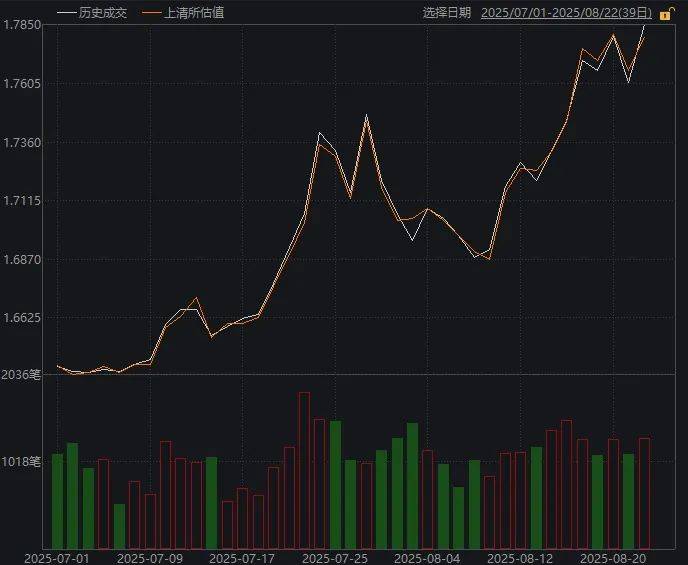
Core Viewpoint - The recent adjustment in the bond market is primarily driven by changes in market sentiment, with a notable "stock-bond seesaw" effect observed as the stock market rises while the bond market experiences significant declines [1][2][3]. Market Dynamics - Since early July, the yield on 10-year government bonds has risen to 1.78%, an increase of 8.2%, while the yield on 30-year bonds has reached 2.08%, up 11.46% [3]. - The bond market's decline is attributed to multiple factors, including changes in macroeconomic expectations, a stable short-term monetary policy, and a shift in risk appetite due to a strong stock market [1][5][6]. Investor Behavior - Despite some redemption pressure on bond funds, the overall situation remains manageable, with no large-scale redemptions reported [7][9]. - The sentiment in the bond market is weak due to expectations of a bull market in equities, leading to significant redemptions on days when bond prices fall [7][10]. Future Outlook - Industry experts suggest that the bond market will not experience a significant downturn, as fundamental and monetary policy factors are expected to provide support [9][10]. - The bond market is likely to exhibit a "grinding top" pattern in the short term, with a focus on mid-to-short duration assets for better yield [9][11]. - There is a potential for increased monetary policy easing in the fourth quarter if economic data continues to show weakness, which could lead to a slight decrease in bond yields [10].

债市突然调整,后市怎么走?基金最新研判
中国基金报· 2025-08-23 09:34
Core Viewpoint - The article discusses the "stock-bond seesaw" effect, highlighting that while the stock market is rising, the bond market is experiencing significant adjustments due to multiple factors, including changes in macroeconomic expectations and shifts in risk appetite [1][3]. Summary by Sections Market Dynamics - Since early July, the yield on 10-year government bonds has risen to 1.78%, an increase of 8.2%, while the yield on 30-year bonds has reached 2.08%, up 11.46% [3]. - The primary reason for the bond market's adjustment is attributed to changes in market sentiment leading to a diversion of funds [3][5]. Investor Sentiment - The recent "stock-bond seesaw" effect and heightened risk appetite have led to a shift in asset allocation, with equities showing a higher risk-reward ratio compared to bonds [5]. - Despite some redemption pressures on bond funds, the overall situation is manageable, with no large-scale redemptions reported [7]. Future Outlook - Industry experts suggest that the bond market is unlikely to see a significant rise in interest rates in the short term, with expectations of a "grinding top" market behavior [1][9]. - The bond market is expected to return to a pricing mechanism based on fundamentals and liquidity in the medium to long term [10]. Investment Strategies - In the current environment, strategies focusing on short to medium-term fixed-income assets are recommended, as the bond market may experience volatility [9][10]. - There are opportunities in credit bonds, particularly in financial bonds, as the market adjusts [10].

股市10年来首次站上3800点,10年期国债上行逼近1.8%关口
Xin Lang Cai Jing· 2025-08-22 09:21
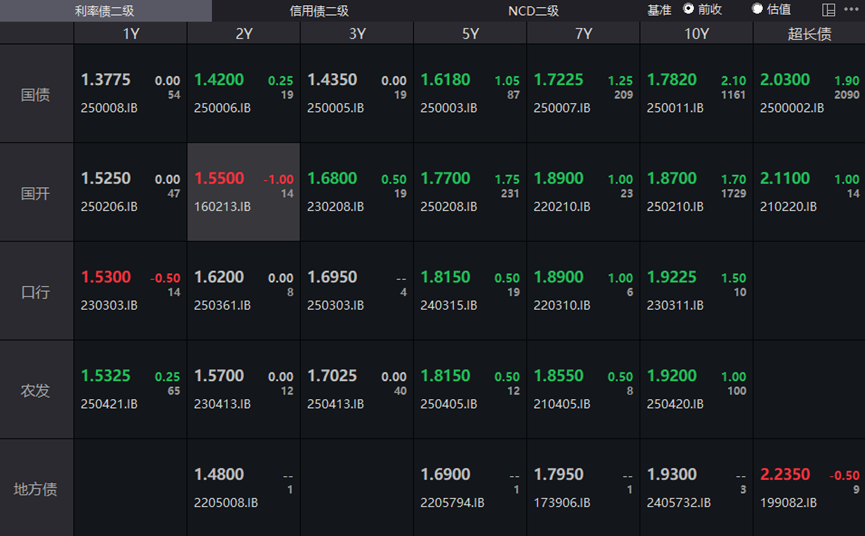
Market Overview - The bond futures market closed lower across the board, with major interbank interest rate bond yields mostly rising, indicating a deep adjustment in the bond market amid a bullish stock market [1][3] - The 10-year government bond yield rose by 2.1 basis points to 1.782%, while the 30-year government bond yield increased by 1.9 basis points to 2.03% [1][3] Bond Market Dynamics - The 10-year and 30-year government bonds had weighted average bidding rates of 1.83% and 2.15%, respectively, both higher than the market estimates, reflecting a decrease in institutional subscription enthusiasm compared to earlier in the year [3][5] - The current bond market is viewed as having relatively high cost-effectiveness, with a recommendation for investors to focus on short-duration, high-liquidity assets [1][3] Monetary Policy and Liquidity - The People's Bank of China conducted a reverse repurchase operation of 361.2 billion yuan at a fixed rate of 1.40%, with a net injection of 123.2 billion yuan for the day [3] - Short-term Shibor rates fell across the board, indicating a loosening of the funding environment [4] Credit Market Performance - Non-financial credit bonds showed varied performance, with notable gains in specific bonds such as 19 Keqiao 02 and 21 Vanke 04, while others experienced declines [5][7] - The secondary market for certificates of deposit showed stable demand, with 6-month and 1-year national bank CDs trading at 1.64% and 1.65%, respectively [8][9]
宁证期货今日早评-20250822
Ning Zheng Qi Huo· 2025-08-22 01:35
Group 1: Report Industry Investment Ratings - There is no information provided regarding report industry investment ratings in the given content. Group 2: Core Views of the Report - The report provides short - term evaluations and trading suggestions for various commodities, including gold, crude oil, iron ore, etc. It analyzes the impact of different factors such as trade agreements, production plans, and policy regulations on commodity prices and market trends [1][3][4]. Group 3: Summaries by Commodity Gold - The US - EU trade agreement is favorable to the US and negative for the euro, causing the US dollar index to rise. Gold has a short - term rebound demand and may fluctuate upward, but the dollar - gold seesaw effect should be monitored. The Jackson Hole Annual Meeting on Friday may increase precious metal volatility [1]. Crude Oil - Iraq plans to increase daily oil production to nearly 6 million barrels by 2028, and India will continue to buy Russian oil. There is a situation of weak expectations against the reality of non - accumulated inventory. It is advisable to wait and see at the current position [1]. Iron Ore - In August, the iron ore fundamentals have few contradictions. High iron - water production provides strong demand support. The ore price is expected to fluctuate within a range, with a reference support level of 750 yuan/ton [3]. Coking Coal - The capacity utilization rate of coking coal mines has increased. The demand side has some support from high iron - water production, but attention should be paid to temporary production - restriction policies. The coking coal price is expected to fluctuate in the short term [3]. Rebar - The fundamentals of steel are weak, but due to environmental protection policies and policy expectations, the probability of a sharp decline in rebar prices is low. Short - term long positions can be considered in the 3000 - 3100 area, and caution is needed when pre - laying long positions in the far - month contracts [4]. Live Pigs - The national average pig - grain ratio has fallen below 6:1, triggering a third - level warning. The state will conduct central frozen pork reserve purchases, which can boost the pig price in the short term. Short - term long positions can be tried, and farmers can choose to sell for hedging according to the slaughter rhythm [5]. Palm Oil - Indonesia's palm oil inventory is at a low level, and the consumption peak season is approaching. The palm oil price is expected to fluctuate strongly at a high level in the short term [6]. Soybeans - The 2025/26 global soybean production forecast has been slightly increased. The domestic soybean market is in a situation of weak supply and demand, and the domestic soybean price is expected to remain weakly stable in the short term [8]. Silver - The US economic data shows resilience, and the US - EU agreement boosts risk appetite. The silver price is expected to fluctuate upward, and attention should be paid to the Jackson Hole Annual Meeting [8]. Medium - and Long - Term Treasury Bonds - The upcoming large - scale policy - based financial instruments may increase stock market investment and have a negative impact on the bond market. The bond market is expected to show more volatility, and short positions can be considered for long - term bonds at key resistance levels [9]. Rubber - The supply of rubber is sufficient as the Southeast Asian production season approaches, and the demand is weak. The rubber price is expected to fluctuate in the short term [10]. PTA - Jiangsu's policy draft signals a solution to over - capacity. For PTA, the proportion of 1 million - ton/year devices is low, and the price is expected to rise slightly in the short term, but caution is needed at high levels [11].