
稳增长

Search documents
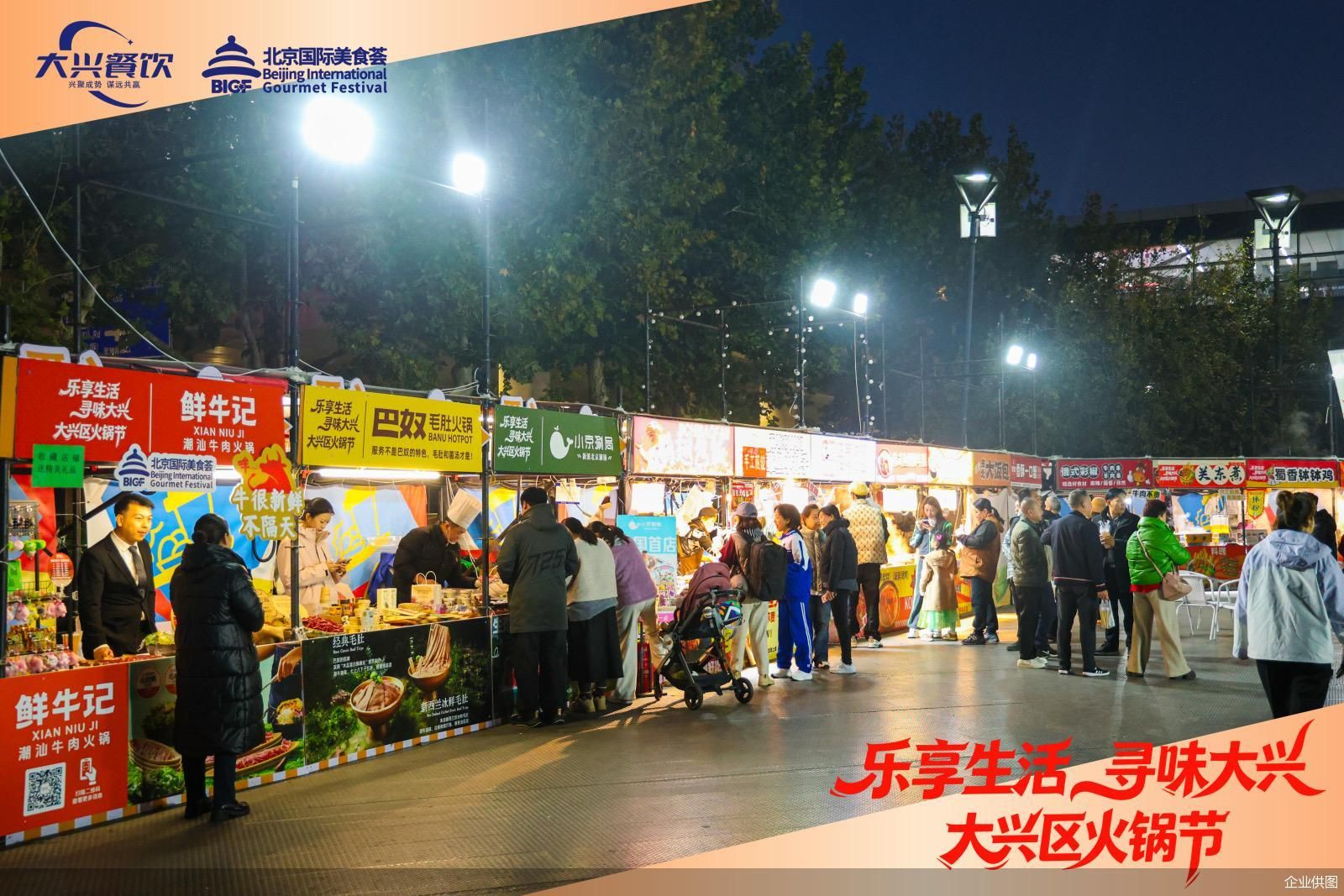
2025大兴区火锅节启动
Bei Jing Shang Bao· 2025-10-31 14:37
Core Points - The 2025 Daxing District Hot Pot Festival has officially launched with the theme "Enjoy Life · Taste Daxing" aimed at showcasing high-quality dining brands and stimulating regional dining consumption potential [1][3] - The festival features participation from 50 hot pot enterprises including popular brands such as Hai Di Lao and Xia Bo Xia Bo, with over 20 brands showcasing on-site [1][3] Group 1 - The offline event will last for three days from October 31 to November 2, operating daily from 4 PM to 8 PM, featuring product displays, discounts, interactive experiences, and live streaming [3] - Online activities will continue until December 31, with ongoing promotional efforts [3] Group 2 - The Daxing District Catering Industry Association stated that the festival is a key initiative for "promoting consumption and stabilizing growth," contributing to regional circulation and industrial collaboration [3] - The event is organized by the Daxing District Commerce Bureau and hosted by the Daxing District Catering Industry Association [3]

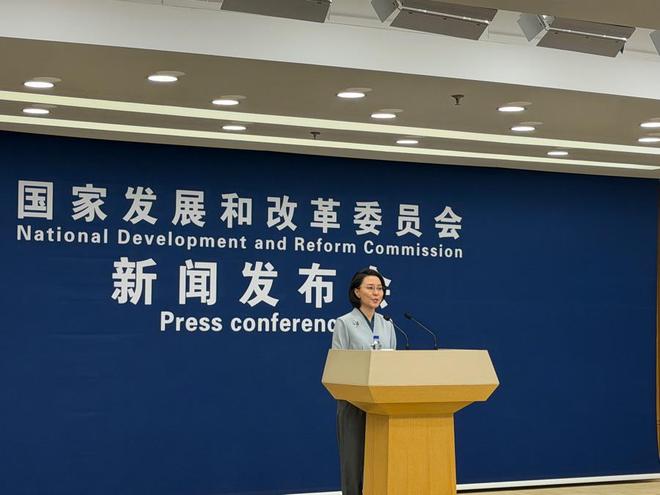
5000亿已投放又来2000亿扩投资,四季度政策加力稳增长
2 1 Shi Ji Jing Ji Bao Dao· 2025-10-31 13:16
Core Points - The National Development and Reform Commission (NDRC) announced the completion of the 500 billion yuan new policy financial tool, supporting 2,300 projects with a total investment of approximately 7 trillion yuan [1][4][5] - The additional 200 billion yuan in special bonds is aimed at supporting local investment projects, marking a significant push for investment in the fourth quarter [3][8] - The overall economic growth in the first three quarters was 5.2%, laying a solid foundation for achieving the annual growth target of around 5% [3][8] Investment and Financial Tools - The new policy financial tool focuses on technology innovation, consumption upgrades, and foreign trade stability, while also considering traditional infrastructure [4][5] - The three policy banks have allocated funds as follows: 250 billion yuan by the China Development Bank, 150 billion yuan by the Agricultural Development Bank of China, and 100 billion yuan by the Export-Import Bank of China [5][6] - The funds are primarily used to supplement project capital, with a maximum of 50% of total capital [4][5] Sector Focus - Key investment areas include digital economy, artificial intelligence, consumer infrastructure, and urban renewal projects [4][5][6] - Specific projects supported include investments in semiconductor manufacturing and smart driving systems, indicating a strong focus on high-tech industries [6] Economic Indicators - The construction industry showed signs of recovery, with the new orders index rising to 45.9%, indicating a positive trend in demand [6][7] - The business activity expectation index for the construction sector increased to 56.0%, suggesting improved confidence among businesses [6][7] Policy Coordination - The NDRC emphasized the need for coordinated fiscal and monetary policies to stabilize and boost investment [8][9] - The central government is expected to implement further measures to support consumption and stabilize the real estate market, which remains a critical area of concern [9][10]
旗滨集团(601636):光伏玻璃量价齐升带动Q3收入增长
HTSC· 2025-10-31 06:35
Investment Rating - The report maintains a "Buy" rating for the company with a target price of RMB 9.01 [1][8]. Core Insights - The company's revenue and net profit for the first nine months of 2025 reached RMB 11.78 billion and RMB 0.92 billion, respectively, representing a year-on-year increase of 1.6% and 30.9%. In Q3 alone, revenue and net profit were RMB 4.39 billion and RMB 0.02 billion, showing a year-on-year increase of 18.9% and 1.4 billion [1][2]. - The growth in revenue is primarily driven by the increase in photovoltaic glass sales, although the gross margin has decreased due to falling prices of float glass [1][2]. - The company has a competitive advantage in its float glass business due to scale and cost efficiency, and its diversified development strategy is expected to support long-term growth [1][2]. Financial Performance - The company reported a significant improvement in operating cash flow, with a net cash flow from operating activities of RMB 1.06 billion for the first three quarters, up 255.7% year-on-year, and RMB 740 million in Q3, up 111.6% year-on-year [2]. - The operating expense ratio decreased to 9.0%, down 3.4 percentage points year-on-year, with management expenses significantly reduced due to unmet long-term targets in the partner shareholding plan [2]. Market Outlook - The real estate sector showed signs of recovery in September, with a positive year-on-year change in completed construction area, which is expected to boost glass demand [3]. - The report highlights that ongoing policies aimed at stabilizing growth and reducing competition in the glass industry may improve the competitive landscape [8]. Valuation Metrics - The report forecasts the company's revenue for 2025 to be RMB 15.42 billion, with a projected net profit of RMB 1.01 billion, reflecting a year-on-year growth of 164.61% [8]. - The company is valued at a price-to-book ratio of 1.7x for 2025, with a target price adjustment from RMB 8.48 to RMB 9.01 based on improved photovoltaic glass production capacity and sales [8].

格林大华期货早盘提示-20251031
Ge Lin Qi Huo· 2025-10-31 01:22
Report Summary 1. Report Industry Investment Rating - The investment rating for the macro and financial (treasury bond) sector is "oscillation" [1] 2. Core View of the Report - The Fed cut the federal funds target rate by 25 basis points to 3.75%-4.00% on October 29, but Powell's hawkish speech lowered the market's expectation of a December rate cut. On October 30, the leaders of China and the United States held a meeting, and the Chinese Ministry of Commerce introduced the consensus reached by the China-US economic and trade teams in Kuala Lumpur. The specific consensus on China-US economic and trade is beneficial for China to increase exports to the US and stabilize growth in the fourth quarter and next year. The easing of China-US economic and trade disputes is also conducive to stabilizing the global trade environment and the global industrial chain and supply chain. Treasury bond futures may oscillate in the short term [2] 3. Summary by Relevant Catalogs 3.1 Market Review - On Thursday, most of the opening prices of the main contracts of treasury bond futures were flat, and they fluctuated slightly upwards throughout the day. As of the close, the main contract of 30-year treasury bond futures TL2512 rose 0.19%, the 10-year T2512 rose 0.05%, the 5-year TF2512 was flat, and the 2-year TS2512 fell 0.01% [1] - The Wande All A stock index closed with a small negative line on Thursday, with a total trading volume of 2.46 trillion yuan, a slight increase from the previous trading day's 2.29 trillion yuan [2] 3.2 Important Information - Open market: On Thursday, the central bank conducted 342.6 billion yuan of 7-day reverse repurchase operations, with 212.5 billion yuan of reverse repurchases maturing on the same day, resulting in a net investment of 130.1 billion yuan [1] - Money market: On Thursday, the overnight interest rate in the inter-bank money market declined compared with the previous trading day. The weighted average of DR001 throughout the day was 1.31% (1.40% the previous day), and the weighted average of DR007 was 1.50% (1.55% the previous day) [1] - Cash bond market: On Thursday, the closing yields of inter-bank treasury bonds mostly declined compared with the previous trading day. The yield to maturity of 2-year treasury bonds rose 3.45 basis points to 0.04%, the 5-year declined 1.74 basis points to 1.56%, the 10-year declined 1.10 basis points to 1.81%, and the 30-year declined 1.45 basis points to 2.16% [1] - On October 30, the Bank of Japan announced to keep the policy interest rate unchanged at 0.50%, in line with expectations [1] - As of the end of October, 500 billion yuan of new policy-based financial instruments had been fully invested, which is expected to drive the total project investment to exceed 7 trillion yuan [1] - On October 30, the European Central Bank announced to keep interest rates unchanged, with the deposit rate remaining at 2%, the main refinancing rate at 2.15%, and the marginal lending rate at 2.4% [2] 3.3 China-US Economic and Trade Consensus - The US will cancel the 10% so-called "fentanyl tariff" on Chinese goods (including those from Hong Kong and Macau), and the 24% reciprocal tariff on Chinese goods will be suspended for another year. China will adjust its countermeasures accordingly. Both sides agree to extend some tariff exclusion measures [2] - The US will suspend the implementation of the 50% penetration rule for export controls announced on September 29 for one year. China will suspend the implementation of relevant export control measures announced on October 9 for one year and study and refine specific plans [2] - The US will suspend the implementation of its Section 301 investigation measures against China's maritime, logistics, and shipbuilding industries for one year. After the US suspends relevant measures, China will also suspend its countermeasures against the US for one year [2] - The two sides also reached consensus on fentanyl anti-drug cooperation, expanding agricultural product trade, and handling individual cases of relevant enterprises. They further confirmed the results of the Madrid economic and trade consultations, and the US made positive commitments in the field of investment. China will properly resolve issues related to TikTok with the US [2] 3.4 Market Logic - On October 29, the Fed announced a 25-basis-point cut in the federal funds target rate to 3.75%-4.00%, in line with market expectations. However, Powell's hawkish speech lowered the market's expectation of a December rate cut. On October 30, the leaders of China and the United States held a meeting, and the Chinese Ministry of Commerce introduced the consensus reached by the China-US economic and trade teams in Kuala Lumpur [2] 3.5 Trading Strategy - Traders are advised to conduct band operations [2]
透视汾酒Q3财报:“高质量、稳增长”成关键词
Di Yi Cai Jing· 2025-10-30 10:53
Core Insights - The current adjustment in the liquor industry has transformed into a comprehensive "stress test" for companies, with key indicators like production, revenue, and profit continuously shrinking, leading to growth bottlenecks for most liquor enterprises [1] - Shanxi Fenjiu's recent performance report for the first three quarters of 2025 has provided a significant boost to the market, showcasing a revenue of 89.60 billion yuan in Q3, a 4.05% year-on-year increase, and a total revenue of 329.24 billion yuan for the first three quarters, reflecting a 5.00% growth [2] - Despite the overall industry pressure, Fenjiu has solidified its position among the top three in the industry, demonstrating strong strategic determination, brand resilience, and operational strength [2][3] Group 1: Growth Drivers - Fenjiu's robust growth is attributed to a clear product matrix, with core products generating 321.71 billion yuan in sales, a 5.54% increase, supported by a strategy that covers high, medium, and low price ranges [4] - The company's national strategy has entered a harvest phase, with provincial markets becoming the main growth engine, achieving 218.13 billion yuan in sales, a significant 12.72% increase [5] - Fenjiu's multi-faceted approach includes systematic channel incentives and brand exposure in high-traffic areas, enhancing brand recognition and market penetration [5] Group 2: Strategic Shift - Fenjiu has shifted its strategic focus from an "accelerated development" model to a "steady growth" model, emphasizing quality over speed as a core capability to navigate industry cycles [7] - The management's insights into industry cycles allow for decisive actions during growth periods and proactive measures during downturns, maintaining a focus on quality and cultural foundations [7] - The ongoing trend of concentration towards top brands in the liquor industry suggests that Fenjiu's growth potential remains strong, particularly in southern markets and among younger consumers [8]

中金公司前三季度归母净利润65.67亿元,实现翻倍
Nan Fang Du Shi Bao· 2025-10-29 12:21
Core Insights - CICC reported significant growth in its Q3 2025 financial results, with a revenue of 7.933 billion yuan, representing a year-on-year increase of 74.78%, and a net profit attributable to shareholders of 2.236 billion yuan, up 254.93% [2][3] Financial Performance - For Q3 2025, CICC achieved a revenue of 79.33 billion yuan, a 74.78% increase year-on-year [2] - The net profit attributable to shareholders for Q3 2025 was 22.36 billion yuan, reflecting a 254.93% year-on-year growth [2] - For the first three quarters of 2025, CICC's total revenue reached 207.61 billion yuan, a 54.36% increase compared to the same period last year [2] - The net profit attributable to shareholders for the first three quarters was 65.67 billion yuan, marking a 129.75% year-on-year increase [2][5] Key Metrics - The basic earnings per share for Q3 2025 was 0.426 yuan, a 357.47% increase year-on-year [3] - The weighted average return on equity for Q3 2025 was 2.12%, up 1.62 percentage points from the previous year [3] - Total assets at the end of the reporting period were 764.94 billion yuan, a 13.37% increase from the previous year [3] Growth Drivers - CICC attributed its revenue growth to an increase in net commission income and gains from financial instruments measured at fair value [6] - The overall market environment, including policies aimed at stabilizing growth and boosting the capital market, is expected to continue supporting the securities sector's performance [6]

回天新材(300041) - 回天新材投资者关系活动记录表2025-05
2025-10-29 12:17
Group 1: Company Performance Overview - In Q3 2025, the company achieved revenue of 1.117 billion, a year-on-year increase of 10%, and a net profit of 73.4 million, up 179% year-on-year, indicating a significant acceleration in profit growth compared to revenue [2][3] - For the first nine months of 2025, the company reported total revenue of 3.285 billion, a growth of 8.49%, and a net profit of 216 million, up 32.38%, with a non-recurring net profit of 182 million, increasing by 60.37% [3] Group 2: Business Segment Performance - The adhesive products, including electronic adhesives, automotive adhesives, photovoltaic adhesives, and packaging adhesives, all showed steady growth, with automotive adhesives achieving over 30% growth in sales and revenue [4][5] - The lithium battery segment, particularly the negative electrode adhesives, saw significant market expansion, contributing to the overall performance improvement [3][4] Group 3: Margin and Cost Management - The company's gross margin improved by over 6 percentage points in Q3, driven by the lithium battery and packaging segments, with ongoing efforts to optimize business structure and manage raw material procurement [4][10] - The company anticipates continued improvement in gross margin and profit levels through strategic management of costs and product mix [4][10] Group 4: Future Outlook and Capacity Expansion - The company has a current production capacity of approximately 15,000 tons/year for lithium battery negative electrode adhesives, with an additional 36,000 tons/year under construction, expected to be operational by next year [7] - The electronic adhesive segment is projected to maintain a high capacity utilization rate of around 75% for 2025, with no immediate plans for capacity expansion [9] Group 5: Market Trends and Strategic Initiatives - The company is actively engaging in R&D for solid-state battery applications and has established a strong position in the photovoltaic adhesive market, with a 10% increase in sales year-on-year [8][10] - The management is focused on optimizing expenses and improving operational efficiency, expecting smoother cost management in Q4 compared to previous years [10]

中国银河证券:建筑新订单景气度回升 管网建设景气高
智通财经网· 2025-10-29 01:28
Core Viewpoint - The construction industry in China is experiencing a recovery in new orders, while fixed asset investment growth continues to slow down [1][2] Group 1: Construction Industry Performance - The construction industry's Purchasing Managers' Index (PMI) for September is at 49.3%, an increase of 0.2 percentage points from the previous month [2] - The new orders index for the construction industry is at 42.2%, up by 1.6 percentage points from the previous month [2] - The input price index for the construction industry is at 47.2%, down by 7.4 percentage points from the previous month [2] - The sales price index for the construction industry is at 48.1%, an increase of 1.6 percentage points from the previous month [2] - The employment index for the construction industry is at 39.7%, down by 3.9 percentage points from the previous month, indicating a decline in employment [2] Group 2: Infrastructure Investment Trends - From January to September, broad infrastructure investment growth is at 3.34%, a decrease of 2.08 percentage points from the previous value [3] - Narrow infrastructure investment growth is at 1.1%, down by 0.9 percentage points from the previous value [3] - Investment in the electricity, heat, gas, and water supply sectors has increased by 15.3% year-on-year, but the growth rate has decreased by 3.5 percentage points from the previous month [3] - Cumulative issuance of new special bonds has reached 3.68 trillion yuan, completing 83.6% of the issuance plan [3] - The forecast for the 14th Five-Year Plan includes the construction and renovation of over 700,000 kilometers of underground pipelines, with new investment demand exceeding 5 trillion yuan [3] Group 3: Real Estate Market Dynamics - Real estate investment has decreased by 13.9% year-on-year from January to September, with the decline expanding by 1 percentage point compared to the previous period [4] - The sales area of commercial housing has decreased by 5.5% year-on-year, with the decline expanding by 0.8 percentage points [4] - The new construction area of residential buildings has decreased by 18.9% year-on-year, but the decline has narrowed by 0.6 percentage points [4] - The real estate market is expected to achieve a balance between supply and demand by 2025, supported by policy implementation and gradual inventory reduction [4] Group 4: Investment Recommendations - The company recommends focusing on stable growth, high dividends, overseas expansion, new infrastructure, and regional construction [5] - Key areas of investment include hydropower projects, urban renewal, and pipeline construction [5] - Attention should be given to emerging sectors such as low-altitude economy, welding robots, and computing power engineering [5]

【广发宏观钟林楠】对央行恢复国债买卖操作的理解
郭磊宏观茶座· 2025-10-28 15:25
Core Viewpoint - The People's Bank of China (PBOC) will resume open market operations for government bonds, indicating a shift towards stabilizing economic growth and enhancing liquidity in the banking system [1][2][4]. Group 1: Resumption of Government Bond Trading - The PBOC's resumption of government bond trading is primarily aimed at supplementing liquidity in the banking system and supporting fiscal efforts, with a total of 3.6 trillion yuan in MLF and reverse repos maturing in November and December [2][7]. - The decision aligns with the central government's goal to achieve economic and social development targets, reinforcing counter-cyclical adjustments [2][4]. - The 10-year government bond yield has increased from an average of 1.64% in January to 1.84% in October, indicating a correction in the expectation of unilateral interest rate declines [2][7]. Group 2: Future Operations and Market Impact - In the second half of 2024, the PBOC is expected to focus on purchasing short-term bonds, with two potential strategies: either continuing to buy short-term bonds or expanding purchases to other maturities like 5-year bonds [3][8]. - The resumption of bond trading sends a strong signal of prioritizing economic stability, especially as economic growth has slowed significantly in the third quarter [3][9]. - The effectiveness of the resumption will depend on whether broad fiscal measures can stimulate fixed asset investment and inflation, which are critical for sustaining a bull market driven by earnings [4][11]. Group 3: Broader Economic Context - The PBOC's actions are part of a broader strategy to ensure that fiscal and monetary policies work in tandem to stimulate demand and stabilize liquidity [3][9]. - The anticipated policies may include rate cuts or reserve requirement ratio reductions to provide cheaper liquidity and lower financing costs for banks and the real economy [3][9]. - The market's short-term focus will likely remain on risk appetite, influenced by trade negotiations and industrial policy benefits, while the long-term outlook hinges on fiscal measures driving nominal growth [4][11].

十五五规划建议:强化逆周期和跨周期调节,实施更加积极的宏观政策,持续稳增长、稳就业、稳预期
Sou Hu Cai Jing· 2025-10-28 09:05
Core Viewpoint - The article discusses the release of the "Suggestions on Formulating the 15th Five-Year Plan for National Economic and Social Development" by the Central Committee of the Communist Party of China, emphasizing the need to enhance macroeconomic governance effectiveness and promote an economy driven by domestic demand and consumption [1] Group 1: Economic Governance - The document highlights the importance of strengthening the strategic guiding role of national development planning [1] - It calls for better coordination between fiscal and monetary policies to enhance overall economic governance [1] - The need to leverage various policies, including industry, price, employment, consumption, investment, trade, regional, environmental, and regulatory policies, is emphasized to foster a more domestically driven economic model [1] Group 2: Macroeconomic Policies - The article advocates for stronger counter-cyclical and cross-cyclical adjustments to implement more proactive macroeconomic policies [1] - It stresses the importance of maintaining stable growth, employment, and expectations through consistent macro policy orientation [1] - The need for enhanced evaluation of policy implementation effectiveness and the establishment of a sound expectation management mechanism is also mentioned [1] Group 3: High-Quality Development - The document underscores the importance of optimizing the comprehensive performance assessment for high-quality development [1]