
日历效应

Search documents
浙商证券:以第一性原理思考当前行情
Xin Lang Cai Jing· 2026-01-31 14:31
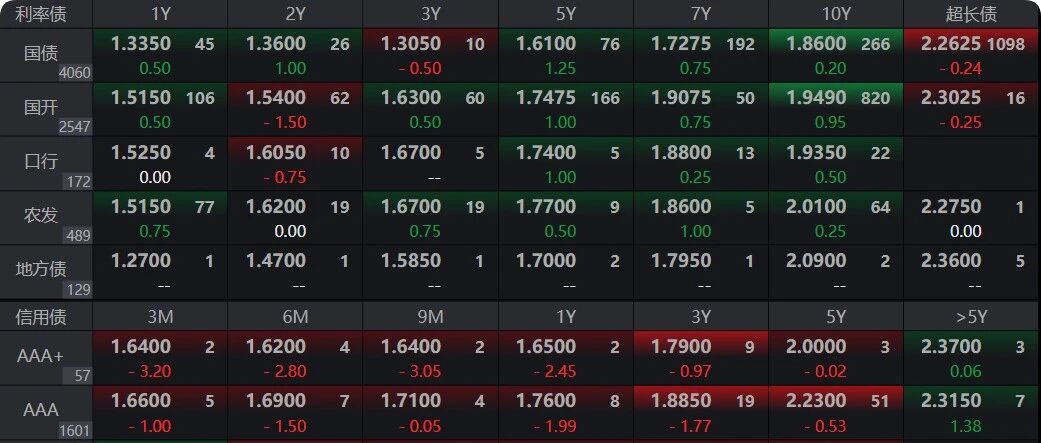
Core Viewpoints - The current bond market is expected to remain volatile, with a possibility of the 10-year government bond yield breaking below 1.80%, but the downward space may be limited without substantial positive factors like reserve requirement ratio cuts or increased trading volume of government bonds [3][11][15] - The equity market maintains an optimistic outlook, with calendar effects likely benefiting small-cap stocks and sustaining strong performance [3][8][15] Bond Market Analysis - The bond market has shown a slight strengthening trend recently, driven by renewed expectations of loose monetary policy, but the performance has been asymmetric, with mid to long-term bonds performing better while ultra-long 20-year and 30-year bond yields have risen [4][12] - A recalibration of perceptions regarding the bond market is necessary, as bonds may now be viewed as weak assets despite some positive catalysts, contrasting with the previous bull market from 2021 to early 2025 [4][12] - The 30-year bond's recognition needs to be reassessed, as its performance has been tied to specific macroeconomic factors, and the current yield spread is at a relatively low level historically [5][13] - The difficulty in capturing market waves has increased, with rapid pricing adjustments occurring within 1-2 trading days, necessitating enhanced trading capabilities [5][12] February Calendar Effects - The bond market in February has historically shown mixed performance, with 4 years of gains and 6 years of losses from 2016 to 2025, influenced by cash demand during the Spring Festival [6][14] - The equity market in February exhibits a style divergence favoring small-cap stocks, driven by a lack of verifiable financial data and a shift in market logic towards future growth narratives [7][14] - The timing of the Spring Festival can significantly impact February's equity market performance, with later festivals correlating with stronger market movements due to the convergence of seasonal and policy factors [7][14]



港股上市公司积极回购!小米集团-W年内回购金额接近去年同期10倍
Mei Ri Jing Ji Xin Wen· 2026-01-22 08:52
Group 1 - The core point of the article highlights the significant share buybacks by Hong Kong-listed companies in early 2026, indicating strong confidence from management in their future prospects [1] - Tencent Holdings has repurchased shares worth a total of 6.3 billion HKD in 2026, while Xiaomi Group-W has repurchased 2 billion HKD, showcasing a trend among leading companies [1] - Xiaomi Group-W's buyback amount is nearly 10 times higher than the same period last year (2.2 million HKD), with the number of shares repurchased increasing almost eightfold (from 682,000 shares last year) [1] Group 2 - Historical data from Huaxia Fund indicates a notable "calendar effect" in the Hong Kong stock market, with better performance in dividends at the end of the year (November-December) [1] - Institutional investors, particularly those focused on dividends, tend to hold onto stocks until the end of the year to benefit from corporate dividends [1] - The technology sector in Hong Kong typically performs poorly in December but shows a general improvement in the first quarter of the following year [1] Group 3 - Investors are encouraged to pay attention to Hong Kong technology core index-related ETFs in the first quarter, such as the Hang Seng Technology Index ETF (513180.SH), Hong Kong Stock Connect Technology ETF (159101.SZ), and Hang Seng Internet ETF (513330.SH), which are traded on the A-share market and support T+0 intraday trading [1]

沪指下探4080点后V型拉升,广发证券:看好一年当中“日历效应”最强的上涨区间
Mei Ri Jing Ji Xin Wen· 2026-01-20 03:13
Group 1 - The Shanghai Composite Index experienced a low opening and a subsequent decline to 4080 points, followed by a V-shaped recovery back to 4100 points, indicating strong market resilience in digesting the "cooling" effects [1] - There are still opportunities for bullish investments, with funds shifting towards sectors with less resistance such as electric power, consumer goods, real estate, and transportation [1] - Recent outflows from broad-based ETFs, including the CSI 300, ChiNext, and STAR Market, totaled over 200 billion yuan in the past week, reflecting a trend of capital withdrawal from these instruments [1] Group 2 - Huaxia Fund noted that the recent cooling of speculative market sentiment may not be negative, as it provides an opportunity for hesitant investors to enter the market, thus supporting the bottom and promoting sustained market performance [2] - During the dense pre-disclosure period of annual reports in late January, the market sentiment is expected to be cautious, and investors are advised to accumulate positions in large-cap value and growth styles, such as the CSI 300 ETF and the ChiNext 50 ETF, which have the lowest management fee rates in the market at 0.15% per year [2]

“春季躁动”复盘与启示
Guo Tai Jun An Qi Huo· 2026-01-12 13:42
Report Summary 1. Industry Investment Rating No industry investment rating is provided in the report. 2. Core Viewpoints - Historically, the A-share market has a typical calendar effect, with the "Spring Rally" occurring around the end of the year, through the Spring Festival, and until the "Two Sessions." It has rarely been absent, lasting about 40 trading days on average, with the Wind All A Index rising an average of 20% and a median increase of 15%. The rally tends to favor small-cap growth stocks [1][5]. - The core logic behind the "Spring Rally" lies in the performance vacuum period, which creates room for expectation games. Positive policy expectations from the beginning - of - year policy kick - off and the "Two Sessions," seasonal improvement in liquidity, and abundant theme investment opportunities contribute to a positive feedback loop of "fund inflow - price increase - further fund inflow" [1]. - The continuation of the "Spring Rally" requires dynamic attention to core drivers such as policies, liquidity, and risk preferences. Key time points include before the Spring Festival and around the second quarter. The full - year market requires both "valuation + earnings" dual - wheel drive, especially driven by the consensus of earnings repair [2][24]. 3. Summary by Directory 3.1 "Spring Rally" Review - Except for 2022 (unilateral decline) and 2015 (atypical unilateral rise), the "Spring Rally" has occurred in other years since 2010. It usually starts between December and January, with 5 times starting in December, 7 times in January, and 3 times in February. The average duration is about 40 trading days, and the Wind All A Index rises an average of 20% with a median increase of 15%. Small - cap growth stocks are favored in 8 out of 15 rallies [5]. 3.2 "Spring Rally" Driving Factors - The "Spring Rally" is driven by liquidity and policy expectations rather than performance. After the new year, institutional funds replenish positions, and there is a peak in credit issuance. Economic data and corporate earnings are in a vacuum, and policies create a positive atmosphere at the beginning of the year. If the market has adjusted significantly before the rally, the subsequent increase is often higher than average [9]. 3.3 Turning Drivers of the "Spring Rally" - The turning points in the "Spring Rally" are mainly affected by internal and external factors. Internally, a shift in policies, such as a reduction in the intensity of pro - growth policies or actions to cool the stock market, can lead to market adjustments. Externally, overseas economic recessions, geopolitical events, or trade frictions can also impact the domestic market [12][13]. - In early 2019, after the market adjustment in 2018, policies turned to "Six Stabilities" at the end of 2018, leading to a significant "Spring Rally." However, in the second quarter of 2019, the Politburo meeting did not mention "Six Stabilities" and re - emphasized "housing is for living in, not for speculation," and trade frictions reignited, causing the rally to end [14][17]. - In early 2012, after the market decline in 2011, policies shifted at the end of 2011, resulting in a "Spring Rally." The rally ended due to policy tightening, pessimistic economic expectations, and external factors such as the re - emergence of the European debt crisis and the US fiscal cliff issue [19][20]. 3.4 Two - stage Focus for the Current "Spring Rally" - To predict the sustainability or inflection point of the current "Spring Rally," it is necessary to track the realization of positive expectations and key time points. Before the Spring Festival, pay attention to the local "Two Sessions," the confirmation or refutation of easing expectations, and the appointment of the new Fed chair. Around the second quarter, focus on events such as Trump's possible visit to China in April, the Politburo meeting in late April, the verification of real - world demand and macro data during the "Golden March and Silver April," and corporate earnings reports [23][24].
A股午评 | 沪指涨超1%刷新十年多新高!牛市旗手冲锋 资金青睐高位人气股
智通财经网· 2026-01-06 03:53
Market Overview - The Shanghai Composite Index opened high and broke through the peak from November 14, 2025, reaching a new high since July 2015, with a half-day trading volume of 1.78 trillion yuan, an increase of 145.5 billion yuan from the previous trading day [1] - The market saw nearly 3,700 stocks in the green, with the Shanghai Composite Index rising by 1.14% and the Shenzhen Component Index increasing by 0.81%, while the ChiNext Index slightly decreased by 0.04% [1] Seasonal Trends - According to Zheshang Securities, the "spring market" effect typically leads to a phase of rising stock prices in the first quarter, with small and medium-sized growth indices performing the best during this period [1] Sector Performance Financial Sector - Major financial sectors, including brokerage and insurance, showed strong performance, with Huayin Securities hitting the daily limit and China Ping An reaching a five-year high [1] Brain-Computer Interface - The brain-computer interface sector experienced a surge, with nearly 20 stocks hitting the daily limit, driven by breakthroughs in clinical trials of a new fully implanted brain-computer interface product [3] - The industry is expected to enter a critical phase of large-scale application due to strong policy support and continuous technological advancements [3] Non-Ferrous Metals - The non-ferrous metals sector saw a resurgence, with companies like Luoyang Molybdenum and Zijin Mining reaching historical highs, supported by rising prices in the London Metal Exchange [4] - The global economic fluctuations and geopolitical tensions are making non-ferrous metals a core asset for long-term investment [4] Solid-State Batteries - The solid-state battery sector gained traction, with several stocks hitting the daily limit following the announcement of a commercially viable solid-state battery at the CES 2026 [5] - The industry is expected to gradually move towards industrialization due to policy emphasis and active participation from industry players [5] Semiconductor Sector - The semiconductor sector remained active, with storage chips and semiconductor equipment leading the gains, as companies like Northern Huachuang continued to reach historical highs [6] Institutional Insights Market Outlook - According to Debon Securities, following a strong market opening, a slow bull market is anticipated, with expectations of a gradual spring market unfolding [9] - The current trend indicates that the A-share market may continue to experience a slow bull market, with a focus on technology, non-bank financials, and consumer sectors [8] Emerging Industries - Orient Securities highlighted that the market's upward trend is supported by new industries such as commercial aerospace, AI, and brain-computer interfaces, which are expected to attract increased investment [10]

【笔记20251230— 债农:抢跑开始了吗?】
债券笔记· 2025-12-30 12:18
Core Viewpoint - The article emphasizes that "expectation differences" are the basis for trading decisions, as without these differences, there are no discrepancies or volatility in the market [1]. Market Overview - The market is experiencing mixed movements with expectations of a better PMI and a balanced, slightly loose funding environment [3]. - The central bank conducted a 3,125 billion yuan reverse repurchase operation, with 593 billion yuan maturing today, resulting in a net injection of 2,532 billion yuan [3]. - Funding rates remain stable, with DR001 around 1.24% and DR007 slightly increasing to approximately 1.69% due to year-end factors [3]. - The stock market showed fluctuations but ultimately closed flat, while the bond market anticipates a better PMI, leading to an overall rise in interest rates [3]. Bond Market Insights - The 10-year government bond yield opened slightly higher at 1.86% and fluctuated within a narrow range, with the lowest point reaching 1.85% before rising again in the afternoon due to concerns over upcoming PMI data [3]. - The article notes that the recent surge in lithium carbonate futures prices, which increased over 66%, has led to losses for industrial companies, highlighting the disconnect between futures hedging and spot market prices [3]. Trading Sentiment - The article discusses the sentiment among bond traders, suggesting that the "running ahead" may refer to preemptively exiting positions, indicating a potential miscalculation regarding the expected decline in interest rates in December [3]. - The stock market is also mentioned to be engaging in speculative activities, with references to seasonal trading patterns [3].
港股科技龙头显著调整,“日历效应”下关注超跌反弹
Mei Ri Jing Ji Xin Wen· 2025-12-30 01:29
Core Viewpoint - The Hong Kong stock market, particularly in the technology sector, has been experiencing adjustments due to liquidity issues and market trading structure, with expectations for a potential rebound in the first quarter of the upcoming year [1] Group 1: Market Conditions - The adjustments in the Hong Kong technology stocks are attributed to several factors: profit-taking by southbound funds due to year-end rankings, a peak in stock unlocks increasing liquidity tension, and a focus on AI trading primarily in the A-share market rather than in Hong Kong [1] - Historical data indicates that the period from Christmas to the Spring Festival is a spring rally period for the Hong Kong stock market, showing a significant "calendar effect" [1] Group 2: Investment Opportunities - The Hong Kong Stock Connect technology ETFs (159101.SZ, 513330.SH, 513180.SH) are currently valued relatively low, with AI-related stocks having undergone significant adjustments, suggesting limited further downside risk [1] - The first quarter is expected to see improved liquidity in the Hong Kong market, driven by the start of a new assessment cycle for institutions in January and the conclusion of the stock unlock peak, alongside expectations of dovish new nominations [1] - The Hong Kong Stock Connect technology ETF (159101.SZ) and its linked fund (025806.OF) are highlighted for their balanced distribution across high-end manufacturing, biotechnology, and internet software applications, with a maximum single stock weight limit of 15%, indicating a higher concentration on core leading companies in Hong Kong [1]
黄金的短期头部在哪里-写在 4510 美元/盎司的“平安夜”
Sou Hu Cai Jing· 2025-12-26 06:11
Core Viewpoint - Gold prices have reached new highs, with spot gold breaking through $4,510 per ounce, reflecting a broader increase in the precious metals sector, including silver and copper [1] Group 1: Technical Analysis - Three technical signals indicate a potential short-term peak for gold prices: a "shooting star" pattern, MACD divergence, and a declining RSI [3] - The "shooting star" pattern formed with significant upper shadows on the candlestick chart, suggesting strong selling pressure [3] - The MACD indicator shows a divergence, with prices reaching new highs while the indicator peaks are declining, marking the first occurrence since September [3] - The RSI has shown a downward trend from 68 to 64 over three days, indicating a hidden divergence as prices remain above $4,500 [3] Group 2: Fundamental Factors - Market expectations for interest rate cuts have increased, with an 84.1% probability of a 25 basis point cut by December 2025, limiting potential upside for gold unless the Federal Reserve adopts a more hawkish stance [3] - Geopolitical tensions, such as the blockade of Venezuelan oil tankers and escalating issues in the Red Sea, have temporarily boosted gold prices, but ETF holdings have decreased by 3 tons, indicating profit-taking by institutions [3] Group 3: Historical Patterns and Price Predictions - Historically, March has seen significant volatility in gold prices, with past instances showing over $100 fluctuations, suggesting a high probability of a peak in March [4] - Analysts predict that if gold fails to close above $4,530 twice this week, a short-term peak will be confirmed, with potential pullback targets at $4,400 and $4,320 [4] - Despite short-term corrections, the long-term outlook remains bullish, with expectations for gold to reach $5,000 by 2026 due to ongoing central bank purchases and dollar credit expansion [4]

内需政策利好来袭,低估资产备受关注
Sou Hu Cai Jing· 2025-12-23 05:44
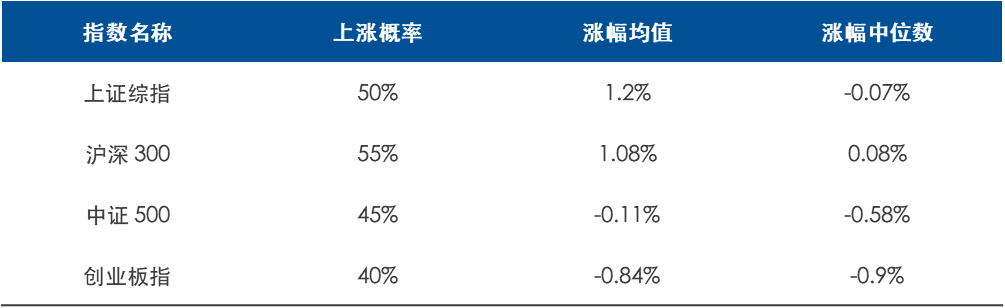
Group 1 - The central economic work conference has prioritized domestic demand expansion, which is expected to support the consumption sector and cyclical assets, with a focus on large-scale equipment updates and consumer goods replacement programs [2] - A special long-term bond of 500 billion yuan will be issued to support domestic demand expansion, alongside plans to increase residents' income through stable employment and pension improvements [2] - The National Value 100 Index aligns well with policy directions, with its top three sectors—home appliances, banking, and non-ferrous metals—accounting for nearly 50% of the index, making it a potential beneficiary of the new policies [2] Group 2 - Historical data shows that the value style has outperformed growth style in the second half of December, with the Shanghai Composite Index having a 50% probability of rising and an average increase of 1.2% [3][4] - The National Value 100 Index is expected to benefit from both improved earnings fundamentals in cyclical industries and the year-end calendar effect, leading to a dual boost in profitability and valuation [4] Group 3 - The National Value 100 Index offers a dual advantage of dividends and long-term performance, with a current dividend yield of 5.1%, higher than the 4.6% of the CSI Dividend Index and 3.3% of the National Free Cash Flow Index [5] - Since its inception, the National Value 100 Index has achieved an annualized return of 17.3%, outperforming other indices in terms of risk-return ratio [5][7] - Recent performance indicates that the National Value 100 Index has been effective as a "dividend+" strategy, with significant gains since October, highlighting its stability and representativeness in the value style [7][9]
财信证券宏观策略周报(12.22-12.26):布局“春季躁动”行情,低吸科技成长方向-20251221
Caixin Securities· 2025-12-21 12:02
Group 1 - The report highlights the "spring market rally" effect, indicating that from the Central Economic Work Conference to the National People's Congress, the A-share market typically experiences a rally, with an average increase of 18.30% over 57 days based on historical data from 2009 to 2025 [4][7] - The report suggests that the market is expected to gradually enter a "spring market rally" phase, driven by increased liquidity and risk appetite, alongside favorable domestic policy expectations [4][7] - Key sectors to focus on include commercial aerospace, satellite industry, national defense, AI applications, and new consumption areas such as health, cultural tourism, and pet economy, which are expected to benefit from policy support [4][14][16] Group 2 - The macroeconomic recovery foundation remains to be solidified, with fixed asset investment declining by 2.6% year-on-year from January to November, indicating a need for policy measures to boost domestic demand [8][11] - The report notes that public budget expenditure increased by 1.4% year-on-year, with significant growth in social security, technology, and environmental protection spending, reflecting a focus on improving livelihoods and technological advancement [11] - The Japanese central bank's recent interest rate hike is expected to have limited impact on global markets, as the market had already priced in this increase, suggesting a continued trend of easing liquidity globally [12] Group 3 - The report provides an overview of A-share market performance, noting a slight increase in the Shanghai Composite Index by 0.03% and a decrease in the Shenzhen Component Index by 0.89% during the specified week [17] - The average daily trading volume in the A-share market was reported at 17,380.31 billion, reflecting a decrease of 10.12% compared to the previous week [17] - The report also highlights the performance of various sectors, with retail, non-bank financials, and beauty care showing the highest gains [17][20]