
资产负债表衰退

Search documents
“消费刺客”退烧
创业邦· 2025-08-27 15:31
Core Viewpoint - The article discusses the challenges faced by Baiguoyuan, a fruit retail brand, highlighting its struggle with consumer trust and market dynamics as it attempts to maintain high pricing amidst changing consumer expectations and competitive pressures [6][8][12]. Group 1: Baiguoyuan's Performance - On August 15, 2025, Baiguoyuan issued a mid-year earnings warning, projecting a revenue decline of up to 25% year-on-year, with a net loss estimated between 330 million to 380 million yuan. The actual revenue was reported at 4.376 billion yuan, a decrease of 21.8%, with a net loss of 342 million yuan and a 27% drop in store count to 4,386 [8][9]. - The brand's previous model, which relied on high-quality standardized fruit to command a premium price, has faltered due to quality control issues and a disconnect between consumer expectations and actual product quality [8][10][12]. Group 2: Market Dynamics - The article notes a broader trend of high-priced consumer brands facing pressure as the market shifts towards value and cost efficiency. This is evident in the new tea and coffee sectors, where brands like Heytea and Luckin Coffee have adjusted their pricing strategies to remain competitive [14][16]. - The oversupply in the market has led to a significant number of closures, with over 20,000 beverage outlets disappearing in the past year, indicating intense competition and a shift in consumer preferences towards lower-priced options [19][21]. Group 3: Consumer Behavior Changes - Consumer behavior is shifting towards prioritizing value and cost-effectiveness, influenced by economic factors such as declining asset values and rising debt obligations. This has resulted in a higher savings rate and reduced discretionary spending [21][22]. - The article highlights that even affluent cities like Beijing and Shanghai are experiencing slower retail growth compared to national averages, reflecting a broader trend of cautious consumer spending [21][22]. Group 4: Future Outlook for Baiguoyuan - Baiguoyuan is at a crossroads, needing to either establish advantages in scale, efficiency, and cost control or create unique value propositions to survive in a market increasingly divided between cost-driven and experience-driven brands [27][28]. - The brand's current positioning, caught between high convenience and high operational costs, limits its ability to compete effectively in a price-sensitive environment [28].


投资者观点反馈多,平安公司债ETF(511030)回撤稳定助力投资者穿越牛熊
Sou Hu Cai Jing· 2025-08-26 06:26
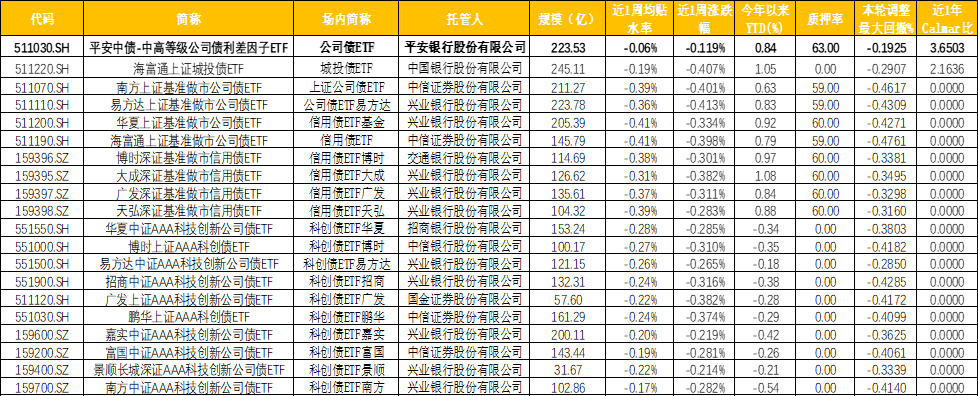
Public Funds - The current market is transitioning from liquidity-driven to fundamental verification, with technology growth (AI, robotics) and consumer recovery as core themes, adjusting holdings dynamically based on policy catalysts and earnings realization [1] - Maintaining a bull market mindset while being cautious of short-term technical pullback risks, optimizing risk-reward ratios through diversified allocation and disciplined operations [1] Private Funds - Excluding the real estate market, high-frequency economic data in the U.S. shows robust performance, indicating that the U.S. economy remains in a healthy wage-employment-inflation cycle, with reduced likelihood of a significant cooling in the labor market [2] - The diffusion of AI applications is gradually reflecting in labor productivity improvements, leading to the belief that the U.S. will not enter a recession [2] Overseas LO - At the Jackson Hole meeting, Powell expressed concerns about the labor market, laying the groundwork for a potential interest rate cut in September, which would create a favorable environment for cyclical stocks [3] - Cyclical stocks have recovered recent losses, and computing hardware remains strong, with new growth points emerging as products are updated [3] - Currently, consumer sectors are viewed as less attractive in the existing environment [3] Hedge Funds - The market is flourishing with discussions around interest rate cuts and anti-involution, highlighting increasing disparities between large and small market capitalizations and between economic fundamentals and valuations [4] - Investors are looking for signs of fundamental recovery, particularly improvements in core indicators like PPI and CPI, hoping for China to emerge from deflation [4] - The recent bond market adjustment has seen Ping An's corporate bond ETF (511030) maintain the best performance in terms of controlled drawdown, with minimal market discount and stable net value [4]
“消费刺客”退烧
Hu Xiu· 2025-08-26 00:07
Core Viewpoint - The controversy surrounding the founder of Baiguoyuan's statement on "educating consumers" highlights the disconnect between brand management and consumer expectations, leading to significant financial losses for the company [1][7][11]. Group 1: Company Performance - Baiguoyuan issued a mid-year earnings warning on August 15, 2025, predicting a revenue decline of up to 25% year-on-year, with a net loss estimated between 330 million to 380 million yuan [2]. - The actual revenue reported was 4.376 billion yuan, a year-on-year decrease of 21.8%, with a net loss of 342 million yuan and a reduction in store count by approximately 27% to 4,386 stores [2][6]. Group 2: Market Trends - The rapid shift in consumer sentiment and market dynamics indicates that brands resisting these changes will incur significant costs, as seen with Baiguoyuan [3][4]. - The high-priced consumer segment is facing pressure, with the narrative of consumption upgrading being challenged as market realities shift [4][9]. Group 3: Consumer Behavior - Baiguoyuan's previous model relied on high-quality fruit to justify premium pricing, but issues with product quality have eroded consumer trust [5][6]. - The founder's comments reflect a misalignment with consumer expectations, as consumers are becoming more price-sensitive and pragmatic [7][11]. Group 4: Industry Dynamics - The new consumption landscape is marked by a decline in high-priced brands across various sectors, including tea and coffee, as companies adjust pricing strategies to remain competitive [10][11]. - The oversupply in the market has led to increased competition, with many brands struggling to differentiate themselves, resulting in a significant number of closures in the beverage sector [15][19]. Group 5: Future Outlook - The industry is transitioning towards two distinct business models: cost-driven efficiency and value-driven experience, with brands needing to adapt to survive [30][32]. - Baiguoyuan must either establish advantages in scale and cost control or create unique value propositions to avoid being squeezed out of the market [36][37].
1990年代后日本货币政策框架的演变进程
NORTHEAST SECURITIES· 2025-08-19 09:13
Group 1: Monetary Policy Framework - Japan's monetary policy framework has undergone several structural changes since the introduction of the zero interest rate policy in February 1999, primarily due to prolonged deflation and economic stagnation[1] - The direct goal of the monetary policy framework from 2013 to 2023 was to address the long-term economic stagnation and chronic deflation that followed the bursting of the economic bubble in the early 1990s[2] - The introduction of the quantitative and qualitative easing (QQE) policy in April 2013 aimed to double the monetary base within two years to stabilize inflation at 2%[2] Group 2: Key Policy Components - The QQE policy was complemented by the introduction of negative interest rates in January 2016 and the yield curve control (YCC) policy in September 2016[3] - The QQE policy led to a temporary increase in the Consumer Price Index (CPI) growth rate to 3.7% in 2014, but it fell back to around 0% due to declining global commodity prices and an increase in the consumption tax[2] - The negative interest rate policy aimed to lower nominal interest rates below the natural rate and alter overall inflation expectations, with excess reserves divided into three categories with different interest rates[3] Group 3: Economic Impact - Japan's natural rate of interest has been on a downward trend since the 1990s, contributing to weak demand and low corporate growth expectations[2] - The prolonged deflation led to a stagnation in the normal economic cycle, where price increases, corporate profits, wage growth, and demand expansion became disconnected[2] - The structural issues in Japan's economy resulted in a shift from a capital shortage to an excess savings situation among firms, leading to "balance sheet recession" and low potential GDP growth rates[2]

人类为什么总喜欢造新词儿
Hu Xiu· 2025-08-03 09:58
Group 1 - The article discusses the disparity in economic recovery in Hong Kong, highlighting a "jobless recovery" phenomenon where GDP is growing but employment is not improving [1][4][5] - Despite a reported 10 consecutive quarters of GDP growth and a 16-month rise in exports, many residents feel the economic situation is poor, with low consumer spending and business closures [2][3] - The term "jobless recovery" is used to describe the current economic state of Hong Kong, indicating a lack of job growth despite overall economic indicators suggesting recovery [4][7] Group 2 - The article references a podcast discussing the economic conditions in Hong Kong, questioning the true state of the economy and the reasons behind the perceived disparity in economic experiences [5] - The concept of "jobless recovery" has historical roots, having been used since the 1990s to describe situations where economic growth does not correlate with job growth [7] - The discussion includes the broader implications of creating new economic concepts to explain unusual economic phenomena, suggesting that language plays a crucial role in shaping economic understanding [8][12][20]

【笔记20250702— 债市也需“反内卷”】
债券笔记· 2025-07-02 11:37
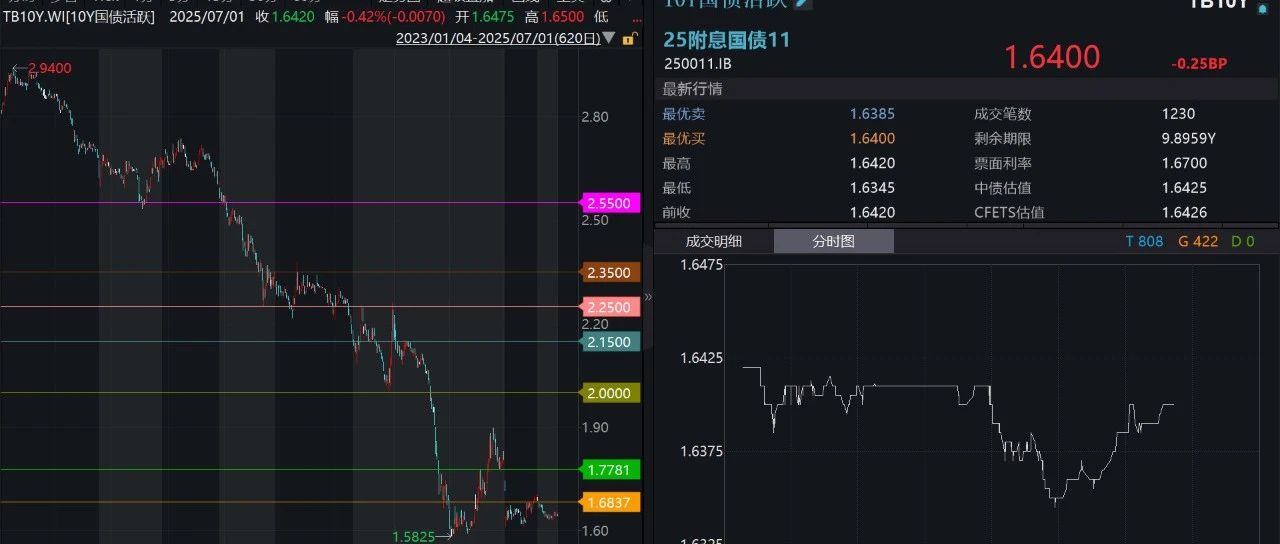
Core Viewpoint - The article discusses the current state of the bond market, emphasizing the need for a "de-involution" approach, particularly in the A-bond sector, amidst a backdrop of weak stock market performance and a balanced, loose funding environment [1][5]. Group 1: Market Conditions - The central bank conducted a 7-day reverse repurchase operation of 985 billion yuan, with 3,653 billion yuan maturing today, resulting in a net withdrawal of 2,668 billion yuan [2]. - The funding environment remains balanced and loose, with the price of funds continuing to decline; DR001 is around 1.36% and DR007 is around 1.51% [3]. - The stock market is experiencing weak fluctuations, with further loosening of the funding environment leading to a decline in interest rates; the 10-year government bond yield opened at 1.6425% and fell to a low of 1.6345% before slightly rebounding to 1.64% [4]. Group 2: Investment Themes - The article highlights the "de-involution" theme, particularly in the supply-side concept, suggesting that the A-bond market needs to focus on longer durations, bypassing the 10-year and 30-year bonds to directly target the 50-year bonds [5]. - The recent decline in the 10-year government bond yield to 1.6% is interpreted as a standard reaction to balance sheet recession, where the primary goal shifts from profit pursuit to survival and debt repayment, leading to a drastic drop in borrowing willingness [5].
洪灏:2025下半年展望-周期的博弈(上)
2025-06-15 16:03
Summary of Key Points from the Conference Call Company/Industry Involved - The discussion primarily revolves around the Chinese stock market and macroeconomic conditions, with a focus on the A-share market and its dynamics. Core Insights and Arguments 1. **Historical Market Performance**: The A-share market has fluctuated between 2,500 and 3,500 points over the past decade without significant breakthroughs, indicating a lack of decisive upward movement despite various expert predictions [3][4][5]. 2. **Market Dynamics**: The A-share market is characterized by a greater emphasis on financing rather than investment, with companies extracting more funds from the market than they return through dividends or buybacks [3][4]. 3. **Earnings Stability**: The earnings per share (EPS) in the A-share market have remained stable over the past decade, suggesting that stock price fluctuations are primarily driven by changes in valuation influenced by market risk appetite and liquidity conditions [4][5]. 4. **Liquidity Conditions**: The future performance of the market is expected to hinge on liquidity conditions, particularly in light of external uncertainties and internal demand challenges [5][10]. 5. **Predictions for 2025**: The report made several contrarian predictions, including a significant drop in the US stock market, a strong performance from the Chinese market, and a depreciation of the US dollar alongside a surge in gold and precious metals [6][10]. 6. **Real Estate Market Challenges**: The real estate sector continues to be a drag on China's economic growth, with recent declines in sales and prices, indicating that the real estate bubble is still in the process of being deflated [10][14]. 7. **Local Government Debt**: Measures have been introduced to alleviate local government debt burdens, including increasing debt limits and allocating special bond quotas to address hidden debts [10][11]. 8. **Comparative Analysis**: The report draws comparisons between the debt management strategies of China, Japan, and the US, highlighting the importance of timely public sector intervention in managing private sector debt [17][18][19][28]. 9. **Consumer Confidence**: Consumer confidence in China remains at historically low levels, which is exacerbated by declining real estate prices and heavy debt burdens [24][29]. 10. **Future Market Outlook**: The report suggests that without significant monetary easing from the central bank, liquidity conditions are unlikely to improve fundamentally, which could lead to continued market volatility [29][36]. Other Important but Potentially Overlooked Content 1. **Geopolitical Risks**: The ongoing geopolitical tensions, particularly between Iran and Israel, are noted as potential disruptors to global markets, but may also present buying opportunities for investors [37][38]. 2. **Market Performance Metrics**: The Chinese onshore market has shown modest returns year-to-date, indicating a stable but unremarkable performance compared to global markets [37]. 3. **Investment Strategy**: The focus for investors should be on capturing trading opportunities arising from policy expectation changes rather than relying solely on fundamental growth [37][39].
宝城期货资讯早班车-20250612
Bao Cheng Qi Huo· 2025-06-12 01:21
1. Report Industry Investment Rating No relevant content provided. 2. Core Viewpoints of the Report - The China - US economic and trade consultation mechanism's first meeting achieved positive results, stabilizing bilateral economic and trade relations [2][14] - The global commodity market shows various trends, with different performances in metals, energy, and agricultural products [5][9][10] - The bond market is performing strongly, and the currency market has complex interest - rate changes [21][22] - The stock market has certain trends, with A - shares and Hong Kong stocks rising, and insurance funds accelerating their entry into the market [31][32] 3. Summary by Relevant Catalogs 3.1 Macro Data - In Q1 2025, GDP grew by 5.4% year - on - year, remaining stable compared to the previous quarter [1] - In May 2025, the manufacturing PMI was 49.5%, up from the previous month, while the non - manufacturing PMI was 50.3%, slightly down [1] - In April 2025, social financing scale increment decreased significantly compared to the previous month, and financial institution RMB loans also decreased [1] 3.2 Commodity Investment 3.2.1 Metals - Spot gold reached a four - day high due to concerns about the Middle East situation. Central banks are increasing gold reserves at a record pace [5] - Copper, tin, lead, and other metal inventories in the London Metal Exchange decreased, with some reaching multi - year lows [6] - Zimbabwe will ban lithium concentrate exports from 2027 [6] 3.2.2 Coal, Coke, Steel, and Minerals - On June 11, 19 steel mills raised scrap steel purchase prices [7] 3.2.3 Energy and Chemicals - The National Energy Administration will carry out hydrogen energy pilot projects [8] - The European market drives the growth of US natural gas futures trading [9] - The global oil and gas industry outlook is deteriorating due to factors such as US tariffs [9] 3.2.4 Agricultural Products - China's cotton planting area has reached 4482.3 million mu this year, with good growth, especially in Xinjiang [10] - Global coffee prices soared in 2024, and Brazil's coffee production decline affected the market [10] - Argentina's wheat production forecast for the 2025/26 season decreased [11] 3.3 Financial News 3.3.1 Open Market - On June 11, the central bank conducted 1640 billion yuan of 7 - day reverse repurchase operations, with a net withdrawal of 509 billion yuan [13] 3.3.2 Key News - The China - US economic and trade consultation mechanism's first meeting achieved positive results [14] - As of May, over 1.6 trillion yuan of replacement bonds were issued, completing over 80% of this year's target [15] - Many provinces have adjusted their budgets to increase borrowing and spending [16] 3.3.3 Bond Market - The bond market performed strongly, with rumors of the central bank inquiring about six - month term repurchase. Treasury bond futures rose [21] - European bond yields generally rose, while US bond yields fell [24] 3.3.4 Foreign Exchange Market - The on - shore RMB against the US dollar rose, and the US dollar index fell [25] 3.3.5 Research Report Highlights - Shenwan Fixed Income believes that convertible bond valuations are expected to rise [27] - CITIC Fixed Income argues that China does not have an asset - liability balance sheet recession problem [27] - CICC Research Report shows that China's consumer market features "consumption segmentation" [28] 3.4 Stock Market - The Shanghai Stock Exchange is promoting the inclusion of Science and Technology Innovation Board ETFs in the fund transfer platform [31] - A - shares and Hong Kong stocks rose, with insurance funds accelerating their entry into the market [31][32] - The stock - repurchase and share - increase re - loan tool is stabilizing the capital market [32]
我不想过这样的生活
集思录· 2025-06-08 14:43
Core Viewpoint - The article discusses the current economic situation in China, drawing parallels with Japan's prolonged recession, emphasizing the reluctance of companies to invest despite low interest rates, and the implications for economic growth and individual aspirations [2][3]. Group 1: Economic Conditions - The current interest rates for one-year bank deposits have dropped to 0.95%, which is lower than the rates for riskier loans, indicating a failure in risk pricing models and a shift in market dynamics [4]. - Companies are hesitant to take loans or invest, opting instead to focus on debt repayment, which leads to insufficient domestic demand and potential economic stagnation [2][3]. Group 2: Comparison with Japan - The prolonged recession in Japan was attributed to companies focusing on repairing their balance sheets rather than pursuing new investments, a situation that could be mirrored in China [2]. - Japan's experience shows that even with low borrowing costs, companies may choose not to invest, leading to a cycle of stagnation and deflation [2][3]. Group 3: Societal Implications - The article highlights a generational shift where younger individuals may feel disillusioned and opt for a "lying flat" lifestyle instead of pursuing entrepreneurial ventures, reflecting a broader societal trend [5][6]. - The discussion includes the importance of economic growth for improving living standards, particularly for those in rural areas or smaller cities who aspire for better opportunities for their children [2]. Group 4: Future Opportunities - Potential investment opportunities may arise from global economic shifts, suggesting that companies should focus on international markets to mitigate domestic challenges [3]. - The article encourages young individuals to seek opportunities abroad as a means to escape the current economic constraints [3].

投资策略周报:一季报并非真正盈利底的原因及未来盈利底的探讨-20250608
KAIYUAN SECURITIES· 2025-06-08 09:29
Group 1 - The core point of the report indicates that the profit growth rate for Q1 2025 turned positive primarily due to a low base effect rather than an inherent improvement in the profit cycle [2][13][21] - The report highlights that the A-share market is currently in the longest historical negative growth period, which has resulted in a very low base for comparison [2][15] - The analysis of Q1 2025 shows that overall demand has not yet shown signs of recovery, with revenue growth remaining weak [2][13] Group 2 - The report identifies that the profit growth rate in Q1 2025 exhibited structural differentiation, with significant contributions from the non-bank financial sector, non-ferrous metals, and agriculture, forestry, animal husbandry, and fishery sectors [3][33] - Non-bank financials contributed 51.4% to the profit growth, followed by non-ferrous metals at 33.4%, and agriculture, forestry, animal husbandry, and fishery at 30.4% [3][34] - Excluding these three sectors, the remaining industries continued to experience negative growth, with a decline of -0.61% [3][33] Group 3 - The report predicts that the inherent profit bottom for A-shares is not expected to occur before Q3 2025, considering the repair of corporate balance sheets and the impact of medium to long-term loans on industrial profits [4][36] - The analysis suggests that the difference in year-on-year growth rates between non-financial enterprises and household deposits serves as a leading indicator for A-share earnings performance [4][36][40] - The report also notes that the growth of new medium to long-term loans typically leads to an increase in corporate capital expenditures and profit expansion, although the current trend shows a decline [4][37][39] Group 4 - The report outlines that several industries are expected to maintain a growth rate of over 20% in Q1 2025, excluding base effects, including optical electronics, feed, aquaculture, marine equipment, and others [41][42] - The report emphasizes that the overall confidence of enterprises has not yet recovered, with both capacity and inventory cycles remaining at low levels [26][31] Group 5 - The investment strategy suggests focusing on domestic consumption sectors such as clothing, automobiles, and food, as well as technology and military sectors [5][47] - The report recommends attention to cost improvement-driven sectors like aquaculture and precious metals, and structural opportunities in overseas markets due to improved trade relations [5][47]