降息预期

Search documents
黄金暴跌一周!“1983年大抛售”再现,中东“卖金筹资”?
华尔街见闻· 2026-03-21 03:30
Core Viewpoint - This week, gold experienced its largest single-week decline since March 1983, with spot gold prices falling for eight consecutive trading days, marking the longest losing streak since October 2023 [2][3][6]. Group 1: Market Dynamics - The recent plunge in gold prices is attributed to escalating Middle Eastern conflicts, which have driven up energy prices and suppressed interest rate cut expectations. Market bets on a Federal Reserve rate hike have risen to 50%, intensifying the sell-off in precious metals [6][11]. - Historical parallels are drawn to the 1983 gold market crash, which was triggered by a massive sell-off of gold reserves by OPEC countries in response to plummeting oil revenues [6][20]. Group 2: Technical Analysis - The technical indicators for gold have deteriorated significantly, with the 14-day Relative Strength Index (RSI) dropping below 30, indicating an oversold condition. This decline is seen as a result of profit-taking and liquidity clearing [16][17]. - As prices began to fall, stop-loss orders were triggered, leading to a self-reinforcing spiral of selling pressure. Additionally, passive selling from declining stock markets has further impacted gold prices [18][19]. Group 3: Economic Implications - The current macroeconomic environment has worsened, with Goldman Sachs economists predicting that rising energy prices will reduce global GDP by 0.3% over the next year and increase overall inflation by 0.5 to 0.6 percentage points [22][23]. - The ongoing conflict in the Strait of Hormuz has raised concerns about prolonged high oil prices, which could further expose vulnerabilities in global asset markets and complicate the Federal Reserve's policy decisions [23].


【笔记20260320— 加油吧,赶在下周一前】
债券笔记· 2026-03-20 10:49
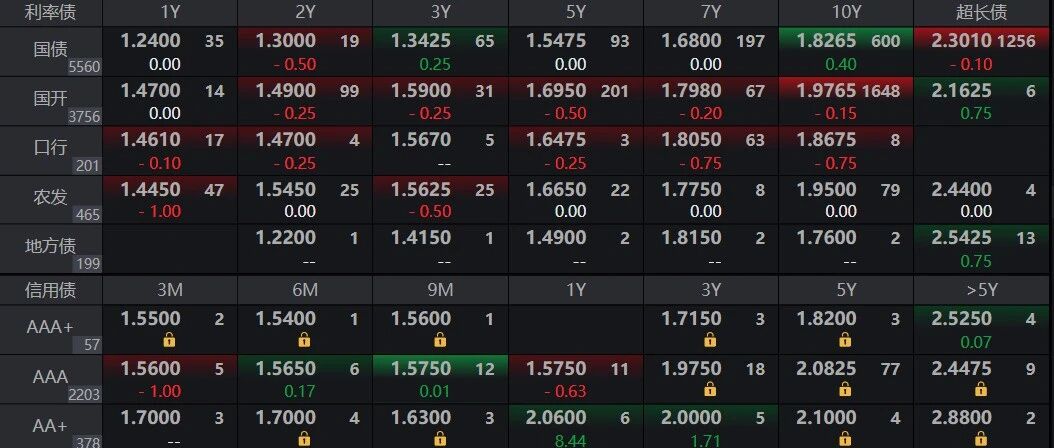
Core Viewpoint - The article discusses the current financial market conditions, highlighting the mixed performance of the stock market and the impact of central bank policies on interest rates and liquidity [3][5]. Group 1: Market Conditions - The stock market experienced a significant decline, with major indices dropping below 4000 points, erasing all gains made in the year [6]. - The central bank is reportedly conducting research to cancel the lower limit on the reserve requirement ratio, which has implications for liquidity in the market [5][6]. - The bond market showed volatility, with the 10-year government bond yield fluctuating around 1.8365% [5][8]. Group 2: Interest Rates and Liquidity - The central bank conducted a 205 billion yuan reverse repurchase operation, with a net withdrawal of 170 billion yuan due to 375 billion yuan of reverse repos maturing [3]. - The funding rates remained stable, with DR001 around 1.32% and DR007 at approximately 1.42% [3]. - The weighted rates for various funding instruments showed slight changes, with R001 at 1.40% and R007 at 1.48%, indicating a mixed trend in the interbank funding market [4].
贵金属市场周报:降息预期延续收敛,金银走势持续承压-20260320
Rui Da Qi Huo· 2026-03-20 09:46
1. Report Industry Investment Rating There is no information about the report industry investment rating in the provided content. 2. Core Viewpoints of the Report - The precious metals market weakened significantly this week, with high - volatility trends continuing under the influence of macro - expectations and geopolitical situations. The price movement was mainly affected by the escalation of the US - Iran geopolitical situation, inflation rebound expectations driven by rising oil prices, and the Fed's hawkish stance [7]. - In the short term, the precious metals market will continue to face a tug - of - war among the risk - aversion sentiment under the US - Iran situation, the tenacity of inflation expectations, and potential economic stagflation risks. If the geopolitical conflict persists and oil prices remain high, inflation expectations may strengthen, suppressing the rebound space of gold and silver. However, if more data confirm the slowdown of the US economy, the market's pricing of stagflation risks may increase, boosting the performance of precious metals [7]. - In the long - term, the long - term bullish logic of precious metals has not fundamentally reversed due to continuous gold purchases by global central banks, the reshaping of the currency system's credit, and the tight supply of silver. In the short term, the prices of gold and silver are expected to oscillate to digest the previous over - heated gains [7]. 3. Summary by Relevant Catalogs 3.1. Weekly Key Points Summary - **Market Review**: This week, the precious metals market weakened significantly. The US - Iran situation, inflation expectations, and the Fed's stance affected the market. The US - Iran tension at the beginning of the week pushed up the US dollar and US bond yields, pressuring gold and silver prices. Although the situation eased later, the upward resistance remained strong. The US economic data showed co - existence of economic slowdown and inflation resilience, and the Fed's stance compressed the interest - rate cut expectations, leading to a significant decline in gold and silver prices on Thursday night [7]. - **Market Outlook**: In the short term, the precious metals market will be influenced by multiple factors. If the geopolitical conflict persists, inflation expectations may strengthen, suppressing the prices. If the US economic slowdown is further confirmed, the market's concern about stagflation may boost precious metals. In the long - term, the long - term bullish logic remains unchanged, and in the short term, the prices are expected to oscillate [7]. 3.2. Futures and Spot Markets - **Price Changes**: As of March 20, 2026, the Shanghai silver main contract 2606 closed at 17,625 yuan/kg, down 15.76% for the week; the Shanghai gold main contract 2606 closed at 1,039.22 yuan/g, down 8.28% for the week [12]. - **ETF Net Positions**: As of March 19, 2026, the net positions of gold and silver ETFs in the overseas market decreased. The SPDR gold ETF net position was 1,062.13 tons, down 1.28% month - on - month; the SLV silver ETF net position was 15,187 tons, down 2.3% month - on - month [17]. - **Regional Investment Demand**: As of February 2026, North American and Asian gold ETFs had net inflows, while European ones had net outflows. North American and European net positions remained high, and Asian ETF positions increased steadily [22]. - **COMEX Net Long Positions**: As of March 10, 2026, the net long positions of COMEX gold and silver both increased. The COMEX gold net position was 163,132 contracts, up 1.90% month - on - month; the COMEX silver net position was 24,578 contracts, up 5.31% month - on - month [27]. - **Basis**: As of March 19, 2026, the basis of Shanghai gold and silver main contracts strengthened week - on - week. The basis of the Shanghai gold main contract was 21.00 yuan/g, and that of the Shanghai silver main contract was 1,062 yuan/kg [30]. - **Internal - External Price Difference**: As of March 19, 2026, the internal - external price difference of gold widened, while that of silver converged. The internal - external price difference of the Shanghai gold main contract was 42.89 yuan/g, and that of the Shanghai silver main contract was 1,859 yuan/kg [33]. - **Inventory Changes**: As of March 19, 2026, the COMEX gold and silver inventories decreased, while the Shanghai Futures Exchange (SHFE) gold and silver inventories increased. The COMEX gold inventory was 32,054,275.29 ounces, down 1.84% month - on - month; the SHFE gold inventory was 105,417 kg, up 0.37% month - on - month. The COMEX silver inventory was 337,892,693 ounces, down 2.10% month - on - month; the SHFE silver inventory was 326,566 kg, up 27.6% month - on - month [36]. - **Gold - Silver Ratio**: As of March 19, 2026, the gold - silver ratio (London gold/silver price) was 63.90, up 1.59 from the previous week [39]. 3.3. Industry Supply and Demand - **Silver Industry**: As of December 2025, the import volume of silver and silver ore sand increased significantly. The import volume of Chinese silver was 334,742.41 kg, up 27.03% month - on - month; the import volume of silver ore sand and its concentrates was 239,325,381 kg, up 32.29% month - on - month. Due to the growth of silver demand in the semiconductor industry, the output of integrated circuits continued to rise, and the year - on - year growth rate tended to be stable. As of February 2026, the monthly output of integrated circuits was 4,807,346 pieces, and the year - on - year growth rate was 12.40% [43][47]. - **Gold Supply and Demand**: In 2025, the investment demand for gold ETFs increased significantly, and emerging - country central banks continued to purchase gold. The total global gold demand reached 5,002 tons, a record high, and the total gold demand amount was 55.5 billion US dollars. The gold investment demand reached a milestone level of 2,175 tons, and the annual net position of gold ETFs increased by 801 tons [51]. - **Silver Supply and Demand**: In 2025, the improvement of the silver supply - demand situation was mainly due to the recovery of mine production and a slight increase in recycled silver, while investment and industrial demand declined slightly, significantly narrowing the market shortage. It is predicted that the global total silver supply will increase by 3% to about 1,050 million ounces, the total demand will decrease by 4% to about 1,120 million ounces, and the supply - demand gap will narrow to about - 70 million ounces, a decrease of about 53% month - on - month [55]. 3.4. Macroeconomic and Options - **Dollar Index and US Bond Yields**: As of March 19, 2026, the dollar index was 99.23, up 0.30% week - on - week; the 10 - year US bond real yield was 1.86%, up 0.50% week - on - week [60]. - **10Y - 2Y US Bond Yield Spread and Other Indicators**: As of March 19, 2026, the 10Y - 2Y US bond yield spread was 0.50%, down 12.30% week - on - week; the CBOE gold volatility was 31.05 (31.09 in the previous week); the ratio of the S&P 500 to the London gold price was 1.42 (1.30 in the previous week) [61]. - **Central Bank Gold Purchases**: In January 2026, the global central bank's gold - purchasing pace slowed down. The global central bank's net gold purchase was 5 tons, significantly lower than the monthly average of about 27 tons in 2025. Some central banks increased their gold reserves, while others decreased them, indicating that global central banks continue to diversify their gold reserves, but the short - term buying momentum has weakened [65].

一度跌破4600美元/盎司!金价回调,实探深圳水贝市场→
证券时报· 2026-03-20 08:07
Core Viewpoint - Recent fluctuations in international gold prices have led to a decline, with spot gold dropping below $4600 per ounce, marking a six-week low [1]. Group 1: Market Trends - On March 20, gold prices experienced a slight rebound, briefly surpassing $4700 per ounce, but the gains were limited by the time of reporting [2]. - The gold price changes have significantly influenced consumer sentiment, with a noticeable split in purchasing behavior; some consumers are hesitant due to previous losses, while others are looking to buy at lower prices [4]. - The market has seen a decrease in foot traffic, with fewer consumers visiting gold markets, indicating a more rational approach to purchasing compared to previous trends where price drops led to increased buying [4][5]. Group 2: Consumer Behavior - Consumers expressed mixed feelings about gold purchases, with some believing in gold's value retention despite high prices, while others are waiting for more favorable conditions to buy [4]. - Merchants have noted a surprising lack of demand despite geopolitical tensions in the Middle East, which typically drive gold prices up [4]. Group 3: Price Adjustments and Market Dynamics - As of March 20, the price of gold jewelry was around 1220 RMB per gram, with branded gold jewelry prices dropping to approximately 1445 RMB per gram, down from over 1700 RMB per gram at the end of January [4]. - Several banks have begun tightening their gold trading operations, indicating a potential industry trend towards reducing exposure to gold investments due to perceived risks [6]. Group 4: Investment Trends - Despite recent price declines, the World Gold Council reported a net inflow of $5.3 billion into global gold ETFs in February, marking the strongest start to the year historically [7]. - The total assets under management (AUM) in global gold investments reached a record high of $701 billion, with total holdings at 4171 tons [7]. - International investment banks maintain a positive long-term outlook on gold prices, suggesting confidence in the asset's future performance [7].

英大证券晨会纪要-20260320
British Securities· 2026-03-20 02:57
Core Views - The A-share market is experiencing a weak and volatile trend, with geopolitical risks in the Middle East acting as a direct trigger for the recent adjustments [2][8] - Concerns over energy supply uncertainties are impacting global inflation expectations, leading to fears that persistently high oil prices will force major central banks to maintain a tightening stance [2][8] - The market's perception of the duration of geopolitical conflicts is shifting from a belief in short-term and localized conflicts to concerns about prolonged and complex situations [2][8] Market Overview - On Thursday, the three major indices of the A-share market opened lower and continued to decline throughout the day, with the Shanghai Composite Index barely holding above 4000 points [5][6] - The public utilities, coal, and power sectors showed strength, while precious metals and various metal sectors experienced declines [5][6] - Overall, the market sentiment is cold, with a poor profit-making effect, as evidenced by a total trading volume of 21.11 billion yuan [6] Sector Analysis - The public utilities sector is gaining strength amid geopolitical instability, with increased interest in state-owned monopolistic industries such as electricity, water, and gas [7] - Coal stocks are also performing well due to rising oil and gas prices, which are leading to a shift towards coal as an alternative energy source [7] Investment Strategy - Given the multiple short-term disturbances, the market requires time to digest these factors [9] - Investors are advised to reassess their portfolio structure and adjust their investment pace, focusing on sectors with anti-inflation and performance certainty advantages [9] - Core competitive technology growth stocks should still be considered for opportunistic buying [9]
3月FOMC例会 | 相机抉择(申万宏观·赵伟团队)
申万宏源证券上海北京西路营业部· 2026-03-20 02:46
Core Viewpoint - The Federal Reserve maintained interest rates unchanged during the March FOMC meeting, signaling a hawkish stance with upward revisions in inflation and economic forecasts, while reducing expectations for rate cuts this year [1][2][6]. Group 1: Interest Rate Decisions - The FOMC decided to keep the Federal Funds Rate (FFR) target range at [3.50%-3.75%], with a dissenting vote from Governor Milan who favored a 25 basis point cut [2][7]. - The median dot plot indicates a potential for one rate cut in 2026 and 2027, with a current split of 12 to 7 in favor of maintaining rates versus cutting [10]. Group 2: Economic and Inflation Forecasts - The Fed revised its GDP growth forecasts for 2026, 2027, and 2028 upwards by 0.1, 0.3, and 0.2 percentage points to 2.4%, 2.3%, and 2.1% respectively, while also adjusting the unemployment rate forecast for 2027 to 4.3% [8][9]. - Core PCE inflation forecasts for 2026 and 2027 were raised by 0.2 and 0.1 percentage points to 2.7% and 2.2% respectively [8][9]. Group 3: Forward Guidance and Economic Risks - Chairman Powell emphasized a wait-and-see approach, stating that progress on inflation is a prerequisite for any rate cuts, and highlighted the uncertainty surrounding the economic impact of geopolitical tensions [3][12]. - The Fed's current interest rate level is deemed appropriate given the balance of risks between employment and inflation, with Powell noting the difficulty in determining which risk is more significant [12]. Group 4: Oil Price Impact and Future Projections - Under the assumption of rising oil prices for 1-2 months, the Fed may only cut rates once in 2026, as the conditions for a "stagflation" scenario are not sufficiently met [15]. - The U.S. economy's resilience, supported by non-farm employment growth primarily from the public sector, suggests limited impact from high oil prices [15].

广发早知道:汇总版-20260320
Guang Fa Qi Huo· 2026-03-20 02:04
1. Report Industry Investment Rating There is no information about the industry investment rating in the provided content. 2. Core Viewpoints of the Report - The overall market is significantly affected by geopolitical conflicts, especially the conflict between the US, Israel, and Iran, which has led to increased inflation pressure, tightened monetary policies in many countries, and significant fluctuations in the prices of various commodities [12][14][94]. - Different industries show different trends. For example, some industries are under pressure due to supply - demand imbalances and macro - economic factors, while others are supported by cost or demand [2][3][4]. - In the short term, most commodities are expected to maintain a volatile trend, and investors need to pay close attention to geopolitical developments, supply - demand changes, and cost factors [17][22][41]. 3. Summary by Directory Daily Selections - **Carbonate Lithium**: The market sentiment is dominated by macro factors, and the decline in the futures price has widened. The fundamentals are resilient with both supply and demand increasing. In the short term, it is expected to be weak, with the main contract running in the range of 140,000 - 148,000 yuan [2][41]. - **Soda Ash**: The supply is at a high level and increasing, while the downstream demand is average. Multiple production lines are planned for maintenance. The futures are expected to be in a weak and volatile pattern, with the range of 1,150 - 1,300 yuan [3][119][122]. - **Rebar**: The steel price center has risen, and it is necessary to pay attention to the pressure at the previous high. The supply and demand of the five major steel products have both increased, and the inventory has started to be depleted. The price is affected by raw material prices and demand expectations [4][47][49]. - **Apples**: The inventory reduction is smooth, and the futures price has risen significantly. The production and quality of apples in the 25/26 production season have declined, and the low inventory supports the futures price [5][92][93]. Macro - Finance - **Stock Index Futures**: The energy sector has risen against the trend, while the overall A - share market has declined. Overseas stagflation risks have suppressed market sentiment. The view is neutral and weakly volatile, and it is recommended to stay on the sidelines [6][7][8]. - **Precious Metals**: Geopolitical conflicts have increased inflation pressure, and central banks around the world have turned hawkish. The prices of precious metals have fallen sharply. In the short term, they are expected to be weakly volatile and seek to build a bottom at the low level in early February [9][12]. Non - ferrous Metals - **Copper**: The conflict between the US and Iran has escalated, and the copper price has been under pressure. The short - term supply is tight at the mine end, the demand is picking up, and the inventory structure has changed. It is recommended to stay on the sidelines and pay attention to the pressure at 97,000 - 98,000 yuan [13][14][17]. - **Alumina**: Speculative demand has increased, and the spot price has continued to rise. The supply is expected to decrease slightly in March, and the inventory shows a structural differentiation. It is recommended to maintain a short - selling mindset at high prices [17][18][19]. - **Aluminum**: There are both recession expectations and supply crises, and the internal and external aluminum markets have shown increased differentiation. The short - term price is expected to be in a wide - range volatile pattern, and it is recommended to try long positions lightly [20][21][22]. - **Zinc**: The interest rate cut path is unclear, and the zinc price has been under pressure. The supply shortage at the mine end has improved, and the demand is relatively stable. The short - term price is expected to be weakly volatile [25][26][28]. - **Tin**: The situation in the Middle East has been stalemate, and the tin price has continued to fall. The supply has gradually recovered, and the demand is relatively weak. In the short term, it is expected to be weakly volatile, and in the long term, there is a bullish logic [28][31][32]. - **Nickel**: The macro - sentiment has been significantly adjusted, and the nickel price has weakened rapidly. The supply pressure still exists, and the demand has not improved significantly. It is expected to be in a weakly volatile range [32][33][35]. - **Stainless Steel**: The macro - sentiment has suppressed the market, and the supply and demand are gradually recovering. The raw material cost is high, and the short - term price is expected to be weakly volatile [35][36][38]. - **Carbonate Lithium**: The macro - sentiment has dominated the market, and the futures price has fallen significantly. The fundamentals are resilient, but the short - term price is expected to be weak [39][40][41]. - **Polysilicon**: The spot price has stabilized, and the futures price has fallen significantly due to market sentiment. The supply is expected to increase, and the demand has recovered, but the inventory has continued to accumulate. It is recommended to stay on the sidelines [42][43][44]. - **Industrial Silicon**: The spot price has stabilized, and the futures price has fallen significantly due to market sentiment. The supply is expected to increase, and the demand has shown signs of recovery. It is recommended to stay on the sidelines and pay attention to the cost fluctuations [45][46]. Ferrous Metals - **Steel**: The steel price has been in a high - level volatile pattern. The supply and demand have both increased, and the inventory has started to be depleted. The price is affected by raw material prices and demand expectations [47][48][49]. - **Iron Ore**: The macro - disturbance has intensified, and the iron ore price has been supported in the short term. The supply has increased, and the demand has recovered. It is expected to be in a strongly volatile pattern in the short term [51][52]. - **Coking Coal**: Some coal types have risen, and the price has been affected by geopolitical risks. The supply has gradually recovered, and the demand has increased. It is recommended to go long on the 2605 contract at low prices [53][55][57]. - **Coke**: The coke price has followed the coking coal and fluctuated. The supply has increased, and the demand has recovered. It is recommended to go long on the 2605 contract at low prices [58][60][62]. - **Silicon Iron**: The geopolitical conflict has continued, and the supply and demand of silicon iron have both increased. The price is expected to be in a wide - range volatile pattern [64][65][66]. - **Manganese Silicon**: The market sentiment has been changeable, and the cost of manganese silicon has increased. The supply and demand have both increased, and the price is expected to be in a wide - range and strongly volatile pattern [67][68][69]. Agricultural Products - **Meal**: The US soybean has stopped falling and rebounded, and the domestic soybean meal is supported by tight supply and demand. The short - term price is expected to be in a high - level volatile pattern [70][71][72]. - **Hogs**: The hog supply pressure is large, and the price is expected to continue to bottom out. It is necessary to pay attention to the supply reduction [73][74]. - **Corn**: The spot price has remained stable, and the corn price is expected to be in a volatile pattern. The supply has improved, and the demand is still at a low level [75][77]. - **Sugar**: The raw sugar price has risen again, and the domestic sugar price is expected to be in a high - level volatile pattern. The supply is relatively abundant, and the demand is affected by policies and energy prices [78][79]. - **Cotton**: The commodity market has weakened, and the cotton price has continued to adjust. The US cotton is expected to be in a high - level volatile pattern, and the domestic cotton price is supported by demand in the long term [80][81]. - **Eggs**: The egg supply is stable, and the price is expected to be in a low - level volatile pattern. The inventory is normal, and the demand is average [84]. - **Oils and Fats**: The geopolitical disturbance has been repeated, and the vegetable oil price has followed the crude oil price. The palm oil, soybean oil, and rapeseed oil are all in a volatile pattern, and the market is affected by supply, demand, and cost factors [85][86][88]. - **Jujubes**: The jujube consumption is difficult to improve, and the futures price is expected to be weakly volatile. The supply - demand pattern is loose, and the inventory is high [89][90]. - **Apples**: The apple inventory reduction is smooth, and the futures price has risen significantly. The production and quality have declined, and the low inventory supports the price [92][93]. Energy and Chemicals - **Crude Oil**: The conflict between the US and Iran has led to a wide - range volatile pattern of oil prices. The supply risk has increased, and the price is expected to be in a pattern of "policy suppression + geopolitical support" in the short term [94][95]. - **PX**: The cost support is strong, but the downstream negative feedback has dragged down the trend. The supply is expected to decrease, and the demand is weak. It is recommended to protect long positions with put options [97][98]. - **PTA**: The cost support is strong, but the downstream negative feedback has dragged down the trend. The supply has decreased, and the demand is affected by high - price raw materials. It is recommended to pay attention to the oil price [99][100]. - **Short - fiber**: The short - fiber has limited self - driving force and follows the raw materials. The price is affected by the oil price and downstream demand [102]. - **Bottle Chips**: The supply of raw materials is expected to be in short supply, and the bottle chips are expected to be in a tight supply - demand situation. The supply is expected to increase, and the demand is expected to follow up [103][104]. - **Ethylene Glycol**: The Middle East conflict has affected the ethylene glycol, and the near - month inventory reduction is expected to expand. The supply has decreased, and the demand has increased seasonally. It has the potential to rise in the short term [105][106]. - **Pure Benzene**: The cost support is strong, but the high - level volatility has increased. The supply is expected to decrease, and the demand is expected to improve. It is recommended to protect long positions with put options [107]. - **Styrene**: The raw material ethylene has risen significantly, and the styrene profit has been significantly compressed. The supply is at a high level, and the demand is expected to slightly reduce the inventory. It follows the oil price [108][109][110]. - **LLDPE**: The LLDPE maintains a risk - free basis, and the transaction is cold. The supply is expected to shrink, and the demand is gradually recovering. It is in a wide - range volatile pattern [111]. - **PP**: The upstream parking and load - reduction have increased, and the PP is relatively strong. The supply has shrunk, and the demand has certain resilience. It is recommended to gradually take profits on the 5 - 9 positive spread [112]. - **Methanol**: Affected by the geopolitical situation, the methanol is relatively strong. The supply is at a high level, and the demand is expected to increase. It is recommended to hold long - position bottom positions [112]. - **Caustic Soda**: The price of caustic soda is running strongly. The supply has decreased, and the demand has improved. The price is affected by the Middle East situation [114][115]. - **PVC**: The geopolitical disturbance has brought export expectations, and the PVC price has fluctuated emotionally. The supply and demand have changed slightly, and the price is expected to be easy to rise and difficult to fall in the short term [116]. - **Urea**: The commercial storage release and price - stabilizing policies have led to a possible oscillatory callback of the urea price. The supply is abundant, and the demand is weak [118]. - **Soda Ash**: The supply is at a high level and increasing, and the downstream demand is average. Multiple production lines are planned for maintenance. The futures are expected to be in a weak and volatile pattern [119][122]. - **Glass**: The downstream demand has recovered slowly, and the glass enterprises are mainly digesting inventory. The supply has decreased, and the demand is weak. It is recommended to stay on the sidelines [121][123]. - **Natural Rubber**: The situation in the Middle East has been stalemate, and the rubber price is running weakly. The supply is expected to increase, and the demand is affected by geopolitical factors [123][124][126]. - **Synthetic Rubber**: Under the tense situation in the Middle East, the BR is generally supported to run strongly. The cost support is strong, and the demand support still exists [126][127][128]. Container Shipping to Europe - The shipping companies have raised the fuel surcharge, and the offline price has loosened. The futures price is in a wide - range volatile pattern. It is recommended to wait for the market sentiment to cool down and pay attention to the long - position layout opportunities of the peak - season contracts [128][130][131].
独家洞察 | 地缘冲突与油价飙升扰动政策路径,美联储议息会议面临多重权衡
慧甚FactSet· 2026-03-20 02:02
Core Viewpoint - The Federal Reserve's monetary policy is under significant pressure due to rising energy prices and geopolitical tensions, particularly following the U.S. airstrikes on Iran, which have led to increased oil prices and inflation expectations [2][4]. Group 1: Federal Reserve Meeting Insights - The Federal Reserve is expected to maintain interest rates at the current level during the upcoming meeting, with a 99% probability of no rate cut [4]. - The market anticipates only one rate cut by the Federal Reserve in 2026, likely delayed until December, indicating that geopolitical shocks are becoming a crucial variable in policy decisions [4]. - The rapid rise in energy prices complicates the Federal Reserve's policy environment, with a focus on how these prices affect inflation and employment data [4]. Group 2: Economic Data Analysis - Recent economic data shows that the U.S. economy is resilient but showing signs of marginal weakening, with February non-farm payrolls falling short of expectations and an increase in the unemployment rate [5]. - The Consumer Price Index (CPI) for February rose by 0.3% month-on-month and 2.4% year-on-year, while core CPI increased by 0.2% month-on-month and 2.5% year-on-year, indicating inflation remains manageable but may be impacted by recent energy price fluctuations [5]. Group 3: Policy Communication and Perspectives - Federal Reserve officials have adopted a cautious stance, with a general tendency to "wait and see" regarding policy adjustments [6]. - Different Fed officials express varying degrees of caution, with some suggesting that inflation risks remain significant and that the Fed should not underestimate these risks [6]. - Morgan Stanley predicts that the Fed may initiate rate cuts in June, but there are risks that this could be delayed until September or December, potentially requiring larger cuts later [6]. Group 4: Balancing Act for the Federal Reserve - The Federal Reserve faces a dual challenge: the cooling labor market may provide room for policy shifts, while rising energy prices and their inflationary effects limit the potential for early easing [7]. - The balance between promoting growth and controlling inflation will be a key focus for the market in the near future [7].
\Be More\ or \Not to Be\:【宏观快评】3月FOMC会议点评
Huachuang Securities· 2026-03-20 01:58
Group 1: Inflation and Interest Rate Outlook - If medium to long-term inflation expectations rise significantly, the Federal Reserve may find it difficult to lower interest rates this year, and in extreme cases, may even need to raise rates[3] - The risk of inflation expectations becoming unanchored is a systemic and persistent threat, not merely a risk associated with declining employment[3] - If high oil prices persist, the required rate cuts may need to be larger, as prolonged high oil prices significantly impact living costs and consumption in the U.S.[3] Group 2: Impact of Oil Prices on Consumption - A survey by the American Automobile Association indicates that when gasoline prices exceed $4 per gallon (approximately $110 per barrel), 64% of respondents would reduce driving, combine trips, or cut back on shopping/dining[3] - A 10% increase in gasoline prices leads to a 2-3% decrease in gasoline consumption, which can drag down overall consumption by approximately 0.06 percentage points[3] - As of March 16, gasoline prices have risen about 43% compared to late February, potentially dragging down consumption by approximately 0.27 percentage points[3] Group 3: Market Reactions and Asset Performance - The total market capitalization of U.S. stocks is approximately $70 trillion, and a 10% decline would result in a wealth loss of $7 trillion, which could reduce consumption by about 0.3%[4] - Since March, market expectations for interest rate cuts have closely followed oil price fluctuations, leading to liquidity shocks and pressure on risk assets[5] - If medium to long-term inflation expectations remain stable, a rebound in rate cut expectations could occur, leading to a significant reversal in current market pricing[6]
美股三大股指跌破关键均线,金银大跌
第一财经· 2026-03-20 00:11
Market Overview - The U.S. stock market closed lower amid escalating tensions in the Middle East and significant fluctuations in oil prices, leading to a renewed rise in inflation expectations and a cautious outlook on future interest rate cuts by the Federal Reserve [3][11] - The Dow Jones Industrial Average fell by 203.72 points to close at 46,021.43, a decline of 0.44%, while the S&P 500 and Nasdaq Composite also experienced declines of 0.27% and 0.28%, respectively, with all three major indices breaking below their 200-day moving averages, indicating a weakening mid-term trend [3][11] Sector Performance - Among the 11 major sectors in the S&P 500, 8 sectors declined, with the materials sector leading the drop at 1.55%, and the consumer discretionary sector falling by 0.87% [8] - Precious metals saw a significant pullback, leading to notable sell-offs in mining stocks, with Newmont down 6.9% and Freeport-McMoRan down 3.3% [8] Technology Stocks - Major tech companies faced pressure, with Nvidia down 1.02%, Microsoft down 0.71%, Apple down 0.39%, Meta down 1.46%, and Google-A down 0.18%. Tesla saw a more significant decline of 3.18% due to safety concerns regarding its fully autonomous driving system [5][8] Chinese Stocks - The Nasdaq Golden Dragon China Index fell by 1%, with Alibaba dropping 7.09% after reporting a 66.7% year-on-year decline in non-GAAP net profit for the quarter ending December 2025, despite a 2% increase in revenue [9] Economic Indicators - The U.S. labor market remains stagnant, with initial jobless claims decreasing to 205,000, below market expectations, indicating a tight labor market [12] - The yield on the two-year U.S. Treasury rose to 3.96%, the highest since August of the previous year, reflecting market adjustments to policy expectations [12] Commodity Prices - Brent crude oil prices briefly reached $119 per barrel due to attacks on Middle Eastern energy targets, while light crude oil futures closed at $96.14 per barrel, down 0.19% [13] - Precious metals experienced a significant decline, with spot gold dropping 4.3% to $4,612, marking a new low since early February, and silver down 5.3% to $71.39 [14]