AI投资热潮

Search documents
每日机构分析:12月16日
Xin Hua Cai Jing· 2025-12-16 11:31
Group 1 - Nomura Securities predicts that the Bank of Korea has ended its current rate-cutting cycle, with a shift in policy risk towards rate hikes by 2026, supported by economic recovery in consumption, construction, and the semiconductor industry [1] - Standard & Poor's Global reports that the UK's PMI has stabilized, with business confidence recovering, although growth remains weak, as the composite PMI rose to 52.1 in December [2] - The Australian Federal Bank expects the Reserve Bank of Australia to raise interest rates to 3.85% by February 2026, with a tightening cycle potentially beginning due to core inflation remaining above 3% for five consecutive quarters [3] Group 2 - The OECD Secretary-General states that the AI investment boom will continue, significantly boosting productivity and economic growth in the medium to long term, despite a projected slowdown in global growth from 3.2% in 2025 to 2.9% in 2026 due to increasing trade headwinds [2] - The economic outlook for the Eurozone is uncertain, with a decline in Germany's industrial performance dragging down overall results, as the composite PMI fell to 51.9 in December, indicating a contraction in manufacturing for two consecutive months [2] - Morningstar DBRS has a negative outlook on the global private credit industry, warning that declining borrower profit margins may increase default rates in 2026, although the industry remains resilient despite regulatory tightening in the US and UK [3]
商品支撑澳元震荡逼近关键位
Jin Tou Wang· 2025-12-16 03:00
Core Viewpoint - The Australian dollar (AUD) is experiencing a slight decline against the US dollar (USD), trading at 0.6629, as the market awaits key economic data and reacts to the Reserve Bank of Australia's (RBA) hawkish signals [1] Group 1: RBA's Hawkish Stance - The RBA's recent decision to maintain the benchmark interest rate at 3.6% reflects a consistent hawkish stance, with the committee unanimously agreeing to this decision [1] - The RBA's statement indicates an upward shift in inflation risks, with the chairman explicitly stating that there will be no consideration of rate cuts in the foreseeable future [1] - The October Consumer Price Index (CPI) rose to 3.8%, exceeding the RBA's target range of 2%-3%, driven by increases in housing (+5.9%) and food and non-alcoholic beverages (+3.2%) [2] Group 2: Economic Indicators and Market Sentiment - Despite a lower-than-expected GDP growth rate of 0.4% in Q3, the labor market remains tight, contributing to the RBA's concerns about a wage-inflation spiral [2] - The Australian dollar's performance is influenced by global commodity markets, with recent AI investment trends boosting industrial metal demand and stabilizing core export resource prices [2] - The current technical analysis shows the AUD/USD has broken through a descending channel and is supported by multiple moving averages, indicating a bullish trend [3] Group 3: Future Outlook - The future trajectory of the AUD/USD will depend on four key variables: the continuation of the RBA's hawkish stance, the performance of US monetary policy, global commodity market trends, and overall global risk sentiment [3] - Institutions remain optimistic about the AUD's performance, with forecasts suggesting a continued rise in the first half of the next year, although caution is advised regarding potential stronger hawkish signals from the Federal Reserve [3]
美联储2026年或放缓降息步伐
Qi Huo Ri Bao Wang· 2025-12-16 02:09
Core Viewpoint - The Federal Reserve's recent decision to lower the benchmark interest rate by 25 basis points aligns with market expectations, indicating a potential slowdown in future rate cuts compared to this year [1][2][5] Group 1: Federal Reserve's Actions - The Federal Reserve has cut the benchmark interest rate to a range of 3.50% to 3.75%, marking a total reduction of 75 basis points this year [2] - The decision faced internal dissent, with three officials voting against the rate cut, indicating a higher level of disagreement within the Fed than previously anticipated [2][3] - The Fed has also announced the end of its balance sheet reduction and the initiation of asset purchases to maintain adequate reserves, reflecting liquidity pressures in the banking system [5][6] Group 2: Economic Indicators - The Fed's economic outlook has been adjusted, with GDP growth forecasts for 2025 and 2026 raised to 1.7% and 2.3% respectively, while inflation expectations have been slightly lowered [6] - The unemployment rate has risen to 4.4%, the highest in four years, indicating a cooling labor market, which may increase the necessity for further rate cuts [8][10] - Core service inflation has decreased from 4.3% to 3.5%, suggesting that overall inflation levels may remain subdued [9] Group 3: Market Implications - The market is currently pricing in a cautious approach from the Fed, with expectations of potential rate cuts in early 2026, but also a possibility of pausing cuts depending on economic data [7][10] - The global monetary policy landscape is diverging, with the Fed in a rate-cutting cycle while other major central banks are on hold, reflecting varying economic conditions [12] - Risk assets, particularly equities, are expected to perform well due to improved market sentiment and liquidity conditions, despite concerns over potential bubbles in sectors like AI [14][15]


徽商期货:美联储2026年或放缓降息步伐 黄金、铜等品种仍具备多头配置价值
Qi Huo Ri Bao· 2025-12-16 01:40
Core Viewpoint - The Federal Reserve announced a 25 basis point cut in the benchmark interest rate, aligning with market expectations, bringing the total cuts for the year to 75 basis points, indicating a potential slowdown in rate cuts for the following year [1][2][3] Group 1: Federal Reserve's Rate Decision - The Federal Reserve's decision to lower the benchmark interest rate to a range of 3.50% to 3.75% marks the third consecutive cut this year, totaling 75 basis points for 2023 and 175 basis points since September of the previous year [2][3] - There was a notable internal dissent within the Federal Reserve, with three officials voting against the rate cut, indicating a higher level of disagreement regarding the extent of the cuts than previously anticipated [2][3] Group 2: Economic Outlook and Inflation - The Federal Reserve's economic outlook has become more optimistic, with GDP growth forecasts for 2025 and 2026 raised to 1.7% and 2.3% respectively, while inflation expectations have been slightly adjusted downward [4] - The core service inflation rate has decreased from 4.3% to 3.5% from January to September, suggesting a trend of easing inflation pressures, particularly influenced by the housing market [8] Group 3: Labor Market Conditions - The U.S. labor market is showing signs of weakness, with the unemployment rate rising to 4.4%, the highest in four years, and a decline in private sector jobs reported [7] - The labor market's deterioration is raising the necessity for further rate cuts by the Federal Reserve, as the overall employment situation remains fragile [7] Group 4: Future Policy Directions - Federal Reserve Chairman Powell indicated a pause in rate cuts but left the possibility of a cut in January open, emphasizing the importance of upcoming economic data [5] - The market anticipates that the Federal Reserve may continue to lower rates in the first half of 2026, contingent on the labor market's recovery and inflation trends [9] Group 5: Global Monetary Policy Context - The global monetary policy landscape is diverging, with the Federal Reserve in a rate-cutting cycle while other major central banks are in a holding pattern, reflecting varying economic conditions and inflation outlooks [10][12] - The potential appointment of a new Federal Reserve chair could influence future monetary policy directions, with current expectations leaning towards continued easing [10]
美联储2026年或放缓降息步伐 黄金、铜等品种仍具备多头配置价值
Qi Huo Ri Bao· 2025-12-16 00:13
Core Viewpoint - The Federal Reserve announced a 25 basis point cut in the benchmark interest rate, aligning with market expectations, bringing the total cuts for the year to 75 basis points, indicating a potential slowdown in rate cuts for the following year [1][2] Interest Rate Decisions - The Federal Reserve's decision to lower the rate to a range of 3.50% to 3.75% marks the third consecutive cut this year, with a total reduction of 175 basis points since September of the previous year [2] - There was a notable dissent among the Federal Reserve officials, with three voting against the rate cut, indicating internal disagreements on the extent of the cuts [2][3] - The updated dot plot suggests a more dovish outlook, with expectations for only one rate cut in 2026 and a long-term rate forecast of 3.0% [4] Economic Outlook - The Federal Reserve's economic projections have become more optimistic, raising GDP growth forecasts for 2025 and 2026 to 1.7% and 2.3% respectively, while slightly lowering inflation expectations [4] - The labor market is showing signs of weakness, with the unemployment rate rising to 4.4%, and private sector job losses reported, particularly among small businesses [7] Inflation Trends - Inflation has remained moderate, with core service inflation decreasing from 4.3% to 3.5% over the first nine months of the year, indicating a potential for continued low inflation levels [8] - The overall inflation trend is influenced by the performance of core services, particularly rent, which lags behind housing prices [8] Future Policy Signals - The Federal Reserve Chairman Powell indicated a pause in rate cuts but left the possibility of a cut in January open, depending on forthcoming economic data [5] - The market is currently pricing in expectations for further rate cuts, with a consensus that the Federal Reserve may lower rates to around 3% in the future [10] Global Monetary Policy Context - The global monetary policy landscape is diverging, with the Federal Reserve in a rate-cutting cycle while other major central banks are on hold or pausing [10][12] - The potential appointment of a new Federal Reserve Chair could influence future monetary policy directions, with current speculation favoring a dovish stance [10][14]
2026年最佳投资机遇在哪里?全球亿万富豪加码押注:中国和西欧
凤凰网财经· 2025-12-14 12:51
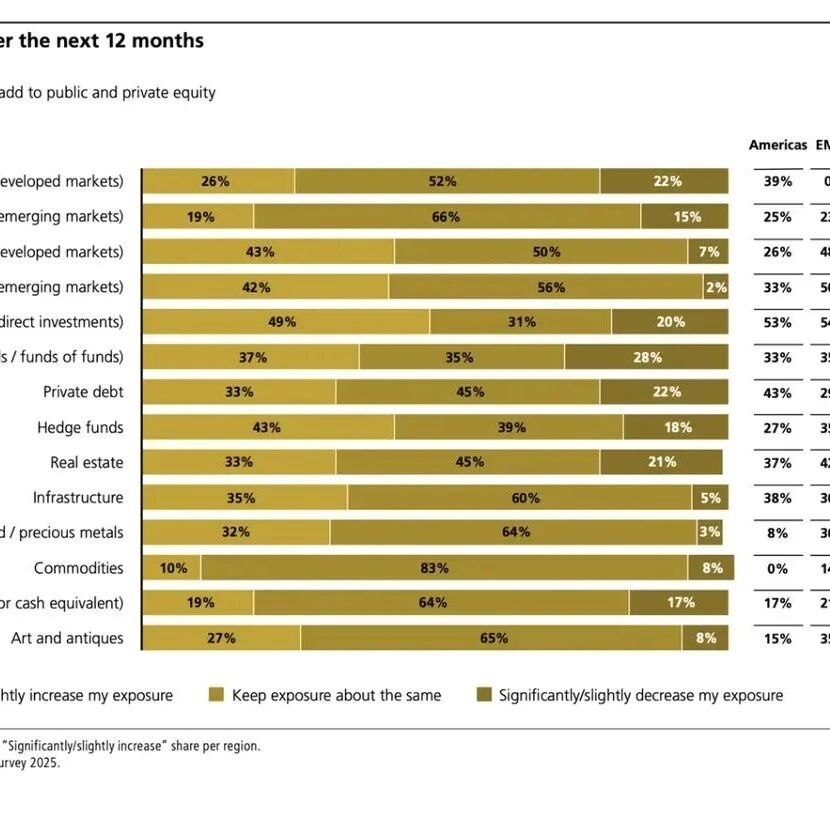
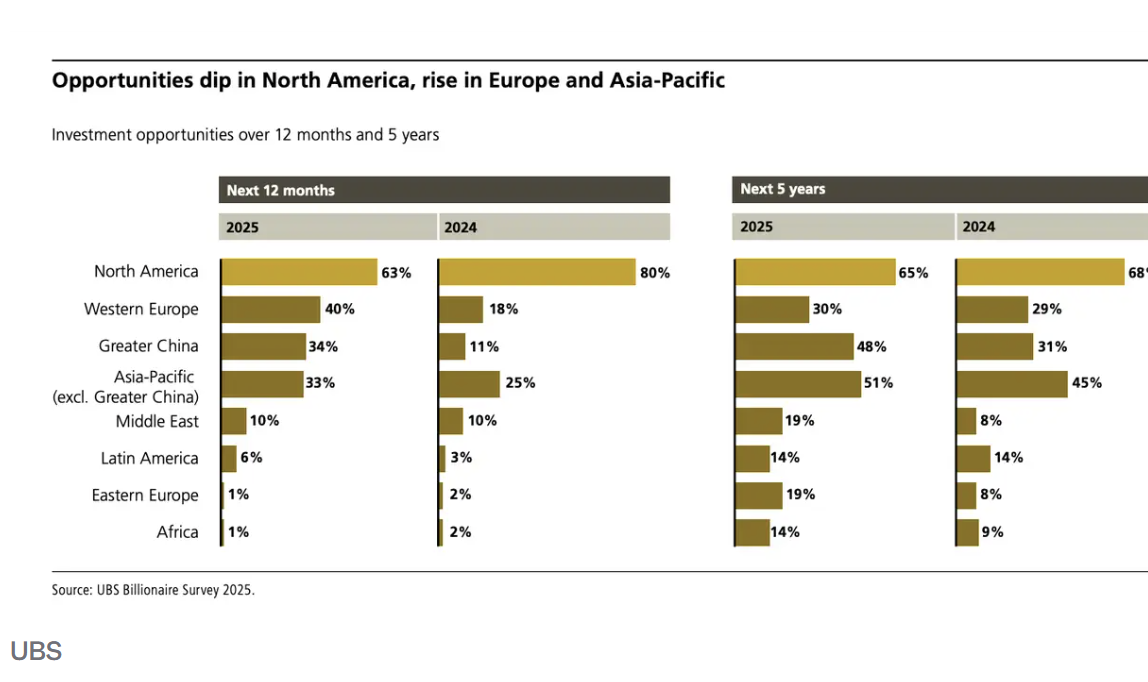
Group 1 - The global stock market has shown strong performance in 2025, driven by the AI investment boom and loose monetary policies, with many indices, including the US stock market, reaching historical highs [1] - Billionaires are optimistic about investment opportunities in China and Western Europe, with 40% of respondents favoring Western Europe for the next 12 months, up from 18% in 2024, and 34% favoring the Greater China market, significantly higher than 11% last year [5] - Over a five-year outlook, the percentage of respondents optimistic about the Greater China market rose from 31% in 2024 to 48% in 2025 [6] Group 2 - There has been a significant decline in optimism regarding the North American market, with only 63% of billionaires favoring it in 2025, down from 80% in 2024, primarily due to concerns over multiple risk factors, particularly tariffs [9] - 66% of respondents identified tariffs as the most likely negative factor affecting the market environment in the next 12 months, followed by geopolitical conflicts (63%), policy uncertainty (59%), and higher inflation (44%) [9] - Billionaires plan to increase investments in private equity, hedge funds, developed market equities, and emerging market equities, with 49% intending to increase exposure to private equity in the next 12 months, followed by hedge funds (43%), developed market equities (43%), and emerging market equities (42%) [11]

2026年最佳投资机遇在哪里?全球亿万富豪加码押注:中国和西欧!
天天基金网· 2025-12-14 07:00
Core Insights - The global stock market has shown strong performance in 2025, driven by the AI investment boom and loose monetary policies, with many indices, including US stocks, reaching historical highs [2] - Billionaires are optimistic about investment opportunities in China and Western Europe, with 40% of respondents favoring Western Europe and 34% favoring Greater China for the next 12 months, significantly up from 18% and 11% respectively in 2024 [2] - Over a five-year horizon, the outlook for Greater China has also improved, with the percentage of respondents expecting positive investment opportunities rising from 31% in 2024 to 48% in 2025 [2] North America Market Sentiment - There has been a significant decline in optimism regarding the North American market, with only 63% of billionaires favoring it in 2025, down from 80% in 2024 [4] - Concerns over multiple risk factors, particularly tariffs, have influenced this shift, with 66% of respondents identifying tariffs as a major potential negative impact on the market environment [4] - Other concerns include geopolitical conflicts (63%), policy uncertainty (59%), and higher inflation (44%) [4] Investment Preferences - Billionaires plan to increase their investments in private equity, hedge funds, developed market equities, and emerging market equities over the next 12 months, with 49% indicating plans to increase exposure to private equity [4] - The survey indicates that 43% of respondents plan to increase investments in hedge funds and developed market equities, while 42% are looking to invest more in emerging market equities [4] Regional Investment Trends - The UBS Billionaire Survey 2025 highlights varying investment preferences across regions, with significant interest in private equity and hedge funds in the Americas and EMEA [5] - In the Asia-Pacific region, 61% of billionaires plan to increase their exposure to hedge funds, indicating a strong regional preference for alternative investments [5]

2026年最佳投资机遇在哪里?全球亿万富豪加码押注:中国和西欧
Feng Huang Wang· 2025-12-14 05:30
Core Insights - The global stock market has shown strong performance in 2025, driven by the AI investment boom and loose monetary policies, with many indices, including the US stock market, reaching historical highs [1] Group 1: Investment Sentiment - Billionaires are increasingly optimistic about investment opportunities in China and Western Europe, with 40% of respondents favoring Western Europe for the next 12 months, up from 18% in 2024 [1] - Similarly, 34% of billionaires see potential in the Greater China market for the next 12 months, a significant increase from 11% in the previous year [1] - Over a five-year horizon, the outlook for Greater China has also improved, with the percentage of respondents optimistic rising from 31% in 2024 to 48% in 2025 [1] Group 2: North America Market Sentiment - In contrast, optimism towards the North American market has sharply declined, with only 63% of billionaires favoring it in 2025, down from 80% in 2024 [4] - Concerns over multiple risk factors, particularly tariffs, are driving this shift, with 66% of respondents identifying tariffs as a major potential negative impact on the market environment [4] - Other significant concerns include geopolitical conflicts (63%), policy uncertainty (59%), and higher inflation (44%) [4] Group 3: Investment Areas - Billionaires plan to increase their exposure to private equity, with 49% indicating plans to invest more in this area over the next 12 months [5] - Other areas of interest include hedge funds (43%), developed market equities (43%), and emerging market equities (42%) [5] - The survey indicates a strong preference for public and private equity investments among billionaires, reflecting a strategic shift in their investment focus [6]
美联储正式宣布,降息25个基点,特朗普:降息幅度太小,本可以更大,罕见言辞引爆国际舆论
Sou Hu Cai Jing· 2025-12-11 12:13
Group 1: Federal Reserve's Rate Cut Decision - The Federal Reserve announced a 25 basis point cut in the federal funds rate, bringing it to a target range of 3.50% to 3.75%, marking the third consecutive cut since September and the sixth since the current easing cycle began in September 2024 [1][3] - The decision was made against a backdrop of mixed economic data, with inflation remaining above the 2% target and signs of a weakening job market [3][5] - The personal consumption expenditures price index rose by 2.79% year-on-year in September, indicating persistent inflation despite a slowing economy, complicating the Fed's decision-making [5] Group 2: Political Pressure and Internal Disagreements - President Trump expressed dissatisfaction with the rate cut, suggesting it could have been larger, reflecting ongoing political pressure on the Federal Reserve [3][7] - There were notable internal disagreements within the Federal Reserve, with three out of twelve voting members opposing the rate cut, the highest number of dissenting votes since 2019 [9] - The Fed faces a dual mandate of promoting maximum employment while maintaining price stability, making it challenging to find a balance amid high inflation and a softening job market [9] Group 3: Economic Challenges and Global Implications - The U.S. economy is grappling with structural challenges, including the impact of AI investments, which while driving growth, also threaten traditional job markets through automation [11][12] - Lowering interest rates to address job market weaknesses may inadvertently accelerate AI investments, exacerbating structural pressures in the labor market [12] - The Fed's monetary policy decisions have significant global ramifications, with potential inflationary pressures from tariffs yet to fully materialize, complicating future policy choices [14][16]
公开支持日本后,美国人发现情况不对劲,中方等待的时机已经到了
Sou Hu Cai Jing· 2025-12-11 10:52
Group 1 - The core issue revolves around Japan's accusation of China conducting "radar illumination" against Japanese F-15 jets, which Japan claims was unprovoked and without prior notification from China [3] - The U.S. initially supported Japan's stance, emphasizing the importance of the U.S.-Japan alliance, but was later undermined by China's release of audio evidence proving Japan had received prior notifications about the training exercises [3][10] - Japan's Defense Minister had to retract his statement acknowledging the receipt of notifications, which highlighted the inconsistency in Japan's narrative and suggested a deliberate attempt to mislead [3] Group 2 - Japan's government, led by Prime Minister Sanae Takaichi, is facing domestic criticism over previous statements regarding Taiwan, which have been labeled as militaristic and have strained Japan-China relations [5] - The U.S. is experiencing a strategic shift, acknowledging its limitations in maintaining global dominance and focusing resources on countering China, which diminishes Japan's leverage as a U.S. ally [5][7] - Economic challenges in the U.S., including rising interest rates and a cooling economy, further complicate its ability to support Japan effectively, as domestic issues take precedence [7][8] Group 3 - China's industrial strength and economic resilience are highlighted as key factors in its ability to counter U.S. and Japanese narratives, with evidence of expanding trade surpluses despite U.S. tariffs [8][10] - The situation illustrates a shift in the balance of power in the Asia-Pacific region, where China's capabilities are increasingly recognized, diminishing the influence of U.S.-Japan assertions [10]