
市场风险偏好

Search documents
宏观周报(5月第3周):中美日内瓦经贸会谈联合声明超预期-20250519
Century Securities· 2025-05-19 01:51
Group 1: Macroeconomic Overview - The joint statement from the China-US Geneva trade talks exceeded expectations, with a 24% tariff on certain goods suspended for 90 days, but the negotiation challenges remain significant[2][12]. - April economic data showed weakness across various indicators, including a 20.9% year-on-year decline in exports to the US, significantly down from a previous increase of 8.9%[5][16]. - The overall market saw a slight increase, with the Shanghai Composite Index rising by 0.76% and the Shenzhen Component Index by 0.52%[11]. Group 2: Financial Market Insights - The bond market experienced an overall rise in yields, with the 10-year government bond yield increasing by 5 basis points, reflecting a limited downward space for long-term rates[11][20]. - April's new social financing was 1.16 trillion yuan, below the expected 1.26 trillion yuan, indicating weaker credit demand amid external pressures[20][21]. - The US stock market saw gains, with the Dow Jones rising by 3.41% and the S&P 500 by 5.27%, driven by improved risk appetite following the trade talks[11][19]. Group 3: Policy and Economic Implications - The Chinese government is expected to continue supporting infrastructure projects, which may provide some stability to the economy despite weak data[5][11]. - The Federal Reserve's potential for rate cuts in 2025 remains uncertain, with inflation pressures expected to ease but still influenced by existing tariffs[19][20]. - The market's short-term outlook is cautious, with limited elasticity due to the uncertainty surrounding tariff negotiations and economic fundamentals[5][17].
黄金时间·一周金市回顾:市场情绪快速转换 短期金价大幅波动难免
Xin Hua Cai Jing· 2025-05-19 00:54
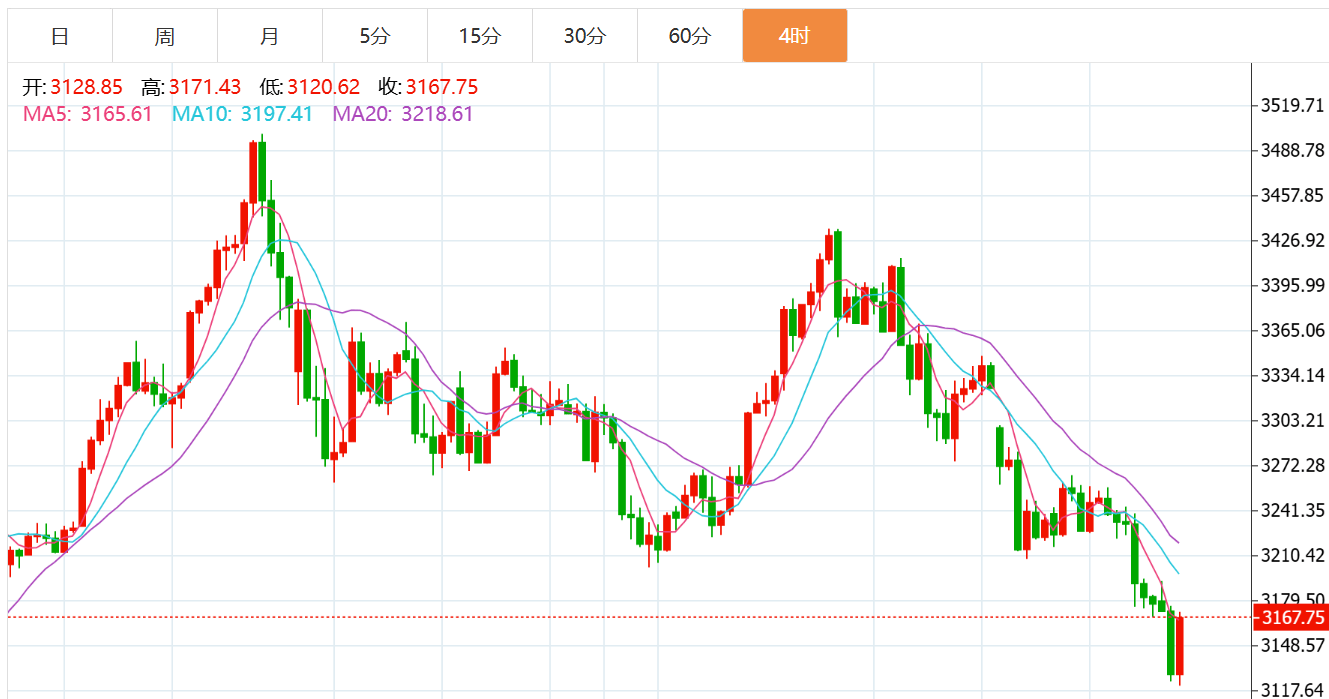
Core Viewpoint - The rapid warming of market risk appetite has led to a significant decline in international gold prices during the week of May 12-16, with a drop of $124.29 or 3.74%, marking the worst week since November of the previous year [1] Market Dynamics - The optimism surrounding trade relations and the delayed expectations for the Federal Reserve to restart interest rate cuts are the primary reasons for the weakening gold prices [1][2] - The recent slowdown in U.S. inflation data, coupled with economic data falling short of expectations, has reinforced the anticipation of further rate cuts by the Federal Reserve this year, helping gold prices maintain above the $3200 per ounce mark [1] Economic Indicators - The U.S. consumer confidence index from the University of Michigan dropped significantly to 50.8 in May, down from 52.2 in April and below the market expectation of 53.4, marking the lowest level since June 2022 [4] - The Federal Reserve's Chairman Jerome Powell indicated that inflation may become more volatile and that the Fed is adjusting its overall policy framework in response to significant changes in the economic environment since 2020 [3] Geopolitical Factors - The easing of geopolitical tensions, such as the maintenance of the India-Pakistan ceasefire and the resumption of direct negotiations between Russia and Ukraine, has contributed to a decrease in market anxiety [2][6] - However, the path to peace remains challenging, and the geopolitical landscape continues to influence market sentiment [5] Credit Rating Impact - Moody's downgraded the U.S. sovereign credit rating from Aaa to Aa1 due to increasing government debt and interest payment ratios, which may lead to further fluctuations in gold prices [7] Market Positioning - There are signs of renewed bullish sentiment in the gold market, with an increase in open interest in gold futures contracts on the Chicago Mercantile Exchange [8] - Despite a decrease in speculative net long positions, there was a slight increase in long positions after seven weeks of decline, indicating potential market recovery [8] Technical Analysis - Gold prices rebounded after dipping to $3120 per ounce, with resistance levels identified between $3263 and $3293 per ounce, and critical support at the $3200 mark [8]
资产配置周报:经济预期与市场风险偏好,均衡配置下寻找权益低估资产-20250518
Donghai Securities· 2025-05-18 14:07
Group 1 - The report emphasizes the need to seek undervalued equity assets under balanced allocation amid economic expectations and market risk preferences, noting a global increase in risk appetite with most stock markets rising [8][9] - It suggests that despite weak growth signals from the US PMI and rising commodity prices, the US CPI showed a mild decline, indicating a stable economic outlook [8][9] - The report recommends positioning in undervalued sectors such as petrochemicals, chemicals, and non-ferrous metals, as domestic equity assets remain favorable in the long term due to improving consumption and technology trends [8][9] Group 2 - The domestic equity market showed a preference for financial, cyclical, consumer, and growth sectors, with an average daily trading volume of 12,325 billion yuan, down from 13,242 billion yuan [11][17] - Among the 31 primary industries tracked, 20 experienced gains while 11 saw declines, with beauty care, non-bank financials, and automotive sectors leading the gains [11][17] - The report highlights that the market's style shift is influenced by new public fund regulations and the easing of trade tensions, which has affected trading dynamics [11][17] Group 3 - The report tracks the performance of major global asset classes, noting that US stocks outperformed A-shares, while commodities like oil and aluminum saw price increases [11][12] - It indicates that the US Treasury yields rose following a downgrade in the US credit rating by Moody's, with the 2-year and 10-year Treasury yields increasing to 3.98% and 4.43%, respectively [12][12] - The report also mentions the strengthening of the offshore yuan against the US dollar, with a 0.42% appreciation noted [12][12]
申万期货品种策略日报:国债-20250516
Shen Yin Wan Guo Qi Huo· 2025-05-16 03:51
1. Report Industry Investment Rating - No relevant content provided 2. Core View of the Report - The prices of Treasury bond futures rose and fell unevenly, with the T2506 contract rising 0.02% and its trading volume decreasing. The IRR of the CTD bonds corresponding to the main contracts of each Treasury bond futures was at a low level, with no arbitrage opportunities. Short - term market interest rates also showed mixed trends. The yields of key - term Treasury bonds in China and overseas also had different changes. With the progress of Sino - US talks, the market risk appetite increased, and the prices of Treasury bond futures declined, with the possibility of increased short - term fluctuations [2][3] 3. Summary by Related Contents Futures Market - **Prices and Changes**: The prices of Treasury bond futures on the previous trading day showed mixed trends. For example, the T2506 contract rose 0.02%, while the TF2509 contract fell 0.08%. The trading volume of each contract also varied, with the TL2506 having a trading volume of 67,722 [2] - **Open Interest**: The open interest of each contract changed. Some contracts decreased, such as the TS2506 with a decrease of 7,948, while others increased, like the TS2509 with an increase of 1,873 [2] - **Inter - delivery Spreads**: The inter - delivery spreads of each contract also had different changes. For example, the inter - delivery spread of TS2506 increased from - 0.128 to - 0.110 [2] - **IRR of CTD Bonds**: The IRR of the CTD bonds corresponding to the main contracts of each Treasury bond futures was at a low level, and there were no arbitrage opportunities [2] Spot Market - **Short - term Market Interest Rates**: Short - term market interest rates showed mixed trends. SHIBOR7 - day interest rate decreased by 0.4bp, DR007 interest rate increased by 0.16bp, and GC007 interest rate increased by 0bp [2] - **Yields of Key - term Treasury Bonds in China**: The yields of key - term Treasury bonds in China also showed mixed trends. The 10Y - term Treasury bond yield decreased by 0.43bp to 1.67%, and the long - short (10 - 2) Treasury bond yield spread was 19.29bp [2] - **Yields of Key - term Treasury Bonds Overseas**: The yields of key - term Treasury bonds overseas also had different changes. The US 10Y Treasury bond yield decreased by 8bp, the German 10Y Treasury bond yield increased by 0bp, and the Japanese 10Y Treasury bond yield increased by 2.3bp [2] Macro and Policy Information - **Central Bank Operations**: The central bank conducted 645 billion yuan of 7 - day reverse repurchase operations on May 15, with an operation rate of 1.40%. The same day, 158.6 billion yuan of reverse repurchases and 125 billion yuan of MLF matured, resulting in a net withdrawal of 219.1 billion yuan [3] - **Market Environment**: The Sino - US talks achieved substantial progress, canceling some additional tariffs and establishing a Sino - US economic and trade consultation mechanism. The market risk appetite increased. The US April unadjusted CPI rose 2.3% year - on - year, lower than expected for the third consecutive month, and the US Treasury bond yields declined [3] - **Economic Data**: Affected by external shocks and seasonal changes, the manufacturing prosperity level in April declined. Exports (in US dollars) increased by 8.1% year - on - year, with the growth rate slowing down. The government bonds promoted the social financing stock to increase by 8.7% year - on - year, and the M2 balance increased by 8% year - on - year, both with accelerated growth rates compared to the previous month [3]
贺博生:5.15黄金暴涨暴跌最新行情走势分析,原油晚间美盘独家操作建议
Sou Hu Cai Jing· 2025-05-15 12:23
Group 1: Gold Market Analysis - The recent decline in gold prices is attributed to easing US-China trade tensions, which has led to a shift of funds away from safe-haven assets like gold [1][5] - As of May 15, spot gold prices fell to a new low of $3120, marking the lowest level since April 10, driven by reduced expectations for Federal Reserve interest rate cuts [1][5] - Technical indicators suggest that gold prices have broken key support levels, with a potential further decline to $3075 or even the psychological level of $3000 if US PPI data exceeds expectations [1][4] Group 2: Oil Market Analysis - The latest data from the EIA indicates an unexpected increase in US crude oil inventories by 3.5 million barrels, raising concerns about supply exceeding demand [5][6] - As a result, WTI crude oil prices fell by $1.33 to $61.82 per barrel, reflecting market reactions to the inventory increase and fears of supply-demand imbalance [5][6] - The technical outlook for oil suggests a downward trend, with expectations of further declines towards the $50 mark after a series of price fluctuations [6]

日度策略参考-20250515
Guo Mao Qi Huo· 2025-05-15 06:48
1. Report Industry Investment Ratings - **Bullish**: Alumina, Aluminium, Tin, PTA, Short - fiber [1] - **Bearish**: Zinc, Manganese Ore, Coke, Coking Coal, Natural Rubber Latex From New Zealand, Crude Oil [1] - **Oscillating**: Equity Index, Gold, Copper, Nickel, Stainless Steel, Silicon Iron, Rebar, Hot - Rolled Coil, Iron Ore, Printing, Soda Ash, Palm Oil, Soybean Oil, Cotton, Bean Meal, Pulp, Fuel Oil, Bitumen, BR Rubber, Methanol, PE, PP, PVC, Caustic Soda [1] 2. Core Views of the Report - The results of the Sino - US trade talks exceeded market expectations, which improved market risk appetite and had a positive impact on multiple varieties, but short - term operations still need to be cautious [1]. - The weak economy and asset shortage are beneficial to bond futures, but the central bank's short - term interest rate risk warning restricts the upward space [1]. - The long - term upward logic of gold remains unchanged, while silver may be more resilient in the short term due to potential tariff impacts [1]. 3. Summary by Industry Macro - finance - **Equity Index**: Yesterday, large - cap stocks led the rise. Observe whether small and medium - cap stocks can achieve resonance and make up for the rise. In a structural market, long - position investors should be cautious [1]. - **Treasury Bonds**: Asset shortage and weak economy are beneficial to bond futures, but the central bank's short - term interest rate risk warning restricts the upward space [1]. - **Gold**: The short - term gold price may enter a consolidation phase, but the long - term upward logic remains unchanged [1]. - **Silver**: Generally follows gold. Unexpected tariff results will benefit the commodity attribute of silver, so the short - term silver price may be more resilient than gold [1]. Non - ferrous Metals - **Copper**: The joint statement of the Sino - US trade negotiations exceeded market expectations, which is positive for copper prices. However, the copper price has rebounded significantly recently, so be cautious about chasing high in the short term [1]. - **Aluminium and Alumina**: Aluminium prices continue to rebound. Alumina supply has increased, the supply - demand pattern has improved, and the short - term price may further rebound [1]. - **Zinc**: Terminal demand has weakened significantly in the off - season, and the inflow of imported goods has weakened the fundamentals. Pay attention to short - selling opportunities [1]. - **Nickel and Stainless Steel**: The US inflation cooled more than expected, and the Sino - US talks results exceeded expectations. The Indonesian resource tax policy has been implemented, and there are rumors of a mining ban in the Philippines. Nickel prices will oscillate in the short term, and there is still pressure from long - term excess of primary nickel. Stainless steel futures will oscillate and rebound in the short term, but there is still supply pressure in the long term [1]. - **Tin**: With the improvement of macro - sentiment, tin prices are expected to rebound. Continuously pay attention to the resumption of production in low - grade mines [1]. - **Industrial Silicon**: Supply is strengthening, demand is weakening, it has entered a low - valuation range, and the demand and inventory pressure have not been alleviated [1]. - **Polycrystalline Silicon**: The number of registered warehouse receipts is extremely small, and the willingness to register warehouse receipts is low due to the futures discounting the spot [1]. - **Lithium Carbonate**: Supply has not further shrunk, inventory has continued to accumulate, and downstream buyers still maintain rigid demand purchases [1]. Ferrous Metals - **Rebar and Hot - Rolled Coil**: They are in the window period of switching from the peak season to the off - season. The cost is loose, the supply - demand pattern is loose, and the driving force for price rebound is insufficient [1]. - **Iron Ore**: There is an expectation that pig iron production will peak, and pay attention to the pressure on steel products [1]. - **Manganese Ore**: There is still an expectation of decline due to the expected excess of manganese ore, and the pressure of warehouse receipts is heavy [1]. - **Silicon Iron**: The cost is dragged down by thermal coal, but the production reduction in the production area is large, and the supply - demand has become tight [1]. - **Printing**: The supply - demand is weak, and with the arrival of the rainy season, there are concerns about weakening demand, and the price will continue to be weak [1]. - **Soda Ash**: There are many maintenance operations in May, and the direct demand is okay, but there is excess supply in the medium term, and the price is under pressure [1]. - **Coking Coal and Coke**: The supply - demand is relatively excessive, and they are short - allocated in the sector. Consider participating in the JM9 - 1 positive spread [1]. Agricultural Products - **Palm Oil and Soybean Oil**: The rise of crude oil and US biodiesel news drove the rise of palm oil. The Sino - US talks may drag down the soybean - palm oil price spread. After the crude oil price falls, consider short - selling palm oil. The Sino - US talks are expected to be negative for soybean oil in terms of sentiment, and it is recommended to wait and see for single - side operations [1]. - **Rapeseed Oil**: The northern rapeseed - producing areas in Europe are still dry, which is not conducive to the formation of rapeseed yield per unit. The Sino - Canadian relationship is still uncertain. If Canada cancels the additional tariffs on China, it may lead to a large decline. Consider buying volatility [1]. - **Cotton**: In the short term, there are disturbances such as trade negotiations and weather premiums for US cotton. In the long term, macro - uncertainty is still strong. The domestic cotton textile industry has entered the off - season, and downstream inventories are starting to accumulate. It is expected that the domestic cotton price will maintain a weak oscillating trend [1]. - **Sugar**: Brazil's 2025/26 sugar production is expected to reach a record high. If crude oil continues to be weak, it may affect the sugar - making ratio and lead to higher - than - expected sugar production [1]. - **Corn**: The spot price increase has slowed down, and the import corn auction has a negative impact on sentiment. The port inventory has decreased but is still at a high level. It is recommended to buy on dips and pay attention to the CO7 - C01 positive spread [1]. - **Bean Meal**: There is no driving force for speculation in US soybean planting. The domestic market is still digesting the pressure of spot and Brazilian selling, and the futures price is expected to oscillate [1]. - **Pulp**: After the positive impact of the Sino - US trade negotiations on pulp futures is realized, the fundamentals still lack upward momentum, and it is expected to oscillate [1]. - **Natural Rubber Latex From New Zealand**: The shipping volume from New Zealand has decreased, the terminal demand is still weak, and the overall bearish pattern remains unchanged. It is recommended to short after a rebound [1]. - **Live Pigs**: The pig inventory is continuously recovering, the slaughter weight is increasing, and the breeding profit is generally good. The futures price is at a large discount to the spot price. Pay attention to the pace of future production capacity release and wait for spot price guidance [1]. Energy and Chemicals - **Crude Oil, Fuel Oil**: The results of the Sino - US trade negotiations exceeded market expectations, reducing concerns about weakening demand. There is a demand for rebound and repair after the previous sharp decline [1]. - **Bitumen**: The cost is dragging down, the inventory accumulation slope has decreased, and the demand is slowly recovering [1]. - **BR Rubber**: The tariff negotiation is beneficial, and the cost is strongly supported. It will be strong in the short term, but there is a risk of price decline in the long term due to loose fundamentals and weak demand [1]. - **PTA**: The PX device is under intensive maintenance, the procurement demand for PX has increased, and the high load of polyester has supported the demand for PTA [1]. - **Ethylene Glycol**: The ethylene glycol device is under maintenance, large - scale devices in Jiangsu and Zhejiang have reduced their loads, the basis has dropped rapidly, and market sentiment has subsided [1]. - **Short - fiber**: The slightly tight situation of PTA strengthens the cost support for short - fiber, and short - fiber performs strongly under the high - basis situation [1]. - **Styrene**: The improvement of Sino - US tariff policies has stimulated market speculative demand, the pure benzene price has gradually strengthened, and the downstream demand for styrene is expected to pick up [1]. - **Urea**: There are still positive expectations in the market, the downstream follow - up is okay, and the market negotiation focus has risen. However, due to price stability policies, the upward price space is limited [1]. - **Methanol**: The basis is strengthening, and the short - term price will oscillate strongly. The medium - long - term spot market may change from strong to weak oscillation [1]. - **PE, PP, PVC**: Macro - factors are positive, and they will oscillate strongly. PVC has a weak fundamental but may rebound in the short term [1]. - **Caustic Soda**: The spot demand is weak, and the driving force for price increase is insufficient, but the macro - positive factors support the futures price, which will oscillate [1]. - **Propane and Butane**: The CP has decreased, the MB has increased, and the regional price difference of propane has narrowed. Butane is in the seasonal off - season [1].
研究所晨会观点精萃-20250515
Dong Hai Qi Huo· 2025-05-15 06:25
Report Industry Investment Rating No relevant content provided. Core View of the Report The domestic market sentiment continues to warm up, and the risk appetite continues to rise. Overseas, the US is close to reaching a trade tariff agreement with Japan, South Korea, and India, and the US dollar index rebounds from a low level. Domestically, China's credit and financing data in April were lower than expected, but exports far exceeded expectations, and the implementation of the policy of significantly reducing tariffs between China and the US has boosted domestic risk appetite in the short term. Different asset classes have different trends and investment suggestions [3]. Summary by Related Catalogs Macro Finance - **Macro**: Overseas, the US is close to reaching a trade tariff agreement with Japan, South Korea, and India, and the US does not seek a weaker dollar in tariff negotiations, leading to a rebound of the US dollar index from a low level. Domestically, China's credit and financing data in April were lower than expected, indicating weakening domestic demand, but exports far exceeded expectations, and the implementation of the policy of significantly reducing tariffs between China and the US has weakened the impact of US trade policy on the domestic economy and boosted domestic risk appetite in the short term. The RMB exchange rate and domestic stock market continue to strengthen. For assets, the stock index rebounds with short - term fluctuations, and it is advisable to be cautiously long; the treasury bond corrects with short - term fluctuations, and it is advisable to wait and see; among commodity sectors, the black metals fluctuate at a low level in the short term, and it is advisable to wait and see; non - ferrous metals fluctuate in the short term, and it is advisable to wait and see; energy and chemicals rebound with short - term fluctuations, and it is advisable to be cautiously long; precious metals fluctuate at a high level in the short term, and it is advisable to wait and see [3]. - **Stock Index**: Driven by sectors such as insurance, port shipping, and securities, the domestic stock market continues to rise. Fundamentally, China's credit and financing data in April were lower than expected, but exports far exceeded expectations, and the implementation of the tariff reduction policy between China and the US has boosted domestic risk appetite in the short term. It is advisable to be cautiously long in the short term [4]. - **Precious Metals**: The precious metals market continued to decline overnight. The main contract of COMEX gold futures fell below the $3200/ounce mark, and the main contract of Shanghai gold fell more than 2% to 748 yuan/gram. Weaker - than - expected US inflation data supported the US dollar. The release of the China - US Geneva Joint Statement eased trade tensions, and the global risk - aversion sentiment significantly cooled down. The US dollar stabilized and rebounded, and the continuous strength of the US stock market suppressed the rise of gold. Gold is under short - term pressure, but the weakening of the US dollar's credit margin provides structural support for the gold price, and the value of gold allocation remains. For silver, it is advisable to wait and see in the short term [4][5]. Black Metals - **Steel**: On Wednesday, the domestic steel futures and spot markets rebounded significantly, and the market trading volume was at a low level. The substantial progress in the Sino - US tariff issue and the lower - than - expected US CPI data in April increased market risk appetite. Fundamentally, the construction steel inventory of Steel Valley Network continued to decline by 270,000 tons, and the apparent consumption increased slightly. It is currently the off - season for steel demand, and the demand decline trend may continue. In terms of supply, steel mills' profits are considerable, and the daily output of hot metal is at a high level this year, but the output of finished products has decreased recently. In the off - season, the subsequent demand may not be sufficient to support the current high output. It is advisable to view the short - term steel market with an interval - oscillation idea [6]. - **Iron Ore**: On Wednesday, the futures and spot prices of iron ore rebounded significantly. Steel mills' profits are considerable, and the hot - metal output is at a high level in the short term, but it is likely to decline in the future, and there are significant differences in the market regarding the decline path. In terms of supply, the iron - ore shipment volume decreased by 215,000 tons month - on - month, and the arrival volume decreased by 951,000 tons month - on - month. Considering that the second quarter is the traditional peak season for iron - ore shipments, the shipment and arrival volumes will increase later. The port inventory increased by 1.41 million tons on Monday compared with last Friday. The iron - ore price is expected to be strong in the short term [6]. - **Silicon Manganese/Silicon Iron**: On Wednesday, the spot price of silicon iron remained flat, and the spot price of silicon manganese rebounded slightly. The output of construction steel and hot - rolled coils of Steel Valley Network continued to decline, and the demand for ferroalloys remained weak. The supply of silicon iron also continued to decline. The short - term price of ferroalloys is expected to oscillate within an interval [7][8]. Energy and Chemicals - **Crude Oil**: EIA data shows that the US crude - oil inventory increased by 3.45 million barrels last week, the largest increase since March. Tensions over the Iranian nuclear issue may increase oil - price volatility. The oil price may be in a correction phase recently, and the 50 - day moving average will form resistance at around $63.9 [9]. - **Asphalt**: The asphalt price remains stable at a high level following the oil price, and the overall supply is at a low level. The downstream demand has been boosted to some extent recently, and the inventory transfer from factories to society is smooth, with signs of inventory reduction in social warehouses. It will continue to fluctuate at a high level following the crude oil in the short term [9]. - **PX**: After the increase of the crude - oil center, the PX outer - market price remains at around $840. With more PX maintenance and the increase of PTA price, PX rises in resonance with the polyester chain. The PX supply will be tighter later, and it will remain strongly oscillating in the short term [9]. - **PTA**: The basis first rose and then fell. The downstream leading manufacturers' statement of joint production cuts may hit the PTA demand. The PTA price has risen too fast recently, and the downstream production and sales have diverged. It is likely to have a phased correction, and then wait for the stabilization of the crude - oil price and the improvement of the terminal situation [10]. - **Ethylene Glycol**: Ethylene glycol has risen significantly due to the early maintenance of large plants, and the port inventory has decreased slightly. It may start the de - stocking channel, but it may have a phased correction in the short term due to downstream production cuts [10]. - **Short - Fiber**: The polyester price remains oscillating at a high level following the crude - oil price, and the short - fiber price has rebounded significantly. The short - fiber will continue to be strong in the short term [10]. - **Methanol**: The methanol in Jiangsu Taicang continues to be strong. The overall basis weakens, and the supply pressure is prominent. The price may be repaired in the short term but has downward space in the medium and long term [11]. - **PP**: The domestic PP market price oscillates upward. The production has reached a historical high, the downstream demand is weak, and the fundamental situation has weakened marginally. The LP spread is expected to strengthen in the short term [12]. - **LLDPE**: The PE market price rises. The overall maintenance of PE devices is expected to exceed expectations, and the inventory has decreased. The PE price is expected to be repaired in the short term [12]. - **Urea**: The domestic urea market price has been raised. The domestic supply is high, and the export policy has boosted the price. It is oscillating strongly in the short term, but the upward driving force of the market is insufficient without more favorable policies [13]. Non - Ferrous Metals - **Copper**: In April, the production and sales of new - energy vehicles increased significantly. The copper - ore processing fee has declined recently, and the decline rate has slowed down. It is about to enter the off - season for demand, and the reduction of Sino - US tariffs will boost the demand. The copper price oscillates in the short term, and it is advisable to look for short - selling opportunities in the medium term [14][15]. - **Aluminum**: LME aluminum rose significantly today, driven by the overall commodity - rising atmosphere. After the emotional digestion, it is advisable to try short - selling [15]. - **Tin**: The supply of tin is expected to increase, and the demand is about to enter the off - season, with weak marginal demand. The tin price oscillates in the short term, and the news of the resumption of production in Wa State and the risk of weakening demand pressure the price [15].
闫瑞祥:黄金弱势关注周线支撑,欧美日线阻力下偏空
Sou Hu Cai Jing· 2025-05-15 03:43
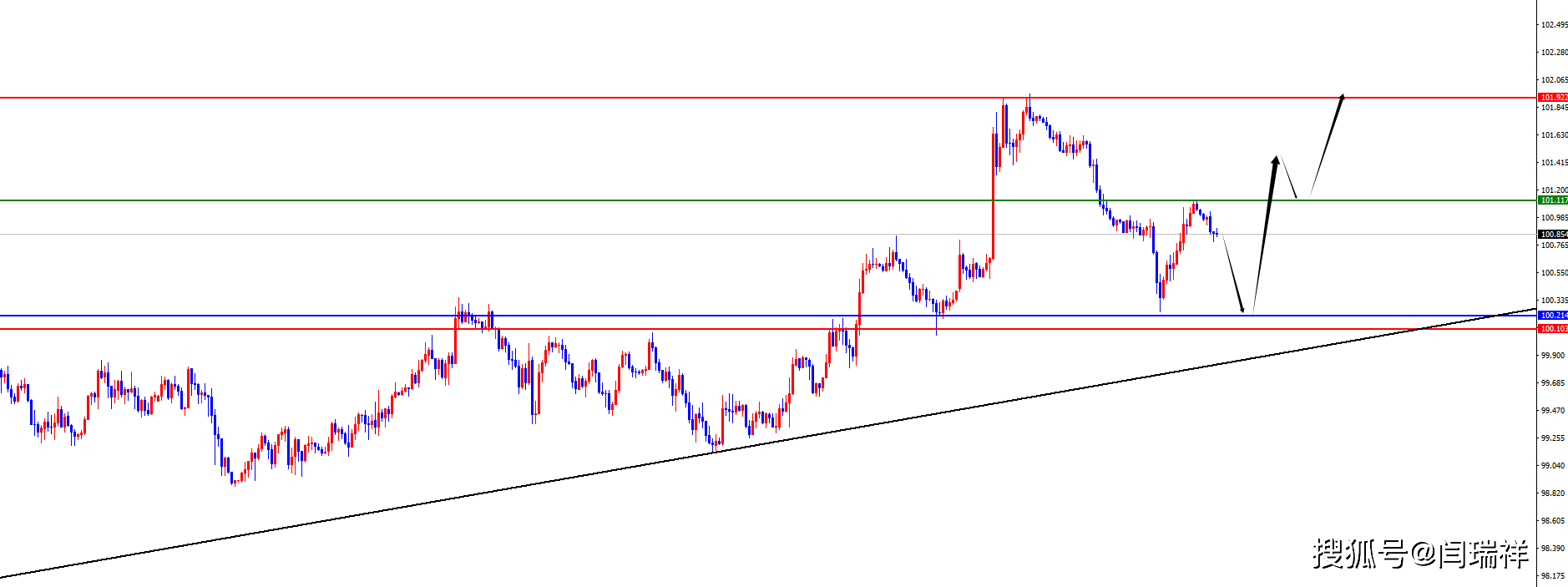
美指100.10-20区间多,防守5美金,目标101-101.80 宏观面 近期黄金市场波动剧烈,从历史高位显著回调,引发市场热议。其价格下跌主要受两大因素驱动:一是全球贸易紧张局势缓和,中美大幅降低关税并暂停部 分关税 90 天,极大提振市场风险偏好,投资者纷纷撤离避险资产,黄金需求下降;二是美元指数探底回升,周三美元指数上涨 0.08%,美国国债收益率也 创下六周新高,10 年期国债收益率突破 4.5%,美联储降息预期调整,使得黄金这类无息资产吸引力下降。不过,地缘政治风险并未完全消散,美欧贸易谈 判进展缓慢,未来或重新提振黄金避险需求。短期来看,贸易乐观情绪和美元走强或继续压制金价;但中长期,地缘政治不确定性、通胀压力及央行购金需 求将为金价提供支撑。投资者需密切关注贸易谈判、美国经济数据、美联储政策等因素,把握黄金市场波动中的投资机会。 美元指数 在美元指数的表现上,周三美元指数呈现出探底回升态势。当日美元指数价格最高攀升至101.117的位置,最低则下探至100.242,最终以 101.046的价格收 盘。回顾周三市场表现,在早盘期间价格短线震荡运行,随后正如笔者所言价格进一步下跌,对于欧盘前价格接 ...
秦氏金升:5.15伦敦金看跌不变,黄金行情走势分析及操作建议
Sou Hu Cai Jing· 2025-05-15 03:30
Group 1 - The core point of the articles indicates that gold prices are experiencing a downward trend due to improved global trade tensions, particularly between the US and China, which has boosted market risk appetite [1][3][5] - Gold prices opened lower this week, with a significant drop of 50 points, and are currently trading below key resistance levels, indicating a bearish market sentiment [3][5] - The recent decline in gold prices is attributed to profit-taking by investors after previous gains, alongside negative technical indicators such as the Relative Strength Index (RSI) signaling bearish momentum [1][3][5] Group 2 - The analysis suggests that if gold prices break below the support level of 3200, further declines could occur, potentially targeting the 2909 level [3][5] - The market is currently in a corrective phase, with the previous bullish trend line broken, leading to increased downward pressure on gold prices [3][5][7] - The articles emphasize the importance of monitoring upcoming economic data, such as the US PPI and retail sales, which could influence market sentiment and gold prices [1][3]

宏源期货品种策略日报:油脂油料-20250515
Hong Yuan Qi Huo· 2025-05-15 01:29
Report Industry Investment Rating - No relevant content provided Core Viewpoints - The positive impact of China-US trade negotiations continued to ferment, and the economic cooperation agreement signed between Trump and the Saudi Crown Prince further boosted market risk appetite, pushing up oil prices. After the negotiation, the market digested the impact of tariffs on the commodity market and repaired the demand expectation of PX. The unplanned loss increment of PX was significant, and combined with the planned device maintenance, the supply of Asian PX tightened significantly. However, the recent failure of some PTA device maintenance to materialize and the unexpectedly high load operation of downstream polyester made the demand expectation of PX also exceed market expectations, further consolidating PX demand. From the medium-term supply and demand pattern of PX, it will still be in the rhythm of destocking in the next few months. On May 14, the PX CFR China price was $870 per ton. The general rise in the bulk chemical market, the low operation rate of PX was beneficial to the market, and individual buyers actively purchased. Both cost and supply supported the upward movement of PX, and the price recovery was obvious [2]. - The low operation rate of PX was beneficial to the market, PTA destocked, the spot basis strengthened, new downstream polyester production capacity was put into operation, and the rigid demand was good, so the PTA market rose. The new polyester production capacity operated stably and maintained a high operation rate, and had a good rigid demand for PTA. In the short term, the PTA spot price mainly followed the cost side. After the inventory of polyester factories was reduced at the end of last month, the operation load of polyester filament was basically stable at present, but the new production devices in the market needed to be followed up. Coupled with the inventory accumulation of most factories during the festival, the subsequent market supply might gradually become abundant. The operation of terminal looms was slowly recovering, and the downstream weaving factories had a low willingness to stock up in early May. It was expected that the downstream concentrated procurement cycle would be in the middle of this month. In general, there were still many PTA device maintenance, while the downstream polyester maintained a high operation rate. It was estimated that PTA would destock from May to June, the price center would fluctuate around the cost, and the short-term price would run strongly [2]. - The mainstream negotiation price of polyester bottle chips in the Jiangsu and Zhejiang markets was 6,160 - 6,300 yuan per ton, up 200 yuan per ton from the previous trading day. The prices of polyester raw materials and bottle chip futures fluctuated strongly. The supply side of bottle chips raised the quotation, but the downstream terminals had no chasing sentiment, and the market trading was cautious. Recently, the operation rate of the bottle chip industry was at a relatively high level within the year, and the market supply might gradually become abundant. The downstream terminals mainly consumed the previously stocked goods, and the purchasing enthusiasm was not high [2]. - The improvement of macro - sentiment drove the price recovery. The TA2509 contract closed at 4,874 yuan per ton (up 2.87%), with an intraday trading volume of 1.92 million lots; due to the reduction in supply and the push of cost, the 2509 contract closed at 6,880 yuan per ton (up 2.96%), with an intraday trading volume of 43,460 lots; PR followed the cost, and the 2507 contract closed at 6,200 yuan per ton (up 3.23%), with an intraday trading volume of 79,600 lots. In the overnight crude oil market, the unexpected increase in US crude oil inventories last week and the accelerated increase in crude oil supply by OPEC and its减产 allies triggered investors' concerns about oversupply, and international oil prices fell for the first time in five trading days. The effect of sentiment was diminishing at the margin. It was expected that PX, PTA, and PR would fluctuate [2]. Summary According to Relevant Catalogs Price Information - **Upstream** - On May 14, 2025, the futures settlement price (continuous) of WTI crude oil was $63.15 per barrel, down 0.82% from the previous value; the futures settlement price (continuous) of Brent crude oil was $66.09 per barrel, down 0.81% from the previous value; the spot price (mid - price) of naphtha CFR Japan on May 13, 2025, was $575.50 per ton, up 1.14% from the previous value; the spot price (mid - price) of xylene (isomeric grade) FOB South Korea on May 14, 2025, was $731.50 per ton, up 3.10% from the previous value [1]. - **PTA** - On May 14, 2025, the closing price of the CZCE TA main contract was 4,874 yuan per ton, up 2.61% from the previous value; the settlement price was 4,852 yuan per ton, up 2.41% from the previous value; the closing price of the CZCE TA near - month contract was 5,050 yuan per ton, up 3.27% from the previous value; the settlement price was 5,010 yuan per ton, up 2.96% from the previous value; the domestic spot price of PTA was 4,933 yuan per ton, up 2.37% from the previous value; the CCFEI price index of domestic refined terephthalic acid PTA was 5,100 yuan per ton, up 3.24% from the previous value; the CCFEI price index of external refined terephthalic acid PTA on May 13, 2025, was $644 per ton, up 3.87% from the previous value; the near - far month spread was 158 yuan per ton, an increase of 30 yuan; the basis was 226 yuan per ton, an increase of 36 yuan [1]. - **PX** - On May 14, 2025, the closing price of the CZCE PX main contract was 6,880 yuan per ton, up 2.56% from the previous value; the settlement price was 6,862 yuan per ton, up 2.69% from the previous value; the closing price of the CZCE PX near - month contract was 6,708 yuan per ton, up 2.69% from the previous value; the settlement price was 6,708 yuan per ton, up 2.69% from the previous value; the domestic spot price of p - xylene was 6,315 yuan per ton, unchanged from the previous value; the spot price (mid - price) of p - xylene CFR Taiwan, China, was $871 per ton, up 2.83% from the previous value; the spot price (mid - price) of p - xylene FOB South Korea was $846 per ton, up 2.92% from the previous value; the PXN spread was $294.50 per ton, up 6.96% from the previous value; the PX - MX spread was $138.50 per ton, up 2.72% from the previous value; the basis was - 565 yuan per ton, a decrease of 172 yuan [1]. - **PR** - On May 14, 2025, the closing price of the CZCE PR main contract was 6,200 yuan per ton, up 2.75% from the previous value; the settlement price was 6,160 yuan per ton, up 2.56% from the previous value; the closing price of the CZCE PR near - month contract was 5,980 yuan per ton, up 5.24% from the previous value; the settlement price was 5,936 yuan per ton, up 4.47% from the previous value; the market price (mainstream price) of polyester bottle chips in the East China market was 6,180 yuan per ton, up 2.83% from the previous value; the market price (mainstream price) of polyester bottle chips in the South China market was 6,250 yuan per ton, up 3.14% from the previous value; the basis in the East China market was - 20 yuan per ton, an increase of 4 yuan; the basis in the South China market was 50 yuan per ton, an increase of 24 yuan [1]. - **Downstream** - On May 14, 2025, the CCFEI price index of polyester DTY was 8,850 yuan per ton, up 1.14% from the previous value; the CCFEI price index of polyester POY was 7,200 yuan per ton, up 1.41% from the previous value; the CCFEI price index of polyester FDY68D was 7,150 yuan per ton, up 2.88% from the previous value; the CCFEI price index of polyester FDY150D was 7,150 yuan per ton, up 2.88% from the previous value; the CCFEI price index of polyester staple fiber was 6,695 yuan per ton, up 3.00% from the previous value; the CCFEI price index of polyester chips was 6,060 yuan per ton, up 3.06% from the previous value; the CCFEI price index of bottle - grade chips was 6,180 yuan per ton, up 2.83% from the previous value [2]. Operation and Sales Information - **Operation** - On May 14, 2025, the operation rate of the PX in the polyester industry chain was 73.32%, unchanged from the previous value; the load rate of the PTA industry chain in PTA factories was 74.41%, unchanged from the previous value; the load rate of the PTA industry chain in polyester factories was 91.34%, unchanged from the previous value; the load rate of the PTA industry chain in bottle - chip factories was 85.13%, unchanged from the previous value; the load rate of the PTA industry chain in Jiangsu and Zhejiang looms was 64.27%, unchanged from the previous value [1]. - **Sales** - On May 14, 2025, the sales rate of polyester filament was 52.00%, down 23 percentage points from the previous value; the sales rate of polyester staple fiber was 61.00%, up 4 percentage points from the previous value; the sales rate of polyester chips was 93.00%, up 38 percentage points from the previous value [1]. Device Information - A 1.2 - million - ton PTA device in the northwest is planned to restart between May 15 and 20, 2025 [2].