供给侧结构性改革

Search documents
中泰国际李迅雷:短期政策将保持定力 把握结构性机遇
Zhong Guo Zheng Quan Bao· 2025-07-30 23:18
7月30日,"2025私募高质量发展聚力计划暨中泰证券尚元杯第四届私募优选启动仪式"在北京举行。中 泰国际首席经济学家李迅雷在主题演讲中表示,2025年上半年我国经济总体向好,为实现全年目标奠定 了基础。短期政策将保持定力,以精准施策和灵活应对为主线,未来仍有降准降息空间。同时,"畅通 循环""因业施策"及全球供应链重构等趋势下,科技、消费、创新药等领域蕴含结构性投资机会。 下半年关注两条政策主线 "2025年上半年我国经济总体向好,为全年目标奠定了基础。"李迅雷表示,上半年消费领域"以旧换 新"带动社零较快增长,拉动耐用消费品增长,对社零增长贡献显著。 "考虑到今年上半年经济增长已为实现全年目标奠定良好基础,既定各项政策部署正在有序推进,目前 出台大规模刺激性政策的必要性不大。"李迅雷表示,相比去年上半年,今年上半年GDP增速更高,消 费增速也显著回升,出口也彰显韧性,今年中期追加财政预算赤字或增发超长期特别国债的可能性较 小。 "短期来看,政策仍将保持定力,下半年或有两条主线。"李迅雷认为,一是精准施策。在不增列赤字、 不增发国债的前提下,发力空间在于调整年初预算安排的结构、优化额度在各省区市之间的分配、 ...
21评论丨治理无序竞争 要设标准更要投入创新
2 1 Shi Ji Jing Ji Bao Dao· 2025-07-30 23:10
工信部近日再次召开重磅座谈会,提出巩固新能源汽车行业"内卷式"竞争综合治理成效,加强光伏等重 点行业治理,以标准提升倒逼落后产能退出。和过往不同的是,这次不只是企业约谈、提出要求,而是 开始制定比较有力的实际措施来解决问题。 最突出的是强化标准引领,尤其是联合多部门加快多项强制性安全标准的制定和落地执行。工信部此前 表示,今年将制定行业标准1800项以上,其中强制性标准100项以上。强制性标准尤其涉及新能源智能 汽车领域,比如辅助驾驶、电池、电耗方面的技术与安全标准形成闭环,形成重塑产业竞争规则局面。 在已经发布的强制性标准当中,《电动汽车能量消耗量限值》,乘用车新增车型自2026年1月1日起执 行;《电动自行车安全技术规范》今年9月1日起正式实施。2026年将陆续实施三项智能网联汽车强制性 国家标准、《电动汽车用动力蓄电池安全要求》等,后者被称为史上最严电池安全令,对电池的安全与 回收利用等做出了明确规范。《汽车车门把手安全技术要求》等也正在意见征集。光伏行业的标准升级 同样采取"标准+监测+退出"的组合拳,《光伏制造行业规范条件》、产能动态监测系统、对未达标企 业实施"等量置换"等,精准施策初见成效。一系 ...
【光大研究每日速递】20250731
光大证券研究· 2025-07-30 23:06
Group 1: Coal Chemical Industry - The operational level of China's coal chemical industry continues to improve, with steady increases in capacity utilization rates across major sub-industries [3] - The coal-to-synthetic ammonia and coal-to-methanol sectors have undergone supply-side structural reforms during the 13th Five-Year Plan, leading to the elimination of outdated capacity and a positive development trend [3] - The coal-to-ethylene and coal-to-oil gas projects are maturing, benefiting from high oil prices and favorable national pipeline reforms, resulting in continuous improvement in capacity utilization [3] Group 2: Chemical Fiber Industry - The chemical industry is experiencing an optimization of supply clearing patterns, with the exit of outdated facilities expected to enhance the polyester filament industry landscape [3] - Polyester filament, as the largest chemical fiber by output, has reached a relatively concentrated industry structure in China, benefiting leading companies [3] Group 3: AI Industry - The demand for AI computing power in the US stock market is expanding into lower-tier and emerging markets, driven by reduced costs of large models [3] - Short-term beneficiaries of the growing AI computing demand include IT operations, network security, and database sectors, which have shorter value chains and stronger certainty compared to downstream AI application companies [3] - A favorable financing environment is expected to encourage companies to increase AI investments and IT budgets, with potential regulatory relaxations under the Trump administration further supporting AI demand [3] Group 4: Company Performance - Baowu Magnesium Industry is facing performance pressure due to declining magnesium prices, while the magnesium-aluminum price ratio has remained below 1 for the past 11 months, indicating growing opportunities in automotive lightweight applications [4] - Sujiao Technology reported a decline in traditional business, with H1 2025 revenue of 1.78 billion and a net profit of 100 million, down 39.5% year-on-year, while new businesses are growing but still need nurturing [4] - WuXi AppTec achieved significant revenue growth in H1 2025, with total revenue of 20.799 billion, a year-on-year increase of 20.64%, and a net profit of 8.561 billion, up 101.92% [5] - Aidi Biological reported a revenue of 579 million in H1 2025, a year-on-year increase of 6.69%, with net profit growing by 31.41% [6]

短期政策将保持定力 把握结构性机遇
Zhong Guo Zheng Quan Bao· 2025-07-30 21:09
Economic Outlook - The overall economic situation in China is positive in the first half of 2025, laying a solid foundation for achieving annual targets [1] - Consumer spending has significantly increased, driven by "trade-in" programs, contributing notably to retail sales growth [1][2] - The GDP growth rate in the first half of the year is higher compared to the same period last year, with a notable rebound in consumption and resilient exports [1] Policy Directions - The government will maintain a steady policy approach in the short term, focusing on precise measures without increasing deficits or issuing new bonds [2] - Key policy directions include optimizing budget allocations among provinces, increasing spending on employment and foreign trade stability, and supporting major economic provinces [2] - Monetary policy is expected to emphasize structural and innovative tools, with room for further interest rate cuts and reserve requirement ratio reductions [2][3] Structural Investment Opportunities - The capital market presents structural investment opportunities, particularly in sectors like technology, consumption, and innovative pharmaceuticals [1][3] - The real estate sector's changing expectations are driving a shift in wealth allocation among residents, with low bond yields prompting capital inflows into the stock market [3] - Historical examples from Japan indicate that even during economic downturns, strategic policies can lead to significant stock market rebounds [3] Thematic Investment Focus - Artificial intelligence (AI) is identified as a long-term investment direction, catalyzing a new wave of technological revolution [4] - Opportunities in the technology sector, particularly in electronics, computing, and communications, are highlighted due to global supply chain restructuring [4] - High dividend yield and low volatility assets are expected to remain attractive to investors [4]
薛鹤翔:以史为鉴看“反内卷”对债市的影响——反内卷系列报告之六
Xin Lang Cai Jing· 2025-07-30 14:40
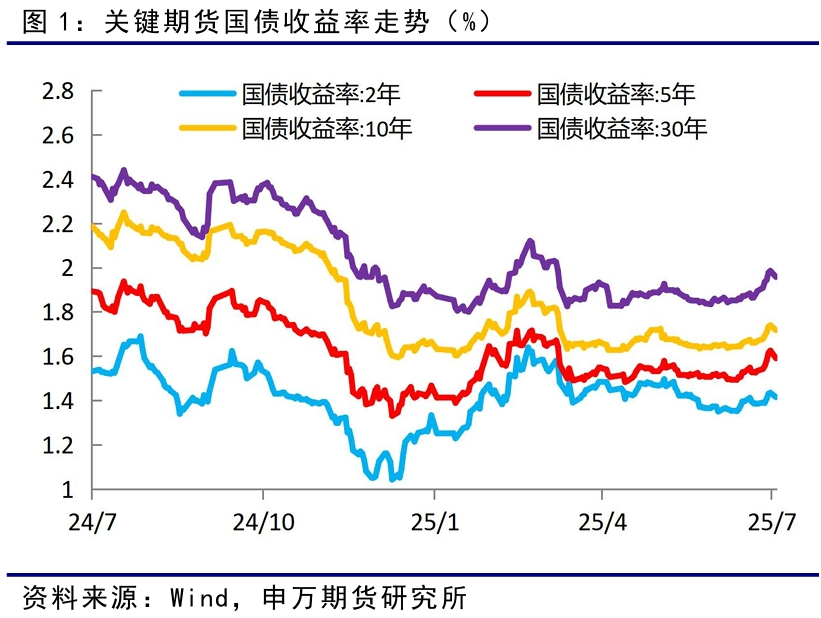
炒股就看金麒麟分析师研报,权威,专业,及时,全面,助您挖掘潜力主题机会! 7月份以来,各国债期货合约价格持续下跌,T2509合约下跌超过0.7%,10年期国债收益率从1.64%最高回升至1.73%上方,回升幅度超过9bp,创今年4月 份以来的新高,主要在反内卷政策驱动下,权益和商品同步走强,提升市场风险偏好,压制债市情绪,同时部分经济金融数据回升改善经济增长预期,美 联储降息时间推迟制约国内货币政策空间。 2015年11月中央财经领导小组会议首次提出供给侧结构性改革,并在当年中央经济工作会议确立"三去一降一补"五大任务,同时实施相互配合的五大政策 支柱。受供给侧结构性改革影响,煤焦钢矿等受影响较大相关期货品种,均于2015年11月见底回升,随后一年(2015年11月10日-2016年11月10日)涨幅 巨大,带动PPI同比降幅于2016年1月份加速收窄,至2016年9月份时转正,在2017年2月份创下本轮PPI同比的高点7.8%。CPI涨幅较为温和,从1.3%回升 至2.5%附近,总体保持在3%以内。但2015年11月至2016年底的债市行情并未明显受到供给侧结构性改革的影响,且在PPI降幅持续收窄甚至转正之 ...
清华大学国家金融研究院院长田轩:深化改革为经济高质量发展提供持久保障
Shang Hai Zheng Quan Bao· 2025-07-30 14:33
来源:上海证券报·中国证券网 上证报中国证券网讯(记者 李雁争)7月30日召开的中共中央政治局会议指出,要坚定不移深化改革。 坚持以科技创新引领新质生产力发展,加快培育具有国际竞争力的新兴支柱产业,推动科技创新和产业 创新深度融合发展。纵深推进全国统一大市场建设,推动市场竞争秩序持续优化。依法依规治理企业无 序竞争。推进重点行业产能治理。规范地方招商引资行为。坚持"两个毫不动摇",激发各类经营主体活 力。 对此,清华大学国家金融研究院院长、清华大学五道口金融学院副院长田轩接受上海证券报记者采访表 示,这些部署涵盖科技创新、产业创新、市场秩序优化、重点行业治理等领域,将通过系统性改革夯实 高质量发展基础,为全面建设社会主义现代化国家注入强劲动力。 针对重点行业产能治理,他指出,这是供给侧结构性改革的延续与深化,旨在通过淘汰落后产能,引导 资源向高附加值、绿色低碳领域集中,推动产业结构向更高质量升级。而规范地方招商引资行为,将有 效遏制地方间的政策"内卷"和恶性竞争,从制度层面优化整体投资环境,促进区域协调发展。 田轩强调,会议重申"两个毫不动摇"意义重大,这一部署将切实保障各类经营主体在市场中的平等地 位,通过 ...
李迅雷专栏 | 从“资产荒”角度看“内卷”的深层原因
中泰证券资管· 2025-07-30 11:30
Core Viewpoint - The article emphasizes the importance of understanding the root causes of "involution" in the context of declining investment returns and risk appetite in the capital market, suggesting that addressing these issues is crucial for effective "anti-involution" measures [2]. Group 1: Investment Returns and Involution - The return on investment for large-scale manufacturing enterprises has been declining, with profit margins decreasing from 5.35% in 2021 to 4.25% in the first five months of 2024 [5][11]. - The revenue generated per 100 yuan of assets for these enterprises has also dropped from 107 yuan in 2022 to 85.2 yuan in the first five months of 2024 [5][11]. - The phenomenon of "involution" is characterized by intensified competition among enterprises, leading to price wars that result in increased volume but reduced profits [11][19]. Group 2: Supply and Demand Dynamics - The persistent "supply exceeds demand" situation is attributed to previous investment expansions, with manufacturing investment growth outpacing overall investment growth from 2021 to 2024 [21][27]. - The average accounts receivable period for large-scale manufacturing enterprises has lengthened from 54 days in 2022 to 71.7 days in the first five months of 2024, indicating increased financial pressure [16][30]. - The capacity utilization rate for these enterprises has decreased from 75.8% in 2022 to 74.2% in the first half of 2024, reflecting a growing surplus in production capacity [19][27]. Group 3: Government Policies and Economic Structure - Local governments are incentivized to boost manufacturing investment to meet GDP targets, often leading to distorted market resource allocation through aggressive investment policies [28][30]. - Recent policies have increased financial support for manufacturing, with long-term loans to the sector growing significantly, providing substantial funding for investment expansions [30][32]. - The article highlights the need for a balanced approach to address both supply-side issues and consumer demand, suggesting that effective "anti-involution" strategies should focus on increasing household income and promoting consumption [72].

周期对比视角看钢铁行业“反内卷”路径
Dong Zheng Qi Huo· 2025-07-30 04:15
Report Industry Investment Rating - The rating for rebar and hot-rolled coil is "volatile" [1] Core Viewpoints - The current steel downturn cycle has similarities and differences with the previous one. The current cycle is more driven by demand decline, with a larger demand drop but a less severe overcapacity issue. The price center is still higher due to increased demand and emerging market demand [2][27][46] - The main policy focus of the previous supply - side reform included capacity reduction, supply control, new capacity control, environmental protection improvement, and price control. However, there were some implementation issues [49][51][56] - Potential supply - side policies for the current "anti - involution" in the steel industry may include promoting ultra - low emission transformation and incorporating the industry into the carbon emission trading market. These are long - term tasks, and short - term over - trading is not recommended. Market turnaround depends on demand recovery [4][78][79] Summary by Directory 1. Comparison of the Current and Previous Steel Downturn Cycles - **Price decline and structure**: The decline time of the current cycle is similar to the previous one. The average price decline of finished products is slightly higher, while the decline of iron ore and coking coal is relatively smaller. The price center is higher than the previous low. The current cycle compresses steel mill profits earlier, and the profit recovers in 2024 - 25 [15][19] - **Demand and overcapacity**: The current cycle is triggered by the decline in real estate demand. The domestic demand for crude steel has been in negative growth since 2021. Although the demand decline is larger, the total demand is on a higher level, and the overcapacity is less severe than the previous cycle [20][27] - **Demand structure**: In the current cycle, the proportion of manufacturing and export demand has increased, playing a role in hedging demand decline. The external demand for manufacturing is strong, supported by overseas demand and emerging market growth. The overseas steel demand also shows a structural increase in emerging markets [28][31][33] 2. Review of the Previous Supply - Side Structural Reform Policies and Market Changes - **Policy background and path**: The previous supply - side reform aimed to solve problems such as overcapacity, high leverage, and real estate inventory. The main policies included capacity reduction (1 - 1.5 billion tons of steel and 5 billion tons of coal), supply control, new capacity control, environmental protection improvement, and price control [47][49][51] - **Market performance**: The steel price performance during the previous reform can be divided into four stages: policy - expectation - driven rise and fall (2015.12 - 2016.4), supply - reduction - driven rise (2016.5 - 2016.12), capacity - reduction - driven profit expansion (2017), and supply - elasticity - increase and narrowing profit (2018 - 2019) [57][61][71] 3. Potential Policy Directions for the Current "Anti - Involution" in the Steel Industry - The current market environment is similar to the previous one, with profit compression and a certain degree of market - based clearance. The priority of promoting supply - side reform this year is not high, but "anti - involution" may be related to anti - deflation [72] - Potential capacity - reduction directions include eliminating blast furnaces below 1000 cubic meters and promoting ultra - low emission transformation in 2026. Supply - control may be achieved by incorporating the industry into the carbon emission trading market, which is a long - term task. Market turnaround depends on demand recovery [73][78][79]
债市短期仍处于“逆风”环境
Qi Huo Ri Bao· 2025-07-29 19:17
Group 1 - The recent "anti-involution" sentiment is intensifying, with policy expectations rising, leading to improved market risk appetite and a positive impact on the Shanghai Composite Index, which has surpassed 3600 points [1] - Industrial product inflation expectations are being driven by both supply-side "anti-involution" and demand-side investments, indicating a correction in the fundamental outlook [1] - The issuance of long-term special government bonds faced a cold reception, and unexpected tightening of liquidity has reinforced a challenging environment for the bond market [1] Group 2 - The "anti-involution" initiative is gaining clarity with various legal, regulatory, and industrial measures being implemented, including the draft amendment to the Price Law, which aims to address low-price dumping [2] - The significance of "anti-involution" lies in breaking the negative feedback loop caused by persistently weak prices, which affects supply-demand balance and optimization [2] - Current economic challenges include weak demand and prices, leading to increased deflationary pressures and insufficient leverage for residents and enterprises, creating a negative feedback mechanism [2] Group 3 - The success of "anti-involution" relies heavily on demand-side recovery, with fiscal measures expected to shift from funding allocation to tangible project execution [3] - Compared to previous supply-side reforms, the current "anti-involution" approach is more market-oriented, with a focus on stabilizing demand while considering employment factors [3] - The policy direction emphasizes deepening reforms and high-quality development without resorting to excessive demand-side stimulus or redundant supply-side investments [3] Group 4 - Historical adjustments in the bond market due to supply-side structural reforms suggest that while industrial prices may rise, the demand side is crucial for determining long-term interest rate trends [4] - The relationship between interest rates and core CPI is significant, as core CPI reflects true demand strength, and the transmission of rising industrial prices to broader CPI is critical [4] - Current demand-side dynamics do not exhibit the same strength as previous housing reforms, leading to potential demand drag in the early stages of "anti-involution" [4] Group 5 - Recent risk warnings from exchanges and the implementation of position limits have cooled the commodity futures market, with significant corrections in previously high-performing products [5] - The bond market may see short-term rebound opportunities due to central bank liquidity support, despite the amplified adjustment pressures from bond fund redemptions [5] - Investors should remain cautious of potential redemption waves and monitor central bank actions to stabilize liquidity expectations, especially with upcoming trade negotiations [5]
社科院金融所:缓解物价低迷可从五方面入手,发展服务消费意义重大
Sou Hu Cai Jing· 2025-07-29 03:45
Core Viewpoint - The report from the Chinese Academy of Social Sciences indicates that while the Chinese economy is stabilizing, persistent low prices are dragging down nominal economic growth, widening the gap between macro and micro economic conditions [1] Economic Indicators - The Consumer Price Index (CPI) has shown a year-on-year growth rate around 0% for 27 consecutive months, while the Producer Price Index (PPI) has seen a year-on-year decline of 3.6%, marking 33 months of negative growth [1] - The GDP deflator has recorded negative year-on-year growth for nine consecutive quarters, surpassing the seven quarters of negative growth during the 1998 Asian financial crisis [1] Causes of Low Prices - The low price environment is attributed to the pains of transitioning from old to new economic drivers. While the impact of durable goods and rental prices on CPI has eased, weakened income expectations are constraining service consumption growth, preventing a virtuous cycle of consumption expansion, price increase, and wage growth [1] - Supply fluctuations, weak domestic demand, and shrinking external demand are increasing downward pressure on PPI, particularly in midstream chemical products and downstream essential consumer goods [1] Policy Recommendations - The report suggests five key recommendations to address the low price situation, including increasing nominal fiscal deficit rates, implementing inflation-targeted monetary policies, and stabilizing real estate prices to mitigate liquidity risks for major property firms [2] - It emphasizes the importance of enhancing service consumption to alleviate persistent low prices, as service consumption tends to exhibit differentiated supply expansion and price increases, unlike the homogeneous supply of general goods [2][4] Future Outlook - The report anticipates that the focus of macroeconomic regulation will be on strengthening the coordination of fiscal, monetary, industrial, employment, and social security policies to promote economic supply-demand balance and reasonable price recovery [4] - It advocates for the inclusion of a broad price index, covering general prices (CPI, PPI, and GDP deflator) and asset prices (housing and stock prices), into macroeconomic regulation targets, and encourages the use of unconventional counter-cyclical adjustment policies [4]