债市

Search documents
1月PMI点评:从以价换量到以量换价?
Changjiang Securities· 2026-02-01 23:30
丨证券研究报告丨 固定收益丨点评报告 [Table_Title] 从"以价换量"到"以量换价"?——1 月 PMI 点评 报告要点 [Table_Summary] 2026 年 1 月,制造业 PMI 回落 0.8pct 至 49.3%,非制造业景气度也回落至荣枯线以下,弱于 季节性水平。产需走弱,库存积压;春节临近,后续消费需求能否顺利消化库存仍有待观察。 总体来看,稳增长的方式或从"以价换量"转向"以量换价",基本面的改善仍需长期性修复,但不 乏亮点:一是大宗商品涨价带动整体价格回升,二是装备制造和高端技术制造业持续释放增长 潜力。而企业利润修复能否持续,还需观察原料成本和产成品价格的动态均衡。预计债市或对 偏弱数据有所反应但难以走出持续修复行情,近期我们维持债市震荡的观点。 分析师及联系人 %% %% research.95579.com 1 [Table_Author] SAC:S0490524080003 SFC:BVN394 赵增辉 马玮健 请阅读最后评级说明和重要声明 %% %% 2026 年 1 月,制造业 PMI 回落 0.8pct 至 49.3%,低于万得一致预期;非制造业商务活动指数 为 ...
每周高频跟踪 20260201:节前经济活动节奏小幅放缓-20260201
Huachuang Securities· 2026-02-01 15:37
Report Industry Investment Rating Not provided in the given content Core Viewpoints - In the fifth week of January, industrial production remained stable. As the Spring Festival holiday approached, construction sites gradually shut down, leading to weak performance in the volume and price of investment products [33]. - In terms of inflation, the food price index continued to rise, but the increase in pork prices narrowed month - on - month [33]. - In terms of exports, the demand for ocean routes was weak, and the month - on - month decline in market container shipping prices widened [33]. - In terms of investment, the PMI of the construction industry dropped significantly in January, indicating that construction projects were gradually shutting down and workers were returning home for the Spring Festival. The asphalt production started to decline seasonally, and traditional off - season factors had a dominant impact on the volume and price of investment products before the Spring Festival [33]. - In the real estate sector, new home sales remained relatively low year - on - year, second - hand home sales slowed down slightly but remained at a high level. The listing price in January turned positive month - on - month, indicating an early start of the "spring market" with signs of stabilization in both volume and price. Attention should be paid to the rebound slope of trading volume and the sustainability of price recovery after the Spring Festival [33]. - For the bond market, with the data "blank period" in February and the approaching Spring Festival, the suppression of pre - holiday data on bond market sentiment is expected to weaken. The ex - factory price in the PMI continued to rise and returned to the expansion range. The month - on - month recovery of PPI in January is expected to continue. Attention should be paid to the impact of structural price improvement on bond market sentiment. On the other hand, due to the Spring Festival date shift, the year - on - year CPI reading may decline; regulatory authorities advocate weakening the scale of credit issuance, so the "good start" of credit in January may be mediocre; the second - hand home sales have started to slow down seasonally recently, and the impact of real estate fundamental factors is expected to decrease compared with January. The short - term impact of fundamentals on bond market expectations is reduced, and attention should be paid to the entry rhythm of pre - holiday allocation funds [33]. Summary by Directory I. Weekly High - Frequency Tracking: Economic Momentum Gradually Cools Down Before the Festival (1) Inflation - related: Food Price Increase Narrows - The increase in pork prices narrowed. From January 24th to January 30th, the average wholesale price of pork in China increased by 0.89% week - on - week, with a narrowing increase [8]. - The 200 - index of agricultural product wholesale prices and the wholesale price index of basket products increased by 0.38% and 0.45% week - on - week respectively, with narrowing increases [8]. (2) Import and Export - related: Container Shipping Prices Accelerate Weakening - The comprehensive container shipping index continued to weaken. This week, the CCFI index decreased by 2.7% week - on - week, and the SCFI decreased by 9.7% week - on - week, with an expanding decline [11]. - From January 19th to January 25th, the container throughput and cargo throughput of ports decreased by 4.35% and 1.70% respectively compared with the previous week before the festival, and increased by 9.6% and 6.9% year - on - year respectively [11]. - The increases of the BDI and CDFI indexes expanded. The pre - holiday transportation demand in the international dry bulk shipping market improved, and the market sentiment was positive. The Far - East dry bulk freight index rose [11]. (3) Industry - related: Pre - holiday Production Continues to Slow Down - Coal prices stopped falling and rebounded. This week, the price of thermal coal (Q5500) at Qinhuangdao Port increased by 0.2% week - on - week, compared with a 1.7% decrease the previous week [15]. - The price of rebar slightly declined. The spot price of rebar (HRB400 20mm) decreased by 0.2% week - on - week, compared with a 0.69% decrease the previous week [15]. - The asphalt production rate accelerated its decline. This week, the operating rate of asphalt plants decreased by 1.3 percentage points to 25.5% week - on - week, and increased by 1.1 percentage points year - on - year [15]. - Copper prices stopped falling and rebounded. This week, the average price of copper in the Yangtze River Non - ferrous Metals Market increased by 1.9% week - on - week [18]. - The glass futures stopped falling and rebounded. The spot price of glass remained stable, and the overall trading situation was slightly weaker than before. The downstream enterprises mainly made rigid - demand purchases. Affected by weather factors, there were differences in production and sales between regions, and the industry inventory increased slightly [18]. (4) Investment - related: Second - hand Home Sales Decline Slightly - The decline in cement prices widened. This week, the weekly average of the cement price index decreased by 1.0% week - on - week, with an expanding decline [22]. - New home sales increased slightly. From January 23rd to January 29th, the transaction area of new homes in 30 cities was 1.328 million square meters, an increase of 14.1% week - on - week and 94% year - on - year. The high year - on - year increase was due to the Spring Festival date shift, and there was a slight end - of - month rush in terms of the week - on - week comparison [23]. - Second - hand home sales cooled down. From last Friday to this Thursday, the transaction area of second - hand homes decreased by 9.4% week - on - week, ending the continuous upward trend. However, it remained at a high level overall. As the Spring Festival holiday approached, second - hand home sales entered a seasonally low stage. In terms of price, the monthly listing price index of second - hand homes increased by 0.1% month - on - month in January, the first positive increase since January 2025. Attention should be paid to the volume and price performance after the Spring Festival [23]. (5) Consumption: Crude Oil Prices Rise Strongly - The increase in oil prices expanded. As of January 30th, the prices of Brent crude oil and WTI crude oil increased by 7.3% and 6.8% respectively week - on - week, with an expanding increase. Tensions in the geopolitical situation between the US and Iran may lead to a decrease in crude oil production. Coupled with the reduction of US crude oil inventories and the decline of the US dollar index, oil prices were jointly pushed up [24].
1月PMI数据点评:制造业PMI超季节性回落,价格指数抬升
Western Securities· 2026-02-01 13:06
1. Report's Investment Rating for the Industry - No information provided regarding the industry investment rating in the report. 2. Core Viewpoints of the Report - In January 2026, the manufacturing PMI declined more than seasonally with supply - demand converging and enterprise - scale differentiation intensifying, while price indices rose. The service industry PMI slightly dropped and the construction industry's prosperity significantly declined, thus more efforts are needed to promote economic - stabilizing policies [1][10][34]. - In January, the shock of sentiment was gradually digested, and the bond market recovered after adjustment. However, there were still some constraints for a smooth short - term decline. The 10Y Treasury bond yield may return to the central part of the oscillation range in February. Two structural investment opportunities are recommended: the allocation opportunities of 5Y government - financial bonds and 3 - 5Y general - credit bonds, and the spread - compression opportunities such as 10Y CDB - 10Y Treasury bonds [4][34][35]. 3. Summary According to the Directory 3.1 1 - month PMI Data Overview - Manufacturing PMI declined by 0.8 percentage points to 49.3% in January, returning to the contraction range and being weaker than the seasonal average. The production index expansion slowed, demand was under pressure, price indices rose, and enterprises replenished inventory passively with a decline in purchasing willingness [10]. - In the non - manufacturing sector, the service industry PMI slightly decreased by 0.2 percentage points to 49.5%, and the construction industry's business activity index dropped by 4.0 percentage points to 48.8%, both showing different degrees of deviation from seasonal performance [11][14]. 3.2 Manufacturing: Demand - side Operation Under Pressure, Both Price Indices Rising - **Production**: The manufacturing PMI production index was 50.6% in January, down 1.1 percentage points month - on - month, weaker than the seasonal level. The slowdown was due to factors like cold weather and approaching Spring Festival, especially the over 4 - percentage - point decline in the consumer goods manufacturing production index [17]. - **Demand**: The new order index and new export order index of manufacturing PMI decreased by 1.6 and 1.2 percentage points respectively. The "new order - new export order" index dropped to 1.4%. Seasonal factors and external policy changes affected demand, but the proportion of manufacturing enterprises reporting insufficient market demand decreased [19]. - **Enterprise Scale and New Kinetic Energy**: The PMI of large, medium, and small enterprises decreased by 0.5, 1.1, and 1.2 percentage points respectively. New kinetic energy industries continued to lead, while traditional industries' prosperity declined [20]. - **Price**: Affected by multiple factors, the main raw material purchase price index and ex - factory price index were 56.1% and 50.6% respectively, up 3.0 and 1.7 percentage points month - on - month. The index difference reached 5.5 percentage points, compressing the profit space of mid - and downstream enterprises [23]. - **Inventory**: The raw material inventory index decreased by 0.4 percentage points, and the finished - product inventory increased by 0.4 percentage points. The economic kinetic energy index decreased by 2.0 percentage points, and the purchasing volume index dropped to 48.7%. The start of the replenishment cycle depends on the recovery of market demand [24]. 3.3 Non - manufacturing: Slight Decline in Service Industry PMI, Significant Decline in Construction Industry - **Service Industry**: In January, the service industry PMI slightly declined. The strong support from the financial industry, the stable development of new kinetic energy, and the good performance of some consumption - related service industries maintained its stability. However, the real - estate industry's business activity index fell below 40.0%, and Spring Festival consumption may boost the consumption - related service industries [29]. - **Construction Industry**: Due to cold weather and the approaching Spring Festival, the construction industry's business activity index decreased by 4.0 percentage points to 48.8% in January. Both housing construction and civil engineering construction activities slowed down, and the off - season characteristics may continue in February [32]. 3.4 Impact on the Bond Market - In January, after the shock of sentiment was digested, the bond market recovered. The 10Y Treasury bond yield dropped to the lower limit of the 1.8% - 1.9% oscillation range. With insufficient broad - money expectations and increased local - bond supply in February, the 10Y Treasury bond yield may return to the central part of the oscillation range. Two parts of structural investment opportunities are recommended [4][34][35].
联储换帅、市场波动与债市逻辑
GOLDEN SUN SECURITIES· 2026-02-01 11:24
固定收益定期 联储换帅、市场波动与债市逻辑 本周债市总体震荡,各期限利率变化有限。本周债市总体震荡,10 年和 30 年 国债利率分别下降 1.9bps 上行 0.2bps 至 1.81%和 2.29%。3 年和 5 年二级 资本债分别上升 3.0bps 和下降 1.6bps。1 年 AAA 存单利率保持在 1.60%。 证券研究报告 | 固定收益定期 gszqdatemark 2026 02 01 年 月 日 本周末全球市场剧烈震荡,可能部分受特朗普提名新的美联储主席影响。本周 五,美国总统特朗普宣布了新的美联储主席提名人选凯文·沃什。由于此前凯 文·沃什相对于当前美联储主席鲍威尔,在货币政策表态方面更显鹰派,例如 更为主张降息与缩表并行,以及支持联储独立性等,市场因此产生对联储政策 路径不确定的担忧。进而贵金属市场和股票市场都出现了较为显著的下跌。 我们认为新任联储主席政策存在不确定性,以往表述可以参考,但也存在变化 可能。美国总统特朗普提名凯文·沃什是货币政策宽松、维护联储独立性以及 美元地位等多方面因素综合考量的结果。而新任联储主席的政策也可能是多 重目标和多种因素综合考虑的结果,并非完全基于上任前的 ...
2月利率债月报:利率:利率胜率高于赔率,久期策略蓄势
CAITONG SECURITIES· 2026-02-01 07:25
Market Overview - The 10-year government bond yield is stabilizing around 1.8%, while the 30-year yield is at 2.25%[2] - Economic and inflation expectations are weakening, leading to a high probability of central bank support despite continued government debt net financing[2] Investment Strategy - February's bond market has a higher win rate than odds, suggesting a dynamic view on central bank threshold limits and a focus on duration strategy[2] - The market may see a bullish momentum if the 30-year bond yield breaks below 2.15%[2] Supply and Demand Dynamics - January government bond issuance reached approximately 2.08 trillion yuan, with net financing exceeding seasonal levels[21] - February government bond issuance is expected to decrease year-on-year to 2.11 trillion yuan, with net financing dropping by 3.4 billion yuan[27] Economic Indicators - PMI data has shown an unexpected decline, contributing to weakened expectations for the New Year[3] - External demand may provide some support to the economy, with exports expected to drive growth[3] Market Sentiment - Bank buying power has increased, which is a key factor in the January interest rate decline[3] - The trading market's confidence in duration strategies is recovering, although it may take time for full restoration[3]
国开债券ETF(159651)实现4连涨
Sou Hu Cai Jing· 2026-01-29 01:40
Group 1 - The core viewpoint indicates that the long-term bonds are experiencing a rebound driven by allocation strategies, with significant net buying from various institutions [1] - Since the beginning of January, the trading data shows that insurance funds have increased their allocation to long-term bonds significantly, benefiting from a notable decline in liability costs [1] - The market anticipates that the yield on 10Y government bonds will drop below 1.8% in the coming month, with potential for 30Y bonds to fall below 2.2% [2] Group 2 - The National Development Bank bond ETF has seen a 1.10% increase over the past year, ranking it in the top half of comparable funds [2] - The ETF's trading volume has been robust, with an average daily turnover of 281 million yuan over the past year [3] - The ETF has experienced a significant growth in scale, increasing by 47 million yuan in the past month [3] Group 3 - The management fee for the National Development Bank bond ETF is set at 0.15%, while the custody fee is 0.05% [4] - The ETF closely tracks the China Bond - 0-3 Year National Development Bank Bond Index, which includes bonds with a maturity of up to 3 years [5]
债市早报:2025年全国规模以上工业企业利润实现增长;资金面有所改善,债市震荡调整
Jin Rong Jie· 2026-01-28 03:42
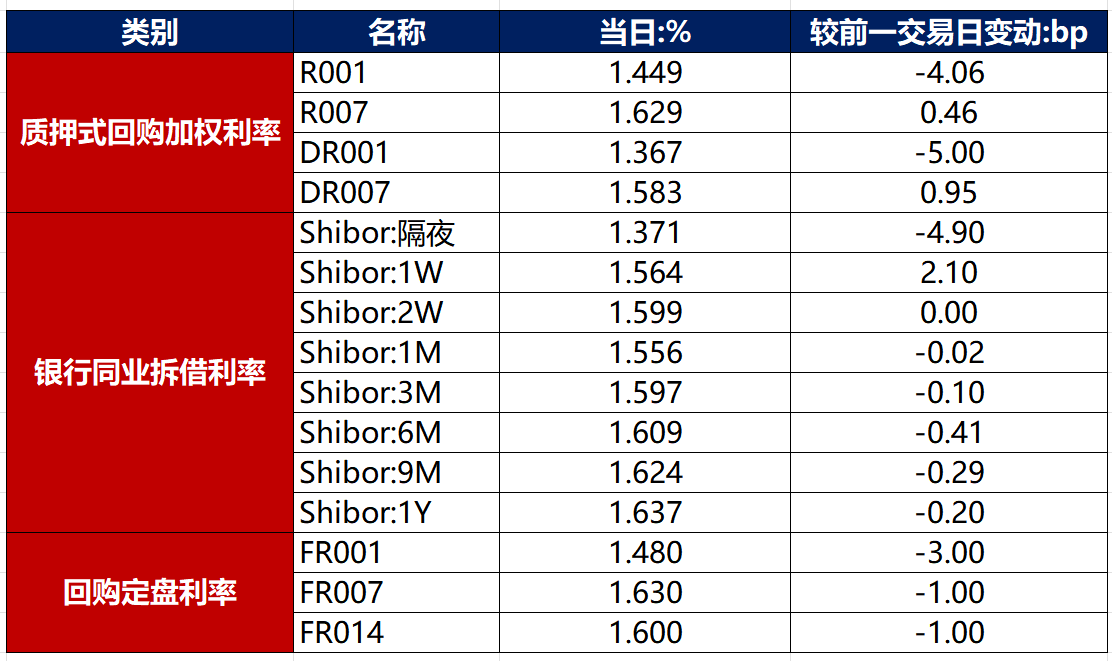
Group 1: Domestic News - The UK Prime Minister Starmer will visit China from January 28 to 31, marking the first visit by a UK Prime Minister in eight years, with discussions on trade and investment cooperation expected [2] - The Ministry of Human Resources and Social Security plans to expand the scale of entrusted investment of the basic pension insurance fund, with the total income of three social insurance funds reaching 9.1 trillion yuan and total expenditure at 8.1 trillion yuan by the end of 2025 [2] - By the end of 2025, the loan acquisition rate for technology-based small and medium-sized enterprises reached 50.2%, an increase of 2 percentage points from the previous year [3] Group 2: Economic Indicators - The profits of industrial enterprises above designated size in China increased by 0.6% year-on-year in 2025, reversing a three-year decline, with significant contributions from equipment manufacturing and high-tech industries [3] - Jilin Province has successfully exited the list of key local debt provinces, achieving the standards set in its 14th Five-Year Plan [4] Group 3: International News - The Federal Reserve is expected to pause interest rate cuts for the first time since September, maintaining the benchmark rate between 3.5% and 3.75% [5] - India and the EU have finalized a historic free trade agreement, with India agreeing to eliminate tariffs on over 90% of EU goods, marking a significant shift in trade relations [6] Group 4: Market Dynamics - The bond market showed fluctuations with the stock market's performance, as the yield on the 10-year government bond rose by 0.70 basis points to 1.8320% [11] - The convertible bond market saw a collective increase in major indices, although most individual convertible bonds experienced declines, with 162 bonds rising and 207 falling [14] Group 5: Commodity Prices - International crude oil prices increased, with WTI crude rising by 2.90% to $62.39 per barrel, while natural gas prices saw a slight decline [7] Group 6: Financial Operations - The central bank conducted a reverse repurchase operation of 402 billion yuan at a fixed rate, resulting in a net injection of 78 billion yuan into the market [8] - The money market showed improvement with the DR001 rate decreasing by 5.00 basis points to 1.367% [9]



资金暖意托底 但债市仍全线回调
Xin Lang Cai Jing· 2026-01-27 12:58
Group 1: Market Overview - The central bank conducted a 7-day OMO injection of 402 billion yuan, resulting in a net injection of 78 billion yuan, indicating a marginal improvement in liquidity [1] - The bond market experienced a mixed performance, with a divergence between long-term and short-term bonds, as the market remained in a narrow fluctuation range [1] - The overall sentiment in the bond market was cautious, influenced by the stock market's volatility, leading to a general decline in bond prices [2] Group 2: Interest Rates and Yield Movements - The yield on the 10-year government bond rose by 0.45 basis points to 1.8295%, while the 30-year bond yield increased by 1.35 basis points to 2.2555% [1] - The Shibor rates showed a mixed trend, with the overnight Shibor declining to 1.3710%, down by 4.90 basis points, while the 1-month Shibor remained relatively stable [3] - The bond market saw a decrease in trading volume, with the total transaction scale dropping by 28.9 billion yuan to 207.8 billion yuan [3] Group 3: REITs Market Performance - The public REITs market showed a slight increase, with the index rising by 0.08% to 1045.72 points, reflecting a cumulative increase of 3.55% for the year [4] - There was significant divergence within the REITs sector, with consumer and high-speed sectors leading gains, while industrial park and innovation sectors faced declines [4] - The total trading volume in the REITs market increased by 23.35% to 666 million yuan, indicating a neutral trading environment [4]
永赢添添悦6个月持有混合A:2025年第四季度利润1987.43万元 净值增长率0.44%
Sou Hu Cai Jing· 2026-01-26 12:42
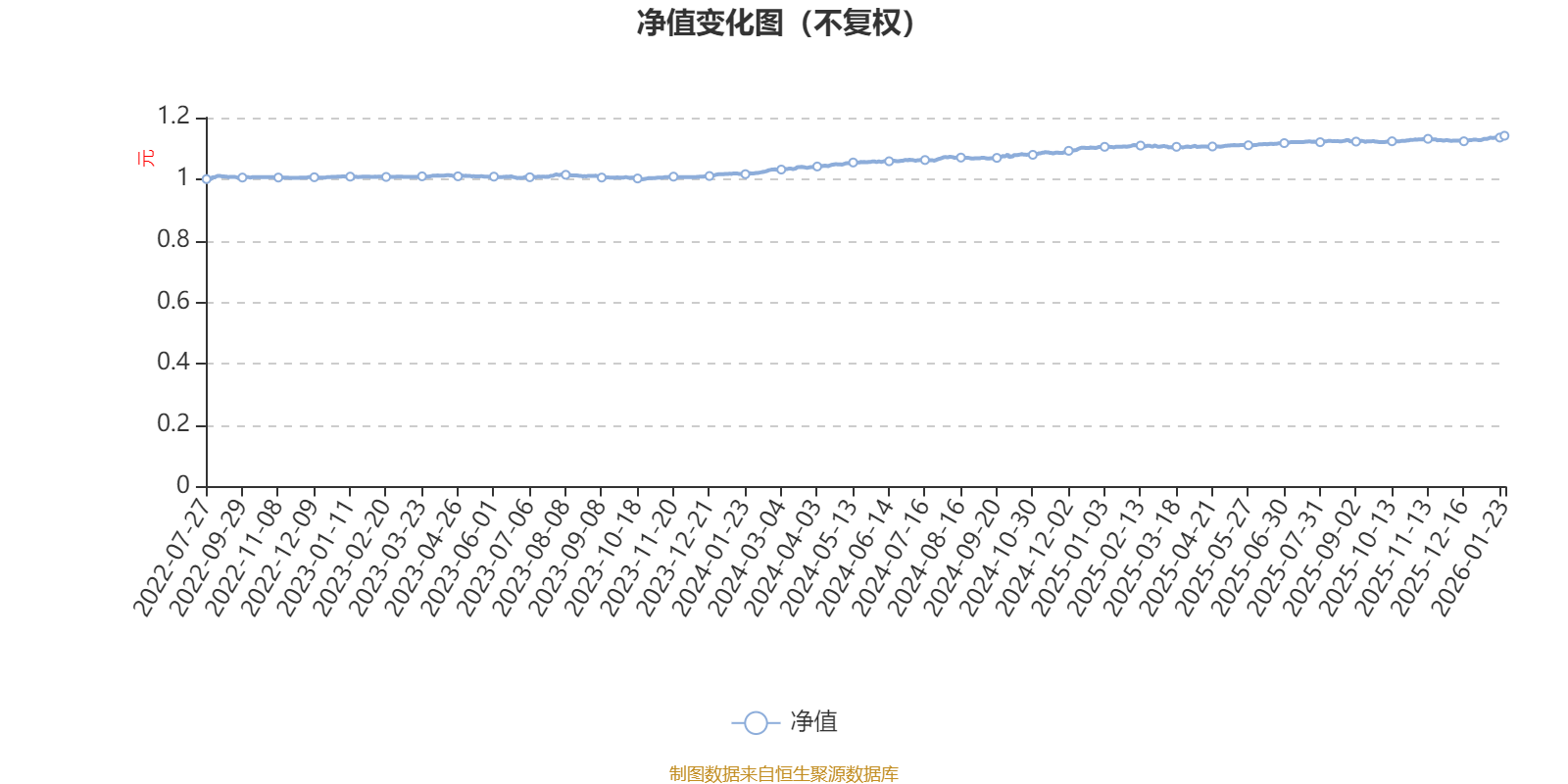
截至1月23日,单位净值为1.141元。基金经理是缪佳、陶毅和刘星宇。 基金管理人在四季报中表示,宏观方面,四季度经济动能放缓、内外需分化加剧。经济延续供强需弱格局,内需相关的投资、消费均明显走弱,信贷需求持 续乏力,经济核心支撑来自出口韧性。整体通胀水平仍处负值区间,四季度反内卷对PPI的影响边际弱化,CPI受低基数支撑边际修复。政策方面,年末政治 局会议、中央经济工作会议落地,货币政策延续宽松定调、财政保持必要强度,超预期增量指引相对有限。利率方面,四季度机构行为是债市定价主导,收 益率震荡上行。节奏上,10月受海外关税政策反复、央行重启买债支撑,利率震荡下行修复。11月机构止盈情绪升温,利率转为震荡。12月机构赎回情绪进 一步走高,叠加年末大行久期指标压力,债市利率震荡上行。 转债方面,四季度表现区间震荡,中证转债指数小幅上涨1.32%。转债估值在经历9月的剧烈波动后开始趋于稳定,百元平价溢价率保持在30%左右的水平窄 幅震荡。结构上,由于股票风格从大盘成长回归均衡,转债内部分化相对较小,低价指数小幅领涨。节奏上,10月在中美贸易摩擦升级下调整,月底缓解后 恢复上行;11月中旬在北美AI叙事质疑和美联储 ...
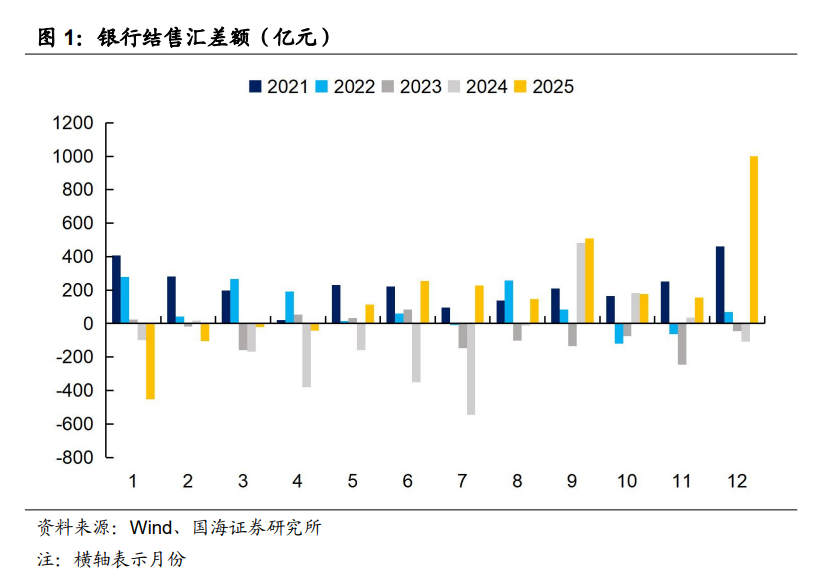
外汇结汇潮,如何影响国内流动性?
Hua Er Jie Jian Wen· 2026-01-26 06:45
2025年以来,企业结汇意愿显著抬升,银行结售汇顺差快速走阔,并在年末攀升至历史高位。结汇究竟是在"放水",还是在"抽水"?央行会不会被动宽松? 国海证券在最新固定收益点评中给出的核心判断是: 第一,结汇高增并非向银行体系"放水",相反会通过消耗超额准备金,对流动性形成阶段性挤压; 第二,在当前政策框架下,央行并不会通过外汇占款被动对冲结汇压力,外汇渠道已不再是主要投放工具; 第三,即便结汇维持高位,其对流动性的影响仍总体可控,是否触发降准、降息,关键仍取决于国内经济金融形势,而非结汇本身。 国海证券认为,这意味着外汇结汇潮更像是一种可被管理的结构性扰动,而非货币政策转向的信号,对债市的影响也不宜被高估。 结汇"抬M1",但在消耗银行超储 国海证券指出,2025年在人民币汇率持续走强的背景下,企业结汇意愿显著增强,银行结售汇规模快速增长,年末结售汇顺差一度升至约1000亿元的历史高 位。 高结汇≠外汇占款回归,央行不会"被动投放" 针对市场关心的"央行是否会通过外汇占款对冲结汇压力",国海证券给出了明确否定判断。 研报指出,在2015年汇改之前,央行外汇占款与银行结售汇高度同步,承担了基础货币投放的重要职能; ...