
债市震荡

Search documents
国债策略月报-20251201
Guang Da Qi Huo· 2025-12-01 07:42
Report Industry Investment Rating - Not provided in the content Core Viewpoints - In December, with loose funds but weak expectations of interest rate cuts, a marginally weakening but overall resilient economy, and inflation continuing to rise moderately, the bond market is expected to maintain a narrow - range oscillation within the year [6] Summary by Directory 1. Bond Market Performance: Favorable Factors Materialized, Bond Market Bearish - **Market Yield and Contract Price**: In early November, after the favorable policy of central bank's bond trading was implemented, with MLF and outright reverse repurchase continuing net injection, the capital was loose. However, the market's expectation of central bank's interest rate cut was low, resulting in a "buy - the - rumor, sell - the - news" situation in the bond market. The bond yields oscillated slightly upward, and the yield curve steepened. As of November 28, the yields of 2 - year, 5 - year, 10 - year, and 30 - year bonds were 1.42%, 1.62%, 1.84%, and 2.19% respectively, up 1.61BP, 5.21BP, 4.58BP, and 4.20BP from October 31. The closing prices of TS, TF, T, and TL main contracts were 102.378 yuan, 105.745 yuan, 107.94 yuan, and 114.49 yuan respectively, down 0.16%, 0.30%, 0.68%, and 1.88% from October 31 [4][9] - **Trading Volume and Open Interest**: On November 28, the trading volumes of 2 - year, 5 - year, 10 - year, and 30 - year bonds were 30770, 58008, 66598, and 97157 respectively, with changes of - 3531, 349, - 12082, and - 22444 compared to October 31. The open interests were 67266, 144566, 234480, and 168934 respectively, with changes of - 16912, - 33502, - 50216, and - 13910 [14] - **Net Basis Spread**: The net basis spread showed a narrow - range oscillation [15] - **Inter - delivery Spread**: The inter - delivery spread of TS decreased slightly, and the long - end inter - delivery spread also declined slightly [17][20] 2. Policy Dynamics: Low Expectations of Interest Rate Cuts - **Reverse Repurchase**: In November, reverse repurchase was flexibly deployed, with a cumulative net injection of 48056 billion yuan, a maturity of 53618 billion yuan, and a net withdrawal of 5562 billion yuan. The reverse repurchase balance at the end of November was 15118 billion yuan. As of November 28, R001, R007, DR001, and DR007 were 1.43%, 1.52%, 1.30%, and 1.47% respectively, with changes of 1.83BP, 2.99BP, - 1.51BP, and 1.17BP from October 31 [24] - **Outright Reverse Repurchase**: In November, the central bank carried out 7000 billion yuan of 3 - month outright reverse repurchase and 8000 billion yuan of 6 - month outright reverse repurchase. After considering the maturity amount, the two - term outright reverse repurchase had a net additional operation of 5000 billion yuan, injecting medium - term liquidity into the market for the sixth consecutive month [28] - **MLF**: In November, the central bank carried out 10000 billion yuan of 1 - year MLF operations. With 9000 billion yuan of MLF maturing in the same month, there was a net injection of 1000 billion yuan, marking the ninth consecutive month of increased MLF operations [32] - **Treasury Bond Trading**: In October, the central bank resumed the suspended treasury bond trading operation since January 2025, with a net purchase of 200 billion yuan of treasury bonds [33][34] - **LPR**: In November, the 1 - year LPR was 3.0%, and the 5 - year - plus LPR was 3.5%, both remaining unchanged from the previous period, in line with market expectations [36] - **PSL**: In October, the PSL had a net withdrawal of 55 billion yuan, with a balance of 10093 billion yuan [36] - **Liquidity**: In November, the overall capital was loose. The 1 - year inter - bank certificate of deposit of joint - stock banks declined slightly, and the bill rate continued to be weak [39][40][43] 3. Bond Supply and Demand: Government Bonds Mostly Issued - **Bond Issuance**: In November, the total issuance of government bonds was 19571 billion yuan, with a maturity of 6786 billion yuan and a net issuance of 12785 billion yuan. As of November, the cumulative net issuance of treasury bonds was 62348 billion yuan, with an issuance progress of 93.62%; the cumulative net issuance of local bonds was 71231 billion yuan, with an issuance progress of 92.51% [6][49] - **Special Bond Issuance**: In November, 4922 billion yuan of new special bonds were issued. From January to November, the cumulative issuance was 44568 billion yuan, with an issuance progress of 96.9%, and the remaining quota for the year was 1432 billion yuan [6] - **Bond Market Trends**: The issuance multiple of local bonds in October remained low. Treasury bond yields rose slightly, US bond yields oscillated weakly, and credit bond spreads widened slightly [53][54][59][60] 4. Strategy Viewpoints: Low Expectations of Interest Rate Cuts, Bond Market Oscillation Continues - The bond market is expected to maintain a narrow - range oscillation within the year due to loose funds, weak interest - rate - cut expectations, a marginally weakening but resilient economy, and moderately rising inflation [6]
国债期货:资金面继续转松 期债延续窄幅震荡
Jin Tou Wang· 2025-11-25 02:16
Market Performance - Treasury futures closed higher across the board, with the 30-year main contract up 0.15% at 115.760 yuan, the 10-year main contract up 0.06% at 108.505 yuan, the 5-year main contract up 0.03% at 105.890 yuan, and the 2-year main contract up 0.01% at 102.418 yuan [1] - The yields on major interbank bonds showed mixed movements, with slight fluctuations. As of the report, the 10-year China Development Bank bond "25国开15" yield remained at 1.8740%, the 10-year government bond "25附息国债16" yield remained at 1.8125%, and the 30-year government bond "25超长特别国债06" yield increased by 0.05 basis points to 2.1590% [1] Funding Conditions - The central bank announced a 338.7 billion yuan 7-day reverse repurchase operation on November 24, with a fixed rate of 1.40%, and the full bid amount was accepted. On the same day, 283 billion yuan of reverse repos matured, resulting in a net injection of 55.7 billion yuan [2] - The interbank market showed a relaxed funding condition, with major term repo rates stabilizing at low levels. The overnight repo rate for deposit institutions slightly decreased to around 1.32% [2] Operational Recommendations - Since October, the resumption of government bond trading and weak fundamentals have led to a rebound in the bond market. However, by mid-November, despite stock market fluctuations, the bond market did not continue to strengthen significantly due to weak expectations for further easing [3] - The short-term bond market is in a range-bound phase, with the 10-year government bond active coupon 250016.IB expected to fluctuate between 1.8% and 1.82%, and the 30-year active coupon rate expected to fluctuate between 2.14% and 2.17% [3] - Factors that may break the current range include the implementation of new redemption fee regulations, the announcement of the central bank's bond purchase scale at the end of the month, and the release of November economic data. A range trading strategy is recommended, with an emphasis on accelerating the pace of position shifting for short investors as the month-end approaches [3]
【中金固收·信用】债市延续小幅震荡
Sou Hu Cai Jing· 2025-11-24 15:12
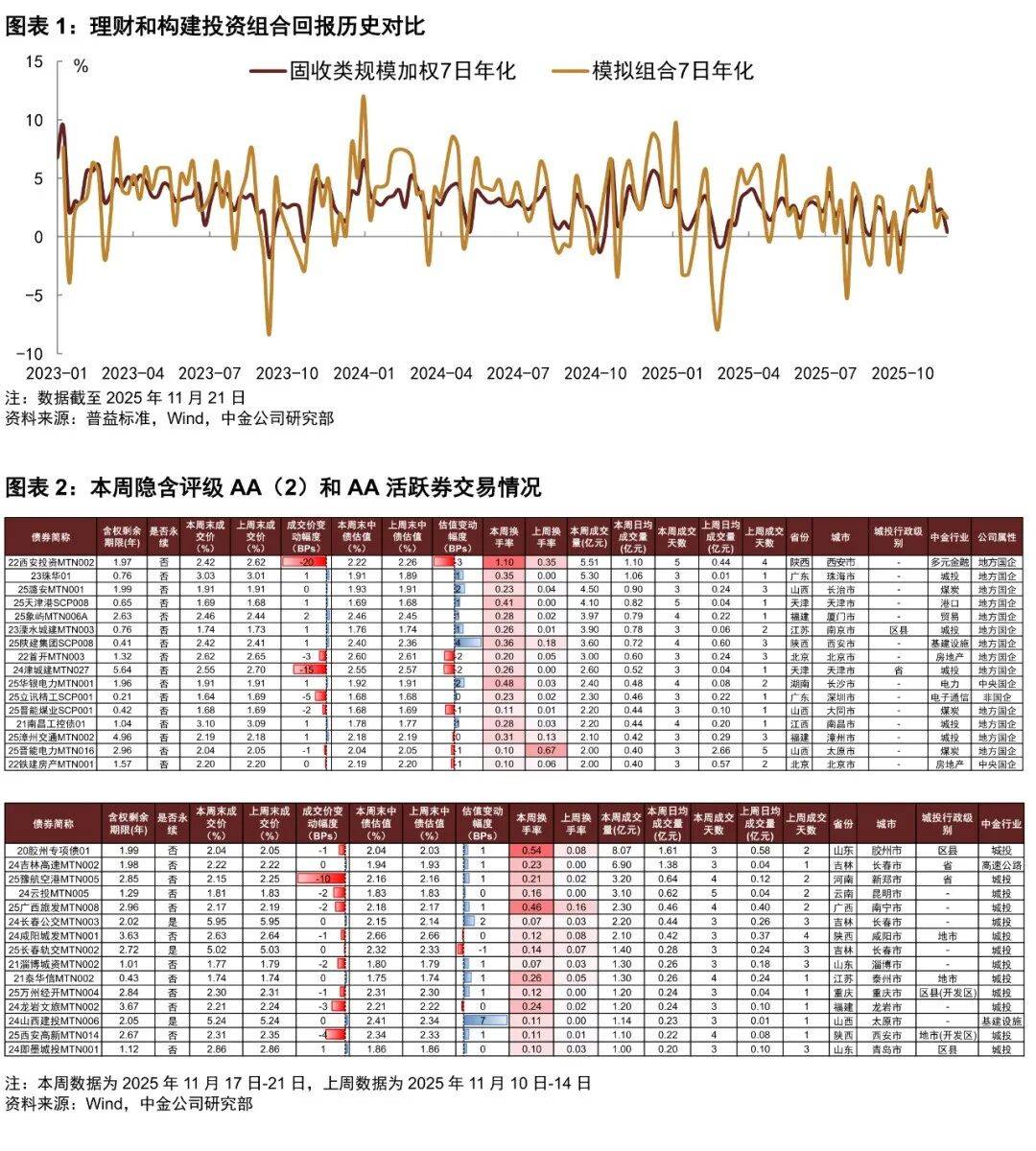
Market Overview - The bond market experienced slight fluctuations last week, with the long-end performing better than the short-end. The overall bond yields showed narrow movements, with the 10-year government bond yield rising by 1 basis point to 1.82% [2] - The issuance of non-financial credit bonds increased significantly, with a primary issuance volume of 409.6 billion yuan, up from 270.2 billion yuan the previous week. The net financing amount rose from 23.1 billion yuan to 132.4 billion yuan [2][3] Credit Bond Demand - Various institutional types showed net buying, although most experienced a decline compared to the previous period. Specifically, the net buying by wealth management decreased from 10.7 billion yuan to 5.5 billion yuan, while funds increased from 27 billion yuan to 34.5 billion yuan [3] - The net buying by insurance companies dropped from 8.2 billion yuan to 3.3 billion yuan, while other asset management institutions increased their net buying from 2.3 billion yuan to 10.3 billion yuan [3] Future Outlook - In the short term, the current market trend is expected to continue, but attention should be paid to stock market movements. A sustained decline in the stock market could lead to redemptions in fixed-income products, triggering bond sell-offs and upward pressure on yields [1][4] - The demand for credit bonds is anticipated to increase, particularly for bonds with maturities of 5-7 years, as a significant amount of amortized cost bond funds will enter the open period in the first half of 2026 [1][4] Issuance Analysis - This week, 418 non-financial credit bonds were issued, totaling 407.8 billion yuan, with a net increase of 130.6 billion yuan, marking a 51% rise in issuance volume and a 465% increase in net increase compared to the previous week [9] - The majority of net increases came from 1-3 year AAA-rated bonds, contributing 110 billion yuan in issuance and 45.1 billion yuan in net increase [9] Yield Trends - The issuance yields varied by rating and maturity, with AAA-rated bonds for maturities of 1 year or less, 1-3 years, and 3-5 years decreasing by 5 basis points, 8 basis points, and 8 basis points respectively [10] - For AA+ rated bonds, the yields for 1 year or less and 1-3 years changed by -3 basis points and 0 basis points, while 3-5 years saw an increase of 30 basis points [10]

LPR连续6个月保持不变,资金面继续转松,债市以震荡为主
Dong Fang Jin Cheng· 2025-11-23 01:58
Report Summary Industry Investment Rating No information provided on the industry investment rating. Core View On November 20, the liquidity continued to ease, the bond market mainly oscillated, the yields of interest - rate bonds changed within 1bp, the main indices of the convertible bond market declined collectively, most convertible bond issues fell, the yields of US Treasury bonds across maturities generally declined, and the yields of 10 - year government bonds in major European economies generally rose [1]. Summary by Section 1. Bond Market News - **Domestic News** - The 1 - year and 5 - year - plus LPR remained unchanged at 3.0% and 3.5% respectively, marking six consecutive months of no change [3]. - The Ministry of Commerce urged Japan to correct its wrong remarks on Taiwan. If Japan persists, China will take necessary measures [3]. - The Ministry of Commerce hoped that the Netherlands would take practical actions to solve the Nexperia issue and restore the security and stability of the global semiconductor supply chain [4]. - 50 cities were short - listed for the pilot program of new consumption models, and the central government will provide up to 400 million yuan per city in subsidies [4][5]. - **International News** - The US added 119,000 non - farm jobs in September, more than double the expected 51,000, but the unemployment rate reached 4.4%, the highest since October 2021. The September non - farm report deepened the Fed's internal division [6]. - **Commodities** - On November 20, WTI December crude futures fell 0.50% to $59.14/barrel, Brent January crude futures fell 0.20% to $63.38/barrel, COMEX December gold futures fell 0.56% to $4,060/ounce, and NYMEX natural gas prices fell 1.62% to $4.490/ounce [7]. 2. Liquidity - **Open - Market Operations** - On November 20, the central bank conducted 300 billion yuan of 7 - day reverse repurchase operations at a fixed interest rate of 1.40%, with a net injection of 110 billion yuan after 190 billion yuan of reverse repurchases matured [9]. - **Funding Rates** - On November 20, the liquidity continued to ease, and major repurchase rates continued to decline. DR001 dropped 5.69bp to 1.365%, and DR007 dropped 2.74bp to 1.486%. Other rates such as Shibor also showed varying degrees of decline [10][11]. 3. Bond Market Dynamics - **Interest - Rate Bonds** - **Spot Bond Yield Trends** - On November 20, the bond market mainly oscillated, and the yield changes of interest - rate bonds were within 1bp. The yield of the 10 - year Treasury bond active issue 250016 rose 0.30bp to 1.8100%, and the yield of the 10 - year CDB bond active issue 250215 rose 0.25bp to 1.8720% [13]. - **Bond Tendering** - Various bonds such as 25 Guokai Qingfa bonds and 25 Jinchujian bonds were tendered, with different issuance scales, winning yields, and multiples [14]. - **Credit Bonds** - **Secondary - Market Transaction Anomalies** - On November 20, the trading price of one industrial bond, "21 Taixin 06", deviated by more than 10%, rising more than 11% [15]. - **Credit Bond Events** - Events such as bond payment extension proposals, issuance cancellations, commercial paper overdue payments, and companies being restricted from high - end consumption or undergoing reorganization occurred among multiple companies [18]. - **Convertible Bonds** - **Equity and Convertible Bond Indices** - On November 20, the A - share market declined, with the Shanghai Composite Index, Shenzhen Component Index, and ChiNext Index falling 0.40%, 0.76%, and 1.12% respectively. The main indices of the convertible bond market also declined, with the CSI Convertible Bond Index, Shanghai Convertible Bond Index, and Shenzhen Convertible Bond Index falling 0.23%, 0.27%, and 0.23% respectively [19]. - **Convertible Bond Tracking** - On November 21, Maolai Convertible Bond started online subscription, and Qizhong Convertible Bond was listed. Multiple convertible bonds announced redemption - related matters [22]. - **Overseas Bond Markets** - **US Treasury Bonds** - On November 20, the yields of US Treasury bonds across maturities generally declined. The 2 - year yield dropped 3bp to 3.55%, and the 10 - year yield dropped 3bp to 4.10%. The inflation - adjusted break - even inflation rate of 10 - year US Treasury bonds dropped 3bp to 2.24% [23][25]. - **European Bonds** - On November 20, except for the 10 - year UK government bond yield which dropped 1bp, the 10 - year government bond yields of other major European economies generally rose [26]. - **Chinese - Issued US - Dollar Bonds** - As of the close on November 20, the daily price changes of Chinese - issued US - dollar bonds varied, with some bonds rising and some falling [28].
国债周报:风险偏好回落,债市震荡为主-20251122
Wu Kuang Qi Huo· 2025-11-22 13:27
Report Industry Investment Rating No relevant information provided. Core Viewpoints of the Report - The economic data in October showed a weakening in both supply and demand, with the overall situation declining compared to the third quarter. The demand-side momentum still needs to be strengthened. The subsequent impact of new policy-based financial instruments and the incremental debt balance limit on the fourth-quarter growth rate should be monitored. The social financing growth rate declined in October, and it may remain weak at the end of the year under the influence of the high base in the fourth quarter, the pressure on the real estate market, and the decline in government bond growth [13]. - In terms of funds, the tax payment period is approaching, and the maturity volume of interbank certificates of deposit is large. However, the central bank has increased the volume of repurchase operations, maintaining its attitude of protecting funds. Overall, the supply-demand pattern of the bond market in the fourth quarter may improve. Currently, the market is generally oscillating under the intertwined background of weak domestic demand recovery and improved inflation expectations. The rhythm needs to pay attention to the seesaw effect between stocks and bonds and the increasing impact of allocation power. The bond market is expected to oscillate and recover [13]. - From a fundamental perspective, the bond market has limited downward adjustment space. Looking forward, the capital side is expected to remain loose. With the increasing uncertainty of tariff disturbances and external demand, there is still pressure on economic growth stabilization. The direction of loose monetary policy and the adjustment trend of capital-intensive industries are still difficult to change. In the long term, the bond market should mainly adopt the idea of buying on dips [14]. Summary by Relevant Catalogs 1. Weekly Assessment and Strategy Recommendation - **Economic and Policy Situation**: In October, economic data showed a decline in both supply and demand. The growth rate of industrial added value declined due to weak external demand, production structure adjustment under the "anti-involution" policy, and fewer working days. New policy-based financial instruments failed to fully offset the impact of the real estate downturn, and the power of demand recovery was insufficient. The export data in October was lower than expected, with a decline in exports to the United States and resilient growth in non-US regions. The Fourth Plenary Session emphasized achieving the annual economic and social development goals. Considering the high economic growth rate in the first three quarters, the pressure to achieve the goals this year is not large, and the policy side may focus more on the connection policies with next year. There is no strong need for additional measures in the fourth quarter. Overseas, the US dollar liquidity is tight, and subsequent inflation and employment data should be observed for their indication of a December interest rate cut [10]. - **Liquidity**: This week, the central bank conducted 1.676 trillion yuan in reverse repurchase operations and 800 billion yuan in outright reverse repurchase operations, with 1.122 trillion yuan in reverse repurchases maturing. The net investment this week was 1.354 trillion yuan, and the DR007 interest rate closed at 1.44% [13]. - **Interest Rates**: The latest 10-year Treasury bond yield closed at 1.82%, up 0.81 BP week-on-week; the 30-year Treasury bond yield closed at 2.16%, up 1.20 BP week-on-week. The latest 10-year US Treasury bond yield was 4.06%, down 8.00 BP week-on-week [13]. - **Summary**: Fundamentally, the economic data in October was weak on both the supply and demand sides, and the overall situation declined compared to the third quarter. The demand-side momentum still needs to be strengthened. The subsequent impact of new policy-based financial instruments and the incremental debt balance limit on the fourth-quarter growth rate should be monitored. The social financing growth rate declined in October, and it may remain weak at the end of the year. In terms of funds, the tax payment period is approaching, and the maturity volume of interbank certificates of deposit is large. However, the central bank has increased the volume of repurchase operations, maintaining its attitude of protecting funds. Overall, the supply-demand pattern of the bond market in the fourth quarter may improve. Currently, the market is generally oscillating under the intertwined background of weak domestic demand recovery and improved inflation expectations. The rhythm needs to pay attention to the seesaw effect between stocks and bonds and the increasing impact of allocation power. The bond market is expected to oscillate and recover [13]. 2. Futures and Spot Markets - **T Contract Performance**: Relevant charts show the closing price and annualized discount trend of the T current-quarter contract, as well as the settlement price and net basis trend of the T main contract [20]. - **TL Contract Performance**: Relevant charts show the closing price and annualized discount trend of the TL current-quarter contract, as well as the settlement price and net basis trend of the TL main contract [23]. - **TF Contract Performance**: Relevant charts show the closing price and annualized discount trend of the TF current-quarter contract, as well as the settlement price and net basis trend of the TF main contract [26]. - **TS Contract Performance**: Relevant charts show the closing price and annualized discount trend of the TS current-quarter contract, as well as the settlement price and net basis trend of the TS main contract [29]. - **TS and TF Positions**: Relevant charts show the closing price and position volume of the TS and TF contracts [33]. - **T and TL Positions**: Relevant charts show the closing price and position volume of the T and TL contracts [36]. 3. Main Economic Data Domestic Economy - **GDP and PMI**: In the third quarter of 2025, the actual GDP growth rate was 4.8%, exceeding market expectations. In October, the manufacturing PMI was 49.0%, down 0.8 percentage points from the previous value; the service industry PMI increased by 0.1 percentage points to 50.2%, showing a differentiation between the manufacturing and service industries [41]. - **Manufacturing PMI Sub - items**: In October, both supply and demand in the manufacturing industry were under pressure. The production index decreased by 2.2 percentage points to 49.5%, with a larger decline than the new order index. The new order index continued to be below the boom-bust line, and the import index dropped to 46.8%, indicating insufficient domestic terminal consumption and investment demand [47]. - **Price Index**: In October, the CPI increased by 0.2% year-on-year, the core CPI increased by 1.2% year-on-year, and the PPI decreased by 2.1% year-on-year. On a month-on-month basis, the CPI increased by 0.2%, the core CPI increased by 0.2%, and the PPI increased by 0.1%. The price of pork was weak due to sufficient supply, but the demand during the double festivals drove up the prices of vegetables and fruits. The year-on-year decline of the PPI narrowed [50]. - **Export Data**: In October 2025, China's import and export data was slightly lower than expected. Exports (in US dollars) decreased by 1.1% year-on-year, and imports increased by 1.0% year-on-year. Exports to the United States decreased by 25.1% year-on-year, while exports to ASEAN maintained a relatively high growth rate [53]. - **Industrial Added Value and Social Consumption**: In October, the year-on-year growth rate of industrial added value was 4.9%, down from 6.5% in the previous month. The year-on-year growth rate of social consumption retail sales was 2.9%, down 0.1 percentage points from the previous month. The growth rate of social consumption retail sales decreased due to the high base of durable goods such as cars and home appliances, but the growth rate of non-car consumption items improved [56]. - **Fixed - Asset Investment and Real Estate**: From January to October, the cumulative year-on-year growth rate of fixed - asset investment was -1.7%, and the cumulative year-on-year growth rate of real estate investment was -14.7%. In October, the month-on-month decline of second - hand housing prices in 70 large and medium - sized cities was 0.7%, and the year-on-year decline was 5.4% [59]. - **Real Estate Construction and Sales**: In October, the cumulative value of new housing starts was 490.61 million square meters, with a cumulative year-on-year decline of 19.8%. The cumulative value of new housing construction was 6.52939 billion square meters, with a cumulative year-on-year decline of 9.4%. The cumulative year-on-year decline of the completion - end data in October was 16.99%, and the new housing sales data in 30 large and medium - sized cities weakened recently [62][65]. Foreign Economy - **US Economy**: In the second quarter, the annualized current - price GDP of the United States was 3.0331 trillion US dollars, with a real year-on-year growth rate of 1.99% and a quarter-on - quarter growth rate of 3.0%. In September, the unadjusted CPI in the United States increased by 3% year-on-year, and the core CPI increased by 3% year-on-year. In August, the order amount of durable goods in the United States was 312.4 billion US dollars, with a year-on-year growth rate of 7.63%. The seasonally adjusted non - farm employment population increased by 22,000, and the unemployment rate was 4.3%. In October, the ISM manufacturing PMI in the United States was 48.7, and the non - manufacturing PMI was 52.4 [68][71][74]. - **European Economy**: In the third quarter, the GDP of the European Union increased by 1.5% year-on-year and 0.3% quarter-on - quarter. In October, the CPI in the eurozone increased by 2.1% year-on-year, and the core CPI increased by 2.4% year-on-year. In November, the initial value of the manufacturing PMI in the eurozone was 49.7, and the service industry PMI was 53.1 [74][77]. 4. Liquidity - **Money Supply and Social Financing**: In October, the growth rate of M1 was 6.2%, and the growth rate of M2 was 8.2%. The increment of social financing was 815 billion yuan, with a year-on - year decrease of 597 billion yuan. The growth rate of government bonds in the social financing sub - items slowed down, and the financing of the real - sector was weak. The growth rate of social financing in the household and enterprise sectors was 5.92%, and the growth rate of government bonds was 19.20% [82][85]. - **Central Bank Operations**: In October, the balance of MLF was 6.05 trillion yuan, with a net investment of 200 billion yuan. This week, the central bank conducted 1.676 trillion yuan in reverse repurchase operations and 800 billion yuan in outright reverse repurchase operations, with 1.122 trillion yuan in reverse repurchases maturing. The net investment this week was 1.354 trillion yuan, and the DR007 interest rate closed at 1.44% [88]. 5. Interest Rates and Exchange Rates - **Interest Rate Changes**: The table shows the changes in various market interest rates, including repurchase rates, Treasury bond yields, and US Treasury bond yields [91]. - **Interest Rate Charts**: Relevant charts show the trends of Treasury bond yields, inter - bank pledged repurchase rates, US Treasury bond yields, and the yields of Treasury bonds in the UK, France, Germany, and Italy. There are also charts showing the Federal Reserve's target interest rate and exchange rates [94][96][97].
纯固收理财收益持续回落,国有行理财公司包揽榜单前三
2 1 Shi Ji Jing Ji Bao Dao· 2025-11-20 12:01
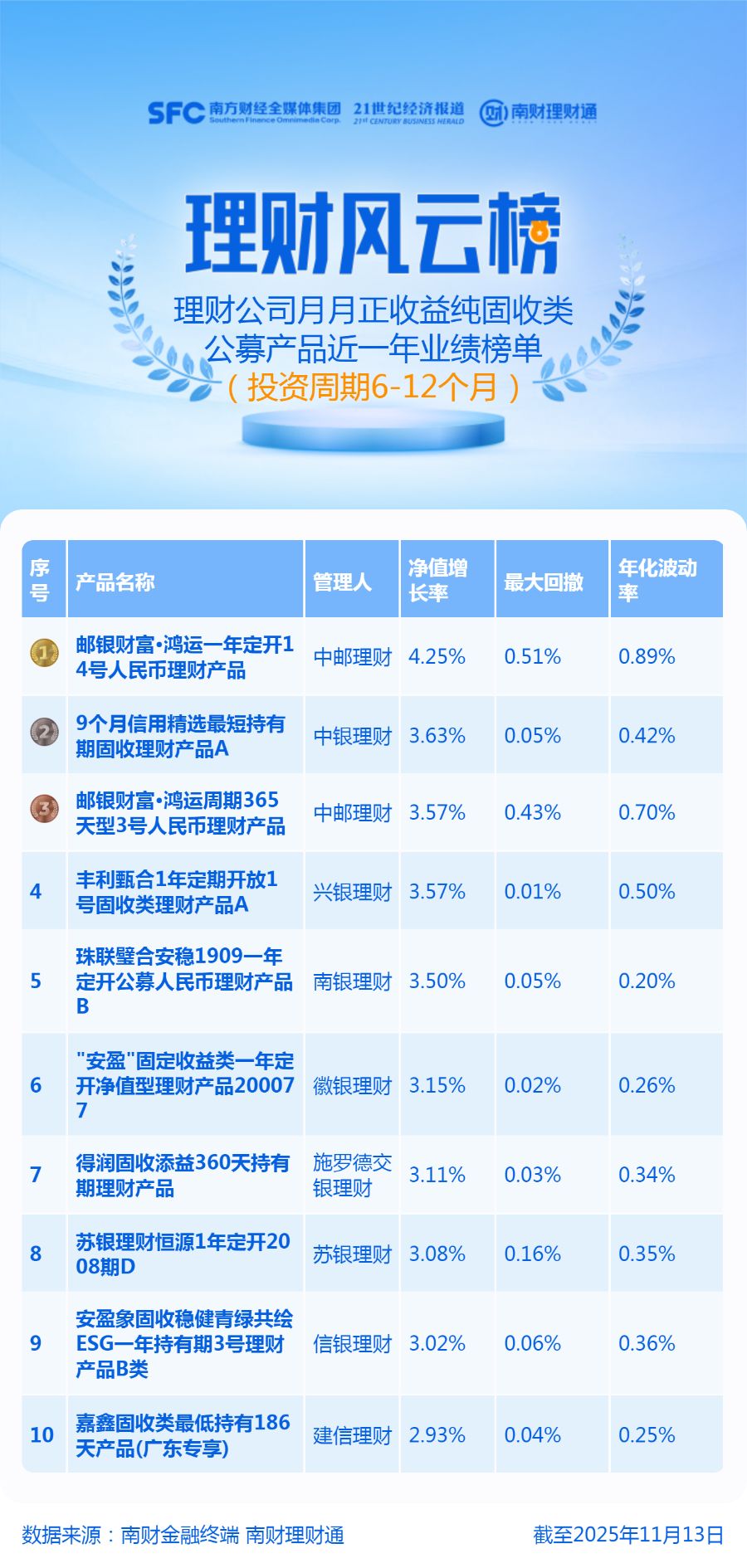
Overall Performance - As of November 13, 2025, there are 954 public pure fixed-income products with an investment period of 6-12 months, of which 216 products achieved positive monthly returns, accounting for less than 30% [5] - The average net value growth rate for these products over the past year is 2.75%, with an average maximum drawdown of 0.08% [5] - Notable issuers include Zhongyou Wealth Management with 2 products listed, and Huibin Wealth Management, Jianxin Wealth Management, Nanyin Wealth Management, Schroder Jiao Yin Wealth Management, Suyin Wealth Management, Xingyin Wealth Management, and Zhongyin Wealth Management each with 1 product listed [5] Highlighted Product Analysis - Zhongyou Wealth Management's "Youyin Wealth · Hongyun One-Year Open 14th RMB Wealth Management Product" ranks first with a net value growth rate of 4.25% over the past year, and as of September 30, 2025, the product's scale reached 198 million yuan, with over 90% of assets invested in bonds [6] - The investment allocation for this product is primarily in urban investment bonds, medium-term notes, and sci-tech bonds, with a bond holding ratio of 94.44% [6] - Zhongyin Wealth Management's "9-Month Credit Selection Shortest Holding Period Fixed Income Wealth Management Product A" ranks second with a net value growth rate of 3.63% and a maximum drawdown of 0.05%, with approximately 70% of assets in bonds and the remainder in cash, bank deposits, interbank certificates, and equity investments [6] Market Outlook - Zhongyou Wealth Management anticipates limited upward space for interest rates, with factors such as US-China trade issues and changes in market risk preferences likely to continue affecting the bond market in the short term [6] - Zhongyin Wealth Management notes that the current absolute yield levels in the bond market are still low, predicting a continued oscillation in the bond market for the fourth quarter [7] - The management plans to reduce portfolio duration and leverage, expand assets with coupon protection, and selectively increase convertible bond allocations to enhance yield flexibility [7]
债市延续震荡整理,关注十年国债ETF(511260)配置机会
Mei Ri Jing Ji Xin Wen· 2025-11-20 03:42
Core Viewpoint - The bond market continues to experience fluctuations, with the ten-year government bond ETF (511260) slightly down by 0.04% and the thirty-year government bond futures down by 0.41%. The central bank's "moderate easing" stance has led to uncertainty in interest rates, and despite weak credit expansion, monetary policy is not significantly relaxed, resulting in a complex bond market environment [1] Group 1 - The central bank's gradual shift towards more precise and efficient regulation aims to avoid excessive liquidity, contributing to the bond market's entangled state [1] - The resumption of government bond trading by the central bank sets a ceiling for bond yields, while external risks easing prevents the ten-year bond yield from dropping to 1.6%, indicating limited overall volatility [1] - From an asset allocation perspective, bonds are viewed as a hedge against stock market risks, with a recommendation to focus on the ten-year government bond ETF (511260) for balanced stock-bond allocation [1]
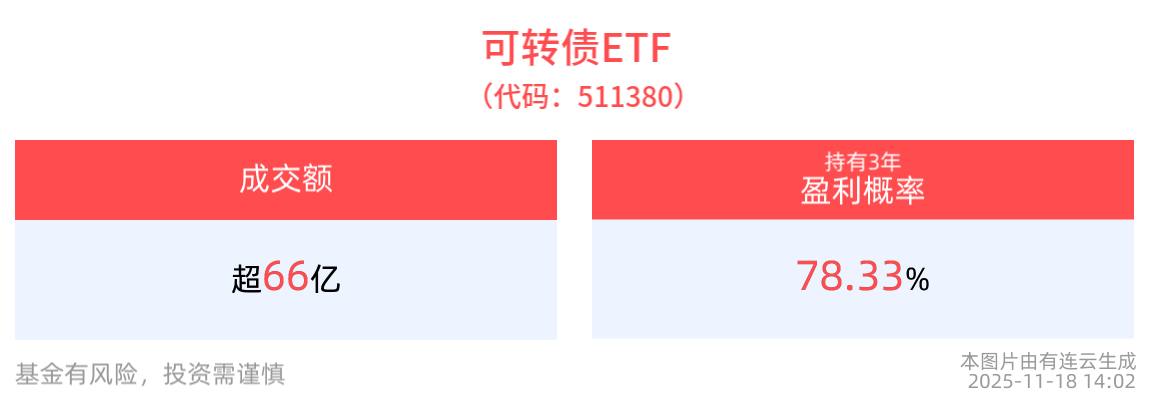
债市延续窄幅震荡,可转债ETF(511380)盘中交投活跃,成交额超66亿元
Sou Hu Cai Jing· 2025-11-18 06:33
Group 1 - The convertible bond market is experiencing fluctuations, with the China Securities Convertible Bond and Exchangeable Bond Index down by 0.58% as of November 18, 2025, and the convertible bond ETF (511380) down by 0.41% at a latest price of 13.6 yuan [2] - Year-to-date, the total issuance of bonds by securities firms has reached 1.6 trillion yuan, a year-on-year increase of 62.34%, driven by a recovering capital market and low interest rates [2] - The issuance of 58 technology innovation bonds since May has totaled 789.7 billion yuan, with an average oversubscription rate of 3.8 times, indicating strong investor interest [2] Group 2 - The bond market is expected to maintain a volatile pattern, with government bond issuance decreasing and a balanced funding environment supported by the central bank [3] - The convertible bond market is projected to exhibit significant range-bound characteristics in 2026, influenced by rising expected returns from equity assets and the increasing probability of strong redemptions [3] - The latest size of the convertible bond ETF is 567.10 billion yuan, closely tracking the China Securities Convertible Bond and Exchangeable Bond Index, which reflects the overall performance of convertible and exchangeable bonds listed on the Shanghai and Shenzhen exchanges [3]
公募基金泛固收指数跟踪周报(2025.11.10-2025.11.14):美联储降息预期降温,国内债市延续震荡-20251117
HWABAO SECURITIES· 2025-11-17 11:42
1. Report Industry Investment Rating - The report indicates that the current bond market has more opportunities than risks, especially from November to December [11]. 2. Core Viewpoints - Last week (2025.11.10 - 2025.11.14), the domestic bond market maintained an overall volatile pattern. The yield of 1 - year Treasury bonds rose by 0.59BP to 1.41%, the yield of 10 - year Treasury bonds remained flat at 1.81%, and the yield of 30 - year Treasury bonds fell by 1.00BP to 2.15%. The change in the wording of the third - quarter monetary policy implementation report towards further easing and the warming of inflation data led to a cooling of expectations for further monetary policy easing, resulting in a short - term continuation of the volatile pattern in the bond market [2][10]. - The US bond yield increased last week. The 1 - year US bond yield rose by 7BP to 3.70%, the 2 - year US bond yield rose by 7BP to 3.62%, and the 10 - year US bond yield rose by 3BP to 4.14%. The increasingly hawkish attitude of Fed officials led to a significant cooling of the market's expectation of a Fed rate cut in December [11]. - The issuance of Huaxia Anbo Warehouse REIT was very popular, achieving "one - day sell - out". The public offering part of Huaxia Anbo Warehouse REIT, which was launched on November 11, exceeded the initial fundraising scale limit in one day and started the proportional placement [12][13]. 3. Summary by Directory 3.1. Pan - fixed - income Market Review and Observation - **Domestic Bond Market**: The domestic bond market was volatile last week. The change in the monetary policy report's wording and the warming of inflation data affected the market. In the long term, the downward breakthrough of long - term yields depends on economic data and investors' risk preferences. Overall, the bond market from November to December has more opportunities than risks [10][11]. - **US Bond Market**: The US bond yield increased last week. The hawkish attitude of Fed officials and the under - expected auction yield of 10 - year US Treasury bonds led to a significant cooling of the market's expectation of a Fed rate cut in December [11]. - **REITs Market**: The CSI REITs Total Return Index rose by 0.86% last week, with the transportation, affordable housing, consumption, and warehousing and logistics sectors leading the rise, while the municipal environmental protection and data center sectors falling. The issuance of Huaxia Anbo Warehouse REIT was very popular [12]. 3.2. Public Fund Market Dynamics - The issuance of Huaxia Anbo Warehouse REIT was very popular, achieving "one - day sell - out". The public offering part exceeded the initial fundraising scale limit in one day, and the public investor subscription confirmation ratio was 5.83%, while the offline investor confirmation ratio was as low as 0.68% [12][13]. 3.3. Pan - fixed - income Fund Index Performance Tracking - **Performance Statistics**: - The money enhancement index rose by 0.03% last week, with a cumulative return of 4.30% since its establishment [4]. - The short - term bond fund selection index rose by 0.03% last week, with a cumulative return of 4.48% since its establishment [4]. - The medium - and long - term bond fund selection index rose by 0.07% last week, with a cumulative return of 6.82% since its establishment [4]. - The low - volatility fixed - income + fund selection index rose by 0.07% last week, with a cumulative return of 4.78% since its establishment [4]. - The medium - volatility fixed - income + fund selection index rose by 0.04% last week, with a cumulative return of 6.12% since its establishment [4]. - The high - volatility fixed - income + fund selection index fell by 0.06% last week, with a cumulative return of 8.11% since its establishment [4]. - The convertible bond fund selection index rose by 0.03% last week, with a cumulative return of 23.54% since its establishment [4]. - The QDII bond fund selection index rose by 0.08% last week, with a cumulative return of 10.35% since its establishment [4]. - The REITs fund selection index rose by 1.67% last week, with a cumulative return of 33.81% since its establishment [4]. - **Index Positioning**: - **Money Enhancement Strategy Index**: Aims at liquidity management, pursues a curve that surpasses money funds and rises smoothly, and mainly allocates money market funds and inter - bank certificate of deposit index funds [17]. - **Short - term Bond Fund Selection Index**: Aims at liquidity management, pursues a smooth upward curve on the basis of ensuring drawdown control, and mainly configures 5 funds with stable long - term returns, strict drawdown control, and significant absolute return capabilities [19]. - **Medium - and Long - term Bond Fund Selection Index**: Aims to obtain stable returns by investing in medium - and long - term pure bond funds, controls drawdowns, and tries to obtain excess returns relative to the medium - and long - term bond fund index. It selects funds with both returns and drawdown control, and flexibly adjusts the duration and the proportion of credit bond funds and interest rate bond funds according to market conditions [21]. - **Low - volatility Fixed - income + Selection Index**: The equity center is positioned at 10%, and 10 funds are selected each period. It focuses on selecting fixed - income + targets with an equity center within 15% in the past three years and recently, and emphasizes the holding experience [22]. - **Medium - volatility Fixed - income + Selection Index**: The equity center is positioned at 20%, and 5 funds are selected each period. It selects fixed - income + targets with an equity center between 15% and 25% in the past three years and recently, and focuses on the performance - risk cost - effectiveness [25]. - **High - volatility Fixed - income + Selection Index**: The equity center is positioned at 30%, and 5 funds are selected each period. It selects fixed - income + targets with an equity center between 25% and 35% in the past three years and recently, and focuses on selecting targets with strong stock - picking ability and certain offensiveness on the equity side [26][29]. - **Convertible Bond Fund Selection Index**: Selects bond - type funds with the average proportion of convertible bond investment in bond market value greater than or equal to 60% in the latest period and greater than or equal to 80% in the past four quarters as the sample space. It constructs an evaluation system from multiple dimensions and selects 5 funds to form the index [30]. - **QDII Bond Fund Selection Index**: Selects 6 funds with stable returns and good risk control based on the credit and duration of overseas bonds to form the index [33]. - **REITs Fund Selection Index**: Selects 10 funds with stable operation, reasonable valuation, and certain elasticity based on the underlying asset types of REITs to form the index [34].
破局因素不足,债市继续震荡
Dong Zheng Qi Huo· 2025-11-16 10:11
周度报告-国债期货 [Table_Summary] ★一周复盘:国债期货窄幅震荡 本周(11.10-11.16)国债期货窄幅震荡。周一,周末公布的 10 月通胀数据超预期,早盘现券利率上行,但由于科技股震荡调 整,国债期货震荡转涨,曲线走平。周二,市场消息面较为平 静,成交相对清淡。上午股市震荡走弱,国债期货小幅拉升, 午后股市低位震荡,市场担忧费率新规落地,国债期货转而走 弱。周三,央行昨日晚间公布的 Q3 货政报告表述整体中性,股 市中光伏、科技板块表现偏弱,红利板块走强,国债期货小幅 上涨。周四,市场消息面平静,股市持续上涨,锂电、有色等 板块涨幅靠前,国债期货震荡下跌。尾盘公布的 10 月金融数据 多数表现偏弱,但债市反应不大。周五,早盘统计局公布的 10 月经济数据普遍不及预期,股市震荡略偏弱,债市小幅走强; 午间股市跌幅扩大,但债市较为担忧买断式逆回购缩量而下 跌,尾盘债市担忧情绪有所缓解。截至 11 月 14 日收盘,两 年、五年、十年和三十年期国债期货主力合约结算价分别为 102.446、105.850、108.390 和 116.070 元,分别较上周末变动- 0.026、-0.070、-0 ...