实际利率

Search documents
达利欧警告:AI热潮处于泡沫初期阶段
Sou Hu Cai Jing· 2026-01-06 00:20
Group 1 - The founder of Bridgewater, Dalio, warns that the AI-driven surge in tech stocks has entered the early stages of a bubble [1] - Investors are showing a preference for non-US assets over US stocks, and similarly favor non-US bonds over US bonds and cash [1] - There is significant uncertainty regarding the future direction of the Federal Reserve's policies and productivity growth prospects [1] Group 2 - The new Federal Reserve Chairman and the Federal Open Market Committee are likely to lean towards lowering nominal and real interest rates [1] - This potential action may support asset prices but could also further fuel the bubble [1]
建议大家:今明两年,不要随便存“定期存款”,内行人说出实情!
Sou Hu Cai Jing· 2026-01-04 14:16
Core Viewpoint - The article discusses the declining interest rates on fixed-term deposits and the implications for individuals' savings strategies, emphasizing the need for diversification and alternative investment options in the current economic environment. Group 1: Declining Interest Rates - Fixed-term deposit rates have significantly decreased, with many banks offering rates below 2%, and some even in the "1s" range for three to five-year terms [4][6] - The overall trend indicates that interest rates are likely to remain low for an extended period, with potential for further minor reductions [8][10] Group 2: Inflation Impact - Inflation is eroding purchasing power, meaning that even if nominal savings increase, the real value of money decreases when accounting for rising costs of living [12][14] - The concept of "real interest rate" highlights that when inflation exceeds deposit rates, individuals may feel financially worse off despite seeing an increase in their account balances [16] Group 3: Liquidity Concerns - Fixed-term deposits have poor liquidity, making it challenging to access funds in emergencies without incurring significant interest losses [18][20] - Individuals often lock away large sums for higher interest, but this can lead to substantial financial setbacks when unexpected expenses arise [24][26] Group 4: Alternative Investment Options - There are smarter, more flexible options for "stable money" beyond traditional fixed-term deposits, such as large-denomination certificates of deposit, savings bonds, low-risk investments, and dividend insurance products [28][29][31][35] - Financial experts recommend a diversified asset allocation strategy that includes cash for liquidity, stable investments, and some exposure to higher-yielding options for those who can tolerate risk [37] Group 5: Strategic Financial Planning - Individuals should assess their financial situations by considering the timeline for using funds, their risk tolerance, and income stability [39][40] - A balanced approach involves keeping emergency funds liquid, using fixed deposits for medium-term savings, and exploring low-risk investments for long-term growth [42][46]

多头获利了结,贵金属高位回落
Dong Zheng Qi Huo· 2026-01-04 10:13
周度报告-黄金 多头获利了结,贵金属高位回落 [走Ta势bl评e_级Ra:nk] 黄金:震荡 报告日期: 2026 年 1 月 4 日 [★Ta市bl场e_综Su述mm:ary] 伦敦金跌 4.4%至 4332 美元/盎司。10 年期美债收益率升至 4.19%, 通胀预期 2.26%,实际利率微升至 1.93%,美元指数涨 0.46%至 98.4, 标普 500 指数跌 1.03%,人民币升值破 7,沪金维持折价。 贵 金 属 贵金属冲高回落,白银剧烈波动,国际银价一度上涨至 82 美元/ 盎司后下跌至 72.8 美元/盎司,当周收跌 8.2%。随着 12 月交割月 的结束白银短期逼空行情告一段落,CME 一周两度上调黄金、白 银等贵金属保证金,上海期货交易所亦小幅上调贵金属保证金, 交易所降温意图明显,多头在元旦假期前获利了结离场。1 月 8-14 日,Bloomberg 商品指数迎来年度权重调整,由于 2025 年贵金属 涨幅显著高于能源、农场品等其他大宗商品,贵金属权重需要被 动降低,跟踪该指数的基金也需要相应做出调整,短期会给贵金 属带来抛压,波动预计仍会增加,但不改变长期趋势。 基本面维度关注即将公 ...
实际利率过低或推动紧缩步伐加快!小摩押注日本央行明年4月再加息
Zhi Tong Cai Jing· 2025-12-31 07:56
Core Viewpoint - The Bank of Japan (BOJ) is facing internal concerns regarding the prolonged maintenance of significantly negative real interest rates, with indications of potential further interest rate hikes, although there is no consensus on the timing or pace of these hikes [1][2][3] Group 1: Monetary Policy Concerns - Many members of the BOJ's monetary policy committee expressed worries about the current financial conditions being too loose relative to economic fundamentals, suggesting that delaying further rate hikes could pose significant risks [2] - There is a general consensus among members that the current real policy rate in Japan is the lowest globally, raising concerns about potential macroeconomic imbalances and sustainable economic growth [2] - The BOJ is considering a basic scenario of raising rates every six months, but there is also a possibility of acting sooner based on market conditions [1][3] Group 2: Rate Adjustment Strategy - The BOJ members are divided on the approach to adjusting monetary easing, with some advocating for rate hikes every few months, while others prefer a more gradual approach based on economic activity and market conditions [2][3] - The ambiguity surrounding the pace of policy adjustments extends to the views on neutral interest rates, with members acknowledging the difficulty in pre-determining these levels [3] - Concerns have been raised about the volatility in Japan's bond and foreign exchange markets due to delayed policy adjustments, with members noting that the depreciation of the yen and rising long-term bond yields reflect the low policy rate relative to inflation [3]
对冲需求激增释放关键信号 日元套利交易“好日子”到头了?
智通财经网· 2025-12-29 07:53
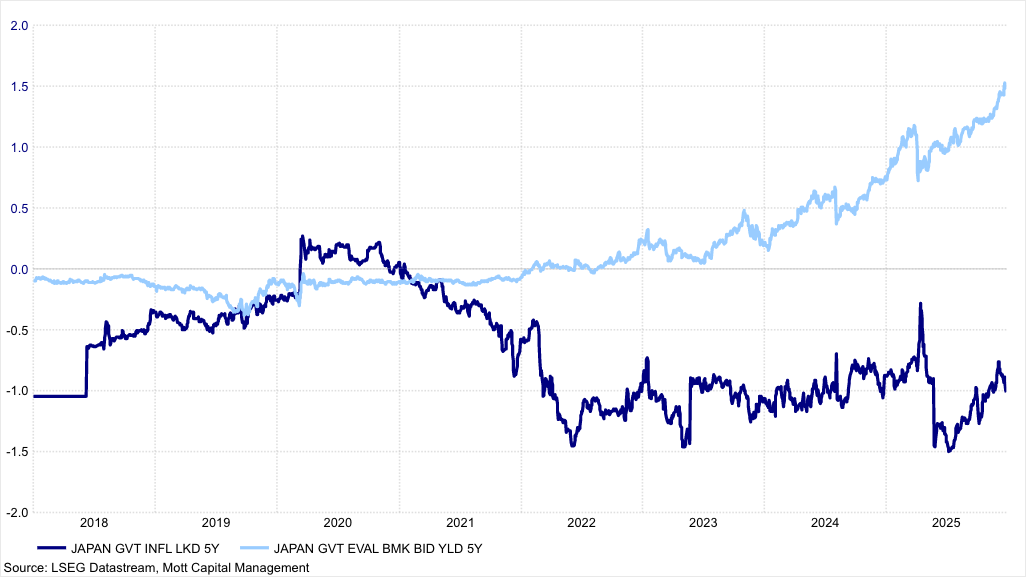
智通财经APP获悉,对冲日元兑美元汇率风险的需求正在上升,这或许是日本利率上行开始影响套利交易的第一个信号。在日本央行12月加息并 暗示未来仍可能进一步收紧货币政策之后,日本利率已升至数十年来高位——日本五年期国债收益率升至约1.5%,这是2008年以来未曾见过的水 平。尽管名义利率已经上升,但盈亏平衡通胀预期也同步上行,这意味着日本的实际利率仍然处于深度负值区间。 远期利率 五年期日元远期利率目前仍处于关键水平,暗示突破可能迫在眉睫。如果隔夜利率之间的利差持续收窄,可能会对远期利率施加更大压力,促使 其进一步压缩。 总体而言,要使日本的实际利率转为正值,五年期名义利率需要升至约2.5%以上,这一水平相当于假设的盈亏平衡通胀率,也是当前名义利率与 实际利率之间的差值。这意味着,如果日本央行最终目标是将利率推升至正区间,日本五年期利率在未来几个月可能仍需要显著上行。 更高的日本五年期利率将意味着美日利差将明显收窄,除非美国利率与日本利率同步上升、甚至上升得更快。但鉴于市场预计美联储将在2026年 降息,美国利率上行速度快于日本的可能性似乎并不大。 最终,这一趋势是否持续,很大程度上取决于日元能否相对美元走强。尽 ...
日本央行政策路径谨慎 2026年唱空日元的调门越来越高
Xin Lang Cai Jing· 2025-12-26 06:30
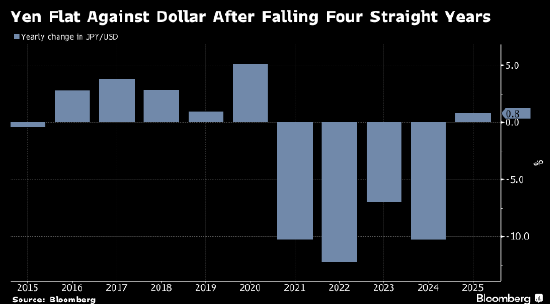
Core Viewpoint - The recent interest rate hike by the Bank of Japan has not sustained a boost for the yen, leading to increasing bearish sentiment towards the currency and reinforcing the view that the yen's structural weakness will not be resolved quickly [1][5]. Group 1: Market Predictions - Strategists from institutions like JPMorgan and BNP Paribas predict that the yen will depreciate to 160 or lower against the dollar by the end of 2026, influenced by the large US-Japan interest rate differential, negative real interest rates, and ongoing capital outflows [1][5]. - JPMorgan's chief Japan FX strategist, Junya Tanase, forecasts a more pessimistic outlook, predicting the yen will reach 164 by the end of 2026, citing cyclical factors that may further pressure the yen [3][8]. - BNP Paribas' strategist, Parisha Saimbi, anticipates that the dollar will rise to 160 against the yen by the end of 2026, supported by strong arbitrage demand and a cautious stance from the Bank of Japan [4][9]. Group 2: Economic Factors - The yen has only appreciated less than 1% against the dollar this year, despite expectations of interest rate hikes from the Bank of Japan and rate cuts from the Federal Reserve [1][5]. - The yen is currently fluctuating around 156, close to its yearly low of 158.87, indicating ongoing weakness [1]. - Japanese household investments in overseas assets remain high, with net purchases of foreign stocks hovering around 9.4 trillion yen (600 million USD), which is a ten-year high, contributing to downward pressure on the yen [4][9]. Group 3: Investment Trends - There is a notable trend of Japanese companies increasing their overseas direct investments, with this year's M&A activity reaching a multi-year high, which may be a persistent driver of capital outflows [7][11]. - The popularity of borrowing low-interest yen to invest in higher-yield currencies like the Brazilian real and Turkish lira is creating additional resistance to any potential rebound of the yen [3][8].
诡异的日元:央行喊话干预市场
Sou Hu Cai Jing· 2025-12-24 08:50
Core Viewpoint - The Bank of Japan raised its benchmark interest rate by 25 basis points to 0.75%, marking a 30-year high, yet the yen depreciated against the dollar, indicating a disconnect from fundamental economic conditions [1] Group 1: Interest Rate and Currency Dynamics - The yen depreciated by 1.45% to 157.5 against the dollar following the interest rate hike, despite the increase in bond yields [1] - The Japanese government approved a substantial fiscal stimulus plan of 18.3 trillion yen, which may lead to increased bond issuance and impact the bond market negatively [2] - The yield on Japan's 30-year government bonds rose to 3.452%, while the 10-year yield reached 2.034%, widening the interest rate differential with China [1][2] Group 2: Inflation and Economic Policy - Current market expectations place inflation between 2.5% and 3%, while the nominal interest rate is only 0.75%, resulting in real interest rates between -1.75% and -2.25% [2] - The Bank of Japan's cautious stance on interest rate hikes reflects uncertainty amid persistent inflation pressures and economic recovery fluctuations [3] - The Bank of Japan's communication has been vague, leading to negative market expectations for future rate hikes [3] Group 3: Market Reactions and Future Outlook - The market anticipates potential intervention by the Bank of Japan if the yen approaches the critical level of 160 against the dollar [4] - Concerns in the U.S. regarding rising Japanese bond yields suggest potential financial risks that could affect other markets [5] - The Japanese economy's recovery relies on careful management of both monetary and fiscal policies, with market skepticism about the Bank of Japan's commitment to tightening [5]
金价突破1400元!2025年12月23日各大金店黄金价格一览
Sou Hu Cai Jing· 2025-12-23 07:35
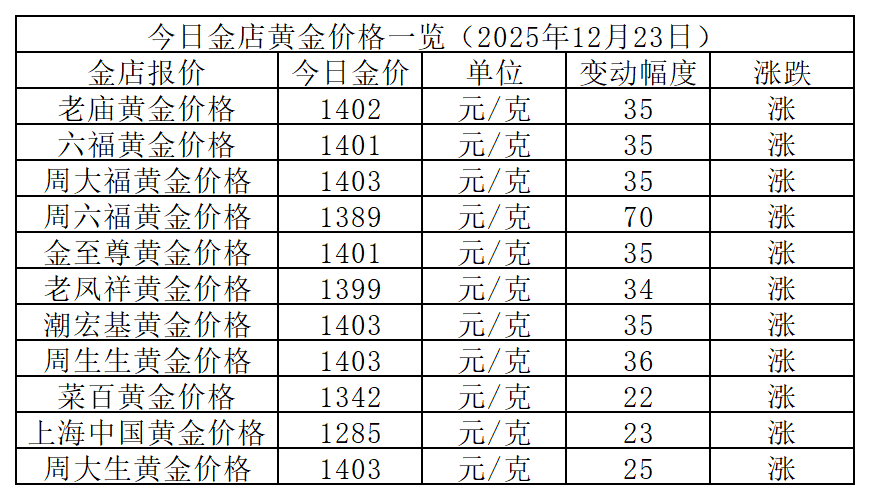
继昨日集体上涨后,今日国内金店金价涨势继续,多家品牌金店金价突破1400元大关,创下历史新高。其中,周大福、潮 宏基、周生生报价均达1403元/克,并列成为市场最高价。上海中国黄金价格涨至1285元/克,仍为市场最低价。两者之间的 价差进一步扩大至118元/克。 以下是各大品牌金店详细报价: | | | 今日金店黄金价格一览(2025年12月23日) | | | | --- | --- | --- | --- | --- | | 金店报价 | 今日金价 | 单位 | 变动幅度 | 涨跌 | | 老庙黄金价格 | 1402 | 元/克 | 35 | 派 | | 六福黄金价格 | 1401 | 元/克 | 35 | 涨 | | 周大福黄金价格 | 1403 | 元/克 | 35 | 涨 | | 周六福黄金价格 | 1389 | 元/克 | 70 | 涨 | | 金至尊黄金价格 | 1401 | 元/克 | 35 | 涨 | | 老凤祥黄金价格 | 1399 | 元/克 | 34 | 涨 | | 潮宏基黄金价格 | 1403 | 元/克 | 35 | 涨 | | 周生生黄金价格 | 1403 | 元/克 | 36 ...
美委伊以局势齐紧 避险需求引爆黄金日涨150美元
Jin Tou Wang· 2025-12-23 06:04
中长期来看,央行购金、实物需求与地缘对冲仍是金价的重要支撑;美联储政策及实际利率则主导周期 性波动。值得关注的是,新入场者如Tether等稳定币发行机构及部分企业财务部门开始配置黄金,使需 求基础更为多元、韧性增强。黄金在10月自前高回落后迅速反弹——当时市场普遍认为涨势过热、交易 拥挤,而如今其涨势有望延续至明年。 今日周二(12月23日)亚盘时段,国际黄金目前交投于1016元附近,截至发稿,国际黄金最新报1011.72 元/克,涨幅0.78%,最高上探至1016.30元/克,最低触及1003.65元/克。目前来看,国际黄金短线偏向看 涨走势。 【要闻速递】 摘要今日周二(12月23日)亚盘时段,国际黄金目前交投于1016元附近,截至发稿,国际黄金最新报 1011.72元/克,涨幅0.78%,最高上探至1016.30元/克,最低触及1003.65元/克。目前来看,国际黄金短 线偏向看涨走势。 特朗普上周宣布对进出委内瑞拉的油轮实施"封锁",令加勒比海局势骤然紧张。随着其对委总统马杜罗 政府施压升级,外界对美国可能在该国采取地面军事行动的猜测持续升温。 与此同时,伊朗与以色列间的紧张关系再度加剧,也为金价走高 ...
日本货币政策仍未实现正常化
日经中文网· 2025-12-22 08:00
Core Viewpoint - The Bank of Japan (BOJ) maintains a dovish stance on interest rate hikes, which is interpreted by the market as less aggressive than expected, contributing to the continued depreciation of the yen [2][6]. Group 1: Interest Rate Policy - The BOJ plans to continue raising interest rates, but the actual rates remain significantly negative due to price fluctuations, indicating that monetary easing is still substantial [2][4]. - BOJ President Ueda expressed that if wages and prices continue to rise, interest rates will be adjusted at an appropriate time [4]. - The market's expectation for aggressive rate hikes has diminished following the BOJ's statements, with the interest rate differential between Japan and the U.S. narrowing by 0.5 percentage points [6]. Group 2: Economic and Price Outlook - Ueda indicated that the neutral interest rate is difficult to estimate and will be assessed at each meeting based on economic and financial conditions [8]. - Concerns about the yen's depreciation impacting domestic prices are prevalent within the BOJ, as rising import costs could lead to higher core inflation rates [9]. - The government, while allowing the BOJ to decide on monetary policy, has mixed opinions on the timing of rate hikes, with some officials suggesting that the December hike may have been premature [9]. Group 3: Future Rate Hike Expectations - Market predictions suggest that the pace of rate hikes may be limited to once or twice a year, with some economists forecasting a gradual increase to 1.5% by mid-2027 [9]. - The risk of delayed rate hikes is increasing, and there is a belief that the BOJ may need to consider the government's preference for maintaining low rates [9].