Workflow
关税政策
icon
Search documents
每日债市速递 | 本周央行公开市场将有16760亿逆回购到期
Wind万得· 2025-11-23 22:34
Group 1: Open Market Operations - The central bank conducted a 7-day reverse repurchase operation of 375 billion yuan at a fixed rate of 1.40% on November 21, with a total bid and awarded amount of 375 billion yuan [1] - On the same day, 212.8 billion yuan of reverse repos matured, resulting in a net injection of 162.2 billion yuan. The total net injection for the week reached 1.354 trillion yuan, including 120 billion yuan from maturing treasury cash deposits [1] - For the week of November 24 to 28, 1.676 trillion yuan of reverse repos are set to mature, along with 900 billion yuan of MLF and 300 billion yuan of 182-day reverse repos [1] Group 2: Funding Conditions - The interbank market saw a continued easing of funding conditions, with overnight repo rates dropping over 4 basis points to around 1.32%. The overnight quotes on the anonymous X-repo system fell to a low of 1.3% [3] - Non-bank institutions borrowing overnight funds against pledged credit bonds saw rates decline to around 1.35% to 1.4% [3] - With the tax period passed and ongoing net injections from the central bank, liquidity is expected to remain loose, with market expectations for further central bank bond purchases rising as month-end approaches [3] Group 3: Interbank Certificates of Deposit - The latest transaction rate for one-year interbank certificates of deposit among major banks is stable at 1.64% [6] Group 4: Government Bonds and Futures - The closing prices for government bond futures showed a decline, with the 30-year main contract down 0.31%, the 10-year down 0.04%, the 5-year down 0.06%, and the 2-year remaining flat [11] Group 5: Key News and Developments - The Ministry of Finance and the People's Bank of China announced that electronic savings bonds will be included in personal pension products, with allocation ratios adjusted quarterly based on the proportion of uninvested amounts in pension accounts [12] - The Governor of the People's Bank of China met with UAE officials to discuss strengthening bilateral financial cooperation and witnessed the launch of several payment projects [12] Group 6: Global Macro Developments - The U.S. Congressional Budget Office revised down its estimate of savings from President Trump's tariff policies by 1 trillion dollars, now projecting total savings of 3 trillion dollars [14] - Japan's cabinet approved a 21.3 trillion yen (approximately 135.4 billion dollars) economic stimulus plan, which includes significant general expenditures and tax reduction measures [14]
特朗普心急如焚,关税战不但没打赢中,美国可能要倒赔2万亿
Sou Hu Cai Jing· 2025-11-23 06:07
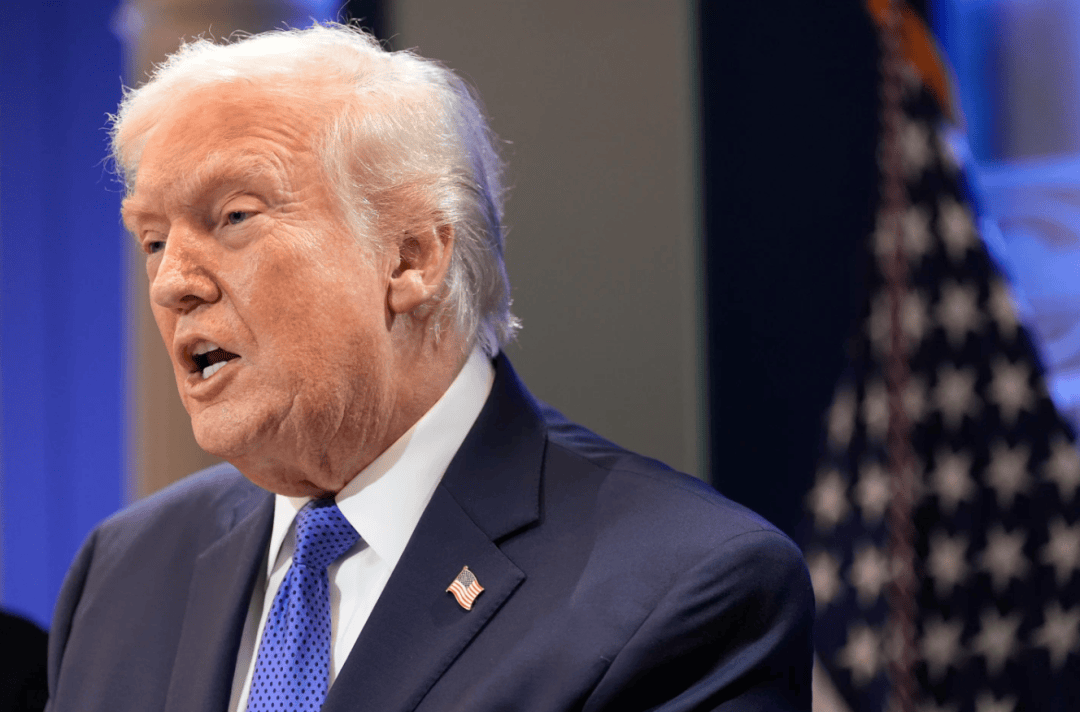
2025年11月,美国最高法院成为全球聚焦的焦点,审理的案件涉及特朗普政府的关税政策是否合规。这 一案件的核心问题是:特朗普是否可以在没有国会授权的情况下,借口国家紧急状态单方面对包括中国 在内的多个国家加征高额关税?这场审判的结局不仅关系到特朗普经济政策的成败,还可能使美国政府 面临高达2万亿美元的赔偿。面临着司法天平的倾斜,特朗普,曾将关税视为经济武器,正深陷前所未 有的焦虑和被动之中。 11月5日,特朗普大规模关税政策合法性的辩论在美国最高法院开庭,这场庭审被认为是对总统行政权 限的重大考验。美国财政部长贝森特应特朗普要求出席听证会,显示出政府对这一案件的重视。政府的 辩护律师是最高法院的首席律师、总检察长D·约翰绍尔,他不断强调,特朗普征收关税是为了应对国际 贸易失衡带来的国家安全威胁,因此是必要的。 然而,庭审气氛并没有如政府预期般对其有利。在口头辩论阶段,大多数法官对政策的合法性提出了质 疑,甚至一些通常偏向保守派的大法官,也未明确支持政府立场。法官们的关注点集中在两个问题上: 一是国会是否已将征收关税的权力独占,二是特朗普援引国家紧急状态是否存在滥用。有法官直言,若 承认总统的这种权力扩张,将使 ...
刚刚!美国关税突发大消息!
天天基金网· 2025-11-23 03:10
Core Viewpoint - The Trump administration is preparing a backup plan to reinstate tariffs if the U.S. Supreme Court overturns the current tariff authority used by Trump, indicating a strong commitment to maintaining tariffs as a core part of economic policy [3][5][7]. Group 1: Backup Plan Details - The backup plan involves utilizing other legal authorities, specifically Sections 301 and 122 of the Trade Act, to impose tariffs if the Supreme Court rules against the current policy [3][5]. - The effectiveness of these backup options may be limited, as they could take longer to implement or have a narrower scope compared to the current powers [3][6]. - The administration is exploring new methods to sustain Trump's trade policies, emphasizing the importance of addressing the significant trade deficit and revitalizing domestic manufacturing [4][5]. Group 2: Legal Context and Implications - The Supreme Court is currently reviewing the legality of Trump's tariff policy, which is based on the International Emergency Economic Powers Act, a law that has not been used by previous presidents for imposing tariffs [7][8]. - The total effective tariff rate on U.S. imports is estimated to be around 14.4%, with over half of this stemming from tariffs imposed under the emergency powers [5][6]. - If the court rules unfavorably, the government may have to refund over $88 billion in tariffs already collected, but officials believe they can restore tariffs through alternative legal means [7][9]. Group 3: Political and Economic Reactions - The Supreme Court's deliberations have raised questions among justices regarding the expansion of executive power in tariff imposition, with potential implications for future trade policy [7][8]. - The administration's commitment to tariffs remains strong, with Trump indicating that alternative methods will be sought if the court ruling is not favorable [3][9]. - The ongoing legal challenges and potential for a ruling against the current tariff policy create uncertainty for businesses and foreign governments [5][9].
美国关税,突发!B计划曝光!
券商中国· 2025-11-23 02:32
Group 1 - The Trump administration is preparing a backup plan to reinstate tariffs if the Supreme Court overturns its current tariff authority [2][3] - The backup plan involves utilizing other legal provisions, specifically Sections 301 and 122 of the Trade Act, which grant the President unilateral power to impose tariffs [2][3] - The administration's commitment to tariffs remains strong, with Trump emphasizing that tariffs will be a core part of his economic policy regardless of the court's decision [2][3] Group 2 - The Supreme Court's decision on the legality of Trump's tariffs is uncertain, with potential outcomes ranging from upholding the tariffs to completely abolishing them [3][5] - The effective tariff rate on imported goods is estimated to be around 14.4%, with over half of this stemming from tariffs imposed under the International Emergency Economic Powers Act [3][5] - If the court rules against the administration, it may lead to the refund of over $88 billion in tariffs already collected [5][6] Group 3 - The administration has various legal tools at its disposal to replicate existing tariff policies, but these alternatives may face legal challenges and limitations [4][5] - The use of Section 122 allows for tariffs up to 15%, but with a maximum duration of 150 days, which raises concerns about its effectiveness [4][5] - The Trump administration's reliance on the International Emergency Economic Powers Act for tariffs is unprecedented, leading to legal scrutiny and challenges from affected businesses and states [6][7]
特朗普政府在法院裁决前准备关税备用方案
Zhong Guo Ji Jin Bao· 2025-11-23 00:25
Group 1 - Trump's team is preparing a backup plan in case the Supreme Court overturns his significant tariff authority, aiming to quickly implement new tariffs if necessary [1][3] - The U.S. Department of Commerce and the U.S. Trade Representative's Office are exploring options under Trade Law Sections 301 and 122, which grant the president unilateral tariff authority, although these alternatives may face legal challenges and have limitations [3][5] - Current average tariff rates on U.S. imports are approximately 14.4%, with over half stemming from tariffs imposed under the International Emergency Economic Powers Act (IEEPA) [5][6] Group 2 - Trump's recent executive order modifies tariffs on Brazilian goods, maintaining a 40% tariff on some products while eliminating additional tariffs on specific Brazilian agricultural products and aircraft parts [7][8] - The Brazilian Vice President noted that while some tariffs have been lifted, about 22% of Brazilian exports to the U.S. are still subject to high tariffs, indicating ongoing negotiations between the two countries [8]
特朗普 关税突发!美联储官员最新表态 12月降息概率几乎翻倍
Qi Huo Ri Bao· 2025-11-22 23:56
Group 1: Tariff Policy Developments - The Trump administration is preparing a backup plan for tariffs amid potential Supreme Court challenges to a key tariff authorization [2] - The U.S. Department of Commerce and the U.S. Trade Representative's Office are exploring options under Trade Act Sections 301 and 122, which grant the president unilateral tariff authority [2] - If the court ruling is unfavorable, the U.S. government may be forced to refund over $88 billion in tariffs, but analysts expect immediate reimplementation of tariffs [2] Group 2: U.S.-Brazil Trade Relations - The U.S. has announced the cancellation of a 40% additional tariff on certain Brazilian goods, including coffee, meat, and fruits, while approximately 22% of exports to the U.S. remain affected [3][4] - This tariff adjustment is seen as a significant progress in bilateral negotiations, with Brazil expressing optimism about ongoing talks [4] - The White House's decision also includes the removal of a 40% tariff on Brazilian aircraft parts, aimed at balancing national security concerns with trade relations [5][6] Group 3: Oil Market Dynamics - International oil prices have been declining, with WTI crude futures down 1.59% to $58.06 per barrel, and Brent crude down 1.29% to $62.56 per barrel, amid geopolitical and macroeconomic pressures [13] - Analysts suggest that a potential resolution in the Russia-Ukraine conflict could significantly reduce geopolitical risks and lead to a drop in oil prices as Russian oil returns to the market [13][14] - Current oil supply is under pressure, with OPEC+ increasing production while demand is in a seasonal decline, leading to expectations of significant inventory build-up in 2025-2026 [14][15]
特朗普,关税突发
Zhong Guo Ji Jin Bao· 2025-11-22 23:36
Group 1 - Trump's team is preparing a backup plan in case the Supreme Court overturns his key tariff powers, aiming to quickly implement new tariffs if necessary [2][4] - The U.S. Department of Commerce and the U.S. Trade Representative's Office are exploring options under Trade Act Sections 301 and 122, which grant the president unilateral tariff authority, although these alternatives may face legal challenges and have limitations [4][8] - Current average tariff rates on U.S. imports are approximately 14.4%, with over half of these tariffs imposed under the International Emergency Economic Powers Act (IEEPA) [7] Group 2 - If the Supreme Court rules against Trump, the government may have to refund over $88 billion in tariffs, with officials indicating a 50-50 chance of winning the case [10] - Trump's recent executive order modifies tariffs on Brazilian goods, maintaining a 40% tariff on some products while eliminating additional tariffs on specific agricultural products and aircraft parts [12] - The Brazilian Vice President noted that while some tariffs have been lifted, about 22% of exports to the U.S. are still subject to high tariffs, indicating ongoing negotiations between the two countries [12]
特朗普准备关税“备胎方案”
Zhong Guo Ji Jin Bao· 2025-11-22 16:18
Core Points - Trump's team is preparing a backup plan in case the Supreme Court overturns his key tariff powers, aiming to implement new tariffs quickly if needed [1] - The U.S. government is exploring options under Trade Act Sections 301 and 122, which grant the president unilateral tariff authority, although these alternatives may face legal challenges and have limitations [1][3] - The average tariff rate on U.S. imports is approximately 14.4%, with over half of these tariffs imposed under the International Emergency Economic Powers Act (IEEPA) [3] - If the Supreme Court rules against Trump, the government may have to refund over $88 billion in tariffs already collected [5] Group 1 - Trump's administration is confident in winning the Supreme Court case but is also preparing for potential unfavorable outcomes [1][6] - The Supreme Court's decision could either uphold or overturn the tariffs, creating uncertainty for businesses and foreign governments [1] - The government is considering the use of Section 122, which allows for tariffs up to 15% but is limited to 150 days, complicating long-term tariff strategies [3][4] Group 2 - Recent changes to tariffs on Brazilian goods include maintaining a 40% tariff on some products while eliminating additional tariffs on specific agricultural imports [7] - Brazil's Vice President noted that while some tariffs have been lifted, approximately 22% of exports to the U.S. are still affected by high tariffs [8] - The adjustments in tariffs are seen as a significant development in U.S.-Brazil trade negotiations, with both sides optimistic about future discussions [8]
全球资产罕见集体暴跌,现在该恐慌还是贪婪?
Sou Hu Cai Jing· 2025-11-22 13:46
Group 1 - The global financial markets experienced a rare simultaneous decline across various asset classes in 2025, characterized by significant drops in stock indices and cryptocurrencies, with the S&P 500 falling 1.97% and the total cryptocurrency market cap decreasing by 25% [1][2] - The Japanese Government Pension Investment Fund reported a loss of $611 billion in Q1 2025, with overseas stocks down 6% and domestic stocks down 3.5%, indicating widespread asset pressure [2][3] - The correlation between risk assets and traditional safe-haven assets like gold has weakened, with gold prices dropping below $4,000 and U.S. 10-year Treasury yields remaining high, reflecting a unique market condition where both risk and safe-haven assets declined simultaneously [5][6] Group 2 - The U.S. stock market led the declines, with the S&P 500 and Nasdaq indices experiencing significant drops, particularly in the technology sector, which contributed over 60% of the declines on "Black Friday" [3][4] - The cryptocurrency market saw extreme volatility, with Bitcoin's price dropping from $84,000 to $81,500 in a short period, and a total of 17,000 investors liquidated positions during the November downturn, resulting in a loss of $5.7 billion [4][11] - The tightening liquidity environment has led to a vicious cycle of asset sell-offs, exacerbated by the Federal Reserve's high-interest rate policies, which increased the opportunity cost of holding gold and pressured bond prices [6][10] Group 3 - The market's decline is attributed to a chain reaction of policy uncertainty, rising inflation expectations, and a hawkish shift in Federal Reserve policy, leading to liquidity contraction and a reassessment of risk assets [7][8] - The AI sector, particularly companies like Nvidia, faced significant valuation corrections, with Nvidia's dynamic P/E ratio dropping from 120 to 78, indicating a market reassessment of growth expectations [9][30] - The overall market valuation has shifted from a bubble to a more reasonable level, with the Nasdaq 100's dynamic P/E ratio falling to near its five-year average, suggesting potential investment opportunities in undervalued sectors [30][31]
再次跑赢印度,亚洲GDP增速第一的国家还是它
虎嗅APP· 2025-11-22 09:45
以下文章来源于时代周报 ,作者马欢 时代周报 . 记录大时代,深读全商业。互联网新闻信息服务许可证编号:44120230006 本文来自微信公众号: 时代周报 ,作者:马欢,编辑:梁励,原文标题:《再次跑赢印度!亚洲 GDP增速第一的国家还是它,明年目标要增长10%》,题图来自:视觉中国 亚洲经济增速第一的国家,或许还是越南。 越南近期公布经济数据,2025年第三季度国内生产总值 (GDP) 同比大幅增长8.23%。越南总理范 明政在国会上表示:"2025年的GDP增长率将达到8%。" 制造业的强劲表现是越南此次经济快速增长的核心驱动力。越南政府还计划,明年GDP增速要冲上 10%。 此前,美国政府宣布,美国已经和越南就关税问题签署了框架性协议。按照协议,美国对越南商品实 施平均约20%的进口关税,但部分产品可获豁免。 与此同时,昔日GDP增速在亚洲领跑的印度,却受困于美国政府的关税政策。 一、越南:制造业与出口强劲 今年以来,越南的经济增速格外亮眼。 分季度来看,越南经济增长呈现逐步上升的态势——第一季度增长7.05%,第二季度增长8.19%;第 三季度更是达到8.23%,创三年来最快增速。 在所有产业中, ...