
PMI

Search documents
7月PMI,淡季偏淡
HUAXI Securities· 2025-07-31 14:53
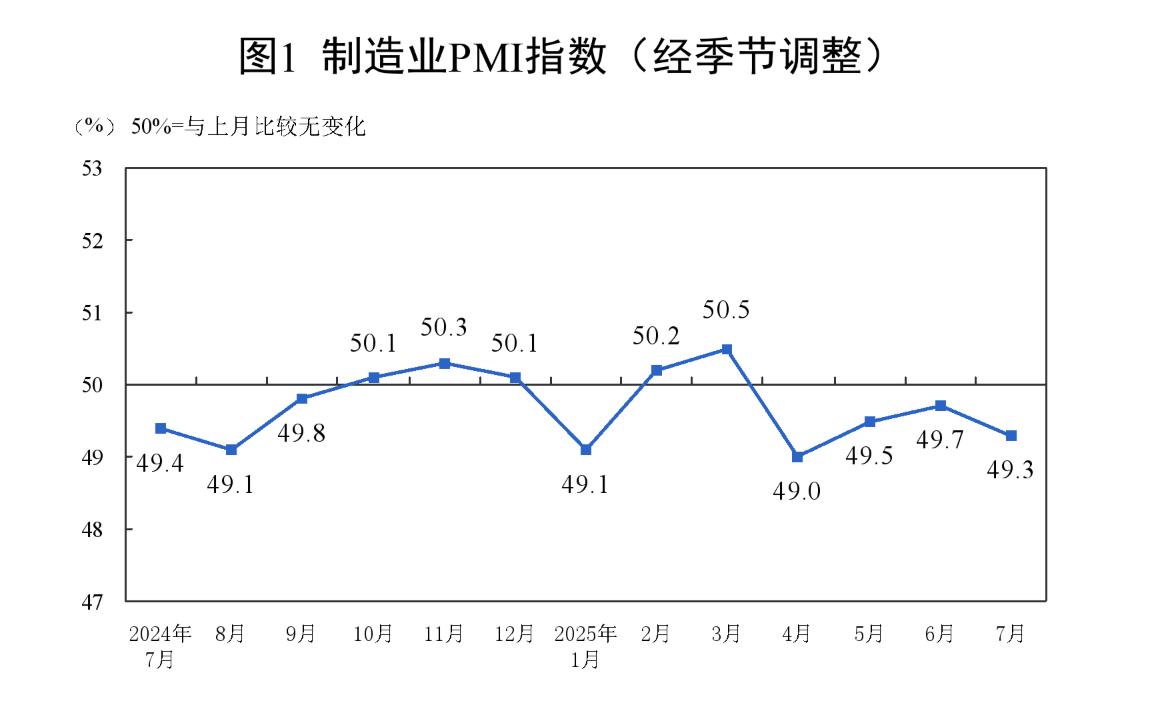
Group 1: Manufacturing Sector Insights - July Manufacturing PMI stands at 49.3%, below the expected 49.7% and previous value of 49.7%[1] - New orders in manufacturing decreased by 0.8 percentage points to 49.4%, while production fell by 0.5 percentage points to 50.5%[1] - Manufacturing new export orders dropped by 0.4 percentage points to 47.1%, slightly below the first half average of 47.3%[2] Group 2: Price and Demand Dynamics - Raw material purchase price index increased by 3.1 percentage points to 51.5%, while factory prices rose by 2.1 percentage points to 48.3%[3] - Procurement volume declined by 0.7 percentage points to 49.5%, indicating insufficient demand constraints[3] - Finished goods inventory decreased by 0.7 percentage points to 47.4%, reflecting a preference for reducing stock rather than increasing production[3] Group 3: Non-Manufacturing Sector Trends - Non-manufacturing PMI recorded at 50.1%, down from 50.5% in the previous month[1] - Construction activity index and new orders both fell by 2.2 percentage points, while service sector indices saw minor declines[4] - Employment indices in construction and manufacturing improved by 1.0 and 0.1 percentage points respectively, indicating a slight recovery in job markets[4] Group 4: Economic Outlook and Market Implications - Overall economic slowdown in July attributed to adverse weather conditions and previous export surges[5] - The composite PMI for July is at 50.2%, matching levels from April and July of the previous year[6] - Market risk appetite may be affected by the July PMI results, leading to potential volatility in stock markets[5]
2025年7月PMI数据点评:PMI淡季回落,价格上涨
Haitong Securities International· 2025-07-31 14:31
Group 1: Manufacturing PMI Insights - In July 2025, the manufacturing PMI decreased to 49.3%, down 0.4 percentage points from the previous month[6] - The production index for July was 50.5%, reflecting a seasonal decline of 0.5 percentage points[13] - The new orders index fell to 49.4%, a decrease of 0.8 percentage points, indicating a stronger-than-seasonal decline in demand[13] Group 2: Sector Performance - The construction business activity index was 50.6%, down 2.2 percentage points, influenced by weak real estate demand and slowing fiscal spending on infrastructure projects[27] - The services business activity index remained stable at 50.0%, with tourism-related sectors performing well during the summer[25] - In key industries, the equipment manufacturing PMI was 50.3%, while the consumer goods industry PMI dropped to 49.5%, down 0.9 percentage points[12] Group 3: Raw Material Prices and Inventory - The main raw material purchase price index rose to 51.5%, an increase of 3.1 percentage points, marking the first rise above the critical point since March 2025[19] - The procurement index fell to 49.5%, down 0.7 percentage points, indicating reduced purchasing activity due to insufficient domestic demand[21] - The raw material inventory index decreased to 47.7%, down 0.3 percentage points, suggesting continued reduction in inventory levels[21] Group 4: Policy and Economic Outlook - The central political bureau emphasized the need for sustained macroeconomic policy efforts, including timely fiscal measures[29] - A total of 69 billion yuan was allocated in July for consumer support initiatives, with additional funds expected in October[29] - Urban renewal projects are anticipated to boost investment, particularly in municipal infrastructure and renovation of old neighborhoods[29]
2025年7月PMI点评:制造业PMI季节性回落,价格指数回升
Hua Yuan Zheng Quan· 2025-07-31 14:26
证券研究报告 固收点评报告 hyzqdatemark 2025 年 07 月 31 日 ——2025 年 7 月 PMI 点评 投资要点: 证券分析师 廖志明 SAC:S1350524100002 liaozhiming@huayuanstock.com 马赫 请务必仔细阅读正文之后的评级说明和重要声明 联系人 mahe@huayuanstock.com 制造业 PMI 季节性回落,价格指数回升 7 月 PMI 季节性回落,景气度有所下降。7 月制造业 PMI 环比下降 0.4pct 至 49.3%, 2021-2024 年的 7 月制造业 PMI 平均环比下降 0.38pct,今年 7 月下降或主要受部 分地区高温、暴雨、台风灾害等因素影响。7 月产需相关指数有所收缩,价格指数持 续回升。7 月非制造业商务活动指数为 50.1%,环比下降 0.4pct,服务业商务活动指 数和建筑业商务活动指数分别为 50.0%和 50.6%,较上月分别-0.1pct/-2.2pct。7 月综合 PMI 产出指数为 50.2%,较上月-0.5pct,仍位于扩张区间,显示企业生产经 营活动总体扩张虽有所减缓,但经济内生动力持续 ...
新华财经晚报:国家网信办就H20算力芯片漏洞后门安全风险约谈英伟达公司
Xin Hua Cai Jing· 2025-07-31 13:51
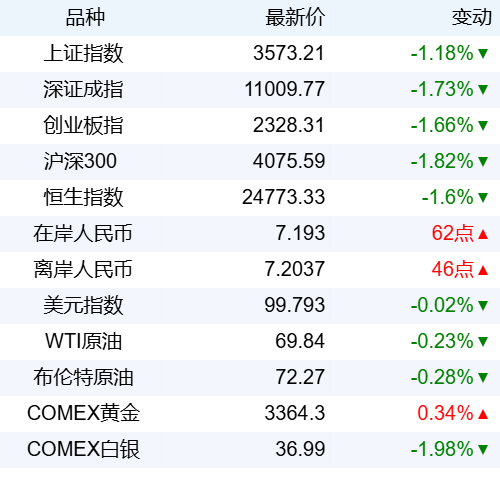
Domestic News - The Ministry of Commerce expressed China's expectation to deepen dialogue with the U.S. to achieve more win-win results following the recent economic talks held in Stockholm [1][2] - China's manufacturing PMI for July was reported at 49.3%, a decrease of 0.4 percentage points from the previous month, marking the first decline in four months [2] - The National Development and Reform Commission announced a new pricing mechanism for newly launched drugs, adding over 100 price items related to new medical technologies [2] International News - The Bank of Japan maintained its current interest rate level amid uncertainties regarding the impact of U.S. tariff policies on the Japanese economy [5] - The German government plans a total expenditure of €520.5 billion for the 2026 federal budget, a 3.5% increase from the previous year, with a focus on infrastructure and digital development [5] Market Overview - The Shanghai Composite Index closed at 3573.21, down 1.18% [6] - The Hang Seng Index ended at 24773.33, down 1.6% [6] - The onshore RMB was quoted at 7.193, appreciating by 62 points [6]


制造业PMI低于荣枯线 国常会部署贴息政策促消费
Di Yi Cai Jing· 2025-07-31 13:51
Economic Overview - The Central Political Bureau emphasized the need to enhance macroeconomic policy effectiveness and stimulate internal economic growth [1] - The State Council reiterated the implementation of personal consumption loan interest subsidy policies to better stimulate consumption potential [1][7] Manufacturing Sector - The manufacturing Purchasing Managers' Index (PMI) for July was reported at 49.3%, a decrease of 0.4 percentage points from the previous month, marking the fourth consecutive month below the growth threshold [1][4] - The new orders index for manufacturing fell to 49.4%, down 0.8 percentage points, indicating a contraction in market demand [6] - Despite the decline in demand, the production index remained at 50.5%, indicating continued expansion in manufacturing activities [6] Price Trends - The manufacturing raw material purchase price index rose to 51.5%, an increase of 3.1 percentage points, indicating a recovery in raw material prices [6] - The ex-factory price index increased to 48.3%, up 2.1 percentage points, marking the second-highest point this year [6] Business Confidence - The production and business activity expectation index rose to 52.6%, reflecting increased confidence among manufacturing enterprises regarding market development [8] - Large enterprises maintained a PMI of 50.3%, while medium-sized enterprises improved to 49.5%, indicating a mixed outlook across different enterprise sizes [8] Non-Manufacturing Sector - The non-manufacturing business activity index was reported at 50.1%, a decrease of 0.4 percentage points, but still within the expansion range [10] - The construction business activity index fell to 50.6%, influenced by seasonal weather conditions, while infrastructure-related activities continued to show robust growth [10] Consumer Behavior - The summer consumption effect began to show, with retail and postal service indices rising above 50%, indicating strong consumer spending intentions [11] - However, the accommodation and catering sectors remained below 50%, suggesting that summer consumption has not yet significantly impacted these areas [11][12] Policy Implications - The Central Political Bureau's meeting highlighted the importance of releasing internal demand potential and implementing consumption-boosting actions [12] - The focus on service consumption is expected to play a crucial role in meeting public needs and driving consumption industry upgrades [12]
2025年7月PMI数据解读:7月PMI:增长动能高点或已过去
ZHESHANG SECURITIES· 2025-07-31 12:01
Economic Indicators - The manufacturing PMI for July is at 49.3%, a decrease of 0.4 percentage points from June, indicating a weak recovery and potential peak in economic growth momentum[1] - The new orders index fell to 49.4%, down 0.8 percentage points from the previous month, entering a contraction zone, suggesting tightening market demand[13] - The comprehensive PMI output index is at 50.2%, down 0.5 percentage points from last month, still indicating overall expansion in production activities[27] Sector Performance - The production index for July is at 50.5%, a decline of 0.5 percentage points, but remains in the expansion zone for three consecutive months[3] - Equipment manufacturing PMI is at 50.3% and high-tech manufacturing PMI is at 50.6%, both above the critical point, indicating continued expansion in these sectors[1] - The consumer goods industry PMI is at 49.5%, down 0.9 percentage points, while the high-energy-consuming industries PMI is at 48.0%, up 0.2 percentage points, showing mixed performance across sectors[1] External Trade and Demand - The new export orders index is at 47.1%, down 0.6 percentage points, reflecting cautious attitudes among foreign trade enterprises due to uncertainties in tariffs[16] - Port cargo throughput in July increased by 10.9% year-on-year, indicating some resilience in actual export volumes despite potential sustainability issues[17] Price Trends - The main raw material purchase price index rose to 51.5%, up 3.1 percentage points, marking the first rise above the critical point since March, indicating improved market price levels[18] - The factory price index is at 48.3%, up 2.1 percentage points, suggesting a slight recovery in manufacturing prices[18]
PMI点评:内外需震荡下行PMI走弱,能否快速迎来反弹?
Huafu Securities· 2025-07-31 11:48
Group 1: PMI Trends - In July, the manufacturing PMI index fell by 0.4 percentage points to 49.3%, marking the fourth consecutive month below the threshold and the lowest in nearly six months[1] - The new orders index dropped significantly by 0.8 percentage points to 49.4%, with the consumer goods sector declining by 0.9 percentage points to 49.5% due to ongoing downturns in the real estate market[1] - The production index also decreased by 0.5 percentage points to 50.5%, influenced by extreme weather and weakened internal and external demand[1] Group 2: Export and Inventory Insights - The new export orders index fell by 0.6 percentage points to 47.1%, with high-tech and equipment manufacturing sectors declining by 0.3 and 1.1 percentage points respectively, reflecting short-term impacts from delayed tariff negotiations[1] - The finished goods inventory index dropped by 0.7 percentage points to 47.4%, indicating a cautious outlook among enterprises amid weak demand[2] - Industrial enterprises are expected to maintain a moderate pace of inventory replenishment due to ongoing challenges in the real estate market and limited traditional infrastructure investment[2] Group 3: Service and Construction Sector Performance - The service sector PMI slightly decreased by 0.1 percentage points to 50.0%, remaining near the threshold, indicating stable growth in service consumption[2] - The construction sector PMI fell significantly by 2.2 percentage points to 50.6%, impacted by extreme weather conditions and limited traditional infrastructure investment due to debt concerns[2] - The political bureau meeting emphasized the importance of expanding consumer goods consumption, but did not extend the previous policies aimed at enhancing durable goods subsidies, suggesting a need for ongoing observation[3]
宏观点评:7月PMI超季节性回落的背后-20250731
GOLDEN SUN SECURITIES· 2025-07-31 11:33
Group 1: PMI Trends - July manufacturing PMI decreased to 49.3%, down 0.4 percentage points from the previous value, indicating a contraction for the fourth consecutive month[2] - Non-manufacturing PMI fell to 50.1%, a decline of 0.4 percentage points, with service and construction sectors dropping by 0.1 and 2.2 percentage points respectively[2] - Composite PMI output index decreased by 0.5 percentage points to 50.2%, suggesting a slowdown in overall economic expansion[2] Group 2: Supply and Demand Signals - July PMI production index was 50.5%, down 0.5 percentage points, indicating continued expansion but with weakening demand[3] - New orders index fell by 0.8 percentage points to 49.4%, entering contraction territory, with new export orders down by 0.6 percentage points[3] - New export orders index dropped to 47.1%, remaining in contraction, while import orders held steady at 47.8%[3] Group 3: Price and Employment Insights - Price indices rebounded, with raw material and factory price indices rising by 3.1 and 2.1 percentage points respectively, indicating a narrowing decline in PPI[4] - Employment pressure eased slightly, with manufacturing, service, and construction employment indices increasing by 0.1, 0.0, and 1.0 percentage points respectively[4] - Service sector PMI fell to 50.0%, while construction PMI dropped 2.2 percentage points to 50.6%, the second-lowest this year[6] Group 4: Economic Outlook - The July Politburo meeting indicated a focus on policy implementation, with potential new policies expected but not strong stimulus measures[6] - Economic pressures are anticipated to increase in the second half of the year, particularly in August and September, due to prior "export rush" effects and short-term contraction[6] - Continued monitoring of US-China trade negotiations is advised, as potential developments may impact market conditions[6]
2025年7月PMI分析:7月PMI为什么下降?
Yin He Zheng Quan· 2025-07-31 11:28
Group 1: PMI Overview - In July 2025, the manufacturing PMI decreased to 49.3%, down 0.4 percentage points from the previous month, indicating a decline in manufacturing activity[1] - The construction business activity index was at 50.6%, down from 52.8%, while the services business activity index remained stable at 50.0%, slightly down from 50.1%[1] Group 2: Production and Demand Factors - The production index for July was 50.5%, down from 51%, while the new orders index fell to 49.4% from 50.2%, indicating a contraction in new orders[2] - Extreme weather events in July, including heavy rains and heatwaves, impacted outdoor construction activities, contributing to the decline in production and new orders[2] - Passenger car sales dropped by 21.9% month-on-month in July, reflecting weakened consumer demand post the June shopping festival[2] Group 3: Price Indices and Inventory - The PMI output price index rose by 2.1 percentage points to 48.3%, and the raw material purchase price index increased by 3.1 percentage points to 51.5%, indicating rising input costs[3] - The gap between raw material prices and finished product prices widened to 3.2 percentage points, up from 2.2 percentage points, which is detrimental to corporate profit recovery[3] - The inventory indices for finished goods and raw materials both declined, with finished goods at 47.4% and raw materials at 47.7%, indicating a contraction in inventory levels[4] Group 4: Business Sentiment and Future Outlook - Small enterprises faced significant pressure, with their PMI dropping to 46.4%, while large and medium enterprises saw slight increases[4] - The outlook for future demand remains cautious, with businesses responding primarily to short-term orders and maintaining low inventory levels[5] - The political bureau meeting emphasized consolidating economic recovery and addressing prominent issues, with a focus on nurturing emerging industries and avoiding debt-driven growth[5]
宏观数据观察:东海观察7月PMI数据低于预期,经济景气有所下降
Dong Hai Qi Huo· 2025-07-31 08:46
Group 1: Report Industry Investment Rating - No relevant content provided Group 2: Report's Core View - In July, due to entering the traditional production off - season and factors like high - temperature, rainstorm and flood disasters in some areas, the business activities of enterprises slowed down. The three major PMIs declined but remained above the critical point, and the overall economic output in China continued to expand. However, demand was weak in the short - term, and production and price trends were complex. The export's role in driving the economy was expected to weaken in the second half of the year [2]. Group 3: Summary by Related Catalogs 3.1 Overall Economic Situation - China's official manufacturing PMI in July was 49.3% (expected 49.7%, previous value 49.7%); non - manufacturing PMI was 50.1% (expected 50.2%, previous value 50.5%); comprehensive PMI was 50.2% (previous value 50.7%). The three major indexes all declined, indicating a slowdown in economic prosperity, but the overall economic output remained in the expansion range [1]. 3.2 Investment - Real estate investment remained weak. Although sales and capital sources improved, investment - side policies were restricted. Infrastructure investment slowed down due to factors like high - temperature and flood disasters affecting construction progress, despite accelerated special bond issuance. Manufacturing investment slowed down but continued to grow at a high speed, and short - term restocking motivation of manufacturing enterprises declined [2]. 3.3 Consumption - The growth rate of consumption slowed down, but its driving effect on the economy remained strong [2]. 3.4 Export - Exports maintained resilience due to the mitigation of external shocks, but as the US restocking demand weakened in the future, export growth might slow down, and its driving effect on the economy was expected to weaken in the second half of the year [2]. 3.5 Manufacturing - The manufacturing PMI in July was 49.3%, lower than expected and the previous value. New order index and production index both declined, indicating a slowdown in market demand and a continued but decelerated expansion in production. New export order index declined, showing a slowdown in external demand, while import demand rebounded. Price indexes rebounded, and both finished - product and raw - material inventory indexes declined [3][4]. 3.6 Non - manufacturing - The non - manufacturing business activity index in July was 50.1%, still above the critical point. The service industry business activity index was 50.0%, slightly down. Some service - related industries were in a high - level prosperity range, while real estate and other industries had weak prosperity. The construction industry business activity index was 50.6%, down 2.2 percentage points. Most service enterprises were optimistic about the market, while the construction industry's market expectation declined [5]. 3.7 Comprehensive - The comprehensive PMI output index in July was 50.2%, down 0.5 percentage points from the previous month, indicating that overall business activities of enterprises in China continued to expand but at a slower pace [6].