经济衰退

Search documents
【央行圆桌汇】关于降不降息 美联储内部出现两大阵营(2025年6月3日)
Sou Hu Cai Jing· 2025-06-05 06:25
Global Central Bank Dynamics - Federal Reserve Chairman Powell met with President Trump to discuss economic development issues, including growth, employment, and inflation, without addressing monetary policy expectations [1] - The Federal Reserve's meeting minutes indicate that officials recognize the challenging trade-offs ahead due to rising inflation and increasing unemployment, with heightened risks of an economic recession in the coming months [1] - New Zealand's central bank lowered its benchmark interest rate by 25 basis points to 3.25%, the lowest since September 2022, indicating room for further rate cuts [4] - The Bank of Korea also reduced its benchmark interest rate by 25 basis points to 2.5%, revising its growth forecast for South Korea down from 1.5% to 0.8% due to economic downturn risks [4] Central Bank Officials' Perspectives - New York Fed President Williams emphasized the importance of maintaining stable inflation expectations and the need for strong measures if inflation deviates from targets [2] - Minneapolis Fed President Kashkari noted an internal debate on whether to view tariff impacts as temporary or long-term, affecting the approach to monetary policy [2] - Chicago Fed President Goolsbee suggested that resolving trade policy issues could allow the economy to return to pre-tariff conditions, enabling potential rate cuts [2] - San Francisco Fed President Daly anticipates two rate cuts by the end of the year, aiming to maintain a moderately restrictive policy until inflation reaches targets [2] Market Observations - Analysts from Mitsubishi UFJ predict that the Federal Reserve may need to implement rate cuts later this year to support the economy, which could weaken the dollar [5] - Goldman Sachs believes tariffs will only cause temporary inflation fluctuations in the U.S., forecasting core PCE inflation to rise to 3.6% by the end of 2025 [5] - The Australian Federal Bank expects the Reserve Bank of Australia to cautiously lower rates further, with a 60% chance of a 25 basis point cut in July [5]
黄金:小非农超预期走弱白银:跟随反弹铜:美元走弱,支撑价格
Guo Tai Jun An Qi Huo· 2025-06-05 01:49
2025年06月05日 | 国泰君安期货商品研究晨报 | | --- | 观点与策略 | 黄金:小非农超预期走弱 | 3 | | --- | --- | | 白银:跟随反弹 | 3 | | 铜:美元走弱,支撑价格 | 5 | | 铝:震荡横盘 | 7 | | 氧化铝:偏弱运行 | 7 | | 锌:区间调整 | 9 | | 铅:低位企稳 | 10 | | 锡:止跌回升 | 11 | | 镍:短线成本托底,预期偏弱压制 | 13 | | 不锈钢:负反馈与减产博弈,钢价区间震荡 | 13 | | 碳酸锂:基本面暂无改善,反弹空间或有限 | 15 | | 工业硅:情绪扰动,上方空间有限 | 17 | | 多晶硅:弱势基本面格局 | 17 | | 铁矿石:板块预期反复,宽幅震荡 | 19 | | 螺纹钢:市场情绪提振,宽幅震荡 | 20 | | 热轧卷板:市场情绪提振,宽幅震荡 | 20 | | 硅铁:黑色板块共振,宽幅震荡 | 22 | | 锰硅:黑色板块共振,宽幅震荡 | 22 | | 焦炭:三轮提降开启,盘面震荡偏强 | 24 | | 焦煤:消息扰动,盘面震荡偏强 | 24 | | 动力煤:底部阶段企稳运行 | ...
李在明上台,韩国转机将至?
Guo Ji Jin Rong Bao· 2025-06-04 14:18
Economic Overview - South Korea's new president, Lee Jae-myung, has pledged to initiate an emergency economic task force to achieve a virtuous economic cycle through national finances [1] - The Consumer Price Index (CPI) for May was reported at 116.27, reflecting a year-on-year increase of 1.9%, which is below the Bank of Korea's 2% inflation target [1][3] - The economic outlook is grim, with many financial institutions lowering their growth forecasts for South Korea due to ongoing trade tensions with the U.S. [1][5] Inflation and Price Trends - Core CPI, excluding food and energy, rose by 2.0% year-on-year and 0.2% month-on-month, indicating persistent inflation in personal services [3] - Prices for petroleum products fell by 2.3% year-on-year, with gasoline and diesel prices decreasing by 3.5% and 5.5%, respectively [3] - Agricultural and livestock prices saw a slight increase of 0.1%, while the fresh food index dropped by 5.0% year-on-year [3] Government Response and Fiscal Policy - The South Korean government approved a supplementary budget of 13.8 trillion KRW (approximately 725.7 million RMB) to mitigate the impact of U.S. tariffs and stabilize prices [4] - The Bank of Korea has revised its economic growth forecast for the year down to 0.8%, significantly lower than previous estimates [4][5] - The new administration is expected to implement fiscal stimulus measures to support strategic industries and enhance the stock market [9] Trade Relations and External Pressures - The U.S. has increased tariffs on steel and aluminum, which poses a significant challenge for South Korea's export-driven economy [8] - South Korea is the fourth-largest steel exporter to the U.S., accounting for 13.1% of U.S. steel imports, and is facing increased export pressure due to the tariff hikes [8] - The ongoing trade negotiations with the U.S. are seen as critical for the new government's success [7][9] Market Reactions - Following the announcement of the new government, the yield on South Korea's 10-year government bonds rose by over 10 basis points to 2.90% [9][10] - Analysts predict that bond issuance may exceed initial plans, with estimates suggesting issuance could reach 230 trillion KRW in 2025 [9] - The Bank of Korea has lowered the benchmark interest rate from 2.75% to 2.5%, with expectations of further reductions by year-end [10]
山金期货贵金属策略报告-20250604
Shan Jin Qi Huo· 2025-06-04 11:04
Report Industry Investment Rating No relevant content provided. Core Viewpoints of the Report - The short - term core logic is that Trump's trade war is fluctuating, the risks of economic recession and geopolitical unrest are rising, the risk of stagflation in the US economy is increasing, and the Fed maintains a cautious attitude towards interest rate cuts [2]. - It is expected that precious metals will be volatile and bullish in the short term, oscillate at a high level in the medium term, and rise step - by - step in the long term [2]. - The gold price trend is the anchor for the silver price. In terms of capital, CFTC silver net long positions and iShare silver ETF have resumed adding positions. In terms of inventory, the visible inventory of silver has increased slightly recently [6]. Summary by Relevant Catalogs Gold - **Core Logic**: Short - term Trump trade war fluctuations, increased risks of economic recession and geopolitical unrest, rising stagflation risk in the US economy, and the Fed's cautious attitude towards interest rate cuts [2]. - **Safe - haven Attribute**: Trump plans to raise import steel tariffs to 50% from June 4th. The EU may counter - retaliate if the US does not lower tariffs. The Russia - Ukraine - Istanbul peace talks broke down, and Iran may reject the US nuclear proposal [2]. - **Monetary Attribute**: The Fed acknowledges the potential simultaneous rise of inflation and unemployment. The US manufacturing industry continues to shrink under the shadow of tariffs. The market expects the next Fed rate cut to be in September, and the expected total rate cut space in 2025 has dropped to around 50 basis points. The US dollar index is under pressure and回调, while the US Treasury yield is oscillating strongly [2]. - **Commodity Attribute**: The CRB commodity index is oscillating and rebounding, and the appreciation of the RMB is negative for domestic prices [2]. - **Strategy**: Conservative investors should wait and see, while aggressive investors can buy low and sell high. Good position management and strict stop - loss and take - profit are recommended [3]. Silver - **Price Anchor**: The gold price trend is the anchor for the silver price [6]. - **Fund and Inventory Situation**: CFTC silver net long positions and iShare silver ETF have resumed adding positions, and the visible inventory of silver has increased slightly recently [6]. - **Strategy**: Conservative investors should wait and see, while aggressive investors can buy low and sell high. Good position management and strict stop - loss and take - profit are recommended [7]. Fundamental Key Data - **Fed - related Data**: The upper limit of the federal funds target rate is 4.50%, the discount rate is 4.50%, the reserve balance interest rate (IORB) is 4.40%, and the Fed's total assets are 67241.46 billion US dollars, showing a decrease compared to the previous period [9]. - **Inflation Data**: CPI, core CPI, PCE price index, and other inflation - related indicators show certain changes, with some indicators decreasing [11]. - **Economic Growth Data**: GDP shows a decline in both annualized year - on - year and quarter - on - quarter terms. The unemployment rate remains stable, and other labor market indicators also have corresponding changes [11]. - **Other Data**: Data on the real estate market, consumption, industry, trade, and economic surveys all show different trends [11]. Fed's Latest Interest Rate Expectations - According to the CME FedWatch tool, the probability distribution of the Fed's interest rate range at different meetings from 2025 to 2026 is provided, showing a general trend of gradually increasing the probability of lower interest rates over time [14].
黄金时间·每日论金:金价短期面临3400美元关口的技术阻力
Xin Hua Cai Jing· 2025-06-04 06:48
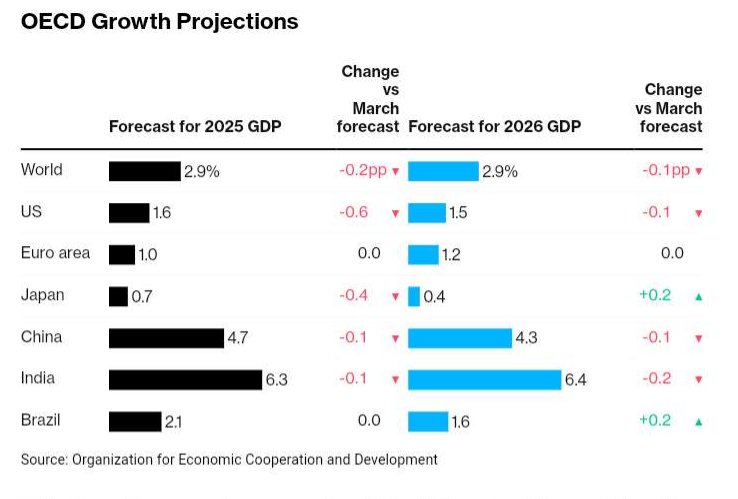
Group 1 - The international gold price continues to rise amid a stable background, but the upward momentum is limited, facing technical resistance at the $3400 level [1] - The OECD has downgraded global economic growth forecasts, predicting a growth rate of 2.9% for both 2025 and 2026, lower than previous estimates of 3.1% and 3.0% [1] - The ongoing geopolitical tensions, particularly the escalation of the Russia-Ukraine conflict, have heightened market risk aversion, further supporting gold prices [1][2] Group 2 - Concerns over economic recession, the ongoing Russia-Ukraine conflict, and the escalation of the US-EU trade war are providing support for the gold market [2] - The current gold price is in an adjustment cycle after reaching a high of $3500, with resistance still present at the $3400 level [2] - The price range of $3325-$3335 is identified as an important support level, which if maintained, could allow gold to challenge the $3400 mark again [2]
经济衰退竟是“最佳买点”?大摩:标普500最高将迎22%涨幅
Jin Shi Shu Ju· 2025-06-03 13:15
Group 1 - Morgan Stanley's Chief U.S. Equity Strategist Mike Wilson suggests that a mild economic recession could pave the way for a stock market rally, particularly if it leads to interest rate cuts by the Federal Reserve and a recalibration of corporate earnings expectations [1][2] - The firm has reduced concerns about an economic recession due to recent easing of U.S.-China trade tensions, projecting the S&P 500 index to rise to 6,500 points in the next 12 months, approximately a 10% increase from current levels [2] - In a bullish scenario, Morgan Stanley anticipates a mild recession followed by a market rally, with the S&P 500 potentially reaching 7,200 points, representing a 22% increase if the economy rebounds quickly from tariff-induced fluctuations [2] Group 2 - Wilson notes that if a recession occurs, the Federal Reserve will likely need to lower interest rates to alleviate high unemployment and stimulate the economy, with expectations of seven rate cuts by 2026 providing significant support for the stock market [3] - The stock market is expected to bottom out in early 2026 and then rebound, with earnings per share (EPS) growth briefly dipping into mild negative territory before recovering, driven by cyclical sectors sensitive to interest rates and government spending [3] - In the event of a mild recession, small-cap stocks and lower-rated stocks are likely to be the biggest beneficiaries, as smaller companies typically gain more in low-interest-rate environments [3]
2025年美国GDP预期再次下调 白银大盘走势依然乐观
Jin Tou Wang· 2025-06-03 11:35
Core Insights - Silver prices faced selling pressure after retreating from a seven-month high, trading around $34.15, influenced by profit-taking and a slight strengthening of the dollar amid easing trade tensions [1] - The U.S. manufacturing sector showed signs of contraction for the third consecutive month, with the PMI dropping from 48.7 to 48.5, below market expectations [2] - The OECD downgraded U.S. economic growth forecasts for 2025 from 2.2% to 1.6% and for 2026 from 1.6% to 1.5%, citing factors such as trade policy uncertainty and reduced federal employment [3] Group 1: Market Trends - Silver T+D closed up 2.75% at 8405.0 yuan/kg, despite the overall decline in silver prices during the European session [1] - The U.S. Treasury market started June poorly, with yields rising 4-7 basis points across the curve, particularly in long-term bonds, reflecting concerns over potential trade measures by the Trump administration [2] - The trend of increased home cooking in the U.S. has led to a decline in restaurant spending, which poses risks to consumer spending that constitutes two-thirds of GDP [4] Group 2: Economic Indicators - The ISM manufacturing index indicates ongoing contraction in the U.S. manufacturing sector, raising concerns about economic growth [2] - The consumer confidence index from the University of Michigan reached a historical low, reflecting negative public sentiment regarding the economic outlook [4] - The OECD's revised growth forecasts highlight a broader economic slowdown, particularly in North America, while other economies are expected to see smaller adjustments [3]
英国央行行长贝利:官方数据显示去年英国生产率增长为负,这是一个令人困惑的现象,因为生产率下降通常与严重经济衰退相关联。
news flash· 2025-06-03 10:34
Core Viewpoint - The Governor of the Bank of England, Andrew Bailey, highlighted that official data indicates a negative growth in UK productivity last year, which is perplexing as a decline in productivity is typically associated with severe economic recessions [1] Group 1 - The negative productivity growth in the UK is an unusual phenomenon that raises questions about the current economic conditions [1] - Typically, a drop in productivity is linked to significant economic downturns, suggesting potential underlying issues in the UK economy [1]
贸易战谁最痛?OECD:特朗普关税重创美国 引爆全球经济衰退!
智通财经网· 2025-06-03 09:25
Core Viewpoint - The OECD report indicates that Trump's confrontational trade policies have led to a global economic downturn, with the U.S. experiencing the most severe impact [1]. Economic Growth Forecast - The OECD has downgraded the global economic growth forecast for 2024 from 3.3% to 2.9%, with the U.S. growth rate significantly reduced from 2.8% to 1.6% [1][2]. - Other regions' forecasts include Euro area at 1.0%, Japan at 0.7%, China at 4.7%, and India at 6.3% for 2025 [2]. Impact of Trade Policies - The report highlights that trade barriers and policy uncertainty are undermining market confidence and investment activities, exacerbating inflationary pressures [1][4]. - OECD Chief Economist Alvaro Pereira states that the global economic outlook is bleak, with reduced trade affecting income and employment growth [4]. Recommendations for Policy - The OECD emphasizes the importance of reaching agreements to ease trade tensions, reduce tariffs, and eliminate trade barriers to restore economic growth and investment [4]. - The report suggests that even if the Trump administration adjusts tariff policies, the positive effects on economic growth and inflation relief will not be immediate due to ongoing policy uncertainty [7]. Additional Economic Concerns - The report warns that the negative impacts of trade policies are compounded by immigration restrictions and large-scale federal layoffs, which may further deteriorate the U.S. economy [7]. - OECD Secretary-General Mathias Cormann notes that retaliatory measures from trade partners are slowing export growth, and significant immigration slowdown is also a concern [7]. Inflation and Fiscal Risks - The OECD predicts that U.S. inflation will continue to rise, with the Federal Reserve potentially delaying easing until 2026, and warns of the risk of consumer inflation expectations spiraling out of control [7]. - The report also highlights increasing global fiscal risks due to pressures from defense spending, climate governance, and aging populations, recommending governments to cut unnecessary spending and broaden the tax base [7].