量化宽松

Search documents
财政主导时代来临,各国央行只能被动配合,而市场严阵以待
Hua Er Jie Jian Wen· 2025-08-21 01:31
Core Viewpoint - Prominent investors like Ray Dalio are warning that major global economies are entering a "fiscal dominance" era, where rising government debt and borrowing costs exert significant political pressure on central banks, potentially compromising their primary mission of controlling inflation [1][2]. Group 1: Fiscal Pressure on Monetary Policy - The OECD projects that sovereign borrowing in high-income countries will reach a record $17 trillion in 2023, followed by $16 trillion in 2024, and $14 trillion in 2025, creating a dilemma for central banks trying to normalize their balance sheets [2]. - Central banks, after years of quantitative easing, are attempting to shrink their balance sheets through bond sales, but this raises bond yields and increases government debt servicing costs, leading to policy conflicts [2]. Group 2: Rising Borrowing Costs - In the UK, the yield on 30-year government bonds has reached 5.6%, close to a 25-year high, while in Germany, yields have surpassed 3% due to increased borrowing for infrastructure and defense spending [3]. Group 3: Market Concerns Over Political Interference - In the U.S., the yield spread between 2-year and 30-year Treasury bonds has widened to its highest level since early 2022, indicating market concerns over potential political interference in monetary policy [4]. - Analysts suggest that recent unusual market reactions to inflation data reflect fears of increased control over monetary policy by the White House, with expectations of multiple rate cuts by the end of next year [4]. Group 4: Extreme Risks of Fiscal Dominance - Ray Dalio warns that fiscal dominance could lead to extreme risks, such as a "debt death spiral," where governments are forced to borrow more to pay rising interest, potentially leading to currency devaluation [5]. - The volatility in the market may hinder governments from issuing long-term bonds, pushing them towards riskier short-term debt, which could make fiscal conditions more sensitive to interest rate fluctuations [5].
利多星智投科普:什么是量化宽松
Sou Hu Cai Jing· 2025-08-20 03:30
Group 1: Definition and Purpose of Quantitative Easing - Quantitative Easing (QE) is a non-conventional monetary policy where central banks purchase long-term bonds to increase the money supply and inject liquidity into the market, aiming to stimulate consumption and investment by influencing inflation expectations [3][4] - The primary goal of QE is to break the "liquidity trap" when nominal interest rates are near zero, making it difficult for traditional monetary policy to be effective [4] Group 2: Reasons for Implementing Quantitative Easing - Traditional monetary policy tools become ineffective during severe economic downturns, such as the 2008 financial crisis and the 2020 COVID-19 pandemic, necessitating the use of QE to directly inject liquidity into the market [4] - QE helps combat deflation by injecting liquidity, raising asset prices, and stimulating demand, thereby reversing deflationary expectations [5] - During financial crises, QE provides liquidity to prevent market panic and stabilize financial institutions, avoiding widespread bankruptcies [6] Group 3: Operation of Quantitative Easing - Central banks typically target low-risk, highly liquid assets for purchase, such as government bonds and mortgage-backed securities, with the possibility of including corporate bonds and ETFs in special circumstances [7] - The implementation involves open market operations where central banks buy assets from primary dealers, injecting funds back into the banking system [8] - The funds received by dealers from asset sales flow back into the banking system, increasing excess reserves and ultimately facilitating lending and investment in the real economy [9] Group 4: Impacts of Quantitative Easing - QE stimulates economic recovery by lowering financing costs for businesses and individuals, leading to increased investment and consumption, which can boost GDP and reduce unemployment [11] - It stabilizes the financial system by injecting liquidity, alleviating pressure on financial institutions during crises [11] - The influx of capital into financial markets drives up asset prices, potentially creating a positive feedback loop that further stimulates consumption and investment [11] Group 5: Notable Cases of Quantitative Easing - The Federal Reserve implemented multiple rounds of QE post-2008 financial crisis, expanding its balance sheet from $4 trillion to a peak of $8.9 trillion after the COVID-19 pandemic [10] - Japan's central bank adopted QE in the 1990s following economic stagnation, significantly increasing its balance sheet, but with limited success in economic recovery [10]


美联储主席鲍威尔将被特朗普拿下了!特朗普:很快宣布新任主席!
Sou Hu Cai Jing· 2025-08-18 13:23
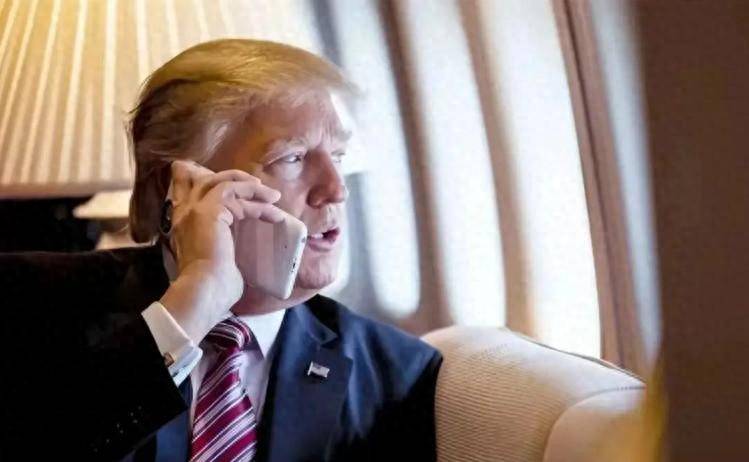
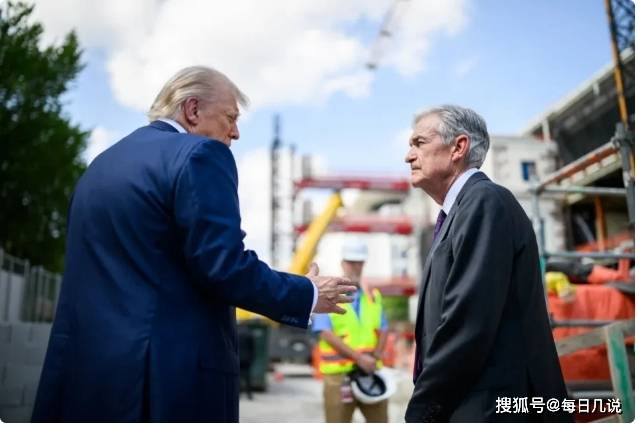
Core Viewpoint - The potential replacement of Federal Reserve Chairman Jerome Powell by President Trump has created significant speculation and volatility in global financial markets, reflecting a complex power struggle and economic interests [1][26]. Group 1: Trump and Powell's Relationship - The relationship between Trump and Powell has been tumultuous, with Trump desiring aggressive monetary policies to boost the economy, while Powell maintains a cautious approach to ensure the Fed's independence and stability [3][5][10]. - Trump's frustration with Powell's reluctance to lower interest rates has led to public criticism, highlighting the ongoing conflict between the administration's economic goals and the Fed's policy decisions [5][10]. Group 2: Economic Context - Current economic indicators suggest a fragile job market in the U.S., with discrepancies in reported employment data raising concerns about the true state of the economy [7][9]. - Trump's trade policies have increased costs for U.S. businesses, contributing to a lack of confidence in expanding production and hiring, which further complicates the employment landscape [9][10]. Group 3: Potential Successors - If Powell is replaced, former Treasury Secretary Steven Mnuchin is a leading candidate, known for his close relationship with Trump and understanding of Wall Street dynamics, which may lead to more accommodative monetary policies [14][15]. - Another potential candidate is economist John Taylor, known for the "Taylor Rule," which could introduce a more formulaic approach to monetary policy, though his conservative stance may not align with Trump's aggressive economic strategies [16][18]. Group 4: Implications of Powell's Replacement - The replacement of Powell could lead to significant market volatility, with potential for both positive and negative reactions depending on the new chairman's perceived competence and the independence of the Fed [20][22]. - Changes in monetary policy under a new chairman could impact bond markets and the attractiveness of the U.S. dollar, influencing foreign investment and potentially leading to capital outflows from emerging markets [24][26].
【UNFX课堂】下周前瞻:通胀迷雾、央行分歧与地缘政治阴影
Sou Hu Cai Jing· 2025-08-17 09:20
Group 1 - The global financial markets are entering a phase of uncertainty and critical decision-making, influenced by unexpected U.S. inflation data, diverging monetary policies among major central banks, and potential geopolitical impacts [1] - The U.S. Consumer Price Index (CPI) showed a year-on-year increase of 2.5%, while core inflation rose by 2.7%, initially suggesting a clear path for a rate cut in September [2] - However, the Producer Price Index (PPI) unexpectedly surged by 0.9% month-on-month, with a core PPI year-on-year increase of 3.7%, indicating rising production costs and the reality of "tariff-induced inflation" [2][3] Group 2 - The unexpected rise in PPI, along with downward revisions in non-farm employment data, has diminished the likelihood of a September rate cut, leading to a shift in market sentiment from certainty to skepticism regarding rate cuts [3] - Risk assets, particularly cryptocurrencies, have been significantly impacted, reflecting their sensitivity to macroeconomic headwinds, while major U.S. stock indices show signs of hesitation and differentiation [3] - Geopolitical events, such as the meeting between Trump and Putin, could have immediate effects on oil prices, highlighting the direct impact of geopolitical stability on commodity markets [3] Group 3 - The Jackson Hole Economic Policy Symposium is expected to be a focal point for market participants seeking policy direction, with Fed Chair Jerome Powell's speech being particularly significant [4] - Powell's tone could either suppress rate cut expectations if he emphasizes inflation risks or provide relief to the market if he alleviates inflation concerns [4] - The Reserve Bank of New Zealand (RBNZ) is anticipated to cut rates by 25 basis points to 3%, marking it as another developed economy central bank adopting a loosening policy [5] Group 4 - The People's Bank of China (PBoC) is under scrutiny for potential additional stimulus measures to boost domestic demand and economic growth, which could significantly impact regional currencies and global commodity markets [5] - Producer Price Index (PPI) data from the UK and Germany will provide insights into European price trends, which could influence the European Central Bank's policy decisions [5] - Global PMI data will serve as a leading indicator for assessing the health of manufacturing and service sectors, providing further context for market conditions [5] Group 5 - The complexity of inflation, particularly "tariff-induced inflation," is challenging traditional monetary policy frameworks, as central banks strive to balance inflation control, growth support, and financial stability [6] - Geopolitical events add unpredictability to the market, necessitating investor vigilance regarding policy signals from the Jackson Hole Symposium and actions from various central banks [6] - The importance of flexibility in asset allocation and risk management is emphasized in the current high-volatility environment, where understanding macroeconomic trends and geopolitical dynamics is crucial for achieving stable returns [6]
美债 37 万亿利息超军费!美国如何破局?
Sou Hu Cai Jing· 2025-08-15 16:17
Group 1 - The total U.S. national debt has surpassed $37 trillion, which is 1.27 times the projected GDP for 2024, with an average debt burden of $108,000 per citizen [1] - The U.S. national debt is increasing at a rate of $1 trillion every five months, which is more than double the average growth rate over the past 25 years [1] - Interest payments on the national debt for FY 2024 are projected to reach $1.133 trillion, exceeding both defense and Medicare spending, and accounting for 18.7% of total federal revenue [3] Group 2 - The U.S. debt ceiling has been breached, leading to political stalemate between parties, with a potential technical default looming if no agreement is reached [4] - The structural imbalance in U.S. fiscal policy is highlighted by mandatory spending on social security, healthcare, and interest payments, which now constitutes 73% of total federal spending [5] - Tariff revenues have surged but remain insignificant compared to the national debt, contributing to inflation and forcing the Federal Reserve to maintain high interest rates [6] Group 3 - The crisis of confidence in the U.S. dollar is accelerating, with its share in global foreign reserves dropping from 65.8% in 2015 to 57.8% in 2024 [13] - The risk of liquidity shortages is increasing, as evidenced by declining bid-to-cover ratios in U.S. Treasury auctions, indicating waning investor confidence [13] - The political landscape is characterized by polarization, with both parties avoiding the political costs of addressing the debt issue, leading to a stalemate [13] Group 4 - Historical comparisons to the 1990s show that past fiscal successes were contingent on unique circumstances that are not present today, such as the "peace dividend" from the end of the Cold War [11] - The U.S. faces structural contradictions that complicate fiscal recovery, including rising elderly populations and stagnant productivity growth [14] - The potential for a significant rise in long-term interest rates poses a risk of widespread defaults in corporate debt markets [13]
“著名反指”美银调查:机构对经济和AI更乐观,对中国更乐观,加密货币和黄金持仓很低
美股IPO· 2025-08-11 11:39
Core Viewpoint - The August Bank of America Fund Manager Survey (FMS) indicates a significant improvement in investor sentiment, reaching a six-month high, driven by optimism regarding AI's impact on productivity and expectations of a "soft landing" for the global economy [1][3][7] Group 1: Investor Sentiment and Economic Outlook - 68% of respondents expect a "soft landing" for the global economy, with only 5% anticipating a "hard landing," the lowest since January [9] - The net overweight ratio for equities has risen for the fourth consecutive month, reaching 14%, the highest in six months [4] - Optimism regarding future interest rate cuts has reached its highest point since December 2024 [11] Group 2: AI and Productivity - 55% of fund managers believe AI has already begun to enhance productivity, a significant increase from 42% in July [5][16] - Despite the optimism, there is a divide regarding AI stocks, with 52% believing they are not in a bubble, while 41% think otherwise [18] Group 3: Emerging Markets and China - There is a notable shift in asset allocation towards emerging markets, with the net overweight ratio for emerging market stocks rising from 22% to 37%, the highest since February 2023 [21] - A net 11% of respondents expect the Chinese economy to strengthen, the highest level since March 2025 [23] Group 4: Cryptocurrency and Gold - Interest in cryptocurrencies remains low, with only 9% of respondents holding them, and an average allocation of just 3.2% among holders [27] - Gold also sees limited interest, with 48% of investors holding it, but an overall average allocation of only 2.2% [30]

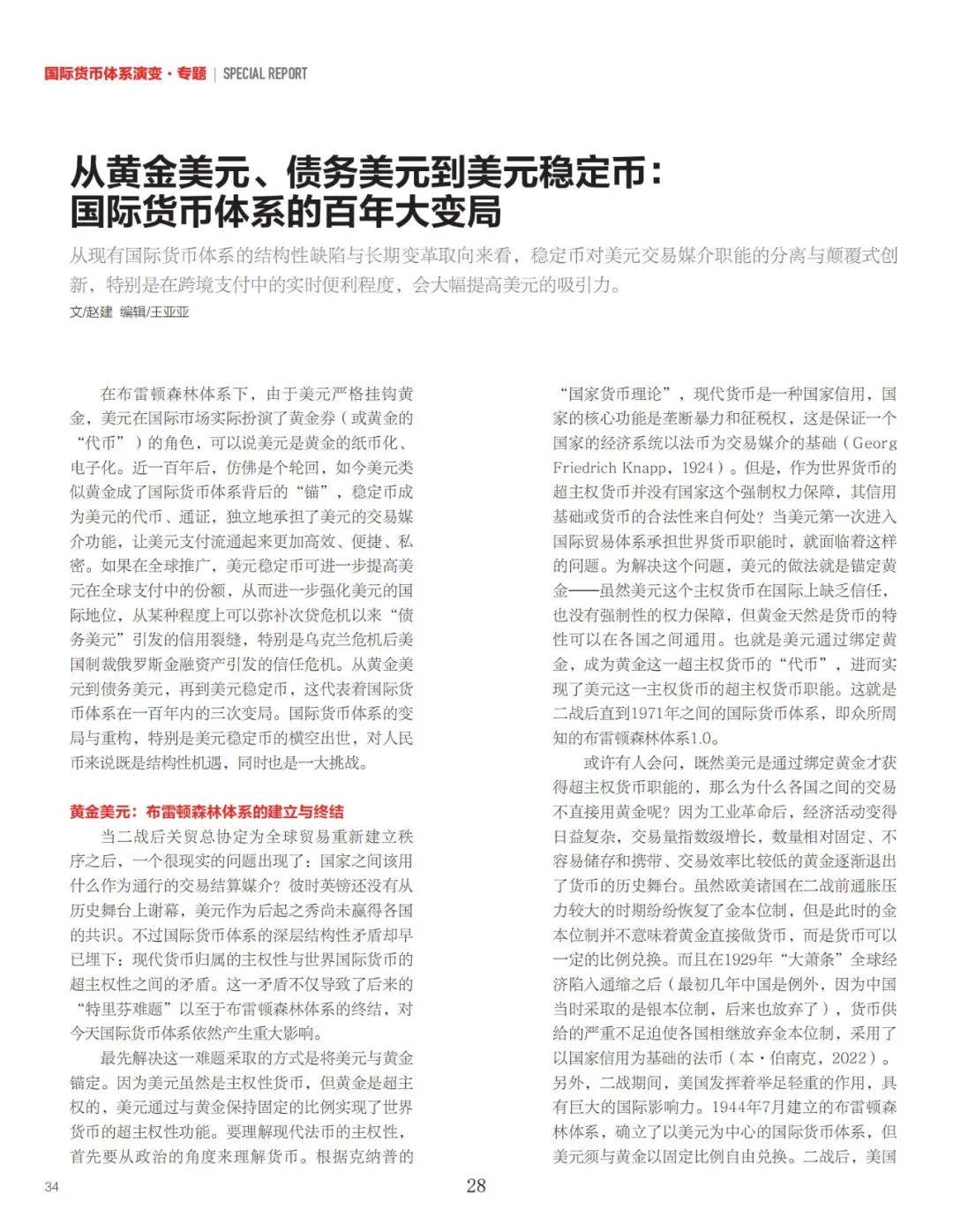
赵建:从黄金美元、债务美元到美元稳定币——国际货币体系的百年大变局
Sou Hu Cai Jing· 2025-08-11 09:33
Group 1: Core Views - The article discusses the structural flaws of the current international monetary system and the transformative potential of stablecoins, particularly in enhancing the efficiency of dollar transactions in cross-border payments [4][18][19] - It outlines the historical evolution of the international monetary system, highlighting three significant phases: the "golden dollar" era under the Bretton Woods system, the "debt dollar" phase driven by debt expansion, and the emergence of "dollar stablecoins" as a technological innovation [4][10][18] Group 2: Golden Dollar: Establishment and Termination of the Bretton Woods System - The Bretton Woods system established the dollar's peg to gold, allowing it to function as a global trade and reserve currency, but this system faced inherent contradictions leading to its collapse [5][9] - The "Triffin Dilemma" emerged as a critical issue, where the demand for dollars in international trade outpaced the growth of gold reserves, ultimately resulting in the suspension of dollar convertibility to gold in 1971 [9][12] Group 3: Debt Dollar: Modern Credit Currency Era and Its Flaws - The transition to a "debt dollar" system marked a shift where the dollar was no longer tied to gold, leading to a reliance on debt for currency creation, which has resulted in significant global financial implications [10][12] - The article identifies three phases of the debt dollar system, including the rise of global dollar loans, the debt explosion post-2008 financial crisis, and the surge in U.S. government debt during the COVID-19 pandemic [15][17] Group 4: Dollar Stablecoins: Technological Innovation and Future of the International Monetary System - Stablecoins are positioned as a solution to enhance the efficiency of dollar transactions, potentially restoring confidence in the dollar amidst concerns over its debt issues and geopolitical tensions [19][20] - The article emphasizes the rapid growth of stablecoin transactions, which reached $27.6 trillion in 2024, surpassing the combined transaction volumes of Visa and Mastercard, although most of this volume is still tied to crypto assets [21] - It discusses the theoretical and technical foundations of stablecoins, including their ability to separate the functions of currency, and the underlying technologies that support their operation [20][21]
“著名反指”美银调查:机构对经济和AI更乐观,对中国更乐观,加密货币和黄金持仓很低
Hua Er Jie Jian Wen· 2025-08-11 08:46
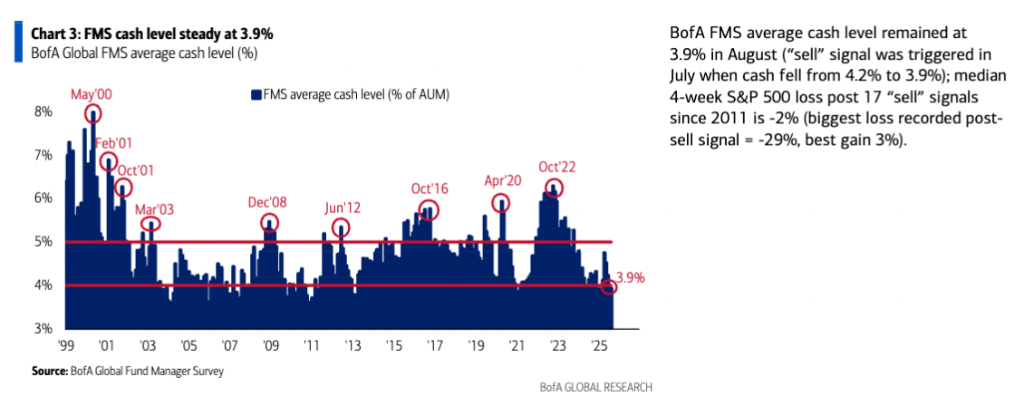
Group 1 - The core sentiment among global fund managers is the most optimistic since February, driven by confidence in a "soft landing" for the global economy, recognition of AI's productivity enhancement, and improved outlook for the Chinese economy [1][6][9] - The latest Bank of America Fund Manager Survey (FMS) conducted from July 31 to August 7 included 197 fund managers with a total asset management of $475 billion, showing a significant improvement in market sentiment [2][6] - 68% of respondents predict a "soft landing" for the global economy, with only 5% expecting a "hard landing," the lowest since January [9][12] Group 2 - There is a notable increase in allocation to emerging market stocks, with a net overweight ratio rising from 22% to 37%, the highest level since February 2023 [23] - Optimism regarding the Chinese economy has also improved, with a net 11% of respondents expecting economic strength, the highest since March 2025 [25] - Despite the overall positive sentiment, 91% of respondents believe U.S. stocks are overvalued, indicating persistent bearish sentiment towards the U.S. market [27] Group 3 - AI optimism is rising, with 55% of fund managers believing AI has begun to enhance productivity, a significant increase from 42% in July [3][17] - However, there is a divide regarding AI stocks, with 52% believing they are not in a bubble, while 41% think a bubble has formed [19] - "Long Mag 7" has become the most crowded trade again, reflecting continued interest in large tech stocks despite bubble concerns [21] Group 4 - Fund managers show limited interest in cryptocurrencies and gold, with only 9% holding cryptocurrencies and an average allocation of 3.2%, leading to an overall exposure of just 0.3% [30] - For gold, 48% of investors hold it, with an average allocation of 4.1%, but 41% have no gold positions, resulting in a weighted average exposure of only 2.2% [32] - Cash levels among investors have dropped to 3.9%, triggering a "sell signal" from Bank of America, indicating potential short-term market pullback risks [4][12]

国际货币体系专题(一):百年浮沉,彰往察来
HUAXI Securities· 2025-08-10 15:32
Group 1: Historical Evolution of the International Monetary System - The international monetary system has evolved through three major phases since 1870: the Gold Standard, the Bretton Woods System, and the Jamaica System[1] - The Gold Standard operated on a government commitment to maintain currency value through gold reserves, while the Bretton Woods System was a quasi-gold standard based on the unique economic position of the United States[2] - The Jamaica System represents a loose and flexible choice under economic diversification, affirming the current state of a multi-currency system[3] Group 2: Monetary Discipline and Current Challenges - The transition from the Gold Standard to the Bretton Woods System and then to the Jamaica System reflects a gradual loosening of monetary discipline, allowing for more flexible monetary policies[4] - In the 21st century, major economies like Japan, the U.S., and the Eurozone have implemented aggressive quantitative easing near zero interest rates, undermining confidence in these reserve currencies[5] - Emerging economies are increasing their gold reserves, indicating a paradox where the freedom from gold constraints leads to a heightened desire for gold reserves[6] Group 3: Capital Flows and Regulatory Needs - International capital flows have grown significantly, revealing the weaknesses of existing monetary systems, with capital acting as a powerful force that can destabilize these systems[7] - The Jamaica System's characteristics of freedom and diversity allow international capital to attack weaker economic regions, necessitating capital control measures to prevent financial crises in emerging markets[8] Group 4: Future of the Monetary System - The future restructuring of the international monetary system will depend on shifts in global economic and trade centers, influenced by technological advancements and industrial competitiveness[9] - The current monetary system faces challenges from structural imbalances among major economies, which could lead to financial crises and increased protectionism, particularly from the U.S.[10]
下一任美联储主席“花落谁家”?美联储独立性面临考验
Xin Hua Cai Jing· 2025-08-06 14:35
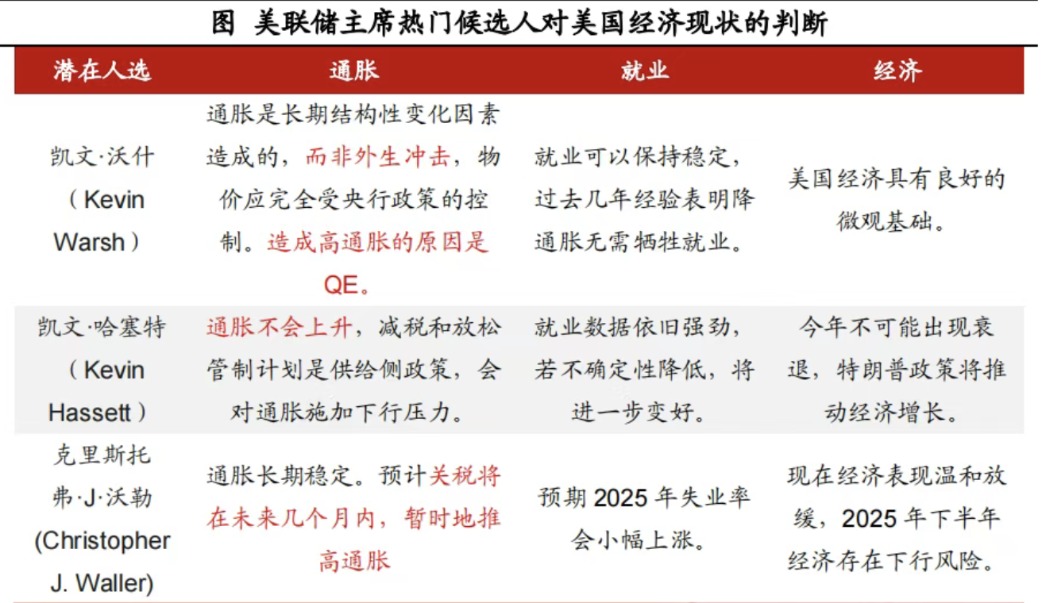
Core Viewpoint - The upcoming nomination of a new Federal Reserve Board member and potential successor to Chairman Jerome Powell by President Trump is expected to significantly influence future monetary policy and challenge the independence of the Federal Reserve [1][9]. Group 1: Nomination Process - Federal Reserve Board member Adriana Kugler announced her resignation effective August 8, allowing Trump to quickly nominate a new member, potentially setting the stage for selecting the next Fed Chair [2]. - Trump has narrowed down the list of candidates for the next Fed Chair to four individuals, with Scott Bessent expressing no interest in the position [3]. - The candidates include Kevin Warsh and Kevin Hassett, with Christopher J. Waller also being a popular choice among market participants [3][7]. Group 2: Candidate Profiles - Kevin Warsh is viewed as a strong candidate with a hawkish stance on monetary policy, emphasizing the need for balance sheet reduction before considering interest rate cuts [7][8]. - Kevin Hassett is seen as a more dovish candidate, advocating for immediate rate cuts to stimulate economic growth, aligning closely with Trump's preferences [7][8]. - Christopher J. Waller has expressed concerns about inflation and has voted against maintaining current interest rates, indicating a potential alignment with Trump's desire for looser monetary policy [8]. Group 3: Federal Reserve Independence - Trump's ongoing pressure on the Federal Reserve, including criticism of Powell, raises concerns about the institution's independence and the potential for political interference in monetary policy [9][11]. - Historical examples illustrate that the Federal Reserve has faced political pressures in the past, which could impact its credibility and decision-making [11]. - Analysts suggest that if a candidate aligned with Trump's views is appointed, it could negatively affect the overall outlook for U.S. dollar assets [12]. Group 4: Market Expectations for Rate Cuts - Recent economic data, including disappointing employment figures, has led to increased expectations for a rate cut by the Federal Reserve in September, with a 87.5% probability of a 25 basis point cut [13][16]. - Analysts predict that the Fed may implement multiple rate cuts in the coming months, with discussions around the possibility of a more aggressive 50 basis point cut if economic conditions worsen [16][17].