供应链效率

Search documents
古茗(1364.HK):深渠长流 万店耕新
Ge Long Hui· 2025-07-26 05:39
Core Viewpoint - The company, Gu Ming, has established itself as a leading player in the ready-to-drink tea market, leveraging supply chain efficiency to drive store expansion and achieve significant revenue growth in a competitive environment [1][2]. Company Overview - Gu Ming was founded in 2010 in Zhejiang, China, and has focused on supply chain as a core driver of growth, implementing a self-distribution system in 2013 and cold chain logistics in 2017 [1]. - By 2023, the company has developed a cold storage capacity exceeding 60,000 cubic meters and operates over 300 cold chain transport vehicles, creating an industry-leading warehousing and distribution network [1]. - In 2024, Gu Ming achieved revenue of 8.791 billion yuan, a year-on-year increase of 14.54%, and an adjusted net profit of 1.493 billion yuan, up 5.69% year-on-year [1]. Industry Insights - The ready-to-drink tea market has surpassed a trillion yuan in scale, evolving into a new consumption arena where tea products serve as a medium for lifestyle expression among young consumers [2]. - Gu Ming holds a 9% market share in overall GMV and an 18% share in the mass market, ranking second overall and first in the mass market segment in 2023 [2]. - The company has demonstrated resilience amid industry slowdowns, with average daily GMV per store reaching 6,800 yuan in 2023 and projected to be 6,500 yuan in 2024 [2]. Competitive Advantages - Gu Ming's competitive edge lies in its comprehensive support for franchisees and deep optimization of its supply chain, allowing for store expansion without sacrificing profit margins or quality [2]. - The company boasts the largest cold chain storage and logistics infrastructure in the industry, utilizing temperature-controlled vehicles to deliver fresh ingredients to 97% of its stores every two days [2]. - With an average delivery cost of 0.9% of GMV, Gu Ming's logistics efficiency is significantly better than the industry average of 2% [2]. - The company achieved a quarterly repurchase rate of 53% in 2023, surpassing the industry average of 30%, and has launched over 100 new products in 2024, leading the industry in product innovation [2]. Future Growth Potential - Gu Ming employs a regional density strategy for store openings, targeting 500 stores per province as a key scale node, and currently holds a 25% market share in the ready-to-drink tea market across eight provinces [3]. - The company has achieved the highest market share in Zhejiang, Fujian, and Jiangxi provinces, with a 45% share in the mass ready-to-drink tea market [3]. - By June 2025, Gu Ming aims to have a total of 10,403 stores across 20 provinces, with significant potential for expansion into untapped regions [3]. - The company has identified a potential store opening space of approximately 9,866 stores under a neutral assumption, with a 5-year CAGR of 15%, and up to 19,314 stores if it expands into currently unentered cities, with a 5-year CAGR of 25% [3].
古茗(01364):深度报告:深渠长流,万店耕新
Changjiang Securities· 2025-07-24 11:11
Investment Rating - The report assigns a "Buy" rating for the company [5][14]. Core Insights - The current landscape of the tea beverage industry is thriving, driven by the delivery battle and the peak season, with the company positioned as a leading player in the ready-to-drink tea market. The company is expected to achieve significant revenue growth, with projected revenues of 110.3 billion, 127.5 billion, and 147.0 billion yuan for 2025-2027, and net profits of 19.4 billion, 22.8 billion, and 26.5 billion yuan respectively [5]. Company Overview - The company, founded in 2010 in Zhejiang, has established itself as a leader in the ready-to-drink tea market, focusing on supply chain efficiency to support store expansion. As of 2024, the company achieved revenues of 87.91 billion yuan, a year-on-year increase of 14.54%, with adjusted net profits reaching 14.93 billion yuan, up 5.69% [9][21]. Market Position - The ready-to-drink tea market has evolved beyond basic product functionality, becoming a medium for young consumers to express lifestyle and values. The company holds a 9% and 18% market share in the overall and mass market segments respectively, ranking second overall and first in the mass market [10]. Competitive Advantages - The company has built a robust competitive edge through comprehensive support for franchisees and optimized supply chain management, allowing for profitable expansion without sacrificing quality. The company boasts the largest cold chain logistics infrastructure in the industry, with an average delivery cost of 0.9% of GMV, lower than the industry average of 2% [11]. Future Growth Potential - The company employs a regional density strategy, aiming for 500 stores per province as a key scale node. It currently operates in eight provinces, capturing 25% of the mass ready-to-drink tea market. The company has significant room for expansion, with estimates suggesting over 9,866 potential new stores in a neutral scenario and up to 19,314 if it continues to expand into currently unentered cities [12]. Financial Overview - The company has demonstrated resilient financial performance, with revenues of 87.91 billion yuan in 2024, driven by store expansion and increased demand for products. The revenue structure remains stable, with product sales accounting for nearly 80% of total revenue [38]. The adjusted net profit margin has shown fluctuations but remains competitive within the industry [43].
疯狂的外卖大战,谁是最终赢家?
财联社· 2025-07-08 03:16
Core Viewpoint - The competition in the food delivery market has intensified with the launch of significant subsidy programs by major players like JD.com and Alibaba, leading to a surge in daily order volumes and a shift in market dynamics [1][2][15]. Group 1: Market Dynamics - The total daily order volume in the food delivery and instant retail market has rapidly increased to approximately 200 million orders, driven by aggressive subsidy strategies from JD.com and Alibaba [2][15]. - In June, Meituan's market share dropped to around 60%, with daily orders exceeding 90 million, while Taobao Shanguo and JD.com reported significant order volumes during the same period [1][2][10]. - As of July 5, Meituan's instant retail orders surpassed 1.2 billion, with over 1 billion being food orders, indicating a strong recovery and competitive response to rival promotions [10][11]. Group 2: Promotional Strategies - Taobao Shanguo launched a substantial subsidy plan of 500 billion yuan, resulting in a significant increase in order volumes across various categories, including food and beverages [3][4][11]. - Meituan responded to the competitive pressure by offering various high-value discount coupons and promotional activities, aiming to retain its customer base during the peak consumption season [5][11]. - The promotional activities led to a notable increase in order volumes for several brands, with some reporting up to a 230% increase in orders due to the influx of new customers attracted by the subsidies [11][12]. Group 3: Operational Challenges - The sudden spike in order volumes has created operational challenges for many merchants, with reports of overwhelmed staff and difficulties in fulfilling the increased demand [12][13]. - Some merchants expressed concerns about the sustainability of such high order volumes and the impact on brand quality, indicating a potential long-term challenge for businesses focused on maintaining brand integrity [14]. Group 4: Strategic Responses - JD.com is exploring new business models in the food delivery sector, focusing on supply chain efficiencies and cross-selling opportunities, while also expanding its logistics capabilities [15][16]. - Meituan is shifting its resources towards enhancing its instant retail and grocery delivery services, aiming to create a comprehensive delivery network that caters to urban consumers [18][19]. - The competition among the three giants—Meituan, JD.com, and Alibaba—highlights the ongoing battle for market share in the rapidly evolving instant retail landscape, with each company seeking to leverage its strengths in supply chain and customer engagement [19].



纵腾集团李聪:美国零售业加速洗牌,供应链竞争打响时效之战
Nan Fang Du Shi Bao· 2025-06-26 07:36
Group 1 - The core theme of the event was the transformation of global retail and supply chains, highlighting the challenges faced by traditional retailers in the U.S. due to high interest rates, tariff costs, and inventory reduction pressures [3][4] - Many traditional retailers, such as Walmart and Home Depot, are experiencing significant cash flow issues and high debt levels, which hinder their ability to stock up and respond to market fluctuations, leading to an accelerated industry reshuffle [3][4] - The competition logic in e-commerce has fundamentally shifted from merely being "cheaper" to "cheaper and faster," presenting a historic opportunity for online sellers to capture market share [3][4] Group 2 - Amazon's logistics strategy, particularly its "distributed warehouse" model, has redefined competition by focusing on "inventory proximity" rather than just product pricing, emphasizing the importance of delivery speed and cost efficiency [4] - Cross-border sellers are advised to prioritize cash flow management and prepare for strategic contraction in the short term, while in the long term, they should embrace changes by establishing local buffer warehouses and optimizing multi-regional warehouse layouts [4] - The company, Zongteng Group, has over 2.3 million square meters of overseas warehouses and is investing in robotic smart warehouses to enhance efficiency and reduce costs, aligning with the future trends of supply chains [4][5]
茅台跌倒,新消费三姐妹却“暴力逆袭”?
Tai Mei Ti A P P· 2025-06-23 08:09
Core Viewpoint - The article highlights the contrasting performance of traditional high-end liquor brands like Moutai, which are struggling, versus the rising success of new consumer brands such as Pop Mart, Mixue Ice City, and Laopu Gold, which are thriving in the current market environment [1][18]. Group 1: Company Performance - Pop Mart has achieved a market valuation close to HKD 300 billion, driven by its successful LABUBU plush toy line and a comprehensive IP ecosystem that includes original IP incubation and a blind box mechanism [3][10]. - Mixue Ice City has over 46,000 stores globally, with annual revenue exceeding CNY 24.8 billion and net profit over CNY 4.4 billion, focusing on affordable pricing and quality [4][10]. - Laopu Gold reported sales of CNY 9.8 billion in 2024, a 166% year-on-year increase, with net profit rising by 254% to CNY 1.47 billion, targeting a younger demographic with culturally rich gold jewelry [5][10]. Group 2: Business Strategies - Pop Mart's strategy involves creating a complete IP incubation system and product lifecycle management, moving beyond just selling blind boxes to a broader range of products [7][14]. - Mixue Ice City emphasizes a strong supply chain and low-cost entry for franchisees, allowing for rapid expansion and high turnover in the beverage market [10][14]. - Laopu Gold differentiates itself by combining traditional craftsmanship with modern aesthetics, positioning itself in high-end shopping districts and appealing to a younger, fashion-conscious audience [15][16]. Group 3: Market Trends - The article notes a shift in consumer preferences, with younger consumers favoring products that offer emotional value and social currency, as seen in the success of the new consumer brands [9][18]. - The traditional high-end liquor market is experiencing a downturn, with brands like Moutai facing challenges due to changing consumer habits and a decline in the "banquet culture" [18][19]. - The new consumer brands are capitalizing on the demand for affordable, trendy, and culturally relevant products, indicating a significant transformation in the consumption landscape [1][19].


泡泡玛特、蜜雪冰城和老铺黄金:三家千亿公司,三种稀缺性
创业邦· 2025-06-23 04:07
Core Viewpoint - The article discusses the rise of three new consumption brands in Hong Kong: Mixue Ice City, Pop Mart, and Laopu Gold, highlighting their unique business models and market strategies that cater to different consumer needs and preferences [5][7][23]. Group 1: Business Models - Mixue Ice City focuses on efficiency by offering low-priced products and expanding through a franchise model, supported by a highly efficient supply chain [10][20]. - Pop Mart capitalizes on emotional engagement through its collectible toys, creating a strong brand narrative and high market expectations, reflected in its elevated price-to-earnings ratio [10][12]. - Laopu Gold targets cultural identity and high-net-worth consumers by positioning itself as a luxury brand, successfully bridging the gap between traditional gold products and modern luxury [15][16]. Group 2: Market Performance - In 2023, the average stock price increase for these brands exceeded 200%, with a total market capitalization surpassing 700 billion HKD, indicating strong investor interest [3][5]. - Pop Mart's market capitalization has fluctuated significantly, reaching a peak of over 100 billion HKD shortly after its IPO in 2020, but later experiencing a decline of over 90% before recovering to around 37 billion HKD by mid-2024 [7][12]. - Laopu Gold has shown remarkable growth, with its revenue increasing from 130 billion CNY in 2018 to 1,573 billion CNY in 2023, demonstrating its successful market penetration [15][16]. Group 3: Channel Strategies - Mixue Ice City operates over 46,000 stores globally, primarily through a franchise model, while maintaining a low-cost structure that allows for competitive pricing [25][44]. - Pop Mart and Laopu Gold utilize a direct sales model, focusing on high-end retail locations to enhance brand prestige and customer experience [25][26]. - Laopu Gold's average store performance in luxury malls exceeds that of international brands, showcasing its effective positioning in the high-end market [25][26]. Group 4: International Expansion - All three brands began their international expansion in 2018, with Mixue Ice City opening its first overseas store in Vietnam, Pop Mart entering South Korea, and Laopu Gold establishing a presence in Hong Kong [34][35]. - By 2024, Pop Mart's overseas revenue accounted for nearly 40% of its total income, indicating a successful international strategy [37][39]. - Mixue Ice City has established a significant presence in Southeast Asia, with over 4,800 stores, while Laopu Gold is still in the early stages of its international expansion [42][43].

下沉市场!县城餐饮人做生意的3个狠招
Sou Hu Cai Jing· 2025-06-22 17:06
Core Insights - The article emphasizes that the lower-tier market is not a simplified version of urban dining, but rather a complex environment where local businesses thrive through understanding consumer needs and leveraging local resources [1][22]. Group 1: Key Principles for Success in Lower-Tier Markets - Key Principle 1: "Upgrading" is rooted in "essential needs," where value perception is crucial rather than just low pricing [3]. - Customers in county towns seek quality and visible value, as evidenced by local restaurants achieving high patronage despite higher average spending compared to urban chains [4][5]. - Key Principle 2: "Efficiency wars" focus on supply chain effectiveness, with local sourcing being critical for maintaining quality and customer loyalty [9]. - Local sourcing can lead to higher costs but results in better customer experiences and repeat business, as shown by a local hotpot restaurant that prioritizes fresh ingredients [9][10]. - Key Principle 3: Understanding local social dynamics is essential for success, where building relationships and community ties can drive business [20]. - Engaging with local key customers, such as wedding planners and influential families, can secure consistent business opportunities [16][18]. Group 2: Case Studies and Examples - A case study from Jiangxi highlights a restaurant that emphasizes transparency and quality, leading to customer satisfaction despite higher costs [5]. - Another example from Hebei illustrates how a restaurant enhances the dining experience through entertainment, making it appealing for family gatherings [6][9]. - A community kitchen in Shandong demonstrates the importance of adapting to local supply conditions and customer preferences, showcasing flexibility in menu offerings [12][14]. Group 3: Marketing and Community Engagement - Local marketing strategies, such as personal outreach and relationship-based discounts, are more effective than digital advertising in county towns [20]. - The importance of compliance with local regulations and maintaining good relationships with neighboring businesses is highlighted as critical for operational success [22].

再冲港股,三只松鼠能否重讲“宏大叙事”?
3 6 Ke· 2025-06-11 10:23
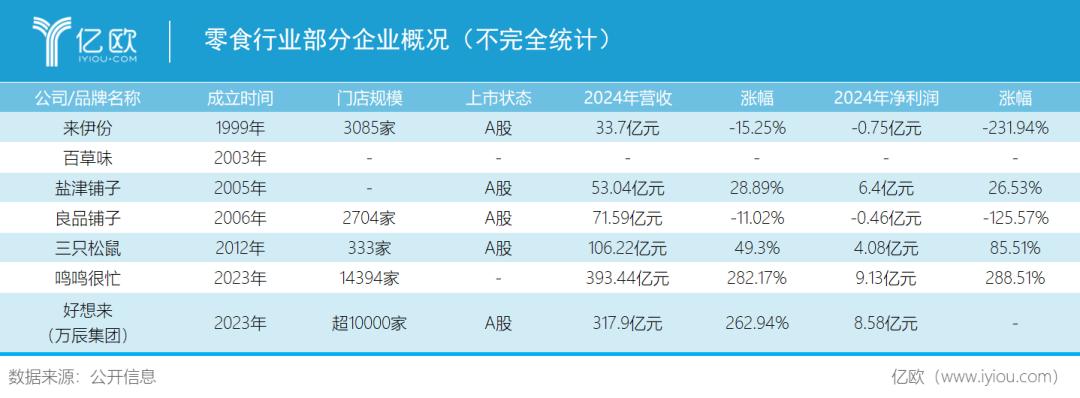
Core Viewpoint - The article highlights the resurgence of the snack industry, particularly focusing on companies like Three Squirrels, which has successfully navigated challenges and achieved significant revenue growth, while traditional consumer brands struggle with stagnation [1][2]. Company Performance - Three Squirrels reported a revenue of 10.622 billion yuan in 2024, marking a 49.3% year-on-year increase, and a net profit of 408 million yuan, up 85.51% [1][2]. - The company aims to achieve a dual listing (A+H) on the stock market, potentially becoming the first in the industry to do so [2]. - After a period of decline, Three Squirrels has rebounded, with a strategic focus on supply chain efficiency and new sales channels, particularly through social media platforms like WeChat [10][11]. Industry Trends - The snack industry is experiencing a bifurcation, with some companies like Three Squirrels and Mingming Hen Mang showing significant growth, while others like Liangpinpuzi and Laiyifen face substantial declines [14][17]. - The competitive landscape is shifting towards companies that prioritize supply chain efficiency, digital operations, and innovative marketing strategies [17][19]. - The global snack market is projected to reach $835.8 billion by the end of 2033, with a compound annual growth rate of 5.1% over the next decade, prompting companies to explore international markets [18]. Strategic Initiatives - Three Squirrels has implemented a "high-end cost-performance" strategy to enhance competitiveness and has successfully leveraged new traffic platforms for growth [10][11]. - The company has expanded its product offerings beyond nuts to include coffee, beverages, baked goods, and pet food, reflecting a broader market strategy [18]. - The industry is witnessing a trend towards digitalization, with companies like Mingming Hen Mang leading in digital management capabilities, enhancing their operational efficiency [16].

消费新势力崛起,618开启情绪价值主战场
Sou Hu Cai Jing· 2025-06-05 18:05
Group 1: Policy and Platform Dynamics - The consumption stimulus policy for 2025 is significantly penetrating daily scenarios, with subsidies for home appliances, electric vehicles, and energy-saving products creating a dual leverage effect with e-commerce promotions [3] - Major platforms are simplifying rules and extending promotional periods, with the 618 sales event lasting 37 days, allowing for diverse consumption scenarios [3] - The shift in the burden of discounts from merchants to platforms is evident, as platforms like Douyin and Taobao are providing cash subsidies to merchants, indicating a transition from "traffic harvesting" to "ecosystem cultivation" [3] Group 2: Consumer Segmentation - The consumer structure is evolving into three main groups: new power consumers (Z generation and small-town youth), blue ocean consumers (silver-haired and middle-aged), and quality-focused consumers (urban white-collar and discerning mothers) [4][5] - Emotional value is becoming a key driver of consumption, with 40.1% of young consumers prioritizing emotional satisfaction in their purchasing decisions [5] Group 3: Technological Empowerment - The 618 event highlights three key areas of technological empowerment: smart home revolution, globalized duty-free consumption, and the industrialization of emotional consumption [6][7] - Smart locks are predicted to see sales exceed 1.3 million units, with advanced biometric technologies becoming increasingly popular [6] - Duty-free shopping is evolving into a major cross-border consumption scene, with significant growth in inbound tourism and duty-free store revenues [6] Group 4: Capital Market Dynamics - The secondary market is experiencing a revaluation of consumption investments, with new consumption entities like Pop Mart and Lao Pu Jin seeing significantly higher price-to-earnings ratios compared to traditional consumer stocks [8] - Traditional leaders are stabilizing, with a focus on cash flow and return on equity, while low-tier market consumption confidence is recovering [8] Group 5: Key Variables in June - Three critical variables will determine consumption performance in June: the balance of price and experience, the efficiency of emotional consumption conversion, and the multiplier effect of policies [9][10] - The average price of smart locks is rising, but enhanced features are helping to mitigate the impact of price increases [9] Group 6: Conclusion on Market Trends - The 2025 consumption market is characterized by differentiation, emotionalization, and technological advancement, with the true battleground shifting to consumer psychology [11] - The new consumption symbols are emerging, reflecting a shift in consumer values and preferences [12]

从闭眼买到不想续:山姆会员店的“精英滤镜”被撕碎?
Sou Hu Cai Jing· 2025-05-08 03:23
Core Insights - The Chinese retail industry is undergoing rapid changes in 2024 due to consumption stratification and digital transformation, with Sam's Club leading in paid membership retail with over 80 million global members and revenue exceeding 80 billion yuan in China [1][3] Group 1: Membership and Revenue - Sam's Club's membership fee revenue grew by 28% year-on-year in 2024, accounting for 15% of total revenue, with average annual sales per store surpassing 2 billion yuan [1] - The number of Sam's Club members reached over 4 million in 2024, generating membership fee income of 2 billion yuan, with a high repurchase rate of around 70% [5][10] Group 2: Competitive Challenges - In 2024, the growth rate of new Sam's Club stores dropped sharply from 40% in 2023 to 18%, with lower sales efficiency in lower-tier markets compared to first-tier cities [3][10] - Online GMV growth for Sam's Club was only 25%, significantly lagging behind competitors like Hema X and JD Seven Fresh, which reported growth rates of 65% and 50% respectively [3][10] Group 3: Market Position and Strategy - Sam's Club has built a strong market position over 26 years, but faces challenges from rising competition, including Costco and Hema X, which are encroaching on its market share [4][12] - The market share of Sam's Club in first-tier cities declined by 2.3% in 2024, while Costco and Hema X saw increases of 4.1% and 3.8% respectively [12] Group 4: Consumer Trends and Preferences - The proportion of members under 30 years old dropped from 28% in 2020 to 15% in 2024, indicating a shift in consumer demographics and preferences [11] - Hema X's focus on localized products and smaller packaging options has attracted younger consumers, contrasting with Sam's Club's traditional larger packaging approach [11][12] Group 5: Operational Efficiency and Supply Chain - Sam's Club's supply chain management is highlighted as a strength, with a global procurement team ensuring high-quality products, but faces pressure from competitors offering lower prices [6][10] - The return rate for Sam's Club increased by 3 percentage points to 8.5% in 2024, and member satisfaction dropped to 79%, indicating potential issues with customer trust and product value [10]