大宗商品超级周期

Search documents
康波的凝视-油价一触即发
2026-01-13 01:10
Summary of Conference Call Records Industry Overview - The current analysis focuses on the commodities market, particularly oil, and its cyclical behavior driven by the Kondratiev wave theory, indicating a supercycle lasting approximately four years due to the expansion of dollar credit cracks [1][3][6]. Key Points and Arguments - **Commodity Supercycle**: The current supercycle is characterized by a rotation in commodity prices: gold, industrial metals, oil, and finally agricultural products. This cycle is expected to continue until around 2026, particularly influenced by geopolitical factors such as the Russia-Ukraine conflict [1][3][6]. - **Oil Price Signals**: The reversal of oil prices is anticipated to be signaled by three core indicators: 1. Major oil-producing countries expressing willingness to negotiate production cuts. 2. Effective execution of joint production cuts by these countries. 3. Continuous strengthening of the production cut agreements in terms of extent and duration. The emergence of the third signal is expected to lead to a rapid increase in oil prices [4][10]. - **Strategic Oil Reserves**: Global strategic oil inventories have reached historical lows, which, combined with a decade-long contraction in oil capital expenditures, supports the potential for future oil price increases [4][7]. - **Investment Opportunities**: The current international oil price has fallen below $60, nearing the breakeven point for the U.S. shale gas industry, suggesting limited downside risk and significant upside potential for investments in the petrochemical sector [2][11]. Additional Important Insights - **Kondratiev Wave Characteristics**: The supercycle during the Kondratiev depression phase is primarily driven by currency credit issues rather than demand. Since 2016, the global demand for the dollar has decreased, enhancing the reserve value of commodities, especially gold [6]. - **Historical Context**: Historical geopolitical events have shown that actions against Russia often lead to significant drops in oil prices, as seen in 1986 and 2014. The current situation reflects similar dynamics following the 2022 Russia-Ukraine conflict [9]. - **Future Economic Predictions**: For 2026, it is predicted that China's economy will enter a phase of prosperity, with the A-share market likely to reach new highs. Key sectors to watch include non-ferrous metals, new consumption, high-end manufacturing, and domestic computing chains with competitive advantages [12]. Conclusion - The analysis indicates a complex interplay of geopolitical factors, market dynamics, and historical patterns that shape the commodities market, particularly oil. Investors are advised to consider these elements when making strategic decisions in the coming years.
What the surge in gold and silver to fresh records says about the mindset of investors to start 2026
MarketWatch· 2026-01-12 18:37
Core Viewpoint - The rise to record highs in gold and silver indicates that a commodities supercycle is "firmly intact" amidst tumultuous news related to Trump, the Federal Reserve, and escalating tensions in regions like Iran, Venezuela, and Greenland [1] Group 1 - Gold and silver prices have reached record highs following significant news events [1] - The current market conditions suggest a strong and ongoing commodities supercycle [1] - Geopolitical tensions in Iran, Venezuela, and Greenland are contributing factors to the rise in commodity prices [1]


金融期货早评-20260112
Zhuo Chuang Zi Xun· 2026-01-12 05:08
Group 1: Report Industry Investment Ratings - No relevant content provided Group 2: Core Views Financial Futures - The market differentiation in 2026 will continue, and volatility will become the norm. It is a structural market, not a full-fledged supercycle. Funds will concentrate on varieties with fundamentals and narratives, marginalizing weak ones [1]. - The stock index market sentiment is positive, and the index is expected to continue to strengthen. The bond market faces pressure from the A-share market, and caution is needed in the short term [1][3]. Commodities New Energy - For lithium carbonate, there may be a rush to export lithium batteries before the end of April, and demand is still optimistic in the short - and long - term, but rapid price increases may erode downstream demand [5]. - For industrial silicon and polysilicon, there may be a rush to export in April, boosting short - term prices, but prices may face significant downward pressure after the rush - export period [7]. Non - ferrous Metals - For copper, the price is likely to be adjusted at a high level, and new positions are not recommended above 100,000 yuan. For aluminum, the medium - to long - term price is bullish, and long positions can be arranged on dips. For zinc, it will continue to adjust and maintain a high - level shock in the short term. For nickel and stainless steel, they will maintain a high - level shock in the short term. For tin, it still has upward momentum in the short term, and it is recommended to buy on dips. For lead, it will fluctuate in a range [10][13][15]. Oils, Fats and Feeds - For oilseeds, pay attention to auctions and the USDA report. For oils, wait for the report to guide the market. For M3 - 5 spreads in soymeal, consider reducing positions [21][23]. Energy and Oil and Gas - For fuel oil, observe the market. For low - sulfur fuel oil, also take a wait - and - see approach [25][26]. Precious Metals - For platinum and palladium, they will have high - level wide - range fluctuations in the short term. Be cautious of short - term corrections. In the medium - to long - term, the bull market foundation remains. For gold and silver, they will be in a high - level shock, and pay attention to the US CPI. They are in an easy - to - rise and hard - to - fall pattern, and dips are opportunities to buy more [27][30]. Chemicals - For pulp and offset paper, the market is neutral to slightly bearish, and it is recommended to observe or short - sell on rallies. For LPG, pay attention to device changes. For PTA - PX, the demand negative feedback intensifies, and it is not recommended to chase long. For MEG - bottle chips, take a wait - and - see approach. For methanol, the geopolitical logic continues, and short - selling is not recommended. For PP, pay attention to the actual implementation of device maintenance. For PE, the upward space may be limited. For pure benzene - styrene, styrene is running strongly, but do not chase high. For rubber, the correction may not have stabilized, and it is recommended to observe. For urea, hold long positions. For soda ash and caustic soda, the weak reality continues. For propylene, the cost provides support, but beware of risks [33][35][36]. Black Metals - For rebar and hot - rolled coil, they will bottom - out and fluctuate with support from raw materials. For iron ore, do not chase long at the current position, and consider taking profits on long positions. For coking coal and coke, the industrial logic is not the core driver of price increases. For ferrosilicon and ferromanganese, they may bottom - out and fluctuate after the correction [59][62]. Agricultural and Soft Commodities - For live pigs, the market will fluctuate narrowly in the short term and may show a "low - first, high - later" trend in the long term. For cotton, there may be a short - term correction risk. For sugar, it will fluctuate under pressure. For eggs, be bullish on the first half of the year, but the process may be volatile. For apples, the price is under pressure at a high level. For red dates, they will fluctuate at a low level [66][68][69]. Group 3: Summaries by Relevant Catalogs Financial Futures Macro - In December 2025, China's CPI and PPI both showed positive changes, and the employment data in the US was mixed. The Iranian situation and China's business work conference policies have an impact on the market [1]. Stock Index - The previous trading day, the stock index rose with heavy volume, and the small - and medium - cap stock indexes led the gains. The market sentiment is positive, and the index is expected to continue to strengthen [1]. Treasury Bond - Last week, treasury bonds fell for three days and then rebounded. The bond market is under pressure from the A - share market, and caution is needed in the short term. It is recommended to hold long - term long positions and gradually take profits on short - term long positions [3][4]. Commodities New Energy Lithium Carbonate - Last week, the futures price was strong, with an increase in trading volume and open interest. The spot market was mainly for rigid demand. The price of lithium ore and lithium carbonate increased. It is expected that there will be a rush to export lithium batteries before April, and demand is still optimistic [5]. Industrial Silicon & Polysilicon - The industrial silicon futures price decreased slightly, with an increase in trading volume and open interest. The polysilicon futures price decreased, with an increase in trading volume and a decrease in open interest. In April, there may be a rush to export, boosting short - term prices, but prices may face significant downward pressure after the rush - export period [7]. Non - ferrous Metals Copper - The price fluctuated last week, with an increase in trading volume and open interest. The inventory situation is complex, and high - level adjustment is likely [10]. Aluminum Industry Chain - The aluminum price rose, driven by funds and the expectation of export rush. The alumina price is affected by related varieties, and it is recommended to short - sell on rallies. The cast aluminum alloy price follows the aluminum price, and pay attention to the spread [13]. Zinc - The zinc price adjusted recently, with a tight domestic raw material supply in the short term and a relatively loose supply in the long term. It will maintain a high - level shock in the short term [15]. Nickel & Stainless Steel - The nickel price fell, and the stainless - steel price rose slightly. The market is affected by supply expectations and funds, and it will maintain a high - level shock in the short term [16]. Tin - The tin price has upward momentum in the short term, mainly driven by macro and capital factors. It is recommended to buy on dips [17]. Lead - The lead price fluctuated narrowly. The domestic and foreign inventory patterns are different, and it will fluctuate in a range [20]. Oils, Fats and Feeds Oilseeds - The domestic soybean futures price was affected by auctions and USDA reports. The supply and demand situation of imported soybeans and domestic soymeal is complex. For the M3 - 5 spread in soymeal, consider reducing positions [21]. Oils - The three major domestic oils are waiting for the MPOB report. The palm oil market sentiment has improved, and the soybean oil and rapeseed oil markets are affected by various factors [23]. Energy and Oil and Gas Fuel Oil - The supply of high - sulfur fuel oil has become tight due to sanctions, and the high - sulfur cracking has continued to decline, but the Iranian geopolitical issue provides support. It is recommended to observe [25]. Low - sulfur Fuel Oil - The supply of low - sulfur fuel oil is improving, and the demand is average. The Lu price has limited upward drive. It is recommended to observe [26]. Precious Metals Platinum & Palladium - They fluctuated widely last week, affected by geopolitical conflicts, index parameter adjustments, and exchange cooling measures. They will have high - level wide - range fluctuations in the short term, and be cautious of short - term corrections. In the medium - to long - term, the bull market foundation remains [27]. Gold & Silver - They continued to rise last week, affected by geopolitical situations and the Fed's interest - rate expectations. They will be in a high - level shock, and pay attention to the US CPI. They are in an easy - to - rise and hard - to - fall pattern, and dips are opportunities to buy more [30]. Chemicals Pulp - Offset Paper - The pulp futures price rebounded, and the offset paper futures price fluctuated. The pulp market is neutral to slightly bearish, and it is recommended to observe or short - sell on rallies [33]. LPG - The LPG price rose slightly. The supply is tight, and the demand is relatively stable. Pay attention to device changes [35]. PTA - PX - The PX supply is expected to remain high, and the PTA supply is affected by device restarts. The demand negative feedback intensifies, and it is not recommended to chase long [36]. MEG - Bottle Chips - The MEG supply has increased slightly, and the demand negative feedback continues. It is recommended to take a wait - and - see approach [39]. Methanol - The methanol price rose, and the MTO end may face parking. The geopolitical logic continues, and short - selling is not recommended [41]. PP - The PP price rose. The supply pressure is relieved in the short term, and the demand may decline seasonally. Pay attention to the actual implementation of device maintenance [43]. PE - The PE price rose. The supply pressure may increase in the future, and the demand may decline seasonally. The upward space may be limited [46]. Pure Benzene - Styrene - The pure benzene market is in an oversupply situation, and the styrene market is strong, but do not chase high [48]. Rubber - The rubber price corrected. The natural rubber inventory is accumulating, and the synthetic rubber is affected by raw materials and demand. The correction may not have stabilized, and it is recommended to observe [50]. Urea - The urea price rose. The supply is in an oversupply stage, and the price is affected by demand and export policies. It is recommended to hold long positions [52]. Soda Ash & Caustic Soda - The soda ash inventory is increasing, and the glass inventory is relatively high. The caustic soda is in a weak - reality state. The weak reality continues [54]. Propylene - The propylene price rose. The supply is relatively loose, and the demand is relatively stable. The cost provides support, but beware of risks [57]. Black Metals Rebar & Hot - rolled Coil - The rebar demand is seasonally weak, and the supply is increasing. The hot - rolled coil inventory is gradually changing from de - stocking to stocking. They will bottom - out and fluctuate with support from raw materials [59]. Iron Ore - The iron ore price has risen, but it has high inventory and high - shipping problems, and the valuation is high. It is not recommended to chase long at the current position [59]. Coking Coal & Coke - The coking coal supply is stable with a slight increase, and the coke production is relatively stable. The demand has growth space, but the industrial logic is not the core driver of price increases [63]. Ferrosilicon & Ferromanganese - They rose and then fell. The supply pressure is relatively large, but they are supported by the cost. They may bottom - out and fluctuate after the correction [64]. Agricultural and Soft Commodities Live Pigs - The pig price fluctuates narrowly, and the supply - demand game intensifies. The market will fluctuate narrowly in the short term and may show a "low - first, high - later" trend in the long term [66]. Cotton - The cotton price has risen, but there may be a short - term correction risk due to factors such as squeezed spinning profits and the price advantage of imported yarn [68]. Sugar - The sugar price is under pressure, affected by the expected increase in Indian production and other factors. It will fluctuate under pressure, and pay attention to the trend of raw sugar [69]. Eggs - The egg price is rising, driven by capacity reduction. The futures market is a game between supply contraction and uncertain demand. Be bullish on the first half of the year, but the process may be volatile [72]. Apples - The apple price is under pressure at a high level. The inventory is decreasing, and pay attention to the pre - Spring Festival stocking [78]. Red Dates - The red date price is fluctuating at a low level. The domestic supply is abundant, and pay attention to downstream procurement [79].
策略周末谈(0111):康波的凝视:油价一触即发
Western Securities· 2026-01-11 08:08
Group 1 - The report identifies the second round of the commodity supercycle driven by the expansion of dollar credit cracks during the Kondratiev depression phase, suggesting that this phase will enhance the monetary attributes of commodities, particularly gold and industrial metals, as safe assets amid increasing geopolitical uncertainties [1][9][10] - Historical patterns indicate a rotation in the commodity supercycle: gold rises first, followed by industrial metals, oil, and finally agricultural products, with each phase influenced by geopolitical factors and economic conditions [2][14][16] - Current oil prices are deemed undervalued due to strategic oil inventories reaching historical lows, and a potential increase in oil prices is anticipated if the geopolitical situation, particularly the Russia-Ukraine conflict, eases by 2026 [3][21][23] Group 2 - The report outlines three key signals to watch for a potential reversal in oil prices: willingness of major oil-producing countries to negotiate production cuts, effective execution of production cuts, and strengthening of reduction agreements over time [4][27][28] - The analysis predicts that 2026 will mark a turning point towards prosperity, with a significant rise in global oil prices expected if the geopolitical tensions ease, leading to a renewed focus on commodities as safe assets [5][37] - Industry allocation recommendations include focusing on metals (gold, silver, copper, lithium), consumer sectors benefiting from wealth return and improved consumption tendencies, and high-end manufacturing sectors with export advantages [5][39]
历史性时刻!紫金矿业市值破万亿,周期之王开启新时代?
Sou Hu Cai Jing· 2026-01-06 10:07
Core Insights - Zijin Mining's stock price surged over 6%, marking a historic moment as its A-share market capitalization surpassed 1 trillion yuan for the first time, representing a significant milestone for the company and the entire non-ferrous metals and resources sector [1][3] - The company's growth from a local mining enterprise in Fujian to a global giant in copper, gold, and lithium reflects the benefits of the commodity super cycle and a re-evaluation of the value of hard assets in the current market [3][4] - The breakthrough in market capitalization signifies a shift in industry and capital logic, highlighting the increasing scarcity premium for leading companies with top-tier resources and operational excellence amid global re-inflation and energy transition trends [4][6] Investment Strategy - For investors already holding Zijin Mining shares, it is advisable to consider them as a core asset and allow profits to run [5] - New investors are cautioned against chasing high prices and should wait for overall sector fluctuations to identify companies with quality resource reserves and reasonable valuations for potential entry points [5] - The market will demand higher performance accountability from Zijin Mining following its trillion-yuan milestone, indicating a need for careful monitoring of its earnings capabilities [5]


2026十大研判
2026-01-05 15:42
Summary of Key Points from the Conference Call Industry and Company Overview - The discussion centers around the Chinese economy and stock market, particularly focusing on the year 2026 as a pivotal point for China's return to prosperity, drawing parallels with historical trends in the United States and Japan during their industrialization phases [2][5][6]. Core Insights and Arguments 1. **Economic Recovery and Growth**: 2026 is anticipated to mark the beginning of China's return to prosperity, driven by a per capita GDP exceeding $10,000, which signifies a mature industrial phase. This is expected to enhance manufacturing export capabilities and improve domestic consumption [2][5][6]. 2. **Impact of U.S. Federal Reserve Policies**: The Federal Reserve's potential interest rate cuts and quantitative easing (QE) are expected to increase global liquidity, facilitating the return of cross-border capital to China, which will support the appreciation of the Renminbi and aid in the recovery of the balance sheets of the real economy [2][4][7]. 3. **Commodity Supercycle**: A supercycle for commodities began in April 2025, driven by abundant global liquidity. The focus should initially be on PPI manufacturing sectors, followed by CPI consumer sectors as monetary policies are implemented [2][8][14]. 4. **Technology Sector Outlook**: The technology sector remains a strong investment theme, with a focus on humanoid robots, AI applications, and new consumption trends. A dynamic scoring model is suggested for adjusting investment strategies in this sector [2][9][17][18]. 5. **Industry Configuration Recommendations**: Suggested sectors for investment include: - **Non-ferrous Metals**: Gold, silver, and copper, benefiting from global liquidity [2][10][19]. - **New and Consumer Sectors**: Food and beverage, tourism, and travel, which are expected to see growth due to improved consumer sentiment [2][10][19]. - **High-end Manufacturing**: Including power equipment, chemicals, home appliances, and pharmaceuticals, which are projected to have strong growth potential [2][10][19]. Additional Important Insights 1. **Renminbi Exchange Rate Trends**: The Renminbi is expected to enter a medium to long-term appreciation cycle, supported by an increase in the current account surplus due to rising export levels. This trend is anticipated to be reinforced by the return of previously exited capital [2][12]. 2. **Manufacturing Sector Resilience**: China's manufacturing sector is expected to be re-evaluated positively, benefiting from improved cash flows and competitive advantages in exports, particularly during the Renminbi appreciation phase [2][13]. 3. **Cyclical Industry Dynamics**: The cyclical industries are expected to experience a transition from a bear to a bull market, driven by improved cash flows and consumer sentiment as national wealth returns [2][16]. 4. **Market Performance Context**: Despite a global bull market since 2020, the A-share market faced challenges from 2022 to 2024 due to capital outflows caused by U.S. interest rate hikes. However, the outlook for 2026 is optimistic, with expectations of new highs in market indices [2][10][11]. This comprehensive analysis highlights the anticipated economic recovery in China, the implications of U.S. monetary policy, and the strategic sectors for investment as the market evolves towards 2026.
策略周末谈(0104):策马乘风:2026十大研判
Western Securities· 2026-01-04 08:56
Core Conclusions - The report suggests that 2025 may be just the "prelude" to a bull market, with the Federal Reserve likely to restart interest rate cuts, leading to a rapid return of cross-border capital to China, which will help various price indices (PPI + CPI) emerge from "deflation" [1] - The report anticipates that in 2026, China will experience a period of prosperity similar to Japan in 1978, driven by the appreciation of the RMB, which will enhance cash flow statements and balance sheets in the real economy [1] Group 1: China’s Economic Outlook - China entered the current Kondratiev wave downturn in 2019, but the external constraints are gradually being lifted, allowing for a return to prosperity [1] - The report indicates that the Federal Reserve's interest rate cuts in 2025 will facilitate the recovery of cash flow statements for enterprises and households in China [1] - The anticipated quantitative easing (QE) by the Federal Reserve in 2026 will open up policy space for the People's Bank of China to implement similar measures, further aiding the recovery of balance sheets [1] Group 2: U.S. Economic Conditions - The report highlights that the U.S. is currently in a Kondratiev wave downturn, with the stock market and economy on the brink of crisis due to over-reliance on AI investment narratives [2] - It notes that the U.S. stock market is at a "crisis edge," and the potential for liquidity shocks is high as cross-border capital begins to flow out of the U.S. [2] - The report warns that if AI investment expectations fall short, it could lead to a negative narrative impacting U.S. consumption and economic stability [2] Group 3: Global Liquidity Trends - The report predicts that the Federal Reserve is likely to shift towards QE, resulting in an increase in global liquidity [3] - It emphasizes that the primary goal of the Federal Reserve is to prevent liquidity shocks in the U.S. market, which will influence global capital flows [3] - The report suggests that the current tight liquidity in the U.S. is pressuring the Federal Reserve to adopt "quasi-QE" measures [6] Group 4: Currency and Capital Flows - Following the Federal Reserve's interest rate cuts, cross-border capital is expected to accelerate its return to China, shifting the A-share market from a tech-focused trend to a cyclical recovery [7] - The report anticipates that the RMB exchange rate will likely break previous highs of 6.8 and 6.3, entering a long-term appreciation cycle [7] - It highlights that the RMB's appreciation will create a positive feedback loop, encouraging further capital inflows into China [7] Group 5: Commodity Supercycle - The report discusses a potential supercycle in commodities driven by de-globalization and a dollar crisis, with supply constraints likely to emerge as resource-rich countries tighten supply [9][10] - It suggests that the demand for commodities will remain resilient due to strategic stockpiling and supply chain improvements in various countries [10] - The report indicates that this supercycle could last for several years, with precious metals leading the way in revaluation [11] Group 6: Sectoral Opportunities - The report identifies key sectors for investment, including non-ferrous metals, consumer goods, and high-end manufacturing, which are expected to benefit from the recovery of cash flow and balance sheets [13] - It emphasizes the importance of focusing on sectors that are likely to achieve new highs, particularly in the context of the anticipated economic recovery [13] - The report suggests that the manufacturing sector will see a systematic recovery in valuations as cash flow statements improve [11]

金银铜齐齐新高-周期怎么看
2025-12-29 01:04
Summary of Key Points from Conference Call Records Industry Overview Commodities - Recent strong performance in commodity prices, with gold surpassing 4,600 yuan, silver increasing by 11% to 80 USD, and LME copper stabilizing above 12,000 USD. Early year copper prices were below 75,000 yuan [2][7] - Short-term price fluctuations due to factors like silver delivery month squeeze, not driven by supply-demand improvements. Long-term outlook remains positive due to a weaker dollar and anticipated Fed rate cuts [2][7] - The current commodity cycle is influenced by international competition, differing from previous cycles driven by real estate and infrastructure [3][8] Aviation Sector - Positive outlook for the aviation sector in 2026, with New Year ticket prices up by 6-7% and passenger load factors increasing by 1-2%. Recovery in China-Japan-Korea routes noted [4] - Anticipated recovery in airline profitability to exceed 2019 levels due to extended holiday periods and improved travel demand [4] Express Delivery Industry - Jitu's stable growth in Southeast Asia, recommended as a stock with potential for doubling in three years. SF Express exited the Douyin return segment to protect profits, with a 30% increase in package volume but unfulfilled profit expectations [5][6] - Focus on bottoming SF Express stock, while waiting for data from other express companies for validation of growth potential [6] Non-Ferrous Metals - Positive outlook for the non-ferrous metals sector in 2026, though growth may not match 2025 levels. Current valuations are lower than in 2025, with high certainty of EPS recovery [10] - Energy metals remain undervalued, presenting investment opportunities [10] Coal Industry - Recent decline in coal prices, with the coal index down by 0.89%. However, coking coal fundamentals remain strong, with prices up 170 yuan per ton year-on-year [11][12] - High inventory levels suppress price rebounds, but potential stabilization due to weather factors is noted. Recommendations include investing in high-dividend coal companies [12] Core Insights and Arguments - The commodity price center is expected to rise long-term, supported by macroeconomic factors such as a weaker dollar and Fed rate cuts [2][7] - The aviation sector is projected to recover significantly, driven by increased travel demand and favorable pricing trends [4] - The express delivery market shows resilience, with specific companies like Jitu and SF Express highlighted for their growth potential [5][6] - Non-ferrous metals are positioned for a strong performance, with a focus on energy metals as attractive investment options [10] - The coal industry faces challenges with price declines but offers opportunities in high-dividend stocks amidst stable fundamentals [12] Additional Important Points - The equity market is not overheated, with P/E and P/B ratios at historical lows, indicating a favorable environment for investment [9] - The end of the current commodity cycle will depend on factors such as the restoration of dollar credit, supply chain restructuring, and domestic policies [8]
Wall Street insiders discuss their stocks to watch in 2026
Youtube· 2025-12-22 17:00
Investment Themes - Hard assets, including metals and agricultural products, are gaining attention, with soybeans and sugar showing positive movements [2] - Oil prices are nearing $58 per barrel, influenced by geopolitical factors and declining rig counts, suggesting potential upside [3] - The biotech sector, particularly in weight loss and vanity-related treatments, is expected to remain a hot theme [3][12] Sector Focus - Semiconductors and infrastructure plays are highlighted as areas of interest, with companies like Nvidia and emerging cloud computing firms being noted [4] - Robotics and energy sectors, particularly nuclear energy, are also seen as promising investment opportunities [4] Healthcare Sector - The healthcare sector is viewed as a stable investment area, with companies like MEDP (a contract research organization) expected to grow due to their efficient processes [6][7] - Transmetics, focused on improving organ transplant logistics, is identified as a potential high-growth company due to its innovative approach [8][10] Market Outlook - Emerging markets, particularly in China and Latin America, are expected to attract investment as global growth and commodity cycles shift [29][30] - The US stock market is anticipated to face challenges as leadership may shift away from US equities, with a multi-year change in market dynamics expected [28] Commodity Trends - Precious metals, especially gold, are experiencing significant price increases, with forecasts suggesting continued bullish sentiment into next year [58][59] - The oil market is expected to transition from an inventory glut to a potential shortage, driven by global growth and limited low-cost production capacity [34][36] Banking Sector - US banks are recovering but face challenges from non-bank competition and potential credit issues, particularly in commercial lending [39][41] - European banks are outperforming US counterparts, with expectations of a credit cycle beginning in Europe [44][45] Biopharma Industry - The biopharma sector is cautiously optimistic following recent policy resolutions regarding drug pricing, although concerns about FDA efficiency remain [81][83] - M&A activity is anticipated as companies seek to acquire assets in response to patent expirations, with a focus on firms with differentiated drug data [88][90]

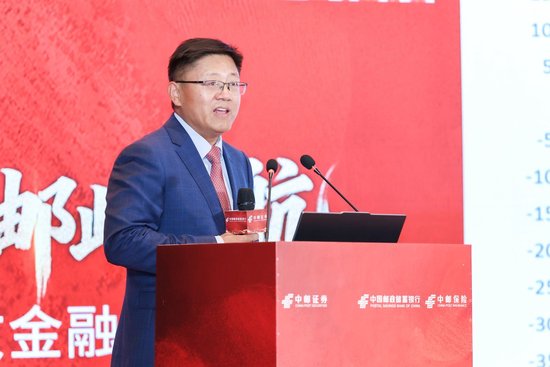
中邮证券黄付生:权益市场持续结构牛市,大宗商品酝酿超级周期
Xin Lang Cai Jing· 2025-12-03 12:36
Core Viewpoint - The 2026 Chinese equity market is expected to enter a "long cycle, structural bull market," while the bond market will shift to a phase of volatility, and a super cycle for commodities may gradually begin, with global asset allocation focusing more on China [1][7]. Group 1: Chinese Equity Market - In the first 11 months of 2025, global major assets showed a comprehensive increase, with the South Korean Composite Index and COMEX gold rising over 60%, while the CSI 300 and Hang Seng Index increased over 25% [3][9]. - Foreign capital inflow into the Chinese stock market reached $50.6 billion in the first 10 months of 2025, significantly surpassing the total of $11.4 billion for the entire year of 2024 [3][9]. - The allocation ratio of global active mutual funds to Chinese stocks is currently at 6.4%, which is below the historical average of 9%, indicating significant room for growth [3][9]. - The equity allocation ratio of domestic wealth management products is only 2.1%, and if it rises to the average of 5.44% from 2017 to 2024, it could bring an additional 1.15 trillion yuan [3][9]. - The investment themes for 2024 Q3 to 2025 Q3 will focus on "innovative drugs + technology growth" (including innovative drugs, computers, and semiconductors), with energy storage and lithium batteries taking over in Q4 2025, and chemicals and consumer sectors entering a recovery cycle in 2026 [3][9]. Group 2: Bond Market - The rapid decline in bond market interest rates has ended, with the policy interest rate reduction space narrowing to 10-20 basis points, and the 10-year government bond yield expected to fluctuate between 1.5% and 1.9%, while the 30-year yield is projected to be between 1.8% and 2.3% [4][10]. - The bond market's single-sided bull market has concluded, and future trends are expected to be dominated by volatility [4][10]. Group 3: Commodity Market - Current commodity prices are at multi-decade lows relative to U.S. stocks, with the commodity equity ratio approaching historical lows, and gold has already begun to rise, along with noticeable increases in copper and aluminum prices [4][10]. - A new super cycle for commodities is anticipated, driven by global interest rate cuts, economic recovery, and factors such as the U.S. being the only source of growth in global oil production and OPEC+ reaching production limits [4][10].