
盈利驱动

Search documents
不要怕!大盘不仅稳,而且还会涨!
Sou Hu Cai Jing· 2025-11-11 10:39
Core Viewpoint - The Shanghai Composite Index is currently experiencing fluctuations around the 4000-point mark, with both bullish and bearish forces being evenly matched. The market is in a state of indecision, influenced by various economic and policy factors [1]. Group 1: Market Sentiment - Optimistic factors include supportive policies and some economic data, such as the recovery of core CPI and the focus on technological innovation in the 14th Five-Year Plan, indicating a potential "slow bull" trend in A-shares [1]. - Cautious factors highlight that economic recovery will take time, with ongoing downward pressure on the economy, particularly in exports, real estate, and consumer markets [1]. - Institutional investors are maintaining high positions, with stock private equity holding over 80% of their portfolios, indicating that they are not significantly withdrawing from the market but are adjusting their structures [1]. Group 2: Conditions for Bull Market - For the Shanghai Composite Index to effectively break through the 4000-point level and initiate a healthy upward trend, several conditions must align, including stable economic data, a shift from valuation recovery to profit-driven growth, clear policy expectations, improved capital market systems, foreign capital inflow, domestic capital accumulation, and the formation of a profit-making effect [1]. Group 3: Future Market Scenarios - Optimistic scenario: If economic data exceeds expectations and strong macro policies are implemented, the market may break through 4000 points and rapidly rise to 4200, 4500, 4800, or even 5000 points [1]. - Neutral scenario: A gradual increase is more likely, with the market slowly rising to digest selling pressure and accumulate strength over several months [1]. - Pessimistic scenario: If economic recovery falls short of expectations or international tensions arise, the market may oscillate between 3800 and 4000 points for an extended period [1]. Group 4: Valuation Insights - The historical PE ratio for the A-share market is around 12-15 times, with potential expansion to 18-20 times during optimistic market conditions. Future upward potential largely depends on corporate profit growth supporting higher valuation levels [1]. - Some optimistic brokerages suggest that if economic recovery is strong, A-shares could see a significant bull market, targeting the 4200-5000 point range, contingent on the strength and sustainability of economic, policy, and capital market dynamics [1].


华泰证券:盈利视角切换下关注低位景气品种
Xin Lang Cai Jing· 2025-11-09 14:14
Core Viewpoint - The report from Huatai Securities indicates that the A-share market experienced a volatile upward trend last week, led by manufacturing and cyclical sectors, while technology stocks continued to adjust [1] Group 1: Market Trends - Historically, the third phase of an upward market is often driven by earnings, suggesting a potential shift from a liquidity-driven market to a fundamentals-driven market since the "924" event last year [1] - After the third quarter reports, the market's earnings perspective is shifting towards next year, with advanced manufacturing actively restocking, domestic consumption transitioning from active destocking to passive destocking, and cyclical sectors attracting early investment [1] Group 2: Economic Indicators - High-frequency data indicates that signs of economic improvement are primarily concentrated in the AI supply chain, price increase chain, capital goods, and consumer goods [1] - In the short term, a "barbell" investment strategy is maintained, with potential recovery in technology stocks after the pressure from overcrowding is alleviated, and continued investment opportunities in dividends [1] - Additionally, sectors such as new energy and chemicals, which have favorable economic logic, are highlighted as relatively low-positioned investment options [1]

关键时刻,最新研判!
Zhong Guo Ji Jin Bao· 2025-11-02 15:25
Core Viewpoint - The Shanghai Composite Index has broken through the 4000-point mark, indicating a potential new round of a "healthy slow bull" market driven by the recovery of market confidence and structural changes in the economy [1]. Market Drivers - The primary driver for the recent market rise is the restoration of confidence in the capital market, supported by favorable policies and improved corporate earnings [18][19]. - Liquidity improvement and industry logic, particularly in technology sectors like AI and renewable energy, are significant factors driving the market [19][20]. - The market's upward movement is attributed to a combination of macroeconomic improvements, positive policy expectations, and an increase in risk appetite [19]. Sources of Incremental Capital - Incremental capital is mainly coming from long-term institutional funds, social security, and the transfer of household savings into equity markets [20][21]. - The current funding structure is healthier compared to previous years, with a notable increase in the proportion of long-term patient capital [22][23]. Main Investment Themes - The technology growth sector remains the primary focus, with AI expected to be a significant opportunity over the next 3 to 5 years [24][25]. - There is an expectation of a balanced market style, with potential shifts between growth and value sectors [27]. Policy Impact - The "policy combination" has played a crucial role in stabilizing market expectations and boosting investor confidence [28][29]. - Continuous and coordinated policy efforts have successfully shaped market sentiment and provided a foundation for the current market rally [30]. Potential Risks - The primary risk identified is the possibility of global macroeconomic growth falling short of expectations, which could impact corporate earnings [31][32]. - High valuation sectors may face risks if actual earnings do not meet market expectations, leading to potential corrections [33]. Investment Strategy Recommendations - It is advised to shift from aggressive investment strategies to optimizing portfolio structures, focusing on defensive and growth balance [34][35]. - Investors are encouraged to maintain a diversified asset allocation to mitigate risks associated with concentrated positions in overheated sectors [36]. Conditions for a "Healthy Slow Bull" Market - The conditions for a new "healthy slow bull" market are in place, including stable blue-chip stocks, strong long-term capital inflows, and a low current allocation of household assets to equities [36][37]. - A stable operating environment for businesses and improved investor risk tolerance are essential for solidifying long-term market trends [38].

关键时刻,最新研判!
中国基金报· 2025-11-02 15:13
Core Viewpoint - The article discusses the recent rise of the Shanghai Composite Index (SHCI) above 4000 points, driven by a recovery in market confidence, structural changes in the economy, and the potential for a new "healthy slow bull" market to emerge [1][2]. Market Drivers - The primary driver for the recent market rise is the restoration of confidence in the capital market, supported by favorable policies and improved corporate earnings, particularly in high-growth sectors [19][20]. - Liquidity improvement and industry logic, particularly in technology sectors like AI and renewable energy, have also contributed to the market's strength [21][22]. - The market is experiencing a structural recovery, with a shift from valuation-driven growth to profit-driven growth as earnings reports improve [22][23]. Sources of Incremental Capital - Incremental capital is primarily coming from long-term institutional funds, insurance, social security, and the transfer of household savings into equity markets [24][25]. - The current funding structure is healthier compared to previous years, with a significant increase in the proportion of long-term patient capital [30][31]. Main Investment Themes - The technology growth sector remains the main investment theme, with AI expected to be a significant opportunity over the next 3-5 years [32][34]. - There is an expectation of a balanced market style, with potential shifts between growth and value stocks as the market evolves [37]. Policy Impact - The "policy combination" has played a crucial role in stabilizing market expectations and boosting investor confidence, which is essential for the current market rally [38][39]. - Continuous and coordinated policy efforts have successfully managed market expectations and supported the recovery of investor confidence [41][42]. Potential Risks - The primary risk identified is the possibility of global macroeconomic growth falling short of expectations, which could impact corporate earnings [45][46]. - High valuation sectors may face risks if earnings do not meet market expectations, leading to potential corrections [49][50]. Investment Strategy Adjustments - Investment strategies should focus on managing volatility and selecting stocks with strong fundamentals, rather than chasing high-flying stocks [52][53]. - A shift towards optimizing portfolio structure is recommended, balancing defensive and growth positions while avoiding overcrowded trades [54]. Conditions for a "Healthy Slow Bull" Market - Conditions for a new "healthy slow bull" market are in place, including stable blue-chip stocks, strong long-term capital inflows, and a favorable environment for emerging industries [55][56]. - The market is establishing a foundation for a structural slow bull market, characterized by stable funding, supportive policies, and improved fundamentals [57].

市场呈现流动性驱动的结构性牛市,关注芯片ETF(512760)
Sou Hu Cai Jing· 2025-09-25 01:19
Group 1 - The current market is primarily driven by liquidity, indicating a structural bull market, but micro liquidity alone is not sufficient for sustained performance, as potential market corrections could lead to liquidity withdrawal through fund redemptions [1] - There are two potential directions for the Chinese stock market: 1) a valuation-driven bull market with increased volatility in high-valuation sectors, leading to risks; 2) an improvement in macro fundamentals and corporate earnings, allowing the market to expand from main sectors to others, facilitating a high-low switch [1] - Recent data shows a weakening economic momentum, with retail sales growth slowing compared to July, and a decline in the housing market, suggesting that the path to fundamental improvement has certain thresholds [3] Group 2 - The expectation of a preventive rate cut by the Federal Reserve could lead to a recovery in overseas demand, potentially benefiting export-oriented sectors in China [3] - The current domestic economic pressure is viewed as a normal consequence of the "anti-involution" path, which aims to control supply-side expansion to restore prices and profits, followed by demand recovery [3] - Short-term market performance is influenced by policy rollbacks and supply-side policies, while structural improvements may exist in the export chain; long-term, price-sensitive upstream resources are expected to benefit first from price recovery [4] Group 3 - The core variable for maintaining a liquidity-driven market or transitioning to a profit-driven one is the pace of fundamental improvement; despite short-term pressures, there are supportive factors in the market [4] - Recommendations include focusing on sectors driven by funds (technology, anti-involution) and those supported by fundamentals/policies, with specific attention to chip ETFs and photovoltaic ETFs [4]
本轮牛市能走多远?
雪球· 2025-09-17 07:57
Group 1 - The article discusses the long-term narrative of a bull market, suggesting that a 10% annualized return from broad market indices is a reasonable expectation based on historical data [5][6] - Historical performance of major indices such as the CSI 300, Hang Seng Index, and S&P 500 indicates significant long-term growth, with the CSI 300 showing a 352.22% increase over 20.78 years and the S&P 500 increasing by 237.13% over 10 years [5][6] - The article emphasizes that a bull market is unlikely to be linear and will be influenced by economic cycles and unexpected events, leading to alternating phases of bull and bear markets [6][7] Group 2 - Economic fundamentals are identified as the cornerstone of a long-term bull market, with earnings growth being a critical driver of index performance [8][10] - The relationship between price (P), earnings per share (EPS), and price-to-earnings (PE) ratio is explained, highlighting that while valuation can fluctuate, sustained earnings growth is essential for a bull market [9][10] - The article warns against relying solely on valuation increases for market growth, as this can lead to unsustainable price levels without corresponding earnings growth [11][16] Group 3 - The concept of a "slow bull" market is introduced, which is characterized by gradual increases in line with corporate earnings, contrasting with the rapid gains of "fast bulls" [19][20] - The article notes that while a slow bull market is preferable for long-term stability, the current market dynamics may still lead to short-term volatility driven by retail investor sentiment [20][21] - Historical data shows a decreasing trend in the amplitude of market fluctuations during bull markets, indicating a maturation of retail investor behavior [21][23]

股指期货全线飘红, 贴水大幅收敛释放啥信号?
Di Yi Cai Jing· 2025-08-25 13:22
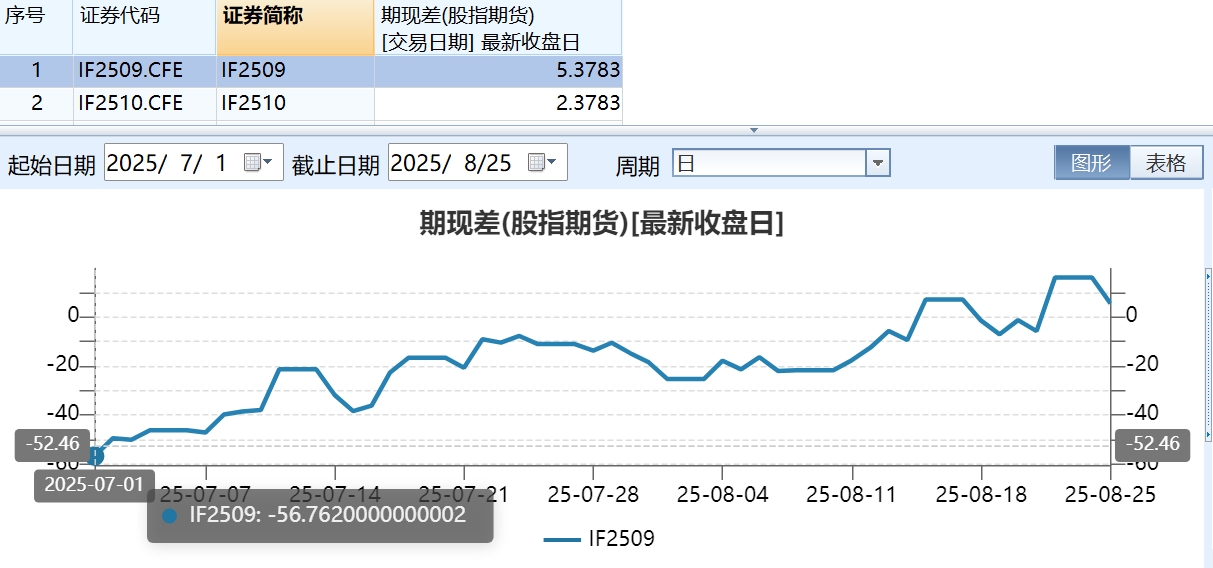
Group 1 - The core viewpoint of the articles indicates that the A-share market is experiencing a strong performance, with major indices collectively rising and the stock index futures market also showing significant gains, reflecting increased market enthusiasm [1][2]. - The main contract of the CSI 300 stock index futures (IF) rose by 2.29%, while other contracts such as the SSE 50 (IH), CSI 500 (IC), and CSI 1000 (IM) also saw increases of 2.14%, 1.8%, and 1.27% respectively, indicating a broad-based rally in the futures market [1]. - The total open interest for the IF contract reached 289,600 lots, with a daily increase of 12,400 lots, while the IC contract had an open interest of 244,500 lots, increasing by 10,900 lots, suggesting a strong influx of capital into the market [1]. Group 2 - Since July, the degree of discount (contango) in stock index futures has gradually narrowed, with the IF contract's discount to the spot market reducing from over 56 points in early July to around 25 points in August, indicating a shift towards a slight premium [2]. - The narrowing of the discount typically signifies improving market expectations for future indices, with the current market being in an "accelerating sentiment" phase characterized by strong capital inflow and rapid rotation of hot sectors [4]. - Investors are becoming more sensitive to positive policy news and better-than-expected earnings, which is driving a positive feedback loop between the futures and spot markets [4]. Group 3 - Despite the market's strong upward movement, analysts caution investors to be aware of potential short-term overheating risks, suggesting that while maintaining current positions, risk management is essential [5]. - It is recommended to focus on high-growth sectors such as technology and consumer goods for structural opportunities, while being cautious of stocks that have seen excessive short-term gains and valuations that deviate from fundamentals [5]. - In the medium to long term, if the economic recovery trend is confirmed and corporate earnings improve, the market is expected to transition from being sentiment-driven to profit-driven, enhancing the value of quality asset allocations [5].
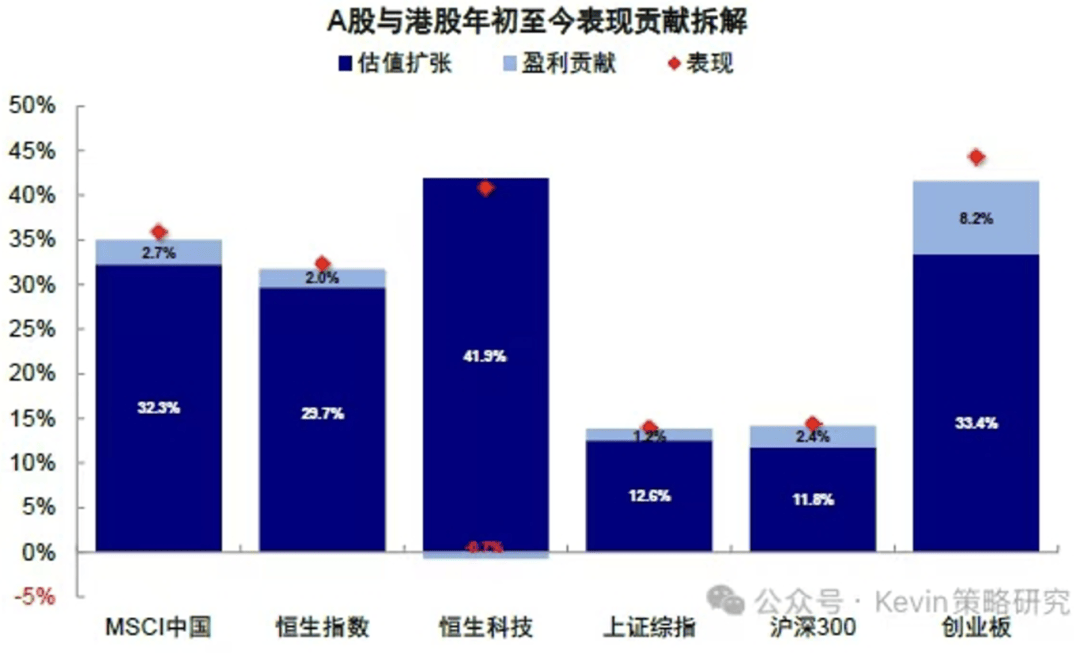
港股科技板块确实可能成为「第二波」行情的主导力量
Sou Hu Cai Jing· 2025-08-18 11:34
Core Viewpoint - The Hong Kong technology sector is poised to lead the "second wave" of market momentum, supported by valuation, capital flow, and industry trends [2] Group 1: Historical Performance and Capital Trends - The Hang Seng Hong Kong Stock Connect China Technology Index has seen a year-to-date increase of 39.03% and an impressive 88.81% rise over the past year, significantly outperforming the broader market [2] - Continuous inflow of southbound capital, coupled with expectations of a 100 basis point rate cut by the Federal Reserve in 2024, alleviates liquidity pressure on Hong Kong stocks [2] Group 2: Sector Structure and Complementarity - The Hong Kong technology sector, primarily focused on internet, AI, and information technology services (e.g., Tencent, Alibaba, DeepSeek), complements the A-share market, which is more manufacturing-oriented [2] - Seven out of the top ten weighted stocks in the Hang Seng Technology Index are not listed on the A-share market, highlighting their scarcity [2] Group 3: Policy and Fundamental Support - Continued liquidity easing (e.g., LPR reduction) and supportive industrial policies (e.g., digital economy, AI development plans) provide a recovery space for technology companies [2] - In Q2 2025, leading companies like Tencent reported better-than-expected earnings, confirming the trend of fundamental improvement [2] Group 4: Institutional Perspectives and Divergence - Optimistic views from institutions like Qianhai Kaiyuan suggest that the Hong Kong technology sector has entered a "slow bull second phase," with profit growth expected to follow valuation recovery [2] - Cautious perspectives highlight short-term volatility risks, such as profit-taking pressure, sector rotation towards pharmaceuticals/consumption, and potential liquidity disturbances from fluctuating Federal Reserve policies [2] Group 5: Investment Opportunities - Recommended elastic targets include the Hang Seng Internet ETF (05188.hk) and the Hang Seng Technology Index ETF (07188.hk) [2] - Individual stock opportunities are identified in leading AI application companies and internet giants with better-than-expected performance [2]

创新药行业周报:关注中报创新药产品放量情况-20250810
Xiangcai Securities· 2025-08-10 15:34
Investment Rating - The industry investment rating is maintained as "Buy" [1] Core Viewpoints - The domestic innovative drug industry is expected to reach a turning point in 2025, shifting from capital-driven to profit-driven trends, with continuous performance realization likely to elevate valuations [4][28] - The innovative drug market is anticipated to expand due to the implementation of supportive policies and the introduction of the first Class B medical insurance directory [30] Summary by Sections Industry Performance - Over the past 12 months, the relative return of the industry compared to the CSI 300 index is 28.2%, with an absolute return of 51.4% [2] Market Analysis and Outlook - The innovative drug sector is entering a new profit-driven cycle, with significant improvements in supply-demand dynamics and competitive landscape [30] - The industry is witnessing a transition where innovative products are being commercialized, marking the beginning of a profit cycle for leading innovative drug companies [29] Mid-Year Tracking - Ganjin Pharmaceutical reported a revenue of 2.067 billion yuan for the first half of 2025, a year-on-year increase of 57.18%, with a net profit of 604 million yuan, up 101.96% [25] - The company has successfully expanded its market share through two rounds of insulin procurement, with international revenue reaching 222 million yuan, a 75.08% increase year-on-year [25] Investment Recommendations - Two main investment lines are recommended: 1. Pharma companies transitioning to innovation, with strong performance resilience and a focus on companies like Sanofi, East China Pharmaceutical, and Aosaikang [30][31] 2. Biotech companies with potential for overseas product registration and growth [31] - The report emphasizes the importance of focusing on the realization of R&D pipeline value and increasing the weight of commercialization value realization factors [6][30]
收评:沪指震荡跌0.37%,保险、券商等板块走低,医药板块持续活跃
Zheng Quan Shi Bao Wang· 2025-08-01 07:57
Core Viewpoint - A-shares experienced a decline on the first day of August, with major indices falling, yet market activity remained robust with approximately 3,300 stocks gaining [1] Market Performance - The Shanghai Composite Index fell by 0.37% to 3,559.95 points - The Shenzhen Component Index decreased by 0.17% to 10,991.32 points - The ChiNext Index dropped by 0.24% to 2,322.63 points - The STAR 50 Index declined by 1.06% - Total trading volume in the Shanghai, Shenzhen, and North markets reached 16,200 billion yuan [1] Sector Performance - Sectors such as insurance, brokerage, military, oil, and semiconductors saw declines - Conversely, sectors including logistics, environmental protection, media, and pharmaceuticals experienced gains - The photovoltaic industry chain, AI applications, and computing power concepts were notably active [1] Future Outlook - According to Galaxy Securities, the A-share market is expected to show a pattern of fluctuating upward movement in August, influenced by favorable policy expectations, moderate economic recovery, mid-year report validation, and overseas disturbances - Structural differentiation is anticipated, driven by mid-year performance and rising policy expectations, which may facilitate capital inflow and support continued upward movement in A-shares - Three main investment themes are suggested: new productive forces, pharmaceuticals, and profit-driven strategies [1]