
反内卷

Search documents
黑色金属数据日报-20260130
Guo Mao Qi Huo· 2026-01-30 04:21
Report Investment Rating - No information provided on the report's industry investment rating Core Views - The steel market is in a seasonal off - peak, with limited demand support, and the strategy is to treat it with a sideways thinking. The hot - rolled coil basis is favorable for spot - futures positions, and the hot - rolled coil spot - futures positive spread can still be rolled [2]. - The price of ferrosilicon and silicomanganese may fluctuate strongly in the short term due to market sentiment, although the fundamentals continue to be under pressure with high supply and weak demand [3]. - The coking coal and coke market has limited upward drive. After the first round of coke price increase is implemented and there is speculation in related materials, pay attention to cashing in spot at high prices and shorting opportunities on the futures market [5]. - Iron ore is in a short - term sideways - strong pattern, but there is obvious upward pressure in the medium - to - long - term. Short - term low - buying and long - term short - selling at pressure levels are recommended [6]. Summary by Related Catalogs Futures Market - On January 29th, for far - month contracts, RB2610 closed at 3203.00 yuan/ton with a gain of 35.00 yuan (1.10%); HC2610 closed at 3330.00 yuan/ton with a gain of 30.00 yuan (0.91%); J2609 closed at 1791.50 yuan/ton with a gain of 50.00 yuan (2.87%); JM2609 closed at 1242.50 yuan/ton with a gain of 41.00 yuan (3.41%). For near - month contracts, RB2605 closed at 3157.00 yuan/ton with a gain of 35.00 yuan (1.12%); HC2605 closed at 3308.00 yuan/ton with a gain of 26.00 yuan (0.79%); J2605 closed at 1723.00 yuan/ton with a gain of 53.50 yuan (3.20%); JM2605 closed at 1165.00 yuan/ton with a gain of 44.00 yuan (3.93%) [1]. - The cross - month spreads on January 29th: RB2605 - 2610 was - 46.00 yuan/ton; HC2605 - 2610 was - 22.00 yuan/ton; 12605 - 2609 was 19.50 yuan/ton; J2605 - 2609 was - 68.50 yuan/ton; JM2605 - 2609 was - 77.50 yuan/ton [1]. - The spreads/ratios/profits on the January 29th for the main contracts: the hot - rolled coil to rebar spread was 151.00 yuan/ton; the rebar to iron ore ratio was 3.95; the coal to coke ratio was 1.48; the rebar futures profit was - 79.78 yuan/ton; the coking futures profit was 173.55 yuan/ton [1]. Spot Market - On January 29th, Shanghai rebar was priced at 3280.00 yuan/ton with a gain of 50.00 yuan; Tianjin rebar was 3190.00 yuan/ton with a gain of 50.00 yuan; Guangzhou rebar was 3410.00 yuan/ton with no change; Tangshan billet was 2950.00 yuan/ton with a gain of 20.00 yuan; the Platts Index was 104.15 with a decrease of 1.45 [1]. - Shanghai hot - rolled coil was 3310.00 yuan/ton with a gain of 50.00 yuan; Hangzhou hot - rolled coil was 3330.00 yuan/ton with a gain of 50.00 yuan; Guangzhou hot - rolled coil was 3300.00 yuan/ton with a gain of 30.00 yuan; the billet - to - product spread was 330.00 yuan/ton with a gain of 30.00 yuan; Rizhao Port's PB powder was 797.00 yuan/ton with a gain of 5.00 yuan [1]. - Qingdao Port's Super Special powder was 666.00 yuan/ton with a decrease of 1.00 yuan; Ganqimaodu's coking refined coal was 1235.00 yuan/ton with no change; Qingdao Port's quasi - first - grade coke (ex - warehouse) was 1430.00 yuan/ton with no change; Qingdao Port's PB was 799.00 yuan/ton with a gain of 6.00 yuan [1]. - The basis on January 29th: HC main contract was 2.00 yuan/ton with a gain of 22.00 yuan; RB main contract was 123.00 yuan/ton with a decrease of 16.00 yuan; J main contract was - 150.37 yuan/ton with a decrease of 39.00 yuan; JM main contract was 100.00 yuan/ton with a decrease of 30.50 yuan [1]. Steel - The steel market is in a seasonal off - peak. The demand support is limited. The price initiative to sell under pressure is not large. The steel mills have the willingness to resume production, but the actual strength and rhythm may be slow. Traders are not willing to do open - position winter storage and it is more suitable to participate in the basis way. The strategy is to treat it with a sideways thinking, and the hot - rolled coil spot - futures positive spread can be rolled [2]. Ferrosilicon and Silicomanganese - With the warming of market sentiment, the prices of ferrosilicon and silicomanganese fluctuate upward. The direct and terminal demand is weak and difficult to improve in the short - term. The alloy plants' production is still high with poor profits, and the medium - term over - supply pressure remains. The macro - policies are mainly favorable. In the short - term, the prices may fluctuate strongly [3]. Coking Coal and Coke - The first round of coke price increase has been implemented, but the market is not optimistic about the future. The downstream procurement is cautious. The coking coal online auction has many unsold lots. The futures market is affected by the relaxation of the "three red lines" for real - estate enterprises and the stock market rotation. The steel market is in the off - peak season, with weak industrial data. The coal mine supply is gradually recovering, and the downstream has pre - holiday replenishment, but the upward drive for prices is limited. After the short - term rebound, pay attention to cashing in spot at high prices and shorting opportunities on the futures market [5]. Iron Ore - The steel mills' in - plant inventory is still at a relatively low level in recent years. The expectation of steel mills' accelerated resumption of production in February and pre - holiday replenishment support the short - term high price. After the replenishment expectation is fully digested, the port inventory pressure will be the source of pressure. It is recommended to go long in the short - term and short at pressure levels in the long - term [6].
周期全面进攻,化工&建材买什么?
2026-01-30 03:11
Summary of Conference Call on Chemical and Building Materials Industry Industry Overview - The conference focused on the chemical and building materials industry, emphasizing the investment opportunities in midstream leading companies despite market adjustments [1][2]. Key Points and Arguments 1. **Investment Strategy**: The company remains committed to recommending core midstream leading stocks, especially in the chemical sector, as they believe these stocks will perform well even during market adjustments [1]. 2. **Price Trends**: Some chemical products are experiencing price increases, but the current market is more about capital allocation rather than a price-driven rally [2]. 3. **Global Demand**: The demand for chemicals is increasingly global and diversified, making it a more stable investment compared to real estate, which has uncertain demand [2]. 4. **Supply Dynamics**: There has been a significant exit of overseas production capacity, particularly in Europe due to high energy prices and increased labor costs, which has strengthened domestic companies' confidence [2]. 5. **Capital Expenditure Trends**: Domestic capital expenditure in the basic chemical sector is expected to decline by approximately 16% year-on-year in 2024, with a smaller decline of 5-6% in the first three quarters of 2025, indicating a downward trend [3]. 6. **Government Policies**: The government's focus on "anti-involution" reflects an awareness of low product prices, which may lead to adjustments in operating rates to balance supply and demand [3][4]. 7. **Carbon Neutrality Initiatives**: The upcoming carbon neutrality policies will significantly impact the chemical industry, with expectations for peak carbon emissions by 2030, which will drive changes in production practices [5]. 8. **Market Recovery**: The chemical market is expected to recover as supply contracts and demand stabilizes, with a focus on leading companies that dominate domestic production [6][7]. 9. **Stock Recommendations**: Specific companies such as Wanhua, Hualu, and others in the polyester and organic silicon sectors are highlighted for their potential growth in production capacity and profitability [8][9]. 10. **Profitability Projections**: The profitability of leading companies is projected to improve significantly, with expectations that earnings could return to historical midpoints, even if product prices do not reach previous highs [10][11]. 11. **Valuation Metrics**: Current valuations for leading companies are considered attractive, with expected price-to-earnings ratios around 15-17 times under neutral performance expectations [28]. Additional Important Insights - **Sector Performance**: The chemical sector has underperformed for several years, contrasting with the metals sector, which has seen price increases [6]. - **Investment Timing**: The timing of investments in leading companies is crucial, as they are expected to benefit from market recovery and improved pricing power [27]. - **Emerging Opportunities**: There are emerging opportunities in agricultural chemicals, particularly in phosphate and potash sectors, which are expected to see volume growth despite price stability [13][31]. - **Regulatory Changes**: Recent regulatory changes regarding PVC production may lead to increased capital expenditures and potential industry consolidation, optimizing supply-demand dynamics [14]. This summary encapsulates the key discussions and insights from the conference call, providing a comprehensive overview of the current state and future outlook of the chemical and building materials industry.



快讯:深成指跌超1% 农业概念快速走强
Xin Lang Cai Jing· 2026-01-30 02:30
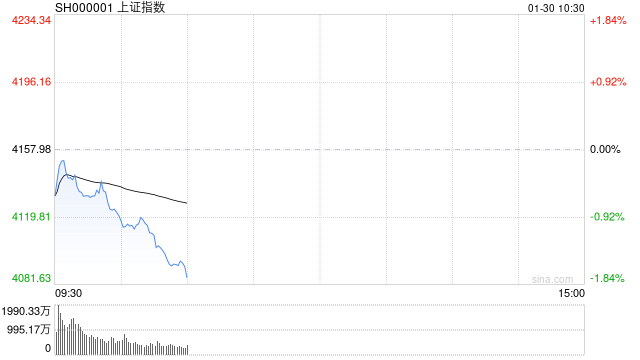
Group 1 - The core viewpoint of the article highlights the ongoing spring market trend and suggests focusing on "anti-involution," new productive forces, and agriculture for investment opportunities in February [1][5]. Group 2 - On January 30, the market indices experienced a downward trend, with the Shenzhen Component Index falling over 1% [2][7]. - Agricultural concepts showed strong performance, with companies like Nongfa Seed Industry achieving two consecutive trading limits in three days, and Dunhuang Seed Industry hitting the daily limit [2][7]. - Coal stocks were active, with companies such as Panjiang Coal and Yunnan Coal Energy also reaching the daily limit [2][7]. - The film and theater sector saw gains, with Hengdian Film and Television hitting the daily limit [2][7]. - Conversely, the precious metals sector opened lower, with companies like Xiaocheng Technology and Zhongjin Gold hitting the daily limit down [2][7]. - The rare earth permanent magnet sector faced declines, with Huahong Technology and Shenghe Resources also hitting the daily limit down [2][7]. - The commercial aerospace sector underwent collective adjustments, with Mingyang Smart Energy and Hitec High-tech hitting the daily limit down [2][7]. - Overall, the market saw more stocks declining than rising, with over 3,200 stocks down [2][7]. - As of the report, the Shanghai Composite Index was at 4,118.07 points, down 0.96%, the Shenzhen Component Index at 14,128.95 points, down 1.20%, and the ChiNext Index at 3,300.55 points, down 0.12% [2][7]. - The leading sectors in terms of gains included genetically modified organisms, planting and forestry, and soybeans, while precious metals, lead metals, and industrial metals saw the largest declines [2][7].

建信期货钢材日评-20260130
Jian Xin Qi Huo· 2026-01-30 02:06
Report Summary 1. Report Industry Investment Rating The report does not mention the industry investment rating. 2. Core View of the Report On January 29, the main contracts of rebar and hot-rolled coil futures rebounded significantly, recovering the losses of the previous three trading days. Considering the news factors leading to the recent rebound in steel prices and the supply-demand balance in the fundamentals, it is expected that the market will likely fluctuate with an upward trend in the future. Investors can wait for dips to arrange medium- and long-term hedging or investment positions [6][11]. 3. Summary by Relevant Catalog 3.1 Market Review and Outlook - **Market Performance**: On January 29, the main contracts of rebar and hot-rolled coil futures 2605 rebounded significantly, recovering the losses of the previous three trading days. The prices of some rebar and hot-rolled coil in the spot market increased [5][6][8]. - **Technical Indicators**: The daily KDJ indicators of the rebar and hot-rolled coil 2605 contracts both showed golden crosses, and the daily MACD green bars both narrowed [8]. - **News Factors**: The regulatory policy tightening sent a cooling signal to the irrational rise of some metal prices, but failed to stop the continuous increase of some metal prices. The black metal commodity prices generally followed the upward trend of the metal sector. The international energy prices rose due to the tense situation in the Middle East, causing coal and coke prices to stop falling and rebound [9][10]. - **Fundamentals**: The production of the five major steel products has been slightly increasing for five consecutive weeks, while the demand has been declining for two consecutive weeks with a narrowing decline. The total inventory has been accumulating for two consecutive weeks due to the seasonal decline in demand. The spot price of iron ore has rebounded after a significant decline, and the first round of price increase for coke is about to be implemented [10]. - **Raw Materials**: The shipment volume of iron ore from Australia and Brazil decreased by 13.3% compared with the previous four weeks, but the arrival volume increased by 3.2%. The port iron ore inventory reached a record high of 1.67 billion tons. The independent coking enterprises slightly reduced production after increasing production following steel enterprises. The supply of imported coal has rebounded again, but the supply and demand are still relatively balanced considering the cold weather in most parts of the north [11]. 3.2 Industry News - **National Policies**: The National Development and Reform Commission will strengthen the comprehensive coordination of coal, electricity, oil, and gas during the Spring Festival travel rush. The Ministry of Industry and Information Technology emphasized the need to promote the photovoltaic industry to return to a healthy and rational development path [12]. - **Enterprise Performance**: Many steel and coal enterprises released performance forecasts. Some enterprises such as Youfa Group, Sansteel Minguang, Fangda Special Steel, and Shandong Iron and Steel achieved profit growth or turnaround, while some enterprises such as Lanhua Kechuang, Hengyuan Coal and Electricity, and Liaoning Energy suffered losses [13][14]. - **Industry Developments**: Shaanxi Yanchang Petroleum Group's annual coal production capacity exceeded 50 million tons, and its coal industry's per capita production efficiency increased. Yunnan Energy Investment disclosed its new energy power generation data, and India set a coal production target for the 2026 - 2027 fiscal year [14][15]. 3.3 Data Overview The report provides multiple data charts, including the spot prices of rebar and hot-rolled coil in major markets, weekly production of the five major steel products, inventory of steel mills and social inventory, blast furnace and electric furnace operating rates, national daily average pig iron production, apparent consumption of the five major steel products, and the basis between Shanghai spot and May contracts for rebar and hot-rolled coil [16][18][26][35][36].
工业硅:上游减产,关注库存变动,多晶硅:会议情绪积极,构筑盘面底部支撑
Guo Tai Jun An Qi Huo· 2026-01-30 01:44
Report Information - Report Date: January 30, 2026 [1] - Report Title: Industrial Silicon: Upstream Production Cuts, Focus on Inventory Changes; Polysilicon: Positive Conference Sentiment, Building Bottom Support for the Futures Market [1][2] - Analyst: Zhang Hang [2] - Investment Consulting Qualification Number: Z0018008 [2] - Email: zhanghang2@gtht.com [2] Investment Rating - No investment rating provided in the report Core Views - The upstream of the industrial silicon industry has cut production, and attention should be paid to inventory changes [1] - The positive sentiment from the photovoltaic industry entrepreneur symposium provides bottom support for the polysilicon futures market [2][4] Summary by Directory Fundamental Tracking - **Futures Market Data**: - Industrial silicon (Si2605): The closing price is 8,925 yuan/ton, with a volume of 300,232 lots and an open interest of 236,653 lots [2] - Polysilicon (PS2605): The closing price is 49,335 yuan/ton, with a volume of 15,626 lots and an open interest of 42,745 lots [2] - **Basis and Spread**: The industrial silicon and polysilicon futures contracts show different spreads and basis values, such as the industrial silicon near - month contract to the continuous - first spread being - 45 yuan/ton [2] - **Prices and Profits**: - Industrial silicon: The price of Xinjiang 99 silicon is 8700 yuan/ton, and the silicon factory profits in Xinjiang and Yunnan are - 2206.5 yuan/ton and - 5414 yuan/ton respectively [2] - Polysilicon: The price of N - type re - feedstock is 52500 yuan/ton, and the polysilicon enterprise profit is 8.1 yuan/kg [2] - Organic silicon (DMC): The price is 13900 yuan/ton, and the enterprise profit is 1830 yuan/ton [2] - Aluminum alloy (ADC12): The price is 24550 yuan/ton, and the regenerative aluminum enterprise profit is - 310 yuan/ton [2] - **Inventory**: - Industrial silicon: The social inventory is 55.4 million tons, the enterprise inventory is 20.9 million tons, and the industry inventory (social + enterprise) is 76.3 million tons [2] - Polysilicon: The manufacturer inventory is 33.3 million tons [2] - **Raw Material Costs**: The costs of silicon ore, washed coal, petroleum coke, electrodes and other raw materials in different regions are provided, with most remaining stable [2] Macro and Industry News - On January 28, the Ministry of Industry and Information Technology held a photovoltaic industry entrepreneur symposium, emphasizing "anti - involution" as the main contradiction in the photovoltaic industry's standard governance, and promoting the industry to return to a benign and rational development track [4] Trend Intensity - The trend intensity of industrial silicon is 0, and that of polysilicon is also 0, indicating a neutral view [4]
中泰期货晨会纪要-20260130
Zhong Tai Qi Huo· 2026-01-30 01:39
1. Report Industry Investment Rating There is no information provided regarding the report's industry investment rating. 2. Core Viewpoints of the Report - **Macro and Financial Markets**: In the stock market, the short - term style may shift to large - cap stocks; in the bond market, the short - term rebound may continue, and the central bank's monetary policy is turning more accommodative [10][11]. - **Black Commodities**: The black commodity market will generally remain volatile. Steel will fluctuate in the short term, and iron ore should be shorted on rallies [14]. - **Non - ferrous Metals and New Materials**: Lithium carbonate prices may rise after a short - term correction; industrial silicon will run with an upward limit due to pessimistic expectations; polysilicon will continue to fluctuate under strict supervision [21][22][23]. - **Agricultural Products**: Zhengzhou cotton is in a high - level and strong consolidation phase; domestic sugar is under pressure; egg prices may decline after the peak of pre - festival stocking; apple prices may be strong; corn prices have large differences in the market; jujube prices will be weak and volatile; hog prices will see a fierce spot - market game [25][28][31][33][34][35][36]. - **Energy and Chemicals**: Crude oil prices are affected by geopolitical risks; fuel oil prices follow crude oil; plastics may have a limited rebound; rubber has support; synthetic rubber is expected to be strong; methanol's fundamentals are improving; caustic soda is bearish; asphalt prices follow crude oil; PVC has a risk of correction; the polyester industry chain is supported by cost; LPG is strong in the short term; pulp will fluctuate; logs are expected to be strong; urea is in a strong and volatile state [38][39][40][41][42][43][45][46][47][49][50][51][52]. 3. Summary by Relevant Catalogs Macro Information - China and the UK have reached a series of positive outcomes, including the development of a comprehensive strategic partnership, the establishment of a financial working group, and a reduction in whisky import tariffs [6]. - SpaceX and xAI are in talks to merge for an IPO [6]. - China has released a work plan to cultivate new growth points in service consumption [6]. - There is a possibility of a new round of Sino - US economic and trade negotiations [6]. - China's Spring Festival cultural and tourism consumption month has started, with about 30,000 cultural and tourism consumption events and over 360 million yuan in consumption subsidies [7]. - The photovoltaic industry needs to "anti - involute" and return to rational development [7]. - The weighted average interest rate of new commercial personal housing loans in Q4 2025 was 3.06%, and Shanghai has extended the personal housing property tax pilot policy [7]. - The US trade deficit in November 2025 was $56.8 billion, a 95% increase from the previous month [7]. - South Africa is considering imposing a 50% tariff on imported vehicles from China and India [8]. Macro Finance Stock Index Futures - The A - share market continued to trade in a narrow range. The short - term style may shift to large - cap stocks due to the strong performance of liquor and real - estate stocks [10]. Treasury Bond Futures - The bond market sentiment has improved, and the short - term rebound may continue. The central bank's MLF operation in January has increased, indicating a shift to a looser monetary policy [11]. Black Commodities Steel and Iron Ore - Macro policies meet market expectations, and there is little possibility of new policies. Steel production is less likely to be affected by policies. Steel inventories are increasing slightly, and the fundamentals are acceptable, but there is a risk of long - term accumulation in the off - season. Iron ore supply is abundant, and the market is relatively loose. The black market will generally remain volatile, and iron ore should be shorted on rallies [14]. Coking Coal and Coke - The prices of coking coal and coke may fluctuate in the short term. In the medium term, domestic mine production will be restricted. After the Spring Festival, the supply - demand contradiction may improve, which may support spot prices [16]. Ferroalloys - There is still a small supply gap in ferrosilicon before the daily production in the main production areas increases significantly. It is recommended to go long on dips in the medium term. For silicomanganese, it is recommended to hold short positions established at high levels and not to enter new positions unilaterally [17]. Soda Ash and Glass - The soda - ash and glass industry chain follows the market atmosphere. Soda - ash supply is at a high level, and new production capacity is expected to increase. The glass market has expectations of both cold repair and restart of production lines. It is recommended to wait and see for now [18][19]. Non - ferrous Metals and New Materials Lithium Carbonate - Driven by the growth of demand and supply - side disturbances, the price center of lithium carbonate may rise after a short - term correction, and it will mainly operate in a wide - range fluctuation [21]. Industrial Silicon - The current situation has improved, and it will run strongly in the short term, but the upside is limited by pessimistic expectations. It is recommended to wait for opportunities to sell out - of - the - money call options after a rebound [22]. Polysilicon - Under strict regulatory restrictions, the market will continue to fluctuate. The "anti - involution" policy in the photovoltaic industry will continue, and the inventory reduction expectation in the first quarter is improving, but the high inventory still suppresses the upside [23]. Agricultural Products Cotton - There is short - term supply surplus, but the expected reduction of long - term supply and the contradiction between pre - festival replenishment and declining production may keep Zhengzhou cotton in a high - level and strong consolidation phase. It is recommended to trade in the short term [25]. Sugar - The domestic sugar market is under pressure from both external and domestic supply. It is recommended to conduct short - term trading in the low - price range [28]. Eggs - As the Spring Festival approaches, the pre - festival stocking of eggs may peak and then decline. The spot price may fall, and the futures contract for the post - festival off - season is under pressure, but the downside is also limited [31]. Apples - The apple market may run strongly. The pre - festival stocking is ongoing, and the high - quality apple prices will remain firm, while the prices of ordinary and low - quality apples may be under pressure [33]. Corn - The market has large differences. The short - term price is supported by pre - festival replenishment, but the upside is limited. It is necessary to focus on the concentrated selling in March and the opportunity to go long on dips in the far - month contracts [34]. Jujubes - The jujube market will maintain a weak and volatile state. The new - season jujubes have advantages in price and quality, and the sales in the off - season are okay, but the overall demand is expected to remain stable [35]. Hogs - The hog market has both increasing supply and demand, and the spot - market game is fierce. It is necessary to focus on the impact of weight reduction before the festival on the spot price. It is recommended to go short on the near - month contracts on rallies [36]. Energy and Chemicals Crude Oil - The US pressure on Iran continues, and the supply surplus problem is still severe. Geopolitical risks are high, and there is a risk of short - term market fluctuations [38]. Fuel Oil - The price of fuel oil is mainly affected by geopolitical factors and will follow crude oil prices. The supply - demand situation has marginally improved, and the inventory is at a high level [39]. Plastics - Polyolefins have a large supply pressure and weak downstream demand. Although the upstream is in heavy losses, which may support the price, the new production capacity will limit the rebound space, and there is a risk of correction [40]. Rubber - The pre - festival replenishment by downstream enterprises and the upcoming shutdown of overseas production areas support the price. It is recommended to close out the profitable positions of shorting out - of - the - money put options and pay attention to the spread between natural rubber and synthetic rubber [41]. Synthetic Rubber - Synthetic rubber is expected to be strong due to the tight supply of butadiene in the first half of the year. It is recommended to go long on dips and pay attention to the narrowing of the spread between natural rubber and synthetic rubber [42]. Methanol - The fundamentals of methanol are improving in the long term, but there is still a risk of inventory accumulation at the end of the month. It is recommended to reduce long positions in the short term and consider going long after the inventory at the port decreases smoothly [43][44]. Caustic Soda - The caustic - soda industry has high production and inventory. The comprehensive profit of chlor - alkali enterprises is poor, and there is a possibility of production reduction. It is recommended to take a bearish view [45]. Asphalt - The asphalt price will follow crude oil prices and may fluctuate strongly in the short term. It is necessary to pay attention to the change of raw - material discounts and the enthusiasm of traders to purchase [46]. PVC - The previous rise of PVC was driven by the expectation of capacity reduction and the improvement of export fundamentals. However, the core supply - demand contradiction has not been resolved, and there is a risk of correction. It is necessary to pay attention to the export situation [47]. Polyester Industry Chain - The near - end fundamentals of the polyester industry chain are weak due to the seasonal off - season, but the cost support limits the downside. It is recommended to go long on dips or conduct positive spreads between 5 - and 9 - month contracts [49]. Liquefied Petroleum Gas (LPG) - The price of LPG is supported by the high import cost due to geopolitical issues. In the short term, it can run strongly, but in the long term, it is recommended to go short on rallies due to the expected decline in demand [50]. Pulp - The pulp market has a large intraday fluctuation. The spot - market trading sentiment has weakened, but the price is still supported by the stable fundamentals and the expected increase in the overseas price. It is recommended to go long on dips if the downstream purchasing intention improves [51]. Logs - The fundamentals of logs are strong, and the spot price has stabilized. The product price has risen due to the increase in raw - material costs. The market is expected to maintain a supply - demand balance, and the price may fluctuate strongly [52]. Urea - The urea futures market is expected to be strong and volatile. The spot - market price has risen, and the futures price is affected by other commodities. It is necessary to focus on the improvement of spot - market liquidity [52].
国泰君安期货商品研究晨报:绿色金融与新能源-20260130
Guo Tai Jun An Qi Huo· 2026-01-30 01:38
2026年01月30日 国泰君安期货商品研究晨报-绿色金融与新能源 | 观点与策略 | | --- | | 镍:印尼事件悬而未决,套保与投机盘博弈 | 2 | | --- | --- | | 不锈钢:印尼加剧镍矿担忧,镍铁跟涨支撑重心 | 2 | | 碳酸锂:刚需采买支撑,盘面宽幅震荡格局 | 4 | | 工业硅:上游减产,关注库存变动 | 6 | | 多晶硅:会议情绪积极,构筑盘面底部支撑 | 6 | 国 泰 君 安 期 货 研 究 所 请务必阅读正文之后的免责条款部分 1 期货研究 【基本面跟踪】 镍基本面数据 | | | 指标名称 | T | T-1 | T-5 | T-10 | T-22 | T-66 | | --- | --- | --- | --- | --- | --- | --- | --- | --- | | | | 沪镍主力(收盘价) | 147,470 | 3,100 | 4,970 | 720 | 15,080 | 25,930 | | 期 | | 不锈钢主力(收盘价) | 14,585 | 120 | -65 | 170 | 1,495 | 1,780 | | 货 | | 沪镍主力( ...
晨会纪要-20260130
Guoxin Securities· 2026-01-30 01:31
Macro and Strategy - The fixed income investment strategy for February 2026 focuses on convertible bonds, suggesting a "Top Ten Convertible Bonds" portfolio, with an emphasis on growth sectors and defensive allocations in power and banking [7] - The report highlights that the small-cap growth style outperformed the large-cap value in January, with significant increases in resource sectors, while the market's valuation levels indicate potential for upward movement [7] - The report anticipates a continuation of the "spring excitement" market trend, with the Shanghai Composite Index expected to break through 4200 points, driven by increased retail investment as high-interest savings mature [7] Industry and Company Mechanical Industry - SpaceX aims for complete reuse of its Starship rockets in 2026, which could reduce space access costs by 99%, while Tesla plans to sell humanoid robots to the public by the end of 2027 [11][12] - The report emphasizes the long-term investment opportunities in commercial aerospace and humanoid robotics, particularly focusing on supply chain companies involved in rocket manufacturing and AI infrastructure [12][13] Energy Sector - China National Offshore Oil Corporation (CNOOC) expects capital expenditures of approximately RMB 8.44 billion for 2026, focusing on equipment investment and technology upgrades, with a positive outlook on its operational performance [24] - The report predicts that international oil prices will stabilize and rise slightly, with CNOOC's business structure continuously optimizing, leading to improved profit margins [24] Battery Materials - Xiamen Tungsten Co., Ltd. anticipates a 42% increase in net profit for 2025, driven by strong sales of lithium cobalt oxide and ongoing advancements in solid-state battery materials [25][26] - The company is expanding its production capacity for high-performance battery materials and is actively developing new materials for electric vehicles and energy storage [27] Insurance Sector - Ping An Insurance is focusing on enhancing its liability business and value transformation, which is expected to improve its valuation amid easing real estate risks [28][29] - The report maintains profit forecasts for Ping An from 2025 to 2027, with expected earnings per share of RMB 7.72, 8.57, and 9.26, respectively, indicating a positive outlook for the company's valuation recovery [29] Sportswear Industry - The sportswear market is experiencing a bifurcation, with high-end brands driving growth in apparel while footwear prices are under pressure, leading to a decline in sales for many brands [18][19] - The report highlights that domestic brands are facing significant price competition, with performance varying widely across different product categories [20][21]



国信证券晨会纪要-20260130
Guoxin Securities· 2026-01-30 00:54
Macro and Strategy - The report emphasizes the importance of the "anti-involution" trend in 2026, which is expected to be a key focus for economic work, with potential for significant upward movement in the market [8][9][10] - The report suggests that the current market environment is characterized by a complex backdrop for the anti-involution trend, with weak domestic demand but resilient external demand [9][10] - It highlights the need to focus on industries with high policy intervention and improved supply-demand dynamics, such as steel, oil services, and cement [10] Industry and Company Insights - The mechanical industry report notes that SpaceX aims for complete reuse of its Starship rockets, which could drastically reduce space access costs by 99% [11][12] - The report on humanoid robots indicates that Tesla plans to sell its Optimus robot to the public by the end of 2027, with significant advancements expected in robot capabilities [13][14] - The report on the textile and apparel industry indicates a bifurcation in the market, with high-end brands driving growth while many mid-tier brands struggle with price competition [18][19][20] - The analysis of the computer industry highlights price increases in cloud services from major providers like Google and Amazon, indicating a rising trend in computing power costs [22][23] - The report on CNOOC Services indicates a positive outlook for the company, with expected capital expenditures of approximately RMB 8.44 billion for 2026, focusing on equipment investment and technology upgrades [24] - The report on Xiamen Tungsten indicates rapid growth in profits and ongoing advancements in solid-state battery materials, with projected revenues of RMB 20.03 billion for 2025 [25][26][27] - The analysis of China Ping An highlights a shift towards value growth and improved valuation due to enhanced product structure and channel value [28][29]
四大证券报头版头条内容精华摘要_2026年1月30日_财经新闻
Xin Lang Cai Jing· 2026-01-29 23:09
Group 1 - The State Council of China has issued a work plan to accelerate the cultivation of new growth points in service consumption, which includes optimizing loan interest subsidy policies for service industry entities and encouraging financial institutions to increase credit support for these sectors [1][5] - The work plan outlines 12 specific measures aimed at stimulating development in key areas such as transportation, housekeeping, and the automotive aftermarket, thereby reducing uncertainties for enterprises entering and expanding in the service consumption market [5][22] Group 2 - The Ministry of Civil Affairs is exploring the establishment of a civil affairs technology innovation fund through investment financing and charitable donations to support the research and industrialization of suitable technology products [2][18] - The goal is to enhance the innovation system by 2030, increase technological investment, and improve innovation levels, ultimately leading to breakthroughs in key technologies and the emergence of leading talents and enterprises in civil affairs technology [2][18] Group 3 - There is a significant performance divergence among funds labeled as "cyclical," with some funds focusing heavily on the non-ferrous sector for maximum elasticity, while others adopt a diversified approach across multiple cyclical areas for varied returns [3][19] - This divergence raises questions about fund positioning and the active management capabilities of fund managers, with market expectations influencing single-strategy approaches [19] Group 4 - Major central banks, including the Federal Reserve, have opted to maintain current interest rates, indicating a slowdown in the pace of global interest rate cuts, which could have significant implications for global asset allocation [4][21] - The Federal Reserve's decision to keep the federal funds rate unchanged at 3.5% to 3.75% reflects internal divisions, with some members advocating for a rate cut, highlighting the challenges of maintaining independence amid political pressures [6][23] Group 5 - The demand for optical fiber in the telecommunications industry is surging due to the construction of AI data centers, with Meta committing to pay $6 billion for fiber optics from Corning by 2030 [7][24] - The rapid growth of AI applications is expected to drive higher bandwidth requirements, influencing the demand trajectory for optical fiber and related industries [24] Group 6 - The REITs market is witnessing innovation with the launch of mixed-asset REITs, as demonstrated by the recent expansion of the Zhonghang Jingneng photovoltaic REIT, which combines hydropower and solar assets [8][25] - This development marks a significant step in diversifying public REITs and revitalizing dormant assets [25] Group 7 - The Ministry of Industry and Information Technology is addressing "involution" in the photovoltaic industry by promoting coordinated efforts to regulate competition and enhance industry standards [9][26][27] - The focus is on using market-oriented and legal methods to foster healthy competition and rational development within the photovoltaic sector [27] Group 8 - The consumer electronics industry is facing a cost defense battle due to skyrocketing storage prices, with major companies like Samsung and SK Hynix raising NAND flash supply contract prices by over 100% [10][28] - The ongoing supply tightness in DRAM is also contributing to rising prices, impacting the overall cost structure of consumer electronics [28] Group 9 - The Norwegian Government Pension Fund Global reported a 15.1% return in 2025, with its total assets reaching approximately 15.47 trillion RMB, highlighting the fund's robust performance [11][29] - This fund is one of the largest sovereign wealth funds globally, indicating strong investment management capabilities [29] Group 10 - China is planning to expand its "space+" future industries, focusing on commercial space applications and infrastructure development, which includes initiatives in space resource management and space tourism [12][30] - The China Aerospace Science and Technology Corporation is leading these efforts, aiming to foster collaboration across the industry chain [30] Group 11 - The China Commercial Rocket Corporation is preparing for the first flights of reusable rockets this year, emphasizing the importance of resource coordination and successful recovery operations [13][31] - This initiative is part of a broader strategy to enhance China's capabilities in commercial spaceflight [31] Group 12 - The AI industry is experiencing a surge in new model releases, with major companies like Tencent and Baidu competing for application traffic through significant promotional efforts [14][32] - The release of advanced AI models, such as Alibaba's Qwen3-Max-Thinking, reflects the rapid evolution and competitive landscape of the AI sector [32] Group 13 - The chemical sector is gaining attention in the A-share market, with chemical ETFs seeing significant growth in their share volumes as the sector aligns with cyclical market trends [15][33] - The recovery of profitability in the chemical industry is enhancing its appeal for investment, particularly in the context of "anti-involution" strategies [33] Group 14 - Several banks have adjusted the margin requirements for personal clients trading in Shanghai Gold Exchange's deferred contracts, increasing the margin ratio from 44% to 60% for specific gold and silver contracts [16][34] - This adjustment reflects changing market conditions and regulatory responses within the financial sector [34]