
中美贸易摩擦

Search documents
铜及再生铜市场分析与展望
2025-05-20 15:24
Summary of Copper and Recycled Copper Market Analysis Industry Overview - The analysis focuses on the copper and recycled copper market, highlighting supply and demand dynamics, production trends, and pricing factors for 2025 [1][3][40]. Key Points Supply and Demand Dynamics - Copper mine supply growth is projected to be only 1%-2% in 2025, while domestic smelters are expected to add over 1 million tons of new production capacity, leading to a tight supply situation amid increasing demand [1][3]. - In the first four months of 2025, electrolytic copper production increased by approximately 400,000 tons year-on-year, primarily due to the significant contribution of recycled copper anode plates [1][6]. - Domestic recycled copper supply increased by 87,000 tons year-on-year in the first four months of 2025, driven by rising copper prices and policies promoting the replacement of old equipment [1][11]. Production and Profitability - The average processing profit for copper processing and recycled copper industries remains high, encouraging companies to maximize production capacity, particularly for anode plates, which are expected to reach 1.85 to 1.90 million tons in 2024 [1][8][9]. - Current smelting operations are facing challenges, with zero single transactions generally resulting in losses of around 1,500 yuan, reflecting the tough market environment [1][7]. - The processing profit for recycled copper anode plates is notably high, with profits reaching 500 to 600 yuan per ton, driving increased production [5][8]. Regional Development - Key regions for the development of the recycled copper industry include Jiangxi, Anhui, Hubei, and Sichuan, benefiting from tax incentives and attracting significant investment [1][10]. Market Influences - The growth in electric grid investment is expected to boost demand for wires and cables, with a positive outlook for the real estate market in 2025, indicating a narrowing year-on-year decline [2][17]. - The impact of U.S.-China trade tensions has led to fluctuations in the supply of recycled metals, with April 2025 seeing a decrease in supply due to tariffs [14][24]. Price Trends - Copper prices are expected to remain optimistic in 2025, with a support level likely above 70,000 yuan, despite potential volatility due to macroeconomic factors [25][41]. - The price sensitivity of downstream demand is significant, with order volumes increasing when prices drop to around 75,000 yuan [30][31]. Future Outlook - The overall outlook for the recycled copper supply is positive, with expectations of an increase in both imported and domestic supply, driven by policy changes and the aging of equipment [22][35]. - The anticipated stability in the waste copper market suggests that while the second quarter may not show significant growth, the overall demand for copper is expected to rise in the latter half of 2025 [24][40]. Additional Insights - The relationship between electrolytic copper production and recycled copper anode plates is crucial, as the latter helps to fill the production gap caused by slow growth in copper mines [28]. - The competition for waste copper between smelting and processing plants is influenced by market prices, affecting production decisions and supply flows [29]. This comprehensive analysis provides a detailed overview of the current state and future prospects of the copper and recycled copper markets, highlighting key trends, challenges, and opportunities for stakeholders in the industry.
4月经济呈供给驱动特征,应超前关注科技产业对投资的补充
China Post Securities· 2025-05-20 10:51
证券研究报告:宏观报告 研究所 分析师:袁野 SAC 登记编号:S1340523010002 Email:yuanye@cnpsec.com 研究助理:苑西恒 SAC 登记编号:S1340124020005 Email:yuanxiheng@cnpsec.com 近期研究报告 《外需波动影响信贷,加速改善可 期》 - 2025.05.16 宏观研究 4 月经济呈供给驱动特征,应超前关注科技产业对 投资的补充 投资要点 4 月经济运行呈现"增速边际放缓、韧性延续"的特征。受外部环 境不确定性上升影响,当月经济增速边际回落;在低基数效应下,按 照生产法测算,4 月经济增速拟合值为 5.5%,低于 3 月经济增速,基 本持平 1-2 月经济增速,经济增速保持一定韧性。从增长动能看,考 虑到外部环境复杂性加剧,可能强化市场主体谨慎预期,进而对消费、 投资和生产活动形成收缩压力,经济动能呈现显著的供给驱动特征, 供需缺口持续扩大。 当前宏观环境的主要矛盾是中美贸易摩擦,成为影响市场定价的 主要因素。尽管中美经贸会谈释放积极信号,但未来不确定性仍大。 4 月 12 日,中美经贸会谈释放积极信号,美国对我国加征关税税率从 ...
终端需求转强,二甲苯市场筑底反弹
Xin Hua Cai Jing· 2025-05-20 07:19
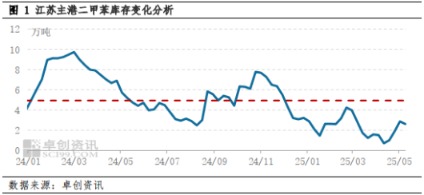
新华财经北京5月20日电 2025年1-4月中旬,宏观消息面疲软,中美加征对等关税、终端需求不及预期 等利空消息面不断释放,导致国内二甲苯市场商谈价格基本呈现震荡下行趋势,价格跌至近五年低位水 平。而随着中美贸易摩擦缓和提振市场信心,叠加终端聚酯预期外的高开工以及终端织机开机率的提 升,推动PTA-PX产业链供需向好,下游PX价格连日上涨,MX-PX价差拉大,短流程生产微跌,下游 PX企业阶段性集中采购原料MX,多重利好推动二甲苯市场价格快速上涨。以江苏异构二甲苯市场为 例,5月14日市场商谈价格最高涨至6050元/吨,较5月6日低点上涨650元/吨,涨幅高达12%。 1-4月宏观消息面疲软叠加需求不及预期,市场商谈价格下跌且交投活跃度低。 2025年1-4月中旬,受国内主营炼厂常减压开工负荷较低叠加海外调油需求尚可等利好支撑,调油经济 性尚可,国内二甲苯生产企业自用为主,外销有限,使得国内二甲苯总供应偏紧。以江苏主港二甲苯到 货量及库存为例,1-4月份江苏主港月度平均到货量仅有2万吨左右,除去春节假期期间二甲苯库存小幅 累积外,整体库存呈现下降趋势,至4月中上旬,港口库存最低降至0.71万吨,较2021年末 ...

打蛇打七寸?美商家疯抢中国产品之际,美大豆在华市场却彻底失宠
Sou Hu Cai Jing· 2025-05-20 03:49
Group 1 - The core point of the article is the significant reduction of tariffs on Chinese imports by the US and the corresponding decrease in tariffs on US imports by China, which is expected to reshape trade dynamics between the two countries [1][3][5] - The US will lower tariffs on Chinese goods from 145% to 30% over the next three months, while China will reduce tariffs on US goods from 125% to 10% [1] - Brazil's soybean export premium has dropped, and US futures prices have reached a three-month high due to expectations that China may purchase more soybeans from the US [1][3] Group 2 - China has been investing in upgrading infrastructure in Brazil, including the Santos port, which will shorten the transportation cycle for Brazilian soybeans to China to 23 days and increase annual throughput by 30% [1] - Chinese companies have invested $3.5 billion in building a deep-water port in Peru and are laying down a thousand-kilometer railway network in Brazil, which will double the export capacity of South American food to China [1] - In 2024, Brazil's soybean exports to China are projected to reach 3.5 times that of the US, indicating a significant shift in supply sources [3] Group 3 - Following the tariff adjustments, there has been a 277% surge in container bookings from China to the US, indicating a rapid response in the shipping market [5] - The average booking volume for container transport from China to the US reached 21,530 twenty-foot equivalent units, a significant increase from the previous week's 5,709 units [5] - The reduction in tariffs is expected to last until August 12, and there is optimism among US businesses regarding potential further negotiations and tariff reductions [5] Group 4 - Despite the tariff reductions, US farmers express that the pause in tariffs is insufficient, highlighting ongoing challenges in regaining market share in China [1][3] - The article notes that the US has struggled to compete in the soybean market, with Chinese imports from Brazil and Argentina rapidly increasing since the trade tensions began [3] - The article also mentions that high tariffs on Chinese goods have led to increased consumer dissatisfaction in the US, impacting political support for current policies [7]

中泰国际:受到中美贸易摩擦风险舒缓、叠加科网股业绩超预期的提振
ZHONGTAI INTERNATIONAL SECURITIES· 2025-05-20 02:50
Market Overview - The Hang Seng Index rose 2.1% last week, closing at 23,345 points, marking the fifth consecutive week of gains[1] - The Hang Seng Tech Index increased by 2.0%, closing at 5,281 points[1] - Average daily trading volume increased by 16.1% week-on-week to over HKD 232.5 billion[1] - Net outflow from the Hong Kong Stock Connect was approximately HKD 8.7 billion for the week, with a significant reduction in cumulative net inflow to HKD 16.8 billion over the past 20 days[1] Sector Performance - The financial sector surged by 3.8%, driven mainly by domestic banks and insurers[1] - Industrial, energy, and telecommunications sectors also saw gains of 2% or more over the week[1] Investment Sentiment - Since mid-April, the flow of funds through the Hong Kong Stock Connect has been volatile, with a record net outflow of HKD 18.5 billion on May 12, indicating a cautious stance from southbound investors[2] - The current AH premium index has dropped to the 16.0 percentile since 2020, suggesting insufficient value for aggressive buying[2] - The Hang Seng Index faces significant resistance in the 23,500-24,000 point range, with potential for continued volatility if southbound fund support diminishes[2] Macro Dynamics - Moody's downgraded the U.S. long-term sovereign credit rating from Aaa to Aa1, citing structural debt imbalance and increasing fiscal deficit pressures[3] - The U.S. federal debt-to-GDP ratio is projected to rise from 98% in 2024 to 134% by 2035, raising concerns about long-term repayment capacity[3] - Despite the downgrade, Moody's maintains that systemic risk has not reached a critical point, and market reactions will depend more on policy responses and economic data than on the rating change itself[3] Industry Developments - The Hang Seng Healthcare Index rose by 0.6%, with notable gains from companies like CSPC Pharmaceutical (3.1% to 3.9% increase)[4] - CSPC signed an exclusive licensing agreement for a cancer treatment in the U.S., receiving an upfront payment of USD 15 million and potential milestone payments of up to USD 25 million[4] - The IPO of Heng Rui Medicine received a "subscribe" rating, with projected revenue growth of 7.3% and net profit growth of 10.1% for 2023-24[4][7] New Drug Approvals - Rongchang Biotech's new indication for its drug has been approved, expected to boost sales significantly[11] - The company reported a 59.1% year-on-year increase in revenue to RMB 530 million for Q1 2025, with a reduction in net loss by 27.2%[13] - Target price for Rongchang Biotech has been raised to HKD 45.00, reflecting positive adjustments in revenue and profit forecasts[14]
黄金抹平4月涨幅,后续如何抉择?
2025-05-19 15:20
Summary of Key Points from Conference Call Industry Overview - The discussion primarily revolves around the **gold market** and its dynamics in relation to macroeconomic factors, particularly focusing on the impact of U.S.-China trade relations and U.S. economic data. Core Insights and Arguments 1. **April Gold Price Adjustment**: The adjustment in gold prices in late April was attributed to the visibility of macro narratives, such as the difficulty of achieving de-dollarization in the short term and positive signals from U.S.-China negotiations. Additionally, despite weak U.S. economic data, the decline in interest rate expectations was delayed, leading to a shift of risk-averse funds towards risk assets [1][4][5]. 2. **Short-term Price Predictions**: In the short term, gold prices are expected to stabilize with limited upward or downward drivers, forming a new platform for sideways trading. The positive factors from trade tensions have been fully priced in, and U.S. economic data remains resilient [6][23]. 3. **Long-term Bullish Outlook**: The long-term bullish logic for gold remains unchanged, with the U.S.-China tariff situation not reversing. A 30% tariff has been established, with potential fluctuations of 24% in the future. The negative economic impact of tariffs and their positive influence on gold prices are expected to persist [7][8]. 4. **U.S. Economic Data**: The first quarter GDP showed resilience, driven by private consumption and investment, but trade deficits pose significant negative impacts. The trend of "import grabbing" supports short-term data but is unsustainable in the long run [9]. 5. **Dollar Credit Contraction**: Long-term factors contributing to the contraction of U.S. dollar credit include de-globalization, excessive debt issuance, and the rise of domestic AI. These factors collectively indicate a prolonged contraction cycle for dollar credit [10][11]. 6. **Impact of Trade Relations on Gold**: The ongoing U.S.-China trade tensions are expected to continue influencing the U.S. economy, with the likelihood of recession increasing if interest rate cuts are delayed. This scenario supports the bullish outlook for gold [8][9]. 7. **Manufacturing Repatriation Challenges**: The U.S. manufacturing repatriation plan aims to reduce trade deficits but faces high costs and effectiveness concerns. Successful implementation could pressure gold prices in the medium to long term, but the plan's feasibility is questionable [14][15]. 8. **Gold Price Sensitivity to Trade Agreements**: If the U.S. reaches tariff reduction agreements with other countries, leading to increased exports and reduced trade deficits, this could exert downward pressure on gold prices. However, the actual impact remains uncertain due to the complexities of trade dependencies [14]. 9. **Central Bank Gold Purchases**: Central banks are expected to continue purchasing gold as a strategic move against dollar credit contraction and to support internationalization efforts, particularly in the context of the RMB [17][18]. 10. **Market Dynamics Between Different Gold Markets**: Shanghai gold has shown stronger performance compared to New York and London gold, reflecting robust domestic demand and confidence among Chinese investors. The long-term outlook suggests that domestic gold prices may outperform due to the underlying economic conditions [21][22]. Other Important Insights - The volatility in gold prices during April was linked to external risk asset declines, leading to liquidity squeezes, which have historical precedents [3]. - The potential for gold price rebounds exists, but achieving a sustained upward trend is challenging given the current market conditions [13]. - The effectiveness of U.S. manufacturing repatriation is under scrutiny, with historical precedents indicating only marginal improvements during past trade tensions [16]. This comprehensive analysis highlights the intricate relationship between gold prices, macroeconomic indicators, and geopolitical factors, providing a nuanced understanding of the current and future landscape of the gold market.
宏观经济宏观月报:4月“抢出口”强化生产韧性,内需有所走弱-20250519
Guoxin Securities· 2025-05-19 14:04
Economic Growth - In April, the industrial added value above designated size grew by 6.1% year-on-year, a decrease of 1.6 percentage points from March[1] - The total retail sales of consumer goods in April reached 37,174 billion yuan, with a year-on-year growth of 5.1%, down by 0.8 percentage points from March[1] - Fixed asset investment (excluding rural households) in April was 147,024 billion yuan, growing by 4.0% year-on-year, a decline of 0.2 percentage points from March[1] Trade and Exports - The total import and export value in April was 38,391 billion yuan, with a year-on-year growth of 5.6%; exports were 22,645 billion yuan, up by 9.3%, while imports were 15,745 billion yuan, increasing by 0.8%[1] - The "export rush" behavior was observed due to the escalation of the US-China tariff war, enhancing domestic industrial production resilience[2] Employment and Unemployment - The urban surveyed unemployment rate in April was 5.1%, down by 0.1 percentage points from the previous month, but still 0.1 percentage points higher than the same month last year[1][2] Economic Outlook - The monthly GDP growth rate for April was approximately 5.1%, a decline of 0.8 percentage points from March, but still above the annual economic growth target[2] - In extreme scenarios, if China's exports to the US drop by 100%, the annual GDP growth could fall to about 3.7%[3]
复盘与前瞻:下周财经大事件梳理与交易风险提示
Sou Hu Cai Jing· 2025-05-19 03:14
Group 1 - The recent easing of tensions in US-China trade relations has led to a significant drop in gold prices, while global stock markets have surged dramatically [1] - The upcoming week features several key economic events that could impact market movements, including speeches from Federal Reserve officials and the Australian interest rate decision [3][4] - The oil market will see important data releases, including the EIA crude oil inventory report, which is expected to influence oil prices and related currencies [5][6] Group 2 - The focus for the week will be on employment data from the US, which traditionally has a strong influence on the dollar and gold prices [6] - Despite a lighter economic calendar, the potential for volatility remains high due to central bank communications and energy inventory reports [7]

全球金融论坛 施康:全球多元化体系正在进行重塑
Zhong Guo Jing Ying Bao· 2025-05-19 00:41
Group 1 - The global economic landscape is undergoing significant adjustments, with a shift towards a diversified system amid increasing geopolitical tensions [1][2] - Current global cooperation is in a "consensus deficit phase," with challenges in negotiation mechanisms and an overall pessimistic outlook for future collaboration [2][3] - The U.S.-China trade conflict is a critical element, with long-term implications for global trade dynamics, as China seeks to promote inclusivity through initiatives like the Belt and Road [2][3] Group 2 - China is transitioning from an export-driven economy to one focused on domestic consumption, marking a key phase in its economic transformation [2][3] - High household savings rates in China are attributed to insufficient social security systems, prompting the government to implement policies aimed at enhancing consumer confidence and spending [3] - The U.S. dollar remains a dominant global reserve currency and a "safe haven" asset, despite recent challenges, with calls for optimizing global liquidity mechanisms rather than suppressing other currencies [4] Group 3 - The need for international cooperation is emphasized, as geopolitical factors such as regulation and sanctions must be considered in global investment strategies [4] - The global economic governance is at a crossroads, with the necessity to move beyond zero-sum games in both China's domestic demand transformation and the optimization of the dollar system [4]
中国经济展望:因关税缓和上调中国增长预测
2025-05-18 14:09
China and the US both lowered the "reciprocal" tariff rates significantly and agreed to continue discussions and negotiations (see our earlier report), possibly with the framework of Phase One Deal as the starting point. We estimate that the weighted average incremental US tariff rate on Chinese goods in 2025 YTD is around 30% (ad valorem, vs 96% before the de-escalation), which is still very damaging for China's exports and growth. There is still significant uncertainty around future US-China negotiations, ...
