
扩内需

Search documents
长城策略周观点:沿政策发力和自主可控方向布局-20250428
Great Wall Securities· 2025-04-28 11:34
Group 1 - The core viewpoint of the report emphasizes the need for a proactive approach in economic management, focusing on domestic demand expansion and self-sufficiency in response to external uncertainties [1][8] - The Politburo meeting highlighted the importance of strengthening bottom-line thinking and preparing contingency plans to ensure economic stability, with a focus on stabilizing employment, enterprises, markets, and expectations [1][8] - The report indicates that expanding internal demand is crucial for countering external shocks and low domestic inflation, with future policies expected to revolve around this central theme [1][8] Group 2 - Domestic economic data for Q1 shows positive signs, with industrial production and domestic consumption showing relative strength, although Q2 may face volatility due to external factors [2][16] - The report notes a potential easing of the "tariff war" between the US and China, which could positively impact market sentiment, but warns that formal trade negotiations have not yet commenced, leaving external trade risks high [2][17] - The report suggests that the capital market may benefit from strong signals of domestic demand expansion, with sectors such as consumer goods, real estate, and technology being highlighted for potential investment opportunities [3][18] Group 3 - The report identifies specific sectors that may benefit from the expansion of domestic demand, including consumer electronics, automotive, and healthcare, particularly in light of upcoming holidays that may boost spending [3][18] - It also recommends a cautious approach to investment in defensive assets and dividend-paying stocks to mitigate ongoing external risks [3][18] - The focus on technology and self-sufficiency is underscored, with attention drawn to domestic alternatives in critical areas such as semiconductors and emerging industries like robotics and healthcare [5][18]
建筑材料行业跟踪周报:以稳为主,科技加内需仍是主线
Soochow Securities· 2025-04-28 08:23
Investment Rating - The report maintains an "Overweight" rating for the construction materials industry [1] Core Viewpoints - The industry is expected to focus on stability, with technology and domestic demand as the main themes [1] - The construction materials sector has shown a slight increase of 0.22% this week, underperforming compared to the CSI 300 and Wind All A indices [4] - The report anticipates a significant acceleration in home decoration demand in Q3 2025, driven by policies promoting consumption [4] Summary by Sections 1. Industry Trends - The construction materials sector has experienced a price fluctuation, with the national average price of high-standard cement at 390.8 RMB/ton, down 1.8 RMB/ton from last week but up 35.7 RMB/ton year-on-year [4][22] - Cement market demand has slightly weakened due to seasonal rainfall, with a national average cement shipment rate of 47.4%, down 1.3 percentage points from last week [30] 2. Bulk Construction Materials Fundamentals and High-Frequency Data 2.1 Cement - The national cement market price has decreased by 0.5% this week, with price adjustments mainly in East, Central, and Southwest regions [21] - The report highlights that the cement industry is expected to maintain profitability, with leading companies showing a strong willingness to protect margins [5][12] 2.2 Glass Fiber - The profitability of the glass fiber industry remains at a low point, but demand in wind power and thermoplastics is expected to grow, leading to a gradual recovery in supply-demand balance [13] - The report recommends companies like China Jushi and suggests monitoring others like Zhongcai Technology and Shandong Glass Fiber [13] 2.3 Glass - The glass industry is currently facing a weak balance in supply and demand, with slow inventory depletion and limited price rebound potential [15] - The report recommends Qibin Group and suggests monitoring Nanbo A for potential growth [15] 3. Home Decoration Materials - The report indicates that government policies aimed at boosting domestic demand are expected to enhance home decoration consumption, with a year-on-year sales growth of 8.7% in early 2025 [16] - Recommended companies include Beixin Building Materials and Arrow Home, focusing on those with strong growth intentions and competitive advantages [16]



建筑材料行业跟踪周报:以稳为主,科技加内需仍是主线-20250428
Soochow Securities· 2025-04-28 07:56
Investment Rating - The report maintains an "Overweight" rating for the construction materials industry [1] Core Views - The industry is expected to focus on stability, with technology and domestic demand as the main themes [1] - The construction materials sector has shown a slight increase of 0.22% this week, underperforming compared to the Shanghai Composite Index and the Wind All A Index [4] - The report anticipates a significant acceleration in home decoration demand in Q3 2025, driven by policies promoting consumption [4] Summary by Sections 1. Industry Trends - The construction materials sector has experienced a price fluctuation, with the national average price of high-standard cement at 390.8 RMB/ton, down 1.8 RMB/ton from last week but up 35.7 RMB/ton year-on-year [4][22] - Cement market demand has slightly weakened due to seasonal rainfall, with a national average shipment rate of 47.4%, down 1.3 percentage points from last week [30] 2. Bulk Construction Materials Fundamentals and High-Frequency Data 2.1 Cement - The national cement market price has decreased by 0.5% this week, with price adjustments mainly in East, Central, and Southwest regions [21] - The report highlights that the cement industry is expected to maintain profitability, with leading companies showing a strong willingness to protect margins [5][12] - The average cement inventory ratio is 61.8%, unchanged from last week but down 6.6 percentage points year-on-year [30] 2.2 Glass Fiber - The glass fiber industry is experiencing a recovery in profitability, with demand in wind power and thermoplastics sectors continuing to grow [13] - The report suggests that leading companies in the glass fiber sector are likely to benefit from structural advantages and cost efficiencies [13] 2.3 Glass - The glass industry is facing a weak balance between supply and demand, with slow inventory depletion and limited price rebound potential [15] - The report recommends focusing on leading companies that can leverage resource advantages and benefit from industry capacity reductions [15] 3. Industry Dynamics Tracking - The report notes that external uncertainties, such as trade tensions, are increasing, but domestic policies are expected to support consumption and stabilize the real estate market [16] - The report emphasizes the importance of government policies in boosting home decoration demand, with a notable increase in sales in early 2024 [16] 4. Weekly Market Review - The construction materials sector has shown a slight increase in performance compared to broader market indices, indicating potential investment opportunities [4][20]
事关育儿补贴、放开汽车限购、新型政策金融工具扩投资等,国家发展改革委详解扩内需增量政策
2 1 Shi Ji Jing Ji Bao Dao· 2025-04-28 04:17
21世纪经济报道记者周潇枭 北京报道 4月28日,国务院新闻办公室举行新闻发布会,邀请国家发展改革 委副主任赵辰昕、人力资源社会保障部副部长俞家栋、商务部副部长盛秋平、中国人民银行副行长邹澜 介绍稳就业稳经济推动高质量发展政策措施有关情况,并答记者问。 面对美国滥施关税,后续中国如何加力扩内需为外界所关注。4月25日,中共中央政治局会议分析研究 当前经济形势和经济工作。会议指出,要提高中低收入群体收入,大力发展服务消费,增强消费对经济 增长的拉动作用。尽快清理消费领域限制性措施,设立服务消费与养老再贷款。加大资金支持力度,扩 围提质实施"两新"政策,加力实施"两重"建设。 国家发展改革委副主任赵辰昕在发布会上回应记者提问表示,更好发挥内需主动力作用,具体思路和方 法也非常明确,就是增加中低收入群体收入、大力提振消费,扩大有效投资,做强国内大循环。下一 步,国家发展改革委将认真落实党中央、国务院决策部署,扎实做好这三方面工作。 在提振消费方面,近期已经下达了今年第二批消费品以旧换新资金,前两批一共下达超过1600亿元,后 续还有1400亿元左右,我们会根据各地支付进度陆续下达。还将建立实施育儿补贴制度,创设专项 ...
渤海证券研究所晨会纪要(2025.04.28)-20250428
BOHAI SECURITIES· 2025-04-28 01:23
Company Research - The company reported a revenue of 4.465 billion yuan in 2024, representing a year-on-year growth of 19.15%, and a net profit of 394 million yuan, up 68.89% year-on-year, with a basic earnings per share of 1.34 yuan [12] - In Q1 2025, the company achieved a revenue of 1.101 billion yuan, a year-on-year increase of 25.41%, and a net profit of 91.155 million yuan, up 62.13% year-on-year, with a basic earnings per share of 0.31 yuan [12] - The company's gross margin improved due to higher margins on staple and canned products, with gross margins increasing by 1.88 and 4.02 percentage points year-on-year to 28.16% and 31.87% respectively in 2024 and Q1 2025 [12][13] - The company focused on enhancing its own brand marketing, leading to a significant increase in brand recognition and sales, with a 131% year-on-year growth in GMV during the Double 11 shopping festival in 2024 [13][15] - The company expanded its overseas market presence, entering 9 new countries in 2024, and its overseas revenue growth rate was 14.62% for the year, with further production capacity expansion planned for Canada and the US [15][16] Industry Research - The overall number of equity funds increased to 6,774 by the end of Q1 2025, with a total scale of 74,529.42 billion yuan, reflecting a growth of 1,005.15 billion yuan from the previous quarter [9] - The average equity fund position increased, with flexible allocation funds seeing the largest rise of 1.44 percentage points to 71.90% [9][10] - The industry saw an increase in allocation towards automotive and non-ferrous metals, while reducing exposure to electric power equipment and non-bank financials [10][11]
财信证券宏观策略周报(4.28-5.2):政策加力应对外部冲击,聚焦扩内需与AI产业投资方向-20250427
Caixin Securities· 2025-04-27 12:28
Group 1 - The report emphasizes the need for policies to address external shocks, focusing on expanding domestic demand and investing in the AI industry [1][4][17] - The macro policy tone from the April Politburo meeting is described as both proactive and reserved, with an emphasis on implementing more active macro policies and enhancing counter-cyclical adjustments [1][17] - The report highlights the importance of service consumption as a key driver for expanding domestic demand, alongside a strong focus on technological innovation and the implementation of the "AI+" initiative [1][17] Group 2 - The A-share market showed a mixed performance, with the Shanghai Composite Index rising by 0.56% and the Shenzhen Component Index increasing by 1.38% during the week of April 21-25 [7][11] - The report notes that sectors such as automotive, beauty care, and basic chemicals performed well, indicating a recovery in the export-related industries [7][14][16] - The report suggests that the AI industry is expected to see significant growth, with major Chinese internet companies increasing their capital expenditures significantly in Q4 2024, indicating a strong future performance for the domestic AI industry chain [14][24] Group 3 - The report indicates that the overall market valuation is relatively low, with the Wan De All A Index's price-to-book ratio at 1.53, which is below historical averages, suggesting strong long-term investment value [14][41] - The report highlights the potential for structural market trends post-May Day holiday, with a focus on domestic demand expansion and the AI industry as key themes [15][24] - The report identifies specific sectors for investment, including service consumption, AI industry chain components, and self-sufficiency areas such as national defense and industrial machinery [24][25][26]
建筑材料行业研究周报:外部扰动加大,推荐扩内需和一带一路标的-20250427
HUAXI Securities· 2025-04-27 08:01
Investment Rating - The industry rating is "Recommended" [5] Core Views - The report emphasizes the need to focus on resilient companies with high dividends and those benefiting from domestic demand expansion, recommending companies such as Dongfang Yuhong, Sankeshu, Tubao, Weixing New Materials, and Beixin Building Materials [1] - The report highlights the expected commencement of major national projects, particularly the Yarlung project, and recommends companies involved in these projects, such as Zhongyan Dadi [1] - The report notes the high demand in the civil explosives sector, recommending companies like Guangdong Hongda and Xuefeng Technology [1] - The report discusses the impact of "reciprocal tariffs" on domestic investment expectations, recommending companies like China State Construction, China Communications Construction, and Sichuan Road and Bridge [1] - The report mentions the trend of domestic substitution in the paint industry, recommending companies like Maijia Xincai and Songjing Co., Ltd. [1] - The report anticipates a renewed catalyst for the "Belt and Road" strategy amid trade tensions, recommending international engineering companies such as China State Construction and China Metallurgical Group [1] Summary by Sections Market Overview - In the 17th week of April, new home sales in 30 major cities decreased by 21% year-on-year, while second-hand home transactions increased by 21% year-on-year [2][21] - The national cement market price fell by 0.5% this week, with price adjustments mainly in East, Central, and Southwest China [3][23] Cement Industry - The average operating load of cement mills nationwide is 49.04%, down 1.83 percentage points from last week [3][34] - The report indicates that the cement price is expected to continue its downward trend due to weak supply-demand dynamics [23] Recommendations - Companies with strong operational resilience and high dividends are recommended to benefit from domestic demand stimulation, including Dongfang Yuhong and Weixing New Materials [8] - Companies in the copper mining sector, such as Jinchengxin, are expected to see significant growth due to resource release and strong demand [8] - Companies involved in the Yarlung project and civil explosives are also highlighted for their growth potential [8] - The report suggests focusing on infrastructure investment, recommending companies like China State Construction and China Communications Construction [8] - The report identifies domestic paint companies as beneficiaries of the trend towards local substitution [8]




中金研究 | 本周精选:宏观、策略
中金点睛· 2025-04-25 23:38
中金点睛"本周精选"栏目将带您回顾本周深受读者欢迎的研究报告。 01 宏观 Macroeconomy 特朗普的两个目标均难实现 >>点击图片查看全文<< 特朗普政府试图通过加征关税促使美国贸易逆差收窄,制造业回流,我们认为这两个目标难以通过关税实现。首先,关税难以使得美国贸易逆差收 窄。从理论来看,提升关税并不一定能够缩减逆差(扩大顺差)。根据勒纳对称定理,对进口征税等同于对本国的出口征税。关税难以促使制造业回 流美国。全球供应链对中国的依赖度比较高,而且无论是从劳动者数量、质量,还是就业意愿来看,美国制造业回流都将面临着劳动力短缺的问题。 美国制造业成本高,也是其制造业回流的挑战。特朗普关税或对美国产生滞胀式影响,美国衰退风险加大。除了"滞胀"风险,特朗普的减税、削减支 出和关税组合或将损害美国大多数家庭,对低收入人群损害更大,加剧美国内部不平衡。实际上,从经济视角来看,美国没有非常突出的外部失衡问 题,但内部分配问题很严重。 资料来源:US Census Bureau,中金公司研究部 >>点击图片跳转报告原文<< 2025.04.23 | 张文朗 黄亚东等 02 宏观 Macroeconomy 从汇率、利 ...
食品饮料周报:贵州茅台重返“领奖台” 山西汾酒董事会大换血
Zheng Quan Zhi Xing· 2025-04-25 07:23
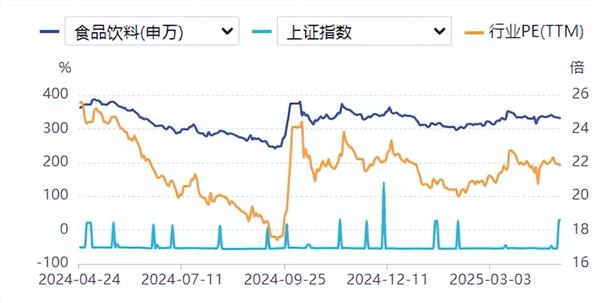
Core Viewpoint - The food and beverage industry is experiencing mixed performance, with the Shanghai Composite Index showing a slight increase while the Shenwan Food and Beverage Index has declined. Key stocks to watch include Youyou Food and New Dairy [1] Group 1: Market Performance - The Shanghai Composite Index rose by 0.38% during the week of April 21-25, 2025, while the Shenwan Food and Beverage Index fell by 1.66% [1] - The top five performing stocks in the food and beverage sector were Youyou Food, Anji Food, Haoxiangni, Kuaijishan, and New Dairy [1] Group 2: Institutional Insights - Tianfeng Securities recommends focusing on Hong Kong food and beverage stocks such as Qingdao Beer, China Resources Beer, Budweiser, Mengniu Dairy, and others [2] - The white liquor sector is advised to consider leading companies like Guizhou Moutai and Shanxi Fenjiu, with a focus on both strong alpha and cyclical beta stocks [2] - In the consumer goods sector, there is a short-term emphasis on snacks and dairy products, with recommendations for companies like Anjijia Food and Yili Group [2] Group 3: Consumption Trends - In March 2025, China's retail sales showed a year-on-year growth of 5.9%, indicating a recovery in consumer demand [3] - The importance of domestic demand is increasing due to external uncertainties, with expectations for further consumption policy support [3] Group 4: Industry Developments - The new national standard for special medical infant formula food will be implemented on March 16, 2027, allowing companies to register products according to the new standards starting from the announcement date [5] - The 112th National Sugar and Wine Fair attracted 6,612 exhibitors and showcased over 300,000 new products, highlighting the industry's innovation trends [11] Group 5: Company News - Shanxi Fenjiu's board of directors underwent significant changes ahead of the 2024 annual report, with new candidates nominated to enhance governance [14] - Luzhou Laojiao has reportedly not received any official notice regarding the suspension of orders and shipments, despite media reports suggesting otherwise [16]



周乃翔在临沂菏泽调研时强调 扩内需 稳外贸 惠民生 推动经济持续稳健向好进中提质
Da Zhong Ri Bao· 2025-04-24 01:18
4月22日至23日,省委副书记、省长周乃翔在临沂市、菏泽市调研,强调要深入学习贯彻习近平总书记 重要指示精神,认真落实党中央、国务院决策部署,按照省委工作要求,牢牢把握高质量发展这个新时 代的硬道理,稳扎稳打、踏踏实实,统筹推进扩内需、稳外贸、惠民生、保安全等各项工作,推动经济 持续稳健向好、进中提质。 在临沂市,周乃翔来到临沂现代物流城、深度(山东)数字科技集团有限公司,调研商贸物流运行、数 字商贸等情况,希望临沂市千方百计扩大内需,加快商城国际化、数字化转型,进一步做优服务、降低 物流成本,打造临沂未来发展新的增长极。在万德福冻干科技有限公司,他了解产品出口等情况,希望 企业创新贸易方式,加大国际市场开拓力度,积极拓展内销市场。他指出,各级各有关部门要强化助企 服务,支持企业稳订单拓市场,努力稳住外贸基本盘。 在菏泽市,周乃翔来到巨野县核桃园镇前王庄村,指出要大力发展乡村旅游业,尊重农民意愿,优化生 态环境,加强文化遗产、乡村风貌保护,完善利益联结机制,促进群众增收致富。山东三禛电器装配有 限公司是一家韩资劳动密集型企业,周乃翔与企业负责人亲切交流,希望企业不断增强竞争力,创造更 多就业岗位。他强调,要扎 ...