扩内需

Search documents
中银证券:金融属性及产业趋势支持有色金属板块 有望迎来盈利与估值双升
智通财经网· 2026-02-23 03:26
Core Viewpoint - The report from Zhongyin Securities indicates that as the market enters the second phase of a bull market driven by profits by 2026, the narrative of domestic re-inflation will strengthen, highlighting the strong cyclical attributes of non-ferrous metals and presenting revaluation opportunities for the industry [1] Group 1: Investment Strategy - The company recommends focusing on industrial metals and strategic minor metals as offensive investments, while using precious metals as a defensive strategy [1] - In the context of industrial metals, copper prices are expected to receive solid support due to a tight mid-term supply-demand balance and a weak dollar cycle that may enhance industry trends [1] - The investment theme for strategic minor metals is shifting from event-driven speculative trading to systematic revaluation based on long-term strategic value [1] Group 2: Specific Metal Insights - For rare earths, the report notes that rigid supply-side policies and recovering demand from exports, along with long-term growth momentum, have created a strong resonance, suggesting that the upward price trend for rare earths is not yet over [1] - Compared to the price increases from 2020 to 2022, the current rise in rare earth prices is relatively moderate, indicating that leading companies still have further profit release potential [1] Group 3: Precious Metals Outlook - The long-term price of gold is expected to remain high, with short-term volatility providing opportunities for positioning [1] - The strong performance certainty of leading companies this year will aid in the valuation recovery of the sector, with expectations for both profit and valuation increases in 2026 [1]

申万宏源证券首席经济学家赵伟:2026年,聚焦“顺周期”新叙事与资金“再平衡”
赵伟宏观探索· 2026-02-20 16:02
Core Viewpoint - The year 2026 marks the beginning of the "15th Five-Year Plan" and is a critical juncture for economic transformation and institutional reform, with a non-typical "recovery" state expected, leading to improved corporate profitability and significant structural differentiation across industries and companies [3] Group 1: Economic Recovery and Policy Measures - The policy focus on "anti-involution" aims to curb low-price competition, restore damaged profit margins, and promote a positive Producer Price Index (PPI) and profit recovery [3] - The emphasis on "investing in people" through social security reforms and service industry openness is expected to continuously unlock growth in service consumption [3] - Fiscal policies will play a crucial role in enhancing domestic demand, with increased debt relief efforts to mitigate the "crowding out effect" on investment funds, ensuring steady recovery in fixed asset investments, particularly in equipment upgrades, digital infrastructure, and energy transition [3] Group 2: Capital Market Dynamics - In the short term, the A-share market is expected to experience a continuation of capital "rebalancing" under a "pro-cyclical" narrative, with funds likely flowing from low-yield, high-volatility bond markets to equity markets, driving asset price revaluation [4] - Despite uncertainties in external trade, the domestic policy toolbox remains robust, and the continuous optimization of export structures indicates resilience in economic development [4] - The capital market is anticipated to reflect not only quantitative economic growth but also qualitative improvements in pricing and profitability, with A-shares expected to gradually elevate their central tendency amidst volatility [4] Group 3: Long-term Structural Changes - Over the long term, the "transformation" of industries and the "dividends" from reforms during the "15th Five-Year Plan" will be central to high-quality development [4] - Key areas of focus include the construction of a unified national market, financial and tax system reforms, and breaking down institutional barriers to stimulate the vitality of business entities [4] - The cultivation of "new productive forces" alongside deep reforms will provide a solid rationale for the long-term revaluation of Chinese assets [4] Group 4: Key Areas of Attention for 2026 - The construction of a unified market will encompass foundational market systems, infrastructure, resource markets, government behavior standards, and market regulation enforcement, with an acceleration of institutional openness expected [5] - The green transition will be a significant policy focus, emphasizing energy-saving and carbon-reduction transformations in traditional high-energy-consuming industries through technological innovation and capacity replacement [5] - The combination of green transformation and industrial upgrading aims to enhance the core competitiveness of traditional industries, achieving a dual win of "carbon reduction" and "quality improvement" [5]


申万宏源证券首席经济学家赵伟:2026年,聚焦“顺周期”新叙事与资金“再平衡”
申万宏源宏观· 2026-02-19 16:02
Core Viewpoint - The year 2026 marks the beginning of the "15th Five-Year Plan" and is a critical juncture for economic transformation and institutional reform, with a non-typical "recovery" state expected, leading to improved corporate profitability and significant structural differentiation across industries and companies [3] Group 1: Economic Recovery and Policy Measures - The policy focus on "anti-involution" aims to curb low-price competition, restore damaged profit margins, and promote a positive Producer Price Index (PPI) and profit recovery [3] - The emphasis on "investing in people" through social security reforms and service industry openness is expected to continuously unlock growth in service consumption [3] - Fiscal policies will play a crucial role in enhancing domestic demand, with increased efforts to alleviate the "crowding out effect" on investment funds, ensuring steady recovery in fixed asset investments, particularly in equipment upgrades, digital infrastructure, and energy transition [3] Group 2: Capital Market Outlook - In the short term, the A-share market is expected to experience a continuation of capital "rebalancing" under a new "pro-cyclical" narrative, with funds likely flowing from low-yield, high-volatility bond markets to equity markets, driving asset price revaluation [4] - Despite uncertainties in external trade, the domestic policy toolbox remains robust, and the continuous optimization of export structures indicates resilience in economic development [4] - The capital market is anticipated to reflect not only quantitative economic growth but also qualitative improvements in pricing and profitability, with A-shares expected to gradually elevate their central tendency amidst volatility [4] Group 3: Long-term Structural Changes - During the "15th Five-Year Plan," industrial "transformation" and reform "dividends" will be key engines for high-quality development, focusing on breaking institutional bottlenecks and stimulating the vitality of business entities [4] - Key areas for attention in 2026 include the construction of a unified national market, high-level opening-up, accelerated green transformation, social security, and financial system reforms [4] Group 4: Unified Market and Green Transformation - The construction of a unified market involves establishing basic market systems, infrastructure, resource markets, government behavior standards, and market regulation, alongside expanding both domestic and international openness [5] - The acceleration of green transformation will focus on energy-saving and carbon-reduction modifications in traditional high-energy-consuming industries, promoting low-carbon and efficient transitions through technological innovation and capacity replacement [5] - The combination of green transformation and industrial upgrading is expected to enhance the core competitiveness of traditional industries, achieving a dual win of "carbon reduction" and "quality improvement" [5]

2026年地方政府怎么干:下篇:任务怎么做?
Yuekai Securities· 2026-02-13 07:43
Group 1: Expanding Domestic Demand - Local governments are focusing on stabilizing investment and enhancing consumption, with a target of approximately 5% growth in investment for 2026[11] - Provinces like Guangdong and Shandong are increasing government investment in public welfare and new infrastructure, with Guangdong aiming for a significant increase in the share of social investment[12] - Most provinces are implementing plans to increase residents' income, with Guizhou targeting an annual growth of 5% for urban and 7% for rural disposable income from 2025 to 2027[11] Group 2: Promoting Innovation - At least 18 provinces have set targets for R&D investment growth, with Fujian, Jilin, and Ningxia aiming for a 10% increase in 2026[15] - Guangdong, as the leading province in R&D investment, is focusing on maintaining high efficiency and effectiveness in R&D output[15] - Provinces are enhancing the innovation ecosystem by building technology innovation communities and reforming the technology achievement transfer mechanism[18] Group 3: Industry Development - Provinces are adopting differentiated strategies for emerging industries, with a focus on artificial intelligence and green transformation[20] - The deployment of strategic emerging industries is seen as a key area for cultivating new productive forces, with provinces like Guangdong and Zhejiang leading in AI development[20] - 26 provinces have set carbon reduction targets, with Shandong focusing on ultra-low emissions in high-energy-consuming industries[12] Group 4: Risk Prevention - Local governments are working to stabilize the real estate market by revitalizing existing properties and improving new projects[4] - Provinces like Inner Mongolia and Jilin have exited the list of high-debt provinces, while others are focusing on reducing hidden debts and transforming urban investment platforms[4] - Financial institutions are being encouraged to improve quality while reducing quantity, with provinces like Henan and Fujian prioritizing risk management in smaller financial entities[4]
西安去年进出口总值4987.9亿元 出口增速领跑副省级城市
Sou Hu Cai Jing· 2026-02-12 13:13
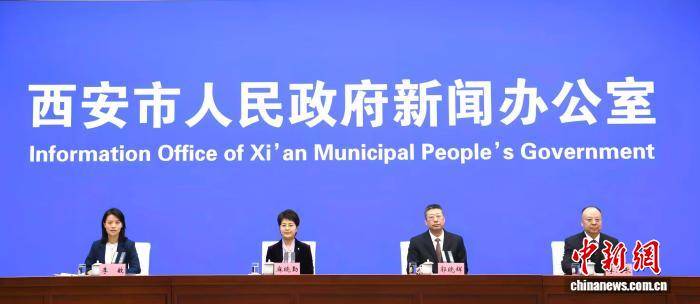
Group 1 - In 2025, Xi'an's total import and export value reached 498.79 billion yuan, a historical high with a year-on-year growth of 21.1% [1][3] - Exports amounted to 349.26 billion yuan, with a growth rate of 25.8%, ranking first among sub-provincial cities [1][3] - The city's retail sales of consumer goods reached 572.12 billion yuan, growing by 5.3%, surpassing the national average by 1.6 percentage points [3] Group 2 - The import and export of new business formats like cross-border e-commerce grew by 75.1%, with trade partners increasing to 217 [3] - By the end of 2025, the total assets of state-owned enterprises in Xi'an reached 3,834.29 billion yuan, a year-on-year increase of 9.5% [4] - The total equity of state-owned enterprises was 969.24 billion yuan, up by 5.7%, marking a historical high [4] Group 3 - In 2026, Xi'an's investment cooperation system aims to attract over 110 industrial chain projects, focusing on project implementation and output [6] - The city plans to revitalize idle assets in state-owned industrial parks through tailored strategies [6] - The goal for the first quarter includes achieving actual foreign investment of 160 million USD and signing 100 projects worth over 10 million yuan [6]
“史上最长春节假期”发力促消费,有奖发票将兑现超10亿元真金白银,20亿元新春大礼包来了
Sou Hu Cai Jing· 2026-02-12 13:12
Core Viewpoint - The Chinese government is implementing a series of measures to boost consumer spending during the upcoming Spring Festival, including financial support and promotional activities aimed at enhancing holiday consumption [2][3][5]. Group 1: Consumer Promotion Initiatives - The Ministry of Commerce has launched a special "Spring Festival Shopping" campaign, which includes three major initiatives to stimulate consumer spending [3]. - The first initiative involves a subsidy program with an allocation of 62.5 billion yuan to support consumers in exchanging old products for new ones during the holiday period [3][4]. - The second initiative is a lottery for consumers who obtain invoices over 100 yuan in 50 pilot cities, with a total prize pool exceeding 1 billion yuan during the Spring Festival [4]. - The third initiative focuses on financial support, encouraging financial institutions to offer various discounts and loans to promote spending in sectors such as travel, dining, and entertainment [4]. Group 2: Economic Context and Long-term Strategies - The Chinese economy is increasingly relying on consumer spending as a key driver of growth, with recent policies aimed at expanding domestic demand [5][6]. - The government is working on a long-term plan to enhance consumer spending, including the development of new consumption growth points in various service sectors [6]. - Experts suggest that optimizing income distribution and implementing targeted cash voucher policies could effectively stimulate immediate consumer demand [6].

银行:4Q25货币政策执行报告点评:新发贷款利率有望低位企稳,扩内需目标明确
GOLDEN SUN SECURITIES· 2026-02-12 01:24
Investment Rating - The report maintains an "Accumulate" rating for the banking sector [6]. Core Insights - The central bank continues to implement a moderately loose monetary policy, focusing on stabilizing economic growth and ensuring reasonable price recovery [1][9]. - The average weighted interest rate for new loans dropped to 3.15% in December 2025, with expectations for further stabilization at low levels [2][14]. - The report emphasizes the importance of expanding domestic demand as a key focus for monetary policy in 2026, with structural financial support for priority areas [3][12]. Summary by Sections Monetary Policy - The report reiterates the commitment to a moderately loose monetary policy, aiming to maintain liquidity and ensure that the growth of social financing and money supply aligns with economic growth and price level expectations [8][9]. - The central bank aims to enhance the effectiveness of monetary policy tools and support key areas such as technology innovation and consumption [9][10]. Interest Rates - The average weighted interest rate for new corporate loans decreased to 3.10%, while personal housing loan rates remained stable at 3.06% [2][14]. - The adjustment in policy language reflects a shift towards maintaining low financing costs rather than further reductions [2][3]. Domestic Demand Expansion - The report highlights the need for structural monetary policy tools to support domestic demand, with a focus on collaboration between the central bank and the Ministry of Finance [3][12]. - Specific measures include re-loan and interest subsidy policies aimed at equipment upgrades, small and micro enterprises, and consumption [12]. Banking Sector Stability - The report discusses the impact of deposit outflows on the banking sector, indicating that while there is a shift in deposit structure, overall liquidity remains stable [4]. - The implementation of a one-time credit repair policy is expected to improve the asset quality of banks and enhance personal loan issuance [4][12]. Investment Recommendations - The report suggests that 2026 will see a large-scale repricing of bank deposits, which is likely to optimize liability costs and support a narrowing of interest margins [5]. - It recommends focusing on high-dividend stocks in the current low-interest-rate environment [5].
朝闻国盛:央行四季度货币政策报告6大信号:存款“流失”的变与不变
GOLDEN SUN SECURITIES· 2026-02-12 00:47
Group 1: Macro Insights - The report indicates a positive outlook for the economy, emphasizing the importance of maintaining a moderately loose monetary policy to support economic stability and growth [5][11] - The report highlights a shift in focus towards promoting stable economic growth as a key consideration for monetary policy, indicating that a weakening economic fundamental may trigger further monetary easing [5] - The report discusses the impact of "deposit outflow" on liquidity, noting that while it affects the structure of bank liabilities, it does not significantly alter the overall liquidity situation in the financial system [5] Group 2: Price Trends - In January, the Consumer Price Index (CPI) growth rate fell to 0.2%, influenced by seasonal factors, while the core CPI showed improvement, reaching its highest level in six months [3] - The Producer Price Index (PPI) saw a narrowing decline, with a month-on-month increase of 0.4%, marking four consecutive months of growth [3] - The report anticipates a rebound in CPI readings for February, with an expected annual average around 0.7%, while core CPI is projected to remain strong, driven by factors such as gold prices and consumer services [3] Group 3: Banking Sector Insights - The average interest rate for new loans in Q4 2025 was reported at 3.15%, a decrease of 10 basis points from the previous quarter, indicating a continued downward trend in overall interest rates [8][11] - The report suggests that the banking sector will experience a significant repricing of deposits in 2026, which is expected to optimize funding costs and support a narrowing of interest margins [11] - The report emphasizes the importance of financial support for key sectors to stimulate domestic demand, with a focus on maintaining a stable lending environment [11] Group 4: Industry Performance - The report identifies the top-performing industries in January, with the oil and petrochemical sector leading at 17.3%, followed by construction materials at 14.5% and basic chemicals at 7.7% [1] - Conversely, the report notes the underperforming sectors, including defense and military, which saw a decline of 12.7% in January, and the computer sector, which fell by 8.2% [1]

刘向东:高质量推进城市更新释放内需潜力
Jing Ji Ri Bao· 2026-02-12 00:43
Core Viewpoint - Urban development is transitioning from large-scale expansion to quality improvement and efficiency enhancement, driven by the need to meet high-quality living demands and stimulate effective investment growth [1][2]. Group 1: Urbanization Trends - The new urbanization emphasizes the importance of urban renewal, focusing on optimizing investment layouts and service supply to meet the upgraded consumption demands of residents [2]. - Urbanization is shifting from rapid growth to stable development, with a significant portion of the population concentrated in 19 urban agglomerations, contributing approximately 85% of the GDP [2]. - An increase of 1 percentage point in urbanization rate can generate an additional investment demand of 1 trillion yuan and over 200 billion yuan in consumption demand annually [2]. Group 2: Consumer Demand and Infrastructure - The diversification and quality of consumer demand are increasing, necessitating improvements in urban living environments, infrastructure, and public services [3]. - There is a growing demand for services catering to the elderly and children, requiring an expansion of related public service facilities [3]. - The integration of new technologies such as 5G and AI into urban development is crucial for enhancing service quality and meeting evolving consumer needs [3]. Group 3: Investment and Economic Growth - Urban renewal involves not just physical space transformation but also a systematic restructuring of urban functions, industries, and culture to stimulate investment and consumption [4]. - The existing housing stock of approximately 35 billion square meters creates a substantial demand for renewal, estimated at around 700 million square meters annually due to a 2% depreciation rate [4]. - Upgrading old neighborhoods and infrastructure can create new job opportunities and drive regional economic development [4]. Group 4: Industry Innovation and Cultural Integration - The fusion of industry and urban functions is essential for reshaping urban development models, enhancing the supply system to meet diverse consumer needs [5]. - Cultural heritage preservation is vital for urban renewal, enhancing the cultural economy and meeting the diverse spiritual and cultural needs of the population [6]. Group 5: Challenges and Solutions - Cities face challenges such as outdated planning, inefficient facility updates, and insufficient funding, which must be addressed to unlock development potential [7]. - Investment in high-quality infrastructure and the renovation of old housing are critical for improving living standards and urban resilience [7][8]. - A comprehensive service system covering all demographics and life cycles is necessary to enhance public service quality and meet the needs of the population [8]. Group 6: Financial and Governance Strategies - Establishing a sustainable urban construction and operation financing system is essential, with increased government investment in basic livelihood projects [9]. - Encouraging social capital participation in urban renewal can enhance investment efficiency and promote a virtuous cycle of investment [9]. - Improving urban governance through technology and community engagement is crucial for addressing residents' needs and enhancing overall governance effectiveness [10].
热点思考 | 积极因素正在累积(申万宏观·赵伟团队)
赵伟宏观探索· 2026-02-11 16:03
Group 1 - The most difficult period for the real estate sector may have passed, with supply and demand pressures easing. Recent data shows a marginal recovery in supply and demand, with the year-on-year decline in second-hand housing transaction area narrowing by over 5 percentage points to -14.7% in the last 3-4 weeks before the festival. The decline in government fund revenue also narrowed to -11.7% [3][47][48] - Various supportive policies are continuously being implemented to stabilize the real estate market. Regulatory focus has shifted towards risk management and livelihood protection, with some companies no longer required to report "three red lines" indicators monthly. Out-of-risk companies must report key financial indicators and progress on debt resolution [3][17][47] - Local governments are launching breakthrough policies to support the acquisition of second-hand housing for rental purposes, with Shanghai's pilot program serving as a significant example. The program aims to acquire small second-hand apartments under 70 square meters in specific districts [3][48][19] Group 2 - Multiple ministries are enhancing policy coordination, with fiscal and financial policies working together to support three key areas: consumption, equipment investment, and the private economy. In January, the net financing scale of government bonds increased by over 280 billion yuan year-on-year, with a significant reduction in the proportion used for debt repayment [4][20][49] - The central bank and the Ministry of Finance have announced measures to expand interest subsidies and reduce financing costs for market entities. The National Venture Capital Fund is directed to invest early, small, long-term, and in hard technology sectors [4][25][49] - Other departments, including commerce and human resources, are also strengthening collaboration to stimulate service consumption. A new work plan was issued to cultivate new growth points in service consumption, focusing on sectors like retail, catering, and tourism [5][27][50] Group 3 - Local governments are proactively advancing economic work, moving away from a wait-and-see attitude. Some regions have scheduled their first meetings of the year immediately after New Year's Day to kickstart annual work [6][51][32] - By the end of January, 20 provinces and cities had disclosed their GDP targets for 2026, with a weighted average of 5.1%. Major provinces like Guangdong and Henan expressed positive outlooks, emphasizing the pursuit of better results in actual work [6][35][51] - The upcoming Spring Festival will be the longest in history, making holiday consumption a key driver for first-quarter domestic demand and a foundation for economic recovery throughout the year. Policies are shifting from traditional physical consumption stimulation to a balanced focus on both physical and service consumption [7][42][52]