PPI

Search documents
【中国银河宏观】金融和经济继续分化,亮点来自PPI——2025年8月经济数据预测
Sou Hu Cai Jing· 2025-09-03 10:23
Group 1 - The market is currently influenced by three main lines: overseas monetary easing, domestic financial improvement, and the expectation of PPI recovery [1][3][4] - The RMB is expected to appreciate slowly, potentially reaching 7.05 against the USD by the end of the year, influenced by global monetary conditions and domestic capital market performance [4][5] - M1 and M2 are on the rise, indicating a better financial environment, although new loans remain relatively low [5][19] Group 2 - PPI is anticipated to rise, which would indicate an increase in corporate profits; however, the recovery of PPI may depend on government policies and investment [2][17] - The overall economic performance remains weak, with investment and consumption continuing to decline, while exports show resilience, particularly in the electronic chip sector [3][16] - Industrial production is expected to increase, with an estimated year-on-year growth of 5.8% in August, supported by strong export demand [18] Group 3 - The financial sector continues to show signs of improvement, with social financing and M1 growth expected to persist, driven by government bond financing and corporate direct financing [19][20] - The economic outlook for the second half of the year suggests a nominal growth rate slightly lower than the first half, with real GDP growth projected between 4.5% and 4.8% [17][18] - The consumer price index (CPI) is expected to show slight increases, but overall inflation remains weak, with PPI showing signs of recovery due to policy measures [17][19]


“月度前瞻”系列专题之二:8月经济:“景气”分水岭?-20250902
Shenwan Hongyuan Securities· 2025-09-02 10:12
Demand - In August, external demand is expected to outperform internal demand, with exports projected to decline by 5.1% due to high base effects and tariff impacts, but the pressure is manageable due to improving external demand and market share gains[1] - Domestic consumption and manufacturing investment are expected to weaken, with retail sales projected to grow by only 4.4% year-on-year, influenced by limited use of subsidy funds[1][27] - High-frequency indicators show that retail sales of passenger cars and white goods in August increased by only 0.8% and 2.1% year-on-year, respectively[27] Supply - The manufacturing PMI rose by 0.1 percentage points to 49.4% in August, indicating sustained production activity, with the production index increasing by 0.3 percentage points to 50.8%[3][45] - Industries with high external demand, such as textiles and specialized equipment, showed significant production index increases of 23.6 percentage points to 57.1% and 8.6 percentage points to 63.9%, respectively[49] - Industrial added value is expected to grow by 5.8% year-on-year in August, supported by resilient indicators in the export chain[4][54] Inflation - The Producer Price Index (PPI) is expected to show limited year-on-year improvement at -2.9%, despite rising commodity prices and a low base effect, with the main raw material purchase price index increasing by 1.8 percentage points to 53.3%[5][61] - Consumer Price Index (CPI) is projected to decline by 0.4% year-on-year in August, constrained by weak food prices and downstream PPI[6]
宏观经济数据前瞻:2025年8月宏观经济指标预期一览
Guoxin Securities· 2025-09-02 05:25
Economic Indicators - August 2025 domestic CPI is expected to be approximately 0.1% month-on-month, with a year-on-year decline to -0.3%[3] - July 2025 PPI is projected to increase by about 0.4% month-on-month, with a significant year-on-year recovery to -2.5%[3] - Industrial added value is anticipated to rebound slightly to 6.0% year-on-year in August 2025[3] - Retail sales of consumer goods are expected to rise to 4.5% year-on-year in August 2025[3] Investment and Trade - Fixed asset investment is forecasted to continue declining, reaching a cumulative year-on-year growth of 1.3%[3] - Exports in dollar terms are projected to decrease to around 6.0% year-on-year[3] - Trade surplus for August 2025 is estimated at 992 million USD, up from 982 million USD in the previous period[4] Financial Metrics - Monthly increase in credit is expected to be 10,500 million CNY, a significant improvement from a decrease of 500 million CNY previously[4] - Total social financing is projected to increase by 26,000 million CNY for the month, compared to 11,320 million CNY previously[4] - M2 year-on-year growth rate is expected to remain stable at 8.8%[4]
开源证券:8月制造业PMI略弱于季节性 关注服务消费增量政策
智通财经网· 2025-09-02 01:36
Group 1 - The manufacturing sector shows marginal recovery in supply and demand, with PMI production rising by 0.3 percentage points to 50.8% [2] - The "anti-involution" policy is driving a rebound in commodity prices, with August PPI expected to narrow its year-on-year decline to -2.8% [2] - The BCI index for private enterprises has dropped to 46.9%, indicating ongoing operational pressures for small and medium-sized enterprises [2] Group 2 - Infrastructure investment is likely to continue slowing down, but the launch of 500 billion yuan in policy financial tools may stimulate total investment by approximately 400 billion yuan in Q4 [3] - The service sector has shown slight improvement, with the capital market's strength boosting service PMI above 70.0% for two consecutive months [3] Group 3 - Q4 policies are expected to be timely enhanced, focusing on expanding service consumption, with nationwide service consumption vouchers estimated to be between 300-500 billion yuan [4] - Shanghai plans to allocate over 40 billion yuan for consumption upgrades from September to December 2024, suggesting a national scale of approximately 375 billion yuan for service consumption vouchers [4]
高频数据扫描:上游物价渐进改善
Bank of China Securities· 2025-09-01 00:09
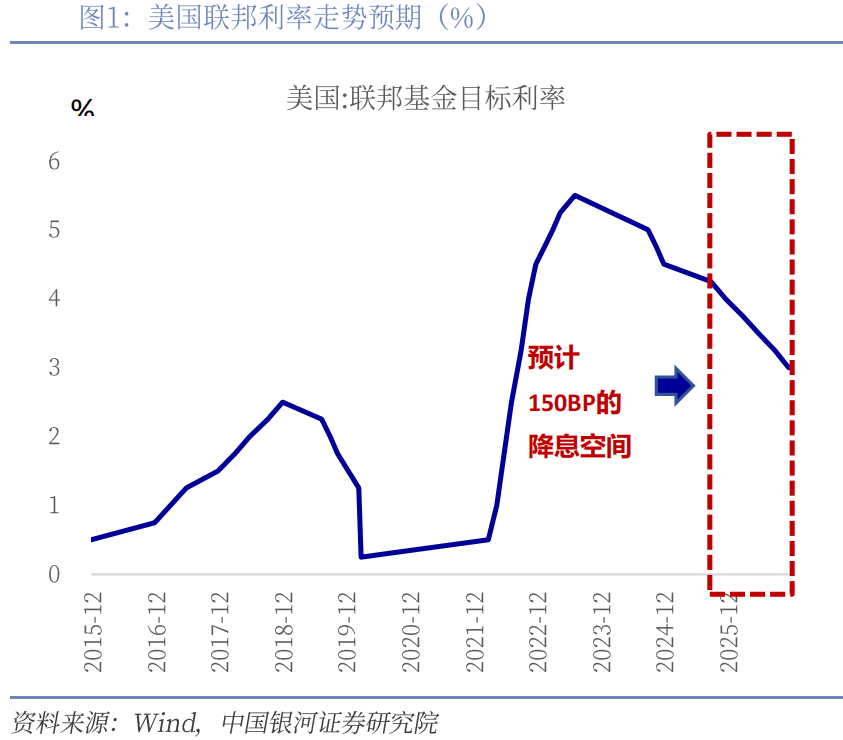
Report Industry Investment Rating The report does not provide an industry investment rating. Core Viewpoints - Upstream prices are gradually improving. The production - material price index declined slightly in the week of August 22, but the year - on - year decline since August has narrowed. Steel industry capacity and output will be precisely regulated, which is expected to drive a gradual improvement in PPI and a slow rise in long - bond interest rates [4][13]. - The strengthening of the RMB against the US dollar does not necessarily trigger a more relaxed liquidity supply. If Trump successfully replaces Cook, the proportion of "dovish" Fed governors may increase, leading to a decline in the long - term yield of US Treasury bonds. The strengthening of the RMB against the US dollar is conducive to stabilizing foreign investment, and its stability against the currency basket is conducive to stabilizing foreign trade [4][16]. - The US PCE inflation in July basically met market expectations and may have limited impact on the Fed's interest - rate cut prospects. However, the US trade deficit in July far exceeded expectations, mainly due to a sharp increase in imports, which may lead to intensified inflation and affect the interest - rate cut rhythm [4]. Summary by Directory High - Frequency Data Panoramic Scan - **Upstream prices**: The production - material price index declined slightly in the week of August 22, with a narrowing year - on - year decline since August. The steel industry's average annual added - value growth target for 2025 - 2026 is 4%. By August 29, the closing price of the coking - coal futures main contract was close to the December 2024 average, while that of the rebar main contract was significantly lower [4][13]. - **Exchange rate**: After Powell's hint at the global central - bank annual meeting and Trump's move to remove Cook, if Cook is successfully replaced, the long - term yield of US Treasury bonds may decline. The RMB has strengthened against the US dollar, but the RMB exchange - rate index is still not high, which is an ideal state [4][16]. - **Inflation and trade**: The US PCE inflation in July basically met expectations. The trade deficit far exceeded expectations due to a sharp increase in imports, which may be related to the tariff "grace period" and mild inflation, and may intensify inflation and affect interest - rate cuts [4]. - **High - frequency data changes**: In the week of August 30, the average wholesale price of pork decreased by 0.78% week - on - week and 27.43% year - on - year; the Shandong vegetable wholesale - price index increased by 2.54% week - on - week and decreased by 19.19% year - on - year. The prices of Brent and WTI crude - oil futures increased by 1.85% and 1.63% respectively week - on - week. The LME copper and aluminum spot prices increased by 1.13% and 1.52% respectively week - on - week [4][20]. High - Frequency Data and Important Macroeconomic Indicators Trend Comparison The report provides multiple charts to show the trend comparison between high - frequency data and important macroeconomic indicators, such as the relationship between LME copper spot - price year - on - year change and industrial added - value year - on - year change (plus PPI year - on - year change), and the relationship between crude - steel daily - output year - on - year change and industrial added - value year - on - year change [22][33]. Important High - Frequency Indicators in the US and Europe The report presents charts of US weekly economic indicators and actual economic growth rates, US first - week unemployment - claim numbers and unemployment rates, US same - store sales growth rates and PCE year - on - year changes, and Chicago Fed financial - condition indexes, as well as the implied prospects of the US Federal Fund futures for interest - rate hikes/cuts and the overnight index swap for the ECB's interest - rate hikes/cuts [88][90][93]. Seasonal Trends of High - Frequency Data The report shows the seasonal trends of high - frequency data through various charts, such as the seasonal trends of crude - steel (decade - average) daily output, production - material price index, and 30 - major - city commercial - housing transaction area [101]. High - Frequency Traffic Data in Beijing, Shanghai, Guangzhou, and Shenzhen The report provides charts of the year - on - year changes in subway passenger traffic in Beijing, Shanghai, Guangzhou, and Shenzhen [158][160][165].
PMI数据点评:PMI见底回升了吗?
Tianfeng Securities· 2025-08-31 10:14
Report Summary 1. Industry Investment Rating The provided content does not mention the industry investment rating. 2. Core View In August, the PMI data showed a combination of "manufacturing at the bottom and non - manufacturing moderately recovering". Compared with the "double - weak" situation in July, the short - term economic downward risk may be alleviated. With the weakening of the impact of high - temperature and rainy weather, the continuous release of policy effects, and the influence of seasonal factors, the economy is expected to continue the recovery trend, and the manufacturing PMI in September is expected to improve month - on - month, which may weaken the downward driving force of long - term interest rates [2][4]. 3. Summary by Related Catalogs August Manufacturing - The manufacturing PMI was 49.4%, up 0.1 percentage points from the previous value, still in the contraction range but showing marginal improvement. The non - manufacturing business activity index was 50.3%, up 0.2 percentage points, continuing to expand. The composite PMI output index was 50.5%, up 0.3 percentage points, indicating an accelerated overall expansion of enterprises' production and business activities [1]. - In terms of supply and demand, the production index was 50.8%, up 0.3 percentage points, with continuous expansion. The new order index was 49.5%, up 0.1 percentage points, with insufficient market demand. The new export order index was 47.2%, up 0.1 percentage points, with foreign demand hovering at a low level [2]. - In terms of prices, the purchase price index of major raw materials was 53.3%, up 1.8 percentage points, rising for three consecutive months and in the expansion range for two consecutive months. The ex - factory price index was 49.1%, up 0.8 percentage points, also rising for three consecutive months and reaching the highest point this year. It is expected that the year - on - year decline of PPI will continue to narrow, and the pressure on industrial product prices may be alleviated [2]. August Non - manufacturing - The service industry business activity index was 50.5%, up 0.5 percentage points, reaching the highest point this year. Industries such as capital market services, railway transportation, and aviation transportation were in a high - level boom range, while industries such as retail and real estate had weak prosperity. The business activity expectation index was 57.0%, up 0.4 percentage points, indicating that service enterprises were optimistic about the market [3]. - The construction industry business activity index was 49.1%, down 1.5 percentage points, in the contraction range, mainly due to the impact of high - temperature and rainy weather. The business activity expectation index was 51.7%, slightly higher than the previous month. Looking forward, with the weakening of the weather impact and the release of policies, the economy may continue to recover, and the manufacturing PMI in September is expected to improve [4].
【广发宏观郭磊】PMI价格指标连续第三个月回升
郭磊宏观茶座· 2025-08-31 10:01
Core Viewpoint - The August PMI indicates a divergence among industries, with manufacturing stabilizing slightly, service sectors improving significantly, and construction experiencing a notable decline. However, all three sectors show a common trend of improving sales prices [1][5]. Manufacturing Sector - The August manufacturing PMI stands at 49.4, slightly up from 49.3 in July, indicating a need for further support for actual growth [5]. - The production index is above 50 at 50.8, reflecting a stronger production performance compared to new orders, which remain below 50 [9][10]. - The consumer goods sector is a major drag on manufacturing PMI, while high-tech manufacturing shows strength, and both equipment manufacturing and basic raw materials industries show slight improvements [10] - The raw material purchase price index rose to 53.3, up 1.8 points, while the factory price index increased to 49.1, up 0.8 points, marking the third consecutive month of price increases [11][12]. Service Sector - The service sector PMI for August is 50.5, up from 50.0, indicating a positive trend influenced by capital market services, which have seen a business activity index above 70 for two consecutive months [5][10]. - Retail sentiment remains weak, suggesting challenges in consumer spending [10]. Construction Sector - The construction PMI dropped to 49.1 from 50.6, attributed to adverse weather conditions and a slowdown in construction activities [18]. - Fiscal spending on infrastructure showed a year-on-year decline of 3.6% in July, continuing a trend of low spending [18]. Economic Indicators - The three "soft indicators" for August reveal low absolute values, indicating a short-term economic slowdown compared to the first half of the year [19]. - Price indicators show a continuous improvement, which may influence future PPI trends [19]. - The manufacturing inventory index decreased to 46.8, while the raw material inventory index increased to 48.0, reflecting a proactive approach by companies to replenish stocks in response to rising prices [16][15]. Future Outlook - Attention is needed on the government's emphasis on stabilizing construction and actual growth, as well as whether the continuous improvement in PMI price indicators can translate into a rise in PPI [19]. - The manufacturing production expectation index rose to 53.7, the highest since April, indicating improved business expectations possibly linked to price expectations [17].

8月经济运行的三点特征
EBSCN· 2025-08-31 09:00
Manufacturing Sector - August manufacturing PMI increased by 0.1 percentage points to 49.4%, exceeding the market expectation of 49.1%[2] - Production index rose to 50.8%, up 0.3 percentage points from the previous month; new orders index increased to 49.5%, up 0.1 percentage points[5] - Large enterprises' PMI improved significantly to 50.8%, up 0.5 percentage points, while small enterprises' PMI rose to 46.6%, up 0.2 percentage points; medium enterprises' PMI fell to 48.9%, down 0.6 percentage points[5] Export and Import Trends - New export orders index rose to 47.2%, up 0.1 percentage points, indicating stabilization in export momentum[20] - Import index increased to 48.0%, up 0.2 percentage points, reflecting ongoing production expansion[20] Price Indices - Raw material purchase price index rose to 53.3%, up 1.8 percentage points; factory price index increased to 49.1%, up 0.8 percentage points, indicating a potential upward trend in PPI[25] - Raw material inventory index increased to 48.0%, up 0.3 percentage points, while finished goods inventory index decreased to 46.8%, down 0.6 percentage points[25] Service Sector - Service sector business activity index rose to 50.5%, up 0.5 percentage points from the previous month, and higher than last year's 50.2%[29] - The business activity expectation index for the service sector increased to 57.0%, indicating positive market sentiment[29] Construction Sector - Construction sector business activity index fell by 1.5 percentage points to 49.1%, continuing a downward trend for two consecutive months[32] - The decline in construction activity is attributed to adverse weather conditions and reduced demand from real estate and infrastructure investments[32]
【新华解读】8月份中国制造业PMI小幅回升意味着什么?
Xin Hua Cai Jing· 2025-08-31 08:56
Core Points - In August, China's manufacturing Purchasing Managers' Index (PMI) rose slightly to 49.4%, indicating a small recovery from July's decline, reflecting the initial effects of policies aimed at expanding domestic demand and reducing competition pressure [1][2] - The production index and new orders index both showed improvements, with the production index rising to 50.8%, remaining above the critical 50% mark for four consecutive months [1][4] - The manufacturing raw material purchase price index increased to 53.3%, indicating rising costs for manufacturers, which may pressure profit margins [2][3] Economic Indicators - The new orders index rose to 49.5%, while the production index increased by 0.3 percentage points, suggesting a stabilization in market demand and supply [1][2] - The export orders index improved slightly to 47.2%, indicating resilience in external demand despite previous challenges [2] - The manufacturing production activity expectation index rose to 53.7%, reflecting increased optimism among manufacturers regarding future market conditions [3][4] Policy and Market Outlook - The government is focusing on enhancing the effectiveness of macroeconomic policies to stimulate domestic demand and investment, particularly in the context of ongoing economic recovery challenges [4] - Analysts predict that as policy effects continue to materialize and with the upcoming peak production season, various economic indicators are expected to improve further [4]
“反内卷”政策预计会继续ING
Sou Hu Cai Jing· 2025-08-30 06:05
Core Viewpoint - The Producer Price Index (PPI) in July showed a month-on-month decline of 0.2%, marking the first narrowing of the decline since March this year, indicating a potential stabilization in industrial prices [2][3]. Group 1: PPI Trends - In July, the prices in coal mining, black metal smelting, photovoltaic equipment manufacturing, cement manufacturing, and lithium-ion battery manufacturing saw a reduced month-on-month decline of 1.9, 1.5, 0.8, 0.3, and 0.1 percentage points respectively, contributing to a reduced downward impact on PPI by 0.14 percentage points compared to the previous month [3]. - The month-on-month decline in PPI was primarily influenced by a series of "anti-involution" policies that have led to a rebound in product prices in cyclical industries, as evidenced by the futures price trends of coal, steel, and cement [3][4]. Group 2: Year-on-Year PPI Analysis - The year-on-year PPI in July decreased by 3.6%, maintaining the same decline as the previous month, with the PPI growth rate remaining in negative territory for 34 consecutive months [4]. - The "anti-involution" policy is seen as a significant factor in the month-on-month improvement of PPI, addressing the core issue of low-price competition driven by supply-demand imbalances [4][5]. Group 3: Future Outlook - The ongoing "anti-involution" policies are expected to continue supporting the month-on-month improvement of PPI, but the extent of this improvement and whether the year-on-year growth can turn positive will require further observation [5]. - To solidify the effects of the "anti-involution" policies, it is crucial to restore domestic demand; otherwise, competitive pressures among enterprises may intensify [6].