
反内卷政策

Search documents
齐翔腾达(002408):三季度业绩承压,反内卷驱动下景气度有望改善
Changjiang Securities· 2025-11-11 10:45
Investment Rating - The investment rating for the company is "Buy" and is maintained [8]. Core Views - The company reported a revenue of 18.212 billion yuan for the first three quarters of 2025, a year-on-year decrease of 0.77%. The net profit attributable to the parent company was -146 million yuan, down 174.19% year-on-year. The net profit excluding non-recurring items was -144 million yuan, a decline of 182.20% year-on-year [2][6]. - In Q3 2025, the company achieved a revenue of 6.004 billion yuan, an increase of 6.75% year-on-year but a decrease of 8.89% quarter-on-quarter. The net profit attributable to the parent company was -169 million yuan, turning to a loss both year-on-year and quarter-on-quarter [2][6]. - The company is positioned as a leader in the C4 industrial chain, with significant competitive advantages. It focuses on deep processing of raw material C4, forming four product lines, including but not limited to methyl ethyl ketone, maleic anhydride, MMA, and nitrile latex, with a market share of approximately 70% in China [13]. - The company is expanding into the C3 industrial chain, with projects including a propane dehydrogenation project and an epoxy propane project. However, the supply-demand imbalance in the epoxy propane market poses challenges to profitability [13]. - The projected net profits for the company from 2025 to 2027 are estimated to be 60 million yuan, 490 million yuan, and 910 million yuan, respectively, with corresponding price-to-earnings ratios of 246.1x, 28.7x, and 15.4x [13]. Summary by Sections Financial Performance - For the first three quarters of 2025, the company reported a total revenue of 18.212 billion yuan, a decrease of 0.77% year-on-year. The net profit attributable to the parent company was -146 million yuan, a decline of 174.19% year-on-year, and the net profit excluding non-recurring items was -144 million yuan, down 182.20% year-on-year [2][6]. - In Q3 2025, the revenue was 6.004 billion yuan, up 6.75% year-on-year but down 8.89% quarter-on-quarter. The net profit attributable to the parent company was -169 million yuan, indicating a loss both year-on-year and quarter-on-quarter [2][6]. Market Position and Strategy - The company is a leader in the C4 industrial chain, focusing on the deep processing of raw material C4, with a strong market presence in products like methyl ethyl ketone and maleic anhydride. The company benefits from its location in Shandong, which has abundant refining resources [13]. - The company is also developing its C3 industrial chain, with several projects underway. However, the supply-demand dynamics in the epoxy propane market are challenging, affecting profitability [13]. Future Outlook - The company anticipates net profits of 60 million yuan, 490 million yuan, and 910 million yuan for the years 2025, 2026, and 2027, respectively, with corresponding price-to-earnings ratios indicating potential growth [13].

光伏板块热度回升,该怎么看?
Ge Long Hui· 2025-11-11 09:28
Group 1 - The core viewpoint is that the photovoltaic sector is experiencing a strong market trend driven by anti-involution policies, with a focus on stabilizing prices in the silicon material and silicon wafer segments, while demand remains relatively weak [3] - The prices of battery cells have slightly decreased, and component prices have remained stable, with market attention on the demand situation in the first quarter of next year [3] - November is identified as a critical month for the implementation of anti-involution policies aimed at curbing disorderly expansion and promoting industrial upgrades [3] Group 2 - The China Photovoltaic Industry Association's cost analysis report indicates that the profitability in the component segment has shown signs of recovery, reflecting the initial effects of policies on industry profitability [3] - Overall, the photovoltaic sector is expected to be influenced by anti-involution policies in the fourth quarter of this year, with a potential shift towards a phase of fundamental improvement in investment drivers next year [3] - The Tianhong CSI Photovoltaic Industry Index Fund closely tracks the CSI Photovoltaic Industry Index, which selects up to 50 representative listed companies in the photovoltaic industry chain to reflect the overall performance of photovoltaic industry securities [3]


中银晨会聚焦-20251111
Bank of China Securities· 2025-11-11 05:07
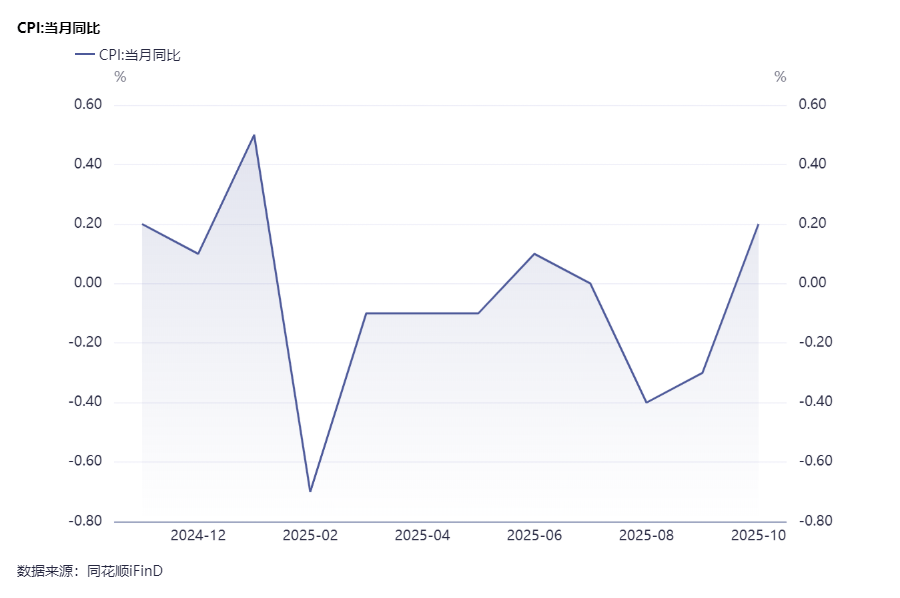
Group 1: Macro Economic Overview - In October, both CPI and PPI growth rates exceeded consensus expectations, with CPI driven by a narrowing drag from food prices and a boost from holiday-related service price increases [2][6][8] - October CPI increased by 0.2% month-on-month and 0.2% year-on-year, while core CPI rose by 1.2% year-on-year [6][7] - PPI experienced a month-on-month increase of 0.1% but a year-on-year decline of 2.1%, influenced by international energy prices and domestic supply-demand dynamics [9][10] Group 2: Transportation Sector - Xiamen Xiangyu - Xiamen Xiangyu reported a revenue of 316.865 billion yuan for the first three quarters of 2025, marking a year-on-year growth of 6.44%, with net profit attributable to shareholders reaching 1.633 billion yuan, up 83.57% [10][11] - The company achieved a non-recurring net profit of 1.149 billion yuan, reflecting a significant year-on-year increase of 302.47%, indicating strong operational performance in the bulk commodity supply chain [11][12] - Future strategies may focus on enhancing operational efficiency and risk management, aiming for sustainable cash flow and long-term shareholder value creation [12] Group 3: Social Services Sector - Shoulv Hotel - Shoulv Hotel's third-quarter revenue decreased by 1.60% year-on-year, with a net profit decline of 2.21%, while the non-recurring net profit showed a slight increase of 0.57% [3][14] - The hotel market remains under pressure due to insufficient demand recovery and increasing market supply, yet the company demonstrates resilience through improved operational efficiency [14][15] - The company opened 1,051 new hotels in the first three quarters, achieving 70% of its annual target, with a focus on enhancing the quality of its hotel offerings [16]


10月CPI同比转正,消费、化工相关ETF备受关注
Sou Hu Cai Jing· 2025-11-11 04:14
Group 1 - The core viewpoint of the article highlights the positive shift in China's Consumer Price Index (CPI) in October, with a year-on-year increase of 0.2% and a month-on-month rise of 0.2%, indicating a recovery in consumer demand driven by policy measures and holiday effects [1] Group 2 - The traditional consumption sector is experiencing growth due to policy support, including the expansion of duty-free shopping, which saw a 34.86% year-on-year increase in shopping amounts during the first week of November [3] - The food and beverage sector's public fund holdings have decreased to 4.9%, the lowest since 2010, suggesting a potential for increased investment in the consumer sector [3] Group 3 - The chemical sector has been in a long-term bottoming phase, with recent policy shifts aimed at reducing competition and improving the supply structure, which may enhance investment opportunities in this sector [5] - The Producer Price Index (PPI) showed a month-on-month increase of 0.1% in October, marking the first positive change of the year, which could lead to rising industrial prices and increased value in the chemical sector [5] Group 4 - Relevant ETFs for investors interested in these sectors include the E Fund Consumption ETF, which tracks the CSI Consumption 50 Index, and the E Fund Chemical Industry ETF, which follows the CSI Petrochemical Industry Index, providing exposure to leading companies in these sectors [6]
每日投资策略-20251111
Zhao Yin Guo Ji· 2025-11-11 03:50
Core Insights - The report highlights a structural upturn in the global PCB and CCL industries driven by AI infrastructure investment, with a projected 12.8% rebound in the PCB market by 2025 and an 18% growth in the CCL sector in 2024, indicating strong pricing power [4] - Pfizer is positioned as a leader in the pharmaceutical industry, with a forecasted 12% growth in non-COVID revenue in 2024, despite facing a patent cliff from 2025 to 2028 [6][7] - The semiconductor industry is experiencing a demand surge due to AI, with significant growth expected in high-performance products, benefiting leading manufacturers [4] Market Performance - The Hang Seng Index closed at 26,649, up 1.55% for the day and 32.85% year-to-date, while the Hang Seng Tech Index rose 1.34% [1] - Southbound capital saw a net inflow of HKD 6.65 billion, with notable purchases in China National Offshore Oil Corporation and Pop Mart, while Alibaba and SMIC saw the most significant net sell-offs [3] Company Analysis - Pfizer's aggressive cost-cutting plan aims to save USD 7.2 billion from 2024 to 2027, with an expected operating profit margin increase to 26.2% in 2024 from 9.6% in 2023 [5] - The report anticipates that Pfizer's revenue will begin to recover in 2029, driven by new product contributions, with a target price set at USD 36.16 [7] - Beike's revenue for Q3 2025 grew by 2.1% year-on-year, with a focus on improving profitability in its core real estate transaction business [8] Industry Trends - The report notes a shift in investment focus towards energy, chemicals, and consumer stocks in the Chinese market, with chemical sector valuations at historical lows, suggesting a potential buying opportunity [3] - Japan's new government is expected to implement expansive fiscal policies, focusing on key sectors such as semiconductors and defense, which may lead to a decline in government bond prices [3]


“申”度解盘 | 财报落地、蓄势来年
申万宏源证券上海北京西路营业部· 2025-11-11 02:50
Core Viewpoint - The article discusses the recent trends in the A-share market, highlighting a recovery in profit growth for listed companies, expectations for a potential interest rate cut by the Federal Reserve, and changes in market dynamics indicating a shift towards a more cautious investment environment [6][11][12]. Group 1: Profit Growth of Listed Companies - The profit growth of A-share listed companies has turned positive after a prolonged period of decline, with a non-financial and "three barrels of oil" adjusted net profit growth rate of 7.0% in Q1 2023, followed by low single-digit growth in the subsequent quarters [6][11]. - The expectation is for continued low positive growth in Q4 2023, aided by a lower comparative base in 2024 [11]. Group 2: Federal Reserve Interest Rate Expectations - The probability of a 25 basis point rate cut by the Federal Reserve in December has decreased to 63.00%, down from 91.70% a week prior, indicating internal disagreements within the committee [12]. - Despite the decrease in probability, a rate cut remains a likely event, which may still influence market risk appetite [12]. Group 3: Market Dynamics and Risk Preferences - The equity risk premium for the CSI 300 index showed a slight recovery to 5.70 at the end of September, interrupting a downward trend that had persisted since April, suggesting a slight decline in investor risk appetite [7][15]. - The number of stocks with over 20% gains in October 2025 dropped to 237, a 41% decrease from the previous month, indicating a significant reduction in market risk appetite and a return to a sideways market structure [18]. Group 4: Market Index Predictions - The Shanghai Composite Index faced resistance after attempting to break out of a trading range in October, suggesting the need for further market consolidation [20]. - The CSI 300 index experienced volatility, with significant technical resistance at levels established during the second half of 2021, while key support levels are identified at the 2016 and 2020 lows [24].

新能源及有色金属日报:枯水期供需格局好转,工业硅盘面偏强运行-20251111
Hua Tai Qi Huo· 2025-11-11 02:38
Group 1: Industry Investment Rating - No information provided Group 2: Core Views - For industrial silicon, the supply - demand pattern may improve due to the slight increase in spot prices and production cuts during the dry season in the southwest. The industrial silicon futures price is mainly affected by overall commodity sentiment and policy - related news. With the expected increase in silicon - coal prices, there is some support for industrial silicon. If there are relevant capacity - exit policies, the futures price may rise [2][4]. - For polysilicon, the supply - demand fundamentals have slightly improved, but there is still significant inventory pressure. The downstream production schedule may weaken, and consumer support is average. The futures price is affected by anti - involution policies and weak market reality, and is expected to fluctuate mainly [5][8]. Group 3: Market Analysis of Industrial Silicon - On November 10, 2025, the industrial silicon futures price showed a strong and volatile trend. The main contract 2601 opened at 9,230 yuan/ton and closed at 9,290 yuan/ton, a change of 120 yuan/ton (1.31%) from the previous settlement. The position of the main contract 2511 was 281,503 lots, and the total number of warehouse receipts was 46,255 lots, a change of 75 lots from the previous day [2]. - The spot price of industrial silicon increased slightly. The price of East China oxygen - passing 553 silicon was 9,400 - 9,600 yuan/ton (a 50 - yuan increase), and 421 silicon was 9,700 - 9,800 yuan/ton (a 50 - yuan increase). The price of Xinjiang oxygen - passing 553 silicon was 8,800 - 8,900 yuan/ton, and 99 silicon was 8,800 - 8,900 yuan/ton, with no change. Silicon prices in some regions such as Kunming, Huangpu Port, and others increased, while the price of 97 silicon remained stable [2]. - In Yunnan, the dry season has arrived. Most silicon enterprises in production stopped production at the end of October, and a few stopped in early November. Currently, there are only over 20 silicon furnaces in production in the entire Yunnan region, and the remaining enterprises are of the integrated or long - order delivery types [2]. - The consumption side: The quotation of organic silicon DMC was 11,000 - 11,300 yuan/ton with no change. Yunneng Silicon Materials' Qujing Branch completed a key technological transformation project, which improved the tank utilization rate to 100% and laid a foundation for process optimization and cost control [3]. Group 4: Strategy for Industrial Silicon - Unilateral: Short - term range operation, buy on dips - No strategies for inter - delivery spread, cross - variety, cash - futures, and options [4] Group 5: Market Analysis of Polysilicon - On November 10, 2025, the main contract 2601 of polysilicon futures maintained a volatile trend, opening at 53,000 yuan/ton and closing at 53,720 yuan/ton, a change of 1.08% from the previous trading day. The position of the main contract was 125,974 lots (125,517 lots the previous day), and the trading volume was 218,786 lots [5]. - The spot price of polysilicon weakened slightly. The price of N - type material was 49.40 - 55.00 yuan/kg, and N - type granular silicon was 50.00 - 51.00 yuan/kg, with no change. Polysilicon manufacturers' inventory increased, while silicon wafer inventory decreased. The latest polysilicon inventory was 25.90 (a month - on - month change of - 0.77%), and silicon wafer inventory was 17.52GW (a month - on - month change of - 7.45%). The weekly polysilicon production was 27,000 tons (a month - on - month change of - 4.30%), and silicon wafer production was 13.45GW (a month - on - month change of - 5.55%) [5][6]. - In October, the polysilicon production was expected to be about 133,500 tons, an increase compared to September, exceeding market expectations. In November, production in the southwest region will be significantly reduced, and production is expected to decline [6]. - Silicon wafer prices: The price of domestic N - type 18Xmm silicon wafers was 1.32 yuan/piece, N - type 210mm was 1.69 yuan/piece, and N - type 210R silicon wafers was 1.34 yuan/piece, with no change [6]. - Battery cell prices: The price of high - efficiency PERC182 battery cells was 0.27 yuan/W, PERC210 was 0.28 yuan/W, Topcon M10 was 0.31 yuan/W, Topcon G12 was 0.30 yuan/W, Topcon 210RN was 0.28 yuan/W, and HJT210 half - piece battery was 0.37 yuan/W, with no change [6]. - Component prices: The mainstream transaction price of PERC182mm was 0.67 - 0.74 yuan/W, PERC210mm was 0.69 - 0.73 yuan/W, N - type 182mm was 0.66 - 0.68 yuan/W, and N - type 210mm was 0.68 - 0.69 yuan/W, with no change [7]. Group 6: Strategy for Polysilicon - Unilateral: Short - term range operation, the 12 - contract is expected to fluctuate in the range of 52,000 - 57,000 yuan/ton - No strategies for inter - delivery spread, cross - variety, cash - futures, and options [8][9]
大越期货玻璃早报-20251111
Da Yue Qi Huo· 2025-11-11 02:21
交易咨询业务资格:证监许可【2012】1091号 大越期货投资咨询部 胡毓秀 从业资格证号:F03105325 投资咨询证号:Z0021337 联系方式:0575-85226759 重要提示:本报告非期货交易咨询业务项下服务,其中的观点和信息仅作参考之用,不构成对任何人的投资建议 。 我司不会因为关注、收到或阅读本报告内容而视相关人员为客户;市场有风险,投资需谨慎。 玻璃早报 2025-11-11 每日观点 玻璃: 1、基本面:供给低位企稳回升,但沙河地区"煤改气"等供应端扰动因素较多;下游深加工订单 整体偏弱,不及往年同期,地产终端需求疲弱,库存高位;偏空 2、基差:浮法玻璃河北沙河大板现货1052元/吨,FG2601收盘价为1069元/吨,基差为-17元,期 货升水现货;偏空 3、库存:全国浮法玻璃企业库存6313.6万重量箱,较前一周减少4.03%,库存在5年均值上方运行; 偏空 4、盘面:价格在20日线下方运行,20日线向下;偏空 5、主力持仓:主力持仓净空,空增;偏空 6、预期:玻璃基本面疲弱,短期预计震荡偏弱运行为主。 影响因素总结 利多: 1、"反内卷"政策、环保政策影响下,浮法玻璃行业产能出清 ...
纠结于进退之间 公私募的“4000点时刻”
Shang Hai Zheng Quan Bao· 2025-11-11 02:16
Core Viewpoint - The market is experiencing upward fluctuations, with the Shanghai Composite Index frequently surpassing 4000 points, leading to a critical decision-making moment for professional investors [1][2] Group 1: Market Sentiment and Investor Behavior - There is an increase in the number of public and private funds facing restrictions, indicating a rise in cautious sentiment among investors [1] - Despite some investors considering profit-taking, many are choosing to hold their positions, reflecting confidence in the market's upward trajectory [2][4] - The stock private equity position index reached 80.16% as of October 31, marking a new high for the year [4] Group 2: Sector Focus and Investment Strategies - The technology sector has been a significant contributor to excess returns for public and private funds, prompting a strategic focus on optimizing portfolios within this sector [6][7] - Fund managers are shifting their strategies from valuation expansion to performance verification, emphasizing the importance of profit-taking and rotation in investments [6][8] - Key areas of interest include AI hardware, semiconductor equipment, and sectors benefiting from global demand [9][10] Group 3: Future Outlook and Investment Directions - Looking ahead, fund managers are optimistic about sectors such as AI and innovative pharmaceuticals, which are seen as foundational to national competitiveness and security [9] - The cyclical industry is expected to improve due to supply-side adjustments and increasing demand for materials like rare earths and lithium driven by AI development [9] - The market is anticipated to continue its upward trend, supported by factors such as the Federal Reserve's interest rate cuts and ongoing technological advancements [4][10]
中泰期货晨会纪要-20251111
Zhong Tai Qi Huo· 2025-11-11 01:42
Report Industry Investment Rating No relevant content provided. Core Viewpoints of the Report - Based on fundamental analysis, trend - bearish varieties include zinc; shock - bearish varieties include egg, plastic, methanol; shock varieties include soda ash, glass, asphalt, etc.; shock - bullish varieties include lithium carbonate, apple; trend - bullish varieties are not mentioned [2]. - Based on quantitative indicators, bearish varieties include corn, PTA, glass, etc.; shock varieties include coking coal, hot - rolled coil, etc.; bullish varieties include methanol, palm oil, rapeseed oil, etc. [4]. Summary by Related Catalogs Macro News - The US suspends the 301 investigation on China's shipbuilding and other industries for one year. China suspends the special port fees for US ships and anti - countermeasures against 5 US subsidiaries of Hanwha Ocean Co., Ltd. for one year. China adds the US, Mexico, and Canada to the export control list of precursor chemicals [6]. - The US Senate passes a temporary appropriation bill to end the government shutdown, but the final vote time is not arranged, and the bill still needs to be voted by the House of Representatives. The US government shutdown may end before this weekend [6]. - The State Council issues measures to promote private investment, including encouraging private capital to participate in the construction and operation of small - scale urban infrastructure projects [6]. - The Asset Management Association solicits opinions on the management guidelines for the investment style of public - offering theme funds to regulate style drift [7]. - The State Administration for Market Regulation issues compliance tips for the "Double Eleven" online promotion, banning illegal acts such as "big data price discrimination" [7]. - The US and Thailand reach a reciprocal trade framework agreement. Thailand cancels 99% of tariff barriers, and the US maintains a 19% reciprocal tariff [7]. - Switzerland is close to reaching an agreement with the US to reduce tariffs on Swiss goods to 15% [7]. - Fed Governor Milan supports further interest rate cuts. San Francisco Fed President Daly suggests discussing further rate cuts with an "open mind" [8]. - In October, US container imports were 2.31 million TEU, down 7.5% year - on - year and 0.1% month - on - month. November and December imports are expected to decline [8]. - The new Japanese government asks the central bank to postpone interest rate hikes until at least January next year, but the central bank may raise rates as early as December [8]. Macro Finance Stock Index Futures - Adopt a shock - rising strategy and pay attention to the style switch between IH and IC. The A - share market shows differentiation, with inflation data better than expected and export decline affected by high - base and holiday factors [10][11]. Treasury Bond Futures - Monetary policy implementation is in the realization period, and bonds still have upward momentum. Pay attention to the rhythm. The market digests inflation data, and bonds show a strong trend. The decline in exports is affected by multiple factors, and moderately loose monetary policy should be implemented [12]. Black Steel and Iron Ore - In the short term, the black market will be in shock consolidation, and in the medium term (winter), it will maintain a short - on - rallies strategy. Policy events are basically settled, and the industry will return to fundamentals. Demand for building materials is weak, while demand for coils is okay. Steel mills' profits are low, and iron ore and other raw material prices are weak [14]. Coking Coal and Coke - The prices of coking coal and coke may continue to fluctuate in the short term. Pay attention to the impact of mine inspections and downstream molten iron output. In the short term, molten iron output may decline, and coking coal supply is restricted. However, weak steel demand in the off - season and potential negative feedback will limit price increases [16][17]. Ferroalloys - In the long - term, the oversupply of ferrosilicon and silicomanganese is difficult to ease. Adopt a short - on - rallies strategy. In the short - term, also take a short - on - rallies approach, but be cautious due to the firm performance of manganese ore and rising lanthanum charcoal prices [18]. Soda Ash and Glass - Currently, adopt a wait - and - see strategy. Glass prices are weak, and soda ash prices are strong. Glass enterprises reduce prices after poor sales, and some soda ash plants raise prices due to cost increases and production cuts [19]. Non - ferrous Metals and New Materials Zinc - Hold short positions at high levels. Domestic zinc inventories slightly increase, and zinc prices are high due to inventory fluctuations and macro - positive factors. Downstream demand is cautious, and spot trading is mainly among traders [21]. Lithium Carbonate - In the short - term, the fundamentals are good, but there is an expectation of weakening demand in Q1 next year. After the price correction, consider buying on dips [21]. Industrial Silicon and Polysilicon - Industrial silicon has no prominent supply - demand contradiction and will fluctuate within a range. Polysilicon's price is supported by spot prices, and its upper limit depends on capacity merger policies. It will also fluctuate within a narrow range [24]. Agricultural Products Cotton - Cotton prices will fluctuate at a low level. Supply pressure is increasing, and demand is weak. The end of the US government shutdown is beneficial for market confidence. Pay attention to USDA reports [28]. Sugar - Domestic sugar prices are under pressure from supply expectations but supported by production costs. Adopt a wait - and - see strategy before new sugar supply increases significantly. Global sugar supply is expected to be in surplus [30]. Eggs - Egg futures are strong due to "capacity reduction" expectations, but the premium over spot may limit the upside. Spot prices may be strong in November but with limited upside. It is recommended to wait and see, and aggressive investors can short near - month contracts [33]. Apples - Apple prices will fluctuate strongly. The apple storage season is nearly over, and inventory is lower than last year. Pay attention to price trends and post - storage sales [35]. Corn - Adopt a wait - and - see strategy and pay attention to the upside pressure on the futures. Corn prices have rebounded, but supply pressure is still accumulating. Pay attention to new - grain sales progress and wheat policy [36]. Red Dates - Adopt a wait - and - see strategy. Weak spot sales in the distribution area drag down new - jujube ordering prices, and the futures fluctuate [38]. Pigs - Supply pressure continues, and demand is average. Adopt a short - on - rallies strategy for near - month contracts and control positions. Supply is high, and short - term sales pressure remains [38]. Energy and Chemicals Crude Oil - Crude oil prices are expected to fluctuate. EIA inventories are increasing, and there is an expectation of supply surplus in Q1 next year. OPEC+ slows down production increases, but the long - term supply - demand imbalance remains [41]. Fuel Oil - Fuel oil prices will follow crude oil prices. Supply is loose, and demand is weak. The focus is on supply concerns after sanctions on Russia [43]. Plastics - Polyolefins are expected to fluctuate weakly due to supply pressure, but production losses may provide some support [44]. Rubber - Rubber prices are expected to fluctuate slightly stronger. Consider going long on dips with stop - losses. Pay attention to the spread between RU and NR [45]. Synthetic Rubber - Be cautious about going long on synthetic rubber. It may continue to fluctuate weakly due to raw material drag. Pay attention to downstream procurement and macro - sentiment [46]. Methanol - Methanol prices fluctuate greatly. Adopt a short - on - rallies strategy for near - month contracts and wait for a long - entry opportunity for far - month contracts after a rebound driver appears [47]. Caustic Soda - Adopt a short - on - rallies strategy for caustic soda and consider going long on dips. Spot prices are stable, and futures prices are affected by coking coal prices [49]. Asphalt - Asphalt prices are expected to have a larger fluctuation range. The focus is on the price bottom after winter - storage games. Crude oil prices are stable, and asphalt demand is entering the end - stage [50]. Polyester Industry Chain - The polyester industry chain is expected to be strong in the short - term. Pay attention to unexpected device changes. PX supply is stable, PTA supply pressure may ease, and ethylene glycol inventory is high [51]. Liquefied Petroleum Gas (LPG) - In the long - term, adopt a short strategy for LPG. In the short - term, prices may fluctuate strongly due to the approaching peak demand season [53]. Pulp - Adopt a wait - and - see strategy for pulp. Fundamentals are stable, and the upside space is limited [53]. Logs - Log prices are expected to be under pressure. Fundamentals are weakly balanced, and inventory is expected to increase [54]. Urea - Operate according to policies and pay attention to basis pressure. Adopt a wide - range fluctuation strategy. Spot prices are rising, but the follow - up power is insufficient [54].