滞胀

Search documents
美元困境与大宗商品“滞胀”的再定价
对冲研投· 2025-05-27 10:32
Core Viewpoint - The article discusses the implications of recent economic policies and credit rating changes in the U.S., highlighting the potential risks and opportunities in the commodity markets and U.S. debt dynamics. Group 1: U.S. Credit Rating and Debt Dynamics - On May 16, Moody's downgraded the U.S. sovereign credit rating from Aaa to Aa1, marking the first downgrade in 108 years [2]. - The downgrade triggered a re-evaluation of U.S. Treasury risks, leading to a steepening yield curve, with 10-year yields rising by 3 basis points and 30-year yields by 10 basis points [4]. - The U.S. fiscal deficit is projected to reach $1.7 trillion for FY2023, approximately 6.3% of GDP, creating a vicious cycle of rising interest rates and expanding deficits [8]. Group 2: Fiscal Policy and Economic Implications - The "One Big Beautiful Bills" fiscal policy aims to extend tax cuts and increase defense spending while raising the debt ceiling by $4 trillion, potentially increasing federal debt by $3.06 trillion over the next decade [7]. - The U.S. federal debt has surpassed $34 trillion, with about one-third being short-term debt, which poses refinancing risks as interest rates rise [9]. - The current fiscal pressure is the most severe since the 1980s, with interest payments potentially exceeding military spending, impacting infrastructure and healthcare budgets [11]. Group 3: Commodity Market Outlook - The article notes that the current "stagflation" state in the U.S. economy is likely to persist, leading to downward pressure on commodity prices, particularly for financial commodities [13]. - Recent fluctuations in oil prices indicate a pessimistic demand environment, despite temporary supply shocks [17]. - In the agricultural sector, there is a bullish sentiment for corn and wheat due to supply constraints, while the soybean oil market faces limitations on price increases due to fiscal constraints [20][21]. Group 4: Currency and Investment Trends - The article highlights the impact of U.S.-China interest rate differentials on the RMB, with current U.S. rates around 4.5% compared to China's 1%-2% [23]. - A potential depreciation of the U.S. dollar could lead to a passive appreciation of the RMB, which may attract global capital towards Chinese assets [23].



FICC日报:美欧贸易摩擦阶段性缓和,人民币韧性凸显-20250527
Hua Tai Qi Huo· 2025-05-27 04:02
Report Industry Investment Rating - Overall neutral for commodities and stock index futures, waiting for fundamental verification; allocate more gold on dips [2] Core View of the Report - The US-EU trade friction has eased temporarily, and the RMB has shown resilience. The short-term export is supported, but the investment data has weakened, and attention should be paid to the possibility of further fiscal expansion. The long-term US Treasury yields have continued to rise, and attention should be paid to potential liquidity risks. For commodities, pay attention to the fundamental transmission and long-term stagflation allocation. [1] Summary According to Related Catalogs Market Analysis - In April, China's export slightly exceeded expectations, but the investment data weakened, especially in the real estate sector. Fiscal revenue and expenditure increased simultaneously, and consumption was slightly pressured. The central bank will conduct a 500 billion yuan MLF operation on May 23. The China-US Geneva economic and trade talks achieved substantial progress, and the two sides promised to suspend some additional tariffs and establish a negotiation mechanism. The RMB is expected to be more stable in the future. [1] - Moody's downgraded the US sovereign rating, and the US debt is expected to continue to rise. The Fed may adjust the interest rate setting framework, and the first interest rate cut this year is expected to be postponed to September. The US-EU tariff war has been postponed, which has improved market risk appetite. [1] - For commodities, beware of the emotional impact of the US stock adjustment on industrial products, and the price of agricultural products is more likely to rise due to tariffs. The crude oil price has declined, and the supply is expected to be relatively loose in the medium term. The EU has imposed new sanctions on Russia, and the EC plans to levy a 2 euro tax on small packages entering the EU. Gold may present a buying opportunity on dips. [1] Strategy - Overall neutral for commodities and stock index futures, waiting for fundamental verification; allocate more gold on dips. [2] Important News - The onshore RMB closed at 7.1843 against the US dollar on Monday, up 52 basis points from the previous trading day. The central parity rate of the RMB against the US dollar was raised by 86 basis points. [1][5] - The Fed's Kashkari said that uncertainty is the most concerned issue for the Fed and US companies, and long-term high tariffs will increase the risk of stagflation. [1][5] - The President of the European Commission said that Europe is ready to advance trade negotiations quickly and decisively, and the US has agreed to extend the deadline for EU tariffs to July 9. [1][5] - The US President said that the US does not plan to produce textiles but will focus on manufacturing large items such as tanks, chips, and computers. [1][5]
避险情绪抬升,金价大幅反弹
Mei Ri Jing Ji Xin Wen· 2025-05-26 08:02
Core Viewpoint - Gold prices have rebounded due to increased market risk aversion following the passage of Trump's tax reform and proposed tariffs on Europe, with medium to long-term support expected from the Fed's interest rate cuts and global de-dollarization trends [1][4]. Group 1: Market Dynamics - As of May 23, gold closed at $3357.52 per ounce, with a weekly increase of $124.68 per ounce, representing a 4.86% rise [1]. - Trump's tax reform passed in the House with a narrow margin, raising concerns about the U.S. deficit [3]. - Trump announced a proposal to impose a 50% tariff on the EU starting June 1, heightening market risk aversion [3]. Group 2: Economic Indicators - The U.S. May Markit Manufacturing PMI preliminary value was 52.3, above expectations of 49.9, while the Services PMI also came in at 52.3, exceeding the forecast of 51 [2]. - The U.S. April existing home sales fell by 0.5% to an annualized rate of 4 million units, the lowest since 2009, while new home sales rose by 10.9% to an annualized rate of 743,000 units [2]. - The U.S. leading economic index (LEI) dropped by 1.0% in April, marking the largest monthly decline since March 2023 [2]. Group 3: Long-term Outlook for Gold - The ongoing trend of central banks purchasing gold is notable, with China's central bank increasing its gold reserves to 73.77 million ounces as of April, marking the sixth consecutive month of increases [5]. - The combination of monetary expansion, fiscal deficit monetization, and geopolitical instability is expected to enhance the demand for gold as a safe-haven asset [4][5]. - The global trend of de-dollarization may position gold as a new pricing anchor, potentially leading to upward momentum for precious metals [4].
人民币突然大反攻,升破7.17元!
21世纪经济报道· 2025-05-26 03:53
Core Viewpoint - The article discusses the recent decline of the US dollar index and the appreciation of the Chinese yuan, highlighting the underlying factors and potential implications for the market. Group 1: US Dollar Index - The US dollar index has dropped approximately 0.3%, with a year-to-date decline of 8.92% [2] - The dollar index opened at 99.0858 and reached a low of 98.6921, indicating a significant downward trend [2] - The euro and British pound have strengthened against the dollar, with the pound reaching its highest level since February 2022 [2] Group 2: Chinese Yuan Performance - The onshore and offshore yuan have both surged, with the offshore yuan breaking the 7.17 mark, reaching a high of 7.1648, the highest since December 2024 [3][4] - The central parity rate of the yuan against the dollar was adjusted up by 86 basis points to 7.1833, marking the highest since April 2 [4] - Over the past month, the dollar to offshore yuan exchange rate has decreased from 7.42 to a low of 7.1616, reflecting a rise of over 2500 basis points [4] Group 3: Factors Influencing Currency Movements - Six key reasons for the yuan's appreciation include improved trade conditions, a weakening dollar, inflow of safe-haven capital, recovery of the Chinese economy, positive policy expectations, and stable exchange rate pricing mechanisms [6] - A report from China International Capital Corporation suggests that if concerns about the US fiscal deficit persist, the yuan may continue to benefit from a weaker dollar, maintaining a moderately strong trend in the short term [7] Group 4: Economic Uncertainty and Market Outlook - The US economy faces uncertainty due to inflation concerns and potential delays in interest rate cuts by the Federal Reserve, with officials indicating that a clearer economic picture may take several months to emerge [9][10] - Analysts warn that high tariffs could negatively impact corporate earnings, with estimates suggesting a 3% decline in overall earnings due to a 10% tariff affecting 30%-40% of revenues from overseas for S&P 500 companies [10] - There are concerns that the optimistic earnings forecasts for S&P 500 companies may need to be revised downward, potentially affecting stock prices [10]
美股一线|贸易战担忧再度加剧,美股反攻行情“戛然而止”
Sou Hu Cai Jing· 2025-05-26 00:23
21世纪经济报道记者吴斌 上海报道 随着投资者对贸易战的担忧再度加剧,过去一周,美股三大指数累计跌幅均超过2%,纳指跌2.47%,标 普500指数跌2.61%,道指跌2.47%。 据央视新闻报道,当地时间5月23日,美国总统特朗普在社交媒体上表示,建议从2025年6月1日起对欧 盟产品直接征收50%的关税,而如果产品在美国制造或生产,则无需缴纳关税。欧盟设置了强大的贸易 壁垒、征收增值税、企业罚款、非货币贸易壁垒、货币操纵、针对美国公司不公平且不合理的诉讼等。 同一天,特朗普还表示,对不在美国生产的手机制造商征收25%的关税,将在6月底前对苹果公司和三 星征收关税。 受关税消息冲击,上周五标普500指数收跌0.67%,报5802.82点,连续四天下跌;纳指跌1%,报 18737.21点;道指跌0.61%,报41603.07点。 不过,目前有限的跌幅显示,市场目前并不完全相信美国会在6月1日对欧盟加征50%的关税,"朝令夕 改"的关税政策仍充满不确定性,市场仍在观望这些威胁落地的可能性。 不确定性高悬 面临关税不确定性,美国经济笼罩在滞胀阴霾下,9月前美联储或不会下调利率。 纽约联储主席威廉姆斯表示,政策制定者 ...

大宗商品涨跌不一,国际原油市场疲软,金价再度飙涨
2 1 Shi Ji Jing Ji Bao Dao· 2025-05-25 13:13
Group 1: Commodity Market Overview - Commodity prices showed mixed trends during the week from May 19 to May 23, with gold prices experiencing a significant rebound [1] - In the energy and chemical sector, coking coal fell by 1.59%, while crude oil rose by 0.46% [1] - The black metal sector saw iron ore and rebar prices decline by 0.76% and 0.65%, respectively [1] Group 2: Gold Market Insights - Gold prices surged, with London gold increasing by 4.86% to $3,357.2 per ounce, and COMEX gold rising by 5.65% to $3,386.5 per ounce [1] - The World Gold Council reported an average daily trading volume of $441 billion in April, a 48% month-over-month increase, indicating strong structural demand for gold [2] - Geopolitical risks, particularly related to U.S. tariffs proposed by President Trump, have heightened market sensitivity, contributing to gold's price support [2] Group 3: Trade Tensions and Agricultural Commodities - Soybean meal prices saw a slight increase after five weeks of decline, with the main contract rising by 1.83% to 2,952 yuan/ton [4] - Concerns over potential impacts of U.S. tariffs on soybean meal exports to the EU have intensified market apprehension [4] - The market sentiment for soybean meal remains bearish due to supply surplus and export uncertainties, with a notable increase in net short positions [4][5] Group 4: Economic Data and Implications - China's economic indicators for January to April showed a retail sales growth of 4.7% and fixed asset investment growth of 4.0%, indicating stable growth despite external pressures [7] - The chief economist at GF Securities noted that economic data reflects resilience, but investment growth remains a concern [7] - The ongoing trade tensions and tariff discussions are expected to require more macroeconomic policy support for sustained growth [9] Group 5: U.S. Treasury Market Developments - The recent auction of 20-year U.S. Treasury bonds faced weak demand, with yields surpassing 5% for the second time, reflecting market concerns over U.S. fiscal health [10] - Moody's downgraded the U.S. sovereign credit rating, which has contributed to rising yields and declining bond prices [10] - The passage of the "One Big Beautiful Bill" in the U.S. House of Representatives is expected to further exacerbate fiscal challenges, potentially increasing upward pressure on bond yields [11]
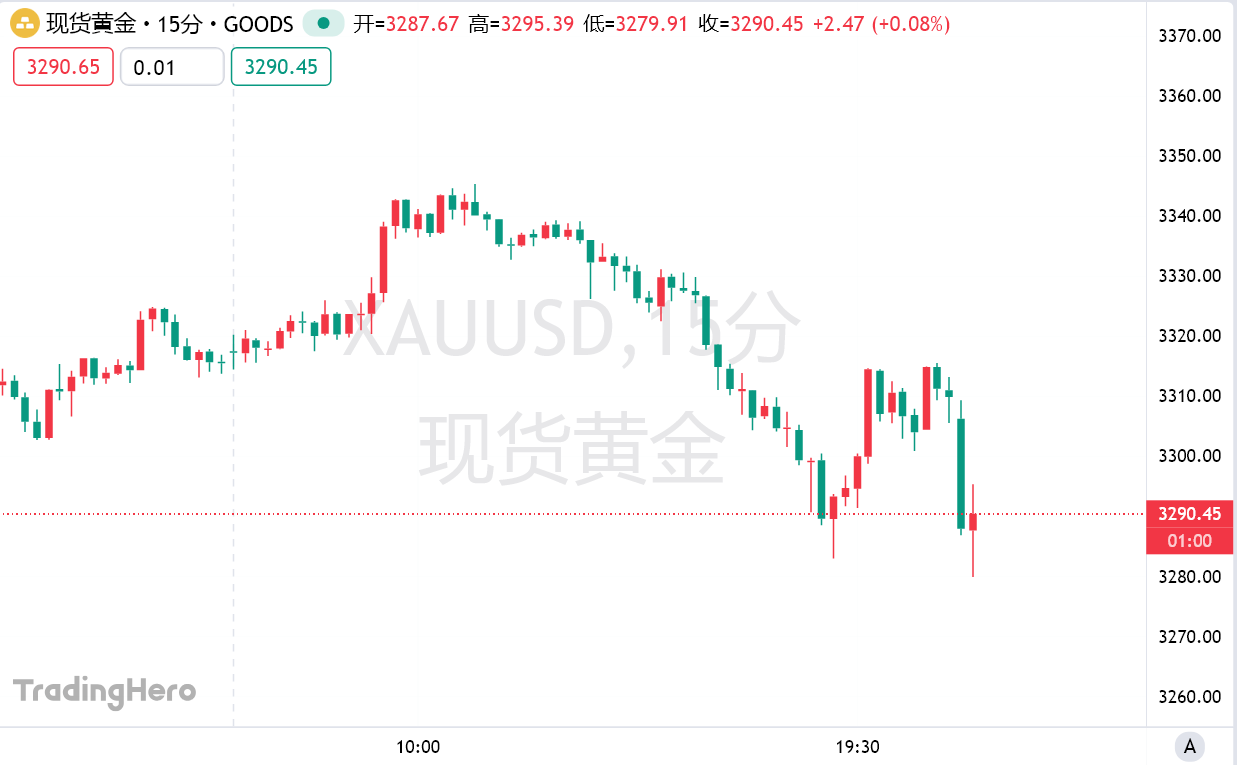
金荣中国:现货黄金自隔夜下探后重拾上涨,目前交投于3321美元附近
Sou Hu Cai Jing· 2025-05-25 02:41
基本面: 周五(5月23日)亚盘时段,现货黄金自隔夜下探后重拾上涨,目前交投于3321美元附近。经过本周前三个交易日的上涨后,周四亚市金价曾短暂触及3345 美元的两周高点,随后急转直下,最终收于3294美元附近。这场戏剧性转折背后,隐藏着美元走强、美债动荡和地缘政治三大变局的激烈角力。 周四美元指数强势反弹0.3%,一度回升至100关口上方,收报99.94附近。这种看似温和的涨幅对黄金市场却产生了放大效应。因为之前美元指数已经连续三 个交易日下跌,且创下了近两周新低。黄金市场另一大压力来自美债收益率的剧烈波动。30年期美债收益率触及19个月新高,反映出市场对3.8万亿美元新 增债务的深度忧虑。周三160亿美元20年期美债标售遇冷,更是印证了主权债券需求正在发生结构性变化。值得注意的是,美债市场正在形成诡异的"两极分 化"。短期国债因初请失业金人数降至22.7万人的良好数据获得支撑,而长期国债则因财政赤字恶化遭遇抛售。 多单: 3296附近轻仓多,止损3289,目标3345/3360附近 标普全球的调查数据揭示了更严峻的经济图景。美国5月投入价格指数飙升至63.4,企业收费价格指数跃升至59.3,这两个关键通 ...

突然!美联储,重大变数!
券商中国· 2025-05-23 15:16
美联储的降息前景再添变数。 5月23日,2025年FOMC票委、美国芝加哥联储主席古尔斯比表示,短期内降息的门槛"略高",但在未来10至 16个月内仍有可能降息。另外,美联储理事沃勒表示,如果特朗普政府的关税政策的影响能够稳定下来,预计 将在2025年下半年降息。但他同时警告称,如果特朗普政府恢复更高关税水平,将严重限制美联储利率政策的 操作空间。 据最新消息,美国总统特朗普当地时间23日在社交媒体上表示,建议自6月1日起对欧盟征收50%的关税。受此 影响,欧美股市全线大跌,纳指、标普500指数盘初均跌超1%,欧洲斯托克50指数、法国CAC40指数均大跌超 2%。 针对美联储持续暂停降息的决定,号称"华尔街一哥"的摩根大通CEO杰米·戴蒙表示,美联储在决定货币政策 之前采取的观望态度是正确的。对冲基金桥水的创始人达利欧也表示,美联储处境艰难,不应当降息。 降息前景存在变数之际,美联储的政策独立性得到了美国最高法院的支持。美国最高法院最新暗示,美联储是 一个"结构独特的准私人实体",美联储董事会成员将受到特别保护,不会被总统解雇。 "美联储不降息是正确的" 5月22日,摩根大通CEO杰米·戴蒙警告称,由于美国经 ...
每日机构分析:5月23日
Xin Hua Cai Jing· 2025-05-23 15:07
星展集团:新加坡核心通货膨胀将在今年剩余时间保持温和 美国银行:美国消费者信用卡支出在5月初出现放缓 澳新银行预测显示,截至2025年底,印度央行预计将会实施三次降息操作;鉴于目前印度的通胀压力并 不显著,而经济增长却显得疲软,这可能会推动印度央行持续采取宽松的货币政策以刺激经济。倘若 2025年第一季度的GDP数据未能达到预期,印度央行可能不得不下调本财年6.5%的经济增长预期。 美国银行指出,美国消费者信用卡支出从3月同比增长1.1%放缓至4月下半月的同比增长1%。5月前两 周,支出增长持平,没有同比增长;鉴于征收关税和相应的价格上涨导致经济不确定性依然很高,分析 师继续密切关注消费者的反应。 万神殿宏观经济公司认为,美国消费增长的减缓可能引发经济步入"停滞"阶段,尽管衰退或许可以避 免。企业界预期消费者需求将会减弱,并已经开始减少招聘人数。 预计裁员的步伐将加快,新的招聘活动也将减少,特别是在关税导致的价格上涨开始生效之后,消费者 支出从高于平均水平转向低于平均水平。 阿波罗全球管理公司首席经济学家认为,美国消费疲软是影响美国经济前景的主要风险,物价上涨可能 导致美联储在更长时间内维持较高利率;如果美国 ...


美国5月PMI意外回暖,细节之处暴露滞胀隐忧!
Jin Shi Shu Ju· 2025-05-22 14:29
Core Insights - The temporary trade agreement between the US and China has led to a rebound in US business activity in May, but the comprehensive tariffs imposed by President Trump have increased prices for businesses and consumers [1] - Despite the improvement in business sentiment, concerns about the negative impacts of Trump's policies persist, keeping sentiment slightly below the average level for 2024 [3] Economic Indicators - The S&P Global composite PMI output index rose from 50.6 in April to 52.1 in May, indicating private sector expansion [1] - The manufacturing PMI unexpectedly rebounded from 50.2 to 52.3, surpassing expectations of 50.1, while the services PMI increased from 50.8 to 52.3, contrary to predictions of stability [1] - New orders received by businesses increased from 51.7 in April to 52.4, primarily driven by manufacturing [3] Inflation and Costs - The prices paid by businesses for inputs surged from 58.5 in April to 63.4, the highest level since November 2022, indicating that companies are passing higher costs onto consumers [3] - The prices charged for goods and services rose from 54.0 to 59.3, marking the highest level since August 2022, suggesting a sharp increase in consumer price inflation [3] - Core personal consumption expenditures (PCE) inflation is expected to rise to approximately 3.5%, while GDP growth is projected to slow to below 1% this year [2] Employment and Labor Market - The employment index fell from 50.2 to 49.5, reflecting concerns about future demand, rising costs, and labor shortages [3] - Inventory investments have surged to an 18-year high due to fears of supply shortages and price increases related to tariffs [2]