流动性

Search documents
申万宏源证券晨会报告-20250512
Shenwan Hongyuan Securities· 2025-05-12 01:13
Group 1: Market Overview - The Shanghai Composite Index closed at 3342 points, with a 1-day decline of 0.3% and a 1-month increase of 1.92% [1] - The Shenzhen Composite Index closed at 1971 points, with a 1-day decline of 0.88% and a 1-month increase of 2.88% [1] - The large-cap index showed a 1-day decline of 0.15% but a 1-month increase of 4.65% [1] Group 2: Industry Performance - The personal care products industry saw a daily increase of 2.72% and a 1-month increase of 18.62% [1] - The banking sector, particularly joint-stock banks, experienced a daily increase of 1.64% and a 1-month increase of 7.68% [1] - The film and television industry faced a daily decline of 2.61% but had a 1-month increase of 2.12% [1] Group 3: Honey Snow Group (蜜雪集团) Insights - Honey Snow Group is the leading fresh beverage company in China, with a market share of 20.2% based on retail sales in 2023 [18] - The company operates 46,479 stores globally, making it the largest fresh beverage company by store count [18] - The fresh beverage market in China reached 517.5 billion yuan in 2023, with a projected compound annual growth rate of 22.2% from 2023 to 2028 [18][19] Group 4: Semiconductor Industry Insights - Semiconductor company SMIC reported a first-quarter utilization rate of 89.6%, with a year-on-year increase in wafer delivery volume of 27.7% [21] - The average selling price (ASP) for wafers decreased by 11.5% to 980 USD per piece due to production adjustments [21] - The company expects a slight revenue decline in the second quarter due to production fluctuations, while maintaining high capital expenditures [21] Group 5: Fund Performance Measurement - A new fund performance measurement method was developed, focusing on extracting similar fund samples and calculating their excess returns [15] - The model has shown a historical return of 112.96%, significantly outperforming the benchmark index [15][17] - The methodology aims to improve the efficiency of fund selection by addressing the limitations of traditional performance momentum strategies [15]
5月流动性:可以更加乐观
Shenwan Hongyuan Securities· 2025-05-11 09:14
Group 1 - The core viewpoint of the report indicates that the implementation of a series of monetary policies has set a positive tone for liquidity in May, with a 50 basis points reduction in the reserve requirement ratio and a 10 basis points cut in policy interest rates [8][9][22] - The report highlights that liquidity conditions are expected to remain optimistic in May, with the funding center gradually returning to the vicinity of policy interest rates [11][12] - The report notes that the recent easing of exchange rate pressures has alleviated constraints on funding rates, creating a favorable environment for the recent interest rate cuts [12][22] Group 2 - The report discusses the upcoming peak in government bond supply in the first half of the year, suggesting that liquidity pressures are unlikely to re-emerge due to the coordinated monetary policy [13][22] - It emphasizes that May is typically not a month of significant credit demand, which may lead to a natural easing of liquidity conditions [30][32] - The report mentions that the first quarter monetary policy execution report has removed references to "funds idling," indicating a more favorable liquidity environment in May [28][37] Group 3 - The report addresses the timing of resuming government bond purchases, suggesting that the current liquidity environment may not support such actions immediately, with a more favorable opportunity expected in the second half of the year [38][40] - It highlights that the recent easing measures have opened up space for trading, with short-term and medium-term bond yields declining, while long-term yields remain stable [41][42] - The report suggests that the yield curve may further steepen, indicating a potential for increased duration value as interest rates decline [43][47]
耶鲁、哈佛两大超级LP决定:抛售500亿PE投资组合
Sou Hu Cai Jing· 2025-05-10 01:11
Core Insights - Yale University and Harvard University are facing financial difficulties, leading to significant sell-offs of their private equity portfolios [2][4][6] - Yale plans to sell up to $6 billion of its private equity investments, which represents 15% of its endowment fund [2][4] - Harvard aims to sell approximately $1 billion in private equity assets and issue $750 million in taxable bonds to alleviate financial pressure [5][7] Group 1: Yale University - Yale's endowment fund totals $41.4 billion, but its return rate has declined to 5.7% for the fiscal year 2024, below the 10-year average of 9.5% [4] - Approximately one-third of Yale's endowment is allocated to private equity, which has become a burden due to low liquidity in the current market [4][9] - The decision to sell private equity holdings is aimed at increasing liquidity and providing room for future portfolio adjustments [4][9] Group 2: Harvard University - Harvard's endowment fund stands at $53.2 billion, with a return rate of 6.3% for the fiscal year 2024, also below its long-term target [6][7] - Harvard's financial situation is exacerbated by the freezing of $2.2 billion in federal funding and threats to its tax-exempt status [6][7] - The university's strategy includes selling private equity assets and issuing bonds to enhance liquidity and optimize its investment portfolio [7][9] Group 3: Broader Industry Context - U.S. university endowments are generally facing challenges such as declining investment returns, liquidity issues, and market volatility [9][10] - The overall investment environment for endowments has become more complex due to global economic uncertainties and geopolitical tensions [10] - Despite these challenges, there are opportunities for endowments to adjust their investment strategies and improve risk management [10]
宝城期货国债期货早报-20250509
Bao Cheng Qi Huo· 2025-05-09 01:55
投资咨询业务资格:证监许可【2011】1778 号 宝城期货国债期货早报(2025 年 5 月 9 日) 备注: 1.有夜盘的品种以夜盘收盘价为起始价格,无夜盘的品种以昨日收盘价为起始价格,当日日盘收盘 价为终点价格,计算涨跌幅度。 2.跌幅大于 1%为下跌,跌幅 0~1%为震荡偏弱,涨幅 0~1%为震荡偏强,涨幅大于 1%为上涨。 3.震荡偏强/偏弱只针对日内观点,短期和中期不做区分。 ◼ 主要品种价格行情驱动逻辑—金融期货股指板块 品种:TL、T、TF、TS ◼ 品种观点参考—金融期货股指板块 时间周期说明:短期为一周以内、中期为两周至一月 | 品种 | 短期 | 中期 | 日内 | 观点参考 | 核心逻辑概要 | | --- | --- | --- | --- | --- | --- | | TL2506 | 震荡 | 震荡 | 震荡偏强 | 区间震荡 主 | 降息预期兑现,短期震荡整理为 | 日内观点:震荡偏强 中期观点:震荡 参考观点:区间震荡 核心逻辑:昨日国债期货均小幅震荡反弹。中长期的角度看,外部环境变数较大,需要稳定的内部环 境来对冲,宏观政策将逐渐加码,央行实施适度宽松的货币政策,国债中长 ...
帮主深度解码:降准降息落地!普通人钱包要变厚还是变薄?
Sou Hu Cai Jing· 2025-05-08 12:08
Group 1 - The central bank's recent decision to cut the reserve requirement ratio (RRR) and interest rates is expected to have significant impacts on various sectors, particularly benefiting homebuyers with lower mortgage rates [3][4] - The reduction in the public housing loan interest rate by 0.25% allows first-time homebuyers to access rates below 3%, potentially saving substantial amounts over the life of a loan [3] - Increased liquidity of approximately 1 trillion yuan from the RRR cut is anticipated to invigorate the stock and real estate markets, with particular benefits expected for real estate and banking stocks [3][4] Group 2 - The decrease in interest rates for car loans and credit card installments is likely to stimulate consumer spending, although consumers should be cautious of potential hidden fees in promotional offers [4] - The employment market may see gradual improvements as companies find it easier to secure financing for expansion, but immediate job creation is not guaranteed [4] - Investment strategies should be diversified, with recommendations to consider government bonds and savings insurance products as alternatives to traditional savings accounts, which may see reduced interest rates [3][4]


【宏观洞见】资金面观察:4月流动性平稳宽松
Xin Hua Cai Jing· 2025-05-08 09:37
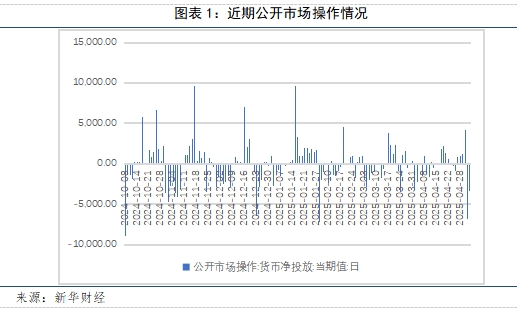
Core Viewpoint - The liquidity in the market remained stable and loose in April, but pressure is expected to increase in May due to accelerated government bond issuance and the maturity of MLF and reverse repos [1][4]. Group 1: Liquidity Trends - In April, the central bank maintained stable open market operations, with a total of 1.2 trillion yuan in reverse repos and a net injection of MLF for the second consecutive month, indicating a stable and loose liquidity environment [2][4]. - The People's Bank of China (PBOC) conducted a significant reverse repo operation on April 30, with a net injection of 422.8 billion yuan for the 7-day reverse repo [2]. - The total amount of reverse repos conducted in April was 1.2 trillion yuan, including 700 billion yuan for 3-month and 500 billion yuan for 6-month reverse repos [2]. Group 2: Interest Rate Trends - Overall, funding rates in April were low, with fluctuations due to government bond issuance and the "May Day" holiday, but remained at low levels [5]. - The 1-year and 5-year LPR remained unchanged at 3.1% and 3.6%, respectively, for six consecutive months, reflecting market expectations [7]. - The average monthly rate for DR007 in April was 1.73%, down 15 basis points from March, indicating a narrowing spread with the 7-day reverse repo rate [9]. Group 3: Outlook for Liquidity - In May, government bond supply is expected to be the largest influencing factor on liquidity, with an estimated issuance of approximately 1.34 trillion yuan in national bonds and 840 billion yuan in local bonds, totaling about 2.18 trillion yuan [10]. - The central bank's recent monetary policy measures, including a 0.5 percentage point reduction in reserve requirements, are expected to provide long-term liquidity support exceeding 1 trillion yuan [11]. - The current liquidity issues are primarily structural, and the central bank is expected to continue daily operations to maintain liquidity, focusing on increasing medium to long-term liquidity supply [11].
马来西亚央行:存款准备金率下调将释放约190亿林吉特的流动性。
news flash· 2025-05-08 08:07
Group 1 - The central bank of Malaysia has announced a reduction in the statutory reserve requirement ratio, which is expected to release approximately 19 billion ringgit in liquidity [1]
市场环境因子跟踪周报(2025.04.30):节前市场波动降低,节后风格或将转向-20250507
HWABAO SECURITIES· 2025-05-07 09:12
Quantitative Factors and Construction Methods 1. Factor Name: Market Style Factors - **Construction Idea**: The market style factors track the balance and volatility between different market styles, such as large-cap vs. small-cap and value vs. growth[11][13] - **Construction Process**: - **Style Balance**: Measure the relative performance of large-cap vs. small-cap stocks and value vs. growth stocks to determine the market's style preference[11] - **Style Volatility**: Calculate the fluctuations in the relative performance of these styles over time to assess the stability of the market's style preference[11] - **Evaluation**: The market style factors showed a balanced preference between large-cap and small-cap stocks, as well as between value and growth stocks. Additionally, the volatility of these styles continued to decline, indicating a more stable market environment[11][13] 2. Factor Name: Market Structure Factors - **Construction Idea**: These factors analyze the dispersion of returns, sector rotation, and trading concentration to understand the structural dynamics of the market[11][13] - **Construction Process**: - **Return Dispersion**: Measure the excess return dispersion across industry indices to evaluate the variability in sector performance[11] - **Sector Rotation**: Assess the speed of sector rotation by tracking changes in sector leadership over time[11] - **Trading Concentration**: Calculate the proportion of trading volume concentrated in the top 100 stocks and the top 5 industries to gauge market concentration[11] - **Evaluation**: The market structure factors indicated a decline in return dispersion, slower sector rotation, and reduced trading concentration, suggesting a more evenly distributed market environment[11][13] 3. Factor Name: Market Activity Factors - **Construction Idea**: These factors measure the overall activity and liquidity of the market through volatility and turnover rates[12][13] - **Construction Process**: - **Volatility**: Calculate the index-level volatility to assess market stability[12] - **Turnover Rate**: Measure the turnover rate of the market to evaluate trading activity[12] - **Evaluation**: The market activity factors showed a decline in both volatility and turnover rates, reflecting reduced market activity, likely influenced by the holiday period[12][13] 4. Factor Name: Commodity Market Factors - **Construction Idea**: These factors analyze the performance, momentum, and liquidity of various commodity sectors[27][30] - **Construction Process**: - **Trend Strength**: Measure the strength of price trends in different commodity sectors, such as energy, metals, and agriculture[27] - **Basis Momentum**: Calculate the basis momentum, particularly for the metals sector, to assess the relative strength of futures prices compared to spot prices[27][30] - **Volatility**: Track the volatility levels across commodity sectors to evaluate risk[27][30] - **Liquidity**: Measure the liquidity of commodity sectors to assess trading ease[27][30] - **Evaluation**: The commodity market factors showed mixed performance, with strong trends in energy and metals, weaker trends in agriculture, and high volatility across sectors. Liquidity remained stable overall[27][30] 5. Factor Name: Options Market Factors - **Construction Idea**: These factors analyze the implied volatility and skewness of options to infer market sentiment and expectations[35] - **Construction Process**: - **Implied Volatility**: Measure the implied volatility levels of options on major indices, such as the SSE 50 and CSI 1000, to gauge market uncertainty[35] - **Skewness**: Analyze the skewness of call and put options to understand market expectations for upward or downward movements[35] - **Evaluation**: The options market factors indicated a divergence in sentiment, with increased optimism for small-cap stocks (CSI 1000) and reduced optimism for large-cap stocks (SSE 50). This suggests a potential shift in market preference post-holiday[35] 6. Factor Name: Convertible Bond Market Factors - **Construction Idea**: These factors evaluate the valuation and trading activity of the convertible bond market[38] - **Construction Process**: - **Valuation**: Measure the average conversion premium of convertible bonds to assess their relative attractiveness[38] - **Trading Activity**: Track the trading volume and turnover in the convertible bond market to evaluate market interest[38] - **Evaluation**: The convertible bond market factors showed a slight increase in valuation, with trading activity continuing to recover, indicating improving market sentiment[38] --- Factor Backtesting Results 1. Market Style Factors - **Style Balance**: Balanced between large-cap and small-cap, as well as value and growth[11][13] - **Style Volatility**: Continued decline in volatility, indicating stability[11][13] 2. Market Structure Factors - **Return Dispersion**: Declined, indicating less variability in sector performance[11][13] - **Sector Rotation**: Slowed down, suggesting reduced changes in sector leadership[11][13] - **Trading Concentration**: Decreased, reflecting a more evenly distributed market[11][13] 3. Market Activity Factors - **Volatility**: Declined, indicating reduced market risk[12][13] - **Turnover Rate**: Decreased, reflecting lower trading activity[12][13] 4. Commodity Market Factors - **Trend Strength**: Strong in energy and metals, weak in agriculture[27][30] - **Basis Momentum**: Highest in metals, declined in other sectors[27][30] - **Volatility**: High across all sectors[27][30] - **Liquidity**: Stable overall[27][30] 5. Options Market Factors - **Implied Volatility**: Increased for both SSE 50 and CSI 1000, indicating higher uncertainty[35] - **Skewness**: Positive for CSI 1000 (small-cap optimism), negative for SSE 50 (large-cap caution)[35] 6. Convertible Bond Market Factors - **Valuation**: Slight increase in average conversion premium[38] - **Trading Activity**: Continued recovery in trading volume[38]
央行降息和黄金价格有什么关系?
Sou Hu Cai Jing· 2025-05-07 04:38
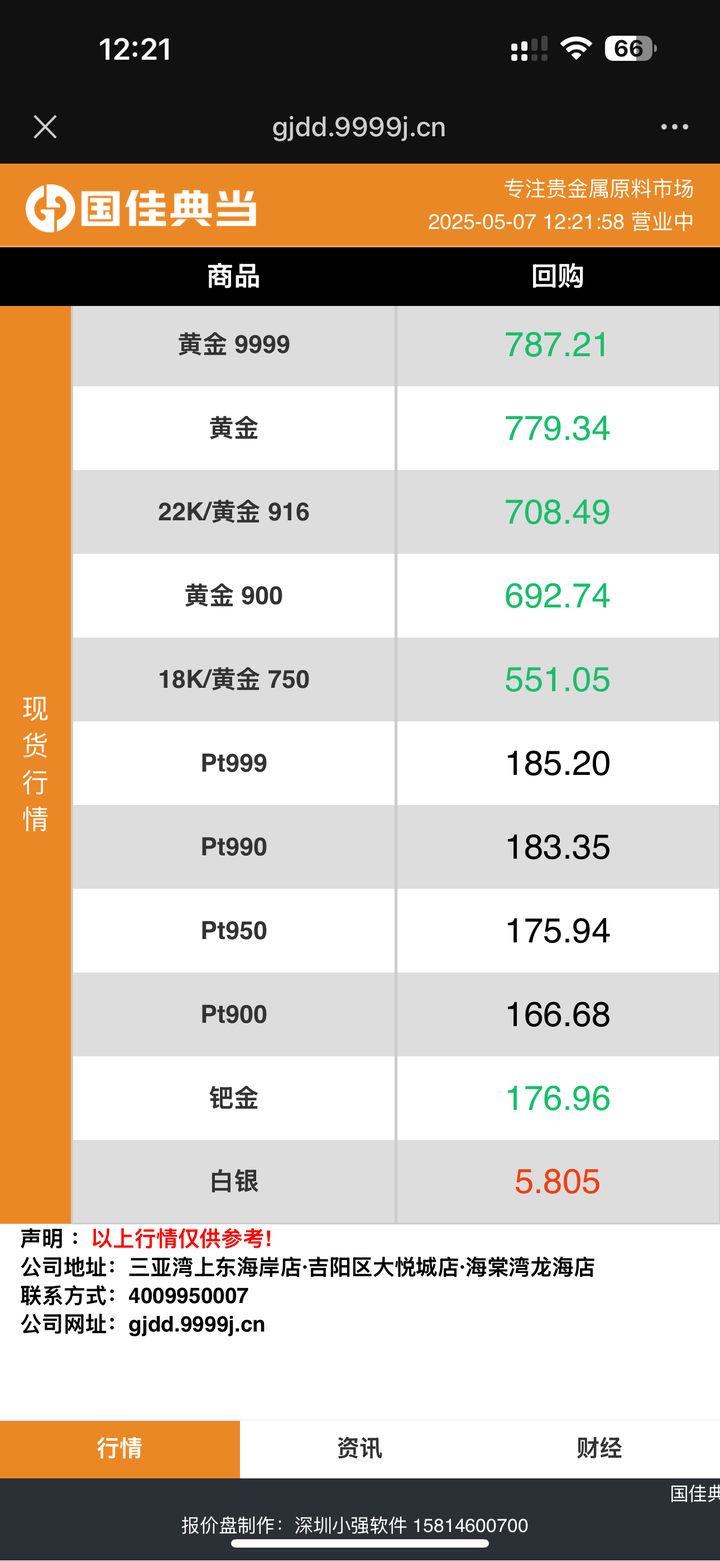
一、政策传导机制的即时效应 1. 美联储政策预期的博弈 1. 预期差与 "买预期、卖事实" 风险 1. 短期关注政策落地节奏 1. 实际利率下行驱动配置需求 2. 中国央行于 2025 年 5 月 7 日宣布降准 0.5 个百分点、降息 0.1 个百分点,直接压低名义利率34。 若通胀预期稳定(IMF 预测 2025 年全球通胀率 4.3%8),实际利率(名义利率 - 通胀)将进一步 下降。黄金作为零息资产,持有成本降低的优势凸显。例如,2020 年美联储零利率政策下,国际 金价全年涨幅达 25%1,而当前中国降息周期中,实际利率的边际变化可能推动黄金 ETF 持仓增 加,形成价格支撑。流动性宽松与资金分流 3. 本次降准释放约 1 万亿元长期流动性3,部分资金可能流入大宗商品市场。历史数据显示,宽松周 期中黄金表现强劲,如 2008 年金融危机后金价累计上涨超 300%1。当前市场流动性充裕,叠加 地缘风险(如俄乌冲突持续9、中东局势紧张10),避险资金可能加速流入黄金,形成 "流动性驱 动 + 避险需求" 的共振效应。汇率波动与内外盘价差 4. 降息可能加剧人民币贬值压力。2025 年 5 月 7 日美元 ...
连平:此时降准,将发挥多重作用
Sou Hu Cai Jing· 2025-05-07 04:01
目前美国对华综合累计税率已超过100%,今后还有可能会有更多的不确定性。这将不可避免地对中国出口、消费、投资乃至于GDP产生重大冲击。初步估 算,美国对华关税每加征10%,中国出口或下降2%-2.5%,在美国关税未减免的情况下,2025年中国出口有可能下滑8%-10%;2026年出口增速可能进一步 下降15%左右。随着出口受阻,消费和投资领域也将出现连锁效应,对出口、消费、投资的变化如果不加干预,不排除极端情况下2025年中国GDP增速可能 下降1.0-1.5个百分点。同时,股票市场也出现了较大波动。 除了支持政府债券发行之外,一方面需要支持商业银行加大信贷投放,尤其是增加对出口、农业、"卡脖子"等相关行业企业的资金支持。另一方面,还需要 支持政策性银行、商业银行、证券、保险、基金等头部金融机构与大型央企集团、众多上市公司增持金融资产,稳定股市,稳定市场信心。综合来看,市场 存在较大的资金缺口。 2.年内存准率还有进一步下调的空间 存准率变动与国内经济发展需求密切相关,服务于宏观调控的政策目标。随着我国金融市场总体规模逐步扩大,货币政策总量调节的传导链条将更加复杂, 存准率对市场总量的调节难度上升。我国货币政 ...