
美联储货币政策

Search documents
2026年03月02日:期货市场交易指引-20260302
Chang Jiang Qi Huo· 2026-03-02 04:00
Report Industry Investment Ratings - **Macro Finance**: Bullish on stock indices in the medium to long term, suggesting buying on dips; expecting government bonds to trade in a range [1][6] - **Black Building Materials**: Short - term trading for coking coal, range trading for rebar, and a strategy of shorting May and going long September for glass [1][8][9] - **Non - ferrous Metals**: Short - term range trading for copper, suggesting more observation for aluminum, moderately holding long positions on dips for nickel, range trading for tin, and both gold and silver expected to be in a strong - side oscillation, with lithium carbonate in a range oscillation [1][12][15] - **Energy and Chemicals**: Range trading for PVC, low - level oscillation for caustic soda, shorting on rallies for soda ash, going long on dips but not chasing highs for styrene and rubber, range trading for urea and methanol, and a strong - side oscillation for polyolefins [1][19][21] - **Cotton and Textile Industry Chain**: Oscillating with a strong bias for cotton and cotton yarn, apples, and dates oscillating [1][29][30][32] - **Agriculture and Animal Husbandry**: Caution against shorting the May contract of live pigs, with a strategy of shorting on rebounds; if the culling of laying hens does not accelerate, shorting on rebounds for near - month egg contracts; range trading for corn due to high short - term basis; shorting on rallies for soybean meal; and a strategy of going long on dips for soybean and palm oils as oils follow international crude oil in a strong - side oscillation [1][33][34][37] Core Views - Geopolitical conflicts such as the Iran situation and trade policy uncertainties are impacting the financial and commodity markets, affecting the supply and demand and price trends of various commodities [6][13] - The supply and demand fundamentals of different industries are in a state of change, with some industries facing supply - side challenges, while others are affected by seasonal and policy factors [8][19][25] - The prices of most commodities are expected to show different trends, including oscillations, strong - side oscillations, and range trading, and investors should adopt corresponding trading strategies according to different market conditions [1] Summary by Directory Macro Finance - **Stock Indices**: Geopolitical conflicts may put pressure on stock indices in the short term, but they are bullish in the medium to long term, and investors are advised to buy on dips [6] - **Government Bonds**: With the release of policy signals and the approaching of the Two Sessions, government bonds are expected to oscillate with a strong bias [6] Black Building Materials - **Coking Coal**: After the Spring Festival, the coking coal market is weak and stable. Mines are resuming production, but trading is weak, and short - term trading is recommended [8] - **Rebar**: The rebar futures price is oscillating. It has a low static valuation and weak driving forces. It is expected to oscillate in the context of low - valuation and weak - driving, and range trading is recommended [8] - **Glass**: The glass market is in a pattern of weak reality and strong expectation. The short - term fundamentals are deteriorating, and a strategy of shorting May and going long September is recommended [9][10] Non - ferrous Metals - **Copper**: Policy uncertainties and supply - demand contradictions coexist. The short - term price is expected to oscillate in the range of 98,000 - 106,000 yuan/ton, and range trading is recommended [12][13][14] - **Aluminum**: The supply expectation is improving, but the market sentiment for being bullish on non - ferrous metals remains. It is recommended to strengthen observation [15] - **Nickel**: Affected by the reduction of nickel ore quotas in Indonesia, the ore end has strong support, and it is recommended to moderately hold long positions on dips [16][17] - **Tin**: The supply of tin ore is tight, and the downstream demand is in a state of rigid procurement. It is expected to oscillate with a strong bias, and range trading is recommended [17] - **Gold and Silver**: Due to geopolitical conflicts and the weakening of the US economic data, the mid - term price centers of gold and silver are moving up, and they are expected to oscillate with a strong bias. It is recommended to build long positions on dips after sufficient price corrections [18] - **Lithium Carbonate**: Supply disturbances reappear, and the price is expected to continue to oscillate with a strong bias, and range trading is recommended [19] Energy and Chemicals - **PVC**: The supply is high, the domestic demand is weak, and the inventory is high. However, it has a low valuation, and range trading is recommended, focusing on policies and cost disturbances [19][21] - **Caustic Soda**: The demand support is weak, there is inventory pressure in the short term, and it is expected to oscillate at a low level, focusing on supply - side maintenance and downstream replenishment [21] - **Soda Ash**: The supply is in excess, the inventory pressure is increasing, and it is recommended to short on rallies [28][29] - **Styrene**: Supported by cost and with low inventory accumulation during the Spring Festival, it is expected to oscillate with a strong bias, and it is recommended to go long on dips but not chase highs [22][23] - **Rubber**: The supply of raw materials is shrinking, and there is a short - term upward expectation. It is recommended to go long on dips but not chase highs [23] - **Urea**: After the Spring Festival, the supply and demand are both increasing. The price is expected to be strong in March and may be under pressure later, and range trading is recommended [24][25] - **Methanol**: The war in Iran may cause a supply gap, and the price may be pushed up in the short term. The supply and demand are both at a relatively high level, and range trading is recommended [27] - **Polyolefins**: Affected by geopolitical conflicts and cost support, they are expected to oscillate with a strong bias, focusing on downstream demand and inventory [28] Cotton and Textile Industry Chain - **Cotton and Cotton Yarn**: The new - year global cotton supply and demand situation is changing, and the price is expected to oscillate with a strong bias after the festival [29] - **Apples**: The apple trading is stable, and the price is expected to oscillate with a strong bias [30][31] - **Dates**: The acquisition price of Xinjiang gray dates in the 2025 production season is in a certain range, and the price is expected to oscillate [32] Agriculture and Animal Husbandry - **Live Pigs**: In the short term, the pig price is oscillating at a low level, and the May contract is recommended to be shorted on rebounds. In the long term, the price may strengthen, but the increase is limited [33] - **Eggs**: The egg price has a bottom support, but the supply is sufficient, and if the culling does not accelerate, it is recommended to short on rebounds for near - month contracts [34] - **Corn**: The short - term price is in a range oscillation, and the medium - to long - term supply - demand pattern is relatively loose, and range trading is recommended [35][36] - **Soybean Meal**: The domestic soybean meal price is under pressure, and it is recommended to short on rallies [37] - **Oils**: Oils are expected to oscillate with a strong bias following international crude oil, and it is recommended to go long on dips for soybean and palm oils [37][42]
南华宏观热点:美伊以热战突袭:谁在博弈?市场何去何从?
Nan Hua Qi Huo· 2026-03-01 08:00
Group 1: Report Overview - The report analyzes the recent military conflict between the US, Israel, and Iran, covering aspects such as conflict origin, nature, strategic goals, economic impacts, and war scenario projections [2][3] Group 2: Conflict Origin - The conflict is a result of decades - long development of the Iranian nuclear issue, including the end of the Iran Nuclear Deal in 2025, political and economic turmoil in Iran, and the long - term escalation of confrontation among the US, Israel, and Iran [4][6] - The US - Israel coalition aims to destroy Iran's nuclear facilities and promote regime change, while Iran aims to defend national sovereignty and regime stability [6] Group 3: Conflict Nature and US Action Timing - The conflict is a combination of the US's need to maintain Middle - East hegemony, Trump's political calculation for the 2026 election, and Israel's preventive strike against Iran's nuclear threat [7] - The US chose to act due to the 2026 election window, Iran's domestic unrest, energy market buffer, and the lack of unified international intervention [8] Group 4: Strategic Goals of the Three Parties - The US aims for regime change in Iran, elimination of nuclear threats, and consolidation of Middle - East hegemony [9] - Israel focuses on eliminating Iran's nuclear and military threats and strengthening its military advantage in the region [10] - Iran aims to defend its regime, maintain nuclear sovereignty, and promote conflict de - escalation through counter - attacks and diplomacy [11] Group 5: Macroeconomic Conduction Effects - The conflict's impact on the macro - economy is mainly through the "energy price → inflation level → economic growth → monetary policy" chain [12] - The Fed is likely to maintain a wait - and - see stance, with a delayed but not reversed easing policy [13] - The conflict may disrupt the global supply chain if the Red Sea - Suez Canal route is affected [14] Group 6: War Scenario Projections - Four core variables determine the war's direction: Iran's counter - attack red lines, the flexibility of US - Israel strategic goals, Iran's regime cohesion, and international mediation [15][16][17] - Four scenarios are projected: escalation, benchmark, out - of - control, and reversal [18][19] - Key time windows include March 1 - 3, March 3 - 5, March 7 - 15, and March 20, each with specific observation points [19][20][21] - Black swan and grey rhino events, such as high US casualties and Strait of Hormuz blockade, may significantly change the war's direction [22]
沃什提名罕见卡关、鲍威尔留任悬而未决,美联储货币政策前景再添巨大不确定性
Sou Hu Cai Jing· 2026-02-28 03:10
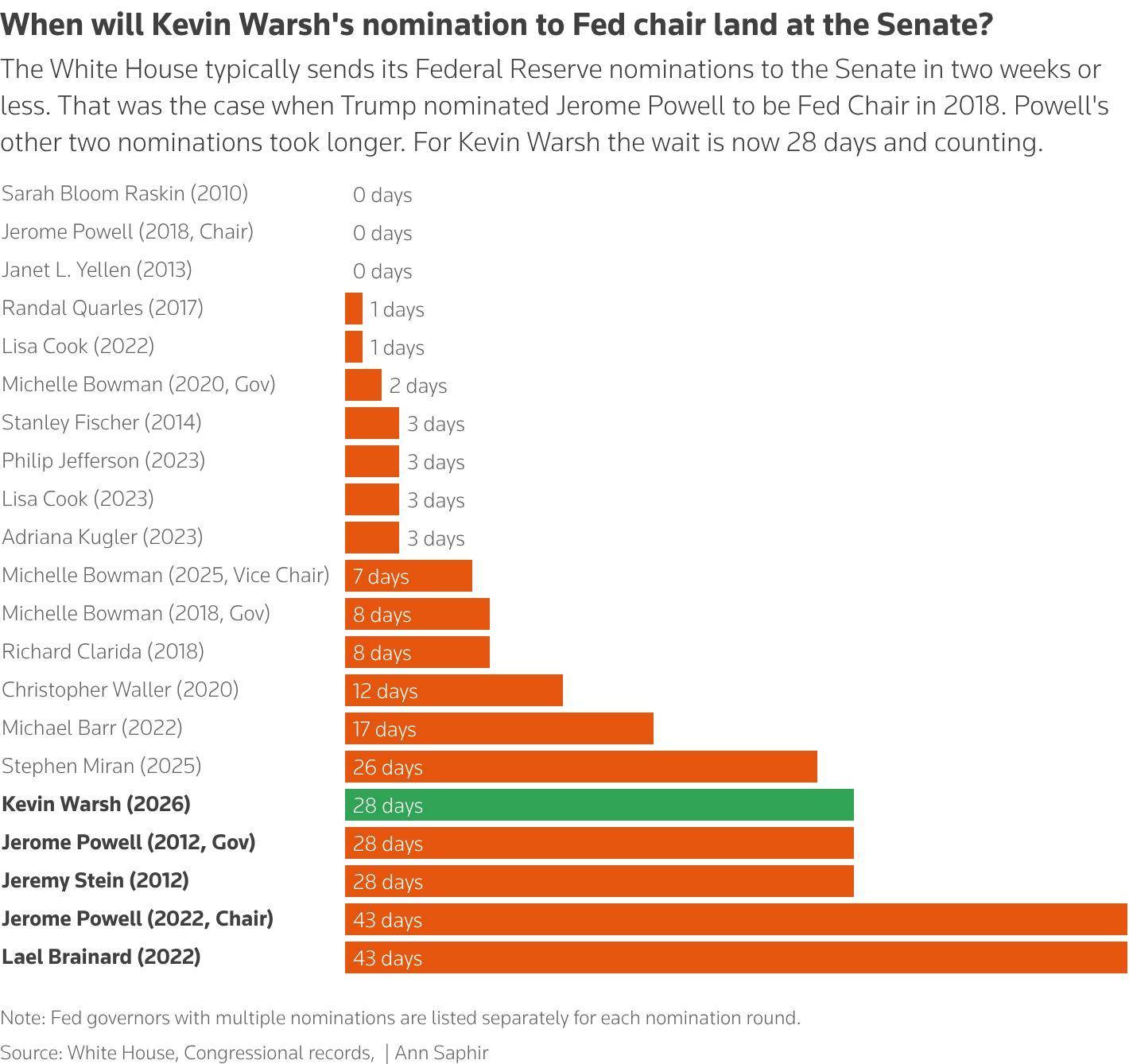
Core Viewpoint - The delay in the nomination of Kevin Warsh to replace Jerome Powell as the Federal Reserve Chairman adds uncertainty to an already politically charged situation, raising concerns about the Fed's independence in setting monetary policy [1][4]. Group 1: Nomination Process - President Trump announced Warsh as his nominee for the Fed Chair four weeks ago, but the nomination has not progressed, which is unusual since only two similar cases have occurred since 2010 [4]. - Senator Thom Tillis has pledged to block any Fed nominations until the Justice Department's investigation into Powell regarding the Washington Fed building renovation is resolved [4][5]. - The White House is reportedly working with the Senate to expedite Warsh's confirmation, asserting that he is qualified to restore the Fed's decision-making capability [5]. Group 2: Investigation and Political Pressure - Powell disclosed a Justice Department investigation in January, describing it as part of the Trump administration's ongoing pressure to force the Fed to lower interest rates [6]. - Reports indicate that the Fed has requested a judge to dismiss subpoenas issued in the investigation, but the Fed has not commented on this [6]. Group 3: Timing and Implications - With only 11 weeks remaining until Powell's term ends on May 15, the timeline for confirmation is tighter than usual for Fed nominees [7]. - If Warsh's confirmation process is prolonged, it could create a "hanging" situation for both the nominee and the Fed as the June 16-17 meeting approaches, which may be the earliest opportunity to discuss interest rate cuts [7]. Group 4: Leadership Dynamics - The expected transition from current Fed Governor Stephen Miran to Warsh would replace one supporter of rate cuts with another, potentially allowing Trump appointees to gain a majority on the seven-member Fed Board [8]. - If Powell chooses to remain on the Board after his term ends, it would be an unusual move, indicating ongoing concerns about the Fed's independence amid unprecedented political pressure [9]. - Even if Powell stays, it is likely that the Federal Open Market Committee (FOMC) will follow established practices, with Warsh leading the committee, which may complicate his efforts to advocate for rate cuts [10].

意外升温!美国1月核心PPI创一年最快增速,美联储货币政策复杂化加剧
Sou Hu Cai Jing· 2026-02-27 15:26
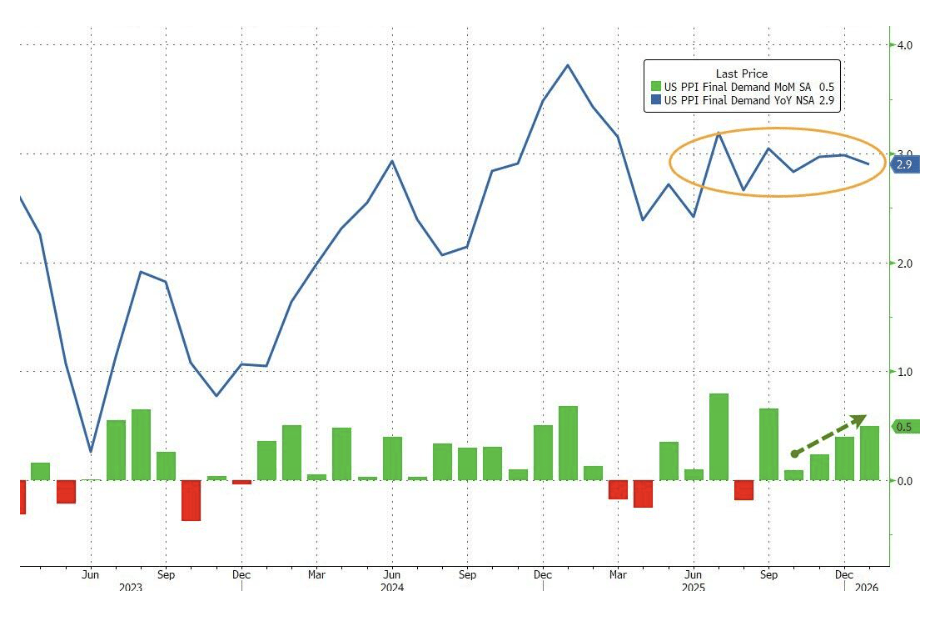
Core Insights - The Producer Price Index (PPI) for January in the U.S. rose unexpectedly, indicating persistent inflationary pressures, primarily driven by soaring service costs [1][4] - The core PPI, excluding food and energy, showed significant month-over-month and year-over-year increases, marking the fastest growth in nearly a year [1][8] PPI Performance - January's PPI increased by 0.5% month-over-month, surpassing the expected 0.3% [2] - The core PPI rose by 0.8% month-over-month, significantly above the anticipated 0.3% and the previous value of 0.7% [3][8] - Year-over-year, the core PPI reached 3.6%, exceeding the forecast of 3.0% and the prior value of 3.3% [1][8] Service Costs Impact - The increase in PPI was largely driven by the service sector, with final demand services rising by 0.8%, the largest monthly increase in recent times [5] - Wholesale and retail trade service profit margins surged by 2.5%, while transportation and freight service prices increased by 1.0% [5] Commodity Prices Trends - In contrast, final demand goods prices fell by 0.3% month-over-month, primarily due to a 2.7% decline in energy prices and a 1.5% drop in food prices [7] - Excluding food and energy, core goods prices rose by 0.7%, marking one of the largest monthly increases since early 2022 [7] Implications for Core PCE - The robust PPI data suggests that inflationary pressures remain at the supply chain level, potentially leading to an upward revision of the core Personal Consumption Expenditures (PCE) price index [10] - The strong performance of the PPI may result in the core PCE exceeding expectations, which is a key focus for policymakers at the Federal Reserve [10]
美银放话:金价要上6000!但先得跨过这道“春坎”
Xin Lang Cai Jing· 2026-02-27 03:17
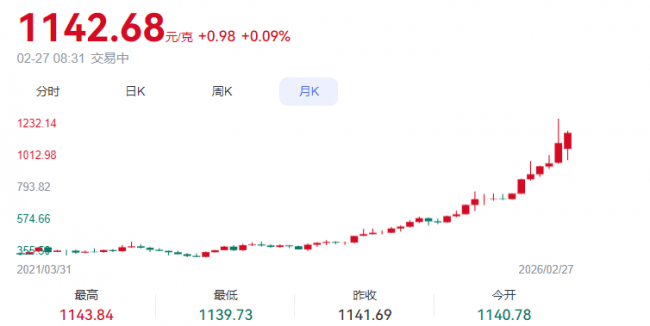
Core Viewpoint - Gold prices are struggling to surpass $5,200 per ounce, with potential for an increase by year-end, but a major bank anticipates further consolidation in spring [3][10]. Group 1: Current Market Situation - The latest trading price for spot gold is $5,174 per ounce, reflecting a monthly increase of over 5% [3][8]. - Despite recent resistance, the market is expected to end the month on a stable note due to a rebound from late January sell-offs [3][10]. Group 2: Future Price Predictions - Analysts from Bank of America reaffirm a target price of $6,000 per ounce for gold over the next 12 months, acknowledging recent resistance as investors adapt to higher prices [5][10]. - There are concerns regarding the pace at which investors are increasing their exposure to gold, which may lead to a period of weakness in prices during spring [5][10]. Group 3: Economic Influences - The gold market is influenced by uncertainties surrounding U.S. tariff policies and the need for clearer monetary policy from the Federal Reserve [11]. - The recent historic pullback was partly due to the nomination of Kevin Warsh as the new Fed chair, who is seen as a traditional central banker [11][12]. Group 4: Interest Rates and Federal Reserve Policies - Analysts note that while a weak dollar typically supports gold prices, the impact of interest rates is a more significant concern [6][11]. - Warsh's intention to lower policy rates could support gold prices, but the Fed's challenge in managing its large balance sheet remains a critical issue [6][12]. - The potential for quantitative tightening to reduce bank reserves may lead to liquidity shortages, affecting the monetary market [12].


中信期货晨报:国内商品期市收盘涨跌参半,基本金属涨幅居前-20260227
Zhong Xin Qi Huo· 2026-02-27 01:51
1. Report Industry Investment Rating - No information provided in the report regarding the industry investment rating. 2. Core Viewpoints of the Report - The domestic commodity futures market closed with mixed results, with base metals leading the gains. The A - share market is expected to continue its moderate upward trend after the opening, but the slope will be slower than in January. The RMB is expected to continue to strengthen in the second quarter. Most varieties in the market are expected to show an oscillatory trend in the short - term [16]. 3. Summary by Relevant Catalogs 3.1 Financial Market Fluctuations - **Stock Index Futures**: On February 25, 2026, the CSI 300 futures price was 4731.4, with a daily increase of 0.9%, a weekly increase of 2.26%, a monthly increase of 0.43%, a quarterly increase of 2.86%, and an annual increase of 2.86%. The Shanghai - Shenzhen 50 futures, CSI 500 futures, and CSI 1000 futures also showed different degrees of increase [2]. - **Treasury Bond Futures**: The 2 - year, 5 - year, 10 - year, and 30 - year treasury bond futures showed different degrees of decline on February 25, 2026, with the 30 - year treasury bond futures having the largest daily decline of 0.48% [2]. - **Foreign Exchange**: The US dollar index was 97.6594 on February 25, 2026, with a daily decline of 0.24%, a weekly decline of 0.09%, a monthly increase of 0.56%, and an annual decline of 0.62%. The US dollar intermediate price decreased by 202 pips daily [2]. - **Interest Rates**: The 10 - year US Treasury bond yield was 4.05 bp on February 25, 2026, with a daily increase of 1 bp, a weekly decline of 3 bp, a monthly decline of 21 bp, and an annual decline of 13 bp [2]. 3.2 Fluctuations of Popular Industries - On February 26, 2026, the defense and military industry had a daily increase of 1.62%, a weekly increase of 4.8%, a monthly increase of 6.07%, a quarterly increase of 10.92%, and an annual increase of 10.92%. The consumer services industry had a daily decline of 1.41%, a weekly decline of 5.6%, a monthly decline of 4.96%, a quarterly decline of 4.37%, and an annual decline of 4.37% [5]. 3.3 Fluctuations of Overseas Commodities - On February 25, 2026, NYMEX WTI crude oil was priced at 65.57, with a daily decline of 0.09%, a weekly decline of 1.12%, a monthly decline of 0.26%, a quarterly increase of 14.21%, and an annual increase of 14.21%. COMEX gold was priced at 5183.7, with a daily increase of 0.14%, a weekly increase of 1.05%, a monthly increase of 5.63%, a quarterly increase of 19.66%, and an annual increase of 19.66% [8]. 3.4 Macroeconomic Summary - **Domestic Macroeconomy**: During the Spring Festival, travel and consumption performed well, while real - estate sales were at a seasonal low. The social financing at the beginning of January was stable, with strong government - sector financing and private - sector financing in line with expectations [16]. - **Overseas Macroeconomy**: The US economy showed a slowdown in overall expansion and structural differentiation in multiple fields. In February 2026, the US economic sentiment and consumer confidence weakened, and the private - sector expansion slowed down [16]. - **Major Asset Classes**: The US - Iran geopolitical situation and Trump's tariff policy may support the prices of gold and silver in the short - term. The A - share market is expected to continue its moderate upward trend, while the black - metal sector and the domestic bond market may continue to oscillate. The RMB is expected to strengthen in the second quarter [16]. 3.5 Viewpoint Highlights - **Financial Sector**: Stock index futures are expected to be oscillating and bullish, stock index options are expected to oscillate, and treasury bond futures are expected to oscillate [17]. - **Precious Metals**: Gold and silver are expected to be oscillating and bullish [17]. - **Shipping**: The container shipping route to Europe is expected to oscillate [17]. - **Black Building Materials**: Most varieties in this sector, such as steel, iron ore, and coke, are expected to oscillate [17]. - **Non - ferrous Metals and New Materials**: Most non - ferrous metals and new materials, such as copper, aluminum, and nickel, are expected to oscillate, with some showing an oscillating and bullish trend [17]. - **Energy and Chemicals**: Most energy and chemical products, such as crude oil, LPG, and asphalt, are expected to oscillate [20]. - **Agriculture**: Most agricultural products, such as natural rubber, cotton, and sugar, are expected to oscillate, with some showing an oscillating and bullish or bearish trend [20].
2026年黄金价格走势深度分析(最新预测+影响因素详解)
Sou Hu Cai Jing· 2026-02-27 01:50
Core Viewpoint - The global gold market is experiencing high volatility in February 2026, with prices fluctuating around $5188 per ounce, driven by factors such as Federal Reserve interest rate expectations, central bank gold purchases, and geopolitical risks [1][3][6]. Price Trend Analysis - **Early February**: Gold prices surged from $5020 to $5248.89 per ounce, supported by rising expectations of a Federal Reserve rate cut and significant central bank gold purchases, totaling 320 tons [3][4]. - **Mid-February**: Prices corrected to around $5130 per ounce due to profit-taking and hawkish statements from Federal Reserve officials, with a 1.1% decline in domestic gold T+D prices [4]. - **Late February**: Prices stabilized around $5188.51 per ounce, influenced by ongoing geopolitical tensions and continued central bank gold purchases [5]. Key Influencing Factors - **Federal Reserve Monetary Policy**: The Fed's policy is a primary driver of gold prices, with expectations of rate cuts influencing market sentiment. Predictions for 2026 vary, with some institutions forecasting multiple rate cuts while others anticipate stability or even rate hikes [6][12]. - **Global Central Bank Gold Purchases**: Central banks are expected to maintain high levels of gold purchases, with 2026 projections between 700-850 tons, significantly supporting gold prices [7][12]. - **Geopolitical Risks**: Ongoing geopolitical tensions, particularly in the Middle East, are contributing to short-term volatility in gold prices, as investors seek safe-haven assets [8][12]. Price Movement Logic - **Reasons for Price Increase**: The primary drivers for potential price increases include expectations of Federal Reserve rate cuts, continuous central bank gold purchases, and persistent geopolitical risks [12]. - **Reasons for Price Decrease**: Potential risks for price declines include less aggressive Fed policies than expected, easing geopolitical tensions, and short-term profit-taking [13]. Price Forecasts - **Institutional Predictions**: Predictions for gold prices in 2026 show a bullish outlook from major institutions, with target prices ranging from $5400 to $6300 per ounce, driven by central bank purchases and geopolitical factors [14][15]. - **Market Sentiment**: Influencers on social media platforms suggest a long-term price range of $5000 to $6300 per ounce, with expectations of reaching $6000 by year-end [14][16]. Investment Recommendations - **Long-term Strategy**: Investors are advised to prioritize gold ETFs and physical gold, maintaining a position of 10%-15% of their portfolio, with opportunities to increase holdings during price corrections [17]. - **Short-term Strategy**: Focus on trading around key support and resistance levels, with timely profit-taking and loss-cutting strategies [17].
招商期货-期货研究报告:商品期货早班车-20260227
Zhao Shang Qi Huo· 2026-02-27 01:45
1. Report Industry Investment Ratings No information provided in the report. 2. Core Views of the Report - The precious metals market is gradually recovering from previous declines. Gold is recommended to hold long positions, and the long - term outlook remains positive. Silver has increased spot price volatility, so caution is advised [1]. - For base metals, copper is expected to remain range - bound in the short term and look for low - buying opportunities in the medium term. Aluminum is expected to maintain a price range in the short term. Alumina's price decline is limited, and attention should be paid to the maintenance and shutdown of alumina plants. Lead is recommended to sell on rallies, and zinc should be traded within a range. Lithium carbonate is expected to have high - level oscillations, and tin is recommended to buy on dips [2][3]. - In the black industry, for rebar, long positions should be closed, and aggressive investors can try to short the hot - rolled coil 2605 contract. Iron ore should be observed. For coking coal, long positions should be closed, and aggressive investors can try to short the coking coal 2605 contract [4][5]. - In the agricultural products market, soybeans are expected to be strong, and domestic soybean meal is expected to be volatile and strong. Corn futures are expected to be volatile and strong. Oils are expected to be weak, and a reverse spread strategy can be used. Cotton is recommended to buy on dips. Egg and hog futures are expected to be volatile and weak [6][7]. - In the energy and chemical industry, LLDPE and PP are expected to be volatile in the short term, and attention should be paid to the US - Iran event. PVC and soda ash are recommended to wait and see. PX is recommended to be long - allocated, and PTA should take appropriate profits. Glass is recommended to buy glass and sell soda ash. MEG is recommended to look for short - term long - buying opportunities. Crude oil is recommended to buy out - of - the - money put options on SC04 when the price is high. Styrene is expected to be volatile in the short term and long - bought in the second quarter [8][9][10]. 3. Summary by Related Catalogs Precious Metals - **Market Performance**: International gold prices denominated in London Gold rose, and international silver prices denominated in London Silver fell [1]. - **Fundamentals**: Nvidia's annual report performance did not ease market concerns, and its stock price fell. The Fed governor expects to cut interest rates in 2026. The third - round of US - Iran negotiations ended. There were changes in domestic and international gold and silver inventories, and India's silver imports increased [1]. - **Trading Strategy**: Hold long positions in gold and be cautious in participating in the silver market [1]. Base Metals Copper - **Market Performance**: Copper prices fluctuated [2]. - **Fundamentals**: Nvidia's stock price decline weakened market risk appetite. The supply of copper ore remained tight, and short - term global visible inventories increased significantly [2]. - **Trading Strategy**: Range - bound in the short term and look for low - buying opportunities in the medium term [2]. Aluminum - **Market Performance**: The closing price of the electrolytic aluminum main contract decreased by 0.17% [2]. - **Fundamentals**: Electrolytic aluminum plants maintained high - load production, and the weekly aluminum product start - up rate increased slightly [2]. - **Trading Strategy**: The price is expected to remain range - bound in the short term, and attention should be paid to downstream resumption of work, US tariff policies, and overseas production capacity changes [2]. Alumina - **Market Performance**: The closing price of the alumina main contract decreased by 1.74% [2]. - **Fundamentals**: Some alumina plants entered the production - reduction and maintenance stage, and electrolytic aluminum plants maintained high - load production [2]. - **Trading Strategy**: The price decline is limited, and attention should be paid to the maintenance and shutdown of alumina plants [3]. Zinc and Lead - **Market Performance**: The zinc and lead main contracts had price changes, and inventories increased [3]. - **Fundamentals**: For lead, the processing fee at the mine end was low, production decreased, and demand was limited. For zinc, the processing fee was low, production decreased seasonally, and the supply - demand imbalance persisted [3]. - **Trading Strategy**: Sell lead on rallies and trade zinc within a range [3]. Lithium Carbonate - **Market Performance**: The price of lithium carbonate rose [3]. - **Fundamentals**: The price of Australian lithium spodumene concentrate increased, production and demand had changes, and inventory decreased [3]. - **Trading Strategy**: The price is expected to oscillate at a high level, and the market will focus on the supply - side Zimbabwe export ban [3]. Tin - **Market Performance**: Tin prices rose sharply [3]. - **Fundamentals**: Market risk appetite decreased, but there was speculation about supply problems due to the turmoil in Myanmar, and funds actively increased positions [3]. - **Trading Strategy**: Buy on dips [3]. Black Industry Rebar - **Market Performance**: The rebar main 2605 contract price decreased [4]. - **Fundamentals**: The supply - demand contradiction of steel was not significant. The demand for building materials was weak, and the supply decreased year - on - year. The demand for plates was stable, and exports remained high. Steel billet inventory was at a historical high, and the inventory of five major steel products was close to the historical average. Steel mills were in a loss state, and production increase was limited. The valuation of hot - rolled coils and rebar futures was polarized [4][5]. - **Trading Strategy**: Close long positions, and aggressive investors can short the hot - rolled coil 2605 contract [5]. Iron Ore - **Market Performance**: The iron ore main 2605 contract price increased [5]. - **Fundamentals**: The supply - demand of iron ore was neutral. The iron - making water production was basically the same year - on - year. There was no further plan for coke price increase. Steel mill profits were poor, and blast furnace production might decrease. The supply was in line with the seasonal pattern and increased slightly year - on - year. Port iron ore inventory was high, and there was a structural contradiction. The valuation was neutral [5]. - **Trading Strategy**: Observe mainly [5]. Coking Coal - **Market Performance**: The coking coal main 2605 contract price decreased [5]. - **Fundamentals**: Steel mill profits were poor, and blast furnace production might decrease. The first - round price increase of coking coal was implemented, and there was no further plan. The inventory at different links was polarized, and the overall inventory was at a medium level. The futures price of the 05 contract was at a premium to the spot price, and the valuation was high [5]. - **Trading Strategy**: Close long positions, and aggressive investors can short the coking coal 2605 contract [5]. Agricultural Products Market Soybean Meal - **Market Performance**: The overnight CBOT soybean price changed little [6]. - **Fundamentals**: South America had a high - yield expectation. US soybean crushing was strong, and export expectations were high. The overall supply - demand of US soybeans was expected to improve, but the global supply - demand was expected to be loose [6]. - **Trading Strategy**: Trade on the expectation of China's increased purchase of US soybeans, and pay attention to US soybean exports and South American production [6]. Corn - **Market Performance**: Corn futures prices were strong, and spot prices in the Northeast increased [6]. - **Fundamentals**: The grain - selling progress was over 60%, and the pressure was not large. Attention should be paid to the grain - selling pressure of ground - stored grain after the temperature rise. The inventory of downstream feed and deep - processing enterprises was at the same level as before, and the inventory at north - south ports was low, but downstream enterprises were in a loss state [6]. - **Trading Strategy**: The futures price is expected to be volatile and strong [6]. Oils - **Market Performance**: Malaysian palm oil prices fell [6]. - **Fundamentals**: The production in Malaysia from February 1 - 20 decreased by 12% month - on - month, and exports from February 1 - 25 decreased by 12% month - on - month. The supply - demand was weak [6]. - **Trading Strategy**: Trade on the expectation of seasonal production increase and use a reverse spread strategy [6]. Cotton - **Market Performance**: The overnight ICE US cotton futures price oscillated and decreased, and the international crude oil price fluctuated widely [7]. - **Fundamentals**: US cotton export sales decreased. The domestic Zhengzhou cotton futures price oscillated after rising and then falling. The textile enterprise's in - stock cotton inventory increased [7]. - **Trading Strategy**: Buy on dips in the price range of 15100 - 15500 yuan/ton [7]. Eggs - **Market Performance**: Egg futures prices were weak, and spot prices decreased slightly [7]. - **Fundamentals**: After the Spring Festival, it was the traditional off - season for egg demand. The overall supply was sufficient, and egg prices were expected to be low [7]. - **Trading Strategy**: The futures price is expected to be volatile and weak [7]. Hogs - **Market Performance**: Hog futures prices oscillated narrowly, and spot prices mostly rebounded [7]. - **Fundamentals**: After the Spring Festival, the supply was strong and the demand was weak. The daily slaughter volume was expected to increase, and the futures and spot prices were expected to be weak [7]. - **Trading Strategy**: The futures price is expected to be volatile and weak [7]. Energy and Chemical Industry LLDPE - **Market Performance**: The LLDPE main contract price decreased slightly. The basis was weak, and the market transaction was average. The overseas price was stable, and the import window was closed [8]. - **Fundamentals**: There was no new device put into production in the first half of the year, and some existing devices reduced production or stopped. The import volume was expected to decrease slightly. The downstream demand was weak, but it would enter the peak season in March and April [8]. - **Trading Strategy**: It is expected to be volatile in the short term, and attention should be paid to the US - Iran event [8]. PVC - **Market Performance**: The V05 contract price decreased by 2% [8]. - **Fundamentals**: High inventory suppressed the price, and it was still oscillating at the bottom. The supply was large, and the demand was weak. The downstream factory had not resumed work, and the real - estate market was weak. The social inventory reached a new high [8]. - **Trading Strategy**: Wait and see [8]. PTA - **Market Performance**: The PX CFR price was 931 US dollars/ton, and the PTA price was 5235 yuan/ton. The spot basis was - 63 yuan/ton [8]. - **Fundamentals**: The supply of PX was at a high level, and the supply of PTA increased. The polyester factory load was at a seasonal low, and the inventory pressure was not large. PX was in the process of destocking, and PTA was in the process of inventory accumulation [9]. - **Trading Strategy**: Maintain a long - allocation view on PX and take appropriate profits on PTA [9]. Glass - **Market Performance**: The fg05 contract price decreased by 0.3% [9]. - **Fundamentals**: High inventory suppressed the price. The supply decreased, and the inventory increased again. The downstream demand was weak, and the real - estate market was weak [9]. - **Trading Strategy**: Buy glass and sell soda ash [9]. PP - **Market Performance**: The PP main contract price decreased slightly. The basis was weak, and the market transaction was average. The overseas price was stable, the import window was closed, and the export window was open [8]. - **Fundamentals**: The supply pressure increased, and the demand was weak in the short term. The downstream would resume work after the Lantern Festival [8]. - **Trading Strategy**: It is expected to be volatile in the short term, and pay attention to the US - Iran event. In the long - term, it is mainly range - bound and short - sold on rallies [8]. MEG - **Market Performance**: The MEG East China spot price was 3641 yuan/ton, and the spot basis was - 88 yuan/ton [9]. - **Fundamentals**: The supply pressure was relieved, and the import supply decreased marginally. The inventory in some East China ports increased to 900,000 tons. The polyester load decreased seasonally, and the inventory pressure was not large. MEG would accumulate inventory in February and destock in March [9]. - **Trading Strategy**: Look for short - term long - buying opportunities [9]. Crude Oil - **Market Performance**: The oil price rose and then fell due to the uncertainty of the US - Iran negotiation [9]. - **Fundamentals**: The supply pressure of Russian oil increased, and the short - term supply was affected by the US - Iran negotiation. The supply would increase in the medium term. The demand for heating in the US increased in February and would decline in March, and the gasoline demand was in the off - season [9][10]. - **Trading Strategy**: Buy out - of - the - money put options on SC04 when the price is high [10]. Styrene - **Market Performance**: The EB main contract price decreased slightly. The spot market transaction was average. The overseas price rose slightly, and the import window was closed [10]. - **Fundamentals**: The pure benzene inventory was at a normal - to - high level, and the supply - demand pattern improved in February and March. The styrene inventory accumulated during the Spring Festival, and the supply - demand was weak in February and March. The downstream enterprise's finished - product inventory was high, and the downstream would resume work after the Lantern Festival [10]. - **Trading Strategy**: It is expected to be volatile in the short term and long - bought in the second quarter [10]. Soda Ash - **Market Performance**: The sa05 contract price increased by 0.5% [10]. - **Fundamentals**: The price was at the bottom and stalemate, and the upstream received orders well. The supply was large, and the inventory increased moderately. The downstream demand was weak [10]. - **Trading Strategy**: Wait and see [10].
贵金属日评-20260227
Jian Xin Qi Huo· 2026-02-27 01:35
Report Information - Report Title: Precious Metals Daily Review - Date: February 27, 2026 - Research Team: Macro Finance Team - Researchers: He Zhuoqiao, Huang Wenxin, Nie Jiayi [2] 1. Investment Rating - No investment rating provided in the report. 2. Core Viewpoints - The medium - and long - term upward driving force of precious metals remains unchanged, and the precious metals sector has shown signs of recovery from the sharp decline at the end of January. Investors are advised to maintain a bullish trading approach but control positions to avoid short - term volatility risks. The medium - term risk of the Fed tightening monetary policy to end the precious metal bull market should be watched out for [4][5]. 3. Summary by Directory 3.1 Precious Metals Market Conditions and Outlook 3.1.1 Intraday Market - The hedging demand caused by the change of US tariff policy has decreased, weakening the upward momentum of the precious metals sector. The weakening of the US dollar index supports the stabilization of London gold in the range of $5150 - 5200 per ounce. The news of the US President's visit to China at the end of March has pushed up the RMB exchange rate, thereby suppressing the domestic precious metals prices [4]. 3.1.2 Medium - term Market - Trump's confirmation of the next Fed Chairman has eliminated the market's hedging demand for this uncertainty. The hawkish stance of the next Fed Chairman has also alleviated market concerns about the out - of - control of US financial discipline, so the correction of precious metals is reasonable. The hawkish stance has no fundamental impact on the long - term bull market of gold, and may mainly affect the duration rather than the upward space of the medium - term bull market of gold. It is bullish for the relative performance of silver, platinum, and palladium compared to gold. The report maintains the view that gold will rise in the medium and long term, and silver, platinum, and palladium will be stronger than gold in the medium term. Investors are advised to go long after the downward momentum of the precious metals sector weakens, but beware of the medium - term risk that the Fed tightens monetary policy to end the precious metals bull market [5]. 3.1.3 Domestic Precious Metals Market Data | Contract | Pre - closing Price | High Price | Low Price | Closing Price | Change (%) | Open Interest | Change in Open Interest | | --- | --- | --- | --- | --- | --- | --- | --- | | Shanghai Gold Index | 1,152.60 | 1,156.74 | 1,146.64 | 1,148.97 | - 0.31% | 300,983 | - 10154 | | Shanghai Silver Index | 22,859 | 23,203 | 22,102 | 22,356 | - 2.20% | 508,280 | - 22773 | | Guangzhou Platinum Index | 584.43 | 599.46 | 578.52 | 587.81 | 0.58% | 26,840 | 271 | | Guangzhou Palladium Index | 457.03 | 461.86 | 442.52 | 446.32 | - 2.34% | 8,961 | - 281 | [5] 3.2 Precious Metals Market - related Charts - The report provides multiple charts, including Shanghai gold and silver futures indices, London gold and silver spot prices, the basis of Shanghai futures indices against Shanghai Gold TD, gold and silver ETF holdings, the gold - silver ratio, and the correlation between London gold and other assets. The data sources are Wind and the Research and Development Department of CCB Futures [7][9][15]. 3.3 Major Macroeconomic Events/Data - The US Trade Representative Greer said that President Trump plans to visit China in the next few weeks, and the government currently has no intention to raise tariffs on Chinese goods. The US will raise tariffs on some countries from 10% to 15% or higher, but no specific trading partners were named [16]. - US St. Louis Fed President Musalem believes that the current US policy interest rate is appropriately balancing economic risks, and inflation is expected to fall back to around 2% later this year. Kansas City Fed President Schmid said that high inflation is still a key issue for the Fed to solve. Richmond Fed President Barkin said that the popularization of AI may not lead to large - scale unemployment [16]. - Saudi Arabia is increasing oil production and exports as an emergency plan in case the US strikes Iran and disrupts Middle East oil supply. If there is no interference, Saudi Arabia will reduce production later to meet its OPEC+ quota [16]. - Zimbabwe's Ministry of Mines has suspended all exports of raw ores and lithium concentrates immediately due to reported illegal operations and resource losses. The duration of the export ban will be notified later [17].
FPG财盛国际:避险情绪升温 金价反弹逻辑
Xin Lang Cai Jing· 2026-02-27 00:55
Core Viewpoint - Gold prices are showing strong resilience around the $5,200 per ounce mark, supported by geopolitical tensions and a slight retreat in the US dollar index, which has fallen 0.2% from recent highs [1][2]. Market Performance - Spot gold recorded a 0.6% increase, stabilizing at $5,196.55 per ounce, driven by heightened geopolitical sensitivities, particularly regarding the diplomatic negotiations between Washington and Tehran over nuclear plans [3]. - The market is closely monitoring the upcoming Geneva talks, as any setbacks or escalations in rhetoric could trigger a surge in safe-haven buying, further boosting gold demand [3]. Legal and Trade Implications - Traders are focused on the recent redefinition of the legal framework for trade measures by the US Supreme Court, which directly impacts the implementation of new global tariffs and casts a shadow over global trade prospects [4]. - The introduction of new global tariffs is increasing supply chain cost pressures and prompting institutional investors to diversify their assets, directing funds towards hard assets like gold for risk mitigation [4]. Economic Data Influence - The market is awaiting the release of key US economic data, including weekly jobless claims, which are crucial for assessing the Federal Reserve's future monetary policy direction [4]. - Despite platinum rising by 1.3% to $2,307.60 and silver remaining relatively flat at $89.41, gold's role as a leading safe-haven asset is becoming increasingly irreplaceable, particularly in hedging against inflation and policy risks [4]. Technical Analysis - Gold prices have successfully recovered over half of the declines from last month's sell-off, showing signs of steady bottoming and upward testing in technical terms [4]. - The ongoing purchases of gold by global central banks and systemic safe-haven flows are providing solid medium to long-term support for gold prices [4].