
绿色转型

Search documents
全球布局+绿色转型双轮驱动 恒逸石化以一体化优势捕捉海内外机遇
Zheng Quan Shi Bao Wang· 2025-12-23 11:05
Core Viewpoint - Hengyi Petrochemical is positioned to benefit from the expansion of overseas cracking margins and the domestic industry's "anti-involution" trend, with significant growth opportunities anticipated in the Southeast Asian refined oil market by 2026 [1][2]. Group 1: Market Opportunities - By 2026, the refined oil supply-demand gap in Southeast Asia is expected to widen to 68 million tons, with Hengyi Petrochemical's Brunei Phase II project completed site preparations, laying a foundation for long-term development [1]. - The Brunei refining project, which Hengyi holds a 70% stake in, has an annual crude processing capacity of 8 million tons and is strategically positioned to meet the growing demand driven by a 5.4% average GDP growth in Southeast Asia [1]. - The European gasoline cracking margin surged by 149% year-to-date due to a 15.5% reduction in Russian refining capacity, while the Singapore diesel margin increased by 95% [1]. Group 2: Domestic Market Developments - The domestic market has seen significant results from multi-product "anti-involution" actions, with caprolactam prices rising from 8,050 CNY/ton to 9,125 CNY/ton in November, and polyester bottle chip processing margins recovering from 300 CNY/ton to 550 CNY/ton [2]. - Guotou Securities has issued a "buy" rating for Hengyi Petrochemical, predicting continued high growth in exports of polyester filament and bottle chips from 2026 to 2027, with a positive shift in the PTA supply-demand landscape [2]. Group 3: Sustainability and Innovation - Hengyi Petrochemical has established a full-chain advantage in green transformation, focusing on "recycling-degradation-regeneration" with a 300,000-ton BHET recycling project in Hubei Jiangling, supported by 169 intelligent recycling points [2]. - The company is expanding production of its self-developed biodegradable polyester "Betel" and antimony-free polyester "Yitai Kang," forming an innovation conversion system from laboratory to industrialization, positioning itself advantageously in the low-carbon economy era [2]. Group 4: Financial Performance and Value Creation - Since its listing, Hengyi Petrochemical has implemented a cash dividend of 5.6 billion CNY and an employee stock ownership plan of 5.2 billion CNY, alongside a planned share buyback of 1.5 to 2.5 billion CNY by the controlling shareholder [3]. - The company holds a 3.54% stake in Zheshang Bank, providing stable investment returns, and has built a diversified value creation system through "main business profitability + capital appreciation," supporting resilience through industry cycles [3].

玲珑轮胎擘画“百年企业”新蓝图
Zhong Guo Qi Che Bao Wang· 2025-12-23 10:36
Core Insights - Linglong Tire celebrates its 50th anniversary, marking its evolution from a local factory to a global enterprise with sales in 173 countries [2] - The company aims to transition from a "large enterprise" to a "great enterprise" by adhering to a user-centric core value and fostering a collaborative global industrial ecosystem [2] Group 1: Company Development - The chairman of Linglong Tire, Wang Feng, highlighted the company's strategic transformations over the past 50 years, emphasizing its alignment with industry trends [2] - The company has established a global sales network and is committed to sustainable value creation through innovation and strategic collaboration [2] Group 2: Industry Perspectives - Serbian Ambassador to China, Maya Stefanovic, praised Linglong Tire's operations in Serbia as a symbol of Sino-Serbian friendship and cooperation [3] - Academics and industry leaders, including Zhang Liqun and Ling Yiqun, recognized Linglong Tire's role in advancing China's tire industry and urged it to continue leading with resilience and innovation [3] Group 3: Technological Advancements - Linglong Tire is committed to green transformation, showcasing innovations such as tires made from 79% sustainable materials and self-healing technology for enhanced safety [4][5] - The company is exploring future technologies like airless tires, reflecting its forward-thinking approach to smart mobility [4] Group 4: Partnerships and Collaborations - The company celebrated its partnerships with global suppliers and channel partners, acknowledging their contributions to its growth and success [6] - Linglong Tire has established strategic collaborations with universities and research institutions, focusing on new materials, green energy, and digital technology [6] Group 5: Future Vision - As Linglong Tire embarks on its next century, it aims to uphold its commitment to quality, social responsibility, and sustainable development [7] - The company envisions a collaborative future with its global partners, striving to achieve ambitious goals and milestones in the tire industry [7]


毕马威:超九成跨国企业继续投资中国,电动汽车等领域是并购重点
Guan Cha Zhe Wang· 2025-12-23 09:33
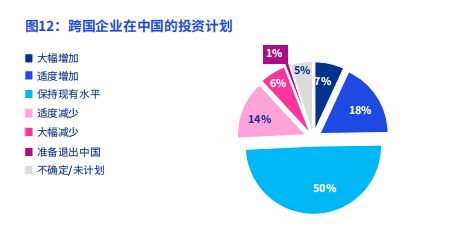
Core Insights - The report by KPMG indicates that multinational companies are optimistic about revenue growth in China over the next three to five years, with 94% continuing to invest in the market and 75% planning to maintain or increase their investments by 2025 [1][3] Investment Plans - There has been a significant increase in mergers and acquisitions (M&A) by multinational companies in China, driven by two key strategies: acquiring companies in advanced sectors like electric vehicles and healthcare, and vertical integration through acquiring distributors and manufacturers to better serve Chinese consumers [3] - 64% of multinational companies plan to increase investments to maintain competitiveness in China, while 36% aim to enhance production capacity and another 36% focus on improving local R&D capabilities [3] Shift in Focus - 61% of multinational companies have shifted their focus from growth to profitability over the past three years, although 36% have not made this transition [4] - Among those prioritizing profitability, 49% are focusing on improving operational efficiency, 34% on pricing strategies to enhance profit margins, and 30% on reallocating resources to high-margin products or services [6] Localization Efforts - 83% of multinational companies have partially localized their operations in China, with 54% prioritizing localization in manufacturing, 50% in supply chain/logistics, and 40% in R&D [6][8] Digital Transformation - Over 90% of surveyed companies plan or have already begun digital investments, with 52% focusing on enhancing data analytics capabilities, 46% on upgrading IT infrastructure, and 36% on investing in emerging technologies [8] - 58% of multinational companies are utilizing artificial intelligence tools in their operations [8] Strategic Reassessment - Multinational companies are reassessing their strategies in China, shifting from mere expansion to focusing on profitable business models through localization and digital investments to enhance operational efficiency and pricing strategies [9]
全球产业链重构的三重变局:地缘冲突、技术变革与中间国家再定位|国际
清华金融评论· 2025-12-23 09:22
以下文章来源于中国金融四十人论坛 ,作者徐奇渊 中国金融四十人论坛 . 聚焦金融热点,速递论坛动态,独家发布论坛课题成果,连载书系新书、好书。 文/中国社会科学院美国研究所研究员 徐奇渊 当今全球产业链重构面临三重变局:地缘冲突、技术变革与中间国家再定 位。在此背景下,中国既面临产业外迁、美国技术"软封锁"与博弈复杂化 的压力,也拥有重要机遇,可凭借超大规模市场和完整产业体系,从"世 界 工 厂 " 升 级 为 " 全 球 供 应 链 关 键 枢 纽 "; 加 强 自 主 创 新 , 结 合 产 业 链 优 势、市场体量与制度供给能力,深化与全球南方国家、中间国家、关键矿 产国等国家合作,成为"规则共建者",赢得与自身经济体量和发展阶段相 匹配的制度性话语权。 2025年,世界在多重裂变中步入一个极不平凡的历史节点。在2025年4月初美国政府推出"对等关税"之后,连英国《经济学人》杂志也不得 不感慨,中国多年前提出的"百年未有之大变局"确实有"先见之明"。 与此同时,这一年的地缘政治冲突也持续不断,一波未平一波又起。在技术变革领域,人工智能(AI)与数字技术变革叠加中美科技竞争 显著加剧,技术体系的局部双轨化 ...

“十四五”末山东高速公路里程将破9300公里,八车道规模全国居首
Feng Huang Wang Cai Jing· 2025-12-23 07:47
Core Viewpoint - Shandong Province is making significant advancements in highway construction, with a total investment exceeding 440 billion yuan and the completion of 28 projects since the start of the 14th Five-Year Plan, aiming to enhance connectivity and improve travel efficiency [1][2] Group 1: Highway Network Expansion - The total length of highways in Shandong is expected to exceed 9,300 kilometers by the end of this year, with the proportion of six-lane and above highways increasing to 41% [1] - Major north-south and east-west corridors have been expanded, including the Beijing-Taiwan, Jinan-Guangzhou, and Shenyang-Haikou routes, enhancing connections with key economic regions [1] - The network has been further strengthened with the addition of five new Yellow River bridges and an increase in inter-provincial exits to 27, achieving a 97.8% coverage rate of "double highways" in counties [1] Group 2: Service Quality and Efficiency - Shandong has implemented a "full lifecycle" approach to road maintenance, maintaining a leading national standard in road conditions [2] - Speed limits have been raised on 848 kilometers of road, and 63 smart cloud toll stations have been established, improving traffic efficiency by over 30% [2] - Service areas are evolving into multifunctional complexes, featuring local cuisine and facilities for drivers, such as showers and rest areas [2] Group 3: Technological and Green Innovations - Shandong is at the forefront of smart highway construction, with the completion of the first upgraded smart highway and the first zero-carbon smart highway in the country, totaling 600 kilometers of smart roads [2] - The province leads in green transformation, with over 833 megawatts of photovoltaic capacity installed along roadways, and comprehensive charging facilities in service areas [2] - Key technological advancements include the innovative application of smart paving and intelligent beam production in highway upgrades, providing replicable "Shandong experience" for the industry [2] Group 4: Preparations for Peak Travel Seasons - In anticipation of the upcoming Spring Festival travel peak, Shandong has deployed measures to enhance road network monitoring, congestion management, and charging supply guarantees to ensure safe and smooth highway operations [2]

补齐短板,推动“十五五”生态环保工作再上新台阶
Zhong Guo Huan Jing Bao· 2025-12-23 05:58
Core Viewpoint - The construction of a beautiful China has made significant progress since the 18th National Congress, but ecological and environmental protection still faces prominent issues in pollution prevention, ecological restoration, resource utilization, and governance systems, which restrict the full release of long-term protection effectiveness [1][2][3] Pollution Prevention - Collaborative governance needs to be strengthened, with structural pollution still present; ozone pollution has become a major issue in summer, and the difficulty of controlling PM2.5 and ozone together is significant [1] - Water environment issues include lagging governance of rural black and odorous water bodies and prominent shortcomings in agricultural non-point source pollution prevention [1] - Soil pollution source control is inadequate, with insufficient restoration technology and funding, and imbalances in solid and hazardous waste disposal [1] Ecological Restoration - Systematic restoration remains insufficient, with incomplete recovery of ecosystem functions; some areas have heavy engineering and light management in ecological restoration, leading to poor stability of restored ecosystems [1] - Biodiversity protection has shortcomings, including inadequate habitat protection for rare and endangered species and a lack of coordinated planning for cross-regional ecological restoration [1][3] Resource Utilization - Efficiency needs further improvement, with high-energy and high-emission industries still holding a significant share; the recycling rate of renewable resources is below 60%, lower than that of developed countries [2] - The development of the new energy industry faces technical bottlenecks in energy storage and consumption, and a comprehensive green consumption model has yet to be formed [2] Governance System - Capacity building requires further enhancement, with insufficient ecological environment monitoring and law enforcement capabilities at the grassroots level [2][3] - Market-oriented governance methods need improvement, as mechanisms like environmental credit systems and pollutant discharge rights trading have not been fully utilized [2][3] Future Directions - The focus for the 14th Five-Year Plan period will be on continuous improvement of ecological environment quality, with an emphasis on reform and innovation, and a systematic approach to pollution prevention, ecological restoration, and resource utilization [2][3] - Key areas include deepening pollution prevention efforts, strengthening ecological system protection and restoration, promoting efficient resource utilization, and improving governance system construction [3]
纸浆库存去化,浆价显著回升
Datong Securities· 2025-12-23 05:16
Investment Rating - The industry investment rating is optimistic [1] Core Insights - The pulp inventory has significantly decreased, leading to a notable rebound in pulp prices. The average closing price of pulp futures has risen by 563.2 CNY/ton to 5303.6 CNY/ton, with inventory levels dropping to an average of 154,300 tons, a week-on-week decrease of 47,375.8 tons [3][9] - The packaging paper prices are showing a mixed trend, with corrugated paper prices slightly decreasing by 30 CNY/ton, while other types like boxboard and white card paper remain stable. The long-term outlook suggests that the reduction in production by leading companies will continue to support price recovery [3][6] - The release of the "Guangdong Province Paper Industry Transformation Financial Implementation Guidelines" aims to provide funding support for the industry's green and low-carbon transformation, filling a gap in the national framework [4] - The industry is expected to experience a "supply optimization + cost support + policy backing" scenario, enhancing the sector's configuration value. The demand for packaging paper is showing resilience, while the supply side is improving due to production cuts [3][26] Summary by Sections Industry News - The "Guangdong Province Paper Industry Transformation Financial Implementation Guidelines" were released to support the green transformation of the industry, with Guangdong's paper and board production reaching 26.48 million tons in 2024, accounting for 16.7% of the national total [4] Market Trends - The pulp market is characterized by a tight supply-demand balance, with expectations for pulp prices to recover year-on-year due to limited new capacity in 2026. The cost advantages of integrated pulp and paper companies are expected to become more pronounced [3][5] - The packaging paper sector is anticipated to see a recovery in price levels, with the supply expansion phase nearing its end. The industry is expected to improve capacity utilization and price levels in 2026 [6] Investment Strategy - The current phase is critical for "valuation recovery + industry prosperity," suggesting a focus on "pulp-paper integration + policy beneficiaries." Companies with integrated pulp-paper operations are expected to benefit from cost advantages and profit elasticity as pulp prices recover [26]
松绑“燃油车禁令”,欧洲分裂
Xin Lang Cai Jing· 2025-12-23 04:36
Core Viewpoint - The European Union's plan to relax the ban on fuel vehicles has faced opposition from Stellantis, which argues that the revised policy lacks a clear growth roadmap for the automotive industry [1] Group 1: Stellantis' Position - Stellantis CEO, Antonio Filosa, criticized the EU's proposal, stating it does not provide necessary measures for the automotive industry to return to growth [1] - Filosa indicated that without growth, it is difficult to consider additional investments, which are essential for building a resilient supply chain crucial for European employment and prosperity [1] - The EU's plan allows manufacturers to emit 10% of 2021 levels and continue selling some fuel and hybrid vehicles, but concerns arise regarding the feasibility and cost of offsetting emissions through low-carbon steel and sustainable fuels [1] Group 2: Reactions from the Automotive Industry - The response from the European automotive industry is divided; Renault welcomed the proposal, while the German automotive industry association described it as "disastrous" due to excessive implementation barriers [2] - EU officials maintain that the new emissions offset mechanism preserves the ambition of the original 2035 ban, emphasizing support for the industry and denying any doubts about climate goals [2] - German Finance Minister Lars Klingbeil warned manufacturers against relying on internal combustion engines, urging a faster transition to electric vehicles as the future of mobility [2]
新能源供给比重持续提升 绿色转型成果显著
Jing Ji Ri Bao· 2025-12-23 03:40
Core Viewpoint - The Chinese energy sector has shown resilience and progress in 2023, with a focus on stable supply, expansion of renewable energy capacity, and advancements in energy technology, contributing to high-quality economic development amidst global supply chain challenges [1] Group 1: Supply Assurance - The electricity load in China reached new highs during the summer, with total electricity consumption exceeding 1 trillion kilowatt-hours in July and August, marking a historical milestone [2] - The total installed power generation capacity is expected to exceed 3.8 billion kilowatts, a year-on-year increase of 14%, with total electricity consumption surpassing 10 trillion kilowatt-hours [2] - The coal production is projected to exceed 4.8 billion tons, maintaining a reasonable supply margin, while oil and gas production is set to reach historical highs by 2025 [2][3] Group 2: Green Transition Achievements - As of September 2023, the total installed capacity of renewable energy reached 2.198 billion kilowatts, a year-on-year increase of 27.2%, accounting for 59.1% of the total power generation capacity [4] - The Dashi Gorge Hydropower Project, a significant water conservancy project, is expected to generate over 1.8 billion kilowatt-hours of clean electricity annually, meeting the needs of 650,000 households [4] - The government aims to achieve a total installed capacity of wind and solar power reaching six times the 2020 level by 2035, requiring an annual addition of approximately 200 million kilowatts over the next decade [5][6] Group 3: Winter Peak Preparation - The energy supply for winter is a top priority, with significant investments in power grid infrastructure to ensure reliable electricity and heating supply [7] - The average daily coal production has remained above 12 million tons since October, indicating a solid foundation for coal supply during the winter peak [8] - Natural gas supply is stable, with continuous production increases and enhanced storage capabilities, ensuring adequate supply during peak demand [8]
发挥特色优势 助力绿色转型
Jin Rong Shi Bao· 2025-12-23 03:33
Group 1 - The central economic work conference emphasizes the importance of "dual carbon" goals, guiding the financial industry towards a comprehensive green transformation [1] - Trust companies and leasing companies are identified as key players in supporting green transformation, leveraging their unique advantages [1][2] - In 2024, trust companies will focus on green low-carbon industries, with significant investments in infrastructure green upgrades (59.39 billion) and energy green low-carbon transition (52.00 billion), accounting for 32.60% and 28.55% of their total investments respectively [2] Group 2 - Leasing companies are actively developing green finance strategies, focusing on clean energy sectors such as wind, solar, and hydropower, with companies like Hebei Jinzheng holding nearly 800 distributed solar power stations [3] - Trust and leasing companies are also involved in biodiversity protection and pollution control, with a total of 19 green charitable trusts registered, amounting to 19.46 million, targeting environmental protection and green rural construction [3][4] - Companies like Northern Trust and Xingye Jinzheng are establishing green charitable trusts and financing solutions to support biodiversity and pollution reduction efforts [4] Group 3 - Differentiated development is crucial for non-bank financial institutions like trust and leasing companies to promote high-quality green finance [5] - Companies are encouraged to leverage regional characteristics and focus on their core strengths to implement targeted green finance strategies [5][6] - For instance, Hebei Jinzheng plans to develop distributed solar business and independent energy storage equipment leasing in the Beijing-Tianjin-Hebei region [6] Group 4 - Trust companies with energy-related backgrounds are utilizing their resources to support green asset securitization and green industry funds, enhancing their market capabilities [7] - National Grid Leasing aims to optimize cooperation models for pumped storage projects, focusing on energy-saving upgrades and smart grid construction [7]