地缘政治

Search documents
金融大家评 | 周小川:关于地缘经济的三个问题
清华金融评论· 2026-01-27 10:15
Core Viewpoint - The article discusses the evolving landscape of geopolitical economics and its impact on economic policy objectives, emphasizing the need for a careful analysis of resource allocation and the potential long-term consequences of prioritizing geopolitical goals over economic efficiency [4][5][6]. Group 1: Geopolitical Economic Context - China is facing unprecedented external challenges due to rising unilateralism and protectionism, as highlighted in the "14th Five-Year Plan" [4]. - Zhou Xiaochuan, former governor of the People's Bank of China, provided insights on the three key dimensions of geopolitical economics during a closed-door seminar, offering new perspectives on the current situation [4]. Group 2: Changes in Economic Policy Objectives - Economic policies have shifted from primarily focusing on development to incorporating geopolitical considerations, which may lead to suboptimal resource allocation [5]. - Historical examples, such as the Cold War, illustrate how prioritizing geopolitical goals can adversely affect a nation's economic strength in the long run [5][6]. Group 3: Resource Allocation and Economic Efficiency - The article presents a microeconomic example from China in the late 20th century, where tariff distortions led to overcapacity in the textile industry, demonstrating the importance of optimal resource allocation [6][7]. - Measures taken for geopolitical reasons, such as tariffs, can result in significant resource misallocation and long-term competitiveness issues [7][9]. Group 4: Current Tariff Wars - The U.S. tariff strategy includes both a general tariff rate and differential tariffs based on product or country, which contradicts established international trade rules [9][10]. - The imposition of tariffs can lead to resource misallocation and may provoke retaliatory measures from other countries, undermining overall economic efficiency [9][10]. Group 5: Multilateral Rules and Challenges - The article emphasizes the importance of multilateralism and the need to support reforms within the World Trade Organization (WTO) to address current challenges in international trade [12][13]. - The concept of origin certification is discussed, highlighting its limitations in the context of globalized supply chains and the need for reform to better reflect value addition [14][15].


北水动向|北水成交净卖出6.35亿 紫金矿业大手笔收购海外金矿 北水逢高抛售紫金系
智通财经网· 2026-01-27 10:13
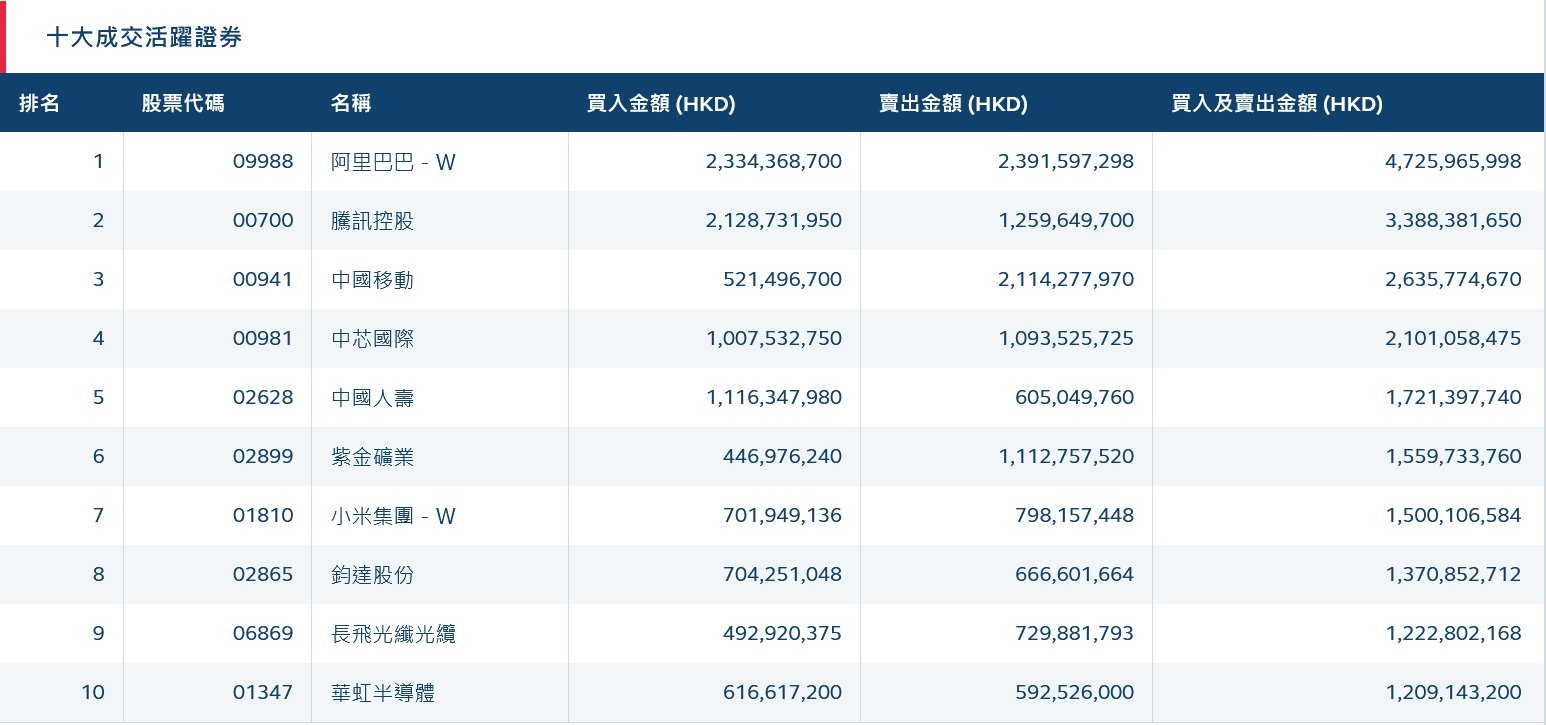
智通财经APP获悉,1月27日港股市场,北水成交净卖出6.35亿港元,其中港股通(沪)成交净卖出13.74亿港元,港股通(深)成交净买入7.39亿港元。 北水净买入最多的个股是腾讯(00700)、中国人寿(02628)、长飞光纤光缆(06869)。北水净卖出最多的个股是中国移动(00941)、紫金矿业(02899)、盈富基金 (02800)。 | 十大成交活躍證券 | | | | | | --- | --- | --- | --- | --- | | 排名 | 股票代碼 | 名稱 | 買入金額 (HKD) | 賣出金額 (HKD) | | 1 | 09988 | 阿里巴巴 - W | 2.334.368.700 | 2,391,597. | | 2 | 00700 | 騰訊控股 | 2,128,731,950 | 1,259,649, | | 3 | 00941 | 中國移動 | 521,496,700 | 2,114,277, | | র্ব | 00981 | 中芯國際 | 1,007,532,750 | 1,093,525, | | 5 | 02628 | 中國人壽 | 1,116,347,980 | ...




北水动向|北水成交净卖出6.35亿 紫金矿业(02899)大手笔收购海外金矿 北水逢高抛售紫金系
智通财经网· 2026-01-27 10:03
智通财经APP获悉,1月27日港股市场,北水成交净卖出6.35亿港元,其中港股通(沪)成交净卖出13.74亿港元,港股通(深)成交净买入7.39亿港元。 北水净买入最多的个股是腾讯(00700)、中国人寿(02628)、长飞光纤光缆(06869)。北水净卖出最多的个股是中国移动(00941)、紫金矿业(02899)、盈富基金 (02800)。 | 排名 | | 名稱 | 買入金額 (HKD) | 賣出金額 (HKD) | | --- | --- | --- | --- | --- | | 1 | 09988 | 阿里巴巴 - W | 2.334.368.700 | 2,391,597, | | 2 | 00700 | 騰訊控股 | 2,128,731,950 | 1,259,649, | | 3 | 00941 | 中國移動 | 521,496,700 | 2,114,277, | | র্ব | 00981 | 中芯國際 | 1,007,532,750 | 1,093,525, | | 5 | 02628 | 中國人壽 | 1,116,347,980 | 605,049, | | ଚ | 02899 | 紫 ...

欧盟再出制裁,批准禁购俄罗斯天然气协议,对俄经济造成巨大打击
Sou Hu Cai Jing· 2026-01-27 09:45
Core Points - The EU has officially approved a landmark regulation to end all imports of Russian liquefied natural gas (LNG) and pipeline gas by 2026 [1][3] - This decision is one of the most significant energy decisions made by the EU since the outbreak of the Russia-Ukraine conflict in 2022, aiming to eliminate dependence on Russian energy [1][3] Regulation Details - The regulation mandates the cessation of Russian LNG imports by the end of 2026, with pipeline gas deliveries to be completely halted by September 30, 2027 [3] - There is an option for member states to delay the pipeline cutoff until November 1, 2027, if they face difficulties securing sufficient non-Russian gas supplies before winter [3] - Hungary and Slovakia opposed the measure but could not prevent its implementation due to the requirement of a simple majority for approval [3] Energy Supply Diversification - Prior to the Russia-Ukraine conflict, over 40% of the EU's gas supply came from Russia, which is expected to drop to about 13% by 2025 as member states diversify their energy suppliers and enhance storage capacity [3] - The new regulation represents the final phase of this transition towards energy independence from Russia [3] REPowerEU Strategy - The EU Council describes the regulation as a key milestone in the "REPowerEU" strategy, aimed at eliminating reliance on Russian fossil fuels [5] - The regulation includes stronger oversight mechanisms requiring member states to verify the production sources of all imported gas to prevent circumvention of the ban [5] Compliance and Penalties - Member states must submit national diversification plans by March 1, 2026, addressing supply security issues and any remaining Russian gas orders held by private companies [6] - Non-compliance may result in fines of at least €2.5 million for individuals and €40 million or up to 3.5% of global annual turnover for companies [6] Financial Implications for Russia - As of August 2025, EU countries were still paying €1.15 billion monthly for fossil fuel purchases from Russia, with Hungary, Slovakia, France, the Netherlands, and Belgium accounting for 85% of these expenditures [6] - The loss of the EU market, historically Russia's most lucrative gas market, will significantly impact Russia's fiscal stability and limit its social spending, military funding sustainability, and investment capacity [6]
金属行业周报:地缘局势紧张,金价强势运行-20260127
BOHAI SECURITIES· 2026-01-27 08:29
Investment Rating - The report maintains a "Positive" rating for the steel industry and a "Positive" rating for the non-ferrous metals industry, with "Buy" ratings for specific companies including Luoyang Molybdenum, Zhongjin Gold, Huayou Cobalt, Zijin Mining, and China Aluminum [6][6][6]. Core Insights - The report highlights that geopolitical uncertainties and concerns over the independence of U.S. Federal Reserve policies are expected to boost gold prices in the short term [6][6]. - The copper market is facing supply constraints due to incidents at major mines, which is likely to support copper prices despite high prices potentially suppressing actual consumption [36][36]. - The aluminum sector is expected to see price support due to downstream inventory demand, while the lithium market is anticipated to maintain a strong price trend due to export tax incentives and tight supply expectations [6][6][6]. Summary by Sections Steel - The steel industry is expected to improve profitability as growth policies are implemented, with demand in shipbuilding and construction likely to increase [3][3]. - Current steel prices are showing seasonal trends, with expectations of price fluctuations following raw material prices [19][19]. - As of January 23, 2026, the total steel inventory has increased by 0.79% compared to the previous week, indicating a potential accumulation ahead of the Spring Festival [26][26]. Copper - The copper market is experiencing a tightening supply due to strikes affecting production at key mines, which may provide price support [36][36]. - The copper smelting processing fees remain negative, indicating pressure on the supply side, while demand is expected to rise in sectors like electric power and new energy vehicles [36][36]. Aluminum - The aluminum market is characterized by stable supply and high operating rates at alumina plants, with expectations of price support from downstream inventory needs [46][46]. - As of January 23, 2026, the average price of alumina is reported at 2,657.00 CNY/ton, reflecting a slight decrease from the previous week [50][50]. Precious Metals - Geopolitical tensions and economic data are influencing gold prices, with a notable increase in prices observed recently [54][54]. - As of January 23, 2026, gold prices have risen by 8.30% on COMEX and 8.07% on SHFE compared to the previous week [54][54]. Lithium and Cobalt - The lithium market is expected to maintain a strong price trend due to export tax incentives and tight supply conditions, with battery-grade lithium prices increasing by 12.46% recently [58][58]. - Cobalt supply is constrained due to limited export quotas from the Democratic Republic of Congo, while demand is driven by the electric vehicle and consumer electronics sectors [6][6].




特朗普喊话,要求中国高价购买委内瑞拉石油,能源霸权玩不转了
Sou Hu Cai Jing· 2026-01-27 05:20
Group 1 - The core logic of Trump's actions regarding Venezuela revolves around energy control, asserting that whoever controls energy can influence global rules [1] - Venezuela possesses the largest oil reserves globally, and Trump believes that controlling this resource would allow the U.S. to regain energy discourse power [1] - Despite initial political pressure on Maduro's government, practical execution faced significant challenges, particularly in managing the vast oil resources [3] Group 2 - U.S. oil companies are cautious due to the complex and risky situation in Venezuela, with legal and security risks being major concerns [3] - Trump acknowledged the U.S.'s inability to handle Venezuelan oil and turned to China, suggesting that China could continue purchasing Venezuelan oil at higher prices [3] - China's diverse energy options and the lack of price advantage in Venezuelan oil make it unlikely for China to comply with U.S. strategies [3] Group 3 - In the Middle East, the U.S. faces challenges, with traditional allies like Saudi Arabia showing reluctance to support military actions against Iran [5] - Saudi Arabia's cautious stance reflects its desire to maintain a balance of power in the Gulf region, avoiding a fully U.S.-aligned Iran [5] - The shift in Saudi Arabia's security strategy, including potential procurement of military assets, indicates a reevaluation of reliance on U.S. protection [5] Group 4 - Many countries at the UN are hesitant about escalating military conflicts, advocating for negotiations instead, indicating a decline in U.S. influence in the region [7] - The current energy competition has entered a new equilibrium, with Russia strengthening ties with China through attractive pricing and stable supply [7] - The future of energy competition will focus on rule-making and cooperation capabilities rather than mere resource control, highlighting the inadequacy of U.S. hegemonic approaches [7]
渣打:创新和地缘政治重塑资本市场 香港具全球联通优势
Zhi Tong Cai Jing· 2026-01-27 03:22
Core Viewpoint - Innovation and geopolitical factors are reshaping capital markets, with Hong Kong positioned as a globally connected hub [1] Group 1: Market Confidence and Policy Measures - Timely policy measures have enhanced market confidence in a changing environment [1] - The People's Bank of China and the Hong Kong Monetary Authority have expanded the RMB business funding arrangement to 200 billion RMB, laying the foundation for the next phase of connectivity development [1] - Confidence is reflected in economic, capital markets, and business activities, translating into tangible results [1] Group 2: Competition and Product Offerings - The Hong Kong Stock Exchange (HKEX) faces competition not only from traditional exchanges but also from emerging virtual platforms, necessitating deep and broad professional capabilities [1] - Investors are increasing their exposure to the Chinese market, prompting Hong Kong to offer product options beyond stocks [1] Group 3: Future Development of HKEX - The future development of HKEX relies on stablecoins, tokenization, and 24-hour trading [1] - HKEX will continue to invest in technology and is promoting infrastructure reforms, including shortening the new stock settlement cycle [1]

2026年1月27日申万期货品种策略日报-黄金白银-20260127
Shen Yin Wan Guo Qi Huo· 2026-01-27 01:49
1. Report Industry Investment Rating - No relevant information provided 2. Core Viewpoints of the Report - The sharp rise in international gold prices is the result of geopolitical turmoil, the shaking of the global political and economic order, and a continuously loose liquidity environment. In 2026, the Fed is expected to continue to cut interest rates, and the loose liquidity environment provides strong support for the rise of precious metals. Global investors' strategic allocation demand for precious metals has increased, and the scale of gold and silver ETFs has continued to expand, driving up precious metal prices. Short - term silver has risen significantly, and there may be some pressure for funds to take profits, while gold is more stable [4]. - Morgan Stanley expects that driven by geopolitical uncertainty, continuous central bank gold purchases, and strong ETF demand, the gold price is expected to rise to $5,700 per ounce in the second half of the year. If the Fed starts to cut interest rates in 2026, it may further support strong physical gold demand [4]. 3. Summary by Relevant Catalogs Futures Market - **Prices**: The closing prices of Shanghai Gold 2606 and 2604 on the previous day were 1146.58 and 1143.32 respectively, with increases of 28.20 (2.52%) and 27.68 (2.48%) compared to the day before. The closing prices of Shanghai Silver 2606 and 2604 on the previous day were 27,189 and 27,207 respectively, with increases of 2259 (9.06%) and 2242 (8.98%) compared to the day before [3]. - **Positions and Volumes**: The positions of Shanghai Gold 2606 and 2604 were 85,261 and 215,820 respectively, and the trading volumes were 76,211 and 395,962 respectively. The positions of Shanghai Silver 2606 and 2604 were 169,868 and 322,579 respectively, and the trading volumes were 605,689 and 965,900 respectively [3]. - **Spot Premium and Discount**: The spot premiums and discounts of Shanghai Gold 2606 and 2604 were - 2.32 and 0.94 respectively, and those of Shanghai Silver 2606 and 2604 were 324 and 306 respectively [3]. Spot Market - **Prices**: The closing price of Shanghai Gold T + D on the previous day was 1144.26, up 33.91 (3.05%) from the day before. The closing price of London Gold was $5042.75 per troy ounce, up $21.76 (0.44%) from the day before. The closing price of Shanghai Silver T + D on the previous day was 27,513, up 2525 (10.10%) from the day before. The closing price of London Silver was $106.61 per troy ounce, up $0.53 (0.52%) from the day before [3]. - **Price Spreads**: The current spreads of Shanghai Gold 2606 - Shanghai Gold 2604 and Shanghai Silver 2606 - Shanghai Silver 2604 were 3.26 and - 18.00 respectively. The current gold - to - silver ratio in the spot market was 41.59, and the ratios of Shanghai Gold to London Gold and Shanghai Silver to London Silver were 1.01 and 1.15 respectively [3]. Inventory - **Futures Exchanges**: The current inventories of gold and silver on the Shanghai Futures Exchange were 103,029 kg and 573,810 kg respectively, with changes of + 1020 kg and - 7280 kg compared to the day before. The current inventories of gold and silver on the COMEX were 35,941,502 troy ounces and 415,241,837 troy ounces respectively, with changes of - 202,778 troy ounces and - 1,183,026 troy ounces compared to the day before [3]. Related Derivatives and Indicators - **Indices and Yields**: The current values of the US Dollar Index, S&P 500 Index, 10 - year US Treasury yield, Brent crude oil price, and US dollar - to - RMB exchange rate were 97.04, 6,950.23, 4.22%, $64.89, and 6.9572 respectively, with changes of - 0.46, + 34.62, - 0.02%, - 0.55, and - 0.0070 compared to the day before [3]. - **ETF and CFTC Positions**: The current positions of SPDR Gold ETF and SLV Silver ETF were 1,087 tons and 15,974 tons respectively, with changes of 0 tons and - 116 tons compared to the day before. The current net positions of CFTC speculators in gold and silver were 244,770 and 25,214 respectively, with changes of - 6468 and - 6846 compared to the day before [3]. Macroeconomic News - **Geopolitical**: The USS Abraham Lincoln aircraft carrier strike group has entered the US Central Command's area of responsibility in the western Indian Ocean. If the White House orders an attack on Iran, the strike group could launch military operations within "one or two days." Trump said the situation in Iran is "changing rapidly" and that Iran wants to reach an agreement [4]. - **Trade**: Trump announced that the reciprocal tariffs on South Korean automobiles, timber, pharmaceuticals, and all other goods will be raised from 15% to 25% due to the South Korean Congress's failure to approve the trade agreement [4]. - **Fed Interest Rate Expectations**: According to CME's "FedWatch," the probability of the Fed cutting interest rates by 25 basis points in January is 2.8%, and the probability of keeping interest rates unchanged is 97.2%. By March, the probability of a cumulative 25 - basis - point rate cut is 15.5%, the probability of keeping interest rates unchanged is 84.1%, and the probability of a cumulative 50 - basis - point rate cut is 0.4% [4]. - **Commodity Market Analysis**: An analyst pointed out that this is one of the most glorious days in the silver market. The price of silver has risen rapidly due to its small market size and low liquidity. Retail investors are flocking in, and there is a (relatively small - scale) gap in the spot market. This is good news for silver miners, but selling some future production in the futures market may bring some selling pressure [4]. - **Economic Data**: The monthly rate of US durable goods orders in November was 5.3%, the largest increase since May 2025 [4].
集运指数(欧线):现货跌价或压制地缘炒作高度,震荡市
Guo Tai Jun An Qi Huo· 2026-01-27 01:43
1. Report Industry Investment Rating - Not provided in the given content 2. Core Viewpoints of the Report - The spot price of the Container Freight Index (European Line) is in a clear downward channel this week, and the further decline in spot prices may suppress the height of geopolitical sentiment speculation in the market. The market is expected to be in a volatile situation in the medium - term [11]. 3. Summary by Relevant Catalogs [Fundamental Tracking] - **Futures Information**: - EC2602 closed at 1,726.7, up 0.76%, with a trading volume of 565 and an open interest of 4,225, a decrease of 176. The trading volume to open - interest ratio was 0.13 [1]. - EC2604 closed at 1,200.2, up 5.46%, with a trading volume of 43,172 and an open interest of 41,690, an increase of 541. The trading volume to open - interest ratio was 1.04 [1]. - EC2606 closed at 1,447.6, up 3.47%, with a trading volume of 4,483 and an open interest of 7,324, an increase of 1,533. The trading volume to open - interest ratio was 0.61 [1]. - **Freight Rate Index**: - The SCFIS European route index on January 26, 2026, was 1,859.31 points, down 4.9% week - on - week [1]. - The SCFIS US West route index was 1,294.32 points, down 0.8% week - on - week [1]. - The SCFI European route index was 1,595 $/TEU, down 4.8% bi - weekly [1]. - The SCFI US West route index was 2,084 $/FEU, down 5.0% bi - weekly [1]. - **Spot Freight Rates**: Different carriers' spot freight rates from Shanghai to Rotterdam vary, with prices for $/40'GP ranging from 2,030 to 2,593 and for $/20'GP ranging from 1,275 to 1,615 [1]. - **Exchange Rates**: The US dollar index was 97.04, and the US dollar against the offshore RMB was 6.95 [1]. [Macro News] - A new round of tri - party talks between Ukraine, the US, and Russia may be held on February 1 [10]. - US President Trump said the situation in Iran is "changing rapidly" and he sent a "huge fleet" to the region, but he thinks Iran wants to reach an agreement [10]. - The US fully agrees with Israel's statement that the reconstruction of Gaza will not start until Hamas is demilitarized and disarmed [10]. - Hamas demands that Israel fully implement the cease - fire agreement [10]. - Iran warns the US that it will attack US aircraft carriers if it suffers a military strike [10]. [Supply Side] - The weekly average capacity in February was revised down from 28.1 to 27.3 million TEU/week, and in March, it was revised up from 29.5 to 29.9 million TEU/week [12]. - After adjustments, the overall capacity during the Spring Festival in 2026 (weeks 8 - 10) decreased slightly, and after the Spring Festival (weeks 11 - 13) remained unchanged. The average capacities in weeks 8 - 10 and 11 - 13 were 22.8 and 32.1 million TEU/week respectively, with year - on - year growth rates of 6.3% and 25.8% [12]. [Spot Freight Rates] - The FAK average in the 4th week was around 2,600 $/FEU, and in the 5th week, the FAK center dropped 250 to around 2,350 $/FEU [13]. - Different alliances and carriers have different FAK price ranges in the 6th week or at the end of the month [13]. [Contract Analysis] - **2602 Contract**: It is expected to oscillate in a narrow range between 1,700 - 1,750 points [13]. - **2604 Contract**: In the short - term, it is recommended to gradually reduce short positions next week and wait. In the long - term, consider shorting at high prices after the GRI bullish expectations are exhausted [14]. - **2606 Contract**: It is recommended to treat it with a wide - range oscillation strategy and trade with a light position [14]. - **2610 Contract**: Hold short positions as appropriate and pay attention to the peace negotiations in Gaza and the geopolitical situation in Iran [14]. [Trend Intensity] - The trend intensity of the Container Freight Index (European Line) is 0, indicating a neutral trend [15].
光大期货0127黄金点评:地缘局势升温,金价延续强势
Xin Lang Cai Jing· 2026-01-27 01:16
Core Viewpoint - COMEX gold prices continue to rise, closing at $5004.8 per ounce with a 0.50% increase, while domestic SHFE gold prices also show a strong performance, closing at 1148.14 yuan per gram with a 1.49% increase [2][4]. Economic Data - The U.S. Department of Commerce reported a 5.3% increase in durable goods orders, the largest growth in six months, following a revised decline of 2.1% in the previous month, driven by orders for commercial aircraft and other capital equipment [2][4]. Market Sentiment - Polymarket data indicates a 78% probability of a new government shutdown in the U.S. by the end of January, a significant increase from less than 10% the previous week [2][4]. Geopolitical Factors - The U.S. Navy's Abraham Lincoln carrier strike group has arrived in the Middle East for several days of military exercises, raising concerns about geopolitical tensions, particularly around Iran [5]. - Despite low expectations for a rate cut from the Federal Reserve in January, geopolitical tensions and concerns over U.S. dollar credibility are expected to support gold prices in the short term [5]. Future Outlook - The market is advised to remain bullish on gold in the short term, with attention on the upcoming decision regarding the next Federal Reserve chairperson [5].