贸易战

Search documents
“加班加点”取消对美所有工业品关税,欧盟承认:这有利于美国,但不得不干
Sou Hu Cai Jing· 2025-08-28 18:09
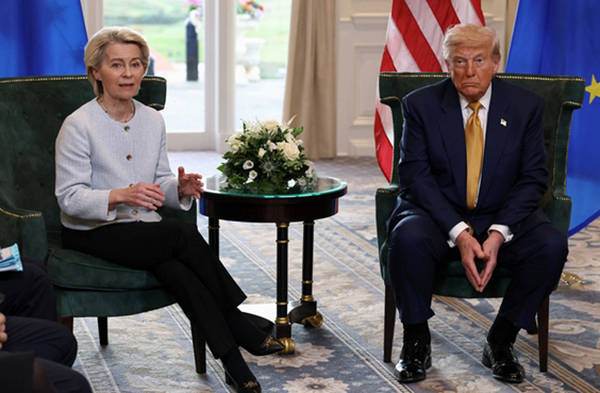
Group 1 - The EU is rapidly legislating to eliminate all tariffs on US industrial goods in exchange for the US reducing tariffs on EU automobiles [1][3] - The EU Commission acknowledges that the trade agreement favors the US but provides necessary stability and predictability for businesses [1][3] - EU Commission President von der Leyen defends the agreement as a thoughtful choice to avoid escalation and confrontation with the US [1][3] Group 2 - The EU is under pressure to complete legislation by the end of the month to meet US demands, which could significantly impact the EU automotive industry [3][4] - A survey by the German Chamber of Commerce indicates that 55% of industrial companies believe the trade agreement imposes a heavy burden on the European economy [4] - The German Mechanical Engineering Industry Association warns that 30% of machinery exported to the US faces 50% tariffs, urging the EU to negotiate for tariff exemptions [4] Group 3 - President Trump threatens high tariffs on countries that impose digital taxes targeting US tech companies, indicating potential trade tensions with the EU [5][6] - French President Macron suggests the EU should consider retaliatory measures against the US tech industry due to significant trade imbalances [5][6] - Despite calls for a stronger stance, EU member states show reluctance to engage in a full-scale trade war, limiting the EU's response options [6]

日本央行委员:10月短观调查对评估贸易战影响至关重要
智通财经网· 2025-08-28 07:23
Core Viewpoint - The ongoing uncertainty from U.S. tariff policies may dampen business and household confidence, potentially dragging down both the Japanese and global economies [1]. Group 1: Economic Impact - Junko Nakagawa, a member of the Bank of Japan's Policy Board, emphasized that despite trade agreements between Japan and the U.S. and progress in negotiations among other major economies, significant uncertainties remain [1]. - The potential impact of these uncertainties could lead to a decline in global business and household confidence, which may adversely affect domestic and international economic conditions [1]. Group 2: Monetary Policy Outlook - Nakagawa reiterated that if economic trends align with expectations, the Bank of Japan will continue to raise interest rates, but she stressed the need for cautious data assessment amid increasing uncertainties [1]. - The upcoming "Tankan" business sentiment survey results are highlighted as crucial for evaluating the impact of major economic negotiations on Japanese businesses, with the next survey scheduled for release on October 1 [1]. - Following a decade of large-scale stimulus, the Bank of Japan raised interest rates to 0.5% in January, believing Japan is on the verge of achieving its 2% inflation target [1]. Group 3: Inflation and Wage Pressure - Nakagawa pointed out that upward pressure on wages may continue to drive prices higher, which could affect household confidence and inflation expectations [2]. - An August survey indicated that nearly two-thirds of economists expect the Bank of Japan to raise the key interest rate by at least 25 basis points later this year, a notable increase from just over half of economists a fortnight earlier [2].
印度为自信付出代价?美国加征惩罚关税,印媒:印度在全球的地位遭到撼动
Sou Hu Cai Jing· 2025-08-28 03:51
Core Insights - India is facing unprecedented trade challenges due to the U.S. imposing a 50% tariff on all Indian products since August 27, impacting $48.2 billion worth of exports [1] - The U.S. has also increased the tax rate on Indian imports of Russian oil from 25% to 50%, citing India's significant increase in Russian oil purchases from 1% to over 40% as a profit-driven action [1] - This trade conflict highlights the fragility of U.S.-India relations, despite India being viewed as a key partner for the U.S. in Asia [1] Trade Impact - The 50% tariff is expected to have a manageable direct impact on the Indian economy, but the deeper crisis lies in the U.S. attempt to obstruct India's path to growth [2] - The punitive tariffs serve as a warning to India about the limitations of its "rock-solid" cooperation with the U.S. in the face of realpolitik [2] Strategic Implications - The U.S. actions are perceived as an effort to curb India's strategic autonomy, as India seeks to diversify its energy supply and enhance its international influence [1] - The imposition of tariffs is seen as a demand for India to choose between energy security and its relationship with the U.S., contradicting India's goal of pursuing a multipolar foreign policy [1]
能源清零只是开始!中美下一战场已展开,美方损失惨重
Sou Hu Cai Jing· 2025-08-28 03:29
Core Insights - The Trump administration's tariff policies have led to a significant decline in U.S. energy exports to China, with imports of crude oil, LNG, and coal dropping to historic lows, reaching below 1 ton for the first time since December 2019 [1][2] - China's strategic diversification of energy sources has effectively filled the void left by U.S. energy products, with increased imports from Russia and Middle Eastern countries, further diminishing U.S. influence in the energy market [2][4] - The U.S. energy sector is facing severe challenges, including a loss of over $30 billion in the first half of 2024 due to the collapse of energy trade with China, leading to inventory buildup and layoffs in shale oil companies [4][6] Energy Trade Dynamics - U.S. energy exports to China have plummeted, with LNG orders dropping to zero since March 2025, and crude oil imports ceasing entirely since June 2025 [1][4] - Russia has capitalized on this situation, with natural gas imports to China increasing by 4.8% and crude oil imports rising by 16.8%, while prices remain 10-15% lower than U.S. offerings [2][4] - Middle Eastern countries, including Saudi Arabia and Iran, have expanded their energy supply to China, further undermining the U.S. dollar's dominance in international energy trade [2][4] U.S. Government Response - In response to the energy trade collapse, the Trump administration has attempted various strategies, including pressuring China to import more U.S. agricultural products, which has had limited success [4][6] - The administration has threatened to impose significant tariffs on rare earth magnets, despite the high dependency of U.S. industries on Chinese rare earth materials, which could increase production costs domestically [4][6] - The signing of the "Big and Beautiful Act" aims to halt wind and solar energy projects, but this has faced backlash as the U.S. risks falling behind in renewable energy capacity compared to China [6][7] Market Reactions and Future Outlook - The U.S. energy sector is experiencing fragmentation, with states and industries expressing dissent against federal policies, leading to potential shifts in political support [7][8] - Upcoming U.S.-China trade negotiations may be complicated by the U.S. administration's insistence on linking energy purchases to geopolitical issues, which China has rejected [7][8] - The loss of the Chinese market poses a significant threat to U.S. energy companies, as they struggle to regain their position in the global energy landscape [7][8]
白宫干预美联储叠加贸易摩擦升级 新兴市场资产承压
智通财经网· 2025-08-26 11:26
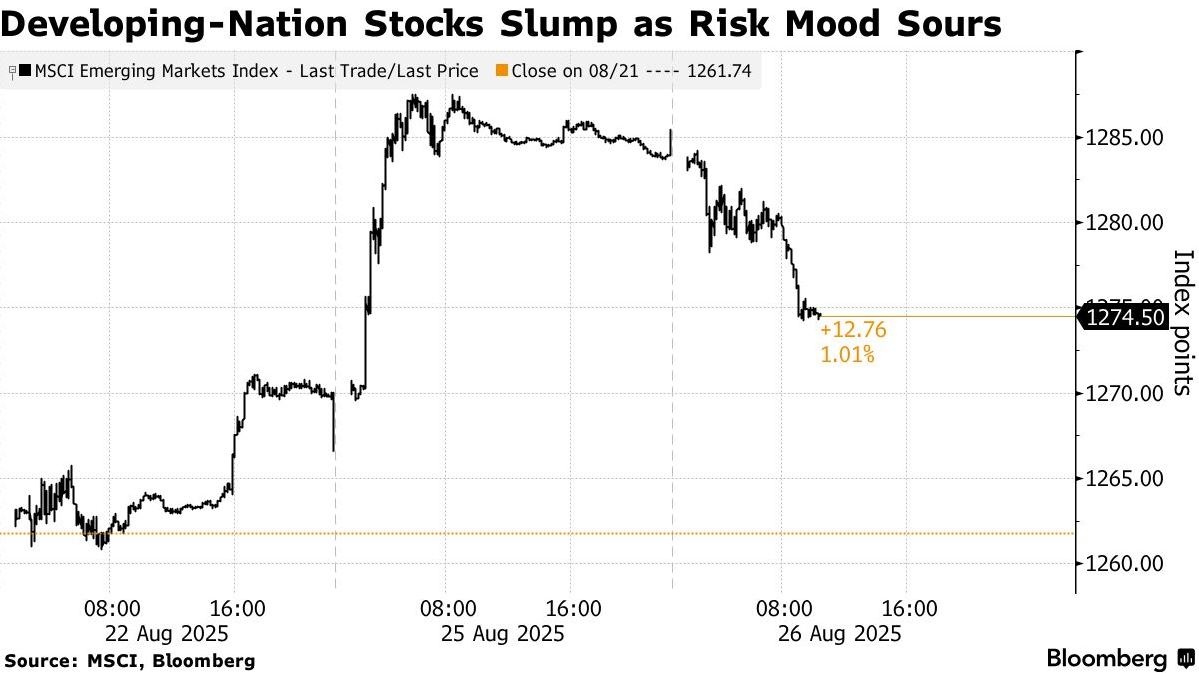
Group 1 - The pressure from President Trump on the Federal Reserve and the resurgence of global trade tensions have heightened market risk aversion, leading to declines in emerging market stocks and currencies [1] - The Morgan Stanley Capital International Emerging Markets Index fell by 0.9%, ending a rally that had reached a three-year high, while the MSCI Emerging Market Currency Index dropped by 0.3%, with the South Korean won being a major contributor to the decline [1] - The Trump administration's announcement of new tariffs on the semiconductor and advanced technology sectors, along with export restrictions, has increased policy uncertainty [2] Group 2 - Trump's dismissal of Federal Reserve Governor Lisa Cook has intensified the power struggle between the President and the Fed, with Cook's legal team indicating plans to challenge the dismissal [3] - The market reacted to this event with a 0.3% drop in the dollar index, a 0.6% increase in gold prices, and rising long-term U.S. Treasury yields, reflecting investor concerns over increasing inflation pressures [3] - Major tech stocks in emerging markets, such as Alibaba and Tencent, experienced declines, while the South Korean won faced pressure due to a 15% tariff on goods and significant investment challenges from the U.S. [3] Group 3 - A high-level trade delegation from China, led by Vice Minister Li Chenggang, is set to visit Washington, signaling a potential thaw in U.S.-China trade relations [4] - This visit follows the Trump administration's recent decision to pause new tariffs on Chinese goods for 90 days, aiming to address several contentious issues [4] - Analysts view the Chinese delegation's visit as a positive sign for potential agreements between Trump and Xi Jinping, contingent on progress in trade negotiations [4]
和特朗普通话24小时后,加拿大态度大变,连夜向美服软求和
Sou Hu Cai Jing· 2025-08-26 11:06
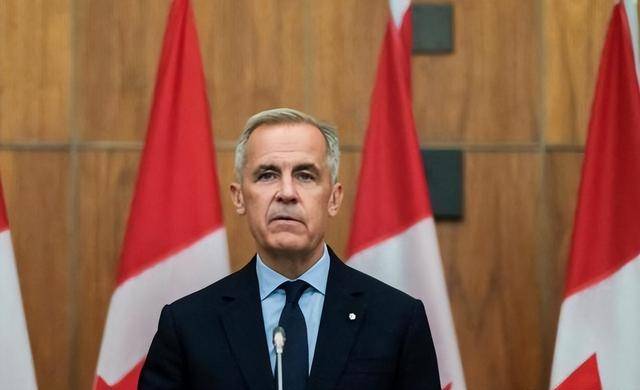
Group 1 - The trade relationship between Canada and the U.S. is characterized by interdependence but also conflicts, particularly regarding tariffs imposed by the Trump administration [2][3] - Canada relies heavily on the U.S. market, with over 75% of its exports going to the U.S., which constitutes one-third of its economy [2][4] - The imposition of tariffs, particularly on steel and aluminum, poses significant risks to Canadian industries, especially in the automotive sector [6][9] Group 2 - The new Canadian Prime Minister, Mark Carney, faced immense pressure from domestic businesses and political opposition regarding the U.S. tariffs [3][6] - In response to escalating tariffs, Canada initially attempted to negotiate but ultimately had to make concessions, including the cancellation of a digital services tax [3][6] - The U.S. tariffs led to a 25% increase in the prices of American food products in Canadian supermarkets, negatively impacting consumer sentiment and business orders [4][8] Group 3 - The strategy employed by the Trump administration aims to leverage tariffs to force Canada into renegotiating the USMCA, which is set for a comprehensive review in 2026 [6][9] - Following a direct communication between Carney and Trump, Canada decided to eliminate most retaliatory tariffs on U.S. goods, signaling a shift in strategy to ease tensions [7][8] - Despite the concessions, Canada retained tariffs on key sectors like steel and aluminum as leverage for future negotiations [8][9] Group 4 - The ongoing trade conflict highlights the power imbalance in trade negotiations, with Canada being significantly dependent on the U.S. market [11] - The adjustments made by Canada are seen as a strategic retreat rather than a sign of weakness, aimed at preserving economic stability [11] - The outcome of future negotiations will be crucial for Canadian industries, particularly in maintaining competitive pricing and job security [11]
“战略矿产之王”稀土:为什么会让美国人破大防?
Sou Hu Cai Jing· 2025-08-26 08:14
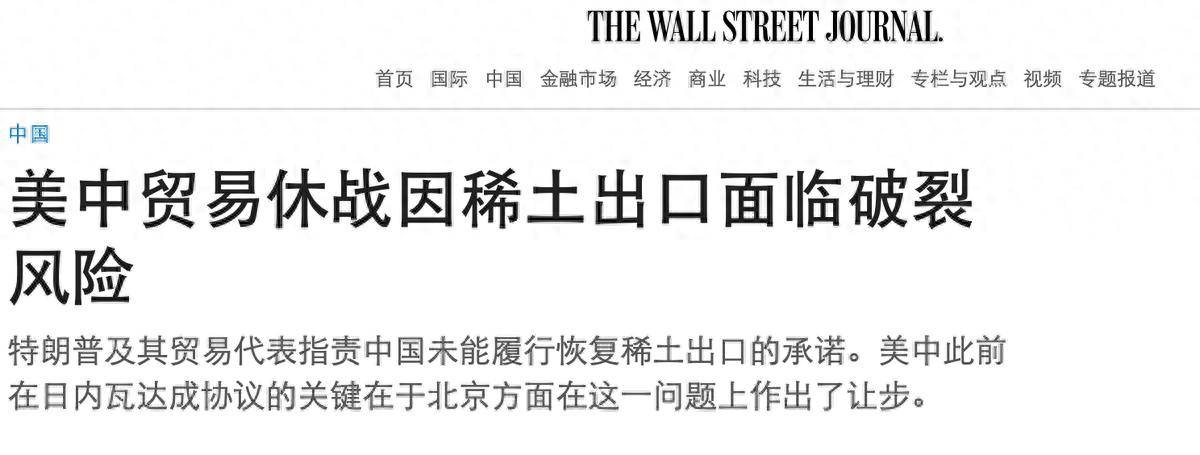
Core Insights - Rare earths have become a focal point in global trade disputes, particularly between the US and China, due to their critical importance in high-tech and military industries [1][3] - China has established itself as the dominant player in the global rare earth market, controlling production and processing, which has significant implications for global supply chains [3][11] - The illegal smuggling of rare earths poses a substantial challenge for China, leading to environmental damage and economic losses, prompting the government to implement stricter regulations [6][8] Group 1 - The US is increasingly sensitive to China's export controls on rare earths, viewing them as a strategic weapon in trade negotiations [1][3] - China's historical development of rare earth resources has positioned it as the largest producer and processor globally, making it indispensable in various high-tech applications [3][6] - The successful development of advanced military technologies, such as the J-10CE fighter jet, is partly attributed to advancements in rare earth technologies [3] Group 2 - China has shifted from low-price competition to a regulated export quota system, which has helped increase domestic rare earth prices [6][11] - The Chinese government is actively combating illegal rare earth smuggling, which has been rampant in resource-rich provinces, involving complex networks and corruption [8][11] - Despite global demand for rare earths, other countries face significant challenges in establishing their own production and processing capabilities, maintaining reliance on Chinese supplies [8][11] Group 3 - The importance of rare earths extends beyond mere resource management; they are integral to advancements in high-tech products and military capabilities, influencing global industrial competition [11][13] - As technology progresses, the applications of rare earths in sectors like renewable energy and robotics are expected to expand, ensuring continued demand [13] - China's role as the primary supplier of rare earths will remain crucial in the future, reinforcing its strategic position in international trade and politics [13]
怪不得特朗普这么轻易就向中国让步,原来他急着去欧洲捏软柿子
Sou Hu Cai Jing· 2025-08-26 05:50
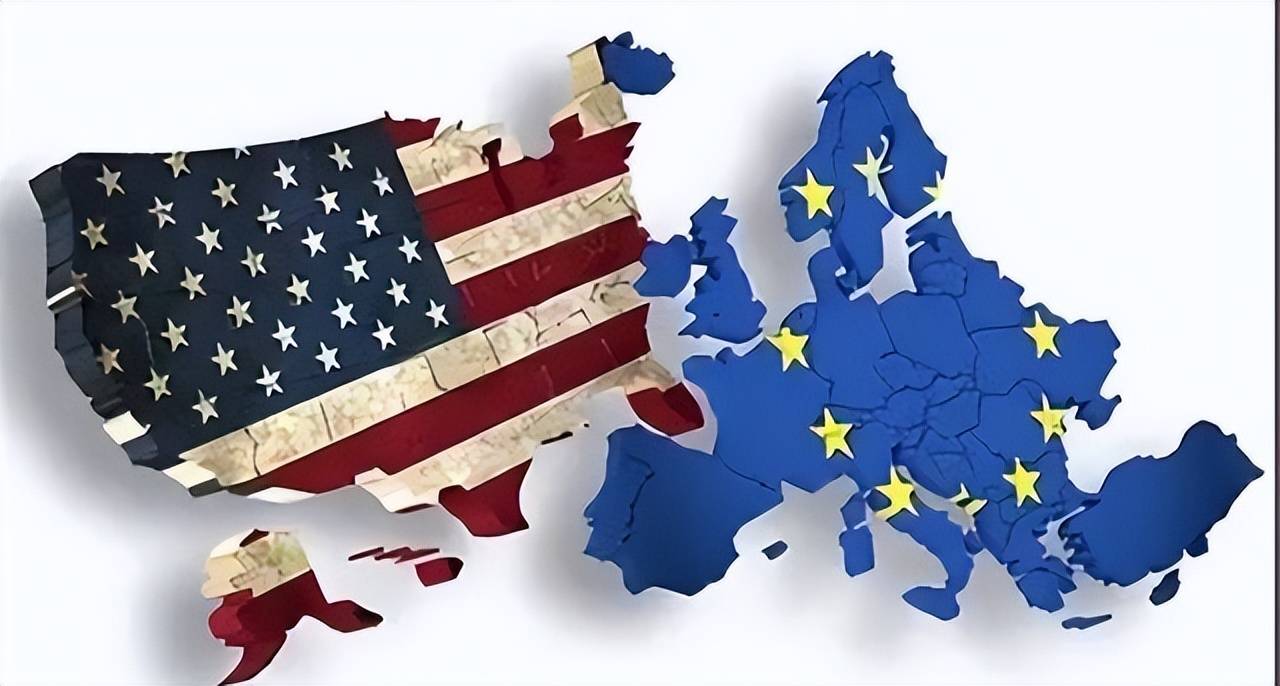
然而,就在协议刚刚签署后,特朗普就将炮火转向了欧盟。他在白宫的记者会上猛烈批评欧盟的贸易政策,特别是在汽车进口方面的壁垒。他指出,欧盟每 年向美国出口约1300万辆汽车,而美国几乎没有什么汽车出口到欧盟,这种不对称的贸易格局让他决定加大压力。特朗普宣称,若欧盟不做出让步,他将对 欧盟汽车加征25%的关税,这一措施预计能为美国企业带来年增380亿欧元的收入,从而缓解美国的财政压力,同时也能弥补对华贸易赤字。 欧盟作为一个由27个国家组成的经济体,其利益显然分散,汽车产业尤其依赖美国市场,尤其是德国和法国最为担忧。特朗普的做法就是抓住了欧盟内部的 分歧,将压力施加在欧盟的脆弱环节上。与中国不同,欧盟的反击能力较为分散,成员国之间在应对贸易压力时也存在着较大的分歧。例如,德国的汽车行 业担心损失,而法国的农业则担心遭受报复。特朗普此前试图将欧洲推向中国,如今则反过来通过施压打乱中欧的投资协定谈判,逼迫欧盟在技术封锁问题 上做出立场。 7月,美国和欧盟达成了协议,欧盟同意对美国商品征收15%的关税,其中包括汽车。这一数值低于特朗普原本威胁的30%,但依然是一项高额的关税。美 国政府宣称这是一场胜利,而欧盟则表示这是为 ...
数据显示:中国今年7月从美国进口的各类能源总量不足1吨,为五年多以来新低
Sou Hu Cai Jing· 2025-08-26 05:38
Core Viewpoint - The article highlights a significant decline in China's energy imports from the United States, reaching near-zero levels, primarily due to ongoing trade tensions and a shift towards alternative suppliers, particularly Russia [1][2]. Group 1: Energy Import Trends - In July, China's total imports of crude oil, liquefied natural gas (LNG), and coal from the U.S. fell to less than 1 ton, marking the lowest level in over five years [1]. - Since March, China has not imported LNG from the U.S., and crude oil imports have ceased since June, with coal imports dropping from approximately 1.35 million tons in January to less than 1 ton per month since May [1]. - The decline in imports is reminiscent of the situation in late 2019 when trade tensions led to a halt in U.S. energy imports, which only rebounded after the signing of the Phase One trade agreement [1]. Group 2: Trade Tariffs and Responses - In response to U.S. tariffs on Chinese goods, China imposed tariffs on U.S. coal and LNG at 15% and on crude oil and other products at 10% starting February 10 [2]. - The trade relationship saw a temporary "truce" with a joint statement on August 12, where both sides agreed to suspend certain tariffs for 90 days [2]. Group 3: Energy Supply Diversification - China is focusing on energy security and diversifying its energy supply sources, with a notable increase in domestic energy production and imports from other countries [4]. - In July, China's natural gas production rose by 7.6% year-on-year to 21.6 billion cubic meters, while pipeline imports from Russia and Central Asia increased by 4.8% to 5.2 million tons [4]. - The cooperation between China and Russia in the energy sector is progressing, with significant increases in pipeline gas imports and ongoing negotiations for new projects [6]. Group 4: Future Outlook - Concerns have been raised regarding the profitability of new LNG development projects in the U.S., which may delay investment decisions and impact supply prospects beyond 2033 [7]. - The U.S. is looking to develop new markets in Japan, South Korea, and Southeast Asia to ensure the advancement of new LNG projects [7].
通过俄罗斯向中方示好,印度这步棋下的妙,要干就对美国干票大的
Sou Hu Cai Jing· 2025-08-26 04:23
Group 1 - The article discusses the escalating trade conflict between the United States and India, initiated by President Trump's decision to impose a 50% tariff on Indian goods, marking one of the highest tariffs in global trade history [1] - In response, Indian Prime Minister Modi froze $3.6 billion in U.S. military purchases and imposed a 150% punitive tariff on bourbon whiskey from Kentucky, targeting Trump's voter base [1] - The Indian economy is significantly impacted, with 70% of products exported to the U.S. facing the new tariffs, leading to increased costs for Indian manufacturers and exporters [4] Group 2 - India is shifting its economic strategy by initiating oil transactions with Russia settled in RMB, importing 1.8 million barrels of Russian oil daily, which is a direct response to U.S. tariffs [3] - The Indian government is also seeking closer ties with China, as evidenced by the resumption of direct flights and easing restrictions on Chinese investments, indicating a strategic pivot towards China amidst U.S. pressures [4][6] Group 3 - The cooperation between India, Russia, and China is becoming a strategic reference for India, with bilateral trade between China and Russia surpassing $250 billion and a significant increase in the use of local currencies for trade [8] - India's collaboration with Russia is seen as a move to promote the internationalization of the RMB, indirectly challenging the dominance of the U.S. dollar in global trade [11] Group 4 - The article highlights a broader trend among developing countries to collectively reshape trade orders in response to unilateralism, with India positioning itself as a key player in this new dynamic [13]