特朗普施压美联储降息

Search documents
大越期货贵金属周报-20250728
Da Yue Qi Huo· 2025-07-28 10:21
Report Title Precious Metals Weekly Report (July 21 - July 25) [1] Report Industry Investment Rating Not provided Core Viewpoints - Last week, domestic commodities surged, and precious metal prices rose first and then fell. Silver remained stronger than gold. The prices of precious metals were supported by the domestic commodity boom despite trade agreement news from Japan and the EU. The expectation of a Fed rate cut continued to rise, and there were still supports for precious metal prices. Affected by the domestic industrial clearance policy, precious metal prices might be supported by non - ferrous metal prices, and silver prices had strong capital support [12]. Summary by Directory 1. Last Week's Review - **Precious Metal Price Movements**: - Shanghai Gold 2510 closed up 0.26%, reaching a maximum of 794 yuan/gram; COMEX Gold closed down 0.2%, reaching a maximum of 3451.7 dollars/ounce. - Shanghai Silver 2510 closed up 2.4%, reaching a new historical high of 9526 yuan/kilogram; COMEX Silver closed up 0.06%, reaching a maximum of 39.91 dollars/ounce, the highest since September 2011. - SGE Gold T + D closed up 0.29%, and SGE Silver T + D closed up 2.21%. - London Gold Spot closed down 0.4%, and London Silver Spot closed down 0.03%. - The US Dollar Index closed down 0.8%, and the US Dollar against Offshore RMB closed down 0.18% [4][12]. - **Trade Agreement News**: - The US and Japan reached a trade agreement with a 15% tariff rate, and Japan would invest 550 billion dollars in the US, with the US getting 90% of the profits. - The US and the EU reached a 15% tariff rate agreement. The EU would increase investment in the US by 600 billion dollars, buy US military equipment and 750 billion dollars of US energy products [12][13]. - **Economic Data**: - The US July Markit Manufacturing PMI fell into contraction, but the overall business activity expanded at the fastest pace since December. - The Eurozone July PMI rose to 51, a new high in nearly a year. Germany's manufacturing industry showed signs of recovery, while France's economy continued to shrink due to political deadlock. - US June existing - home sales dropped to the lowest level in nearly 15 years, while housing prices reached a new historical high [14][15]. 2. Weekly Review - **Market Focus**: This week, the China - US trade negotiation and the August 1 tariff "deadline" were the focuses, and the Fed's interest rate decision was highly anticipated. The US would also release key data such as non - farm payrolls, GDP, and PCE. The Bank of Japan would announce the target interest rate. China would hold a Politburo meeting at the end of July and release the official manufacturing PMI data [12]. - **Position Analysis**: - For Shanghai Gold, the net position decreased slightly, with more long positions added and short positions reduced, and the fluctuation was very limited. - For Shanghai Silver, the net position continued to increase, with both long and short positions increasing significantly. - CFTC net positions fluctuated slightly, with both long and short positions of gold and silver increasing, but the increase in short positions was limited [12]. 3. Fundamental Data - **ETF Positions**: SPDR Gold ETF positions continued to increase, and silver ETF positions increased in a fluctuating manner [31][33]. - **Inventory Data**: - COMEX Gold inventory increased slightly, and COMEX Silver inventory decreased slightly. - Shanghai Gold inventory data was presented, and Shanghai Silver inventory increased in a fluctuating manner [36][38]. 4. Position Data - **Shanghai Gold Top 20 Positions**: This week, long positions were 216,889, an increase of 5.34% from last week; short positions were 66,199, an increase of 5.86%; the net position was 150,690, an increase of 5.12% [23]. - **Shanghai Silver Top 20 Positions**: This week, long positions were 448,932, a decrease of 8.03% from last week; short positions were 348,227, a decrease of 7.89%; the net position was 100,705, a decrease of 8.53% [26]. - **CFTC Positions**: As of July 22, the net long position of CFTC gold increased significantly, with more long positions added and short positions reduced; the net long position of CFTC silver increased slightly, also with more long positions added and short positions reduced [27]. 5. Summary - Tariff agreements had no progress, the expectation of a rate cut increased significantly, and there were still supports for precious metal prices. Affected by the domestic industrial clearance policy, precious metal prices might be supported by non - ferrous metal prices, and silver prices were still relatively strong [12].
【UNFX 课堂】当总统的手伸向利率按钮唯有看透规则者成为赢家
Sou Hu Cai Jing· 2025-07-26 09:45
Group 1 - The core viewpoint of the articles highlights the increasing pressure on the Federal Reserve to lower interest rates, driven by President Trump's calls for significant rate cuts, which could impact the strength of the US dollar [2] - Market expectations for a rate cut in September have surged, with the CME FedWatch tool indicating a 68% probability, suggesting that continued pressure from Trump could lead to more liquidity easing, directly affecting the dollar's value [2] - The overnight reverse repo scale has dropped to $435 billion as of July 25, raising concerns about short-term liquidity and the potential for the Fed to halt its balance sheet reduction, which would increase dollar liquidity in the market [2] Group 2 - The Bloomberg Dollar Index is approaching a critical support level of 107.5 as of July 26, and a breach of this level could trigger accelerated programmatic selling [2] - The articles emphasize the importance of monitoring US Treasury yields, particularly the 2-year yield, as rising rate cut expectations could lower these yields, creating a compounded negative effect on the dollar [3] - The current SOFR rate stands at 5.32%, and any significant movements in this rate could signal tightening in the interbank funding market, potentially forcing the Fed to act sooner [3]


特朗普逼宫鲍威尔,装修大楼你贪了多少钱?再不降息就让你离开
Sou Hu Cai Jing· 2025-07-26 03:01
Core Points - Trump is pressuring the Federal Reserve to lower interest rates, citing the heavy burden of national debt interest payments, which amount to $1.2 trillion annually [1][3] - The current interest rate of 4.5% could be reduced to 1%, potentially saving the government around $1 trillion each year, which could help address the fiscal deficit caused by Trump's policies [1] - Powell is cautious about lowering rates due to the current core inflation rate of 2.8% and rising oil prices due to geopolitical tensions [1][3] Group 1 - Trump criticized the Federal Reserve's renovation budget, which escalated from an initial $1.9 billion to $2.5 billion, labeling it as a waste of taxpayer money [3] - He has employed a strategy of public criticism followed by calls for investigation, reminiscent of his past political tactics [3] - Powell's position is legally protected, as the President cannot remove the Fed Chair without evidence of misconduct, and Powell's term lasts until 2028 [5] Group 2 - Wall Street supports Powell, with JPMorgan's CEO stating that attacking him undermines market confidence, and Goldman Sachs warning of potential market volatility if Trump's policies are enforced [5] - The Treasury Secretary publicly supports Trump but is privately exploring potential successors for Powell, indicating internal tensions [5] - Recent documents suggest a 78% probability of a rate cut in September, indicating a subtle shift in Powell's policy stance despite his public resistance [5] Group 3 - Historical parallels are drawn to Nixon's pressure on the Fed, which led to significant inflation, highlighting the risks of politicizing monetary policy [7] - Concerns are raised about the integrity of the U.S. financial system if the Fed is treated as a political tool, with recent actions by other countries signaling a lack of confidence in U.S. debt [7] - Global investors are closely monitoring the situation, questioning whether the U.S. will risk its financial system for personal political agendas [9]
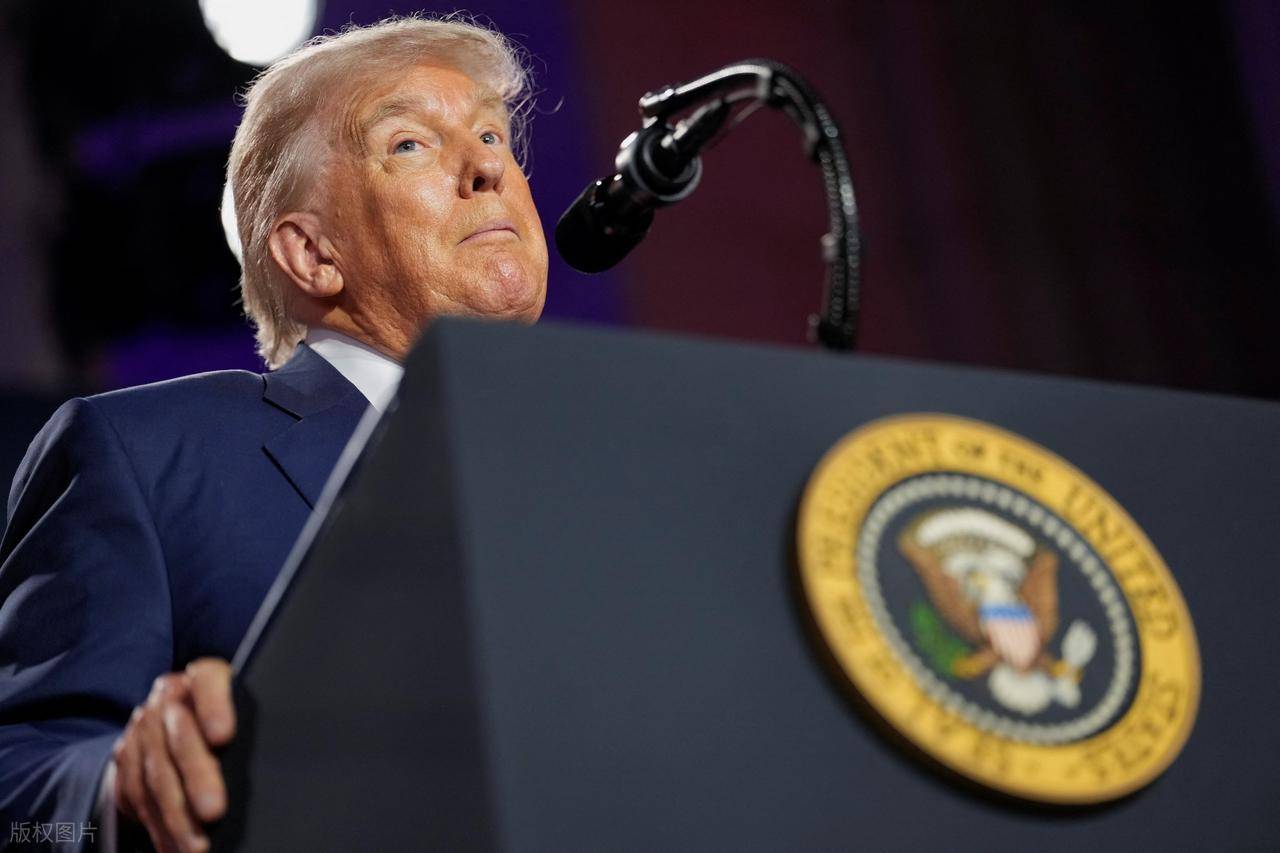
特朗普越是施压鲍威尔,美联储越不可能降息?
Hua Er Jie Jian Wen· 2025-07-25 04:45
Core Viewpoint - The article discusses the escalating conflict between the Trump administration and the Federal Reserve, highlighting the pressure exerted by Trump on Fed Chairman Powell to lower interest rates and the potential counterproductive effects of this strategy [1][2]. Group 1: Institutional Independence vs. Political Pressure - The conflict between the White House and the Federal Reserve represents a fundamental clash between institutional independence and populism, questioning whether expert institutions can manage economic policy better than elected officials [2]. - Trump has called for a significant 3% rate cut, which would mark a radical shift and disrupt traditional economic models, although this may be more political rhetoric than a feasible policy [2]. - Current futures markets indicate a near-zero probability of a rate cut next week, with a 60% chance of a cut in September [2]. Group 2: Market Reactions and Real Costs - Market data supports the argument that political pressure on interest rate policy leads to increased inflation volatility, causing investors to demand higher compensation [3]. - Following Trump's call for a 3% rate cut, the 10-year Treasury yield premium rose to 0.84%, up from 0.6% after a similar attack in April, indicating a market response to political intervention [3]. Group 3: Misunderstanding of Mortgage Rates - Trump’s assertion that high interest rates are preventing home purchases is misleading, as standard 30-year fixed mortgage rates are more closely tied to long-term Treasury yields than to the Fed's overnight rates [5]. - Since the Fed began cutting rates last September, the overnight rate has decreased by 1%, while the 30-year mortgage rate has risen from 6.2% to 6.75%, illustrating the complex relationship between these rates [5]. Group 4: Inflation Concerns and Policy Considerations - The article notes a divergence between the Trump administration and the Fed regarding the economic impact of tariffs, with the Fed taking a cautious approach due to past inflation misjudgments [6]. - Economic indicators supporting a rate cut include minimal inflation impact from tariffs, slightly above-target inflation, weak private sector hiring, slowing wage growth, and rising default rates on loans [6]. Group 5: Professional Justification for Rate Cuts - Concerns are raised about Trump's pressure tactics, suggesting that while there are valid reasons for the Fed to cut rates faster than expected, these should not be articulated by the President [7]. - The article advises the Trump administration to allow market and professional assessments based on economic data to justify rate cuts, rather than continuing to undermine the Fed's independence [7].
美联储降息大消息,达利欧突发警告
Zheng Quan Shi Bao· 2025-07-25 00:09
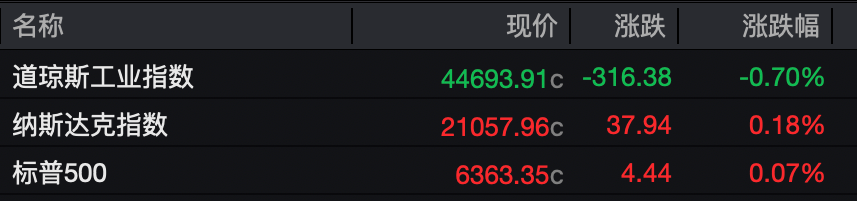
Market Performance - On July 24, the three major U.S. stock indices closed mixed, with the Dow Jones down 0.7%, the Nasdaq up 0.18%, and the S&P 500 up 0.07% [1] - The Dow Jones Industrial Average closed at 44,693.91, down 316.38 points [2] - The Nasdaq Composite closed at 21,057.96, up 37.94 points [2] - The S&P 500 closed at 6,363.35, up 4.44 points [2] Individual Stock Movements - Tesla saw a significant decline, dropping over 8% to 305.06 [3] - Other notable declines included IBM, which fell over 7% [2] - Nvidia, Amazon, and Broadcom each rose over 1% [2] Chinese Stocks - The Nasdaq Golden Dragon China Index fell over 1%, with several Chinese stocks experiencing declines of over 2%, including Netease, Weibo, and Baidu [3][4] Economic Commentary - President Trump visited the Federal Reserve, expressing hope that Chairman Powell would lower interest rates, suggesting a potential savings of over $1 trillion if rates were reduced by three percentage points [6][7] - Trump’s visit comes just under a week before the Fed's interest rate decision, indicating a strategic push for rate cuts [7] - Ray Dalio, founder of Bridgewater, warned that without action to reduce the fiscal deficit, the U.S. could face an "economic heart attack" within three years [9]


中辉有色观点-20250723
Zhong Hui Qi Huo· 2025-07-23 01:36
Industry Investment Ratings - Gold: Bullish [1] - Silver: Bullish [1] - Copper: Bullish [1] - Zinc: Cautiously Bullish [1] - Lead: Rebound [1] - Tin: Rebound [1] - Aluminum: Rebound [1] - Nickel: Rebound [1] - Industrial Silicon: Cautiously Bullish [1] - Polysilicon: Cautiously Bullish [1] - Lithium Carbonate: Bullish [1] Core Views - The market is influenced by factors such as Trump's pressure on the Fed to cut interest rates, trade negotiations, and geopolitical uncertainties, leading to different trends in various metals [1][3] - Gold and silver are likely to rise due to trade uncertainties and the potential for Fed rate cuts [1][2][3] - Copper is expected to perform well in the long - term due to global copper mine shortages and strategic importance [1][6][7] - Zinc supply is abundant, limiting its upside potential in the short - term, with a long - term supply - increase and demand - decrease outlook [1][8][9] - Aluminum and nickel prices may experience short - term rebounds, but are affected by factors such as inventory and seasonal demand [1][10][11][12][13] - Lithium carbonate is expected to rise due to supply - side disruptions [1][14][15] Summary by Metal Gold and Silver - **行情回顾**: The US trade negotiations with Brazil and the EU are not going smoothly, and the approaching tariff deadline on August 1st has increased the safe - haven sentiment for gold and silver [2] - **基本逻辑**: Trump pressures the Fed to cut interest rates, the US has reached trade agreements with some countries, and there are uncertainties in the global economic and political situation. The Fed rate cuts may exceed expectations, and central banks continue to buy gold, supporting the long - term upward trend of gold [3] - **策略推荐**: Gold has strong support around 770 - 775, and the long - term bullish logic remains unchanged. Silver has strong support at 9250, and a bullish approach is recommended [4] Copper - **行情回顾**: Shanghai copper has rebounded strongly and is consolidating around the 80,000 - yuan mark [6] - **产业逻辑**: The supply of copper concentrates remains tight, electrolytic copper production has increased, domestic social inventory has decreased seasonally, downstream开工率 has rebounded, and green copper demand in power and automotive sectors has maintained resilience [6] - **策略推荐**: With Trump's pressure on the Fed and positive short - term macro - sentiment, it is recommended to hold existing copper long positions. In the long - term, copper is still expected to rise. The focus range for Shanghai copper is [79000, 81000], and for London copper is [9700, 10000] US dollars/ton [7] Zinc - **行情回顾**: Shanghai zinc is oscillating at a high level, testing the pressure of the upper resistance [8] - **产业逻辑**: In 2025, the supply of zinc concentrates is abundant, new smelting capacity is being released, and the processing fees for zinc concentrates are rising. The demand side is affected by the high - temperature season and the consumption off - season, and downstream enterprises are hesitant to buy at high prices [8] - **策略推荐**: Due to cost support, low inventory, and macro - sentiment stimulation, zinc has rebounded. It is recommended to hold existing long positions cautiously, not to chase the rise blindly. In the long - term, wait for opportunities to short at high prices. The focus range for Shanghai zinc is [22800, 23200], and for London zinc is [2750, 2950] US dollars/ton [9] Aluminum - **行情回顾**: Aluminum prices continue to rebound, and alumina also shows a rebound trend [10] - **产业逻辑**: For electrolytic aluminum, the operating capacity has increased, the cost has risen, the inventory has slightly increased, and the downstream processing industry's开工率 has decreased in the off - season. For alumina, there are disturbances in Guinea's bauxite supply, and the supply of spot alumina is relatively tight in the short - term [11] - **策略推荐**: It is recommended to wait and see with Shanghai aluminum, paying attention to the change in aluminum ingot inventory. The main operating range for Shanghai aluminum is [20300 - 21200], and alumina is expected to operate in a low - level range [11] Nickel - **行情回顾**: Nickel prices continue to rebound, and stainless steel also shows a rebound trend [12] - **产业逻辑**: For nickel, there are uncertainties in the overseas environment, the price of Philippine nickel ore may decline, and the domestic nickel supply - demand situation has improved slightly. For stainless steel, the production reduction is weakening, and the inventory pressure is emerging again in the off - season [13] - **策略推荐**: It is recommended to wait and see with nickel and stainless steel, paying attention to inventory changes. The main operating range for nickel is [122000 - 125000] [13] Lithium Carbonate - **行情回顾**: The main contract LC2509 has increased in position and reached a new high [14] - **产业逻辑**: In the spot market, lithium salt producers are more willing to sell, and the basis has weakened. The total inventory has increased for 7 consecutive weeks, and the demand growth in the new energy vehicle market has slowed down. However, there are many supply - side disruptions, and the futures market has priced in the improvement of the supply - demand situation in advance [15] - **策略推荐**: It is expected to be strong in the short - term, with a range of [71800 - 74000] [15]
美国前财长:特朗普施压美联储或引发通胀预期上升 加剧长期借贷成本
智通财经网· 2025-07-17 22:30
Core Viewpoint - Former U.S. Treasury Secretary Lawrence Summers warns that President Trump's attempts to influence the Federal Reserve and push for interest rate cuts could lead to a sharp rise in inflation expectations, increasing long-term borrowing costs and exacerbating fiscal risks [1][2]. Group 1: Interest Rate and Monetary Policy - Summers notes that no mainstream economists support lowering interest rates to 1% in the current environment, suggesting that while it may bring short-term economic benefits, it would create strong inflationary expectations [1]. - The current target range for the Federal Reserve's benchmark interest rate is 4.25% to 4.5%, while Trump has called for a reduction of up to 3 percentage points [1]. - Most Federal Reserve officials have indicated that they will not consider rate cuts until the impact of Trump's new tariff policies on inflation is more clearly assessed [1]. Group 2: Market Reactions and Signals - Summers highlights a recent market reaction to reports of Trump considering dismissing Fed Chair Powell, which led to a drop in 2-year Treasury yields and an increase in 10-year yields, indicating a shift in market expectations towards looser monetary policy [1]. - He warns that the current policy mix from the Trump administration is sowing the seeds of a dangerous vicious cycle, where large fiscal deficits push up long-term borrowing costs, further exacerbating budget deficits [2]. Group 3: Long-term Fiscal Outlook - Summers points out that the bond market is sending concerning signals, with long-term U.S. Treasury yield expectations remaining high, which poses a serious warning for the U.S. medium-term fiscal credibility [2]. - Recent market data shows that the one-year forward yield on 10-year inflation-protected Treasury bonds has recently surpassed 3%, compared to an average of about 2% since 2000 [2]. - The Congressional Budget Office (CBO) has not fully accounted for the high market interest rate expectations in its forecasts for future borrowing costs, indicating that the government will face significant challenges in long-term debt issuance [2]. Group 4: Economic Indicators and Concerns - Summers expresses concern over the U.S. fiscal situation, noting that the dollar index has experienced its largest decline since 1973 in the first half of this year [3]. - Regarding the recent U.S. inflation data for June, Summers indicates that while some indicators rose less than expected, the impact of tariffs on inflation may still be delayed and should not be dismissed [3].
深观察丨美国民众:我们脑子里每天想的都是物价
Sou Hu Cai Jing· 2025-07-17 12:14
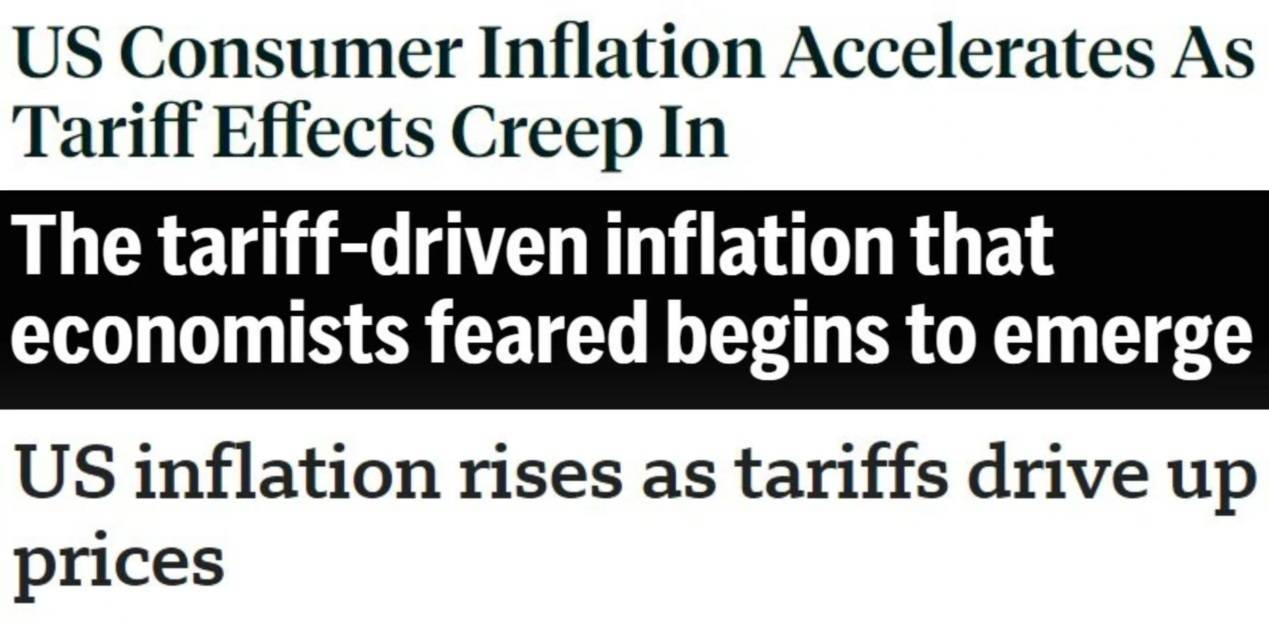
Core Points - The latest U.S. inflation data shows a significant increase in the Consumer Price Index (CPI), rising 2.7% year-on-year in June, up from 2.4% in May, marking the largest increase since February [2][3] - Experts attribute the inflation rise to the U.S. tariff policies, which have begun to impact consumer prices [4][12] - The Federal Reserve has maintained its stance on interest rates despite pressure from the White House, indicating that the uncertainty from tariff policies complicates their decision-making [8][10] Group 1: Inflation Data - The June CPI increase of 2.7% is higher than market expectations and reflects a growing inflationary trend [2][3] - Economists predict that inflation will continue to rise in the coming months due to reduced inventories and ongoing tariff impacts [3][10] Group 2: Tariff Impact - The tariffs imposed by the U.S. government are leading to higher prices for specific products, affecting consumer spending [4][12] - Analysts warn that new tariffs planned for August could exacerbate inflationary pressures in the second half of the year [13][14] Group 3: Federal Reserve Response - The Federal Reserve has resisted calls for interest rate cuts, citing the need for more data to assess the economic impact of tariffs [8][10] - There is a consensus among economists that the Fed is unlikely to lower rates in the upcoming policy meeting due to rising inflation concerns [10][12] Group 4: Consumer Behavior - Rising prices have led American households to cut back on food spending, with consumers becoming more budget-conscious [16] - The uncertainty surrounding price increases has created a challenging environment for both consumers and businesses [14][16]
真有料!郎教授带队团购超150套!
Sou Hu Cai Jing· 2025-07-16 04:36
Core Viewpoint - The article discusses the recent surge in group buying of real estate in China, led by economist Lang Xianping, highlighting the strategies and market conditions that are driving this trend [4][12][16]. Group 1: Market Activity - Lang Xianping's group successfully purchased over 150 new homes in a recent buying spree, exceeding initial expectations of 50-60 units [4]. - The property "Hongrongyuan Jiayu Jiu Xi" has seen increased demand post-group purchase, leading to a stock shortage and plans for new product launches [6][21]. Group 2: Economic Context - The current economic climate is at a critical juncture, with expectations of imminent interest rate cuts by the Federal Reserve, which could stimulate economic recovery [12][13]. - The stock market has already begun to reflect these expectations, with A-shares returning to 3500 points and significant gains in U.S. stocks, particularly Nvidia reaching a market cap of $4 trillion [14][15]. Group 3: Investment Strategy - Lang Xianping's investment strategy emphasizes three key principles: timing, product selection, and the importance of "good housing" [12][19]. - The focus on "good housing" reflects a shift in the market towards properties that offer livability and long-term value, as seen in the success of the Jiayu project [20][23].

美联储松口7月降息?人民币“创造惊喜”,中国再次拯救特朗普?
Sou Hu Cai Jing· 2025-07-16 04:13
2025年7月,全球金融市场神经紧绷,一场围绕美联储降息与人民币汇率的博弈悄然上演。 7月初,一连串事件如同多米诺骨牌般接连发生,将全球金融圈推向风口浪尖。在这场大戏中,美联储 主席鲍威尔如履薄冰,中美两国在货币政策上的角力也日趋白热化。 特朗普的"炮轰"与"影子主席"计划 7月10日清晨,美国前总统特朗普再次火力全开,在社交媒体上直指美联储的利率政策"高得离谱",并 声称这给美国带来了高达3600亿美元的年化负担。这一惊人数字瞬间引爆舆论,让美国民众、资本市场 和全球投资者都屏住了呼吸,未来的走向变得扑朔迷离。 与此同时,美国CNBC爆出猛料,称特朗普正秘密考虑安插一位所谓的"影子主席"进入美联储,其意图 昭然若揭——通过各种手段向鲍威尔团队施压,迫使其尽快启动降息。消息一出,华尔街私下议论纷 纷,猜测白宫是否准备强行干预货币政策。资本市场对政策干预向来高度敏感,这无疑将这场风波推向 了新的高潮。 鲍威尔的困境与模糊回应 面对来自白宫的巨大压力和市场的猜测,鲍威尔的处境显得异常微妙。在欧洲央行的一次会议上,当被 问及7月议息会议是否可能降息时,他依然采取了模棱两可的态度,既不明确肯定,也不完全排除。媒 体对 ...