
红利

Search documents
开年超283亿资金涌入港股ETF
21世纪经济报道· 2026-01-30 14:23
Core Viewpoint - The article highlights a significant inflow of funds into Hong Kong's technology sector through cross-border ETFs, indicating a growing interest in technology-themed investments as the market rebounds in early 2026 [1][3]. Fund Inflows and Performance - Since the beginning of 2026, over 160 Hong Kong ETFs have seen a net inflow of 28.389 billion yuan, with approximately 90% of this capital directed towards technology-themed products such as the Hong Kong Internet ETF and the Hang Seng Technology ETF [1][3][4]. - The total scale of Hong Kong ETFs has approached 800 billion yuan, marking an increase of nearly 79 billion yuan since the end of 2025, representing an 11% growth [6]. Product Development - At least 28 new Hong Kong-themed funds have been reported by public fund managers since the start of 2026, focusing primarily on technology, healthcare, and consumer sectors, with technology funds being the most prominent [1][8][9]. - The top 10 funds attracting significant capital include several technology ETFs, with inflows exceeding 10 billion yuan for products like the GF Hong Kong Non-Bank ETF and the FT Hong Kong Internet ETF [4][5]. Fund Performance - Most Hong Kong ETFs have recorded positive returns since the beginning of 2026, with several funds in the healthcare and non-bank sectors achieving returns over 10% [5][6]. - The performance of technology-themed ETFs has been particularly strong, with the Hong Kong Internet ETF and the Hang Seng Technology ETF yielding returns of approximately 8.9% and 8%, respectively [5]. Long-term Investment Outlook - The article emphasizes the long-term growth potential of the technology sector in Hong Kong, driven by global capital and talent influx, as well as favorable trends in artificial intelligence and innovation [10][11]. - The article also notes the potential for investment in upstream resources and companies expanding internationally, indicating a broader strategy for capital allocation in the Hong Kong market [10].


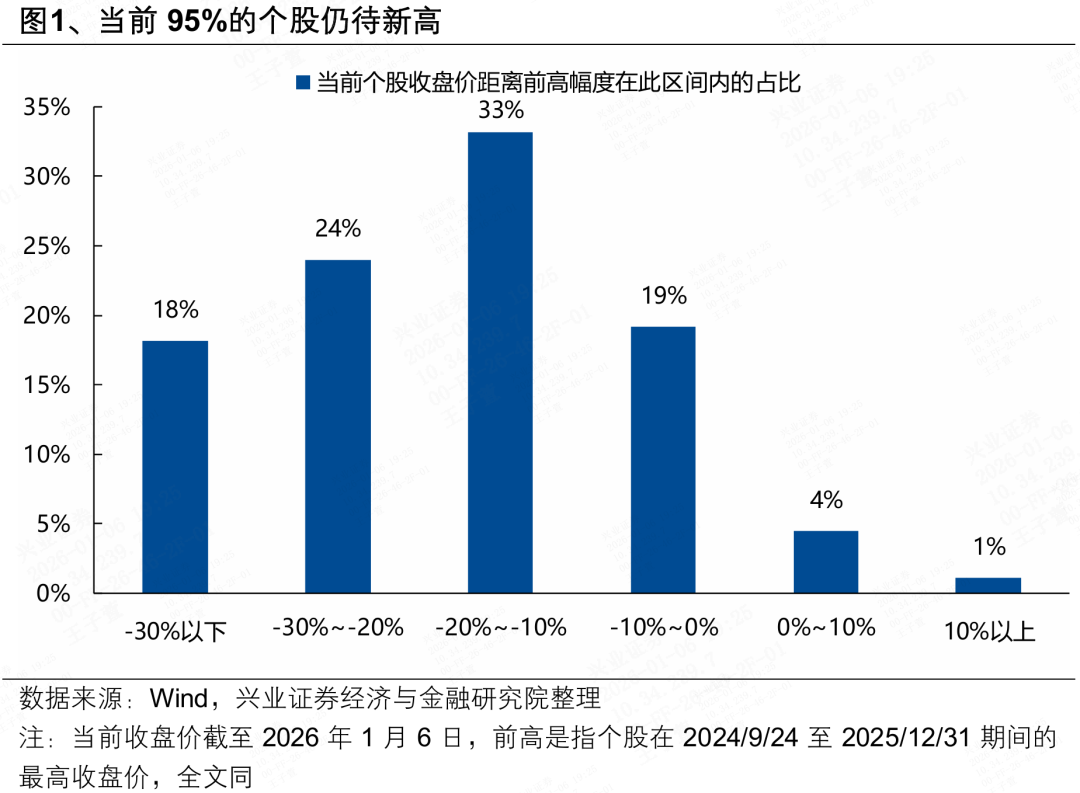
兴业证券:95%个股仍待新高 市场或存在结构性机会
智通财经网· 2026-01-06 12:43
Core Viewpoint - As of January 6, 95% of individual stocks have not broken their previous highs, despite major indices reaching new highs, indicating potential structural opportunities in the market [1][2]. Group 1: Market Overview - Major indices such as the Shanghai Composite Index, All A-shares, CSI 300, and CSI 800 have all reached new highs, but only 5% of individual stocks have surpassed their previous highs [2]. - The previous high for individual stocks is defined as the highest closing price from September 24, 2024, to December 31, 2025, with most stocks still down by over 10% from these highs [2]. Group 2: Sector Performance - The sectors that have broken through previous highs are concentrated in a few segments, particularly in large financials represented by insurance, and sectors benefiting from price increases such as non-ferrous metals, chemicals, petrochemicals, and construction materials [1][5]. - Other sectors that have seen new highs include military, machinery, and home appliance components driven by commercial aerospace and robotics [1][5]. Group 3: Sectors Near Previous Highs - Sectors that have not yet broken their previous highs but are close include technology growth (commercial vehicles, semiconductors, communication equipment), cyclical industries (steel raw materials, renovation materials), and consumer sectors (animal health, textiles, agriculture) [10]. - Industries with significant gaps to their previous highs include technology growth (motors, software, batteries, photovoltaics), dividend sectors (electricity, white goods, banks), and consumer sectors (food and beverage, social services, retail) [13].

中加基金固收周报︱市场随外部催化有好转
Xin Lang Cai Jing· 2025-12-04 09:11
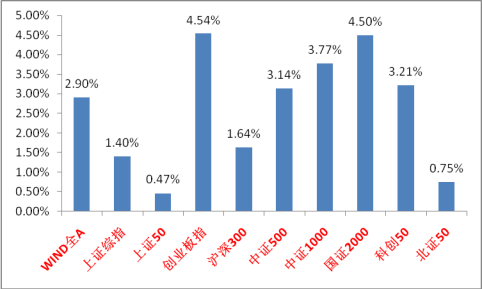
Market Overview - The A-share major indices experienced an upward trend last week, although trading volume continued to decline [7][11] - Among the 31 Shenwan first-level industries, the communication, electronics, and comprehensive sectors performed relatively well [5][7] Macro Data Analysis - The National Bureau of Statistics reported that from January to October, the profits of industrial enterprises above designated size increased by 1.9% year-on-year, while profits in October decreased by 5.5% year-on-year [3][10] - In the cumulative year-on-year perspective, the mining industry saw a decline of 27.8%, while the manufacturing sector grew by 7.7%, and the electricity, heat, gas, and water production and supply industry grew by 9.5% [3][10] - In October, the year-on-year profit growth rates for upstream, midstream, and downstream industries were -12.0%, -4.8%, and -13.9%, respectively, with positive growth recorded in the computer communication electronics manufacturing, automotive manufacturing, and non-ferrous metal rolling industries [3][10] Stock Market Strategy Outlook - The market is currently in a phase of fluctuation, with low trading volume and various technical indicators showing weakness, although financing data has improved [4][11] - The expectation for a Federal Reserve interest rate cut in December has reached 80%, contributing to a rebound in the technology sector [4][12] - The upcoming Federal Reserve meeting on December 10 is expected to significantly impact market sentiment, with the current economic fundamentals and technology narratives remaining unchanged [4][12] - In the long term, the ongoing U.S.-China competition has established a baseline, with international capital markets beginning to question the U.S. government's governance capabilities and institutional credibility [6][12] - The trend of passive investment in public funds and the long-term investment strategies of insurance and brokerage firms are likely to strengthen, with significant stock holdings reported by major A-share insurance companies [6][12] Industry Focus - For defensive dividend sectors, it is recommended to maintain allocation ratios, with a short-term increase in market defensive tendencies likely [6][12] - The technology sector remains a key focus, particularly in areas such as AI, domestic computing power, commercial aerospace, and robotics, which are expected to have high industry prosperity and significant adjustment potential [6][12] - The internal demand and high prosperity sectors may require strong catalysts for market movements, with low valuation opportunities in certain electric new energy segments and specific mechanical and chemical industries becoming more prominent [6][12]
短期或维持区间震荡,中长期向上概率仍偏高
Datong Securities· 2025-12-02 09:32
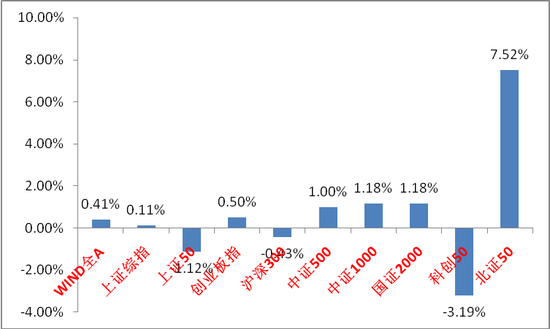
Group 1 - The core viewpoint indicates that the equity market is recovering after a recent downturn, with significant rebounds in previously underperforming sectors such as chips and communications, which are crucial for the market's future performance [1][7][9] - The domestic macroeconomic situation remains stable without major negative surprises, while overseas markets, particularly the US stock market, have stabilized and are showing signs of recovery, providing support for the domestic equity market [1][7][9] - The report suggests that the A-share market may experience short-term fluctuations within a range due to profit-taking pressures, but the medium to long-term outlook remains positive, supported by a relatively stable international market environment and the potential for strong performance in key sectors [2][10][11] Group 2 - The bond market is experiencing a notable decline, attributed to the rebound in the equity market, which has led to a shift in investor preference towards riskier assets, resulting in a lack of upward support for bonds [4][31] - The report recommends a cautious approach to bond investments, suggesting that the bond market may continue to face downward pressure in the short term, with a need for observation in the medium to long term [4][31] Group 3 - The commodity market has shown signs of recovery, particularly with a strong rebound in gold prices, which is expected to provide substantial support for the overall commodity market [5][34] - The report highlights that while gold is currently in a range-bound state, the long-term outlook remains positive due to ongoing trends away from the US dollar, suggesting a high probability of upward movement for gold prices [5][35][38]
散户认购越积极,亏损概率越大?ETF新老赛道建仓策略分化
券商中国· 2025-11-24 03:57
Core Insights - The article discusses the significant divergence in ETF (Exchange-Traded Fund) building strategies amid rising risk aversion, highlighting the differences in institutional participation and stock coverage speed between traditional and emerging ETF sectors [1][2]. ETF Building Strategies - There is a notable disparity in the building pace of new ETFs, with traditional sector ETFs seeing higher institutional participation and faster stock coverage compared to previously popular sectors that now have a higher retail investor ratio and cautious institutional involvement [1][2]. - The newly launched Penghua Hang Seng Biotechnology ETF has a staggering 97.08% retail investor participation, with only about 3% held by institutional investors, and a cautious stock position of less than 2% as of November 20 [2]. Performance of Different Sectors - Some sectors that have not performed well this year are becoming targets for new ETF investments, such as the Bosera National Industrial Software ETF, which achieved a stock position of 47% just a week before its launch [3]. - The article notes that the first major holding of the Bosera ETF, BGI Genomics, has seen a year-to-date decline of approximately 16% [3]. Lessons from Previous ETF Launches - The cautious approach in the biotechnology sector may stem from past experiences where high retail participation led to poor performance, as seen with earlier launched biotechnology ETFs that have not generated positive returns [4][5]. - The article highlights that the Huatai-PineBridge Hang Seng Biotechnology ETF, despite being launched in a hot market, has lost 15% of its value within two months, indicating that high initial enthusiasm can serve as a contrary indicator [5]. Shift in Investment Focus - As the year-end approaches, there is a shift in focus towards traditional low-position industries, with some fund companies suggesting a cautious approach to high-position sectors [6]. - The market is showing a preference for traditional sectors like electricity, coal, and steel, while technology sectors are being overlooked, reflecting a demand for safer investments [6]. Future Market Outlook - The article suggests that for the market to continue its upward trend, macro policies and industrial logic need to align, particularly in emerging tech industries like AI and robotics, which are at a critical commercialization phase [7]. - The potential for systemic revaluation in traditional economic sectors is highlighted, contingent on supportive policies from both supply and demand sides [7].

收盘点评:周期股活跃,港股科技走强
Mei Ri Jing Ji Xin Wen· 2025-11-10 11:12
Group 1 - A-shares fluctuated around the 4000-point mark, with the Shanghai Composite Index closing at 4018.60 points, up 0.53%, and the Shenzhen Component Index at 13427.61 points, up 0.18%. Over 3300 stocks rose, with a total trading volume of nearly 2.2 trillion yuan, indicating increased market activity [1] - The chemical sector performed notably, with the Wind Chemical Index rising 1.19% to reach a new high. Most sub-industries and leading stocks saw widespread gains, driven by supply-side adjustments and industry self-discipline, which boosted expectations for a cyclical rebound. The industry cycle's low point has been largely identified, presenting "double-hit" opportunities for leading companies [1] - The Hang Seng Technology Index saw an expanded gain of 1.34%, with the pharmaceutical sector showing relative strength. The Hang Seng Technology Index remains significantly undervalued compared to global peers, and with improving southbound capital flows, it presents mid-term value. Technology stocks are recommended as flexible positions [1] Group 2 - Gold prices reached 4080 on COMEX, driven by a decline in the US consumer confidence index and worsening economic outlook due to government shutdowns and rising prices. The easing of tariff risks between China and the US also supports gold prices. In the medium to long term, factors such as the Federal Reserve's potential rate cuts and global de-dollarization trends are favorable for gold [2] - Dividend assets continue to perform strongly amid increased market volatility and a shift in risk appetite. Dividend stocks are seen as a defensive anchor, particularly sensitive to resource-heavy sectors like coal and oil. In the short term, dividend strategies are expected to provide better risk-adjusted returns during market fluctuations [2]
中加基金固收周报︱市场重新进入震荡区间
Xin Lang Ji Jin· 2025-11-06 07:46
Market Overview - A-shares experienced mixed performance last week, with major indices showing fluctuations and increased trading volume during adjustments [1] - Among the 31 Shenwan first-level industries, electrical equipment, non-ferrous metals, and steel performed relatively well [1] Macro Data Analysis - In September, industrial enterprise profits grew by 21.6% year-on-year, up from 20.4% in August, marking two consecutive months of double-digit growth [3] - The mining industry saw a profit decline of 29.3%, while manufacturing and electric heat water supply industries reported profit increases of 9.9% and 10.3%, respectively [3] - The automotive and computer communication equipment manufacturing sectors showed significant improvement, influenced by industry trends and policy support [3] - The accounts receivable period slightly shortened to 69.2 days, with a year-on-year increase of 3.3 days and a month-on-month decrease of 0.9 days, linked to a new fiscal tool worth 500 billion [3] Corporate Profit Growth - The cumulative year-on-year net profit growth for the entire A-share market and non-financial A-shares in Q3 2025 was 5.54% and 3.94%, respectively, showing an increase from H1 2025 [4] - The main board, ChiNext, and STAR Market reported net profit growth rates of +5.02%, +19.23%, and -5.01% in Q3 2025, reflecting a recovery from H1 2025 [4] - Key industries with strong net profit growth in Q3 included steel, non-ferrous metals, non-bank financials, electronics, and media [4] Market Strategy Outlook - The market experienced wide fluctuations last week, with marginal increases in trading volume during adjustments [5] - The proportion of public funds heavily invested in TMT sectors reached 40%, nearing historical highs [5] - The market is expected to remain volatile in the short term, with high-pressure adjustments on elevated sectors [5] - Long-term investment opportunities may arise from the ongoing AI competition and sectors with strong fundamentals, such as technology and domestic demand [5] - Defensive sectors are recommended for increased allocation, with a focus on dividend-paying stocks and stable assets like gold and agricultural products [5]
科技板块调整,电子板块优选增强组合超额显著
Changjiang Securities· 2025-10-19 15:17
- The report introduces two active quantitative strategies launched by the Changjiang Quantitative Team since July 2023: the "Dividend Selection Strategy" and the "High Winning Rate Industry Strategy" [3][10] - The "Dividend Selection Strategy" includes two products: "Central State-Owned Enterprises High Dividend 30 Portfolio" and "Balanced Growth Dividend 50 Portfolio" [11] - The "Industry Enhancement Series" focuses on the electronics sector and includes two products: "Electronics Balanced Allocation Enhancement Portfolio" and "Electronics Sector Preferred Enhancement Portfolio," with the latter targeting mature sub-sector leading companies [11] - The "Electronics Sector Preferred Enhancement Portfolio" achieved a weekly excess return of approximately 1.92% relative to the electronics industry index, ranking around the 28th percentile among technology-themed fund products [4][27] - The "Balanced Growth Dividend 50 Portfolio" has shown significant excess returns of approximately 4.27% relative to the CSI Dividend Total Return Index since the beginning of 2025, ranking around the 44th percentile among all dividend-themed fund products [18]
投资策略周报:珍惜优质筹码,修复行情将在10月下旬缓慢展开-20251019
HUAXI Securities· 2025-10-19 08:29
Market Review - Since October, global risk events have increased, including the potential U.S. government shutdown, heightened political uncertainty in Japan, and escalating China-U.S. trade tensions, leading to a rise in market risk aversion. Precious metals have strengthened while oil prices have declined, with Hong Kong stocks experiencing a greater drop than A-shares and U.S. stocks due to the strong U.S. dollar and international capital flow impacts. A-shares have shown characteristics of risk-averse trading, evidenced by a decrease in trading volume, with daily turnover falling below 2 trillion yuan, and a style shift where previously strong sectors like the ChiNext and STAR Market have seen significant adjustments while defensive dividend indices have risen [1][2]. Market Outlook - The report emphasizes the importance of cherishing quality assets, predicting a gradual recovery in the market starting in late October. Recent signals from U.S. trade representatives indicate a potential easing of trade tensions, with expectations for some consensus to be reached during upcoming economic discussions and the APEC summit. This contrasts with the previous widespread declines in April, as the current trade situation reflects a shift in capital flows rather than a broad market downturn. Overall, financing and ETF funds continue to see net inflows, suggesting that micro liquidity in the stock market remains relatively abundant. The construction of a "stabilizing mechanism" in the capital market and improvements in investor return systems are highlighted as key features of this market cycle, supporting the notion of a sustained "slow bull" market in A-shares, which are currently viewed as not overly expensive [2][3]. Key Focus Areas 1. The U.S. government has released signals indicating a potential easing of trade tensions, with discussions between Chinese and U.S. trade leaders suggesting a possible return to "TACO" trading dynamics. This could lead to a recovery in capital market risk appetite [2]. 2. Positive domestic and international factors are expected to support the market, with the upcoming 20th Central Committee meeting likely to address various themes such as new productivity, green development, and external openness, potentially catalyzing investment opportunities. Additionally, a likely interest rate cut by the Federal Reserve and a stable U.S. dollar index are anticipated to provide further support [3]. 3. The recent market style shift, characterized by a decline in tech-heavy indices and a rise in defensive dividend stocks, reflects a defensive positioning by investors amid reduced trading volumes. The report attributes the tech sector's adjustment to several factors, including increased trading congestion and profit-taking amid rising risk aversion due to trade tensions [4][5]. Industry Configuration - The report suggests that the current valuation fluctuations in the tech sector do not indicate a permanent style shift. Upcoming events, including the Central Committee meeting and the release of quarterly reports, are expected to boost market sentiment and catalyze thematic trading. The report notes that growth sectors like TMT continue to show relative performance advantages, while cyclical sectors lack fundamental support due to ongoing negative PPI trends. The report anticipates that once market structures stabilize, the focus will likely return to growth and technology investments, with a recommendation to pay attention to "mergers and acquisitions" as a theme [5][6].
美股狂欢夜,A股休眠时,中国股民何时能得到救赎?
Sou Hu Cai Jing· 2025-09-20 03:33
Group 1 - The A-share market is experiencing a period of low trading volume and slight declines, with the Shanghai Composite Index down 0.3% on September 19 [1][5] - In contrast, U.S. stock markets are reaching new historical highs, with the Dow Jones up 0.37%, Nasdaq up 0.72%, and S&P 500 up 0.49%, driven by strong performances from technology stocks like Apple and Tesla [2][3] - The Federal Reserve's recent decision to cut interest rates by 25 basis points is a key driver for the U.S. market, marking the first rate cut since December of the previous year [4][5] Group 2 - Technical indicators suggest a bearish sentiment in the A-share market, with MACD showing increasing downward momentum and KDJ indicating a lack of upward reversal signals [7] - The 3899-point level is identified as a critical resistance point for the A-share market, which needs to be breached for a potential upward trend to resume [7] Group 3 - Despite the overall market weakness, there are still structural opportunities within the market, with notable sectors such as military trade, lithography machines, and lithium mining showing gains of 2.2%, 1.41%, and 1.16% respectively [8] - Investors are advised to maintain a disciplined approach by controlling their positions, selecting quality stocks, and exercising patience during this turbulent market phase [10][11]