
传媒

Search documents
AH股市场周度观察(3月第1周)-20260307
ZHONGTAI SECURITIES· 2026-03-07 07:07
A-Share Market - The A-share market experienced an overall adjustment this week, with significant declines in small and mid-cap sectors. The CSI 1000, CSI 500, and CSI 2000 indices fell by 3.64%, 3.44%, and 3.00% respectively, while the NEEQ 50 led the decline with a drop of 7.14%. In contrast, large-cap indices like the Shanghai Composite Index decreased by only 0.93%, and the CSI 300 fell by 1.07% [5][6] - A notable style shift occurred in the A-share market, with cyclical sectors rising against the trend while technology growth sectors faced deep corrections. The oil and petrochemical sector surged by 7.18%, and coal prices increased by 3.50%, driven by heightened geopolitical tensions in the Middle East. International oil prices surpassed $80 per barrel, boosting the A-share oil and gas sector significantly [6][7] - Looking ahead, the market is expected to maintain a volatile adjustment pattern in the short term. The evolution of the Middle East geopolitical situation remains a core variable affecting cyclical sectors. If conflicts continue, there may be further opportunities in energy and chemical price increases. However, caution is advised regarding potential corrections if the situation stabilizes [7] Hong Kong Market - The Hong Kong market saw an overall decline this week, with major indices adjusting across the board. The Hang Seng Technology Index fell by 3.70%, the Hang Seng Index decreased by 3.28%, and the Hang Seng China Enterprises Index dropped by 2.61%. In terms of sectors, the energy sector rose by 3.74%, while materials and non-essential consumer sectors fell by 7.79% and 5.79% respectively [8][9] - The Hong Kong market faced downward pressure primarily due to tightening overseas liquidity expectations and rising geopolitical risks. As an offshore market, Hong Kong is highly sensitive to external liquidity changes, with major internet companies like Tencent and Alibaba experiencing significant pressure [8][9] - In the outlook, the Hong Kong market is expected to maintain a volatile pattern in the short term, but structural opportunities still exist. The timing of potential interest rate cuts by the Federal Reserve remains a key variable. If a rate cut cycle begins in the second half of the year, Hong Kong could see a return of foreign capital. The current valuation of the Hang Seng Technology Index presents a favorable long-term investment opportunity [9]
量化行业配置:行业超预期轮动策略今年累计超额4.13%
SINOLINK SECURITIES· 2026-03-06 14:00
Market and Industry Overview - In the past month, major domestic market indices showed mixed performance, with the Guozheng 2000, Zhongzheng 1000, Zhongzheng 500, and Shanghai-Shenzhen 300 rising by 4.07%, 3.71%, 3.44%, and 0.09% respectively, while the Shanghai 50 fell by -0.88% [10] - Among the CITIC first-level industry indices, 22 sectors experienced gains, with the steel, building materials, machinery, coal, and defense industries leading the way. The steel industry had the highest monthly increase at 9.52%. Conversely, consumer services, non-bank financials, and media sectors lagged behind, with monthly declines of -3.37%, -3.48%, and -4.22% respectively [10][11] Industry Rotation Strategy Performance - In February, factor performance varied, with profitability and valuation momentum factors continuing to perform well, achieving IC values of 15.81% and 30.64% respectively. The analyst expectation factor had an IC value of 5.47% [18] - The long-short returns for profitability and valuation momentum were 2.74% and 9.53% respectively. For the year-to-date, the average IC values for profitability and valuation momentum factors were 33.94% and 36.14%, with long positions yielding returns of 1.91% and 6.63% respectively [18] - The February performance of the supernormal enhancement industry rotation strategy yielded a return of 6.86%, while the equal-weight benchmark return was 4.83%, resulting in an excess return of 2.03% [32] Current Industry Recommendations - The supernormal enhancement industry rotation strategy for March recommends the non-ferrous metals, basic chemicals, telecommunications, electronics, and machinery sectors. The strategy has removed media and defense industries from its holdings and added telecommunications and machinery [46] - The basic chemicals sector saw an increase in analyst expectation scores, ranking second among all sectors, while the telecommunications sector's supernormal factor score significantly improved, elevating its total ranking to third [46] - The basic chemicals, non-ferrous metals, steel, basic chemicals, and real estate sectors were recommended by the valuation industry rotation strategy, with the defense, steel, and real estate sectors not included in the supernormal enhancement strategy [46] Research Industry Selection Strategy - The research industry selection strategy for March includes telecommunications, home appliances, non-bank financials, electric power and public utilities, and electric equipment and new energy sectors. The research heat for telecommunications, home appliances, electric power and public utilities, and new energy sectors has increased, while the research crowding for telecommunications, home appliances, non-bank financials, and electric power and public utilities has decreased, leading to their recommendation [46][50]
【6日资金路线图】两市主力资金净流出超46亿元 基础化工等行业实现净流入
证券时报· 2026-03-06 12:59
Market Overview - On March 6, the A-share market saw an overall increase, with the Shanghai Composite Index closing at 4124.19 points, up 0.38%, the Shenzhen Component Index at 14172.63 points, up 0.59%, and the ChiNext Index at 3229.3 points, up 0.38% [1] - The total trading volume for both markets was 22001.49 billion, a decrease of 1898.89 billion compared to the previous trading day [1] Capital Flow - The net outflow of main funds from the Shanghai and Shenzhen markets exceeded 46 billion, with an opening net outflow of 112.88 billion and a closing net inflow of 12.02 billion [2] - The net outflow for the CSI 300 was 6.54 billion, while the ChiNext experienced a net outflow of 38.8 billion [4] Sector Performance - The basic chemical industry saw a net inflow of 103.76 billion, with a growth of 2.80%, while the biopharmaceutical sector had a net inflow of 96.28 billion, increasing by 2.56% [7] - Other sectors with significant net inflows included electrical equipment (61.69 billion, up 1.45%) and non-bank financials (57.42 billion, up 1.58%) [7] - Conversely, the non-ferrous metals sector experienced a net outflow of 60.70 billion, down 0.86%, and the telecommunications sector saw a net outflow of 45.41 billion, up 0.54% [7] Institutional Activity - The top stocks with net inflows from institutions included Fenghuo Communication (26,380.95 million), Lian Te Technology (13,446.31 million), and Jicheng Electronics (8,438.09 million) [11] - Notable stocks with significant institutional interest included Zhongmu Co. (target price 10, current price 8.01, potential upside 24.84%) and Hailianxun (target price 27, current price 24.93, potential upside 8.30%) [13]


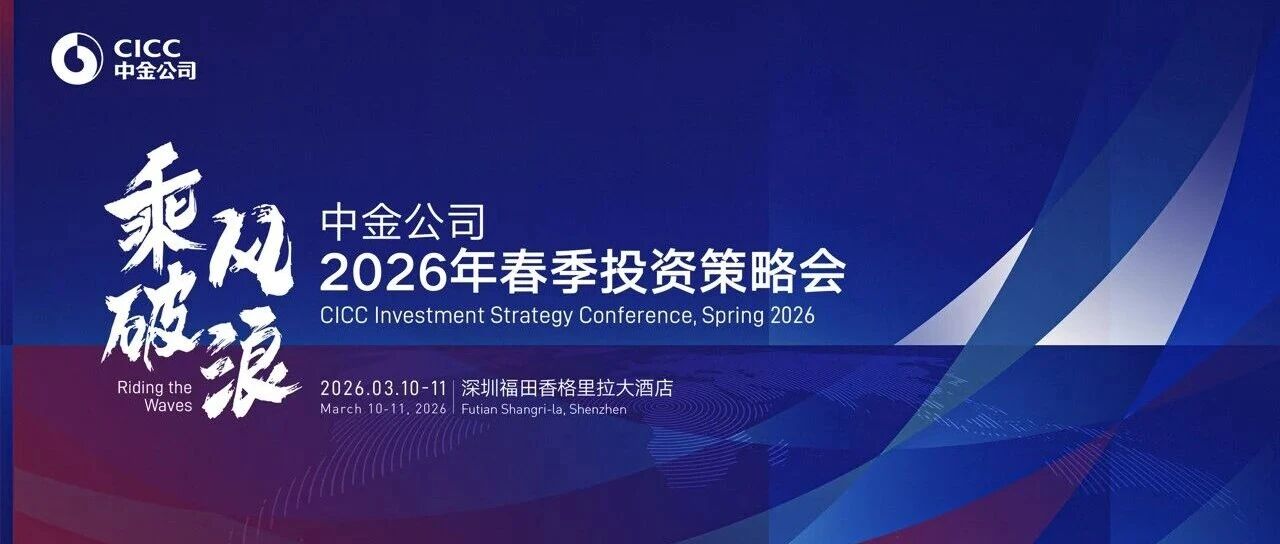
乘风破浪 | 中金公司2026年春季投资策略会
中金点睛· 2026-03-06 11:03
Core Insights - The article discusses the upcoming CICC Investment Strategy Conference scheduled for March 10-11, 2026, in Shenzhen, focusing on macroeconomic outlooks and investment opportunities across various sectors [2][3]. Group 1: Keynote Speakers and Topics - Notable speakers include Wei Lun Professor of Economics at The Chinese University of Hong Kong, the Chief Economist of CICC, and the Senior Managing Director & Chief Strategist of CICC [5][8][11]. - The conference will feature a keynote speech on the macroeconomic outlook for China and the United States, highlighting the global economic landscape [16]. Group 2: Market Outlook Sessions - Sessions will cover A-share market outlook, Hong Kong and overseas market perspectives, and major asset class forecasts [18]. - Specific discussions will address the real estate market trends, fixed income market developments, and the growth of multinational enterprises in a globalized context [19]. Group 3: Sector-Specific Discussions - The conference will include breakout sessions focusing on various sectors such as AI, telecommunications, consumer goods, and renewable energy [20][21][22]. - Topics will explore investment opportunities in the automotive industry, logistics, and the impact of AI on different sectors [21][22][31]. Group 4: Participating Companies - A range of companies from different sectors will participate, including banks, non-bank financial institutions, and technology firms [23][24][26]. - Notable participants include major banks like CITIC Bank and Minsheng Bank, as well as companies in the energy and materials sectors [23][24].
解读2026-政府工作报告相关投资机会
2026-03-06 02:02
Summary of Key Points from the Conference Call Records Industry Overview - The conference call discusses the implications of the 2026 government work report on various industries, including machinery, AI, digital economy, healthcare, and consumer sectors. Key Insights and Arguments Macroeconomic and Policy Changes - The nominal GDP growth target for 2026 is set at 5%, with a focus on moderate fiscal policies and an increase in off-balance-sheet financing tools amounting to 800 billion, aimed at supporting investments [1][2] - The fiscal reform is expected to lead to an increase in state-owned enterprise profit remittance, potentially influencing listed companies to increase dividend payouts [3] Industry-Specific Developments - The machinery sector is highlighted with a focus on future energy and embodied intelligence, supported by 200 billion in long-term special bonds for traditional equipment upgrades [4][5] - The semiconductor storage industry is projected to grow 1-3 times over the next five years due to AI-driven demand, with domestic capital expenditure expected to rise from 500-600 billion to 2000-3000 billion [2][6] Digital Economy and AI - The digital economy's core industry value added is targeted to reach 12.5% of GDP, indicating strong future policy support for technology and digital sectors [7][8] - AI applications are expected to see significant growth, particularly in agent usability, which has been enhanced by improved coding capabilities [14][15] Healthcare Sector - The healthcare sector is seeing a shift towards innovative drugs, with a notable mention of brain-computer interfaces, and an increase in health insurance coverage [29][30] - The focus on innovative drugs is expected to drive significant activity in the sector, with key assets identified for investment [32] Consumer and Service Sectors - The consumer sector is supported by policies aimed at boosting domestic demand, with specific initiatives like 250 billion for trade-in programs and 100 billion for stimulating consumption [16][17] - The service sector is expected to benefit from expanded holiday arrangements, which may enhance consumer spending [17] Machinery and Equipment - The report emphasizes the need for traditional equipment upgrades, with a significant investment planned to support this transition [5][6] - The machinery sector is expected to see a recovery trend, supported by diverse business structures and policy backing [6] Media and Gaming - The media sector is identified as a key area for AI application, with gaming being a significant focus due to its potential for cultural export and AI integration [19][20] - The reduction in Google Play service fees is expected to enhance profitability for companies with high overseas exposure [20][21] Investment Recommendations - The report suggests focusing on companies within the machinery, healthcare, and gaming sectors that are well-positioned to benefit from the outlined policies and market trends [28][30] Additional Important Insights - The government work report indicates a strong commitment to digital transformation and innovation across various sectors, with specific attention to AI, healthcare, and consumer spending [1][2][29] - The emphasis on structural reforms and investment in emerging technologies suggests a proactive approach to economic recovery and growth [4][5][6] This summary encapsulates the critical points discussed in the conference call, providing a comprehensive overview of the implications for various industries and investment opportunities.
付鹏谈AI应用落地:预计在未来12-18个月内将引发行业级的范式转移
凤凰网财经· 2026-03-05 13:56
Group 1 - The core theme of the forum is "Investment Empowerment and Cultural Tourism Coexistence," highlighting the importance of investment in the cultural tourism sector [1] - Economist Fu Peng emphasized the deep adjustment of the global landscape, indicating that changes in trade relations, world order, and global division of labor are underway, leading to significant geopolitical shifts [3][6] - Fu noted that the current geopolitical conflicts, such as those involving Iran, are a result of the transformation in production logic, questioning the relevance of traditional geopolitical strategies [6] Group 2 - Fu predicted that the AI-driven productivity revolution will lead to a disruptive restructuring of production relationships across all industries within the next 5-10 years, with significant changes expected in the next 12-18 months [7][11] - He compared the current investment surge in AI to China's infrastructure boom in the early 2000s, suggesting that the market is effectively signaling the necessity of such investments [10] - Fu raised concerns about the implications of AI on traditional business models, urging industries to rethink their strategies in light of new productivity paradigms [11][12] Group 3 - The rise of AI also brings challenges related to deepfake technology, which poses risks of misuse and ethical concerns, necessitating a rapid response from legal and regulatory frameworks [14][15] - Fu highlighted the need for legal adjustments to address issues such as intellectual property rights and the ethical use of AI-generated content, emphasizing that existing laws are lagging behind technological advancements [15]

【财闻联播】京东2025年业绩出炉!魔法原子回应创始人离职
券商中国· 2026-03-05 11:52
Macro Dynamics - The People's Bank of China will conduct a 800 billion yuan reverse repurchase operation on March 6, 2026, to maintain ample liquidity in the banking system, with a term of 3 months (91 days) [2] Agricultural Production Goals - The "14th Five-Year Plan" draft outlines a new grain production target of approximately 1.45 trillion jin, emphasizing the importance of food security [3] Geopolitical Tensions - Iran has announced a ban on U.S., Israeli, and European vessels from passing through the Strait of Hormuz, asserting its right to control navigation during wartime [4] - Despite the ban, an Iranian military official stated that Iran is not closing the Strait and will treat passing vessels according to international agreements [5] Financial Institutions - Changjiang Securities has received approval from the China Securities Regulatory Commission to participate in carbon emission trading in domestic legal trading venues [6] Market Outlook - Caixin Securities predicts that the A-share market will continue to trend upward in 2026, with a GDP growth target adjusted to 4.5%-5%. The focus will be on developing new productive forces and promoting high-quality economic growth [7] - Key investment areas include sectors benefiting from price increases, technology, and service consumption, particularly in tourism, events, and healthcare [7] Market Data - On March 5, the A-share market saw a collective rebound, with the ChiNext Index rising by 1.66%. The Mini LED concept stocks performed strongly, with several stocks hitting the daily limit [8] - The Hang Seng Index rose by 0.28%, while the Hang Seng Tech Index fell by 0.69%. The oil and gas equipment sector led the decline [9] Company Dynamics - JD Group reported a revenue of 130.91 billion yuan for 2025, with a 7.1% year-on-year growth in the electronics category and a 23.6% increase in service revenue [10] - Bilibili announced a fourth-quarter adjusted net profit of 878 million yuan, a 94% year-on-year increase, with total revenue reaching 8.32 billion yuan [11] - Magic Atom confirmed the departure of its founder and CEO, with the core technology team remaining stable and operations continuing as planned [12] - *ST Songfa's subsidiary signed contracts for the construction of four super-large oil tankers, with a total contract value of approximately 400-600 million USD, representing over 50% of the company's audited main business income for the last fiscal year [13]



百度集团-SW:百度25Q4业绩点评:广告业务有望迎来拐点,看好云业务高增-20260306
Orient Securities· 2026-03-05 10:24
Investment Rating - The report maintains a "Buy" rating for the company with a target price of 141.85 HKD per share, based on a PE valuation method [3][4][7]. Core Insights - The company's traditional online marketing business is experiencing a decline, while AI new business is still in the cultivation phase. The adjusted net profit forecast for 2025-2027 is 189/191/221 billion CNY [3][7]. - The advertising business is expected to see a narrowing of its decline, with AI search commercialization accelerating the potential recovery. The report estimates Q4 2025 advertising revenue at 150 billion CNY, down 16% year-on-year but with a slight improvement from Q3 2025 [6]. - Cloud business is becoming a significant driver of revenue growth, with Q4 2025 intelligent cloud revenue reaching 58 billion CNY, a 38% quarter-on-quarter increase. The demand for AI high-performance computing facilities is expected to sustain cloud growth [6]. Financial Summary - The company's financial projections indicate a revenue of 134,598 million CNY for 2023, with a slight decline to 133,125 million CNY in 2024, and further down to 129,079 million CNY in 2025, before a recovery to 130,748 million CNY in 2026 and 137,623 million CNY in 2027 [3][10]. - The adjusted net profit for 2023 is projected at 28,747 million CNY, decreasing to 27,002 million CNY in 2024, and further down to 18,941 million CNY in 2025, with a slight recovery to 19,142 million CNY in 2026 and 22,052 million CNY in 2027 [3][10]. - The report highlights a gross margin of 52% in 2023, expected to decrease to 50% in 2024 and further down to 44% in 2025, before recovering to 45% in 2026 and 47% in 2027 [3][10].

网易云音乐:25H2动态跟踪:流量增长,会员数及ARPU有望双增-20260306
Orient Securities· 2026-03-05 10:24
Investment Rating - The report maintains a "Buy" rating for NetEase Cloud Music (09899.HK) with a target price of HKD 214.37, equivalent to RMB 189.35 [3][6]. Core Insights - The company is expected to benefit from the continuous introduction of popular music labels, enhancing its music library and promoting original music, which is anticipated to positively impact online music MAU (Monthly Active Users) [3][11]. - The forecasted net profit for the years 2025 to 2027 is projected to be RMB 2.75 billion, RMB 2.00 billion, and RMB 2.40 billion respectively, reflecting adjustments based on the 25H2 financial report [3][11]. - The report highlights a potential dual increase in paid membership numbers and ARPU (Average Revenue Per User) due to improved music offerings and reduced channel discounts [11]. Financial Summary - Revenue for 2023 is reported at RMB 7.87 billion, with a year-on-year decline of 12.5%. The revenue is expected to recover to RMB 9.15 billion by 2027, with a growth rate of 8.3% [5][13]. - The operating profit for 2025 is estimated at RMB 1.42 billion, showing a significant increase of 28.7% compared to the previous year [5][13]. - The gross margin is projected to improve from 26.7% in 2023 to 41.6% by 2027, indicating a positive trend in profitability [5][13]. - The net profit margin is expected to rise from 9.3% in 2023 to 26.2% in 2027, reflecting enhanced operational efficiency [5][13]. Market Performance - The stock price as of March 3, 2026, was HKD 147.3, with a 52-week high of HKD 303.4 and a low of HKD 123.6 [6]. - The report notes a relative performance decline of 20.76% over the past three months compared to the Hang Seng Index [7].
金融工程定期:港股量化:2月市场表现不佳,3月组合维持价值配置
KAIYUAN SECURITIES· 2026-03-05 10:11
Quantitative Models and Construction Methods - **Model Name**: Hong Kong Stock CCASS Preferred 20 Portfolio **Model Construction Idea**: The model leverages CCASS data from the Hong Kong Stock Exchange to track and replicate the monthly holdings of individual brokers. It identifies high-performing brokers and constructs a portfolio based on their holdings[36][38] **Model Construction Process**: 1. Use CCASS data to analyze the holdings of brokers in Hong Kong stocks 2. At the end of each month, rank all brokers based on their standardized excess Sharpe ratio and monthly win rate, and calculate a composite score by equally weighting these two metrics 3. Select the top N brokers with the highest composite scores to form a pool of high-performing brokers 4. Allocate funds equally among the N brokers and aggregate their latest holdings 5. Retain the top M stocks by weight and allocate them equally to construct the portfolio Formula: $ \text{Composite Score} = \text{Standardized Excess Sharpe Ratio} + \text{Monthly Win Rate} $ Parameters: - N = 10 (number of brokers) - M = 20 (number of stocks) **Model Evaluation**: The model effectively identifies high-performing brokers and constructs a portfolio with strong historical performance, demonstrating its potential for excess returns[36][37][38] Model Backtesting Results - **Hong Kong Stock CCASS Preferred 20 Portfolio**: - February 2026 performance: - Portfolio return: -3.36% - Benchmark (Hang Seng Index) return: -2.76% - Excess return: -0.60%[38] - Full period performance (2020.1–2026.2): - Annualized excess return: 17.0% - Excess Sharpe ratio: 2.23[38] - Annualized performance by year: - 2020: Annualized excess return 22.6%, Sharpe ratio 2.33, maximum drawdown -4.9%, monthly win rate 66.7% - 2021: Annualized excess return 13.8%, Sharpe ratio 1.72, maximum drawdown -4.1%, monthly win rate 75.0% - 2022: Annualized excess return 11.4%, Sharpe ratio 1.35, maximum drawdown -5.6%, monthly win rate 66.7% - 2023: Annualized excess return 19.6%, Sharpe ratio 2.85, maximum drawdown -3.3%, monthly win rate 75.0% - 2024: Annualized excess return 21.6%, Sharpe ratio 3.04, maximum drawdown -3.8%, monthly win rate 91.7% - 2025: Annualized excess return 18.1%, Sharpe ratio 3.41, maximum drawdown -2.6%, monthly win rate 83.3% - 2026 YTD: Annualized excess return -8.3%, Sharpe ratio -1.64, maximum drawdown -1.8%, monthly win rate 0.0% - Full period: Annualized excess return 17.0%, Sharpe ratio 2.23, maximum drawdown -7.3%, monthly win rate 74.3%[39]