
机械

Search documents
深观察丨美式关税恶果:在损人和害己之间循环
Sou Hu Cai Jing· 2025-06-15 13:31
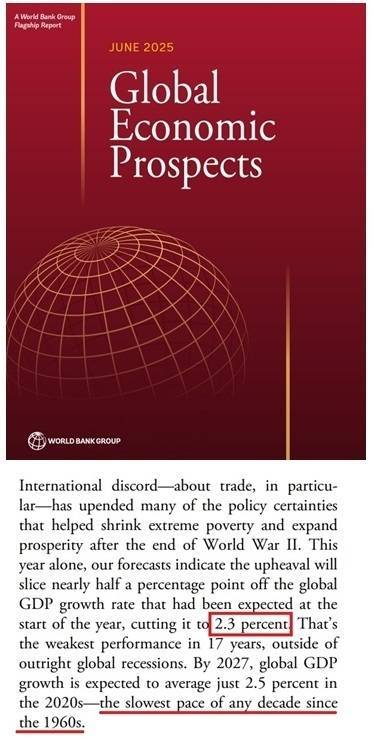
Global Economic Outlook - International financial institutions have recently downgraded global economic growth forecasts for this year, with the World Bank reducing its projection from 2.7% to 2.3% [1][3] - The World Bank's report indicates that nearly 70% of economies are experiencing a slowdown, with the potential for the average growth rate in the 2020s to be the lowest since the 1960s [1][3] Impact of Tariffs - The reports highlight that the U.S. tariff policies are not only hindering global economic growth but are also detrimental to the U.S. economy itself [1][6] - The OECD has also lowered its global growth forecast for the next two years to 2.9%, citing increased trade barriers and uncertainty in economic policies as significant factors affecting business and consumer confidence [4][6] U.S. Economic Projections - The U.S. economic growth forecast has been significantly reduced from 2.3% to 1.4% for this year, with projections for 2024 and 2025 at 1.6% and 1.5% respectively [3][4] - The U.S. economy has shown signs of contraction, with a reported GDP shrinkage of 0.2% in the first quarter, marking the first decline in nearly three years [12][14] Consumer and Business Impact - New tariffs on steel-derived products, effective from June 23, are expected to increase prices for consumers significantly, with some products potentially tripling in cost [6][9] - The aggressive tariff policies have led to job losses in the U.S. manufacturing sector, with estimates indicating a loss of 75,000 jobs since the implementation of steel and aluminum tariffs in 2018 [9][12] Trade Data Fluctuations - U.S. trade data has shown significant volatility, with a sharp decline in imports in April due to reduced demand from importers and increasing caution in the market [15] - The overall role of trade in the U.S. economy is expected to weaken, reminiscent of conditions seen during the early COVID-19 pandemic and the global financial crisis [15]

市场情绪监控周报(20250609-20250613):本周热度变化最大行业为石油石化、有色金属-20250615
Huachuang Securities· 2025-06-15 11:45
Quantitative Models and Construction Methods - **Model Name**: Broad-based Index Heat Rotation Strategy - **Model Construction Idea**: The model uses the weekly heat change rate (MA2) of broad-based indices to construct a rotation strategy. The idea is to buy the index with the highest heat change rate at the end of each week, or stay in cash if the "Others" group has the highest rate[7][13]. - **Model Construction Process**: 1. Calculate the total heat of constituent stocks for each broad-based index (CSI 300, CSI 500, CSI 1000, CSI 2000, and "Others") by summing up their individual heat indicators[8][11]. 2. Compute the weekly heat change rate for each group and smooth it using a 2-week moving average (MA2)[11][13]. 3. At the end of each week, invest in the index with the highest heat change rate (MA2). If the "Others" group has the highest rate, remain in cash[13]. - **Model Evaluation**: The strategy demonstrates a reasonable annualized return and manageable drawdown, indicating its potential effectiveness in capturing short-term market sentiment[16]. Model Backtesting Results - **Broad-based Index Heat Rotation Strategy**: - Annualized Return: 8.74% (since 2017)[16] - Maximum Drawdown: 23.5%[16] - 2025 YTD Return: 10.1%[16] Quantitative Factors and Construction Methods - **Factor Name**: Total Heat Indicator - **Factor Construction Idea**: The total heat indicator aggregates the attention metrics (e.g., browsing, watchlist additions, and clicks) of individual stocks, normalized as a percentage of the market total, to serve as a proxy for market sentiment[7]. - **Factor Construction Process**: 1. For each stock, calculate the sum of browsing, watchlist additions, and clicks[7]. 2. Normalize the value as a percentage of the total market activity for the same day[7]. 3. Multiply the normalized value by 10,000 to scale the indicator within the range [0, 10,000][7]. - **Factor Evaluation**: The factor effectively captures market sentiment and is used as a proxy for emotional intensity in broader market or sector-level analysis[7]. - **Factor Name**: Weekly Heat Change Rate (MA2) - **Factor Construction Idea**: This factor measures the weekly change in the total heat indicator, smoothed using a 2-week moving average, to identify trends in market sentiment[11][13]. - **Factor Construction Process**: 1. Compute the weekly change rate of the total heat indicator for each stock or group[11]. 2. Apply a 2-week moving average (MA2) to smooth the weekly change rate[11][13]. - **Factor Evaluation**: The smoothed heat change rate provides a stable and actionable signal for rotation strategies and sentiment analysis[13]. Factor Backtesting Results - **Total Heat Indicator**: - Range: [0, 10,000][7] - **Weekly Heat Change Rate (MA2)**: - CSI 300: +7.76% (highest among broad-based indices for the week)[16] - "Others" Group: -3% (lowest among broad-based indices for the week)[16] - **Concept Heat TOP/BOTTOM Portfolios**: - BOTTOM Portfolio Annualized Return: 15.71%[33] - BOTTOM Portfolio Maximum Drawdown: 28.89%[33] - 2025 YTD Return for BOTTOM Portfolio: 21.1%[33]
基金风格配置监控周报:权益基金连续两周上调小盘股票仓位-20250615
Tianfeng Securities· 2025-06-15 08:11
- The report constructs a model to estimate the complete stock holdings of public funds based on the top 10 heavy holdings disclosed in quarterly reports, the top 10 shareholders of listed companies, and the industry allocation information of public funds[7][8][9] - The model assumes that the non-heavy stock holdings of the fund remain unchanged in terms of stock types across two periods, with only the holding weights changing proportionally. Based on the non-heavy stock holdings at the end of the previous period, the weights are scaled proportionally to simulate the non-heavy stock holdings for the current period[9] - The model uses weighted least squares to estimate the allocation of public funds in large-cap and small-cap combinations at each point in time, based on the daily returns of the fund and the daily returns of the large-cap and small-cap indices[2][11] - The model evaluates the average style changes of public funds from three dimensions: large-cap and small-cap allocation, market value exposure, and industry allocation[2][11] - The median stock position of ordinary stock funds as of June 13, 2025, is 88.84%, up 1.57% from the previous week's estimate. The median stock position of partial equity hybrid funds is 84.98%, up 0.95% from the previous week's estimate[3][13] - The estimated positions of ordinary stock funds and partial equity hybrid funds in the large-cap combination increased by 0.96% and decreased by 1.02%, respectively, while the estimated positions in the small-cap combination increased by 0.61% and 1.97%, respectively[3][13] - The current estimated positions of ordinary stock funds and partial equity hybrid funds are at the 60.53% and 48.47% percentiles, respectively, in the position estimate series since 2016[3][13] - As of June 13, 2025, public funds have high allocation weights in industries such as electronics, pharmaceuticals, electrical equipment, food and beverages, and machinery[3][20] - During the week of June 9-13, 2025, partial equity investment funds reduced their positions in industries such as electronics, computers, pharmaceuticals, food and beverages, and agriculture, forestry, animal husbandry, and fishery, while increasing their positions in industries such as machinery, banking, non-bank finance, basic chemicals, and consumer services[3][20]
美国钨砂傲视群雄,国靠进口压身,断供后路在哪
Sou Hu Cai Jing· 2025-06-14 04:10
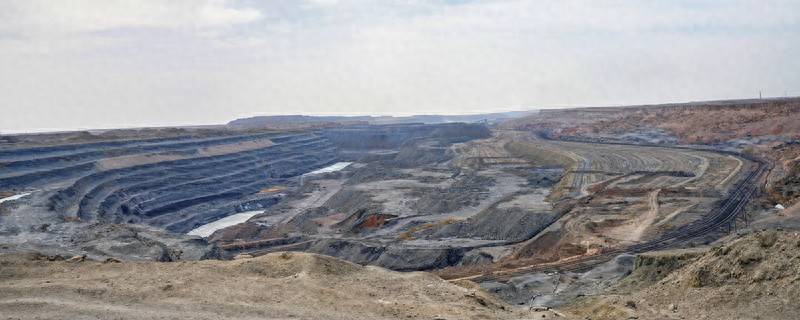
Group 1 - The article highlights the critical importance of tungsten, noting that the U.S. holds over 30% of the world's proven reserves while China relies on imports for 95% of its tungsten needs [3][5] - The potential impact of U.S. supply disruptions on various sectors, including military, automotive, machinery, and chemicals, is discussed, emphasizing that such disruptions could lead to increased prices for consumers [3][5][7] Group 2 - The article proposes three strategies for China to address its tungsten dependency: diversifying procurement sources, accelerating domestic production and technology development, and establishing strategic reserves [5][7] - It suggests that China should deepen cooperation with countries like Vietnam and African nations for tungsten sourcing and processing, while also encouraging domestic research and development to enhance tungsten processing capabilities [5][7] - The establishment of strategic reserves is recommended to ensure a buffer against supply disruptions, similar to reserves for food and oil [5][7]
热点追踪周报:由创新高个股看市场投资热点(第198期)-20250613
Guoxin Securities· 2025-06-13 11:06
Quantitative Models and Construction Methods - **Model Name**: 250-Day New High Distance Model **Model Construction Idea**: This model tracks the distance of the latest closing price from the highest closing price over the past 250 trading days. It is used to identify stocks or indices that are trending near their historical highs, which can serve as market trend indicators[10][17]. **Model Construction Process**: The formula for the 250-day new high distance is: $ 250\ Day\ New\ High\ Distance = 1 - \frac{Close_t}{ts\_max(Close, 250)} $ - $ Close_t $: Latest closing price - $ ts\_max(Close, 250) $: Maximum closing price over the past 250 trading days If the latest closing price reaches a new high, the distance is 0. If the price has fallen from the high, the distance is a positive value representing the percentage drop[10]. **Model Evaluation**: This model effectively captures momentum and trend-following characteristics, which are widely supported by academic research and practical strategies[10][17]. - **Model Name**: Stable New High Stock Screening Model **Model Construction Idea**: This model identifies stocks that have recently reached new highs and exhibit stable price paths, strong momentum, and consistent trends. It incorporates factors such as analyst attention, relative strength, and price smoothness[23][25]. **Model Construction Process**: 1. Select stocks that have hit 250-day new highs in the past 20 trading days. 2. Apply the following screening criteria: - **Analyst Attention**: At least 5 "Buy" or "Overweight" ratings in the past 3 months. - **Relative Strength**: 250-day return in the top 20% of the market. - **Price Stability**: Use the following metrics: - Price path smoothness: Ratio of price displacement to total price movement. - Consistency of new highs: Average 250-day new high distance over the past 120 days. - Trend continuation: Average 250-day new high distance over the past 5 days. 3. Rank stocks based on these metrics and select the top 50%[23][25]. **Model Evaluation**: This model emphasizes the temporal characteristics of momentum, leveraging smoother price paths and consistent trends to enhance returns[23][25]. --- Backtesting Results of Models - **250-Day New High Distance Model**: - As of June 13, 2025, the 250-day new high distances for major indices are as follows: - Shanghai Composite Index: 3.23% - Shenzhen Component Index: 11.94% - CSI 300: 9.21% - CSI 500: 9.33% - CSI 1000: 7.65% - CSI 2000: 4.96% - ChiNext Index: 19.86% - STAR 50 Index: 13.66%[11][12][14] - **Stable New High Stock Screening Model**: - 42 stocks were selected based on the screening criteria. - Distribution by sector: - Manufacturing: 9 stocks (e.g., machinery) - Consumer: 9 stocks (e.g., food and beverage) - Examples of selected stocks: - Manufacturing: Shenghong Technology, Wanchen Group - Consumer: Dongpeng Beverage, Youyou Food[26][31] --- Quantitative Factors and Construction Methods - **Factor Name**: 250-Day New High Distance **Factor Construction Idea**: Measures the proximity of a stock's current price to its 250-day high, capturing momentum and trend-following signals[10]. **Factor Construction Process**: The formula is the same as the 250-day new high distance model: $ 250\ Day\ New\ High\ Distance = 1 - \frac{Close_t}{ts\_max(Close, 250)} $ - $ Close_t $: Latest closing price - $ ts\_max(Close, 250) $: Maximum closing price over the past 250 trading days[10]. **Factor Evaluation**: This factor is widely recognized for its ability to identify leading stocks and sectors during market uptrends[10][17]. - **Factor Name**: Price Path Smoothness **Factor Construction Idea**: Quantifies the stability of a stock's price movement, favoring stocks with smoother trends over those with volatile paths[23]. **Factor Construction Process**: - Calculate the ratio of price displacement to the total price movement over a specified period. - Higher values indicate smoother price paths[23]. **Factor Evaluation**: Smooth price paths are less likely to attract excessive speculative attention, leading to stronger and more sustainable momentum effects[23]. --- Backtesting Results of Factors - **250-Day New High Distance Factor**: - Among 838 stocks that hit 250-day highs in the past 20 days, the highest concentrations were in the pharmaceutical, basic chemical, and machinery industries. - By sector: - Manufacturing: 262 stocks (16.91% of the sector) - Cyclical: 212 stocks (18.95% of the sector) - By index: - CSI 2000: 15.75% of constituents - CSI 1000: 12.80% of constituents - CSI 500: 10.20% of constituents[18][19][31] - **Price Path Smoothness Factor**: - Applied to the 42 stocks identified by the Stable New High Stock Screening Model. - Stocks with higher smoothness scores demonstrated stronger momentum and trend continuation[23][25][26]
由创新高个股看市场投资热点
量化藏经阁· 2025-06-13 09:46
Group 1 - The report tracks stocks, industries, and sectors that are reaching new highs, indicating market trends and hotspots [1][4] - As of June 13, 2025, the distance to the 250-day new high for major indices is as follows: Shanghai Composite Index 3.23%, Shenzhen Component Index 11.94%, CSI 300 9.21%, CSI 500 9.33%, CSI 1000 7.65%, CSI 2000 4.96%, ChiNext Index 19.86%, and STAR Market 13.66% [5][25] - The industry indices that are closest to their 250-day new highs include non-ferrous metals, banking, pharmaceuticals, agriculture, forestry, animal husbandry, fishery, and electric power and public utilities [8][25] Group 2 - A total of 838 stocks reached a 250-day new high in the past 20 trading days, with the most significant numbers in the pharmaceutical, basic chemicals, and machinery sectors [2][13] - The highest proportion of new high stocks is found in the banking, textile and apparel, and pharmaceutical industries, with respective proportions of 71.43%, 29.29%, and 24.95% [13][16] - The manufacturing and cyclical sectors had the most new high stocks this week, with 262 and 212 stocks respectively [16] Group 3 - The report identifies 42 stocks that have shown stable new highs, with the majority coming from the manufacturing and consumer sectors, each contributing 9 stocks [22][26] - The mechanical industry had the most new highs within the manufacturing sector, while the food and beverage industry led in the consumer sector [22][26] - The selection criteria for stable new high stocks include analyst attention, relative strength of stock prices, price path stability, and continuity of new highs [19][20]

广东:将进一步加强与日本企业以及经贸机构间的交流与合作
Zhong Guo Fa Zhan Wang· 2025-06-13 08:50
Core Insights - The core opportunity for Japanese companies in Guangdong lies in the province's large consumer market and diverse industrial demands, particularly in sectors like automotive, electronics, and machinery, where Japanese firms can leverage their advanced technologies and products to meet local needs [1][2] Group 1: Market Opportunities - Guangdong is one of China's most developed provinces, featuring multiple internationally competitive industrial clusters, such as the electronic information and automotive industries, each with an output exceeding one trillion yuan, providing a strong competitive environment for Japanese companies to collaborate with local firms [1] - The province is actively promoting low-altitude economy and artificial intelligence applications, creating market space for Japanese companies' new technologies and products [1] Group 2: Strategic Initiatives - The event aims to strengthen communication and cooperation between Guangdong and Japanese enterprises, establishing a regular coordination mechanism to facilitate the implementation of cooperative projects and address challenges faced during collaboration [2] - There is a focus on expanding cooperation into strategic emerging industries such as new energy, biomedicine, and marine economy, enhancing the scope of collaboration between the two regions [2] - The government is committed to providing high-quality, efficient, and convenient administrative services to Japanese companies, improving operational efficiency and fostering an international, rule-based, and market-oriented business environment [2]
国泰海通晨报-20250613
Haitong Securities· 2025-06-13 02:53
Group 1 - The establishment of a joint venture between WoFei ChangKong and WoLong Electric Drive focuses on the development of electric propulsion power systems, which is expected to accelerate the commercialization of the low-altitude economy [2][3][21] - The joint venture, Zhejiang Longfei Electric Drive Technology Co., Ltd., will develop high-performance motors and electric drive systems for tilt-rotor eVTOL aircraft, addressing high thrust demands during vertical takeoff and efficient energy conversion during cruise [3][21] - The collaboration is anticipated to integrate both parties' technologies and market resources, creating a "power solution" that can be reused in the low-altitude economy sector [3][21] Group 2 - The cooperation between power system companies and eVTOL manufacturers is expected to accelerate core technology research and development, enhancing the synergy within the low-altitude economy industry chain [4][21] - The low-altitude economy encompasses various sectors, including low-altitude infrastructure, aircraft manufacturing, and operational support, with the aircraft manufacturing segment facing significant technical barriers and receiving strong policy support for eVTOL technology development [4][21] - The value proportion of the power system and avionics control system in eVTOL aircraft is relatively high, indicating that these segments are likely to benefit significantly from the ongoing developments [4][21] Group 3 - The solid-state battery industrialization process is accelerating, with several automotive companies, including BMW and Mercedes-Benz, beginning road tests of vehicles equipped with solid-state batteries [7][8][9] - The energy density of the new solid-state batteries is reported to be as high as 450Wh/kg, with some manufacturers planning to achieve mass production by 2027 [8][9] - Companies like Ningde Times and Guoxuan High-Tech are leading the development of solid-state batteries, with plans for small-scale production and delivery of high-energy-density batteries in the coming years [9][10] Group 4 - The solid-state battery supply chain is progressing well, with companies like BETTERRY and Xiamen Tungsten New Energy making advancements in key materials for solid-state batteries [10] - The market for solid-state batteries is expected to grow significantly, driven by the increasing demand for high-performance energy storage solutions in electric vehicles [9][10] - The competitive landscape in the lithium battery sector is intensifying as companies race to secure their positions in the solid-state battery market [9][10]
百校联百园 千企促就业
Guang Xi Ri Bao· 2025-06-13 02:06
Group 1 - The event "2025 Guangxi 'Hundred Schools Link Hundred Parks, Thousand Enterprises Promote Employment'" aims to facilitate talent supply and demand matching, involving 85 universities, 20 parks, and 128 enterprises [1] - The conference focused on key areas such as school-enterprise cooperation and talent cultivation, with representatives sharing experiences and establishing multiple cooperation intentions [1] - The talent supply and demand negotiation meeting serves as a crucial platform for communication between universities and enterprises, leading to preliminary cooperation agreements [1][2] Group 2 - The job fair provided 1,500 employment positions across various sectors, including manufacturing, internet, computer, machinery, electronics, and new energy, with over 2,300 resumes submitted [2] - Local employment policies were presented, offering talent subsidies exceeding 80,000 yuan, housing guarantees, and entrepreneurial support [2] - An online job fair was introduced, running until July 7, with 1,105 companies registered and over 7,800 job openings available, creating a 24/7 employment service platform for graduates [2][3] Group 3 - The Education Department emphasized the importance of aligning academic strengths with job market demands to stabilize and expand employment, thereby contributing to high-quality development in Guangxi [3]
方正富邦基金首席投资官汤戈:行到水穷处 坐看云起时
Zhong Guo Jing Ji Wang· 2025-06-12 08:35
Group 1 - The overall stock market has not shown a clear trend since 2025, characterized by volatility with a bottom and top range, leading to "diversification" as a key theme [1] - The macroeconomic situation in China is also showing signs of divergence, with the old economy, represented by the real estate sector, still on a downward trend, although the pace of decline has slowed due to supportive policies [1] - New sectors such as high-end manufacturing and new consumption are performing well, contributing positively to stabilizing China's economic growth [1] Group 2 - Investment strategies for the second half of the year will continue to be dominated by diversification, with rotation playing a more significant role in investment decisions [2] - After the first half's gains, sectors with strong fundamentals and speculative themes have accumulated significant increases, leading to some valuations reaching high levels [2] - The impact of the trade war initiated by the U.S. has made valuations in export-oriented industries, particularly those related to AI, more attractive [2]