
制造业

Search documents
政策精准发力护航经济韧性,中国经济向新而行|2025中国经济年报
Hua Xia Shi Bao· 2025-12-25 06:38
Core Viewpoint - In 2025, China's economy is expected to maintain steady growth despite complex external pressures, with a projected annual GDP of approximately 140 trillion yuan, positioning it among the world's leading economies [2] Economic Performance - China's economic growth rate for the first three quarters is 5.2%, with a forecast of 4.6% for the fourth quarter, leading to an overall annual growth rate of around 5% [2] - International organizations, including the IMF and World Bank, have raised their growth forecasts for China in December, with increases of 0.2 and 0.4 percentage points respectively [2] Policy Measures - The government aims to enhance domestic demand and leverage technological development as new economic drivers, emphasizing the need for reforms to achieve supply-demand balance [2][6] - A comprehensive plan for increasing urban and rural residents' income has been implemented, focusing on income distribution, individual tax, social security, and employment [5] Investment Trends - Investment in high-tech industries remains robust, with significant advancements in artificial intelligence and a notable increase in the number of intelligent factories [5][4] - The focus on technology innovation is expected to continue, with policies aimed at nurturing emerging and future industries [6] Future Outlook - Predictions for 2026 indicate a balanced economic operation with a growth rate of approximately 4.8%, driven by domestic consumption and service sector growth [6] - The macroeconomic policy will continue to be proactive, with an emphasis on technology innovation, advanced manufacturing, and quality consumption supply [7][8]

中企融资风向变了?制造业降温科技业崛起,钱流向揭示转型趋势
Sou Hu Cai Jing· 2025-12-25 06:21
Core Viewpoint - The article discusses the structural characteristics and changes in equity financing for Chinese enterprises, emphasizing its importance as a funding source for business development and reflecting capital market preferences and macroeconomic trends [1]. Financing Stage Classification and Overall Structure - Equity financing is categorized into four stages: startup, growth, expansion, and maturity, each corresponding to different financing rounds, with IPOs being the primary method of financing from 2000 to 2024 [3]. - The disclosed financing amounts for the startup, growth, expansion, and maturity stages are 229.14 billion, 4.4 trillion, 393.88 billion, and 20.7 trillion for mainland listings, respectively, with additional amounts from Hong Kong and U.S. markets totaling 670 billion [5]. Industry Distribution Differences by Stage - In the startup stage, the top three industries receiving financing are scientific research and technical services, information transmission software and IT services, and manufacturing, collectively accounting for over 70%, with scientific research leading at 37.6% [5]. - The manufacturing sector's share decreased from 52.4% in 2020 to 15.2% in 2024, while leasing and business services have seen steady growth [7]. - In the growth stage, the industry distribution remains similar to the startup phase, with manufacturing's share increasing from 16.3% to 31.9% over five years [7]. - The expansion stage shows a unique distribution, with information transmission software and IT services dominating at 45% [7]. Core Structural Features and Recent Trends - The financing structure exhibits four core features: high industry concentration with significant stage differences, pre-IPO financing heavily influenced by IPO rhythms, and a notable increase in early-stage financing since 2010 [12]. - The manufacturing sector remains dominant in post-IPO financing, consistently accounting for over 50% [9]. - Strategic emerging industries, particularly new-generation information technology, have a strong capital attraction, comprising over 60% in early financing [12]. - The support from Hong Kong and U.S. markets for light-asset enterprises has led to over 1 trillion in financing for information transmission software and IT services, surpassing mainland market levels [12]. - The financing demand for high-end manufacturing has risen significantly, indicating the sector's growth potential [13]. - Overall, the equity financing market for Chinese enterprises is maturing, providing robust financial support for high-quality economic development in China [13].
2026年中国宏观展望:不靠强刺激,通胀也能稳住
Xinda Securities· 2025-12-25 06:03
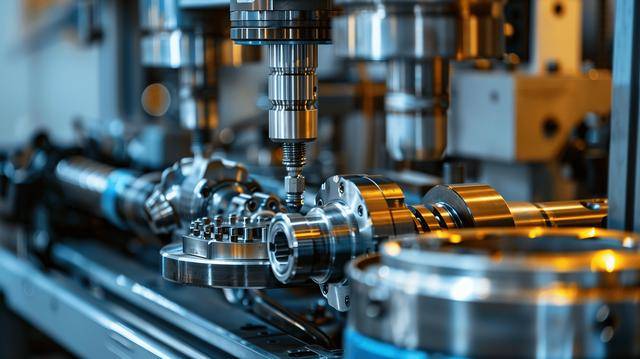
Policy Insights - The GDP target for 2026 is expected to remain around 5%, with macro policies not being strong stimulus but rather supportive measures[5][9]. - Monetary policy is projected to see a 10 basis point rate cut and a 50 basis point reserve requirement ratio cut, consistent with 2025[5][24]. - The fiscal deficit rate is anticipated to stay at 4%, with total debt slightly increasing, maintaining fiscal efforts similar to 2025[5][24]. Economic Outlook - Economic growth is expected to be stable, but structural differentiation may occur, with real housing demand declining due to slowed urbanization[5][36]. - Real estate sales are projected to decrease by 10% in 2026, continuing the downward trend from 2025[5][37]. - Manufacturing investment is likely to remain low, with a growth rate of 3-4% anticipated due to ongoing capacity surplus issues[5][47]. Price Trends - CPI is expected to rise slightly to around 0.5% in 2026, driven by reduced drag from pork and energy prices[5][79]. - Core CPI is projected to maintain resilience, supporting overall CPI growth, with a historical average around 0.8%[5][88]. Market Dynamics - The A-share market is expected to experience a slow bull market, driven by technology and cyclical sectors, with institutional funds poised to enter the market[5][5]. - The total balance of institutional funds is over 100 trillion yuan, with an estimated 1.5-5 trillion yuan ready to enter the equity market[5][5]. Risk Factors - Key risks include geopolitical tensions, domestic policy implementation falling short of expectations, and potential underperformance in infrastructure investment[5][5].
视频丨抵御美国关税冲击 南非贸易展现韧性
Sou Hu Cai Jing· 2025-12-25 05:46
Core Insights - Despite increasing global trade tensions and U.S. tariffs, South Africa's trade has shown resilience, maintaining stability and achieving a trade surplus for eight consecutive months since the beginning of 2025 [1][3] Group 1: Trade Performance - South Africa's exports are relatively diversified, with the U.S. accounting for only about 7% of total exports, which mitigates the impact of new tariffs [3] - Key mineral products exported to the U.S., such as platinum, palladium, rhodium, chromium, and manganese, have received exemptions from tariffs, benefiting South Africa [3] Group 2: Economic Strategy - The South African government is accelerating efforts to diversify export markets and optimize the structure of export products [3] - The ongoing development of the African Continental Free Trade Area is providing new support for South Africa to expand its regional market [3] Group 3: Future Goals - South Africa aims to achieve an export target of 3 trillion rand by 2030, with exports already exceeding 2 trillion rand in 2024, indicating that this goal is attainable [3] - Experts emphasize the need for South Africa to reduce reliance on mineral exports and expand agricultural and manufacturing exports while exploring emerging markets outside the U.S. to enhance long-term trade resilience [3]

2025年Q3美国GDP增长率达4.3%!马斯克称未来18个月内美国GDP将两位数增长,你怎么看?
Sou Hu Cai Jing· 2025-12-25 05:30
Group 1 - The core point of the article is that the U.S. GDP growth rate for Q3 is 4.3%, driven by increased consumer spending, exports, and government spending, marking the highest growth rate in two years [1][3] - Consumer spending, which accounts for about 70% of the U.S. economy, grew by 3.5% in Q3, supported by both goods and services, particularly in healthcare, international travel, and pharmaceuticals [4][5] - Exports saw a significant rebound of 8.8%, while imports decreased by 4.7%, contributing to the overall economic growth [4][5] Group 2 - The article discusses the feasibility of Elon Musk's prediction of double-digit GDP growth, highlighting three core issues: the potential growth rate ceiling, the structural challenges in growth drivers, and the global economic context [7][8] - The current economic environment shows that U.S. corporate investment remains weak, and for double-digit growth to be realized, AI investment must expand beyond a single sector to drive broader economic growth [7][8] - The global economic growth rate is only 3.2%, which may not support sustained high U.S. exports, and risks such as government shutdowns could further hinder growth [8][10] Group 3 - AI is recognized as a significant driver of economic growth, with predictions that it could contribute to a 12-13% increase in global GDP by 2040, contingent on supportive policies [15][18] - In the U.S., AI-related credit is expected to exceed $200 billion by 2025, contributing over 20% to GDP growth, indicating its critical role in the economy [15][18] - However, the limitations of AI are noted, as its contribution to GDP growth is projected to be less than 1% in the near term, suggesting it cannot solely drive the global economic recovery [15][18]
广西经济运行回升向好 聚力发展壮大智能经济
Zhong Guo Xin Wen Wang· 2025-12-25 05:08
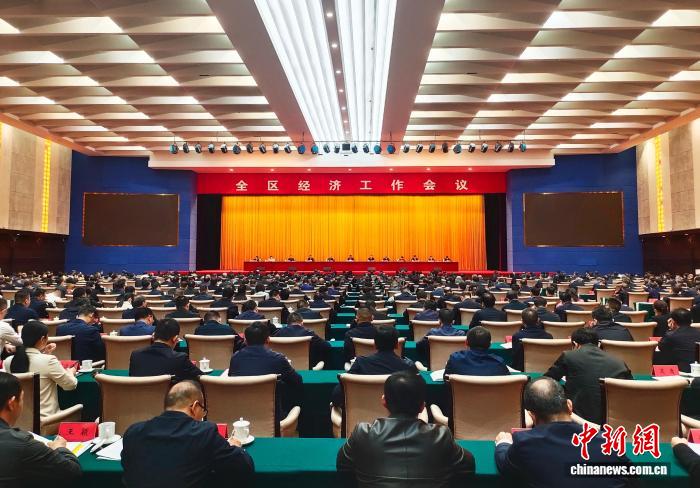
Core Viewpoint - Guangxi's economy is showing signs of recovery, driven by the rapid development of artificial intelligence (AI) and the construction of a modern industrial system, alongside deep reforms and high-level openness [1] Group 1: Economic Development and AI - Guangxi aims to develop a robust smart economy by integrating AI research from major cities with local applications and establishing a China-ASEAN AI application cooperation center [2] - The region plans to implement the "AI+" initiative to enhance the integration of AI with manufacturing, promoting AI as a key driver for industrial upgrades and enterprise transformations [2] Group 2: Industrial Structure and Investment - Guangxi will focus on building a modern industrial system supported by ten key manufacturing industries, enhancing investment structures, and improving investment efficiency [2] - The region intends to promote new business models such as "AI + consumption" and create new supply chains that leverage ASEAN production and Guangxi distribution [2] Group 3: Reform and Innovation - Guangxi will deepen reforms in key areas such as AI development and technological innovation, aiming to stimulate internal growth and integrate into the national market [3] - The region plans to strengthen education and technology talent development while focusing on core technology breakthroughs to foster high-quality industrial growth [3] Group 4: Open Economy and Green Transformation - Guangxi is committed to prioritizing the development of the Beibu Gulf Economic Zone and enhancing trade and investment integration with the Guangdong-Hong Kong-Macao Greater Bay Area [5] - The region will also focus on promoting a green transformation of its industrial system and ensuring the improvement of people's livelihoods [5]
科技金融培育增长新动能,中信银行杭州分行助力“创新浙江”建设
Mei Ri Jing Ji Xin Wen· 2025-12-25 04:20
Group 1 - Zhejiang's innovation capability has ranked fourth nationally for four consecutive years, with R&D investment intensity increasing from 2.77% in 2020 to a projected 3.22% in 2024 [1] - CITIC Bank Hangzhou Branch has served nearly 8,000 technology enterprises, with a comprehensive financing scale of nearly 400 billion yuan, significantly contributing to the cultivation of new productive forces and the upgrading of the technology industry [1][3] - The bank has established a "six specialized system" to enhance its technology finance services, including dedicated teams, specialized resources, and proprietary product services [2] Group 2 - CITIC Bank Hangzhou Branch has launched specialized products such as Talent Loans and Technology Achievement Transformation Loans, which assess technology enterprises based on their technical strength and talent value rather than traditional financial metrics [2][3] - The bank has facilitated over 300 billion yuan in comprehensive financing for more than 1,000 hard technology enterprises in the past three years, with eight companies achieving initial public offerings in 2024 [3] Group 3 - The bank has built an integrated service system that includes collaboration with securities firms, equity investment institutions, and research institutes to provide comprehensive services for technology enterprises [4] - In March 2023, the bank issued a 100 million yuan merger loan for a key "little giant" enterprise, demonstrating its commitment to supporting high-tech sectors [4] Group 4 - CITIC Bank Hangzhou Branch has established a cross-border service office to provide comprehensive financing services, including equity and debt financing for technology enterprises [5] - The bank has set up a 100 billion yuan industry fund in collaboration with local governments and a 50 billion yuan precision manufacturing industry fund with partners, contributing to the capital needs of Zhejiang's advanced manufacturing cluster [6] Group 5 - The bank has successfully launched the first technology achievement transformation loan, providing nearly 10 million yuan to a research transformation enterprise, setting a benchmark for financial support in technology transfer [7] - CITIC Bank Hangzhou Branch's collaborative network with local universities and investment institutions aims to support the financing needs of technology enterprises in Zhejiang [7]

回顾 | 杜雨:我今年写了7本书
未可知人工智能研究院· 2025-12-25 04:03
Group 1 - The essence of technology is to empower people, and upgrading cognition is the prerequisite for seizing opportunities [1] - The author has written a total of 7 books this year, marking a significant milestone in their writing career [3][4] - The focus of the books is on understanding the underlying logic of AI, practical applications, and insights into various industries [6][11][25][34] Group 2 - "DeepSeek: Understanding the Underlying Logic of the AI Era" addresses the commercial logic behind AI technologies, aiming to provide a framework for entrepreneurs and investors [7][8][9] - "DeepSeek Usage Guide: Practical Applications Across All Professions" has sold 100,000 copies in its first month, emphasizing practical scenarios for various roles [12][13][15] - "A Book to Learn Manus: Practical Guide to AI Agents" targets non-technical users, helping them automate repetitive tasks and improve efficiency [20][22][24] Group 3 - "Humanoid Robots: Technology, Industry, and Future Society" explores the potential impact of humanoid robots on labor markets and industries, providing a comprehensive view of the field [25][32][33] - "Investing in People" shifts the focus from technology to the importance of human factors in investment success, sharing real case studies [34][36][39] - "Stablecoins: Technological Revolution and Financial New Future" highlights the efficiency of stablecoins in cross-border payments, challenging misconceptions about cryptocurrencies [40][41] Group 4 - "New Geeks: The New Round of Global Technological Revolution and China's Innovation Logic" analyzes the characteristics of Chinese innovation in the context of AI and other technologies, providing insights for various stakeholders [42][43][44] - The author plans to focus on human-centric themes in future works, emphasizing the importance of communication and creativity in the AI era [45][49]

股市“四辩”︱2026年重阳投资策略报告
重阳投资· 2025-12-25 03:32
Core Viewpoint - In 2025, the Chinese stock market rebounded strongly, with the Shanghai Composite Index reaching a ten-year high, indicating a highly differentiated market structure. The article explores how to seize new opportunities in 2026 from four perspectives: future debate, allocation debate, current debate, and strategy debate [1]. Future Debate: Will China Repeat Japan's Lost Decade? - China is unlikely to follow Japan's trajectory of economic stagnation due to its superior innovation capabilities and irreplaceability in the global market. The historical context shows that Japan's economic decline was significantly influenced by China's rapid rise, which diminished Japan's industrial advantages. Currently, the Chinese market has shifted from being perceived as "uninvestable" to having "strategic allocation value" [5][6][9]. Allocation Debate: Where Will Incremental Funds for the Stock Market Come From? - The incremental funds for the stock market are expected to come from asset reallocation by residents and financial institutions in a low-interest-rate environment. For the first time in history, the real estate market is transitioning from a source of capital diversion to a driving force for the stock market, leading to a bull market in Chinese stocks [10][11][12]. High-net-worth individuals and insurance funds are the main drivers of this asset reallocation, which is characterized by rational and gradual behavior rather than a rush to invest [11][12][14]. Current Debate: Can AI Capital Expenditure Expectations Be Met? - AI is viewed as one of the most significant technological revolutions since the industrial revolution, but the high profit margins and massive capital expenditures in the industry come with strong macroeconomic assumptions. The article highlights the potential challenges in reconciling the gap between latent demand and effective demand in the AI sector, which may become a critical issue in 2026 [17][19][23]. Strategy Debate: What Directions to Focus On? - The outlook for 2026 remains positive, but investors should temper their return expectations. The strategy emphasizes a defensive approach to preserve the gains from the 2025 bull market while seeking further opportunities. Key sectors to focus on include technology, innovative pharmaceuticals, and advanced manufacturing, while also exploring opportunities in consumer, military, and real estate sectors that have been overlooked for a long time [24][25][26][27].

国泰海通: 科技有色景气延续 服务消费需求提升
智通财经网· 2025-12-24 23:56
Group 1 - The core viewpoint indicates that the global AI infrastructure continues to drive demand in the electronic industry, leading to price increases in technology hardware and metals, while domestic consumption shows marginal improvement in service sectors despite ongoing pressure in durable goods [1][2] - The report highlights a significant increase in high-end memory prices, with DRAM prices for DDR4 and DDR5 reaching $56.9 and $26.7 respectively, reflecting a week-on-week increase of 12.1% and 1.8% [3] - The central economic work conference proposed "in-depth implementation of special actions to boost consumption," suggesting potential unexpected policy space for consumption on both supply and demand sides by 2026 [2][3] Group 2 - Service consumption shows improvement, with Shanghai Disneyland's congestion index increasing by 11.2% week-on-week and 56.2% year-on-year, while the Hainan tourism price index rose by 0.9% [3] - The real estate sector remains under pressure, with a 21.5% year-on-year decline in transaction volume across 30 major cities, although the decline in sales is narrowing [3] - International metal prices have significantly increased due to expectations of monetary easing following a lower-than-expected U.S. CPI, while coal prices have sharply declined [4]
