半导体

Search documents
行业比较周跟踪:A股估值及行业中观景气跟踪周报-20260308
Shenwan Hongyuan Securities· 2026-03-08 09:34
Investment Rating - The report does not explicitly provide an investment rating for the industry Core Insights - The report highlights the valuation comparisons of various indices and sectors within the A-share market, indicating that the overall market is at historically high valuation percentiles, particularly in the real estate, automation equipment, and electronics sectors [2][5][6] - The report tracks the mid-term economic conditions across several industries, noting significant price fluctuations in raw materials and end products, particularly in the new energy and technology sectors [3][4][8] Valuation Summary A-share Valuation (as of March 6, 2026) - The overall market PE is 22.6x, with a PB of 1.9x, placing it at the 83rd and 51st historical percentiles respectively [2][5] - Specific indices such as the Shanghai Composite and CSI 500 show varying PE and PB ratios, with the CSI 500 at 37.5x PE and 2.6x PB, indicating a high valuation relative to historical data [2][5] Industry Valuation Comparisons - Industries with PE valuations above the 85th percentile include real estate, automation equipment, retail, electronics, and IT services [2][8] - Industries with PB valuations above the 85th percentile include electronics (semiconductors) and communications [2][8] - Sectors such as securities, food and beverage, medical services, and white goods are noted to have both PE and PB valuations below the 15th percentile, indicating potential undervaluation [2][8] Mid-term Economic Conditions Tracking New Energy - In the photovoltaic sector, upstream prices for polysilicon have decreased significantly, leading to a downward pressure on prices due to weak demand [3] - Battery material prices, including cobalt and lithium, have also seen declines, reflecting a cautious outlook on future demand [3] Technology (TMT) - The semiconductor market has shown robust growth, with a 46.1% year-on-year increase in global sales, particularly in China [3] - However, consumer electronics, particularly smartphones, are experiencing a decline in shipments, with forecasts adjusted downward [3] Real Estate Chain - Steel prices have seen slight increases, while cement prices have decreased, indicating mixed signals in the construction materials sector [3] - The glass industry is facing high inventory levels, leading to stable prices despite ongoing losses [3] Consumer Sector - Pork prices have dropped significantly due to seasonal demand fluctuations, while liquor prices have shown slight recovery [3] - Agricultural products like corn and wheat have seen price increases, reflecting varying demand dynamics [3] Cyclical Industries - Commodity prices are fluctuating, with precious metals experiencing declines while industrial metals like aluminum have seen price increases due to supply concerns [3] - Oil prices have surged, reflecting geopolitical tensions and supply chain disruptions [3]
宏观周度述评系列:地缘政治冲突框架下的五类资产交易逻辑-20260308
GF SECURITIES· 2026-03-08 09:28
Geopolitical Impact on Asset Trading - Global stock markets are primarily driven by "risk-off" trading, with MSCI developed markets down 2.95% and emerging markets down 5.57%[11] - Commodity markets exhibit mixed trading patterns, with oil prices surging by 27.88% for Brent crude, while copper prices fell by 3.2%[14] - The bond market is influenced by inflation expectations, with the 10-year U.S. Treasury yield rising by 18 basis points to 4.15%[17] Asset Performance Insights - A-shares initially declined but later rebounded, with the Wande All A Index down 2.3% for the week, led by energy and utilities sectors[11] - The dollar index increased by 1.34% to 98.96, while the Japanese yen weakened due to its high dependency on energy imports[18] - Domestic gold ETFs saw a net inflow of 34.51 billion yuan, contrasting with a net outflow of 28.01 tons from the largest global gold ETF, SPDR[14] Market Dynamics and Predictions - The market is expected to see a shift towards "new mainline trading" driven by policy initiatives aimed at boosting domestic demand, particularly in consumer goods and emerging industries[9] - The overall market breadth has decreased, with the proportion of stocks exceeding their 20-day moving average dropping to approximately 41.31%[20] - Risk factors include potential escalation in Middle Eastern geopolitical tensions and unexpected pressures in the domestic real estate market[3]
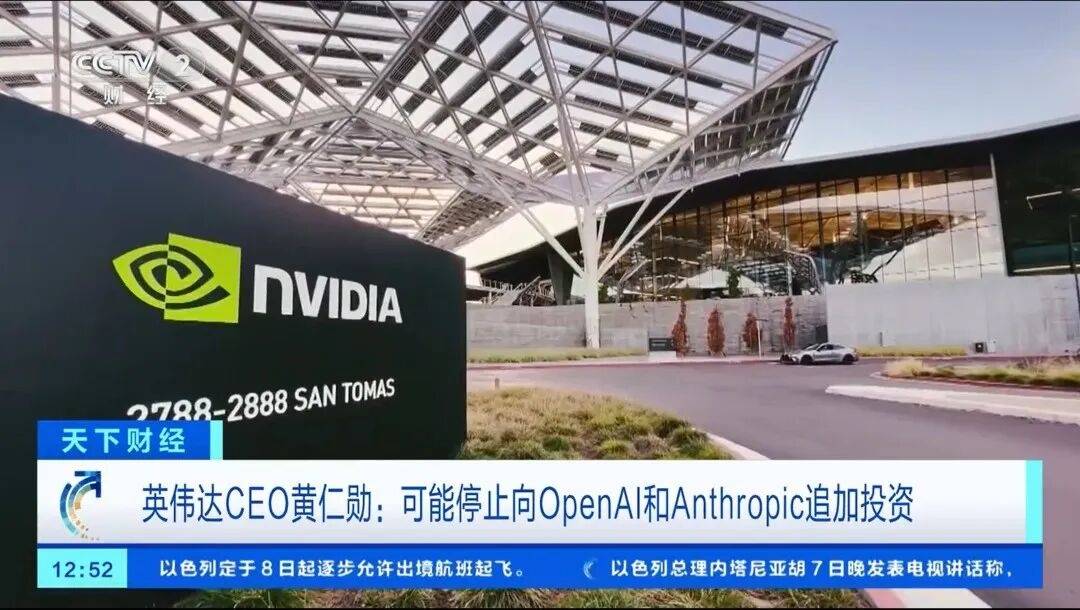
黄仁勋称“不太可能实现”英伟达对OpenAI千亿美元投资,OpenAI机器人业务负责人辞职
Sou Hu Cai Jing· 2026-03-08 08:04
Core Insights - Nvidia's recent $30 billion investment in OpenAI is likely its last, with CEO Jensen Huang stating that the previously mentioned $100 billion investment is "unlikely" to materialize [1] - OpenAI's head of robotics and consumer hardware, Karlinowski, resigned, citing insufficient discussions before deploying AI models to the U.S. Department of Defense's secure network [1] Financial Performance - Nvidia reported record revenue of $68.1 billion for Q4 of fiscal year 2026, a 73% year-over-year increase, with a GAAP net profit of $42.96 billion, up 94% [3] - For the entire fiscal year 2026, Nvidia's revenue reached $215.9 billion, also a 65% increase, with a GAAP net profit of $120.07 billion [3] - The data center revenue for Q4 was $62.3 billion, a 75% increase year-over-year, marking a historical high [6] Market Reactions - Nvidia's stock rose by 1.44% on the day of the earnings report, briefly exceeding a 2% increase before narrowing [5][12] - The earnings report is viewed as a barometer for AI demand, with analysts noting that Nvidia's performance exceeded market expectations [6] Business Segments - Nvidia's data center revenue for fiscal year 2026 was $193.7 billion, a 68% increase, while gaming revenue was $16 billion, up 41% [7] - The professional visualization segment saw revenue of $3.2 billion, a 70% increase, and automotive and robotics revenue reached $2.3 billion, up 39% [7] Industry Trends - There is a growing concern about an AI bubble, with significant capital expenditures from tech giants like Google, Microsoft, Meta, and Amazon projected to reach nearly $700 billion this year [10] - A recent Bank of America survey indicated that 23% of fund managers view the threat from an AI bubble as their primary concern, up from 9% in December [10] Future Outlook - Nvidia's CFO expressed confidence in continued demand for AI infrastructure, noting that the company's data center revenue has increased nearly 13 times since the launch of ChatGPT [7] - Huang mentioned that the demand for AI computing is at a turning point, with significant growth expected in the coming years [11]


10亿只是门票:大额融资占比已经增长2倍丨投中嘉川
投中网· 2026-03-08 07:06
Core Insights - The primary viewpoint of the article is that the primary market is transitioning from a "broad net" approach to a "heavy investment in leading companies" phase, characterized by a significant increase in large-scale financing, particularly in hard technology sectors like embodied intelligence, commercial aerospace, and artificial intelligence [4][5][6]. Group 1: Market Trends - The financing structure of the primary market is showing a "K-shaped differentiation," where capital is increasingly concentrated in a few leading enterprises while medium-sized transactions are shrinking [7][12]. - As of February 15, 2026, the proportion of large transactions (over 1 billion yuan) has risen to 13.3%, a significant increase from 4.2% in the same period of 2025 [11]. - In contrast, medium-sized transactions (between 50 million and 1 billion yuan) have decreased from 49.4% in 2023 to 39.9% by early 2026 [11][12]. Group 2: Large Financing Events - Recent significant financing events include Galaxy General Robotics securing 2.5 billion yuan in Series C funding and Songyan Power completing nearly 1 billion yuan in Series B funding, both backed by state-owned and local investment entities [9][10]. - Since January 2026, over 40 large-scale financings exceeding 1 billion yuan have been completed, predominantly in hard technology sectors [10]. - Notable examples include the commercial aerospace sector, where Star Glory announced a record 5.037 billion yuan in D++ round financing, and the AI sector, where Moonlight Dark recently completed over 700 million USD in financing [10]. Group 3: Drivers of Large Financing - The surge in large financing is driven by the maturation of hard technology companies established 7 years ago and AI companies founded 3 years ago, which now require substantial capital for development [14][15]. - The supply side of funding is also changing, with state-owned capital becoming a significant player, as evidenced by the establishment of large industrial funds in 2025, including the National Big Fund Phase III with over 340 billion yuan [16][17]. - The shift in capital mentality towards seeking certainty in investments has led to a concentration of funds in established companies with state backing, further reinforcing the trend of capital flowing to a few high-quality projects [17]. Group 4: Global Financing Trends - The trend of large financing is not limited to China; globally, significant financing rounds are evident, with companies like OpenAI and Anthropic raising hundreds of billions of yuan in single rounds [18][20]. - In 2025, nearly 50% of global venture capital, amounting to 2.11 trillion USD, flowed into a single industry, highlighting the concentration of investment in leading tech firms [19][20].

海外科技行业2026年第8期:AI模型迭代加速,算力、应用端持续释放产业机遇
GUOTAI HAITONG SECURITIES· 2026-03-08 06:31
Investment Rating - The report maintains an "Overweight" rating for the industry, recommending investments in AI computing, cloud vendors, AI applications, and AI social sectors [3][22]. Core Insights - Broadcom's quarterly revenue reached a record high, with guidance indicating that AI chip revenue will exceed $100 billion by 2027. In FY26Q1, revenue was $19.31 billion, up 29% year-on-year, with AI semiconductor revenue at $8.4 billion, up 106% [2][6]. - Bilibili demonstrated significant operational leverage with a Q4 revenue of 8.32 billion yuan, a 7.6% year-on-year increase, and a net profit margin of 10.5% [7]. - OpenAI launched GPT-5.4, enhancing AI agent capabilities with native computer operation features, supporting complex workflows across software [8][19]. Summary by Sections AI Semiconductor Sector - Broadcom's AI semiconductor revenue is projected to reach $10.7 billion in FY26Q2, a 140% increase year-on-year. The company expects AI network revenue to rise from 33% to 40% of total revenue due to strong demand for specific products [6][22]. Bilibili's Performance - Bilibili's Q4 revenue was 8.32 billion yuan, with a gross margin of 37.0%. The company reported a significant increase in user engagement, with daily active users (DAU) reaching 113 million, up 10% year-on-year [7][22]. OpenAI Developments - OpenAI's GPT-5.4 introduces a "Thinking" mode, allowing for enhanced task execution and context handling capabilities, supporting up to 1 million tokens [8][19]. Investment Recommendations - The report suggests investing in key players such as Nvidia, TSMC, and Broadcom in the AI computing space, as well as major cloud vendors like Microsoft and Amazon [22][23].
美股市场速览:市场震荡回撤,但盈利预测稳步向好
Guoxin Securities· 2026-03-08 06:16
Market Performance - S&P 500 index decreased by 2.0% this week, following a decline of 0.4% last week[1] - Nasdaq Composite index fell by 1.2%, compared to a 1.0% drop last week[1] - Russell 1000 Growth outperformed Russell 1000 Value, with declines of 0.7% and 3.5% respectively[1] Sector Performance - Software and Services sector saw a significant increase of 6.3%, while Household and Personal Products dropped by 7.5%[1] - A total of 4 sectors increased, while 20 sectors experienced declines this week[1] Fund Flows - Estimated fund flow for S&P 500 constituents was -$99.4 billion this week, a significant increase from -$31.9 billion last week[2] - Software and Services sector had a net inflow of $49.1 million, while Technology Hardware and Equipment saw an outflow of $41.6 million[2] Earnings Forecast - S&P 500 constituents' forward 12-month EPS expectations increased by 0.7% this week, consistent with the previous week[3] - Semiconductor Products and Equipment sector saw the largest upward revision in earnings expectations, increasing by 3.2%[3] Risk Factors - Economic fundamentals, international political situations, U.S. fiscal policies, and Federal Reserve monetary policies present uncertainties that could impact market performance[3]



周末五分钟全知道(3月第2期):美伊局势和两会后的市场最新判断
GF SECURITIES· 2026-03-08 04:48
Group 1: Market Impact of Geopolitical Events - The Iranian issue has raised concerns about inflation and stagflation, leading to a risk-off sentiment in the stock market, with short-term oil prices spiking [1][22] - Prior to the Iranian conflict, global non-US assets were in a bull market, benefiting from improved OECD leading indicators and a decline in the attractiveness of dollar assets [1][6] - The report suggests focusing on sectors with high certainty in quarterly reports and selecting industries with improved operational data from January to February [1][50] Group 2: PPI and Market Style Post Two Sessions - The broad fiscal deficit target for 2026 is set at 4.0%, with a projected increase in broad fiscal spending of less than 1%, which may lead to a slight upward shift in PPI but with limited elasticity [3][63] - The report indicates that the cyclical sector may still outperform in the current phase, while the growth sector is entering a high volatility stage but is not over [5][78] - Financial sector expectations should be lowered as excess returns typically weaken after PPI turns positive [5][78] Group 3: Investment Opportunities and Trends - The report highlights potential investment opportunities in the AI industry chain, high-end manufacturing, and sectors benefiting from global demand such as copper and aluminum [5][57] - Companies with strong operational data from January to February, such as storage and semiconductor firms, have shown positive stock price reactions post-announcement [5][55] - The report emphasizes the importance of monitoring PPI trends, as historical data suggests significant market movements following PPI turning points [5][73]
红利立功,成长承压:中概医疗消费同入低估
雪球· 2026-03-08 04:47AI Processing
↑点击上面图片 加雪球核心交流群 ↑ 风险提示:本文所提到的观点仅代表个人的意见,所涉及标的不作推荐,据此买卖,风险自负。 作者:六亿居室 以下文章来源于六亿居士 ,作者六亿居士 六亿居士 . 雪球2024年度十大影响力用户。每周发布指数估值表,研究指数基金(ETF)与大类资产配置框架,关注认知、人性和纪律。 今天,我们聊一聊不同风格的指数,在不同周期的一些特性。 1、 投资的长期收益率 = 初始股息率 + 盈利增长 +估值变化 怎么理解?投资一家企业,本质上是成为这家公司的股东,从而获得这家企业的利润分红,这便是初始股息率。 以红利指数为例,目前A股和H股的红利类指数,大致还有4-6%的股息率,对比1.8%左右的无风险利率(10年期国债收益率),仍有较大的吸引 力。 来源:雪球 受外部事件影响,市场出现连续多日的回撤,多数成长板块回撤较大,红利等防守板块展现防守作用。 其中作为A股平均规模较大的上证50指数,同样承担防守作用,在中国石油等权重的带领下,实现波动对冲作用。 而创业板、科创板、泛科技、成长板块则出现较大回撤,芯片、半导体、人工智能等热门细分行业承压。 在主要行业指数中,消费行业进入历史较低区间, ...

两会|外资机构解读政府工作报告,政策组合以供给侧优先!
券商中国· 2026-03-08 04:30
Group 1 - The government's work report sets a pragmatic economic growth target of 4.5% to 5%, reflecting a focus on stability and structural adjustments rather than aggressive stimulus measures [1][2] - The inflation target remains at 2%, with expectations of a slight increase in CPI, indicating a cautious approach to managing price levels [2][3] - The policy mix prioritizes supply-side reforms, emphasizing technological upgrades and infrastructure support while gradually increasing focus on domestic demand [2][4] Group 2 - Consumer spending is highlighted as a key policy goal, but the measures to boost consumption are described as moderate and targeted rather than broad-based stimulus [4][5] - The report includes a commitment to stabilize the real estate market, encouraging local governments to manage inventory and reform housing finance systems [5][6] - The capital market may experience a re-inflation trade, with potential benefits for A-shares, particularly in technology sectors aligned with government priorities [6][7]

英特尔俄亥俄工厂的坎坷之路
半导体行业观察· 2026-03-08 04:06
Core Viewpoint - The Ohio One project by Intel, aimed at building a large semiconductor factory in New Albany, has faced significant delays, now expected to be completed in the early 2030s instead of the originally planned 2025, highlighting the challenges of public-private partnerships in the face of market forces and political factors [2][3]. Group 1: Project Delays and Economic Impact - Intel's Ohio One project has been delayed multiple times, with local officials expressing disappointment but maintaining hope for its eventual completion [2]. - The state of Ohio has invested $2 billion in public incentives to attract the project, indicating the high stakes involved in securing semiconductor manufacturing within the state [2]. - The project has already seen an investment of approximately $7 billion from Intel, creating construction jobs and stimulating other industries, but concerns remain about its long-term economic impact [4][5]. Group 2: Competitive Landscape and Legislative Support - States are competing aggressively for semiconductor projects, described as an "arms race," with Ohio's leadership emphasizing the necessity of maintaining competitive incentives [3]. - The CHIPS and Science Act, aimed at boosting domestic semiconductor production, has faced delays in fund disbursement, complicating the situation for Ohio One [4]. - Despite the challenges, state leaders remain optimistic about the project's potential to enhance local economic conditions and national security [5]. Group 3: Market Dynamics and Company Positioning - While Intel is focused on the Ohio One project, competitors like Nvidia are gaining market share, reflecting the volatile nature of the semiconductor industry [3]. - The importance of semiconductor manufacturing is underscored by its critical role in various sectors, from consumer electronics to military applications, emphasizing the need for domestic production [3]. - Intel's commitment to the Ohio One project is framed as part of a broader strategy to strengthen U.S. technology and manufacturing leadership [5].