
原油

Search documents
金融数据超预期 商品整体呈现调整:申万期货早间评论-20250814
申银万国期货研究· 2025-08-14 00:54
Core Viewpoint - The financial data has exceeded expectations, while commodities are undergoing adjustments [1][2][3] Financial Data Summary - In the first seven months of the year, the cumulative increase in social financing scale reached 23.99 trillion yuan, an increase of 5.12 trillion yuan compared to the same period last year; RMB loans increased by 12.87 trillion yuan [7] - As of the end of July, M2 grew by 8.8% year-on-year, M1 increased by 5.6%, and the stock of social financing grew by 9% [7] - The social financing scale exceeded 11,600 billion yuan in July, driven by increased government bond financing and a rise in corporate bond financing [1][2] Key Commodities Summary Lithium Carbonate - The main contract for lithium carbonate fluctuated significantly, closing at 85,100 yuan/ton, influenced by the suspension of production at CATL's Yichun mine and policy disruptions [3][21] - Chile is expected to export a total of 28,800 tons of lithium salt by July 2025, a 40% increase month-on-month and a 22% increase year-on-year [3][21] - Short-term supply shortages are expected to support prices, with the main contract likely to fluctuate between 80,000 and 90,000 yuan/ton [21] Coking Coal and Coke - Coking coal prices showed slight strength after a low opening, with coal inventory increasing and coke inventory remaining stable [4][24] - The supply side has shown signs of reduction due to decreased production at coal mines, while demand from steel and coking plants is expected to decrease [4][24] Crude Oil - Crude oil prices fell by 1.69%, with unexpected increases in U.S. commercial crude oil inventories [5][13] - The U.S. and China have agreed to suspend the implementation of 24% reciprocal tariffs for 90 days, which may impact oil prices [5][13] Industry News Summary - The U.S. Treasury Secretary has called for a new round of interest rate cuts, suggesting that rates should be lowered by 150 to 175 basis points from current levels [6] - The People's Bank of China reported significant fluctuations in credit data due to seasonal factors, indicating that single-month loan figures may not accurately reflect economic activity [7] - The market regulatory authorities in China are planning to strengthen the management of intelligent connected vehicles, emphasizing the need for clear safety instructions [8]


橡胶甲醇原油:偏多氛围消化,能化震荡偏弱
Bao Cheng Qi Huo· 2025-08-13 11:49
Report Summary 1. Investment Rating The report does not provide an overall industry investment rating. 2. Core Views - **Rubber**: On Wednesday, the domestic Shanghai rubber futures contract 2601 showed a trend of increasing volume and open interest, oscillating and consolidating, and slightly closing up. The price center of the contract during the session slightly moved down to the 15,800 yuan/ton level, and the closing price slightly increased by 0.13% to 15,800 yuan/ton. The 9 - 1 month spread discount widened to 1,010 yuan/ton. Benefiting from better - than - expected domestic automobile production and sales data and year - on - year growth in heavy - truck sales data, driven by demand factors, it is expected that the domestic Shanghai rubber futures contract 2601 may maintain an oscillating and slightly stronger trend in the future [4]. - **Methanol**: On Wednesday, the domestic methanol futures contract 2601 showed a trend of increasing volume and open interest, oscillating weakly, and slightly closing down. The futures price rose to a maximum of 2,497 yuan/ton and dropped to a minimum of 2,477 yuan/ton, and the closing price slightly decreased by 0.28% to 2,479 yuan/ton. The 9 - 1 month spread discount widened to 104 yuan/ton. Affected by the冲高回落 of domestic coal futures prices and the weak supply - demand fundamentals of methanol, under the suppression of a bearish atmosphere, it is expected that the domestic methanol futures contract 2601 may maintain an oscillating and slightly weaker trend in the future [4]. - **Crude Oil**: On Wednesday, the domestic crude oil futures contract 2510 showed a trend of increasing volume and open interest, oscillating weakly, and slightly closing down. The futures price rose to a maximum of 492.3 yuan/barrel and dropped to a minimum of 488.2 yuan/barrel, and the closing price slightly decreased by 0.41% to 490.6 yuan/barrel. Although OPEC and EIA have increased the global crude oil demand forecast for this year and next year, they cannot offset the rising supply pressure from OPEC+ oil - producing countries. Under the suppression of a bearish atmosphere, it is expected that domestic and foreign crude oil futures prices may maintain an oscillating and slightly weaker trend in the future [5]. 3. Summary by Directory 3.1 Industry Dynamics - **Rubber**: As of August 10, 2025, the total inventory of natural rubber in bonded and general trade in Qingdao was 619,900 tons, a decrease of 11,900 tons or 1.89% from the previous period. The inventory in the bonded area was 75,300 tons, a decrease of 0.24%, and the general trade inventory was 544,600 tons, a decrease of 2.11%. The warehousing rate of the sample bonded warehouses for natural rubber in Qingdao decreased by 0.81 percentage points, and the ex - warehouse rate decreased by 0.93 percentage points; the warehousing rate of general trade warehouses decreased by 0.38 percentage points, and the ex - warehouse rate increased by 0.25 percentage points. As of August 7, 2025, the capacity utilization rate of China's semi - steel tire sample enterprises was 69.71%, a slight week - on - week decline of 0.27 percentage points and a significant year - on - year decline of 9.39 percentage points. The capacity utilization rate of China's all - steel tire sample enterprises was 60.06%, a slight week - on - week increase of 0.80 percentage points and a significant year - on - year increase of 7.76 percentage points. In July 2025, China's automobile production and sales were 2.591 million and 2.593 million vehicles respectively, a month - on - month decrease of 7.3% and 10.7% respectively, and a year - on - year increase of 13.3% and 14.7% respectively. From January to July 2025, China's automobile production and sales were 18.235 million and 18.269 million vehicles respectively, a year - on - year increase of 12.7% and 12% respectively. In July 2025, China's automobile exports were 575,000 vehicles, a year - on - year increase of 22.6%. From January to July 2025, China's automobile exports were 3.68 million vehicles, a year - on - year increase of 12.8%. In July 2025, the sales volume of China's heavy - truck market was about 83,000 vehicles, a month - on - month decrease of 15% and a year - on - year increase of about 42%. From January to July, the cumulative sales volume of China's heavy - truck market was about 622,000 vehicles, a year - on - year increase of about 11% [8][9]. - **Methanol**: As of the week of August 8, 2025, the average domestic methanol operating rate was maintained at 80.35%, a slight week - on - week decline of 1.57%, a slight month - on - month decline of 4.85%, and a slight year - on - year increase of 3.09%. The average weekly methanol production in China reached 1.8453 million tons, a significant week - on - week decline of 84,900 tons, a significant month - on - month decline of 141,800 tons, and a significant year - on - year increase of 111,600 tons compared with 1.7337 million tons last year. As of the week of August 8, 2025, the domestic formaldehyde operating rate was maintained at 28.66%, a slight week - on - week increase of 0.11%. The operating rate of dimethyl ether was maintained at 6.27%, a slight week - on - week increase of 0.55%. The acetic acid operating rate was maintained at 86.45%, a slight week - on - week decrease of 2.34%. The MTBE operating rate was maintained at 53.91%, a slight week - on - week decrease of 0.93%. As of the week of August 8, 2025, the average operating load of domestic coal (methanol) to olefin plants was 76.70%, a slight week - on - week increase of 0.98 percentage points and a slight month - on - month decrease of 1.69%. As of August 8, 2025, the futures profit margin of domestic methanol to olefin was - 99 yuan/ton, a slight week - on - week decline of 18 yuan/ton and a slight month - on - month decline of 25 yuan/ton. As of the week of August 8, 2025, the methanol inventory in ports in East and South China was maintained at 803,300 tons, a significant week - on - week increase of 153,000 tons, a significant month - on - month increase of 235,700 tons, and a slight year - on - year increase of 26,300 tons. As of the week of August 7, 2025, the total inland methanol inventory in China reached 293,800 tons, a slight week - on - week decrease of 30,900 tons, a significant month - on - month decrease of 63,100 tons, and a significant year - on - year decrease of 142,100 tons compared with 435,900 tons last year [10][11]. - **Crude Oil**: As of the week of August 1, 2025, the number of active oil drilling rigs in the United States was 410, a slight week - on - week decrease of 5 and a decrease of 72 compared with the same period last year. The average daily crude oil production in the United States was 13.284 million barrels, a slight week - on - week decrease of 30,000 barrels per day and a significant year - on - year decrease of 116,000 barrels per day. As of the week of August 1, 2025, the commercial crude oil inventory in the United States (excluding strategic petroleum reserves) reached 424 million barrels, a significant week - on - week decrease of 3.029 million barrels and a significant year - on - year decrease of 5.659 million barrels. The crude oil inventory in Cushing, Oklahoma, United States, reached 23.006 million barrels, a slight week - on - week increase of 453,000 barrels; the strategic petroleum reserve (SPR) inventory in the United States reached 403 million barrels, a slight week - on - week increase of 235,000 barrels. The refinery operating rate in the United States was maintained at 96.9%, a slight week - on - week increase of 1.5 percentage points, a slight month - on - month increase of 2.2 percentage points, and a significant year - on - year increase of 6.4 percentage points. As of August 5, 2025, the average non - commercial net long positions in WTI crude oil were maintained at 141,829 contracts, a significant week - on - week decrease of 14,194 contracts and a significant decrease of 41,341 contracts or 22.57% compared with the July average of 183,170 contracts. As of August 5, 2025, the average net long positions of Brent crude oil futures funds were maintained at 230,414 contracts, a significant week - on - week decrease of 19,559 contracts and a significant increase of 10,338 contracts or 4.70% compared with the July average of 220,076 contracts [11][12]. 3.2 Spot Price Table | Variety | Spot Price | Change from Previous Day | Futures Main Contract | Change from Previous Day | Basis | Change | | --- | --- | --- | --- | --- | --- | --- | | Shanghai Rubber | 14,700 yuan/ton | - 50 yuan/ton | 15,800 yuan/ton | - 60 yuan/ton | - 1,100 yuan/ton | + 10 yuan/ton | | Methanol | 2,417 yuan/ton | + 5 yuan/ton | 2,479 yuan/ton | - 17 yuan/ton | - 62 yuan/ton | + 17 yuan/ton | | Crude Oil | 462.8 yuan/barrel | - 0.4 yuan/barrel | 490.6 yuan/barrel | - 3.6 yuan/barrel | - 27.8 yuan/barrel | + 3.2 yuan/barrel | [13] 3.3 Related Charts The report lists various charts for rubber, methanol, and crude oil, including basis, inventory, and open - interest charts, but does not provide specific chart analysis [14][27][40]
百利好晚盘分析:通胀提振降息 金价震荡待变
Sou Hu Cai Jing· 2025-08-13 09:14
Gold Market - The US CPI data for July showed a seasonally adjusted month-on-month increase of 0.2%, lower than the previous value of 0.3%, with an unadjusted year-on-year rate of 2.7%, matching the previous value but slightly below market expectations of 2.8% [2] - The probability of a 25 basis point rate cut by the Federal Reserve in September is 93.4%, and the probability of a cumulative 50 basis point cut by October is 59.9% [2] - Analyst Mai Dong from Baillieau believes that while inflation data remains stable and tariff policies have limited impact, gold prices may experience volatility due to the recent US-Russia negotiation influences [2] Oil Market - The API reported an increase in US crude oil inventories by 1.519 million barrels for the week ending August 8, contrary to expectations of a decrease of 0.941 million barrels [4] - OPEC has raised its forecast for global oil demand growth in 2026 to 1.38 million barrels per day, while the 2025 forecast remains unchanged at 1.29 million barrels per day [4] - The seasonal demand for oil is expected to weaken as summer travel comes to an end, which may further pressure oil prices [4] Dollar Index - In light of moderate inflation data, traders have increased bets on the Federal Reserve cutting rates by 25 basis points in both September and October [5] - President Trump has pressured Fed Chair Powell to cut rates, stating "it must happen now," which has put downward pressure on the dollar index [5] - The market is currently trading between 97 and 100, with a focus on further declines in the 96.90-97.40 range [6] Nasdaq Index - The inflation data has heightened market expectations for future rate cuts, leading to a surge in US stocks, with the Nasdaq reaching a new historical high and challenging the 24,000 mark [7] - The market continues to show an upward trend, with prices remaining above the 60/120-day moving averages [7] Copper Market - The price range for copper has expanded from $4.28-$4.46 to $4.28-$4.60, with the overall price maintaining a low-level consolidation [8] - The price is currently trading above $4.46, indicating a continuation of the upward trend [8]

《能源化工》日报-20250813
Guang Fa Qi Huo· 2025-08-13 01:59
1. PVC, Caustic Soda Investment Rating Not provided Core Viewpoints - For caustic soda, the overall demand has performed well recently, but there are expectations of increased supply in the future, and the rebound height is expected to be limited. Attention should be paid to the raw material procurement situation of alumina enterprises [5]. - For PVC, the supply - side pressure is increasing, downstream demand is difficult to improve, and the overall supply - demand pressure is large. However, there is a need to be vigilant about the positive impact of coking coal on PVC prices. It is recommended to wait and see in the short term [5]. Summary by Directory - **Price Changes**: On August 12, the price of Shandong 32% liquid caustic soda remained unchanged at 2500 yuan/ton, and the price of Shandong 50% liquid caustic soda also remained unchanged at 2600 yuan/ton. The market price of East China calcium carbide - based PVC increased by 20 yuan/ton to 4910 yuan/ton, with a growth rate of 0.4%. The price of SH2601 increased by 41 yuan/ton to 2636 yuan/ton, with a growth rate of 1.6% [2]. - **Supply**: The caustic soda industry's operating rate on August 8 was 89.1%, an increase of 1.7% compared to August 1. The total operating rate of PVC was 77.8%, an increase of 6.1% compared to August 1. The profit of externally purchased calcium carbide - based PVC decreased by 150 yuan/ton to - 542 yuan/ton, a decrease of 38.3% [3]. - **Demand**: As of August 8, the operating rate of the alumina industry was 82.6%, an increase of 0.2% compared to August 1. The operating rate of the viscose staple fiber industry remained unchanged at 85%. The operating rate of the printing and dyeing industry was 59.3%, an increase of 0.7% compared to August 1. The operating rate of Longzhong sample PVC pipes decreased by 0.9 percentage points to 32.1%, and the operating rate of profiles decreased by 0.1 percentage points to 36.9% [4][5]. - **Inventory**: As of August 7, the factory - warehouse inventory of liquid caustic soda in East China was 219,000 tons, an increase of 2.0% compared to July 31. The total social inventory of PVC was 481,000 tons, an increase of 7.3% compared to July 31 [5]. 2. Polyolefin Investment Rating Not provided Core Viewpoints - In August, the supply pressure of PP and PE increases, and the inventory accumulation expectation turns into a flat - inventory expectation. The downstream operating rate is at a low level, but there are potential restocking conditions in the seasonal peak season. The overall valuation is neutral, and the fundamental contradiction is not significant. It is recommended to take profit on the short positions established at 7200 - 7300 around 7000 and continue to hold LP01 [10]. Summary by Directory - **Price Changes**: On August 12, the closing price of L2601 was 7389 yuan/ton, an increase of 0.34% compared to August 11. The closing price of PP2509 was 7091 yuan/ton, a decrease of 0.06% compared to August 11 [10]. - **Supply and Demand**: In August, PP maintenance decreased, and the supply pressure of PE also increased. The downstream operating rate of PP/PE was at a low level, and the social inventory was accumulating, but the downstream raw material inventory had been digested to a relatively low level [10]. - **Inventory**: As of the latest data, the enterprise inventory of PE was 515,000 tons, an increase of 19.09% compared to the previous period; the enterprise inventory of PP was 587,000 tons, an increase of 3.95% compared to the previous period [10]. 3. Crude Oil Investment Rating Not provided Core Viewpoints - Recent oil prices have shown a weak and volatile trend, driven by geopolitics and supply - demand fundamentals. The market is cautious. In the short term, oil prices will remain under pressure. It is recommended to wait and see on the long - short side and expand the 10 - 11/12 month spreads [13]. Summary by Directory - **Price Changes**: On August 13, the price of Brent crude oil was 66.12 US dollars per barrel, a decrease of 0.77% compared to August 12. The price of WTI crude oil was 63.16 US dollars per barrel, a decrease of 0.02% compared to August 12 [13]. - **Supply and Demand**: The US Department of Energy has raised the expected supply surplus for this year to 1.7 million barrels per day, and OPEC+ is accelerating production increases, increasing supply pressure. Seasonal demand is weakening, and gasoline and diesel consumption is gradually declining, suppressing the upside of oil prices [13]. 4. Methanol Investment Rating Not provided Core Viewpoints - The inland maintenance of methanol is expected to peak at the beginning of August. Currently, production is at a high level year - on - year. The port has significantly accumulated inventory this week, and the basis is stable. In August, imports are still relatively high, and downstream demand is weak due to low profits. It is recommended to build long positions at low prices in 01 contracts after the near - end contracts weaken significantly [19][20]. Summary by Directory - **Price Changes**: On August 12, the closing price of MA2601 was 2496 yuan/ton, an increase of 0.44% compared to August 11. The closing price of MA2509 was 2391 yuan/ton, an increase of 0.08% compared to August 11 [17]. - **Inventory**: As of the latest data, the enterprise inventory of methanol was 29.3688 (unit not specified), a decrease of 9.50% compared to the previous period; the port inventory was 925,000 tons, an increase of 14.48% compared to the previous period [18]. - **Operating Rate**: As of August 8, the operating rate of domestic upstream methanol enterprises was 73.17%, an increase of 2.28% compared to the previous period; the operating rate of downstream acetic acid enterprises was 89.8%, a decrease of 4.38% compared to the previous period [19]. 5. Urea Investment Rating Not provided Core Viewpoints - The weak and volatile trend of the urea futures market is driven by the contradiction between supply and demand. High supply pressure persists, and industrial and agricultural demand is weak. Although exports are progressing in an orderly manner, they cannot offset the domestic supply - demand imbalance. It is expected that the market will fluctuate around the 1700 - 1720 range in the short term [27]. Summary by Directory - **Price Changes**: On August 11, the price of Shandong small - particle urea decreased by 30 yuan/ton to 1730 yuan/ton, a decrease of 1.70% [27]. - **Supply and Demand**: The daily output of domestic urea on August 8 was 192,100 tons, an increase of 1.05% compared to August 7. The weekly output of domestic urea was 1.3285 million tons, a decrease of 1.94% compared to August 1 [27]. - **Inventory**: As of August 8, the weekly inventory of domestic urea factories was 887,600 tons, a decrease of 3.24% compared to the previous period; the weekly inventory of domestic urea ports was 483,000 tons, a decrease of 2.03% compared to the previous period [27]. 6. Polyester Industry Chain Investment Rating Not provided Core Viewpoints - **PX**: The supply is expected to increase marginally in August, and the supply - demand situation is expected to weaken. The upward rebound drive is insufficient, but the downward space is also limited. PX11 is expected to fluctuate between 6600 - 6900 yuan/ton [30]. - **PTA**: The supply - demand situation is expected to improve in August, but the medium - term supply - demand situation is expected to be weak. The basis is running weakly. It is recommended to wait and see in the short term and conduct reverse arbitrage on TA1 - 5 at high prices [30]. - **MEG**: The short - term supply - demand situation is expected to improve, and it is recommended to lightly buy on dips around 4400 yuan/ton for EGO9 [30]. - **Short - fiber**: The short - term supply - demand drive is limited, and the absolute price follows the raw material fluctuations. It is recommended to operate within the range of 6300 - 6500 yuan/ton for PF10 [30]. - **Bottle - grade PET**: The inventory is gradually decreasing, and the processing fee has support at the bottom. It is recommended to buy the processing fee on dips in the short term [30]. Summary by Directory - **Price Changes**: On August 12, the price of POY150/48 was 6730 yuan/ton, remaining unchanged. The price of PX futures 2601 was 6712 yuan/ton, an increase of 36 yuan/ton compared to August 11 [30]. - **Operating Rate**: As of August 8, the operating rate of Asian PX was 73.6%, an increase of 0.2% compared to the previous period; the operating rate of PTA was 75.3%, an increase of 0.9% compared to the previous period [30]. 7. Pure Benzene - Styrene Investment Rating Not provided Core Viewpoints - **Pure Benzene**: The supply - demand situation is expected to improve in the third quarter, and the port inventory is expected to decrease in August, providing short - term support for prices. However, the overall supply is still sufficient, and the upward rebound space is limited. BZ2603 should follow the fluctuations of oil prices and styrene [34]. - **Styrene**: The short - term supply remains high, and there are expectations of some device maintenance. The downstream EPS has reduced production due to high inventory. The supply - demand situation is weak, and it is expected to maintain a volatile trend. EB09 is expected to fluctuate between 7200 - 7400 yuan/ton, and short - selling is recommended near the upper limit [34]. Summary by Directory - **Price Changes**: On August 12, the price of CFR China pure benzene was 755 US dollars per ton, an increase of 0.7% compared to August 11. The price of styrene in East China was 7370 yuan/ton, an increase of 1.0% compared to August 11 [34]. - **Inventory**: As of August 11, the port inventory of pure benzene in Jiangsu was 146,000 tons, a decrease of 10.4% compared to August 4; the port inventory of styrene in Jiangsu was 148,800 tons, a decrease of 6.4% compared to August 4 [34]. - **Operating Rate**: As of August 8, the operating rate of Asian pure benzene was 76.0%, a decrease of 1.3% compared to August 1; the operating rate of styrene was 77.7%, a decrease of 1.2% compared to August 1 [34].
能源化工期权策略早报-20250813
Wu Kuang Qi Huo· 2025-08-13 01:51
1. Report Industry Investment Rating - Not provided in the document 2. Core Viewpoints of the Report - The energy - chemical sector is divided into energy, alcohols, polyolefins, rubber, polyesters, alkalis, and others. Option strategies and suggestions are provided for selected varieties in each sector. Strategies mainly involve constructing option combinations with sellers as the main body and spot hedging or covered strategies to enhance returns [2][8] 3. Summary by Relevant Catalogs 3.1 Futures Market Overview - The document presents the latest prices, price changes, price change rates, trading volumes, volume changes, open interests, and open interest changes of various energy - chemical option underlying futures contracts, including crude oil, LPG, methanol, etc. [3] 3.2 Option Factor - Volume and Open Interest PCR - Volume PCR and open interest PCR are used to describe the strength of the option underlying market and the turning point of the underlying market. The document provides the volume, volume change, open interest, open interest change, volume PCR, volume PCR change, open interest PCR, and open interest PCR change of various energy - chemical options [4] 3.3 Option Factor - Pressure and Support Levels - The pressure and support levels of the option underlying are determined from the exercise prices with the largest open interest of call and put options. The document provides the pressure points, pressure point offsets, support points, support point offsets, maximum call open interest, and maximum put open interest of various energy - chemical options [5] 3.4 Option Factor - Implied Volatility - The document provides the at - the - money implied volatility, weighted implied volatility, weighted implied volatility change, annual average implied volatility, call implied volatility, put implied volatility, 20 - day historical volatility, and the difference between implied and historical volatility of various energy - chemical options [6] 3.5 Option Strategies and Suggestions 3.5.1 Energy - related Options - **Crude Oil**: Fundamentally, US crude oil inventories decreased last week. The market is in a short - term upward - blocked and downward - adjusted state. Option strategies include constructing a neutral call + put option combination strategy for volatility, and a long collar strategy for spot hedging [7] - **LPG**: Factory inventories are high, and port inventories are in a high - level shock. The market is short - term bearish. Strategies include constructing a bearish spread strategy for direction, a short - biased call + put option combination strategy for volatility, and a long collar strategy for spot hedging [9] 3.5.2 Alcohol - related Options - **Methanol**: Production and capacity utilization are expected to rise, and imports are estimated. The market is in a weak state with pressure above. Strategies include constructing a short - biased call + put option combination strategy for volatility, and a long collar strategy for spot hedging [9] - **Ethylene Glycol**: East China main port inventories have decreased significantly. The market is in a weak and wide - range shock state. Strategies include constructing a short - volatility strategy for volatility, and a long collar strategy for spot hedging [10] 3.5.3 Polyolefin - related Options - **Polypropylene**: Production enterprise inventories are expected to decline. The market is in a weak state with bearish pressure above. Strategies include a long collar strategy for spot hedging [11] 3.5.4 Rubber - related Options - **Rubber**: Imports have increased. The market is in a short - term weak state with pressure above. Strategies include constructing a neutral call + put option combination strategy for volatility [12] 3.5.5 Polyester - related Options - **PTA**: Industry inventories have decreased, but filament inventories have increased. The market is in a weak consolidation state with pressure above. Strategies include constructing a neutral call + put option combination strategy for volatility [13] 3.5.6 Alkali - related Options - **Caustic Soda**: Enterprises have high operating rates, and it is in the off - season of demand. The market is in a weak shock state with pressure above. Strategies include a long collar strategy for spot hedging [14] - **Soda Ash**: Domestic inventories and production have increased. The market is in a shock state with support below. Strategies include constructing a short - volatility combination strategy for volatility, and a long collar strategy for spot hedging [14] 3.5.7 Other Options - **Urea**: Enterprise inventories have decreased slightly. The market is in a low - level shock state. Strategies include constructing a short - biased call + put option combination strategy for volatility, and a long collar strategy for spot hedging [15]
五矿期货能源化工日报-20250813
Wu Kuang Qi Huo· 2025-08-13 01:44
Report Industry Investment Rating No relevant information provided. Core View of the Report The report believes that although the geopolitical premium has completely dissipated and the macro - environment is bearish, the current oil price is relatively undervalued, and its static fundamentals and dynamic forecasts are still good. It is a good opportunity for left - side layout, and the fundamentals will support the current price. If the geopolitical premium re - opens, the oil price will have more upside potential [2]. Summary by Related Catalogs Crude Oil - WTI主力原油期货收跌0.92美元,跌幅1.44%,报63.08美元;布伦特主力原油期货收跌0.60美元,跌幅0.90%,报66.11美元;INE主力原油期货收涨5.80元,涨幅1.19%,报495.2元 [1] - 富查伊拉港口油品周度数据显示,汽油库存累库0.36百万桶至7.66百万桶,环比累库4.95%;柴油库存累库0.36百万桶至2.25百万桶,环比累库18.97%;燃料油库存累库0.10百万桶至9.70百万桶,环比累库0.05%;总成品油累库0.72百万桶至19.62百万桶,环比累库3.81% [1] Methanol - 8月12日09合约涨2元/吨,报2391元/吨,现货涨3元/吨,基差 - 14 [4] - 国内开工再度回落,企业利润维持高位,后续供应大概率边际走高;进口卸货速度增快但港口MTO装置停车,港口累库加快;内地受烯烃外采支撑企业库存去化,整体压力较小 [4] - 甲醇估值偏高,下游需求偏弱,价格面临压力,单边受整体商品情绪影响大,建议观望 [4] Urea - 8月12日09合约涨5元/吨,报1727元/吨,现货跌20元/吨,基差 - 17 [6] - 国内开工继续回落,企业利润处于低位,后续预计逐步见底回升,开工同比仍处中高位,整体供应宽松 [6] - 国内农业需求扫尾,进入淡季;复合肥开工因秋季肥生产持续回升,后续需求集中在复合肥和出口端;国内需求整体偏弱,企业库存去化缓慢,同比仍在中高位 [6] - 尿素整体估值偏低,继续回落空间有限,倾向于逢低关注多单等待潜在利多 [6] Rubber - 工业品整体上涨,NR和RU震荡反弹 [8] - 全钢轮胎开工率同比走高,截至2025年8月7日,山东轮胎企业全钢胎开工负荷为60.98%,较上周走低0.08个百分点,较去年同期走高8.72个百分点,国内走货慢但出口表现好;国内轮胎企业半钢胎开工负荷为74.53%,较上周走低0.10个百分点,较去年同期走低4.21个百分点,半钢轮胎工厂库存有压力 [9] - 截至2025年8月3日,中国天然橡胶社会库存128.9万吨,环比下降0.48万吨,降幅0.4%;中国深色胶社会总库存为80.4万吨,环比降0.13%;中国浅色胶社会总库存为48.5万吨,环比降0.8%;截至2025年8月4日,青岛天然橡胶库存50.12( - 0.73)万吨 [10] - 现货方面,泰标混合胶14600( + 50)元,STR20报1805( + 10)美元,STR20混合1800( + 10)美元,江浙丁二烯9300( - 50)元,华北顺丁11500(0)元 [11] - 胶价短期涨幅大,宜中性思路,快进快出;多RU2601空RU2509择机波段操作 [11] PVC - PVC09合约上涨37元,报5047元,常州SG - 5现货价4910( + 20)元/吨,基差 - 137( - 17)元/吨,9 - 1价差 - 146( + 2)元/吨 [11] - 成本端电石乌海报价2325( - 15)元/吨,兰炭中料价格620(0)元/吨,乙烯825( + 5)美元/吨,烧碱现货800(0)元/吨;PVC整体开工率79.5%,环比上升2.6%;其中电石法78.7%,环比上升2.6%;乙烯法81.5%,环比上升2.5% [11] - 需求端整体下游开工42.9%,环比上升0.8%;厂内库存33.7万吨( - 0.8),社会库存77.7万吨( + 5.4) [11] - 企业综合利润上升至年内高点,估值压力大,检修量减少,产量处五年期高位,短期多套装置投产,下游国内开工处五年期低位,出口方面印度反倾销政策延期,雨季末期可能抢出口,成本端电石企稳但难支撑估值;整体供强需弱且高估值,基本面差,需观察后续出口能否扭转国内累库格局,短期跟随黑色情绪反复,建议观望 [11] Styrene - 现货价格上涨,期货价格上涨,基差走弱;市场宏观情绪好,成本端有支撑,目前BZN价差处同期较低水平,向上修复空间大;成本端纯苯开工小幅回落但供应量偏多,供应端乙苯脱氢利润上涨,苯乙烯开工持续上行;苯乙烯港口库存持续大幅去库,季节性淡季需求端三S整体开工率震荡下降 [13][14] - 短期BZN或将修复,待港口库存高位去化后,苯乙烯价格或将跟随成本端震荡上行 [14] - 基本面方面,成本端华东纯苯6180元/吨,上涨20元/吨;苯乙烯现货7375元/吨,上涨50元/吨;苯乙烯活跃合约收盘价7322元/吨,上涨72元/吨;基差53元/吨,走弱22元/吨;BZN价差182元/吨,上涨5.5元/吨;EB非一体化装置利润 - 443.7元/吨,上涨54.2元/吨;EB连1 - 连2价差69元/吨,缩小19元/吨;供应端上游开工率77.7%,下降1.20%;江苏港口库存15.90万吨,去库0.50万吨;需求端三S加权开工率39.09%,下降0.85%;PS开工率55.00%,上涨1.70%,EPS开工率43.67%,下降10.58%,ABS开工率71.10%,上涨5.20% [14] Polyolefins Polyethylene - 期货价格上涨,市场期待中国财政部三季度利好政策,成本端有支撑,聚乙烯现货价格上涨,PE估值向下空间有限;贸易商库存高位震荡,对价格支撑松动,季节性淡季需求端农膜订单低位震荡,整体开工率震荡下行 [16] - 短期矛盾从成本端主导下跌行情转移至高检修助推库存去化,8月产能投放压力大,有110万吨产能投放计划,聚乙烯价格短期内由成本端及供应端博弈 [16] - 基本面看主力合约收盘价7329元/吨,上涨15元/吨,现货7300元/吨,上涨15元/吨,基差 - 29元/吨,无变动;上游开工83.44%,环比下降1.50%;周度库存方面,生产企业库存51.54万吨,环比累库8.26万吨,贸易商库存6.12万吨,环比累库0.34万吨;下游平均开工率38.9%,环比上涨0.16%;LL9 - 1价差 - 60元/吨,环比缩小10元/吨,建议空单继续持有 [16] Polypropylene - 期货价格下跌,山东地炼利润止跌反弹,开工率或将回升,丙烯供应边际回归;需求端下游开工率季节性震荡下行;8月聚丙烯仅存45万吨计划产能投放,季节性淡季供需双弱,成本端或将主导行情,预计7月聚丙烯价格跟随原油震荡偏强 [17] - 基本面看主力合约收盘价7091元/吨,下跌4元/吨,现货7110元/吨,无变动,基差19元/吨,走强4元/吨;上游开工78.22%,环比上涨0.56%;周度库存方面,生产企业库存58.71万吨,环比累库2.23万吨,贸易商库存18.73万吨,环比累库1.4万吨,港口库存6.11万吨,环比去库0.13万吨;下游平均开工率48.5%,环比上涨0.1%;LL - PP价差238元/吨,环比扩大19元/吨 [17] PX, PTA, and MEG PX - PX09合约上涨54元,报6832元,PX CFR下跌1美元,报834美元,按人民币中间价折算基差33元( - 61),9 - 1价差84元( + 18) [19] - PX负荷上,中国负荷82%,环比上升0.9%;亚洲负荷73.6%,环比上升0.2%;装置方面,盛虹、扬子石化负荷提升,威联石化重启,海外日本出光20万吨装置重启,韩国hanwha113万吨装置停车,SK40万吨装置重启 [19] - PTA负荷74.7%,环比上升2.1%,装置方面,台化装置一套重启一套停车,嘉兴石化重启,逸盛新材负荷恢复,英力士降负荷,威联石化重启 [19][21] - 进口方面,8月上旬韩国PX出口中国11.2万吨,同比下降0.5万吨;库存方面,6月底库存413.8万吨,月环比下降21万吨;估值成本方面,PXN为267美元( + 6),石脑油裂差79美元( - 5) [19][20] - PX负荷维持高位,下游PTA短期检修增加,整体负荷中枢下降,但因PTA新装置投产,PX有望持续去库,估值下方有支撑,但上方空间短期受限,终端及聚酯较弱压制上游估值;估值目前中性,关注旺季来临后跟随原油逢低做多机会 [20] PTA - PTA09合约上涨20元,报4726元,华东现货上涨5元,报4705元,基差 - 13元( - 1),9 - 1价差 - 34元( - 8) [21] - PTA负荷74.7%,环比上升2.1%,装置情况如上述;下游负荷88.8%,环比上升0.7%,装置整体变动小,部分化纤装置开工率适度提升;终端加弹负荷持平至70%,织机负荷下降2%至59% [21] - 库存方面,8月1日社会库存(除信用仓单)224万吨,环比累库3.5万吨;估值和成本方面,PTA现货加工费上涨9元,至201元,盘面加工费下跌16元,至244元 [21] - 供给端8月检修量增加但有新装置投产,预期持续累库,PTA加工费运行空间有限;需求端聚酯化纤库存压力下降,下游及终端即将结束淡季,需等待订单好转;估值方面,PXN在PTA投产格局改善下有支撑向上动力,但受终端和聚酯较弱景气度影响难走扩,关注旺季下游表现好转后跟随PX逢低做多机会 [21] MEG - EG09合约上涨18元,报4432元,华东现货上涨18元,报4502元,基差76元( + 2),9 - 1价差 - 46元( - 3) [22] - 供给端,乙二醇负荷68.4%,环比下降0.2%,其中合成气制75.1%,环比上升1.1%;乙烯制负荷64.4%,环比下降1%;合成气制装置方面,通辽金煤重启,山西沃能检修;油化工方面,三江负荷提升,浙石化负荷下降;海外方面,马来西亚装置、沙特sharq3停车 [22] - 下游负荷88.8%,环比上升0.7%,装置整体变动小,部分化纤装置开工率适度提升;终端加弹负荷持平至70%,织机负荷下降2%至59% [22] - 进口到港预报14.1万吨,华东出港8月11日0.86万吨,出库下降;港口库存55.3万吨,累库3.7万吨;估值和成本上,石脑油制利润为 - 299元,国内乙烯制利润 - 584元,煤制利润1051元;成本端乙烯持平至820美元,榆林坑口烟煤末价格下跌至520元 [22] - 产业基本面上,海内外检修装置逐渐开启,下游开工将从淡季恢复但高度偏低,预期港口库存去化放缓;估值同比偏高,检修季结束,基本面由强转弱,短期估值有下降压力 [22]
宝城期货原油早报-20250813
Bao Cheng Qi Huo· 2025-08-13 01:14
Report Summary 1. Report Investment Rating for the Industry - No investment rating for the industry is provided in the report. 2. Core Viewpoints of the Report - For crude oil 2510, it is expected to run weakly in the short - term, mid - term, and intraday, with a core logic of being suppressed by bearish factors and showing a weak and volatile trend [1]. - In the intraday view, crude oil (SC) is expected to be volatile and strong, and in the mid - term, it is expected to be volatile, with a reference view of running strongly. Overall, it is expected to maintain a volatile and stable trend on Wednesday [5]. 3. Summary According to Relevant Content 3.1 Crude Oil 2510 - **Short - term**: The short - term view is volatile, the mid - term view is volatile, and the intraday view is weakly volatile. The reference view is running weakly, and the core logic is that bearish factors suppress the price, leading to a weak and volatile trend [1]. 3.2 Crude Oil (SC) - **Intraday and Mid - term Views**: The intraday view is strongly volatile, and the mid - term view is volatile, with a reference view of running strongly [5]. - **Core Logic**: There are both bullish and bearish factors at the macro level. Trump's tariff war and the potential Fed rate cut coexist. OPEC+ is increasing production, and the supply pressure is rising. The demand is in the peak season, but there is a risk of a decline due to seasonal factors. After the digestion of bullish factors, the domestic crude oil futures 2510 contract showed a weakly volatile trend on Tuesday night, with the price slightly down 0.37% to 490.8 yuan/barrel, and it is expected to be volatile and stable on Wednesday [5].
宏观利好提振有限,诸多化?品?临仓单压
Zhong Xin Qi Huo· 2025-08-13 00:58
1. Report Industry Investment Rating The report does not explicitly provide an overall industry investment rating. However, the mid - term outlook for most energy and chemical products is "oscillation", indicating a neutral stance on the short - to - medium - term performance of the energy and chemical industry [7][9][11][12][14][15][17][18][21][22][24][25][27][28][29][30][31][33][34][35]. 2. Core Viewpoints of the Report - The energy and chemical sector as a whole is in an oscillatory pattern. The root cause of this oscillation lies in the divergence between the industry and the macro - environment, as well as the divergence between domestic products and foreign raw materials. Most chemical products are facing negative basis and increasing warehouse receipts [2]. - Crude oil is under pressure from supply increases and inventory accumulation, with a short - term oscillatory trend. Other energy and chemical products are also affected by factors such as raw material prices, supply and demand, and geopolitical situations, showing different oscillatory characteristics [7][9][10][11][12]. 3. Summary According to Related Catalogs 3.1 Overall Market Situation - International crude oil futures are slightly weaker due to concerns about increased supply. The macro - environment is influenced by factors such as the postponement of high - tariff collection between China and the United States and US inflation data, which has led to speculation about the Fed's potential interest - rate cuts. The chemical product market is in the process of shifting the main positions from the September contract to the January contract [1]. 3.2 Variety Analysis 3.2.1 Crude Oil - **Viewpoint**: Geopolitical concerns have eased, but supply pressure remains. The short - term outlook is oscillatory, and the price is relatively under pressure [7]. - **Main Logic**: The upcoming meeting between Trump and Putin reduces concerns about Russian oil supply, and the geopolitical premium has declined. OPEC's production increase has brought supply pressure, and the crude oil inventory faces the dual pressure of the peak - to - decline in refinery operations and OPEC +'s accelerated production increase [7]. 3.2.2 Asphalt - **Viewpoint**: It has broken through the important support level of 3500 yuan/ton, and the futures price is expected to move in the direction of least resistance [9]. - **Main Logic**: OPEC +'s production increase in September, the upcoming meeting between Russian and US leaders, and other factors have brought negative impacts. The supply tension has eased, and the demand outlook is not optimistic [9]. 3.2.3 High - Sulfur Fuel Oil - **Viewpoint**: It is in a weak oscillatory state [10]. - **Main Logic**: OPEC +'s production increase, the increase in heavy - oil supply, and the weakening of demand factors such as the decline in feedstock demand and weak gasoline demand in the US have led to an oversupply situation [10]. 3.2.4 Low - Sulfur Fuel Oil - **Viewpoint**: It follows the weak oscillation of crude oil [12]. - **Main Logic**: It is affected by the decline of crude oil, and also faces negative factors such as the decline in shipping demand, green energy substitution, and high - sulfur fuel substitution [12]. 3.2.5 Methanol - **Viewpoint**: The inland price has support, and it is in an oscillatory state [27]. - **Main Logic**: The supply in Inner Mongolia has tightened, supporting the price. The port inventory has increased, and the downstream olefins are under pressure due to the decline in oil prices [27]. 3.2.6 Urea - **Viewpoint**: The downward trend of the futures price has暂缓, waiting for positive support [28]. - **Main Logic**: There is no effective fundamental support currently, but the low - price new orders have increased, and the market is supported by downstream buying at low prices [28]. 3.2.7 Ethylene Glycol (EG) - **Viewpoint**: The cost raw materials are differentiated, and its own driving force is limited, showing an oscillatory pattern [22]. - **Main Logic**: The upstream raw materials show a pattern of strong coal and weak oil, and the supply and demand are stable. The inventory accumulation in ports is not sustainable [22]. 3.2.8 PX - **Viewpoint**: The cost has stopped falling and stabilized, and the bottom support has been strengthened with the restart of downstream devices [15]. - **Main Logic**: The rebound of oil prices and the restart of downstream PTA devices have provided support, and the short - term price will oscillate with cost and sentiment [15]. 3.2.9 PTA - **Viewpoint**: The device maintenance has returned, and the polyester sales have cooled down, with an oscillatory trend [16][17]. - **Main Logic**: The upstream cost is strong, but the supply has increased with the restart of devices, and the downstream polyester sales are not sustainable, so the supply - demand drive is weak [17]. 3.2.10 Short - Fiber - **Viewpoint**: It is supported by sentiment, and downstream yarn mills are stocking up opportunistically [24]. - **Main Logic**: The upstream polymerization cost is rising, and downstream yarn mills are stocking up due to sentiment, but its own fundamental driving force is weak [24]. 3.2.11 Bottle - Chip - **Viewpoint**: It is supported by raw materials, with an oscillatory pattern [25]. - **Main Logic**: The upstream polymerization cost is strong, and the price follows the cost. The processing fee is slightly compressed, and the price is anchored to the cost [25]. 3.2.12 PP - **Viewpoint**: The maintenance is stable, and it is in an oscillatory state [30]. - **Main Logic**: The coal and oil markets have an impact, the supply is increasing, the demand is in the off - to - peak season transition, and the export window is limited [30][31]. 3.2.13 Propylene (PL) - **Viewpoint**: Supported by spot maintenance, the PP - PL spread around 600 is reasonable, and PL is in short - term oscillation [31]. - **Main Logic**: The PDH maintenance in Shandong has increased, and the spot price is strong. The short - term price follows PP and methanol [31]. 3.2.14 Plastic - **Viewpoint**: The maintenance has decreased, the inventory has increased, and it is in an oscillatory state [29]. - **Main Logic**: The oil price is oscillating weakly, the supply is increasing, the demand is in the off - to - peak season transition, and the overseas situation needs attention [29]. 3.2.15 Pure Benzene - **Viewpoint**: The import arrival has decreased, and downstream production has started, leading to increased buying interest and a shift to a Back structure [18]. - **Main Logic**: The reduction in import arrival and the start of downstream production have boosted the market sentiment, and the port inventory has decreased [18][20]. 3.2.16 Styrene - **Viewpoint**: The supply - demand outlook is weak, and attention should be paid to the inventory accumulation in factories [21]. - **Main Logic**: Pure benzene provides some cost support, but the supply - demand situation is weak, with new device production and potential inventory accumulation in factories [21]. 3.2.17 PVC - **Viewpoint**: It is supported by cost and is in an oscillatory state [34]. - **Main Logic**: The macro - environment and supply - demand factors co - exist. The cost is expected to rise, the supply is increasing, and the export has improved [34]. 3.2.18 Caustic Soda - **Viewpoint**: The spot price has stabilized, and it is in short - term oscillation [35]. - **Main Logic**: The fundamental situation has marginally improved, with increased demand from alumina production and a slight improvement in export orders [35]. 3.3 Data Monitoring 3.3.1 Energy and Chemical Daily Indicator Monitoring - **Cross - Period Spread**: Different energy and chemical products show different cross - period spread values and changes, which reflect the market's expectations for different contract periods [38]. - **Basis and Warehouse Receipts**: The basis and warehouse receipt data of various products are presented, which can help analyze the relationship between the spot and futures markets [39]. - **Cross - Variety Spread**: The cross - variety spread data between different products are provided, which is useful for understanding the relative price relationships between different energy and chemical products [41]. 3.3.2 Chemical Basis and Spread Monitoring - The report also mentions the basis and spread monitoring of specific chemicals such as methanol, urea, etc., but detailed data and analysis are not fully presented in the provided text [42][54].
贺博生:8.13黄金原油今日行情涨跌趋势分析及最新多空操作建议指导布局
Sou Hu Cai Jing· 2025-08-12 23:57
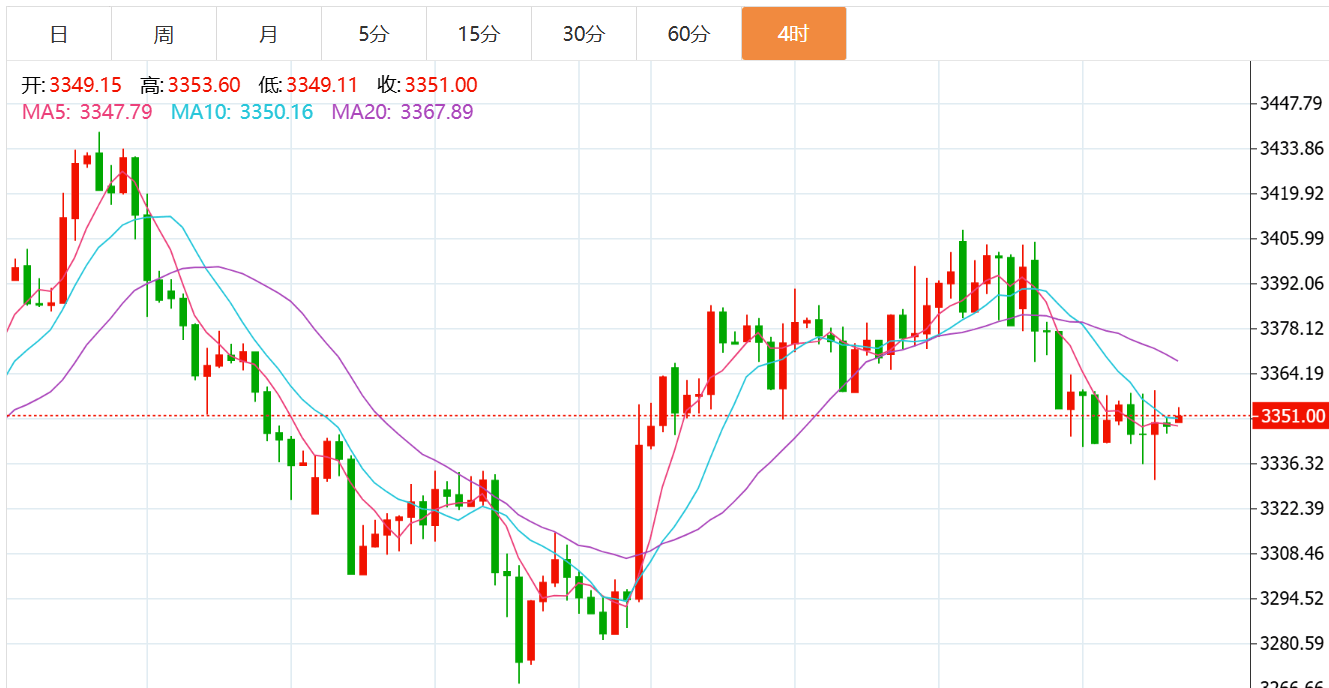
Group 1: Market Overview - The article discusses the recent trends in the gold and oil markets, highlighting the impact of economic data and geopolitical events on prices [2][6]. - The U.S. Consumer Price Index (CPI) data for July showed a month-on-month increase of 0.2% and a year-on-year increase of 2.7%, which was below market expectations [2]. - The market reacted to the CPI data with a short-term drop in the U.S. dollar and a spike in gold prices, indicating a temporary optimistic sentiment [2]. Group 2: Gold Market Analysis - The gold market is currently experiencing a wide-ranging oscillation between $3450 and $3250, with recent price action indicating a potential shift towards a bearish trend [3]. - After testing support levels around $3270/3280, gold prices rebounded but faced resistance at $3410, leading to a significant drop below key support levels [3][5]. - Short-term trading strategies suggest focusing on resistance levels between $3358 and $3370, while support levels are identified around $3335 to $3310 [5]. Group 3: Oil Market Analysis - The oil market saw a slight increase in prices due to the extension of tariff pauses between the U.S. and major Asian countries, alleviating trade concerns [6]. - Brent crude oil futures were reported at $66.65 per barrel, while WTI futures were at $63.89 per barrel, indicating a stable market environment [6]. - Technical analysis suggests that oil prices are in a downward trend, with a potential trading range identified between $62.80 and $64.60 [7].
权益市场再回暖重点关注政策导向
Datong Securities· 2025-08-12 11:48
Group 1: Overall Market Performance - The equity market has shown signs of recovery, with A-shares rebounding after a previous decline, maintaining trading volume above 1.6 trillion [1][8][11] - Investor confidence remains high, supported by favorable CPI data and a stable domestic economic environment, while overseas markets are also showing signs of recovery due to eased tariff concerns and rising interest rate expectations [2][11][12] Group 2: Equity Market Insights - A-shares have experienced a strong upward trend, with daily average trading volume exceeding 1.6 trillion, indicating a healthy market sentiment [2][11] - The policy direction is clear, with the central bank reaffirming a loose monetary environment and regulatory bodies tightening IPO approvals, which collectively support market stability [2][12] - There are structural opportunities in the technology sector, particularly in the communication sector, while "anti-involution" policies may benefit industries like solar energy and new energy [12][13] Group 3: Bond Market Analysis - The bond market remains in a volatile state, with short-term policy support providing some relief, but long-term weakness persists due to the strong attraction of equity markets [33][34] - The bond market is expected to face pressure from the equity market's strong performance, which may lead to capital outflows from bonds [33][34] Group 4: Commodity Market Overview - The commodity market has seen a decline, with gold performing relatively well while energy commodities like oil have experienced significant drops [39][40] - The overall outlook for the commodity market remains uncertain, with expectations of continued volatility rather than a clear upward trend [39][40]