
原油

Search documents
宝城期货原油早报-2025-06-13-20250613
Bao Cheng Qi Huo· 2025-06-13 01:38
Report Summary 1) Report Industry Investment Rating No relevant information provided. 2) Report's Core View - The crude oil market is expected to run strongly, with short - term, medium - term, and intraday trends being mainly oscillatory, and intraday showing a tendency of oscillatory strength [1][5]. - Geopolitical risks are the dominant factor, and crude oil is expected to run with an oscillatory upward trend. Domestic crude oil futures on Friday may maintain an oscillatory and slightly stronger trend [1][5]. 3) Summary by Related Catalogs a. Time - cycle Views - **Short - term**: The short - term view of crude oil 2508 is oscillatory [1]. - **Medium - term**: The medium - term view of crude oil 2508 is oscillatory [1]. - **Intraday**: The intraday view of crude oil 2508 is oscillatory and slightly stronger, and the reference view is a strong operation [1][5]. b. Price and Market Conditions - On Thursday night, international crude oil futures stopped falling and stabilized, then strengthened again. The domestic crude oil futures 2508 contract slightly rose 0.82% to 490.7 yuan/barrel [5]. c. Core Logic - Geopolitical factors have become an important driver for the rise of domestic and international crude oil futures prices. The escalation of the Russia - Ukraine conflict and concerns about the breakdown of the US - Iran nuclear negotiation and potential war have expanded geopolitical risks and increased the premium space for crude oil [5]. - From April to May, OPEC+ oil - producing countries only had a small increase in production, lower than the target, and negative factors were less than expected, leading to the continued recovery of oil prices [5].
能源化策略周报:地缘扰动油价,化?供增需减格局依旧偏弱-20250613
Zhong Xin Qi Huo· 2025-06-13 01:06
1. Report Industry Investment Rating - The overall view on the energy and chemical sector is to treat it with an oscillatory mindset, with various products having different outlooks such as "oscillate", "oscillate weakly", etc., based on the specific situation of each product [2] 2. Core View of the Report - Geopolitical risks in the Middle East have become the core factor driving oil prices, with high uncertainty. The ongoing Iran - US nuclear negotiations are accompanied by military threats. If geopolitical concerns are disproven, the pressure of increased production may drive oil prices down. However, if military action occurs, it could provide significant upward potential for oil prices. The chemical industry shows a pattern of increasing supply and decreasing demand, with a weak outlook [1][2][5] 3. Summary by Relevant Catalogs (1) Market Outlook - **Crude Oil**: Geopolitical risks have increased, leading to intensified oil price fluctuations. SC2507 closed at 495.7 yuan/barrel on June 12, with a change of +3.68%. Brent2508 closed at 70.34 dollars/barrel, with a change of -0.62%. The Middle East situation is the key factor, and the oil price is in a high - risk stage, expected to oscillate after a rapid rise [4] - **LPG**: Cost support has increased, and PG has rebounded following crude oil. However, domestic combustion and chemical demand remain weak, with limited upward rebound space, and it is expected to oscillate at the bottom [8] - **Asphalt**: As crude oil prices rise, the asphalt cracking spread continues to decline. The asphalt futures closed at 3527 yuan/ton, and the spot prices in East China, Northeast, and Shandong were 3670 yuan/ton, 3900 yuan/ton, and 3725 yuan/ton respectively [6] - **High - Sulfur Fuel Oil**: After a sharp rise, it has fallen back. The main contract closed at 2997 yuan/ton. Supply is expected to increase while demand decreases, and it is expected to oscillate weakly [6] - **Low - Sulfur Fuel Oil**: The futures price oscillates following crude oil. It is currently in a situation of weak supply and demand, with low valuation, and is expected to follow crude oil fluctuations [7] - **Methanol**: Port inventories continue to accumulate, and it oscillates. The spot price in Taicang on June 12 was 2370 yuan/ton, and the port inventory increased to 65.22 tons on June 11 [15] - **Urea**: The pattern of strong supply and weak demand remains unchanged, and the market is operating weakly. The factory and market low - end prices on June 12 were 1730 and 1715 yuan/ton respectively, and the daily production was 20.74 tons [15] - **Ethylene Glycol**: Ethane imports may return to normal, and EG has adjusted significantly. The spot price on June 12 was around 4315 yuan/ton, and the port inventory was about 63.4 tons on June 9 [11] - **PX**: Supply restarts quickly, and attention should be paid to PTA production and polyester start - up. The CFR price in Taiwan on June 12 was 818 dollars/ton. The Asian PX operating rate will further increase, and the domestic market is in a de - stocking cycle [10] - **PTA**: Supply increases while demand decreases, and the situation is gradually weakening. The spot price on June 12 was 4855 yuan/ton, and the polyester sales were weak. The 250 - ton PTA device in Shandong has reached full capacity [10] - **Short Fibre**: Production cuts support processing fees, and the absolute value fluctuates with raw materials. The sales rate on June 9 was 60% on average, and the export growth rate from January to April was 33% [11][12] - **Bottle Chip**: The production is at a high level with oversupply, and low processing fees will continue. The processing fees are expected to oscillate between 300 - 400 yuan/ton [13][14] - **PP**: Although the oil price rebounds, the fundamentals are still under pressure, and it oscillates. The mainstream transaction price in East China on June 12 was 7100 yuan/ton, and the supply is still increasing [16][17] - **Plastic**: The raw material end provides a boost, but maintenance is needed to balance supply and demand, and it oscillates. The mainstream LLDPE price on June 12 was 7170 yuan/ton, and the downstream demand is weak [16] - **Styrene**: Driven by macro - expectations, it rebounds. The spot price in East China on June 12 was 7780 yuan/ton. However, the rebound drive may not be sustainable, and the supply may increase while the demand is weak [10] - **PVC**: Market sentiment has cooled, and it operates weakly. The benchmark price of calcium carbide - based PVC in East China was 4790 yuan/ton, and new production capacity is expected to be put into operation in the long - term [18] - **Caustic Soda**: The cost center has shifted downwards, and it operates weakly. The 32% caustic soda price in Shandong was 2719 yuan/ton, and the demand is weak while the supply is expected to increase [18] (2) Variety Data Monitoring (i) Energy and Chemical Daily Indicator Monitoring - **Inter - period Spread**: Different varieties have different inter - period spreads and their changes, such as SC (M1 - M2) being 4 with a change of 0, Brent (M1 - M2) being 0.8 with a change of - 0.05, etc. [19] - **Basis and Warehouse Receipts**: Each variety has corresponding basis and warehouse receipt data, for example, the basis of asphalt is 198 with a change of - 61, and the warehouse receipt is 91510 [20] - **Inter - Variety Spread**: There are also data on inter - variety spreads and their changes, like 1 - month PP - 3MA being - 141 with a change of - 14 [21]
贺博生:6.12黄金暴涨暴跌最新行情走势分析,原油晚间多空操作建议指导
Sou Hu Cai Jing· 2025-06-12 17:00
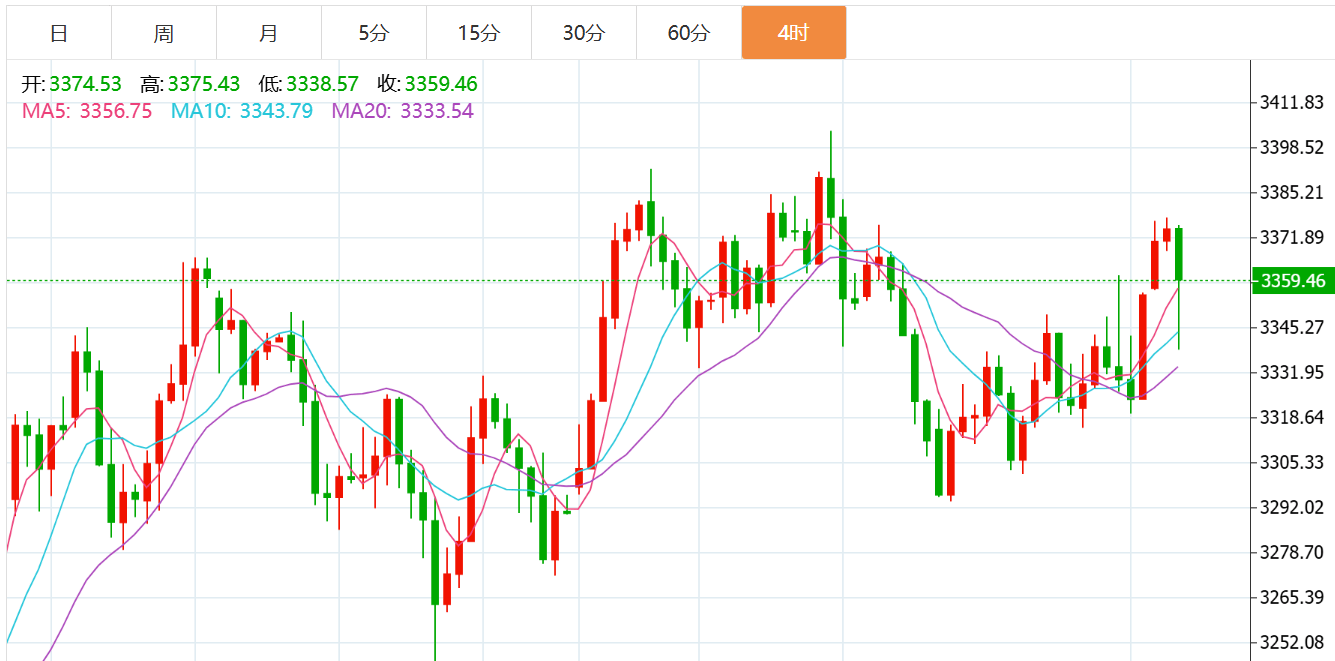
Group 1: Gold Market Analysis - The recent surge in gold prices is attributed to lower-than-expected U.S. inflation data and escalating geopolitical tensions in the Middle East, leading to increased demand for gold as a safe-haven asset [2][3] - Gold reached a weekly high of $3377.55 per ounce, supported by a weakening U.S. dollar, which fell to a near one-week low of 98.42 [2] - Technical analysis indicates a bullish trend for gold, with key resistance levels identified at $3390-$3400 and support at $3355 [3][5] Group 2: Oil Market Analysis - International oil prices experienced a pullback after a recent surge, with Brent crude falling to $69.40 per barrel and WTI to $67.84, despite both having recorded over 4% gains previously [6] - The market is influenced by geopolitical tensions in the Middle East and unexpected declines in U.S. oil inventories, with ongoing concerns about potential supply disruptions [6][7] - Short-term forecasts suggest a bullish outlook for oil prices, with key resistance levels at $68.5-$69.0 and support at $66.5-$66.0 [7]

原油:美伊核谈判一波三折,地缘风波加剧
Bao Cheng Qi Huo· 2025-06-12 12:35
Report Industry Investment Rating - No relevant content provided Core Viewpoints of the Report - The global crude oil futures market has experienced significant fluctuations under the impact of multiple geopolitical crises. The continuous escalation of the Russia-Ukraine war and the turmoil in the US-Iran nuclear negotiations have had a profound impact on crude oil supply, demand expectations, financial speculation, and the global energy landscape [4]. - Geopolitical events affect oil prices through three transmission chains: direct supply disruptions, transportation channel blockades, and changes in sanctions policies. The market's reaction to different types of events varies in time lag, with short-term sudden supply shocks causing a jump of over 10% on the day, while long-term sanctions policies lead to a monthly progressive premium of 3 - 5%. The market is gradually becoming desensitized to repeated geopolitical threats [4]. - Geopolitical turmoil has transformed the impact on the crude oil futures market into a complex game involving financialization, politicization, and greening factors. In the short term, the market is still digesting the contradiction between supply disruption risks and weak demand. In the medium to long term, the acceleration of energy transformation and the reconstruction of pricing power will reshape the industry's fundamentals [5]. Summary by Relevant Catalog Preface: US Evacuation of Personnel from the Middle East Triggers Market Concerns - On June 11, 2025, the US State Department and Department of Defense decided to evacuate non-essential personnel from the Middle East due to the escalating tension in the region. The US-Iran relationship is tense, and the risk of conflict between Israel and Iran is rising, which has increased market concerns [8]. Chapter 1: Geopolitical Crisis Intensifies, Crude Oil Futures Rise Significantly - The intensification of the geopolitical crisis has driven up domestic and international oil prices. After the Russia-Ukraine conflict escalated and the US planned to evacuate personnel from the Middle East, the market worried about the breakdown of the US-Iran nuclear negotiations and the potential blockade of the Strait of Hormuz by Iran. As a result, on Wednesday night, the US WTI crude oil futures price rose 5.11% to $69.29 per barrel, the Brent crude oil futures price rose 5.85% to $70.83 per barrel, and the domestic crude oil futures 2507 contract rose 3.37% to 497.4 yuan per barrel [9]. Chapter 2: Expectations of US-Iran Conflict Heat Up, Evacuation Signs Appear - The US evacuation of non-essential personnel from the Middle East is a preventive measure. The US State Department ordered the evacuation of non-core personnel from the embassy in Baghdad, and authorized the evacuation of non-core personnel and their families in Bahrain and Kuwait. The US Secretary of Defense approved the voluntary evacuation of the families of US troops in the Middle East. The Iranian Defense Minister warned that if the negotiations fail, Iran will attack US military bases in the Middle East. The British Navy also warned that the shipping in the Middle East may be affected. The prices of WTI and Brent crude oil futures have risen significantly, and the market is worried about potential oil supply disruptions [17]. Chapter 3: Long-Standing US-Iran矛盾, Difficult to Resolve Differences - The US-Iran conflict dates back to the Iranian Islamic Revolution in 1979, covering various fields such as ideology, social system, and geopolitics, especially the Iranian nuclear issue. The Iran hostage crisis in 1979 and the Iranian nuclear crisis in 2003 have further intensified the contradiction. Different US administrations have adopted different policies towards Iran, from containment and sanctions to negotiation and then back to sanctions. The current Trump administration's Iran policy is a key part of its Middle East policy [18][20]. Chapter 4: US-Iran Nuclear Negotiations on the Verge of Collapse, Conflict Looms - Since the beginning of 2025, the US and Iran have held multiple rounds of nuclear negotiations. However, there are significant differences between the two sides on key issues such as uranium enrichment and the lifting of sanctions. The future of the negotiations is uncertain, and the breakdown of the negotiations may lead to a larger-scale conflict [23][24]. Chapter 5: Iran's High Geopolitical Influence and Oil Production Status in the Middle East - Iran is a major oil producer in the Middle East. In April 2025, its crude oil production was 3.305 million barrels per day, with a slight monthly decrease of 31,000 barrels per day and a slight annual increase of 82,000 barrels per day. From January to April 2025, its crude oil production was 13.242 million barrels per day, a significant increase of 490,000 barrels per day compared to the same period last year. Iran ranks eighth in global oil production and has the highest production increase among OPEC members. It also has the fourth-largest proven oil reserves and the second-largest natural gas reserves in the world [25]. - Iran controls the Strait of Hormuz, which is crucial for global oil transportation. Approximately 40% of the world's oil exports pass through this strait, and about 90% of the total oil exports from the Persian Gulf go through it. If the strait is blocked, it will lead to a sharp reduction in oil supply, causing a rapid increase in oil prices and seriously affecting the global economy [26]. Chapter 6: Russia-Ukraine Conflict Escalates, Second Round of Peace Talks Fails - In early June 2025, Ukraine launched a drone attack on Russian strategic bombers, resulting in the destruction of 41 bombers, which may account for 45% of Russia's active - duty strategic bombers. The second round of peace talks between Russia and Ukraine in Istanbul ended in failure, and Russia launched a large - scale air strike on Ukraine. The escalation of the Russia-Ukraine conflict has boosted the premium space in the international crude oil futures market [38][40]. Chapter 7: Net Long Positions in the International Crude Oil Market Increase Week - on - Week - Since June 2025, the international crude oil futures price has shown a stable and fluctuating trend, and the market's bullish sentiment has increased. As of June 3, 2025, the average non - commercial net long positions in WTI crude oil were 167,957 contracts, a slight week - on - week increase of 2,263 contracts, but a significant decrease of 10,254 contracts (a decline of 5.75%) compared to the May average. Meanwhile, the average net long positions in Brent crude oil futures were 155,519 contracts, a significant week - on - week increase of 7,688 contracts, and a significant increase of 19,984 contracts (an increase of 14.74%) compared to the May average [41]. Chapter 8: Summary - The global crude oil futures market has been highly volatile under the influence of geopolitical crises. Geopolitical events affect oil prices through three transmission chains, and the market's reaction to different events has time - lag differences. The impact of geopolitical turmoil on the crude oil futures market is a complex game involving multiple factors. In the short term, the market is dealing with the contradiction between supply disruption risks and weak demand, while in the medium to long term, energy transformation and pricing power reconstruction will reshape the industry [46].
中美刚通话结束,美方收到一个坏消息,原油被拒之门外了?
Sou Hu Cai Jing· 2025-06-12 10:52
Core Viewpoint - The recent news highlights that China has not imported U.S. crude oil for two consecutive months, significantly impacting the international energy market and reflecting the ongoing trade tensions between the U.S. and China [1][3][9]. Group 1: Changes in U.S.-China Energy Trade - The U.S. has historically been a major player in the global energy market, becoming the largest crude oil and LNG exporter due to the shale oil revolution [1]. - The trade conflict initiated by the U.S. imposing high tariffs on Chinese goods has led to a drastic change in energy trade dynamics, with U.S. crude oil losing its competitive pricing advantage in China due to increased costs from tariffs [3][5]. - Data indicates a significant decline in U.S. crude oil exports to China, with a loss of approximately 18 million barrels in just two months, translating to billions of dollars in potential revenue loss for U.S. energy companies [3][5]. Group 2: Impact on U.S. Energy Sector - The refusal of China to purchase U.S. crude oil has severely impacted the U.S. energy sector, leading to reduced revenues for energy companies that rely on international markets [5]. - Many U.S. energy firms are facing financial difficulties, resulting in cost-cutting measures such as layoffs and reduced exploration and development investments, which could adversely affect future crude oil production [5][6]. - The situation has led to significant job losses in the energy sector, particularly in Texas's shale oil regions, where many drilling platforms have ceased operations due to decreased orders [5][6]. Group 3: China's Energy Strategy - China's reduction in reliance on U.S. crude oil is part of a broader strategy to diversify its energy imports, strengthening ties with countries like Russia, Saudi Arabia, and Iran [6][8]. - This diversification not only mitigates supply risks but also enhances China's leverage in the international energy market [6]. - China's advancements in energy storage and technology, along with the rapid growth of its new energy vehicle sector, have contributed to a decrease in overall crude oil demand [8]. Group 4: Future Implications - The ongoing situation serves as a wake-up call for the U.S. to reassess its trade policies and energy strategies, as continued reliance on threats and sanctions may lead to further losses in the global energy market [9]. - China is expected to continue its energy strategy adjustments to ensure national energy security and play a more significant role in the international energy arena [9].
百利好晚盘分析:特朗普再发降息声 黄金多空切换加快
Sou Hu Cai Jing· 2025-06-12 10:10
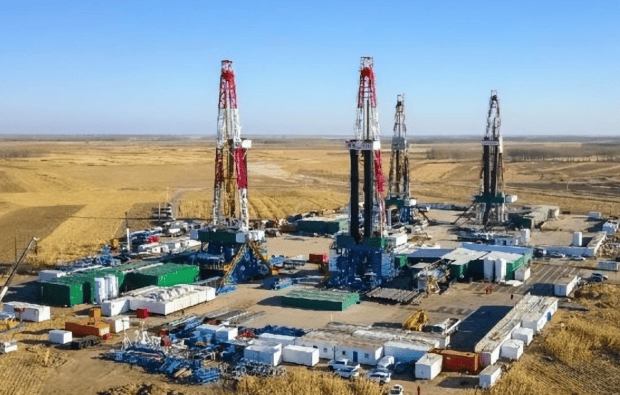
Gold Market - The US May CPI year-on-year recorded at 2.4%, and month-on-month at 0.1%, both below market expectations of 2.5% and 0.2%, indicating a moderate decline in inflation [1] - Following the CPI data release, spot gold surged by $12, breaking through $3360, reflecting that the US consumer market has not been fully impacted by Trump's tariffs, primarily due to the postponement of the trade war [1] - Trump's call for a 100 basis point rate cut by the Federal Reserve boosted gold prices, which stabilized at $3360 before a short-term drop to $3340 as market sentiment cooled [1] - Technical analysis indicates gold is oscillating between $3300 and $3400, with support at $3320 and resistance at $3380 [1] Oil Market - The US EIA's short-term energy report predicts a decline in US crude oil production over the next 18 months, with daily production expected to drop from 13.5 million barrels in Q2 to 13.3 million barrels [2] - The number of active US oil rigs fell to 442, the lowest since October 2021, down by 50 rigs from last year, which may help support oil prices due to reduced supply [2] - Recent US-China trade negotiations have resulted in a framework agreement to ease economic tensions, extending last month's trade truce [2] - Tensions between the US and Iran have escalated, with Trump expressing reduced confidence in reaching a nuclear agreement, while Iran threatened to target US military bases in the region if negotiations fail, causing a spike in oil prices [2] - Technical analysis shows that oil prices have broken through the significant resistance level of $65.10, reaching a high of $69.10, with support at $66.40 [2] Nasdaq Index - The Nasdaq index experienced a drop influenced by Trump's rate cut comments, breaking through 22060 and finding support around 21750, maintaining an overall upward trend with a focus on long positions [3] - The uncertainty introduced by Trump's statements necessitates caution regarding potential downward movements in the market [3] US Dollar Index - The dollar index fell below the previous low of 98.56 due to Trump's rate cut comments, continuing its downward trend, with support at the year's low of 97.90 [4]

申银万国期货首席点评:“硅锂”有意,“钢矿”无情
Shen Yin Wan Guo Qi Huo· 2025-06-12 05:32
报告日期:2025 年 6 月 12 日 申银万国期货研究所 首席点评:"硅锂"有意,"钢矿"无情 中国商务部国际贸易谈判代表:中美原则上达成协议框架。美国 5 月 CPI 同比增 2.4%,核心 CPI 环比增 0.1%、连续第四个月低于预期。美国 5 月 CPI 数据全线 低于预期,能源主导整体 CPI 的放缓,汽车、服装价格均出现下滑,玩具、家电 受关税影响更直接的品类价格上涨。特朗普对伊朗核谈判"信心减弱",美将减 少驻伊拉克使团规模,布油涨超 5%。特朗普表示,伊朗方面似乎在拖延。他强 调,无论协议是否达成,伊朗都不会拥有核武器。黄仁勋 GTC 大会表示,量子计 算正迎来拐点,计划在欧洲新建 20 家"人工智能工厂"。 重点品种:原油、股指、玻璃 玻璃:玻璃期货窄幅整理。基本面,盘面目前在千元下方逐步止跌。不过,整体 而言市场依然关注宏观托底背景下微观层面供需消化的成效。数据方面,上周玻 璃生产企业库存 6011 万重箱,环比增加 222 万重箱。纯碱期货低位整理。数据 层面,上周纯碱生产企业库存 167.5 万吨,环比增加 0.6 万吨。综合而言,国内, 玻璃纯碱都处于库存承压消化的周期,由于生产 ...
宝城期货原油早报:地缘风险加剧,原油震荡偏强-20250612
Bao Cheng Qi Huo· 2025-06-12 05:23
Report Summary 1. Report Industry Investment Rating No relevant content provided. 2. Report's Core View - The crude oil futures are expected to run strongly. The short - term and medium - term trends are both oscillatory, while the intraday trend is oscillatory and bullish. It is anticipated that the domestic crude oil futures on Thursday will maintain an oscillatory and bullish trend [1][5]. 3. Summary by Related Catalog 3.1 Variety Morning Meeting Minutes - For the crude oil 2507 contract, the short - term, medium - term trends are oscillatory, and the intraday trend is oscillatory and bullish. The reference view is a bullish run, with the core logic being the intensification of geopolitical risks [1]. 3.2 Price Quotes and Driving Logic of Main Varieties - Energy and Chemicals Sector of Commodity Futures - The intraday view of crude oil (SC) is oscillatory and bullish, and the medium - term view is oscillatory. The reference view is a bullish run. The core logic includes positive signals from the China - US leaders' phone call, the potential cooling of the China - US tariff war, the escalation of the Russia - Ukraine conflict, concerns about the breakdown of the US - Iran nuclear negotiation and the potential blockade of the Strait of Hormuz by Iran, as well as the OPEC+ countries' lower - than - expected production increase in April - May. International crude oil futures prices rose by over 5% on Wednesday night, and the domestic crude oil futures 2507 contract closed up 3.37% to 497.4 yuan per barrel [5].
成品油逐步累库,能化延续震荡格局
Zhong Xin Qi Huo· 2025-06-12 03:50
Group 1: Report Industry Investment Rating - Not provided in the content Group 2: Core Views of the Report - The overall energy and chemical sector is in a volatile trend. The downstream of the chemical industry is generally weak, with the terminal order index declining compared to May. The peak of supply - side maintenance was in May, and after destocking in May, the market frequently trades on the progress of device maintenance and restart. Currently, the maintenance schedule of a large refinery's reforming unit in East China is crucial. The energy and chemical sector should be treated with a volatile mindset [2]. - The geopolitical risk of crude oil is rising, and oil price fluctuations are intensifying. OPEC+ production increase and geopolitical uncertainties make the oil price at a high - risk stage [1][4]. - The overall supply - demand situation of various energy and chemical products is different. For example, LPG demand is still weak, asphalt is over - valued, and PTA supply increases while demand decreases [2][5][11]. Group 3: Summary by Related Catalogs 1. Market View - **Crude Oil**: On June 11, SC2507 closed at 478.1 yuan/barrel with a change of - 0.35%, and Brent2508 closed at 70.78 dollars/barrel with a change of + 6.28%. Geopolitical risks are rising, and the market is worried about direct military conflicts between the US, Israel and Iran. OPEC+ production increase makes the supply expected to be relatively excessive, and the oil price is in a high - risk stage, expected to fluctuate [4]. - **LPG**: On June 11, PG 2507 closed at 4130 yuan/ton with a change of + 0.27%. Domestic refinery maintenance is gradually restored, supply is increasing, and demand is weak. The upward rebound space is limited, and it is expected to fluctuate at the bottom [8][9]. - **Asphalt**: The main asphalt futures closed at 3483 yuan/ton. The asphalt price is over - valued, and the asphalt spread is expected to decline with the increase of warehouse receipts. The price is under pressure from factors such as increased heavy - oil supply and sufficient domestic raw material supply [4][5]. - **High - Sulfur Fuel Oil**: The main high - sulfur fuel oil closed at 2966 yuan/ton. Supply is increasing and demand is decreasing, and it is expected to fluctuate weakly [5][7]. - **Low - Sulfur Fuel Oil**: The main low - sulfur fuel oil closed at 3559 yuan/ton. It follows the crude oil to fluctuate, with weak supply - demand, and is expected to maintain a low - valuation operation [8]. - **Methanol**: On June 11, the methanol price fluctuated. The port inventory is gradually entering the accumulation cycle, and it is expected to fluctuate in the short term [17]. - **Urea**: On June 11, the urea factory - warehouse and market low - end prices were 1730 and 1740 yuan/ton respectively. The supply is strong and demand is weak, and the price is expected to fluctuate weakly [17]. - **Ethylene Glycol**: On June 11, the ethylene glycol price fluctuated. The market trading logic is shifting, and it is recommended to wait and see. It has support at 4200 - 4300 yuan, and short - selling is not recommended [13]. - **PX**: On June 11, PX CFR China Taiwan was 812 dollars/ton. The cost - end guidance slows down, and the supply - demand game intensifies. It is expected to continue to consolidate [10]. - **PTA**: On June 11, the PTA spot price was 4820 yuan/ton. Supply increases and demand decreases, and the market price is expected to fluctuate weakly [11]. - **Styrene**: On June 11, the East China styrene spot price was 7720 yuan/ton. Driven by the macro - meeting and device rumors, it rebounds, but the subsequent driving force is insufficient, and it is expected to fluctuate weakly [11]. - **Short - Fiber**: On June 9, the direct - spinning polyester short - fiber followed the raw materials to fluctuate. The supply - side pressure is relieved, and the processing fee compression space is limited. It is expected to be dominated by macro - negative factors [14][15]. - **Bottle - Chip**: On June 11, the polyester bottle - chip factory price was mostly stable. The low processing fee continues, and the processing fee is expected to fluctuate between 300 - 400 yuan/ton [15][16]. - **PP**: On June 11, the East China wire - drawing mainstream transaction price was 7050 yuan/ton. The cost - end support marginally rebounds, but the supply is increasing, and the demand is weak. It is expected to fluctuate in the short term [20]. - **Plastic**: On June 11, the LLDPE spot mainstream price was 7150 yuan/ton. The cost - end support marginally rebounds, but the supply pressure is high, and the demand is weak. It is expected to fluctuate in the short term [19]. - **PVC**: On June 11, the East China calcium - carbide - method PVC benchmark price was 4790 yuan/ton. The short - term sentiment warms up, and it rebounds weakly. In the long - term, the supply - demand is pessimistic, and the price is under pressure [22]. - **Caustic Soda**: On June 11, the Shandong 32% caustic soda converted to 100% price was 2719 yuan/ton. The spot price has peaked, and it is recommended to short on rallies. The 09 - contract fundamental expectation is pessimistic [22]. 2. Variety Data Monitoring (1) Energy and Chemical Daily Indicator Monitoring - **Inter - period Spread**: The inter - period spreads of various varieties such as SC, WTI, Brent, etc. have different changes. For example, SC's M1 - M2 spread is 5 with a change of 1, and WTI's M1 - M2 spread is 1.09 with a change of 0.02 [23]. - **Basis and Warehouse Receipts**: The basis and warehouse receipt data of various varieties are provided. For example, the asphalt basis is 259 with a change of 17, and the warehouse receipt is 91510 [24]. - **Inter - variety Spread**: The inter - variety spreads of pairs such as 1 - month PP - 3MA, 1 - month TA - EG, etc. are presented with their corresponding changes [25]. (2) Chemical Basis and Spread Monitoring - The data for specific chemical products such as methanol, urea, styrene, etc. are mentioned, but detailed data are not fully provided in the summary part [26][38][50].
国投安粮期货股指日报-20250612
An Liang Qi Huo· 2025-06-12 03:50
Report Industry Investment Ratings - Not provided in the given content Core Views - Global market shows a differentiated pattern, with the Fed's rate - cut expectations constrained by inflation resilience and the ECB hinting at the end of the easing cycle. The equity market is supported by loose funds, but external disturbances and volume - energy sustainability should be watched [3]. - Crude oil may oscillate strongly in the short - term, but its upside is limited in the long - term without major geopolitical impacts on supply [4]. - Gold is expected to remain in a high - level oscillation, and investors should pay attention to US CPI, PPI data, and the Fed's interest - rate meeting [5][6]. - Silver will maintain a high - level oscillation, and US inflation data will affect its short - term direction [7]. - Most chemical products are expected to have a weak or bearish short - term trend, with supply - demand contradictions and inventory changes being important influencing factors [8][9][10][11][12][13][14][15][16]. - Rubber may have a weak rebound after the short - term negative factors are realized, but it is still affected by the oversupply situation [17][18]. - Methanol's futures price is in an oscillation range, and the progress of Sino - US negotiations and macro sentiment should be watched [19]. - Agricultural products show different trends. Corn may oscillate in the short - term, peanuts may decline slightly but have limited downside, cotton may be strong in the short - term, and the prices of other agricultural products are also affected by supply - demand and seasonal factors [20][21][22][23][24][25][26][27][28][29][30][31]. - Metal prices have different trends. Copper may touch the bubble price line, aluminum may oscillate in a range, alumina shows a weak adjustment, and other metals are also affected by factors such as cost, supply - demand, and global economic situation [32][33][34][35][36][37][38][39][40]. - Black metal products' prices also vary. Stainless steel may oscillate at a low level, and steel products like rebar and hot - rolled coil can be considered for light - position long positions at low prices, while iron ore and coal may oscillate in the short - term [41][42][43][44][45][46] Summary by Industry Macro - Index - Market analysis: Global markets are differentiated. The Fed's rate - cut expectations are constrained, and the ECB hints at the end of the easing cycle. The central bank maintains a "broad credit, stable currency" policy. The equity market is supported by loose funds, with capital flowing to non - banking finance and technology sectors. Index futures show short - covering and a decline in the PCR indicator [3]. - Reference view: Pay attention to Sino - US negotiations and the Fed's policy implementation. Short - term holding along the 5 - day moving average is advisable. Be wary of the risk of insufficient volume energy [3]. Crude Oil - Macro and geopolitics: The second - round Sino - US negotiations reach a "framework agreement in principle," and the oil price may oscillate strongly. Focus on the key level of $65 per barrel for WTI [4]. - Market analysis: OPEC lowers global demand growth forecasts, and US policies cause concerns about demand. Although US crude oil inventories decline, refined product inventories increase. Geopolitical tensions in the Middle East increase supply uncertainty, and OPEC+ plans to increase production [4]. - Reference view: Watch whether WTI can break through $65 per barrel in the short - term. In the long - term, the upside is limited without major geopolitical impacts [4]. Gold - Macro and geopolitics: US economic resilience pressures short - term gold prices, but multiple factors support it in the long - term. Policy uncertainty and geopolitical risks limit the downside space, and the Fed's policy also affects the price [5]. - Market analysis: Shanghai Gold Exchange's gold futures warehouse receipts are stable with a slight increase. The spot price has a discount compared to the futures price [6]. - Operation suggestion: Gold is expected to oscillate. Investors should watch US CPI, PPI data, and the Fed's interest - rate meeting [6]. Silver - Market price: On June 11, the international spot silver price oscillated narrowly [7]. - Market analysis: Shanghai Futures Exchange's silver futures warehouse receipts increased significantly. Global economic growth expectations are lowered, and trade tensions ease, reducing the safe - haven demand for silver [7]. - Operation suggestion: Silver will maintain a high - level oscillation. Pay attention to US inflation data [7]. Chemicals PTA - Spot information: The East China spot price decreased, and the basis is positive [8]. - Market analysis: Oil price fluctuations affect PTA costs. PTA device maintenance and restart coexist, with an overall increase in the operating rate and a decrease in inventory days. Polyester and textile loads decline, and weak orders may intensify supply - demand contradictions [8]. - Reference view: It may oscillate bearishly in the short - term [8]. Ethylene Glycol - Spot information: The East China spot price is flat, and the basis is positive [9]. - Market analysis: The supply side shows a slight decline in the overall operating rate and an increase in coal - based production. Demand is weak due to the off - season. Inventories in the East China main port increase, and future arrivals may limit the upside [9]. - Reference view: The price may be under pressure and oscillate in the short - term [9]. PVC - Spot information: The East China 5 - type PVC spot price increased, and the ethylene - calcium price difference decreased [10][11]. - Market analysis: The production capacity utilization rate increased, but downstream demand is still weak. Inventories decreased. The futures price oscillated at a low level without significant fundamental improvement [10][11]. - Reference view: The fundamentals are weak, and the futures price will oscillate at a low level [11]. PP - Spot market: The spot prices in different regions fluctuate slightly [12]. - Market analysis: The production capacity utilization rate increased, and production volume rose. Demand is in the off - season, and downstream orders decreased. Inventories of production enterprises increased. The futures price oscillated at a low level [12]. - Reference view: Demand is weak, and the futures price may oscillate at a low level [13]. Plastic - Spot market: The spot prices in different regions have different changes [14]. - Market analysis: The production capacity utilization rate increased slightly. The downstream average operating rate changed little. Inventories of production enterprises increased. The futures price may oscillate [14]. - Reference view: The fundamentals are weak, and the futures price may oscillate in the short - term [14]. Soda Ash - Spot information: The heavy - soda prices in different regions are stable [15]. - Market analysis: The overall operating rate and production volume increased. Factory inventories increased slightly, and social inventories decreased. Demand is average, and the market lacks new drivers [15]. - Reference view: The futures price is expected to continue to oscillate at the bottom in the short - term [15]. Glass - Spot information: The 5mm glass prices in different regions are stable [16]. - Market analysis: The operating rate and production volume decreased slightly. Inventories increased, and demand is weak. The futures price may oscillate weakly in the short - term [16]. - Reference view: The futures price is expected to oscillate weakly in the short - term [16]. Rubber - Market price: The prices of different types of rubber and raw materials are provided [17]. - Market analysis: Sino - US trade negotiations and typhoons affect the price. The supply is abundant as domestic and Southeast Asian rubber trees are in the tapping season. Downstream tire operating rates decline, and trade - war concerns suppress demand, but there is a rebound expectation after the negative factors are realized [17]. - Reference view: Pay attention to downstream operating rates. It may start a weak rebound after short - term negative factors are realized [18]. Methanol - Spot information: The East China spot price increased, and prices in other regions vary [19]. - Market analysis: The futures price increased slightly. Port inventories increased. Supply pressure is high, and demand from MTO devices recovers, while traditional downstream demand is in the off - season [19]. - Reference view: The futures price is in an oscillation range. Watch Sino - US negotiations and macro sentiment [19]. Agricultural Products Corn - Spot information: Corn purchase prices in different regions are provided [20]. - Market analysis: Good weather in US corn - growing areas and Sino - US trade relations affect imports. The domestic market is in the transition period between old and new grains, with tight supply in the short - term. Wheat substitution and weather are key factors. Downstream demand is weak [20][21]. - Reference view: The corn futures price may oscillate between 2300 - 2400 yuan/ton in the short - term [21]. Peanut - Spot price: Peanut prices in different regions are provided [22]. - Market analysis: The domestic peanut planting area is expected to increase in 2025. The market is in the inventory - consumption period, with low imports and low inventory levels. Demand is in the off - season, but low inventories may support the price [22]. - Reference view: The peanut price may decline slightly in the short - term, but the downside is limited. Band - trading is advisable [22]. Cotton - Spot information: The Chinese cotton spot price index and Xinjiang cotton arrival price are provided [23]. - Market analysis: Sino - US relations ease, boosting the market. In the long - term, cotton supply is expected to be abundant. In the short - term, low imports and low commercial inventories support the price, but downstream demand is weak [23]. - Reference view: The cotton price may be strong in the short - term. Watch whether it can fill the previous gap [23]. Pig - Spot market: The average price of live pigs in major production and sales areas increased slightly [24]. - Market analysis: Farmers resist low - price sales, reducing supply. Demand is weak due to warm weather, and terminal consumption lacks improvement [24]. - Reference view: The live - pig futures price may oscillate weakly. Watch the slaughter situation [24]. Egg - Spot market: The national average egg price is stable [25]. - Market analysis: Farmers' enthusiasm for replenishing chickens decreases, and old - hen culling increases, supporting the price. Demand may increase in the tourism and catering industries during the summer vacation, but the plum - rain season suppresses consumption [25]. - Reference view: The egg futures price is undervalued. It is advisable to wait and see [25]. Rapeseed Meal - Spot market: The rapeseed meal price in Fangchenggang increased [27]. - Market analysis: Domestic and near - term imported rapeseed supplies are abundant, while far - term imports are tight. Demand is weak due to a small price difference with soybean meal and the off - season. Watch Sino - Canadian and Sino - US trade relations [27]. - Reference view: Watch the performance of rapeseed meal futures at the upper pressure level [27]. Rapeseed Oil - Spot market: The rapeseed oil price in Fangchenggang is stable [28]. - Market analysis: Domestic and near - term imported rapeseed supplies are abundant, while far - term imports are tight. Demand is neutral, and inventories may remain high in the short - to - medium - term [28]. - Reference view: The rapeseed oil futures price may oscillate near the platform [28]. Soybean No. 2 - Spot information: Import costs of US, Brazilian, and Argentine soybeans are provided [29]. - Market analysis: Sino - US trade talks boost market confidence. Good weather in US soybean - growing areas and the peak season of Brazilian soybean exports affect the price [29]. - Reference view: The soybean No. 2 futures price may oscillate strongly in the short - term [29]. Soybean Meal - Spot information: Soybean meal prices in different regions are provided [30]. - Market analysis: Pay attention to Sino - US trade talks. Internationally, trade talks boost confidence, and tariffs and weather are key factors. Domestically, oil - mill production is high, and downstream demand is weak, but inventory accumulation is slow [30]. - Reference view: The soybean meal futures price may oscillate strongly in the short - term [30]. Soybean Oil - Spot information: Soybean oil prices in different regions are provided [31]. - Market analysis: Internationally, supply pressure and falling oil prices put pressure on soybean oil. Domestically, oil - mill production is high, and demand is in the off - season, with inventory accumulation pressure increasing [31]. - Reference view: The soybean oil futures price may oscillate in the short - term [31] Metals Copper - Spot information: The price of Shanghai 1 electrolytic copper increased, and the import copper ore index also rose [32]. - Market analysis: US economic data reduces recession concerns and rate - cut expectations. Global tariffs and domestic policies affect the market. Raw material issues and inventory changes make the market more complex [33]. - Reference view: The copper price may touch the bubble price line. Consider removing defenses based on signals [33]. Aluminum - Spot information: The Shanghai spot aluminum price increased [34]. - Market analysis: The cost of alumina increases, supporting the theoretical cost of electrolytic aluminum. Supply is expected to be in surplus, and demand is in the off - season. Inventories decline, and the spot market is at a premium, but demand limits the upside [34]. - Reference view: The aluminum futures price may oscillate in a range [34]. Alumina - Spot information: The national average alumina price decreased slightly, and prices in different regions vary [35]. - Market analysis: Sino - US trade talks boost market sentiment. Supply slightly decreases as smelters' profits improve. Demand is mainly for rigid needs, and inventories start to accumulate. The price is under pressure [35]. - Reference view: The alumina futures price shows a weak adjustment trend [35]. Cast Aluminum Alloy - Spot information: The national and East China spot prices of cast aluminum alloy are stable [36]. - Market analysis: The high price of scrap aluminum supports the cost. Supply is in surplus as the industry expands. Demand from new - energy vehicles and electronics is resilient but limited by tariffs and the global economy. Inventories are high and may continue to accumulate [36]. - Reference view: The cast aluminum alloy futures price may be strong [37]. Lithium Carbonate - Spot information: The prices of battery - grade and industrial - grade lithium carbonate are stable [38]. - Market analysis: The upstream raw - material market shows signs of stabilization, supply is stable but the structure is adjusting, and demand is weak. The price may oscillate at the bottom [38]. - Reference view: Conservative investors can wait and see, while aggressive investors can trade in the range [38]. Industrial Silicon - Spot information: The prices of different grades of industrial silicon are stable [39]. - Market analysis: Supply increases slightly, and demand is weak as downstream industries cut production or have low operating rates. Inventories are digested slowly, and the price is under pressure. Technically, it may rebound [39]. - Reference view: The industrial silicon futures price may oscillate strongly at the bottom [39]. Polysilicon - Spot information: The prices of different types of polysilicon are stable [40]. - Market analysis: Supply shows no obvious contraction, and demand is weak overall, with some differentiation. Exports decline. The market's supply - demand contradiction is not alleviated [40]. - Reference view: The polysilicon futures price may oscillate. Watch the previous low - point support [40] Black Metals Stainless Steel - Spot information: The price of cold - rolled stainless steel coil increased [41]. - Market analysis: Technically, it may change from a one - sided decline to a low - level oscillation. Fundamentally, the raw - material market is quiet, and cost supports the price, but weak demand restricts the upside [41]. - Reference view: It may oscillate widely at a low level. Wait and see for now [41]. Rebar - Spot information: The price of rebar in Shanghai is stable [42]. - Market analysis: Technically, it is stabilizing. Fundamentally, external talks are going well, raw - material prices are stabilizing, costs are dynamic, and demand is in the off - season, but inventories are low and the valuation is low [42][43]. - Reference view: The overall valuation is low. Consider light - position long positions at low prices [43]. Hot - Rolled Coil - Spot information: The price of hot - rolled coil in Shanghai is stable [44]. - Market analysis: Technically, it is stabilizing. Fundamentally, external talks are going well, raw - material prices are stabilizing, costs are dynamic, apparent demand recovers, and inventories are low with a low valuation [44]. - Reference view: The overall valuation is low. Consider light - position long positions at low prices [44]. Iron Ore - Spot information: The iron ore price index and futures price are provided [45]. - Market analysis: Supply pressure eases as global shipments increase and domestic production rises slightly. Demand weakens as steel - mill operating rates decline, but current iron - water production is still high. Port inventories increase, and demand in the off - season is expected to be weak. Sino - US tariff easing boosts sentiment, but steel - billet exports are uncertain. Non - mainstream ore production cuts support the price, but reduced steel - mill profits may suppress demand [45]. - Reference view: The iron ore futures price may oscillate in the short - term. Watch port inventory