
医药生物

Search documents
科创板平均股价38.24元,60股股价超百元
Zheng Quan Shi Bao Wang· 2025-09-10 08:54
Group 1 - The average stock price of the Sci-Tech Innovation Board is 38.24 yuan, with 60 stocks priced over 100 yuan, and the highest priced stock is Cambrian-U at 1273.00 yuan, which increased by 3.66% [1][2] - Among the stocks priced over 100 yuan, 33 stocks increased in price today, with notable gainers including DingTong Technology, JiePuTe, and XinQi Micro [1][2] - The average premium of the stocks priced over 100 yuan relative to their issue price is 379.18%, with Cambrian-U, BaiLi TianHeng, and AnJi Technology showing the highest premiums of 1877.02%, 1288.70%, and 1238.73% respectively [1][2] Group 2 - The sectors with the highest concentration of stocks priced over 100 yuan on the Sci-Tech Innovation Board include electronics (26 stocks), pharmaceuticals (12 stocks), and computers (9 stocks) [2] - The net inflow of main funds into stocks priced over 100 yuan today totaled 765 million yuan, with the highest net inflows seen in HaiGuang Information, LanQi Technology, and Cambrian-U [2] - The total margin balance for stocks priced over 100 yuan is 72.93 billion yuan, with the highest balances in ZhongXin International, Cambrian-U, and HaiGuang Information [2][3]



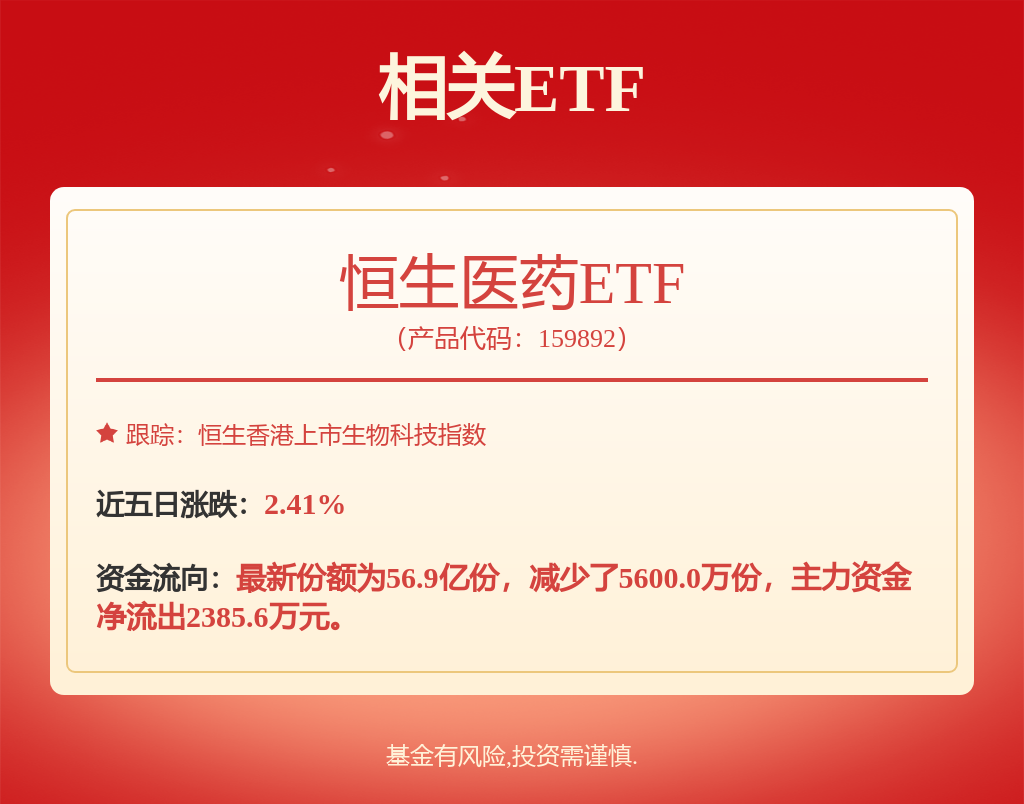
101.05亿元资金今日流出电力设备股
Zheng Quan Shi Bao Wang· 2025-09-10 08:52
Market Overview - The Shanghai Composite Index rose by 0.13% on September 10, with 13 industries experiencing gains, led by the communication and electronics sectors, which increased by 3.49% and 1.78% respectively [1] - The power equipment industry had the largest decline, falling by 1.18% [1] Fund Flow Analysis - The main funds in the two markets experienced a net outflow of 5.62 billion yuan, with 9 industries seeing net inflows [1] - The communication industry had the highest net inflow of funds, totaling 9.07 billion yuan, while the electronics sector followed with a net inflow of 7.51 billion yuan [1] - The power equipment industry led the net outflow, with a total of 10.10 billion yuan, followed by the non-ferrous metals industry with a net outflow of 3.78 billion yuan [1] Power Equipment Industry Performance - Within the power equipment sector, there are 362 stocks, with 94 stocks rising and 263 stocks declining [2] - The top three stocks with the highest net inflow in the power equipment industry were: - XianDao Intelligent (6.93 billion yuan) - Enjie Co., Ltd. (3.76 billion yuan) - DaoShi Technology (3.10 billion yuan) [2] - The stocks with the largest net outflow included: - Ningde Times (-9.27 billion yuan) - Tongwei Co., Ltd. (-6.00 billion yuan) - Wolong Electric Drive (-5.56 billion yuan) [2][3] Power Equipment Industry Stock Performance - The top gainers in the power equipment sector included: - XianDao Intelligent: +4.55% - Enjie Co., Ltd.: +10.00% - DaoShi Technology: +6.87% [2] - The top decliners in the sector included: - Ningde Times: -1.24% - Tongwei Co., Ltd.: -6.00% - Wolong Electric Drive: -2.10% [3]






股指调整,房地产逆势反弹
Hua Tai Qi Huo· 2025-09-10 07:48
Report Industry Investment Rating - Not provided in the content Core Viewpoints - The current stock index is in a wide - range volatile adjustment phase, and the market is digesting the chip pressure through fluctuations, which may take a monthly - level time. Despite the intensified short - term fluctuations, based on the optimistic expectation of the medium - and long - term trend, the stock index is unlikely to have a large - scale downward space. Actively using derivative tools for risk hedging is a reasonable strategy choice during this period [2] Summary by Related Catalogs Market Analysis - Non - farm data was significantly revised. In China, the State Council Information Office held a series of theme press conferences on high - quality completion of the "14th Five - Year Plan", and the Ministry of Industry and Information Technology released the development achievements of the industrial and communication industries in the past five years. Overseas, the US government announced preliminary benchmark revision data, with the US non - farm employment number revised down by 911,000 from March this year, equivalent to an average monthly decrease of nearly 76,000, the largest downward revision since 2000 [1] - In the spot market, the three major A - share indexes adjusted. The Shanghai Composite Index fell 0.51% to close at 3807.29 points, and the ChiNext Index fell 2.23%. Most sector indexes declined, with real estate, banking, and non - ferrous metals leading the gains, and electronics, computer, communication, and pharmaceutical and biological industries leading the losses. The trading volume of the Shanghai and Shenzhen stock markets dropped to 2.1 trillion yuan. Overseas, the three major US stock indexes closed slightly higher, all hitting new closing highs, with the Dow Jones Industrial Average rising 0.43% to 45711.34 points [1] - In the futures market, the basis of stock index futures rebounded on that day. In terms of trading volume and open interest, the trading volumes of IH and IM increased, and only the open interest of IM rose [1] Strategy - During the current stock index adjustment phase, actively using derivative tools for risk hedging is a reasonable strategy [2] Macro - economic Charts - The charts include the relationship between the US dollar index and A - share trends, the relationship between US Treasury yields and A - share trends, the relationship between the RMB exchange rate and A - share trends, and the relationship between US Treasury yields and A - share style trends [5][9][8] Spot Market Tracking Charts - The daily performance of major domestic stock indexes on September 9, 2025, shows that the Shanghai Composite Index fell 0.51%, the Shenzhen Component Index fell 1.23%, the ChiNext Index fell 2.23%, the CSI 300 Index fell 0.70%, the SSE 50 Index fell 0.08%, the CSI 500 Index fell 0.90%, and the CSI 1000 Index fell 1.16% [11] - The charts also include the trading volume of the Shanghai and Shenzhen stock markets and the margin trading balance [5][12] Futures Market Tracking Charts - The trading volume and open interest data of IF, IH, IC, and IM contracts show that the trading volume of IH and IM increased, and only the open interest of IM rose [13] - The basis data of stock index futures show the basis and its changes of different contracts of IF, IH, IC, and IM [37] - The inter - period spread data of stock index futures show the spreads and their changes between different periods of IF, IH, IC, and IM [44][45]
迈瑞医疗(300760):国内拐点将近,海外稳健发展
Orient Securities· 2025-09-10 07:46
Investment Rating - The report maintains a "Buy" rating for the company [3][6]. Core Insights - The company is approaching a domestic turning point while maintaining steady growth overseas. The first half of 2025 saw a revenue of 16.74 billion yuan, a year-on-year decrease of 18.4%, and a net profit attributable to the parent company of 5.07 billion yuan, down 33.0% year-on-year. Domestic revenue was 8.41 billion yuan, down 33.4% year-on-year, attributed to extended income recognition cycles from public tenders. However, the third quarter is expected to show significant improvement as tender activities gradually recover [9]. - The company’s international business achieved revenue of 8.33 billion yuan, up 5.4% year-on-year, benefiting from the continuous breakthrough in high-end customer segments and the gradual improvement of local platforms [9]. - The company has maintained high R&D investment, with 1.78 billion yuan in the first half of 2025, accounting for 10.6% of revenue. It has established a digital medical ecosystem and launched several new products in the in vitro diagnostics and medical imaging sectors [9]. Financial Forecast and Investment Recommendations - Based on the mid-2025 report, the company’s earnings per share (EPS) for 2025-2027 are projected to be 9.64, 10.81, and 12.40 yuan respectively, down from previous estimates of 10.63, 12.13, and 13.77 yuan. The target price is set at 308.48 yuan, based on a 32 times price-to-earnings (PE) ratio for 2025 [3][6]. - The company’s revenue is expected to grow from 34.93 billion yuan in 2023 to 48.98 billion yuan in 2027, with a compound annual growth rate (CAGR) of 14.3% [5][11]. Key Financial Metrics - The company’s gross margin is projected to be 63.3% in 2025, with a net profit margin of 30.2% [5][11]. - The return on equity (ROE) is expected to decline from 35.6% in 2023 to 29.3% in 2025, reflecting the impact of increased competition and market conditions [5][11]. Market Performance - As of September 9, 2025, the company’s stock price was 241 yuan, with a 52-week high of 344.56 yuan and a low of 203.88 yuan [6].

A股资金温度计(第1期):各路资金协同聚力,流动性格局持续改善
Ping An Securities· 2025-09-10 07:31
Group 1: Institutional Funds - Institutional funds are showing collaborative strength with significant growth in various sectors. Public funds saw a notable increase in new stock fund issuance in July, with the number and scale rising by 32.8% and 97.5% respectively compared to June. The second quarter saw major increases in holdings in the banking and TMT sectors [4][9][10] - Private equity funds also experienced a surge, with 1,591 new stock private equity funds launched in July, marking a 20.7% increase from June. The stock position has risen for three consecutive months, reaching 62.8% in July [4][15] - Insurance funds accelerated their market entry, with a net inflow of over 640 billion yuan into A-shares in the first half of the year. The allocation to stocks reached 3.1 trillion yuan, with a net inflow of 2.5 trillion yuan in Q2 [4][20][21] Group 2: Retail Investors - Retail investor activity has increased, with 265,000 new accounts opened on the Shanghai Stock Exchange in August, a 35% increase from July. However, this remains moderate compared to the peak in October 2024 [4][31] - The margin financing balance reached 2.2 trillion yuan, surpassing the 2015 high, but the overall leverage ratio remains healthy at 2.4% of the A-share market capitalization [4][31] Group 3: Foreign Capital - Foreign capital is returning to A-shares, with over 100 billion yuan flowing back in Q2 2025. From August 14 to August 20, foreign capital saw a net inflow of 6.98 billion yuan, marking a shift towards net inflows for the first time since mid-October 2024 [4][6] - The foreign capital primarily increased holdings in defensive assets with stable cash flows, such as finance and public utilities, as well as high-growth sectors like communication and biomedicine [4][6] Group 4: Market Outlook - The mid-term outlook for A-shares indicates a continued emphasis on high-quality equity allocation. Despite short-term volatility, the accumulation of positive factors in the industry and the ongoing policy implementation suggest a favorable environment for investment [4][6] - Key investment themes include the AI industry chain, advanced manufacturing sectors with international competitiveness, and new consumption areas benefiting from domestic policy support [4][6]
【盘中播报】54只A股封板 通信行业涨幅最大
Zheng Quan Shi Bao Wang· 2025-09-10 06:40
Market Overview - The Shanghai Composite Index increased by 0.26% with a trading volume of 1,013.91 million shares and a transaction value of 16,316.30 billion yuan, which is a decrease of 6.89% compared to the previous trading day [1] - A total of 2,382 stocks rose, with 54 hitting the daily limit, while 2,848 stocks fell, including 5 hitting the lower limit [1] Industry Performance - The top-performing sectors include: - Communication: up 3.42% with a transaction value of 1,228.20 billion yuan, an increase of 43.45% from the previous day, led by Yuan Dao Communication, which rose by 20.01% [1] - Electronics: up 2.70% with a transaction value of 2,660.86 billion yuan, an increase of 6.48%, led by Si Quan New Materials, which rose by 19.33% [1] - Media: up 1.67% with a transaction value of 571.93 billion yuan, an increase of 15.06%, led by Happiness Blue Sea, which rose by 15.42% [1] - The sectors with the largest declines include: - Electric Equipment: down 1.29% with a transaction value of 2,193.34 billion yuan, a decrease of 12.65%, led by Shang Neng Electric, which fell by 8.98% [2] - Comprehensive: down 1.17% with a transaction value of 48.00 billion yuan, a decrease of 4.46%, led by Dong Yang Guang, which fell by 2.50% [2] - Basic Chemicals: down 1.06% with a transaction value of 746.27 billion yuan, a decrease of 20.65%, led by Qi De New Materials, which fell by 8.20% [2]
芯片半导体领涨,科创50涨近2%
Mei Ri Jing Ji Xin Wen· 2025-09-10 05:52
Core Viewpoint - The semiconductor sector is experiencing a positive trend, driven by TSMC's strong sales performance and government support for technological innovation in China [1][1][1] Group 1: Market Performance - As of 1:30 PM, the Kexin 50 ETF (588000) rose nearly 2%, with top-performing stocks including Haiguang Information, Lanke Technology, Jingchen Co., Hanwujing, and Zhongwei Company [1] - TSMC reported sales of NT$335.77 billion in August, a year-on-year increase of 33.8%, contributing to the rise in the semiconductor sector [1] Group 2: Government Initiatives - The Ministry of Industry and Information Technology held a meeting to discuss the "14th Five-Year Plan," emphasizing the need to enhance the role of enterprises in technological innovation [1] - The government encourages companies to increase investment in technological innovation and to form innovation consortia to undertake national technology challenges [1] - There is a push for accelerating digital and green transformation, deepening industrial internet applications, and expanding typical applications of "Artificial Intelligence+" [1] Group 3: Industry Composition - The Kexin 50 ETF tracks the Kexin 50 Index, with 68.77% of its holdings in the electronics sector and 9.85% in the pharmaceutical and biotechnology sector, totaling 78.62% [1] - The index covers multiple sub-sectors, including semiconductors, medical devices, software development, and photovoltaic equipment, indicating a high content of hard technology [1] - The Kexin 50 Index is currently near its baseline, and based on historical trends of the ChiNext board, there is potential for future growth [1]
业绩专题:上半年A股盈利增速放缓,后续有望温和回升
Dongguan Securities· 2025-09-08 02:58
Group 1 - The overall profit of A-shares in the first half of 2025 increased by 2.44% year-on-year, but the growth rate has slowed down compared to the first quarter [2][9][10] - The net profit of non-financial A-shares rose by 1.03% year-on-year, a decrease of 3.48 percentage points from the first quarter [9][10] - The net profit of the non-financial and non-oil and gas A-shares increased by 4.82% year-on-year, with a decrease of 3.08 percentage points from the first quarter [9][10] Group 2 - The total revenue of all A-shares increased by 0.03% year-on-year, marking a return to positive growth after a year of decline [15][19] - The revenue growth rates for the ChiNext and Sci-Tech Innovation Board were 7.04% and 4.81% respectively, while the North Stock A-share saw a growth of 5.66% [18][19] - The main board's revenue growth rate decreased by 0.5% year-on-year, but improved by 0.25 percentage points from the first quarter [19] Group 3 - The overall gross profit margin for A-shares was 17.84%, a slight increase from the first quarter [22][24] - The gross profit margins for the ChiNext and Sci-Tech Innovation Board were 23.25% and 28.98% respectively, with the latter maintaining a high level [24][25] - The gross profit margin for the main board decreased by 0.03 percentage points compared to the first quarter [24] Group 4 - Major expenses for non-financial enterprises saw a year-on-year decline, with sales expenses down by 2.29% and financial expenses down by 15.38% [29][30] - The revenue and cost growth rates for non-financial enterprises were -0.18% and -0.17% respectively, indicating a narrowing decline [29][30] - The overall economic environment is expected to improve, with policies aimed at boosting consumption and stabilizing infrastructure investment [30] Group 5 - The return on equity (ROE) for all A-shares remained stable at 7.73%, with slight variations across different sectors [33][34] - The sales net profit margin for all A-shares increased slightly to 7.87% [33][34] - The total asset turnover ratio for all A-shares improved, indicating better efficiency in asset utilization [33][34] Group 6 - In the upstream sector, the performance of the coal industry was weak, with revenue and net profit declining significantly [41][42] - The agricultural sector showed signs of recovery, with a revenue increase of 8.95% and a notable rise in net profit [42] - The machinery equipment sector experienced steady growth, with revenue and net profit increasing by 7.26% and 18.08% respectively [44] Group 7 - The real estate sector continued to face pressure, with a year-on-year revenue decline of 11.92% [46] - The consumer sector showed overall performance slowdown, with the automotive sector's revenue growth rate decreasing significantly [47] - The TMT sector exhibited mixed results, with the electronic sector showing strong growth while the media sector experienced a decline [48] Group 8 - The banking sector's net profit growth turned positive, with a year-on-year increase of 0.77% [49] - Non-bank financial institutions continued to perform well, with a net profit increase of 18.36% [49] - Other sectors such as transportation and defense showed improvement, while environmental and public utility sectors faced challenges [50]
美联储降息几乎板上钉钉 A股能否重演去年“924”行情?
Sou Hu Cai Jing· 2025-09-08 02:35
Group 1 - The core viewpoint is that the market is experiencing a shift from a policy-driven rally to a focus on industrial upgrades and global competitiveness, with the A-share market not expected to replicate last year's "924" surge but still showing a clear upward trend [1][8] - The A-share market has entered a "slow bull" phase, with the Shanghai Composite Index breaking through 3800 points, marking a 44.6% increase from last year's low [4] - The current market environment is characterized by structural differentiation in capital flows, with foreign capital showing significant interest in sectors like semiconductors and consumer electronics, while domestic institutions are focusing on healthcare and biopharmaceuticals [6][7] Group 2 - The policy landscape has shifted, with the Federal Reserve's recent 25 basis point rate cut being a routine action, and domestic policies moving from broad easing to targeted measures, such as a 0.5 percentage point reserve requirement ratio cut and structural tools for service consumption and elderly care [4][6] - The market structure has transitioned from a broad rally to a high-growth rotation model, with sectors like healthcare and consumer services experiencing a resurgence alongside technology [7] - Investment strategies should focus on sectors benefiting from liquidity improvements, such as communication equipment and high-end manufacturing, while also considering valuation recovery opportunities in insurance and brokerage firms [7][8]
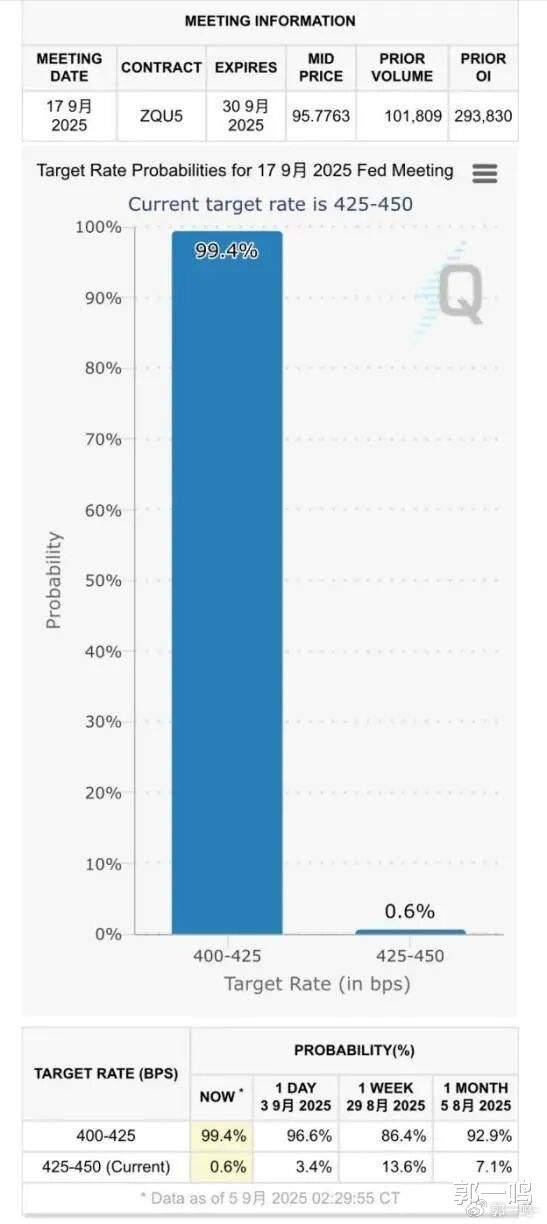
银河证券:后续A股大概率将延续震荡上行走势
Zheng Quan Shi Bao Wang· 2025-09-08 00:22
Group 1 - The report from Galaxy Securities indicates a shift in financing trends, with sectors like electronics, computers, and communications seeing a reversal in net financing since the market fluctuations on September 2, while sectors such as power equipment, non-bank financials, automotive, transportation, and pharmaceuticals continue to experience net inflows [1] - The outlook for the A-share market suggests a likely continuation of a fluctuating upward trend, although short-term volatility risks should be monitored, particularly regarding marginal changes in market volume [1] - Domestic and international conditions are influencing the market, with weak U.S. non-farm payroll data in August reinforcing expectations for Federal Reserve interest rate cuts, alongside enhanced policy expectations under the "14th Five-Year Plan," which provide support for market performance [1] Group 2 - On September 5, the China Securities Regulatory Commission revised and released the "Publicly Raised Securities Investment Fund Sales Fee Management Regulations (Draft for Comments)," marking the completion of the third phase of fee rate reforms in the public fund industry [1] - The ongoing deepening of capital market reforms is expected to inject incremental funds into the A-share market and boost market confidence, aiding in the stabilization and improvement of market conditions [1]