
农业

Search documents
关注黑色、能源上游价格波动
Hua Tai Qi Huo· 2025-09-23 05:20
Industry Overview Production Industry - The 2025 Yunqi Conference will be held from September 24th to 26th in Hangzhou with the theme of "Cloud-Intelligence Integration, Carbon-Silicon Symbiosis", featuring three main forums and over 110 aggregated topics focusing on AI, cloud computing, and industrial applications [1] Service Industry - At the press conference, the head of the central bank mentioned that the theme was about the mid - to long - term "14th Five - Year Plan" of the financial industry without short - term policy adjustments; the head of the financial regulatory agency stated that the total assets of the banking and insurance industries exceeded 500 trillion yuan with an average growth of over 9% in five years; the head of the CSRC said that the market value of the A - share technology sector accounted for over 1/4, and the number of tech companies in the top 50 market - value companies increased from 18 to 24; the deputy head of the central bank and head of the SAFE mentioned that cross - border two - way investment and financing were active, with overseas institutions and individuals holding over 10 trillion yuan in domestic stocks, bonds, and deposits by the end of July [2] Upstream - Black: Wire rod prices have rebounded [3] - Energy: Crude oil and natural gas prices have slightly declined [3] Midstream - Energy: Coal consumption by power plants has remained stable at a medium level [4] - Agriculture: The production of pig products has increased [4] Downstream - Service: The number of domestic flights has increased [4] Key Industry Price Indicators | Industry Name | Indicator Name | Frequency | Unit | Update Time | Value | YoY | | --- | --- | --- | --- | --- | --- | --- | | Agriculture | Spot price of corn | Daily | Yuan/ton | 9/22 | 2288.6 | -0.50% | | | Spot price of eggs | Daily | Yuan/kg | 9/22 | 7.8 | 1.56% | | | Spot price of palm oil | Daily | Yuan/ton | 9/22 | 9372.0 | -0.30% | | | Spot price of cotton | Daily | Yuan/ton | 9/22 | 15242.2 | -0.09% | | | Average wholesale price of pork | Daily | Yuan/kg | 9/22 | 19.6 | -1.61% | | Non - ferrous metals | Spot price of copper | Daily | Yuan/ton | 9/22 | 80233.3 | -0.95% | | | Spot price of zinc | Daily | Yuan/ton | 9/22 | 21942.0 | -1.22% | | | Spot price of aluminum | Daily | Yuan/ton | 9/22 | 20826.7 | -1.09% | | | Spot price of nickel | Daily | Yuan/ton | 9/22 | 122750.0 | -0.81% | | | Spot price of aluminum | Daily | Yuan/ton | 9/22 | 17081.3 | 0.29% | | Ferrous metals | Spot price of rebar | Daily | Yuan/ton | 9/22 | 3167.5 | 1.07% | | | Spot price of iron ore | Daily | Yuan/ton | 9/22 | 807.4 | -0.06% | | | Spot price of wire rod | Daily | Yuan/ton | 9/22 | 3410.0 | 2.87% | | Building materials | Spot price of glass | Daily | Yuan/square meter | 9/22 | 14.3 | 2.14% | | Non - metals | Spot price of natural rubber | Daily | Yuan/ton | 9/22 | 14908.3 | -1.49% | | | China Plastics City Price Index | Daily | - | 9/22 | 791.3 | -0.34% | | Energy | Spot price of WTI crude oil | Daily | US dollars/barrel | 9/22 | 62.4 | -0.46% | | | Spot price of Brent crude oil | Daily | US dollars/barrel | 9/22 | 66.0 | -1.42% | | | Spot price of liquefied natural gas | Daily | Yuan/ton | 9/22 | 3794.0 | -2.12% | | | Coal price | Daily | Yuan/ton | 9/22 | 784.0 | 1.16% | | Chemicals | Spot price of PTA | Daily | Yuan/ton | 9/22 | 4626.3 | -0.12% | | | Spot price of polyethylene | Daily | Yuan/ton | 9/22 | 7386.7 | 0.11% | | | Spot price of urea | Daily | Yuan/ton | 9/22 | 1655.0 | -0.60% | | | Spot price of soda ash | Daily | Yuan/ton | 9/22 | 1262.5 | 0.00% | | Real estate | National cement price index | Daily | - | 9/22 | 133.3 | 1.86% | | | Building materials composite index | Daily | Points | 9/22 | 114.8 | 1.48% | | | National concrete price index | Daily | Points | 9/22 | 91.7 | -0.45% | [39]
中信期货晨报:国内商品期货涨跌互现,贵金属普遍上涨-20250923
Zhong Xin Qi Huo· 2025-09-23 03:54
Report Title - Domestic commodity futures showed mixed trends, with precious metals generally rising - CITIC Futures Morning Report 20250923 [1] Report Industry Investment Rating - Not provided in the content Core Viewpoints - After the overseas Federal Reserve's decision, a new round of global liquidity easing is expected, opening up policy space for China's reserve requirement ratio and interest rate cuts. The market is still dominated by liquidity easing trading, and the risk of the Fed's independence may increase the potential elasticity of future interest rate cuts. Attention should be paid to the actual transmission to the US fundamentals after the rate cuts. The next FOMC meeting is on October 29, and the market is fully expecting a 25bps rate cut. The US September non - farm payrolls and inflation data to be released in early - mid October should be monitored. Historically, it takes about 2 - 3 months for the Fed's preventive rate cuts to impact the US real economy [8]. - In the third quarter, China's economic growth slowed down continuously. The funds from existing pro - growth policies are expected to be in place more quickly. Attention should be paid to the implementation of 500 billion yuan in financial policy tools and new directions in the "15th Five - Year Plan". Investment data from July to August slowed down significantly, especially infrastructure investment. In addition to seasonal factors, the increasing proportion of "debt - resolution" funds may lead to insufficient infrastructure funds in the fourth quarter. However, the GDP growth rates in the third and fourth quarters are expected to be 4.9% and 4.7% respectively, and combined with the 5.3% growth rate in the first half of the year, the annual target of 5% can still be achieved. If investment and exports continue to decline in September, the probability of the implementation of existing funds and incremental policies in the fourth quarter will increase [8]. - After the domestic and overseas uncertainties are resolved, risk assets may experience a short - term adjustment. However, in the next 1 - 2 quarters, the global loose liquidity and the economic recovery expected driven by fiscal leverage will support risk assets. In the medium - term from the fourth quarter to the first half of next year, the expected performance is equities > commodities > bonds. In the short - term of the fourth quarter, the stock market is expected to be volatile, domestic commodities depend on policies, overseas commodities such as gold and non - ferrous metals are favored, and the weak US dollar trend will continue but at a slower pace. In addition, after the rise of domestic interest rates, the allocation value of bonds increases, and bonds should be allocated evenly with equities in the fourth quarter. Gold is a long - term strategic allocation, and interest rate cuts are the main logic in the fourth quarter, with the risk of premature trading of the recovery expectation [8]. Summary by Directory 1. Macro Highlights - **Overseas Macro**: The Fed's decision will lead to global liquidity easing and create policy space for China. The market is dominated by liquidity easing trading, and the Fed's independence risk may affect future rate cuts. The next FOMC meeting is on October 29, and the market expects a 25bps rate cut. Monitor the US September non - farm payrolls and inflation data. Historically, it takes 2 - 3 months for rate cuts to impact the US real economy [8]. - **Domestic Macro**: In Q3, China's economic growth slowed. Existing pro - growth policy funds are expected to be in place faster. Pay attention to 500 billion yuan in financial policy tools and new "15th Five - Year Plan" directions. July - August investment data slowed, especially infrastructure investment. "Debt - resolution" funds may lead to insufficient Q4 infrastructure funds. Q3 and Q4 GDP growth rates are expected to be 4.9% and 4.7% respectively, and the annual 5% target can be achieved. If September investment and exports decline, the probability of policy implementation in Q4 will increase [8]. - **Asset Views**: After uncertainties are resolved, risk assets may adjust in the short - term. In the next 1 - 2 quarters, risk assets will be supported by global liquidity and fiscal leverage. Medium - term (Q4 to H1 next year): equities > commodities > bonds. Short - term in Q4: stock market volatile, domestic commodities depend on policies, overseas gold and non - ferrous metals favored, weak US dollar continues but at a slower pace. Domestic bonds' allocation value increases after interest rate rise, and should be evenly allocated with equities in Q4. Gold is a long - term strategic allocation, with interest rate cuts as the main Q4 logic and the risk of premature recovery trading [8]. 2. Viewpoint Highlights Financial Sector - **Stock Index Futures**: Use a dumbbell structure to deal with market divergence. The short - term outlook is volatile due to the attenuation of incremental funds [9]. - **Stock Index Options**: Continue the hedging and defensive strategy. The short - term outlook is volatile due to the deterioration of options market liquidity [9]. - **Treasury Bond Futures**: The stock - bond seesaw may continue in the short - term. The short - term outlook is volatile, and attention should be paid to unexpected changes in tariffs, supply, and monetary easing [9]. Precious Metals - **Gold/Silver**: The dovish expectations are driving the price up. The short - term outlook is a volatile upward trend, and attention should be paid to the US fundamentals, Fed's monetary policy, and the global equity market trends [9]. Shipping - **Container Shipping to Europe**: The peak season in Q3 has ended, and there is a lack of upward momentum due to loading pressure. The short - term outlook is volatile, and attention should be paid to the rate of freight decline in September [9]. Black Building Materials - **Steel Products**: The return of peak - season demand has improved the fundamentals marginally. The short - term outlook is volatile, and attention should be paid to the progress of special bond issuance, steel exports, and hot metal production [9]. - **Iron Ore**: Hot metal production has slightly increased, and inventory has remained stable overall. The short - term outlook is volatile, and attention should be paid to overseas mine production and shipment, domestic hot metal production, weather, port inventory changes, and policy dynamics [9]. - **Coke**: The second round of price cuts has been implemented, and downstream restocking has begun. The short - term outlook is volatile, and attention should be paid to steel mill production, coking costs, and macro sentiment [9]. - **Coking Coal**: Supply has increased slightly, and the futures and spot prices have rebounded in tandem. The short - term outlook is volatile, and attention should be paid to steel mill production, coal mine safety inspections, and macro sentiment [9]. - **Silicon Ferroalloy**: The decline in the peak - season futures market is limited, but there is still downward pressure in the medium - term. The short - term outlook is volatile, and attention should be paid to raw material costs and steel procurement [9]. - **Manganese Ferroalloy**: The peak - season expectations support the futures market, but the supply - demand outlook is still pessimistic. The short - term outlook is volatile, and attention should be paid to cost prices and overseas quotes [9]. - **Glass**: Supply disruptions are awaited, and demand has improved slightly. The short - term outlook is volatile, and attention should be paid to spot sales [9]. - **Soda Ash**: Demand has increased month - on - month, but supply is still growing. The short - term outlook is volatile, and attention should be paid to soda ash inventory [9]. Non - Ferrous Metals and New Materials - **Copper**: Supply disruptions in copper mines have occurred, and the copper price is expected to fluctuate strongly. The short - term outlook is a volatile upward trend, and attention should be paid to supply disruptions, unexpected domestic policies, less - dovish Fed than expected, and less - than - expected domestic demand recovery [9]. - **Alumina**: The spot market has weakened, and inventory has accumulated. The alumina price is under pressure. The short - term outlook is volatile, and attention should be paid to unexpected delays in ore production resumption, unexpected over - recovery of electrolytic aluminum production, and extreme market trends [9]. - **Aluminum**: Inventory has continued to accumulate, and the aluminum price is expected to fluctuate. The short - term outlook is volatile, and attention should be paid to macro risks, supply disruptions, and less - than - expected demand [9]. - **Zinc**: Inventory has continued to accumulate, and the zinc price is expected to fluctuate. The short - term outlook is volatile, and attention should be paid to macro risks and unexpected increases in zinc ore supply [9]. - **Lead**: The supply of secondary lead has decreased, and the lead price is expected to fluctuate upward. The short - term outlook is a volatile upward trend, and attention should be paid to supply - side disruptions and slowdown in battery exports [9]. - **Nickel**: Indonesia has cracked down on illegal mining, and the nickel price is expected to fluctuate widely. The short - term outlook is volatile, and attention should be paid to unexpected macro and geopolitical changes, Indonesian policy risks, and unexpected supply shortages [9]. - **Stainless Steel**: Cost support is strong, and the stainless - steel futures market has risen significantly. The short - term outlook is volatile, and attention should be paid to Indonesian policy risks and unexpected demand growth [9]. - **Tin**: The resumption of production in Wa State is slower than expected, and the tin price is expected to fluctuate at a high level. The short - term outlook is volatile, and attention should be paid to the expected resumption of production in Wa State and changes in demand expectations [9]. - **Industrial Silicon**: Supply has continued to increase, suppressing the upward space of the silicon price. The short - term outlook is volatile, and attention should be paid to unexpected supply cuts and unexpected photovoltaic installations [9]. Energy and Chemicals - **Crude Oil**: Supply pressure continues, and geopolitical disturbances still exist. The short - term outlook is a volatile downward trend, and attention should be paid to OPEC+ production policies and the geopolitical situation in the Middle East [11]. - **LPG**: The valuation has been restored, and attention should be paid to cost - side guidance. The short - term outlook is volatile, and attention should be paid to the cost of crude oil and overseas propane [11]. - **Asphalt**: The futures price is running below the 3500 pressure level. The short - term outlook is a volatile downward trend, and attention should be paid to sanctions and supply disruptions [11]. - **High - Sulfur Fuel Oil**: Geopolitical disturbances have not had a significant impact, and the fuel oil futures price has weakened. The short - term outlook is a volatile downward trend, and attention should be paid to geopolitics and crude oil prices [11]. - **Low - Sulfur Fuel Oil**: Low - sulfur fuel oil is following the weakening trend of crude oil. The short - term outlook is a volatile downward trend, and attention should be paid to crude oil prices [11]. - **Methanol**: Olefins and port inventory are dragging down the market, and there is still a large contradiction between near - and far - month contracts. The short - term outlook is volatile, and attention should be paid to macro - energy factors and the dynamics of upstream and downstream devices [11]. - **Urea**: The price is under pressure along the cost line, and there is a risk of an over - reaction in sentiment. The short - term outlook is volatile, and attention should be paid to whether the urea export window will be extended, quota adjustments, and the authenticity of the seventh Indian tender [11]. - **Ethylene Glycol**: The market sentiment is greatly affected by the expected future inventory build - up, and the willingness to hold positions is low. The short - term outlook is volatile, and attention should be paid to coal and oil price fluctuations, port inventory trends, and device implementation [11]. - **PX**: The postponement of device maintenance and capacity expansion have weakened the supply - demand balance, and the high valuation is being corrected. The short - term outlook is volatile, and attention should be paid to significant crude oil price fluctuations, macro - level changes, and less - than - expected peak - season demand [11]. - **PTA**: Low processing fees have increased the willingness of enterprises to cut production and conduct maintenance. Although short - term supply - demand conditions have improved, the long - term oversupply situation cannot be reversed. The short - term outlook is volatile, and attention should be paid to significant crude oil price fluctuations, macro - level changes, and less - than - expected peak - season demand [11]. - **Short - Fiber**: Terminal orders have improved marginally, but the improvement is limited, and high supply poses potential risks. The short - term outlook is volatile, and attention should be paid to the purchasing rhythm of downstream yarn mills and the quality of peak - season demand [11]. - **Bottle - Grade PET**: There is short - term concentrated replenishment, but the medium - to - long - term demand rebound height is uncertain, and profits are fluctuating. The short - term outlook is volatile, and attention should be paid to the implementation of bottle - grade PET enterprises' production - cut targets and terminal demand [11]. - **Propylene**: The price difference between propylene and PP is oscillating in the range of 500 - 550. The short - term outlook is volatile, and attention should be paid to oil prices and the domestic macro - situation [11]. - **PP**: There may be support near the previous low, and PP is expected to fluctuate. The short - term outlook is volatile, and attention should be paid to oil prices and domestic and overseas macro - situations [11]. - **Plastic**: The support from maintenance is limited, and plastic is expected to decline. The short - term outlook is volatile, and attention should be paid to oil prices and domestic and overseas macro - situations [11]. - **Styrene**: The commodity sentiment has improved, and attention should be paid to the implementation of policy details. The short - term outlook is volatile, and attention should be paid to oil prices, macro - policies, and device dynamics [11]. - **PVC**: There is a situation of weak reality and strong expectation, and PVC is expected to fluctuate. The short - term outlook is volatile, and attention should be paid to expectations, costs, and supply [11]. - **Caustic Soda**: The expectation of alumina production resumption has increased, and caustic soda prices have rebounded. The short - term outlook is volatile, and attention should be paid to market sentiment, production start - up, and demand [11]. Agriculture - **Oils and Fats**: The expected month - on - month decline in Malaysian palm oil production in September. Attention should be paid to the effectiveness of the support level for oils and fats. The short - term outlook is volatile, and attention should be paid to US soybean weather and Malaysian palm oil production and demand data [11]. - **Protein Meal**: Downstream price - fixing for pre - holiday stocking has led to a rebound at the lower end of the trading range. The short - term outlook is a volatile upward trend, and attention should be paid to US soybean weather, domestic demand, macro - factors, and Sino - US and Sino - Canada trade frictions [11]. - **Corn/Starch**: The support at 2150 is strong, and the short - term market may fluctuate. The short - term outlook is volatile, and attention should be paid to demand, macro - factors, and weather [11]. - **Hogs**: Supply is sufficient, and prices are weak. The short - term outlook is a volatile downward trend, and attention should be paid to breeding sentiment, epidemics, and policies [11]. - **Rubber**: The sentiment is bearish, and rubber prices have declined significantly. The short - term outlook is volatile, and attention should be paid to weather in production areas, raw material prices, and macro - changes [11]. - **Synthetic Rubber**: The weakness of natural rubber has dragged down synthetic rubber. The short - term outlook is volatile, and attention should be paid to significant crude oil price fluctuations [11]. - **Cotton**: Attention should be paid to demand and inventory. The short - term outlook is volatile [11]. - **Sugar**: Imports have increased month - on - month, and sugar prices have continued to decline. The short - term outlook is volatile, and attention should be paid to imports [11]. - **Pulp**: There is no obvious driving force for a breakthrough, and pulp is expected to maintain a volatile trend. The short - term outlook is volatile, and attention should be paid to macro - economic changes and fluctuations in US dollar - based quotes [11]. - **Offset Paper**: The trading volume is low, and offset paper is expected to fluctuate within a narrow range. The short - term outlook is volatile, and attention should be paid to sales, education policies, and paper mill production dynamics [11]. - **Logs**: The commodity market has adjusted, and logs are expected to decline. The short - term outlook is volatile, and attention should be paid to shipping volume and shipment volume [11].
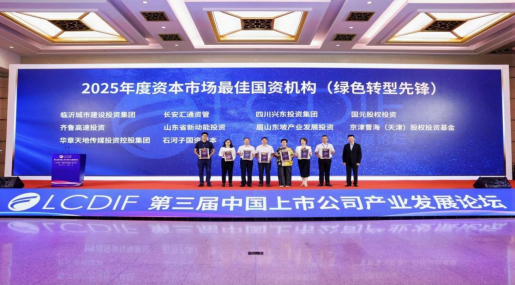
东坡产投获第三届中国上市公司产业发展论坛“2025年度资本市场最佳国资机构(绿色转型先锋)”
Xin Lang Zheng Quan· 2025-09-23 03:48
Core Viewpoint - The third China Listed Companies Industry Development Forum highlighted the role of state-owned capital in empowering listed companies, focusing on technology and industry integration, and exploring new paths for industrial upgrading and governance improvement [1] Group 1: Company Achievements - Dongpo Industrial Development Investment Co., Ltd. was awarded the "2025 Best State-owned Capital Institution (Green Transformation Pioneer)" for its outstanding performance in state-owned capital operations and industrial upgrading [1][4] - The company has an asset scale exceeding 45 billion and a credit rating of AA+, with 24 subsidiaries and 16 professional qualifications [1] Group 2: Investment Strategies - Over the past year, Dongpo Industrial has optimized its state-owned capital market layout through diversified capital operations, including equity investments and mergers, focusing on key sectors like agricultural technology, new energy, and digital economy [2] - The company has driven social capital investment of several billion, injecting strong momentum into industrial stability and upgrading [2] Group 3: Social Responsibility and Economic Development - Dongpo Industrial has implemented significant livelihood projects in rural revitalization, food security, environmental governance, and ecological restoration, achieving a synergy between economic and social benefits [2] - The company emphasizes a dual focus on social and economic responsibilities, aligning its operations with national policies and local economic development [3] Group 4: Future Outlook - The recognition as a leading state-owned capital institution marks an elevation in Dongpo Industrial's industry influence and brand value, with plans to enhance interaction with capital markets and improve the efficiency of state-owned capital operations [4]

2025年8月全国玉米(中等)集贸市场价格当期值2.52元/公斤,同比下滑0.5%
Chan Ye Xin Xi Wang· 2025-09-23 03:32
数据来源:国家统计局 近一年全国玉米(中等)集贸市场价格统计图 相关报告:智研咨询发布的《2025-2031年中国玉米行业竞争现状及投资策略研究报告》 2025年8月,全国玉米(中等)集贸市场价格当期值为2.52元/公斤,比2025年7月下降0.01元/公斤,环 比下滑0.5%,降幅减少0.8个百分点,同比下滑0.5%,增幅增加1.2个百分点。 ...

AI对未来经济可能产生的影响
Sou Hu Cai Jing· 2025-09-23 03:17
以下是基于最新研究成果的AI对未来经济影响的综合分析,涵盖增长动能、产业结构变革、就业重塑 及潜在风险四个维度:经济增长新引擎;生产力跃升:制造业通过AI优化供应链与能耗管理,生产效 率提升40%以上,能耗降低10%-30%。服务业人力成本下降30%-50%(如金融风险评估、医疗诊断), 推动全要素生产率年均增长2%-3%。 资本开支拉动:2025年美国四大云厂商AI相关资本开支增量达861亿美元(占GDP 0.3%),中国头部企 业增量约1498亿元(占GDP 0.11%)。技术扩散效应推动传统行业智能化改造,类比新能源投资规模。 创新驱动循环:AI提效→劳动者收入与企业利润双增→消费扩张→反哺企业业绩,形成经济正循环。 生成式AI催生个性化服务新业态,成为万亿级市场增长点。 五、国际竞争格局 四、风险与挑战,经济失衡加剧:区域发展差距扩大:欠发达地区恐失成本优势,加剧收入分配不平 等。行业垄断风险:头部企业通过数据壁垒强化市场支配地位。增长预期争议;乐观预测:生成式AI 十年内助推全球GDP增长7%(约7万亿美元)。谨慎观点:AI对美国GDP的贡献率可能仅0.8%-1.3%。 伦理治理缺口;算法偏见导致招 ...

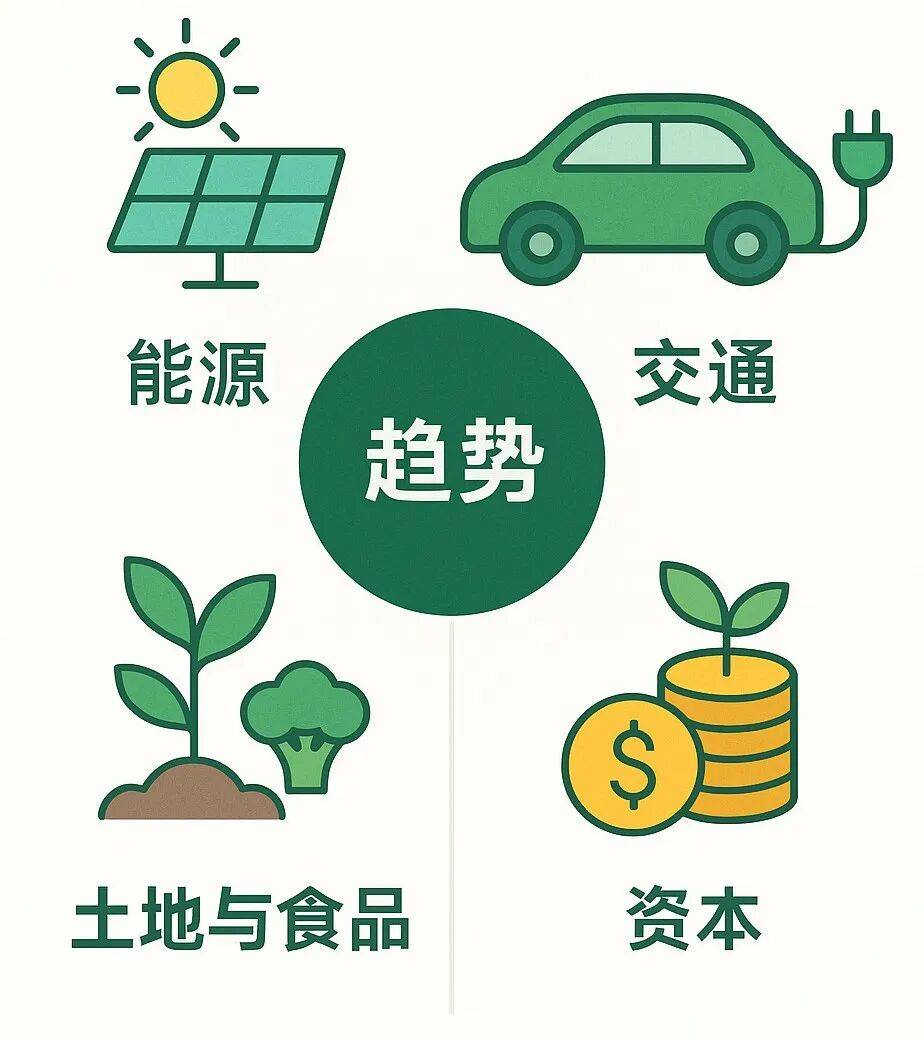
四大领域的可持续发展趋势
Sou Hu Cai Jing· 2025-09-23 03:04
Group 1: Core Trends in Sustainable Development - The narrative around sustainability faces challenges due to political shifts, but technology and capital continue to advance, indicating a strong trend towards sustainability despite opposition [1][3] - The upcoming New York Climate Week (NYCW) plans over 1,000 events, marking a historic high and demonstrating the resilience of the sustainability movement [1] Group 2: Clean Energy Transition - Clean energy is evolving from merely providing cheap electricity to offering reliable supply during peak hours, with solar energy leading the way (+28%) and battery storage enhancing availability [3][5] - The combination of photovoltaic and battery technologies is crucial for transitioning clean energy from daytime to nighttime use, increasing the share of clean electricity [4][5] Group 3: Electrification of Transportation - The electrification of transportation is shifting from isolated demonstrations to widespread adoption, significantly reducing oil demand and urban emissions [4][5] - The industrial chain is being restructured around electric vehicles, with a focus on battery technology and digital solutions [5] Group 4: Land and Food Security - The approach to land and food is shifting towards maximizing yield on existing agricultural land while protecting natural ecosystems, rather than expanding farmland [6][7] - There is a concerning trend of decreasing global agricultural research funding, which has prompted warnings from over 150 Nobel laureates and World Food Prize winners [6] Group 5: Capital and Risk Reallocation - Investment strategies are evolving to prioritize not just growth but also certainty, with a focus on scalable cost reductions in energy generation and resilience in urban planning [8][9] - Emerging markets with stable policies and accelerated approvals are becoming attractive for clean investment opportunities, as they offer favorable conditions for growth [10][11] Group 6: Future Projections and Recommendations - By 2025, it is projected that one-quarter of new vehicles globally will be electric, with significant growth in electric vehicle adoption in China and emerging markets [7][10] - Companies are advised to integrate climate-related risks into their procurement and pricing models, while local governments should manage water and land use in conjunction with agricultural practices [13][14]
越南与马来西亚经贸合作将迎来更多机遇
Shang Wu Bu Wang Zhan· 2025-09-23 02:53
Core Insights - The visit of Vietnam's National Assembly Chairman, Vuong Dinh Hue, to Malaysia during the 46th ASEAN Inter-Parliamentary Assembly (AIPA-46) signifies a commitment to strengthen the friendly relations and comprehensive strategic partnership between the two countries [1] Trade Relations - Malaysia is Vietnam's third-largest trading partner within ASEAN and the ninth-largest globally [1] - As of July 2025, the bilateral trade volume between Vietnam and Malaysia reached $9.23 billion, reflecting an 8% increase compared to the same period in 2024 [1] - Vietnam primarily exports computers, electronic products and components, oil, coffee, pepper, steel products, and rubber to Malaysia [1] - The main imports from Malaysia include computers and components, oil, and machinery [1] Investment Landscape - Malaysia ranks as the third-largest investor in Vietnam within ASEAN and tenth among all countries and regions investing in Vietnam, with 731 effective investment projects and a total registered capital of approximately $13 billion [1]
要素市场化改革改什么?(国金宏观张馨月)
雪涛宏观笔记· 2025-09-23 02:43
Core Viewpoint - The article discusses the comprehensive reform pilot plan for the market-oriented allocation of factors in ten regions, aiming to enhance the efficiency of factor allocation and stimulate productivity [4]. Group 1: Market-Oriented Allocation of Land Indicators - The reform emphasizes the market-oriented allocation of land indicators, addressing the imbalance where underdeveloped areas receive more construction land indicators while potential development areas face shortages [6]. - Specific regions like the Hefei metropolitan area and the Guangdong-Hong Kong-Macao Greater Bay Area propose cross-regional trading of surplus land indicators to enhance land use efficiency and support high-quality development [6]. Group 2: Equalization of Basic Public Services and "Human-Land-Money" Linkage - The reform plans to implement a system linking basic public services to the place of residence, with regions like the Guangdong-Hong Kong-Macao Greater Bay Area aiming to improve service standards [8]. - Chengdu's plan focuses on matching new construction land with population trends, while cities like Chongqing emphasize the "human-land-money" linkage to align fiscal transfers and public service investments with urbanization [8]. Group 3: Rural Homestead Reform - The reform aims to facilitate urbanization of rural populations by exploring voluntary compensation mechanisms for exiting homestead rights, thereby increasing financial support for rural migrants [9]. - Regions like Beijing and Chongqing are investigating specific methods for voluntary exit from homestead rights, which could enhance the willingness of rural residents to migrate to cities [9]. Group 4: Improvement of Income Distribution System - The reform plans to increase labor remuneration in the initial distribution and enhance residents' income through land and capital rights [10]. - Hefei's plan includes raising wages for frontline workers and adjusting minimum wage standards, while regions like Fuzhou and Xiamen focus on increasing farmers' share of land appreciation profits [11]. Group 5: Improvement of Technology Achievement Property Rights System - The reform encourages granting researchers ownership or long-term usage rights of their technological achievements, with Hefei proposing at least 70% ownership rights for researchers [12]. - The plan also promotes the capitalization of technology, including knowledge property financing and supporting quality tech companies in listing [12]. Group 6: Support for Researchers Starting Enterprises - Several regions support researchers in starting businesses, facilitating the flow of talent between academia and industry [13]. - For instance, Suzhou's plan allows researchers to extend their leave for business creation if they are in high-tech sectors [13]. Group 7: Optimization of Technology Innovation Resource Allocation - The reform proposes implementing a chief scientist responsibility system to enhance innovation management and strengthen the role of leading enterprises in technological innovation [14]. Group 8: Financial Industry Opening Up - The reform encourages Taiwanese financial institutions to participate in the mainland market and explores financial product connectivity between China and Singapore [15]. Group 9: Facilitation of Cross-Border RMB Payment Settlement - The reform aims to simplify cross-border RMB settlement processes and establish a unified bank settlement account system for domestic and foreign currencies [16][17]. Group 10: Public Data Opening and Data Element Confirmation - The reform emphasizes the opening of high-value public data sets and explores market-oriented pricing for data elements, promoting data service trade [18].

金融期货早评-20250923
Nan Hua Qi Huo· 2025-09-23 02:42
Industry Investment Ratings The report does not provide industry investment ratings. Core Views - The 7 - 8 months in Q3 show a complex macro - economic situation with economic slowdown pressure and policy counter - cyclical adjustment. The stock market is strong, and the commodity market is volatile. Overseas, the Fed's "preventive降息周期" has started, and future policies depend on employment and inflation [2]. - For the RMB exchange rate, it fluctuates around 7.10. The Fed faces challenges in formulating policies, and the RMB may not have a trend appreciation in the short term [3][4]. - The stock index is expected to continue to fluctuate in the short term due to a lack of super - expected information and approaching holidays [6]. - The bond market is expected to be volatile, and it is advisable to hold some long positions and take partial profits [7]. - The shipping index futures are expected to be volatile, and the 12 - contract can be considered for low - buying opportunities [9]. - In the non - ferrous metals market, copper is expected to be stable, aluminum is expected to be volatile and strong, zinc is expected to be weak after a rebound, nickel and stainless steel have limited downside space, tin is expected to be volatile, and lithium carbonate is expected to be volatile before the holiday [10][11][14][15][17][18]. - In the black metals market, steel prices are expected to be volatile with limited upside and downside, iron ore is expected to be volatile, and coal and coke are not recommended as short - positions in the black series [26][29][32]. - In the energy and chemical market, crude oil is expected to be weak in the medium - term, LPG short - positions can be gradually closed, PX - TA can be considered for cautious long - positions, MEG should be observed in the short term, methanol should hold short - put options, PP can be considered for long - positions at low prices, PE is expected to be volatile, pure benzene and styrene are expected to be affected by pre - holiday stocking, fuel oil follows the cost down, and asphalt is expected to be volatile and weak [36][39][45][47][50][53][54][56][57][61]. - In other markets, urea is expected to be volatile between 1650 - 1850, soda ash has a strong supply and weak demand pattern, glass lacks a clear trend, caustic soda's price is affected by various factors, and pulp is expected to be volatile [64][65][67]. Summary by Directory Financial Futures - **Macro**: Policy is the key variable. The economy shows a slowdown pressure, and policy counter - cyclical adjustment is in place. Overseas, the Fed's "preventive降息周期" has started [1][2]. - **RMB Exchange Rate**: It fluctuates around 7.10. The Fed's policy challenges affect the market, and the RMB may not appreciate in the short term [3][4]. - **Stock Index**: It is expected to be volatile due to a lack of information and approaching holidays [6]. - **Bond Market**: It is expected to be volatile, and long - positions can be partially held and profited [7]. - **Shipping Index Futures**: It is expected to be volatile, and the 12 - contract can be considered for low - buying [9]. Non - Ferrous Metals - **Copper**: It is expected to be stable and may fluctuate strongly around 80,000 yuan per ton due to supply and demand [10]. - **Aluminum Industry Chain**: Aluminum is expected to be volatile and strong after a short - term correction. Alumina is expected to be weak, and cast aluminum alloy is expected to be volatile at a high level [11][12]. - **Zinc**: It is expected to be weak after a rebound, with a supply surplus and general demand [13][14]. - **Nickel and Stainless Steel**: They have limited downside space due to concerns about the Indonesian nickel ore sanctions [15][16]. - **Tin**: It is expected to be volatile due to supply and demand [17]. - **Lithium Carbonate**: It is expected to be volatile between 72,000 - 76,000 yuan per ton before the holiday [18][19]. Black Metals - **Steel**: Steel prices are expected to be volatile with limited upside and downside due to supply, demand, and macro - policies [26]. - **Iron Ore**: It is expected to be volatile, and the market may return to fundamentals after the policy is not as expected [29]. - **Coking Coal and Coke**: They are not recommended as short - positions in the black series, and the market is affected by downstream replenishment and policies [32]. - **Silicon Iron and Manganese**: They can be considered for long - positions at low prices, with cost support and anti - involution expectations [33][34]. Energy and Chemicals - **Crude Oil**: It is expected to be weak in the medium - term due to supply and demand imbalances, although geopolitical risks provide some support [36][37]. - **LPG**: Short - positions can be gradually closed as the supply is controllable and the demand changes little [39]. - **PX - TA**: They can be considered for cautious long - positions, with supply and demand and processing fee issues [40][42]. - **MEG - Bottle Chip**: It should be observed in the short term, with limited supply elasticity and expected to be volatile [43][45]. - **Methanol**: Hold short - put options as the port contradiction is difficult to solve [47]. - **PP**: It can be considered for long - positions at low prices as the profit is compressed and the device operation needs attention [50]. - **PE**: It is expected to be volatile due to weak supply and demand and low valuation [53]. - **Pure Benzene and Styrene**: They are affected by pre - holiday stocking, and the market is expected to be volatile [54][56]. - **Fuel Oil**: It follows the cost down, and it is advisable to observe in the short term [57]. - **Low - Sulfur Fuel Oil**: Its cracking is weak, and the market is currently soft [59]. - **Asphalt**: It is expected to be volatile and weak, with supply growth and demand affected by weather [61]. Others - **Urea**: It is expected to be volatile between 1650 - 1850, with supply and demand and export factors [64]. - **Soda Ash**: It has a strong supply and weak demand pattern, and the market is affected by new production and exports [64]. - **Glass**: It lacks a clear trend due to high inventory and weak demand [65]. - **Caustic Soda**: Its price is affected by spot rhythm, demand, and macro - expectations [67]. - **Pulp**: It is expected to be volatile, with high inventory and limited upward drive [67].
广发早知道:汇总版-20250923
Guang Fa Qi Huo· 2025-09-23 02:12
Report Industry Investment Rating No relevant content provided. Core Viewpoints of the Report - The overall market shows a complex situation with different trends in various sectors. In the stock index futures market, the TMT sector is booming, but the overall market volume is shrinking. The bond market is affected by factors such as central bank policies and market sentiment, showing a mixed situation. The precious metals market is driven by overseas political turmoil and the divergence of Fed officials' attitudes, with prices reaching new highs. The shipping index shows a volatile trend, and the commodity futures market, including non - ferrous metals, black metals, and agricultural products, also presents different supply - demand and price trends [2][5][8][11]. Summary by Directory Financial Derivatives - Financial Futures Stock Index Futures - **Market Situation**: On Monday, A - shares strengthened in the afternoon. The Shanghai Composite Index rose 0.22%, the Shenzhen Component Index rose 0.67%, and the ChiNext Index rose 0.55%. The four major stock index futures contracts all rose with the index, but the basis was deeply discounted. The consumer electronics sector led the rise, while the consumer - related sectors declined [2][3]. - **News**: Domestic news includes a press conference on the "14th Five - Year Plan" of the financial industry. Overseas, there are differences between South Korea and the US on a $350 billion investment [3][4]. - **Funding**: On September 18, the trading volume of A - shares decreased. The central bank carried out reverse repurchase operations, with a net investment of 260.5 billion yuan [4]. - **Operation Suggestion**: After the Fed's interest rate cut, the market turned to shock. It is recommended to sell put options on MO2511 near the strike price of 6600 to collect premiums when the index pulls back [4]. Treasury Bond Futures - **Market Performance**: The 30 - year, 10 - year, 5 - year, and 2 - year treasury bond futures contracts all rose, and the yields of major interest - rate bonds in the inter - bank market generally declined [5]. - **Funding**: The central bank restarted the 14 - day reverse repurchase, with a net investment of 260.5 billion yuan. The inter - bank market funds continued to improve [6]. - **Policy**: The central bank's monetary policy is supportive, and it will ensure liquidity and promote the decline of social financing costs [6]. - **Operation Suggestion**: The bond market is still mixed. It is recommended to operate within the range, and consider the basis narrowing strategy for the TL contract [7]. Financial Derivatives - Precious Metals - **Market Review**: Due to the political turmoil in Argentina and the divergence of Fed officials' attitudes towards interest rate cuts, the precious metals market was driven by risk - aversion sentiment, with gold and silver prices reaching new highs [8][9]. - **Outlook**: In the short term, gold will maintain high - level volatility, and it is recommended to buy on dips or buy out - of - the - money call options. For silver, it is recommended to sell out - of - the - money put options when the price is above $41 [10]. - **Funding**: The Fed's loose monetary policy stimulates institutional investors to increase their holdings of ETFs [10]. Financial Derivatives - Container Shipping Index (European Line) - **Spot Quotation**: As of September 22, the freight quotes for Shanghai - Europe routes from different shipping companies are in different ranges [11]. - **Shipping Index**: The SCFIS European line index decreased by 14.3%. The Shanghai - Europe freight rate decreased by 9%, the Shanghai - US West freight rate increased by 31%, and the Shanghai - US East freight rate decreased by 23% [11]. - **Fundamentals**: As of September 22, the global container shipping capacity increased by 7.35% year - on - year. The eurozone's August composite PMI was 51, and the US August manufacturing PMI was 48.7 [11]. - **Logic**: The futures market was volatile. It is expected that the spot inflection point will appear in mid - to - late October, and attention can be paid to the upward opportunities of the 12 and 02 contracts [12]. - **Operation Suggestion**: The market is bearish, and it is advisable to consider the spread arbitrage between the 12 - month and 10 - month contracts [12]. Commodity Futures - Non - Ferrous Metals Copper - **Spot**: As of September 22, the average price of electrolytic copper increased, but the market procurement sentiment weakened when the price returned to around 80,000 yuan/ton [12]. - **Macro**: The Fed cut interest rates by 25BP in September, and the future interest rate cut path is uncertain. Attention should be paid to the US September non - farm and inflation data [13][14]. - **Supply**: The spot TC of copper concentrate is at a low level. The domestic electrolytic copper production in August decreased slightly month - on - month but increased year - on - year. It is expected to decrease in September [14]. - **Demand**: The operating rates of copper rod production increased after the price correction, and the overall spot trading improved [15]. - **Inventory**: LME and domestic social inventories decreased, while COMEX inventory increased [16]. - **Logic**: The short - term driving force is weak. The market is in a state of "weak reality + stable expectation". The medium - and long - term supply - demand contradiction provides support for the price [17]. - **Operation Suggestion**: The main contract is expected to fluctuate between 79,000 and 81,000 yuan/ton [17]. Alumina - **Spot**: On September 22, the spot prices of alumina in various regions decreased slightly, and the supply pattern was gradually loosening [17]. - **Supply**: In August, China's metallurgical - grade alumina production increased year - on - year and month - on - month. It is expected to continue to increase slightly in September [18]. - **Inventory**: The port inventory decreased, and the total registered warehouse receipts increased [18]. - **Logic**: The market is in a situation of "high supply, high inventory, and weak demand". It is expected to fluctuate between 2,900 and 3,200 yuan/ton in the short term [19]. - **Operation Suggestion**: Pay attention to the support at 2,900 yuan/ton [19]. Aluminum - **Spot**: On September 22, the average price of A00 aluminum decreased, and the market trading activity increased [19]. - **Supply**: In August, domestic electrolytic aluminum production increased year - on - year and month - on - month, and the proportion of molten aluminum increased [20]. - **Demand**: The operating rates of downstream industries were in the process of recovery [20]. - **Inventory**: The domestic social inventory of electrolytic aluminum ingots increased, and the LME inventory remained unchanged [20]. - **Logic**: The macro environment is generally positive, but the inventory is still in the accumulation stage. It is expected to fluctuate between 20,600 and 21,000 yuan/ton in the short term [21]. - **Operation Suggestion**: The main contract is expected to operate in the range of 20,600 - 21,000 yuan/ton [21]. Aluminum Alloy - **Spot**: On September 22, the spot prices of aluminum alloy ADC12 remained unchanged [21]. - **Supply**: In August, the production of recycled aluminum alloy ingots decreased. It is expected that the operating rate will increase slightly in September [22]. - **Demand**: In August, the terminal demand for cast aluminum alloy was weak, but it is expected to recover moderately in September [22]. - **Inventory**: The social inventory increased, and some areas' inventories were close to full [22]. - **Logic**: The price of scrap aluminum is high, and the cost support is significant. The demand is gradually recovering, and the spot price is expected to remain firm in the short term [23]. - **Operation Suggestion**: The main contract is expected to operate in the range of 20,200 - 20,600 yuan/ton [23]. Zinc - **Spot**: On September 22, the average price of 0 zinc ingots decreased slightly, and some downstream enterprises replenished stocks at low prices [23][24]. - **Supply**: The import TC of zinc concentrate continued to rise, and the domestic refined zinc production is expected to decrease slightly in September but increase year - on - year [24]. - **Demand**: The operating rates of primary processing industries increased in the peak season, and the inventory of raw materials increased [25]. - **Inventory**: Both domestic social inventory and LME inventory decreased [25]. - **Logic**: The short - term driving force is weak, and it is expected to fluctuate between 21,500 and 22,500 yuan/ton [26]. - **Operation Suggestion**: The main contract is expected to operate in the range of 21,500 - 22,500 yuan/ton [26]. Tin - **Spot**: On September 22, the price of 1 tin increased, and the spot premium remained unchanged. The trading activity decreased after the price increase [26][27]. - **Supply**: The domestic tin ore import volume in August was at a low level, and the tin ingot import volume decreased [28]. - **Demand**: The operating rate of the solder industry increased in August, but the overall market is still in a tight - balance situation [29]. - **Inventory**: The LME inventory and the warehouse receipts of the Shanghai Futures Exchange increased, while the social inventory decreased [29]. - **Logic**: The supply side provides support for the price. Attention should be paid to the import situation of tin ore from Myanmar [30]. - **Operation Suggestion**: The main contract is expected to operate in the range of 265,000 - 285,000 yuan/ton [30]. Nickel - **Spot**: As of September 22, the average price of electrolytic nickel decreased slightly [30]. - **Supply**: The production of refined nickel is at a high level and is expected to increase slightly [31]. - **Demand**: The demand for electroplating and stainless steel is weak, while the demand for alloys is relatively good. The price of nickel sulfate has increased recently but may face pressure in the medium term [31]. - **Inventory**: The overseas inventory is at a high level and increased, while the domestic social inventory increased slightly and the bonded area inventory decreased [31]. - **Logic**: The macro environment is weak, and the supply - demand situation is relatively stable. The price is expected to fluctuate between 120,000 and 125,000 yuan/ton [32][33]. - **Operation Suggestion**: The main contract is expected to operate in the range of 120,000 - 125,000 yuan/ton [33]. Stainless Steel - **Spot**: As of September 22, the prices of 304 cold - rolled stainless steel in Wuxi and Foshan remained unchanged [33]. - **Raw Materials**: The price of nickel ore is firm, the price of nickel iron is stable, and the price of chromium ore is rising [34]. - **Supply**: The estimated production of stainless steel in August and September increased [34]. - **Inventory**: The social inventory decreased slowly, and the warehouse receipts decreased [35]. - **Logic**: The market is in a state of narrow - range fluctuation. The cost support is significant, but the peak - season demand has not been fully realized [36]. - **Operation Suggestion**: The main contract is expected to operate in the range of 12,800 - 13,200 yuan/ton [36]. Lithium Carbonate - **Spot**: On September 22, the spot prices of battery - grade and industrial - grade lithium carbonate increased slightly [37]. - **Supply**: The production in August increased, and it continued to increase in September. The supply is affected by new projects and imports [37][38]. - **Demand**: The demand is stable and optimistic, and the seasonal performance is weakened. The demand in September and October is expected to increase [38]. - **Inventory**: The overall inventory decreased last week, with the smelter inventory decreasing and the downstream inventory increasing [38]. - **Logic**: The market is in a tight - balance state. The price is expected to fluctuate between 70,000 and 75,000 yuan/ton in the short term [39]. - **Operation Suggestion**: The main contract is expected to operate in the range of 70,000 - 75,000 yuan/ton [39]. Commodity Futures - Black Metals Steel - **Spot**: The spot prices of rebar and hot - rolled coil increased slightly [39]. - **Cost and Profit**: The cost of raw materials is affected by production restrictions and supply - demand relationships. The profit of steel products has declined [40]. - **Supply**: The production of iron elements increased in the first eight months, and the production of rebar decreased while that of hot - rolled coil increased [40]. - **Demand**: The apparent demand for five major steel products was basically flat in the first eight months. The export of steel products supported the valuation [40]. - **Inventory**: The inventory of five major steel products increased, with rebar inventory decreasing and hot - rolled coil inventory increasing [41]. - **Viewpoint**: The steel price is expected to maintain a high - level volatile trend. It is recommended to go long lightly and pay attention to the seasonal recovery of demand. The spread between hot - rolled coil and rebar is expected to continue to converge [43]. Iron Ore - **Spot**: As of September 22, the prices of mainstream iron ore powders were stable or increased slightly [44]. - **Futures**: The main contract of iron ore increased slightly [44]. - **Basis**: The basis of different iron ore varieties is positive [45]. - **Demand**: The daily average pig iron production and blast furnace operating rates increased, while the steel mill profitability decreased slightly [45]. - **Supply**: The global iron ore shipment decreased last week, while the arrival volume at 45 ports increased [45]. - **Inventory**: The port inventory decreased, the daily average dredging volume increased, and the steel mill inventory increased [45]. - **Viewpoint**: The iron ore market is in a tight - balance state. It is recommended to go long on the 2601 contract on dips and consider the spread arbitrage of going long on iron ore and short on hot - rolled coil [46]. Coking Coal - **Futures and Spot**: The coking coal futures fluctuated and declined. The spot auction price showed signs of stabilization and rebound [47][49]. - **Supply**: The coal mines in the main production areas continued to resume production, and the import coal price followed the futures price [49]. - **Demand**: The pig iron production continued to increase, and the downstream replenishment demand increased [49]. - **Inventory**: The overall inventory increased slightly, with coal mines, ports, and steel mills reducing inventory and coal - washing plants, coking plants, and ports increasing inventory [49]. - **Viewpoint**: The coking coal market is moving towards a tight - balance state. It is recommended to go long on the 2601 contract on dips and consider the spread arbitrage of going long on coking coal and short on coke [49]. Coke - **Futures and Spot**: The coke futures fluctuated and declined. Some coking enterprises started to raise prices [50][52]. - **Profit**: The average profit per ton of coke for independent coking plants was - 17 yuan/ton [50]. - **Supply**: The coking enterprises in the north have high enthusiasm for resuming production [52]. - **Demand**: The steel mills continued to resume production, and the demand for coke was supported [52]. - **Inventory**: The overall inventory increased slightly, with the coking plant inventory decreasing and the steel mill and port inventories increasing [52]. - **Viewpoint**: The coke spot price is expected to rebound. It is recommended to go long on the 2601 contract on dips and consider the spread arbitrage of going long on coking coal and short on coke [52]. Commodity Futures - Agricultural Products Meal - **Spot Market**: The domestic spot prices of soybean meal increased on September 22, and the trading volume increased. The trading volume of rapeseed meal was zero [53]. - **Fundamentals**: Argentina temporarily cancelled the export tax on soybeans and their derivatives. The US is expected to increase soybean planting next year, and the soybean planting in Brazil has started [53][54]. - **Market Outlook**: The cancellation of the export tax in Argentina put pressure on the US soybean and domestic oil - meal markets. The domestic soybean meal market is expected to maintain a weak - volatile trend [56]. Live Pigs - **Spot Situation**: The spot price of live pigs fluctuated weakly, with prices in various regions decreasing [57]. - **Market Data**: The profit of live pig breeding decreased, and the average slaughter weight increased. The enthusiasm for slaughtering by farmers and second - fattening increased [57]. - **Market Outlook**: The pressure on live pig slaughter is high, and the spot price is difficult to improve before the National Day. It is recommended to pay attention to the spread arbitrage opportunities between different contracts [58].