
股市

Search documents
富达国际:长期看好中国科技股,黄金长牛行情会继续|年末盘点
Di Yi Cai Jing· 2025-12-11 02:31
Group 1: Core Investment Insights - The core focus for investment remains on Chinese technology stocks, which are viewed as having significant potential and valuation attractiveness compared to U.S. counterparts [4][3] - The development of China's technology sector is still in its early stages, with a strong digital economy evidenced by widespread use of digital payment systems even in remote areas [4][5] - The investment strategy includes a focus on credit bonds in China, but the primary emphasis is on technology stocks [4] Group 2: Regional Market Perspectives - The South Korean stock market is considered undervalued, with favorable government policies supporting it; however, there has been a slight reduction in positions recently [5] - Japan is anticipated to be an important investment market by 2026, with a preference for mid-cap stocks due to their domestic market orientation [5] - The Indian stock market has seen significant foreign investment but is now more domestically driven, with strong fundamentals supporting its valuation despite recent outflows [6] Group 3: Commodity Market Trends - Gold has experienced a long bull market, reaching historical highs, with other precious metals like silver and palladium also rising [7][8] - There is a shift among institutional investors from government bonds to gold due to high debt levels in developed economies, making gold a preferred liquid asset [7] - Silver is seen as a potential investment but carries higher volatility and risks compared to gold, necessitating careful risk management [7][8] Group 4: Future Outlook - The outlook for European assets is cautiously optimistic, with short-term indicators showing promise, although challenges such as declining automotive exports exist [6] - The potential for gold to serve as a hedge against negative market events is emphasized, with expectations for positive returns over the next two years [7] - Tactical investments in other precious metals may occur, but none can replace gold as a primary safe-haven asset [8]


国际清算银行警告「黄金与股市走势趋同,可能是泡沫信号,要警惕市场突然回调」,对此你怎么看?
Sou Hu Cai Jing· 2025-12-09 05:32
Core Insights - The latest report from the Bank for International Settlements (BIS) warns that retail investors' "buying frenzy" is shifting gold from a safe-haven asset to a speculative one, marking the first time in at least 50 years that both gold and stock markets have entered an "explosive zone" simultaneously [1][3][6] - Traditionally, gold and stock markets exhibit a negative correlation, but in 2025, this relationship has reversed, with both asset classes experiencing significant gains [1][6] - The report highlights the unprecedented synchronized surge of these assets, which poses substantial risks to market stability [1][3] Market Dynamics - In 2025, the correlation between gold and the S&P 500 has risen to a positive value of 0.22, indicating that both assets are now moving in tandem [6] - Central bank purchases of gold have provided a solid foundation for gold prices, while retail and institutional investors have increasingly treated gold as a speculative asset rather than a safe haven [6][9] - The AI technology boom and expectations of monetary easing have driven stock market gains, creating a "resonance" effect with gold prices [8][9] Economic Concerns - The optimism surrounding AI has begun to detach from fundamental realities, leading to concerns about a "circular financing chain" in the AI sector [8] - The weakening of the US dollar and expectations of interest rate cuts have created a favorable environment for both the stock market and gold [8][9] - The global economy is facing "asset scarcity" anxiety, with rising concerns over the stability of traditional assets and the creditworthiness of the dollar [9][11] Potential Risks - The BIS warns that if both the stock market and gold were to crash simultaneously, investors would lose their safety net, which could have dire implications for global foreign exchange reserves [11][13] - The interconnectedness of the AI sector's valuation risks and liquidity changes could lead to a sudden market breakdown if optimistic expectations are not met [11][13] - Historical precedents suggest that synchronized asset surges often end in severe corrections, as seen in past market bubbles [14]
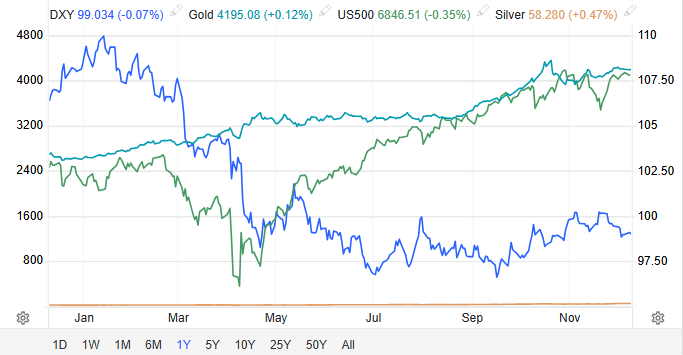
宏观与大宗商品周报:冠通期货研究报告-20251208
Guan Tong Qi Huo· 2025-12-08 11:00
1. Report Industry Investment Rating - No information provided in the report 2. Core Viewpoints of the Report - The key point of the current market macro - logic is the candidate for the next Fed Chair. The market is trading on the expectation of looser policies, leading to pressure on US Treasury yields and the US dollar, and a rebound in risk assets [5][10]. - The change of the Fed Chair in early 2026 will be an important event affecting US monetary policy. The choice of the new chair is essentially a decision between "the most obedient" and "the most suitable", which may bring significant policy changes [7][73]. - The Fed's December interest - rate cut probability has little change, with an 82.8% probability of a 25bp cut to 3.5 - 3.75% [6][64]. 3. Summary by Relevant Catalogs Market Overview - The market is focusing on the next Fed Chair. With Powell about to step down and Trump involved, Kevin Hassett is the hot candidate. The market expects looser policies, causing US Treasury yields and the US dollar to decline, and risk assets to rebound. Global stocks and most commodities rose, A - share major indices rebounded, the BDI index rose, the US dollar index fell, and most non - US currencies strengthened. Commodities showed mixed performance, with precious metals and non - ferrous metals rising, and oil prices rebounding [5][10]. - In the domestic market, the bond market showed mixed performance with near - term strength and long - term weakness, stock indices rebounded across the board, and most commodity sectors declined. The Wind Commodity Index had a weekly change of 1.95%, with 3 out of 10 commodity sector indices rising and 7 falling. Non - ferrous metals soared, precious metals were strong, and grains were firm, while other sectors declined, with the non - metallic building materials sector leading the decline by more than - 4% [5][16]. Capital Flows - The commodity futures market saw a significant overall inflow of funds last week. The non - ferrous metals, grains, coking coal and steel ore, soft commodities, and chemical sectors had obvious inflows, while the oilseeds, agricultural products, and non - metallic building materials sectors had significant outflows [6][18]. Variety Performance - Last week, domestic major commodity futures showed mixed performance. The top - rising commodities were silver futures, copper futures, and the container shipping index, while the top - falling ones were glass, lithium carbonate, and ethylene glycol [23]. - From the perspective of volume - price matching, there were many commodity futures with obvious increasing positions and rising prices, especially copper futures; there were also many with obvious increasing positions and falling prices, such as soda ash, PVC, and sugar futures [25]. Volatility Characteristics - The volatility of the international CRB Commodity Index changed little last week. The volatilities of the domestic Wind Commodity Index and the Nanhua Commodity Index diverged. Among sectors, the volatilities of commodity futures sectors showed mixed performance, with the soft commodities and agricultural products sectors having obvious volatility declines, and the non - ferrous metals sector having a remarkable volatility increase [27]. Data Tracking - Internationally, major commodities generally rose. The BDI index rose, the CRB index had a small increase, soybeans fell while corn rose, and copper, oil, gold, and silver all rose, with the gold - silver ratio dropping significantly [29]. - Domestically, the asphalt production rate rebounded slightly, real - estate sales were at a low level, freight rates continued to diverge, and short - term capital interest rates were at a low level [43]. Macro Logic - Stock indices oscillated and rebounded, valuations recovered, and the equity risk premium (ERP) changed little. In terms of style, value stocks performed better than growth stocks [32][33]. - Commodity price indices rose significantly, while the inflation expectation rebounded weakly [36]. - The "fund seesaw" effect between stocks and commodities and the price difference between domestic and international commodities: last week, stocks oscillated and rebounded, commodities recovered, and the commodity - stock return difference changed little. The domestic and international commodity performance differences were not significant, and the return difference between domestic and international commodity futures hovered around 0 [39][42]. - US Treasury yields were weak in the short - term and strong in the long - term, the term structure steepened, the term spread changed little, and the real interest rate and the gold price rose together [51]. - US Treasury yields rose slightly, the China - US interest rate spread narrowed, the inflation expectation rose slightly, financial conditions were loose, the US dollar fell slightly, and the RMB continued to appreciate [54]. - The US high - frequency "recession indicator" improved, the Citi Economic Surprise Index showed divergence, and the 10Y - 3M US Treasury yield spread widened significantly [56]. Fed Chair Succession - Trump has determined the candidate for the next Fed Chair and will announce it soon. Kevin Hassett is the most popular candidate, and the market has reacted to the expectation of a "more dovish" chair. The candidate list has been narrowed to five, including Hassett, Christopher Waller, Michelle Bowman, Kevin Warsh, and Rick Rieder [67][69]. - The choice of the next Fed Chair is essentially between "the most obedient" and "the most suitable". Hassett's appointment may lead to a looser monetary policy cycle for political growth goals but damage the Fed's independence and the US dollar's credit in the long run. Waller's appointment may lead to a more gradual policy shift and more reliance on traditional economic data [72][74]. - Kevin Hassett has publicly responded and is likely to accept the nomination if selected. Trump may announce the nominee before December 25. If Hassett is elected, it may raise concerns about the Fed's independence, cause market fluctuations during the power transition, and Powell's decision to stay as a governor is also a focus [77]. This Week's Focus - Monday (December 8): Eurozone December Sentix Investor Confidence Index, Ukrainian President Zelensky's visit to London (tentative) - Tuesday (December 9): US October JOLTs Job Openings, US November NFIB Small Business Confidence Index, Reserve Bank of Australia Interest Rate Decision - Wednesday (December 10): China November CPI, US 10 - year Treasury Bond Auction, Bank of Canada Interest Rate Decision - Thursday (December 11): Fed FOMC Interest Rate Decision and Economic Projection Summary & Powell Press Conference, OPEC Monthly Oil Market Report - Friday (December 12): Nasdaq 100 Index Annual Component Adjustment [79]
日股大跌之际,“金主”宣布加码日本:沙特主权基金拟将投资扩大一倍以上
智通财经网· 2025-12-01 10:58
Core Insights - Saudi Arabia's Public Investment Fund (PIF) plans to increase its investments in Japan to approximately $27 billion by the end of 2030, aiming to strengthen ties in various sectors from critical minerals to financial markets [1] - The PIF has invested $11.5 billion in Japan from 2019 to 2024 and anticipates further capital deployment, with a focus on both public and private markets [1][2] - Japan is currently Saudi Arabia's third-largest trading partner, and the PIF's investments are expected to contribute up to $16.6 billion to Saudi Arabia's GDP [1] Investment Strategy - The PIF's investment strategy for 2026-2030 identifies six key sectors, with specific details to be finalized at an upcoming summit in Saudi Arabia [2] - The fund aims to increase its annual capital deployment to $70 billion after this fiscal year, having invested nearly $57 billion in key sectors in 2024 [2] Regional Focus - Saudi Arabia is increasingly prioritizing relationships with Asian countries to attract foreign partners, supporting its multi-trillion-dollar Vision 2030 economic transformation plan [2] - The financial sector in Saudi Arabia has gained significant attention, with multiple markets, including mainland China, Hong Kong, and Japan, launching ETFs to track Saudi asset performance [2] Market Dynamics - International investors have shown sustained optimism towards the Japanese stock market, with foreign capital inflows reaching a historical high in October [3] - The PIF's investments are expected to enhance the attractiveness of Japanese companies to other global institutional investors [3] - Despite the positive foreign investment trend, Japan's stock indices experienced significant declines, attributed to rising expectations of a Bank of Japan interest rate hike in December [3]
黄金翻倍买入,石油够6个月,粮食够2年,囤硬通货释放什么信号
Sou Hu Cai Jing· 2025-11-30 09:25
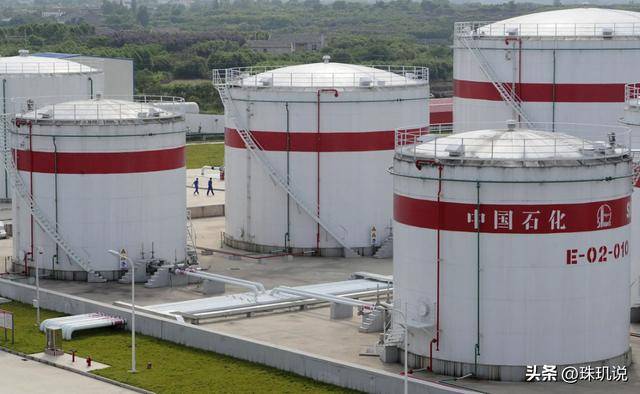
Group 1: Strategic Resource Accumulation - The article discusses the importance of national strategic resource accumulation, particularly in uncertain global conditions, to ensure wealth security for the country and its citizens [1][8] - China has significantly increased its gold reserves, reportedly more than doubling them over the past decade, with unreported purchases potentially exceeding public data by over ten times [3][5] - The accumulation of gold serves as a financial safety net, especially during times of geopolitical instability and fluctuating trust in the US dollar [5][13] Group 2: Oil and Food Security - In the first ten months of the year, China imported 3.462 billion barrels of oil, accounting for 10% of global supply, which is more than Saudi Arabia's daily production [9][11] - China is constructing 11 new oil storage facilities, ensuring that the country can maintain normal operations for six months without imports, surpassing the international safety standard of three months [11] - The country has established standardized grain storage facilities with a total capacity exceeding 730 million tons, sufficient to feed over 1.4 billion people for more than two years [13] Group 3: Investment Opportunities - The article emphasizes the need for individuals to align their investment strategies with national resource accumulation, focusing on stability and gradual growth [13][21] - Two investment categories are highlighted: high-dividend assets, which provide stable cash flow and lower risk, and technology stocks, particularly those aligned with national strategic plans [15][17] - The importance of a diversified investment approach is stressed, advising against concentrating all investments in one sector to mitigate risks [19][21]
全球异动 石油跳水!乌克兰已原则同意美国提出的和平协议
Zhong Guo Ji Jin Bao· 2025-11-25 14:05
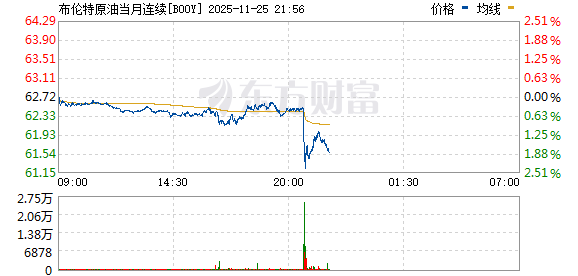
Core Viewpoint - Recent developments in the Russia-Ukraine conflict have led to significant market reactions, including a sharp drop in oil prices and fluctuations in gold and silver prices, as a potential peace agreement is being discussed between Ukraine and the U.S. [2][5] Group 1: Market Reactions - Oil prices experienced a sharp decline following the news of potential peace negotiations [2] - European and American stock markets saw a short-term increase in response to the developments [4] - Gold and silver prices initially dropped but later rebounded [5] Group 2: Peace Negotiations - A U.S. official indicated that the Ukrainian delegation has reached an agreement on a potential peace agreement with the U.S., which has been revised from a 28-point plan to a 19-point plan [5][6] - Key provisions removed from the revised plan include terms related to wartime amnesty and limitations on the future size of the Ukrainian military [6] - Ukrainian President Zelensky emphasized that while progress has been made, there is still significant work ahead [6]
日本股市大跌、「抛售日本」潮加剧,会对日本经济造成怎样的影响?
Sou Hu Cai Jing· 2025-11-23 10:15
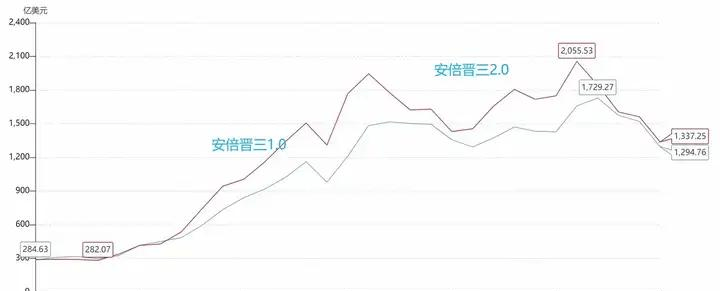
Group 1 - Japan's economic reliance on China is significant, with approximately 20% of Japan's total exports going to China, while China's reliance on Japan has decreased to a historical low of 4.5% in terms of imports [1] - The tourism sector in Japan is heavily dependent on Chinese visitors, with the prosperity of locations like Kyoto and Hokkaido closely tied to their travel intentions [1] - The recent surge in Japanese stock markets is primarily driven by international investors, such as Warren Buffett, rather than Chinese investment institutions, indicating a shift in capital dynamics [1] Group 2 - The recent high-profile incident in Japan may trigger widespread economic backlash from the public, similar to the 2016 response in South Korea, where entertainment exports to China plummeted by 37% [3] - Political instability in Japan, characterized by frequent changes in leadership, could undermine economic policies and investor confidence, leading to a negative feedback loop between politics and economics [3][5] - Japan's lack of natural resources and innovation, combined with a reliance on overseas asset returns from the "lost three decades," poses a significant challenge for sustaining its developed economy [5]
【UNFX本周总结】政策重启下的再定价:情绪修复但结构性风险依旧
Sou Hu Cai Jing· 2025-11-22 03:38
Group 1 - The global financial market shows significant differentiation due to policy changes, data delays, and fluctuations in risk sentiment [1][2] - The end of the U.S. government shutdown provides short-term certainty and prompts the recovery of previously delayed economic data [1][2] - Despite the recovery in market sentiment, the Federal Reserve officials maintain a cautious stance, indicating that inflation has not yet reached a level that would justify interest rate cuts [1][2] Group 2 - The market is currently relying more on expectations for trading due to the delay in key data caused by the shutdown, leading to increased asset volatility [1][2] - Risk appetite in the market has been restored, with some funds flowing back into the stock market and high-beta assets, although the recovery is uneven across sectors [1][2] - The transition from a "defensive" to a "selective offensive" market approach resembles an emotional rebound rather than a trend-based recovery [1][2] Group 3 - The U.S. dollar index stabilizes and rebounds, benefiting from the cooling of rate cut expectations and rising U.S. Treasury yields [3] - Gold is under pressure due to hawkish policy signals and rising yields, yet it remains within a strong support range [3] - Global stock markets continue to experience a volatile rebound, with significant structural differentiation among sectors [3]
韩国金融研究院预测2026年经济增长2.1%
Shang Wu Bu Wang Zhan· 2025-11-21 15:21
Economic Outlook - The Korea Financial Institute predicts a 2.1% growth in the South Korean economy by 2026, primarily driven by a recovery in domestic demand [1] - Private consumption growth is expected to rise to 1.6%, while construction investment is forecasted to rebound from -8.9% to 2.6% [1] Export and Trade - Export growth is anticipated to decline to 0.8% due to the slowdown in global trade, leading to a narrowing of the current account surplus [1] Inflation and Prices - The consumer price inflation rate is projected to decrease to 1.8%, although uncertainties remain regarding U.S. policy direction and geopolitical risks [1] Financial Sector Challenges - The financial sector faces multiple challenges, including potential volatility in the stock market due to credit financing [1] - The banking industry may experience deterioration in soundness indicators due to pressure on net interest margins and adjustments in risk-weighted assets [1] - The insurance industry is expected to see slowed growth due to the impacts of an aging population [1]
全球股市风暴眼中 COMEX黄金期货警报拉响!
Jin Tou Wang· 2025-11-05 03:13
Group 1 - Global stock markets are experiencing significant selling pressure, with expectations of a substantial decline in U.S. indices due to concerns over high valuations and AI stock bubbles [1] - Wall Street CEOs suggest that investors should prepare for a market downturn exceeding 10% within the next 12 to 24 months, viewing such a correction as potentially positive [1] - In Brazil, police, supported by Interpol, dismantled hundreds of illegal mining vessels along the Madeira River, marking one of the largest coordinated actions against crime networks in the Amazon basin [1][2] Group 2 - A total of 277 floating mining rafts were destroyed, valued at approximately $6.8 million, with organized crime groups facing an estimated economic loss of about $193 million when accounting for lost gold, equipment, and environmental damage [2] - The ongoing deadlock between Democrats and Republicans in the U.S. government may lead to a historic government shutdown, affecting millions reliant on food assistance and medical subsidies [2] - President Trump indicated that he would not be coerced by Democrats regarding negotiations to extend the Affordable Care Act subsidies, suggesting that the government shutdown could persist for some time [2] Group 3 - From a technical perspective, the next bullish target for December gold futures is to push the closing price above the key resistance level of $4,100, while the bearish target is to drop below the key support level of $3,800 [3] - The first resistance level is identified at this week's high of $4,043.10, with further resistance at last Friday's high of $4,059.90, while support is noted at $3,950.00 [3]