
股票

Search documents
黄金狂飙,股市狂欢,债市冷笑:大家都在赌什么?
Sou Hu Cai Jing· 2025-10-14 06:45
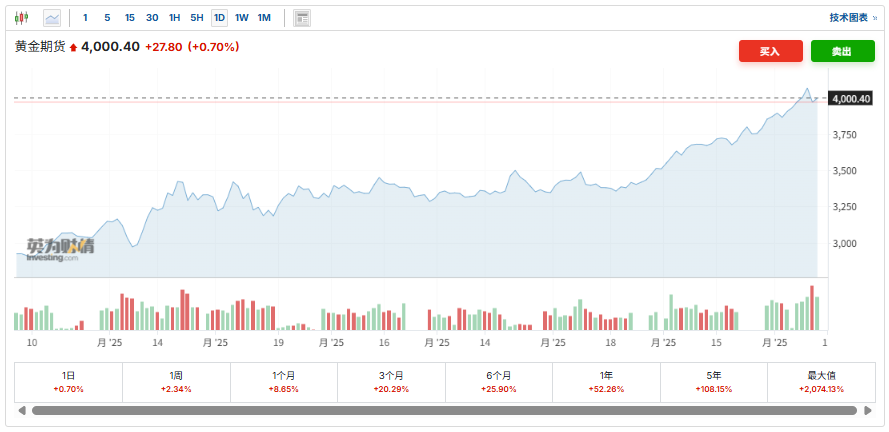
Group 1 - The core idea of the article revolves around the concept of "currency devaluation trading," where investors believe that governments will use inflation to alleviate heavy debt burdens, leading to increased demand for hard assets like gold and stocks [2][4][10] - Gold prices have surged by 51% over the past year, surpassing $4,000 per ounce, while the dollar has depreciated by over 10% against other major currencies [3][4] - The bond market remains calm despite rising gold prices, with long-term inflation expectations stable around 2%, indicating that professional investors do not foresee severe inflation [8][9] Group 2 - The article highlights a split in market sentiment, where stock prices are driven by excitement over artificial intelligence (AI) and its potential to create a low-inflation, high-growth economy, while gold prices are influenced by concerns over currency devaluation and central bank purchases [10][12] - Central banks are actively buying gold to diversify reserves and reduce risk, while lower interest rates make gold more attractive as a non-yielding asset [7][10] - The article emphasizes the importance of distinguishing between long-term concerns about rising debt and short-term realities, as the future direction of markets largely depends on the Federal Reserve's next moves [12][14]

特朗普对华嘴软,美股反弹
Guan Cha Zhe Wang· 2025-10-14 02:35
Group 1 - The U.S. stock market experienced a rebound on October 13, following a significant drop the previous weekend, coinciding with President Trump's softened stance on imposing high tariffs on China [1][3] - Trump's initial threat to impose tariffs came after China's announcement of restrictions on rare earth exports, but he later expressed optimism about U.S.-China relations, stating "everything will be fine" [1][3] - Major stock indices responded positively to Trump's change in tone, with the Nasdaq index leading the gains at 2.2% and the Dow Jones Industrial Average rising by 630 points, or 1.4% [3] Group 2 - Analyst Adam Sarhan from 50 Park Investments noted that Trump's attitude shift sent a positive signal to the market, indicating a potential improvement in U.S.-China relations [3] - Market reactions to Trump's statements have led to frustration among professional investors, with Patrick O'Hare from Briefing commenting on the market's susceptibility to Trump's social media posts [3] - O'Hare highlighted the fragility of market pricing, suggesting that stock prices are easily influenced by threats to optimistic market outlooks [3]
大类资产早报-20251014
Yong An Qi Huo· 2025-10-14 01:27
Report Summary 1. Report Industry Investment Rating No relevant content provided. 2. Core View The report presents a comprehensive overview of the global asset market performance on October 13, 2025, including data on government bond yields, exchange rates, stock indices, and futures trading across major economies [2][3][4]. 3. Summary by Relevant Catalogs Global Asset Market Performance - **Government Bond Yields**: 10 - year and 2 - year government bond yields of major economies are presented, with details on latest, weekly, monthly, and yearly changes. For example, the 10 - year US Treasury yield on October 13, 2025, was 4.034%, with a one - week change of - 0.142 and a one - year change of 0.282 [2]. - **Exchange Rates**: The US dollar's exchange rates against major emerging economies' currencies are shown, including latest, weekly, monthly, and yearly percentage changes. The US dollar to Brazilian real exchange rate on October 13, 2025, was 5.521, with a one - week change of 3.31% [2]. - **Stock Indices**: Closing prices and percentage changes (latest, weekly, monthly, and yearly) of major economies' stock indices are provided. The S&P 500 index on October 13, 2025, was 6552.510, with a one - week change of - 1.37% and a one - year change of 14.19% [2]. - **Credit Bond Indices**: Data on investment - grade and high - yield credit bond indices of the US, eurozone, and emerging economies are given, including latest, weekly, monthly, and yearly percentage changes. The US investment - grade credit bond index on October 13, 2025, was 3529.690, with a one - week change of 0.67% [2]. Stock Index Futures Trading Data - **Index Performance**: Closing prices and percentage changes of A - shares, CSI 300, SSE 50, ChiNext, and CSI 500 are presented. The A - share closing price was 3889.50, with a change of - 0.19% [3]. - **Valuation**: PE (TTM) and its环比变化 (comparative change) of CSI 300, SSE 50, CSI 500, S&P 500, and German DAX are shown. The PE (TTM) of CSI 300 was 14.19, with a环比变化 of - 0.06 [3]. - **Risk Premium**: 1/PE - 10 - year interest rate and its环比变化 of several indices are provided. The 1/PE - 10 - year interest rate of CSI 300 was 3.70, with a环比变化 of 0.00 [3]. - **Fund Flows**: Latest values and 5 - day average values of fund flows in A - shares, main board, small and medium - sized enterprise board, ChiNext, and CSI 300 are given. The latest fund flow in A - shares was 278.56, and the 5 - day average was - 118.93 [3]. - **Trading Volume**: Latest trading volumes and环比变化 of Shanghai and Shenzhen stock markets, CSI 300, SSE 50, small and medium - sized board, and ChiNext are presented. The latest trading volume of the Shanghai and Shenzhen stock markets was 23547.41, with a环比变化 of - 1608.73 [3]. - **Main Contract Premium/Discount**: Basis and percentage of IF, IH, and IC are provided. The basis of IF was - 31.38, with a percentage of - 0.68% [3]. Treasury Bond Futures Trading Data - Closing prices and percentage changes of T00, TF00, T01, and TF01 are presented, all with 0.00% change. The closing price of T00 was 108.065 [4]. - **Funding Rates**: R001, R007, and SHIBOR - 3M are shown, along with their daily changes in basis points. The R001 was 1.3570%, with a daily change of - 13.00 BP [4].
Stock Markets Rebound After Trump China Trade Threats. This Could End the Rally.
Barrons· 2025-10-13 10:58
Bitcoin, other cryptos rebound, shutdown impasse continues, airlines see thousands of flight delays, and more news to start your day. ...

Stocks vs Gold: What Should You Invest In?
The Smart Investor· 2025-10-13 09:30
Group 1: Gold as a Safe Haven - Gold has consistently acted as a safe haven during crises due to its ability to maintain value [3][4] - Traditionally, gold prices move inversely to interest rates; however, this pattern broke as gold prices continued to rally despite falling US interest rates [4] - Gold tends to rise when stock and bond markets decline, making it a useful safety net for investors [5] Group 2: Limitations of Gold - Gold's long-term return potential is significantly lower than that of stocks, as it does not generate earnings or pay dividends [9] - Gold ETFs offer liquidity, but physical gold is less liquid and involves storage and security considerations [7] Group 3: Stocks as Wealth Builders - Stocks are the primary drivers of long-term wealth, providing capital growth and recurring income through dividends [10][11] - The S&P 500 index has delivered a 10-year annualized return of 12.52%, compared to gold's 3.92% over the same period [11] - Stocks allow for diversification across industries and geographies, spreading portfolio risk [13] Group 4: Volatility and Information Access - Stocks are often more volatile, with prices changing based on economic cycles and interest rates [17][18] - Publicly listed companies are required to disclose financial statements and material information, enabling informed investment decisions [15][16] Group 5: Balancing Gold and Stocks - The optimal investment strategy is not choosing between gold or stocks, but finding a balance of both [21][22] - Stocks should form the foundation of a portfolio for long-term growth, while gold can play a smaller role (5-10%) for protection during turbulent times [23][24]

预料之中的黑天鹅事件
鲁明量化全视角· 2025-10-12 03:20
Core Viewpoint - The article discusses the recent market fluctuations driven by retail investor sentiment and the impact of a new round of global "black swan" events, particularly focusing on the escalation of the US-China trade conflict and its implications for the market [3][4]. Market Performance - In the last two weeks, the CSI 300 index increased by 1.47%, the Shanghai Composite Index rose by 1.80%, and the CSI 500 index saw a gain of 2.17% [3]. - The market was primarily influenced by retail investor sentiment, leading to a temporary surge before facing a significant downturn due to external shocks [3]. Trade Conflict Analysis - The article highlights China's proactive response to the US's intensified trade conflict, particularly in the semiconductor and rare earth sectors [4]. - The announcement by Trump on October 10 to impose further tariffs on China triggered a global market sell-off, including a notable drop in the A50 index and significant declines in cryptocurrency markets [4]. Technical Analysis - The article notes a successful early warning for reducing positions, which helped avoid losses during the April 7 market crash [5]. - Despite recent highs in the market, institutional and speculative investors are maintaining a cautious stance, while retail investors continue to drive prices upward, leading to potential market reversals [5]. Investment Strategy - The recommendation is to maintain a low position in the main board and small-cap sectors, emphasizing a focus on avoiding risks in the current market environment [2][6]. - The prevailing market style is identified as large-cap dominant, with no specific sectors recommended for short-term momentum [6].

黄金飙升背后的逻辑,美债并不认可?
Hua Er Jie Jian Wen· 2025-10-11 02:33
Core Viewpoint - The current market is experiencing a divergence in asset pricing, particularly between gold and U.S. Treasury bonds, driven by differing expectations regarding inflation and economic policy responses [1][2][9]. Group 1: Market Dynamics - Gold prices have surged by 51% over the past 12 months, surpassing $4000, while the U.S. dollar has depreciated by over 10% against a basket of major currencies [4][5]. - The concept of "devaluation trade" has gained traction, where investors bet on government-induced inflation to alleviate rising debt burdens, leading to increased demand for hard assets like gold and stocks [5][6]. - The U.S. debt-to-GDP ratio has risen from 96% in 2020 to 98% in 2023, raising concerns about future inflation as a means to manage debt [5]. Group 2: Inflation Expectations - The long-term inflation expectations in the U.S. bond market remain stable, with key indicators like the five-year, five-year forward breakeven inflation rate close to the Federal Reserve's 2% target [7][8]. - This stability suggests that bond investors do not foresee runaway inflation, contrasting sharply with the bullish sentiment in the gold market [6][8]. Group 3: Divergence in Economic Signals - The market is currently divided on which economic signals will dominate Federal Reserve decisions—whether to cut rates in response to potential recession or tighten policies to combat inflation [2][10]. - The stock market's rise is attributed more to optimism surrounding AI technology and its potential to drive strong growth with moderate inflation, rather than solely as a hedge against inflation [9]. - The conflicting macroeconomic data, with signs of a slowing job market and strong growth, creates uncertainty about the Fed's future actions [9][10].
满屏深绿
小熊跑的快· 2025-10-10 19:28
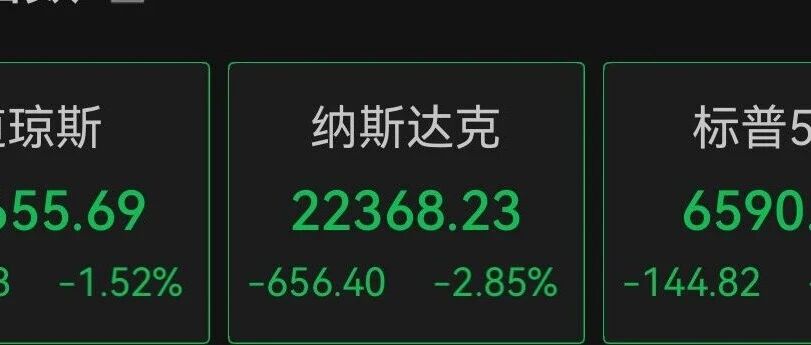
Market Overview - The US stock market experienced a significant decline, with the Nasdaq dropping by 2.8% [1] - A50 futures fell by 3.86%, indicating a bearish sentiment in the market [1] Sector Performance - Following the long holiday, the market showed a stark contrast, with only safe-haven assets like gold and government bonds performing well, while other sectors were predominantly in the red [2] - The Hang Seng Index futures and Hang Seng Tech futures also reflected a downward trend, with declines of 5.00% and 4.99% respectively [3] Key Index Movements - The Dow Jones Industrial Average decreased by 1.52%, closing at 45,655.69, while the Nasdaq and S&P 500 fell by 2.85% and 2.15%, closing at 22,368.23 and 6,590.29 respectively [3] - Gold and silver prices showed slight increases, with London gold rising by 0.80% to 4,007.887 and COMEX silver up by 0.59% to 47.435 [3]
Bitcoin, Ethereum Dive Alongside Stocks as Trump Threatens 'Massive' China Tariffs
Yahoo Finance· 2025-10-10 15:57
Market Reaction - Cryptocurrency prices experienced a significant decline, with Bitcoin falling below $119,000 for the first time since October 2, trading at $119,028, down 1.7% on the day [1] - Other major cryptocurrencies, such as Ethereum and Solana, saw sharper declines, with both down nearly 5% in the last hour, priced at $4,107 and $211 respectively [1] Liquidation Events - The crypto market faced a surge in liquidations, with CoinGlass reporting $459 million worth of liquidations in the last hour, predominantly from long positions [2] - Over the past 24 hours, nearly $773 million worth of positions have been liquidated [2] Broader Market Impact - The stock market indices also reflected a downturn, with the Nasdaq down 1.77%, the S&P 500 down 1.25%, and the Dow decreasing by 0.83% [2] Political Context - President Trump indicated a potential increase in tariffs on Chinese products, suggesting that this policy could have long-term benefits for the U.S. [3]
中信期货晨报:能源化工多数下跌,股指延续升势-20251010
Zhong Xin Qi Huo· 2025-10-10 00:43
1. Report Industry Investment Rating No relevant content provided. 2. Core View of the Report - Overseas macro: The US government is in a shutdown, and Japan is likely to have its first female prime minister. A shutdown over 15 days may affect the release of important economic data. If Koike Sanae is elected, it may impact Sino - Japanese relations and market risk preference [7]. - Domestic macro: The domestic economy continues to stabilize. The manufacturing PMI is 49.8, up 0.4 percentage points month - on - month. The non - manufacturing PMI drops 0.3 points to 50.0. During the holiday, consumption and travel were active [7]. - Asset view: In October, domestic assets benefit from policy expectations and ample liquidity. Overseas, the focus is on the Fed's October rate cut and the BoJ's inaction. The weak - dollar trend continues but with a slower slope. In the fourth quarter, maintain the asset allocation order of equities > commodities > bonds [7]. 3. Summary by Related Catalogs 3.1 Financial Market - **Stock Index Futures**: All major stock index futures showed gains. The CSI 300 futures had a daily, weekly, monthly, quarterly, and year - to - date increase of 1.54%, 1.54%, 1.54%, 1.54%, and 19.59% respectively. The Shanghai 50 futures, CSI 500 futures, and CSI 1000 futures also had positive performances [3]. - **Treasury Bond Futures**: Most treasury bond futures had small increases, except for the 2 - year treasury bond futures with a year - to - date decline of 0.56% [3]. - **Foreign Exchange**: The US dollar index was flat on the day, with different trends in other currency pairs. For example, the euro - US dollar exchange rate remained unchanged on the day, while the US dollar - Japanese yen exchange rate had a weekly increase of 3.52% [3]. - **Interest Rates**: Some interest rates had minor changes, such as the 10 - year Chinese treasury bond yield decreasing by 2.7 bp [3]. 3.2 Hot Industries - Industries like construction, steel, and non - ferrous metals had positive daily, weekly, monthly, quarterly, and year - to - date performances. For example, the non - ferrous metals index had a year - to - date increase of 33.42% [3]. - Some industries such as food and beverage, automotive, and defense and military had mixed performances, with some showing daily declines but positive long - term trends [3]. 3.3 Overseas Commodities - **Energy**: Crude oil futures (NYMEX WTI and ICE Brent) had small daily increases but year - to - date declines. Natural gas prices were mostly down, with NYMEX natural gas having a daily decline of 5.14% [3]. - **Precious Metals**: Gold and silver had significant year - to - date increases, with COMEX gold up 53.85% year - to - date [3]. - **Non - ferrous Metals**: Most non - ferrous metals showed positive long - term trends, but some had daily fluctuations [3]. - **Agricultural Products**: Agricultural products had diverse performances. For example, CBOT soybeans had a year - to - date increase of 1.96%, while ICE 2 - cotton had a year - to - date decline of 5.03% [3]. 3.4 Other Commodities - **Shipping**: The container shipping route to Europe had a significant daily decline of 50.38% [4]. - **Precious Metals**: Gold and silver continued to show positive trends, with silver having a year - to - date increase of 49.52% [4]. - **Non - ferrous Metals and New Materials**: Copper, tin, and other metals had positive price movements, while some like alumina had a weak fundamental situation [4]. - **Black Building Materials**: Most black building materials showed a mixed performance, with some like iron ore having a positive year - to - date performance and others like silicon iron having a decline [4]. - **Energy and Chemicals**: Crude oil had a year - to - date decline of 15.88%. Most chemical products showed a trend of price fluctuations and were in a state of supply - demand adjustment [4]. - **Agricultural Products**: Some agricultural products like soybeans and peanuts had different price trends, with peanuts having a year - to - date decline of 2.83% [4]. 3.5 Market Outlook by Sector - **Financial**: Stock markets had a shrinking - volume rebound, and bond markets remained weak. Stock index futures were expected to rise in a volatile manner, while bond futures were expected to be volatile [8]. - **Precious Metals**: Driven by dovish expectations, the prices of gold and silver were expected to rise in a volatile manner [8]. - **Shipping**: Attention was paid to the rate of freight price decline, and the container shipping route to Europe was expected to be volatile [8]. - **Black Building Materials**: A negative feedback was difficult to form, and the sector was expected to remain volatile before the holiday [8]. - **Non - ferrous Metals and New Materials**: Supply disruptions continued to ferment, and most metals were expected to be volatile, with some like copper expected to rise in a volatile manner [8]. - **Energy and Chemicals**: The crude oil market continued to be volatile, and the chemical market was mainly for hedging and arbitrage, with most products expected to be volatile [10]. - **Agriculture**: Affected by Argentina's tariff policy, oilseeds and meal were hit. Most agricultural products were expected to be volatile [10].