
高端制造

Search documents
创金合信基金魏凤春:基于周期阶段的2026年资产优先级选择
Xin Lang Cai Jing· 2025-12-03 03:29
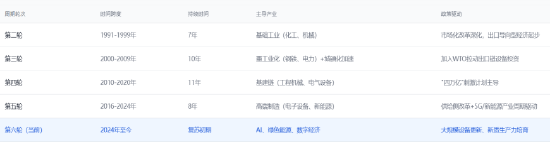
Core Insights - The article discusses the changing liquidity landscape, indicating that liquidity in 2026 will be less abundant than in 2025, primarily driven by structural debt increases with the central government as the main leverager [1][18] - The focus for investors should shift towards fiscal policy rather than monetary policy, although structural characteristics of monetary policy remain significant [1][18] Economic Cycle Analysis Framework - Economic cycle analysis should not be confined to traditional macro asset allocation frameworks, as it emphasizes structural issues rather than aggregate concepts [19] - The economic cycle consists of long, medium, and short cycles, including the Kondratiev, Juglar, and Kitchin cycles, along with Kuznets and Minsky cycles related to real estate and debt [19][20] Phases of the Real Cycle - The real cycle is categorized into three main cycles: Kondratiev, Juglar, and inventory cycles [20] - The Kondratiev cycle, lasting about 60 years, focuses on technological and resource dynamics, with current consensus highlighting AI and its supporting infrastructure as key drivers [21][24] - The Juglar cycle, lasting 7-11 years, is driven by equipment investment and capital expenditure, with China currently in the early recovery phase of its sixth Juglar cycle starting in 2024 [23][25] Inventory Cycle Transition - The inventory cycle is transitioning from passive to active inventory replenishment, influenced by anti-involution policies [27] - Current indicators show a PMI output index of 49.7%, the lowest since December 2022, reflecting weak external demand and cautious exporter attitudes [28] Phases of the Financial Cycle - The financial cycle includes the real estate cycle and the debt cycle, with the real estate market still in a deep adjustment phase since 2020 [30] - The Minsky cycle is characterized by a "wide monetary + low interest rate" environment, with a gradual recovery in macro leverage and a focus on debt resolution strategies [31] Asset Allocation Principles for 2026 - The asset allocation strategy for 2026 emphasizes the resonance of cycles, prioritizing new productive forces while maintaining a defensive base with high-quality fixed-income assets [32][33] - The focus should be on sectors benefiting from technological advancements and policy guidance, particularly in high-end manufacturing and green energy [33]

海默科技战略转型迈出关键一步 产业基金落子新质生产力
Zheng Quan Shi Bao Wang· 2025-12-02 13:52
Group 1 - The core point of the article is that Haimer Technology has established a partnership with Zhongxin Xicheng Private Equity Fund Management to create the Chongqing Zhongxin Xicheng Liangshan Venture Capital Fund, marking a significant step in the company's strategy to cultivate a second growth curve and lay out new productive forces [1][2] - The total scale of the fund is approximately 1.05 billion RMB, with Haimer Technology contributing 200 million RMB, accounting for about 19% of the fund [1] - This partnership follows a strategic cooperation agreement signed in October, indicating a transition from strategic intent to practical implementation in the field of new productive forces [1] Group 2 - The establishment of the industrial fund is a proactive response by Haimer Technology to the national strategy of developing new productive forces and accelerating the construction of a modern industrial system [2] - The national policy emphasizes the importance of technological innovation in leading the development of new productive forces and building a modern industrial system, with a focus on advanced manufacturing [2] - By setting up the fund, Haimer Technology aims to accumulate technological knowledge and industrial resources in areas such as artificial intelligence and digital economy, creating favorable conditions for future technological cooperation and business expansion [2]

M2026年中国经济展望:挑战超乎表面所见(英文版)
Sou Hu Cai Jing· 2025-12-02 09:09
Core Insights - The 2026 economic outlook for China indicates that challenges are more profound than they appear, with a complex external environment and internal structural adjustments leading to moderate growth [1][3] Global Macro Backdrop - The global economic landscape for 2026 presents various scenarios, with persistent inflation and interest rate pressures, alongside trade constraints impacting growth [1][7] - US-China trade tensions remain a significant external variable, with tariffs increasing and uncertainty affecting bilateral trade and investment [1][13] Internal Policy Adjustments - Since September 2024, China has adopted a "three arrows" approach focusing on structural rebalancing, fiscal stimulus, and monetary easing, with policies adapting to economic data [2][38] - The 15th Five-Year Plan emphasizes high-quality development, prioritizing high-end manufacturing, technological self-sufficiency, and expanding domestic demand [2][40] Economic Performance Projections - China's GDP is projected to grow by 4.4% in 2026, with contributions from consumption, investment, and net exports, although domestic demand remains weak [2][38] - The recovery across industries is uneven, with high-end manufacturing and new energy vehicles performing well, while the real estate sector continues to face challenges [2][38] Trade and External Accounts - Exports show resilience, particularly in high-tech products, and the current account is expected to maintain a surplus, with the RMB fluctuating within a reasonable range [2][38] - The transition to a new economic model is ongoing, with new economic drivers gradually contributing more to growth, despite structural contradictions and short-term pressures [2][38] Fiscal and Monetary Policy - The fiscal deficit is expected to remain around 4% of GDP, with ongoing efforts to enhance consumption support and improve fund allocation efficiency [2][38] - Monetary policy is expected to remain prudent, with adjustments to policy rates and reserve requirements to manage liquidity, although net interest margin pressures limit the scope for rate cuts [2][38]

20cm速递|科创综指ETF国泰(589630)回调超1%,AI产业链有望成为市场主线,关注回调布局机会
Mei Ri Jing Ji Xin Wen· 2025-12-02 04:14
每日经济新闻 (责任编辑:董萍萍 ) 【免责声明】本文仅代表作者本人观点,与和讯网无关。和讯网站对文中陈述、观点判断保持中立,不对所包含内容 的准确性、可靠性或完整性提供任何明示或暗示的保证。请读者仅作参考,并请自行承担全部责任。邮箱: news_center@staff.hexun.com 中银国际指出,AI产业链景气趋势仍向好,下游需求旺盛,AI基础设施建设短期面临供应端存力 与电力短缺,资源紧缺带来存力与电力投资机会,算力特别是国产算力仍有广阔成长空间。流动性预期 及风险偏好修复下,科技成长或最为受益,科创板、创业板有望率先迎来修复。AI产业链有望成为市 场主线,适宜择机配置,可重点关注AI行情"硬切软"(尤其是"谷歌链")配置机会。 科创综指ETF国泰(589630)跟踪的是科创综指(000680),单日涨跌幅达20%,该指数旨在反映 整个科创板市场的整体表现。其成分股主要聚焦于"硬科技"领域,包括生物医药和高端制造等具有高研 发强度与创新能力的行业,充分体现了科创板创新驱动与高成长性的市场特征。 注:如提及个股仅供参考,不代表投资建议。指数/基金短期涨跌幅及历史表现仅供分析参考,不 预示未来表现。市 ...
英大证券晨会纪要-20251202
British Securities· 2025-12-02 02:12
Market Overview - The A-share market continues its recovery trend, showing a fluctuating upward pattern with increased market activity and a faster rotation of sectors, particularly in consumer electronics and high-end manufacturing [2][8] - The trading volume has increased significantly, with nearly 300 billion yuan more than the previous trading day, indicating a trial entry of incremental funds and a marginal improvement in investor risk appetite [2][8] Economic Indicators - Recent macroeconomic data indicates a gradual recovery in manufacturing and other sectors, providing a supportive backdrop for the market [2][8] - Expectations for multiple important policy meetings before the end of the year are rising, with the market anticipating policies aimed at stabilizing growth, promoting reforms, and expanding domestic demand [2][8] Sector Performance - The consumer electronics sector has shown strong performance, driven by government policies aimed at enhancing the adaptability of supply and demand in consumer goods [6] - The non-ferrous metals sector has also surged, supported by new demand opportunities in aluminum due to the global data center construction wave and potential supply constraints [7] Investment Strategy - Investors are advised to align with sector rotation trends, employing balanced allocation, high sell-low buy strategies, or focusing on outperforming sectors [9] - Emphasis should be placed on selecting stocks with performance support while avoiding high-valuation speculative stocks lacking earnings backing [9]
24家券商已推荐159只“收官月”金股
Zheng Quan Ri Bao Zhi Sheng· 2025-12-01 16:37
Group 1 - The capital market is at a critical juncture as it transitions from 2025's performance to the opening of 2026, with 24 brokerages recommending a total of 159 "golden stocks" for December [1] - Zhongji Xuchuang leads the recommendations with 7 brokerages endorsing it, followed by Midea Group with 5 brokerages, and other notable mentions include Muyuan Foods and Anjii Foods, each recommended by 4 brokerages [2] - Analysts are generally optimistic about the A-share market in December, predicting a "volatile upward" trend and the potential for a "cross-year market" [2] Group 2 - December is expected to see improvements in fundamental expectations, macro liquidity, and policy catalysts, potentially leading to an early start of the spring market [3] - Four main investment themes have been identified: "anti-involution," "going abroad," high dividends and stable cash flow, and technology innovation and domestic demand recovery [3] - The semiconductor industry is anticipated to benefit from a cyclical recovery, while service consumption is expected to emerge as a new growth point [3] Group 3 - In November, 267 golden stocks were recommended by brokerages, with 87 stocks experiencing price increases, and 4 stocks seeing gains over 30% [4] - Shanghai Port Bay, recommended by Huatai Securities, led with a 60.15% increase, followed by Bluefocus and Yaxiang Integration with gains of 45.99% and 43.57%, respectively [4] - However, the correlation between brokerage recommendations and actual stock performance is not always consistent, as seen with Top Group and Zhongji Xuchuang, which had mixed results despite multiple endorsements [4] Group 4 - The "Guolian Minsheng Golden Stock Index" topped the monthly performance with a 4.59% increase in November, followed closely by the "Huatai Securities Golden Stock Index" at 4.51% [5] - Overall, several golden stock indices have shown strong performance, with some indices exceeding a 60% increase over the first 11 months of the year [6]


200亿救阿根廷,50%关税压巴西!特朗普拉美套路深
Sou Hu Cai Jing· 2025-12-01 06:49
Core Viewpoint - Latin America has become a significant focus in Trump's foreign policy, marked by a departure from traditional U.S. approaches and a more pragmatic, interest-driven strategy known as "Trumpism" [1][5][21] Group 1: Resource Competition - Latin America is rich in natural resources, particularly lithium and copper, which are crucial for global industries, and Trump aims to limit China's influence in this region [7][19] - The U.S. seeks to secure these resources to enhance its position in the global market, especially in renewable energy and high-end manufacturing [7] Group 2: Strategic Locations - The Panama Canal is a critical shipping route for U.S. trade, and Trump's administration emphasizes the importance of Latin America as a strategic area [9] - Trump's foreign policy includes appointing officials familiar with Latin American affairs to strengthen U.S. influence in the region [9] Group 3: Market Access - The U.S. aims to tap into the large market potential in Latin America, but Trump's approach varies based on political alignments, offering financial aid to friendly governments while imposing tariffs on those that oppose U.S. policies [11] - For instance, Trump provided $20 billion to Argentina to stabilize its currency, while imposing a 50% tariff on Brazilian products due to political disagreements [11] Group 4: Immigration Policy - Immigration from Latin America is a key issue for Trump, who has adopted strict measures against illegal immigration, focusing on cooperation with right-leaning governments [13] Group 5: Drug Policy - Trump's administration has taken a unilateral approach to combat drug trafficking, labeling Venezuelan President Maduro as a drug lord and modifying laws to justify military action against drug trafficking organizations [15] Group 6: Countering China's Influence - A significant aspect of Trump's strategy is to limit China's presence in Latin America, with U.S. officials asserting that the region is America's backyard [17] - This strategy raises concerns about potential shifts in global power dynamics if the U.S. reallocates military resources to focus on Latin America [17] Group 7: Future Implications - Trump's pragmatic and hegemonic approach in Latin America may face challenges as local countries assert their autonomy and interests, making the effectiveness of his strategy uncertain [21]

鹏扬基金吴西燕:在稳健与创新之间寻找平衡
Shang Hai Zheng Quan Bao· 2025-11-30 14:10
Core Viewpoint - The investment strategy should balance policy guidance and industry fundamentals, with a focus on high-end manufacturing globalization, new consumption, and innovative pharmaceuticals as long-term growth drivers [1][5]. Group 1: Consumer Market Insights - The consumer market is expected to have strong confidence and growth momentum due to policy support, but brand promotion must align with positioning to avoid blind cross-industry ventures [2]. - Brand building plays a crucial role in boosting consumer confidence and expanding domestic demand, requiring careful maintenance and alignment with appropriate channels [2]. - The sectors of "new consumption" and "emotional consumption" are viewed positively for their growth potential as policy plans continue to be implemented [2]. Group 2: Traditional Industries - Traditional industries like kitchen appliances and automotive lighting have investment value due to improved industry structure and efficiency, despite being affected by cyclical factors [2]. - The kitchen appliance sector, while growing slowly and constrained by the real estate cycle, benefits from a favorable competitive landscape leading to high return on equity (ROE) [2]. - The automotive lighting industry is experiencing growth driven by the upgrade of new energy vehicles, with increased unit value and profit margins due to early investments in the sector [3]. Group 3: Investment Strategy - The current market preference for high-growth sectors and the pressure on blue-chip stock valuations highlight the risks associated with chasing hot themes [4]. - A solution proposed is to identify long-term growth potential through in-depth research and invest when there is a perceived safety margin in stock prices [4]. - In a market environment dominated by quantitative strategies, active management investors should focus on solid companies with sustainable performance to endure long-term [4]. Group 4: Future Outlook - Three key areas are highlighted for future investment: globalization of high-end manufacturing, emerging consumer products, and innovative pharmaceuticals [5]. - High-end manufacturing is expected to gain investment value as Chinese companies enhance their global competitiveness through a complete domestic supply chain and ongoing technological upgrades [5]. - Emerging consumer products are projected to maintain a growth advantage within the overall consumer sector, presenting investment opportunities [5]. - Despite recent adjustments, the long-term logic for innovative pharmaceuticals remains strong, supported by robust internal demand and upcoming clinical data releases from representative companies [5].
A股下周怎么走?三大关键信号+投资策略全解析!
Sou Hu Cai Jing· 2025-11-30 04:14
Market Status - The market has experienced a rebound, with the ChiNext Index rising by 4.5%, indicating a marginal recovery in risk appetite, particularly towards growth-oriented sectors [2] - There is a significant shift in capital away from defensive sectors like banks and telecommunications towards high elasticity sectors such as information technology and communication equipment, driven by both overselling and optimism regarding future industrial policies [2] - The average daily trading volume of 1.73 trillion is insufficient to support a broad market rally, suggesting that the current market dynamics are more about reallocating existing capital rather than initiating a new trend [2] Upcoming Week Projections - The market is expected to experience a period of consolidation and fluctuation, with a focus on structural alpha for profitability [3] - Key observations will include the policy direction from upcoming meetings and whether trading volume can effectively increase, as both factors are critical for potential market breakthroughs [4] Strategy and Positioning - The recommended strategy involves a "core + satellite" approach, maintaining a neutral position while remaining flexible [3] - Core positions should focus on "technology growth" sectors, emphasizing companies with solid orders, performance, and reasonable valuations, while avoiding speculative plays [4] - Satellite positions may include investments in "policy play" sectors such as high-end manufacturing and new materials, along with some high-dividend assets to mitigate risks [4]
报告显示我国民企出海表现持续向好
Jing Ji Ri Bao· 2025-11-30 00:50
Core Insights - The report indicates that the scale of overseas operations for private enterprises in China is expanding, with total overseas revenue projected to reach 52,149.66 billion yuan in 2024, reflecting an increase of 11.93% [1] - A significant portion of the surveyed industries, specifically 80 out of 84, reported profitability, highlighting the overall positive performance of internationalized private enterprises [1] - Export trade figures show a notable increase, with total exports expected to hit 32,839.04 billion yuan in 2024, marking an 11.21% growth [1] Industry Performance - Key industries such as electronics, automotive, and chemicals experienced export growth of 10.51%, while high-end manufacturing saw a remarkable increase of 41.63% [1] - The report emphasizes that traditional industries, the new energy vehicle sector, and the lithium battery industry are maintaining high levels of foreign direct investment, with total investment amounting to 1,593.54 billion yuan in 2024 [1]