消费

Search documents
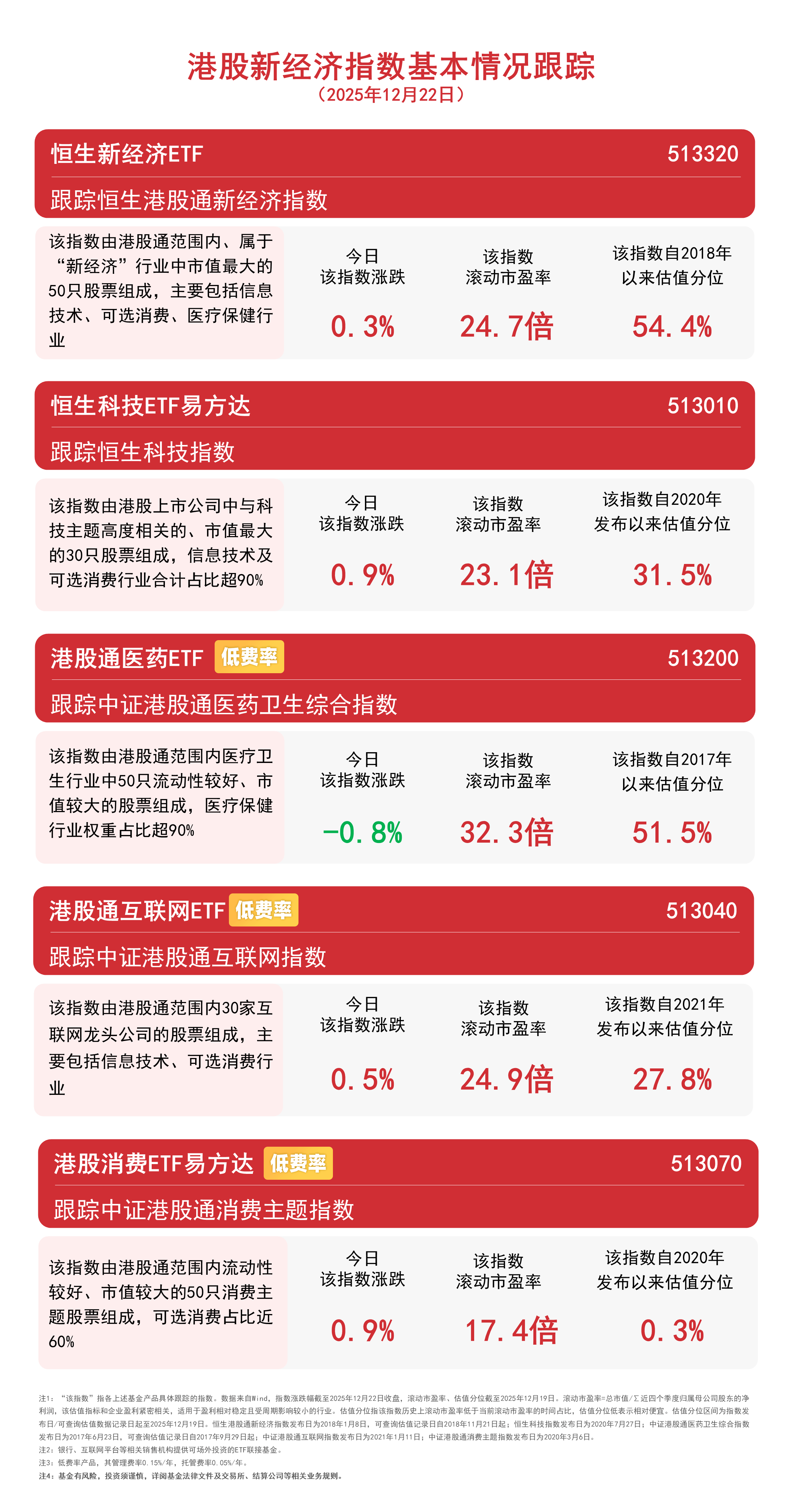
港股震荡分化,恒生科技ETF易方达(513010)、港股通互联网ETF(513040)助力布局港股科技资产
Sou Hu Cai Jing· 2025-12-22 11:42
Group 1 - The Hong Kong stock market experienced fluctuations, with active sectors including semiconductors, non-ferrous metals, and consumer goods, while the pharmaceutical sector saw a decline [1] - The Hang Seng Technology Index and the CSI Hong Kong Stock Connect Consumer Theme Index both rose by 0.9%, while the CSI Hong Kong Stock Connect Pharmaceutical and Health Comprehensive Index fell by 0.8% [1] - Capital inflows continued, with the Hang Seng Technology ETF and the Hong Kong Stock Connect Internet ETF receiving net inflows of 920 million yuan and 280 million yuan respectively last week [1] Group 2 - CITIC Securities highlighted that the "14th Five-Year Plan" emphasizes the construction of a modern industrial system and accelerating high-level technological self-reliance, which may lead to new policy support for strategic emerging industries such as new energy, new materials, and aerospace [1] - By 2026, the Hong Kong stock market is expected to benefit from the internal catalysts of the "14th Five-Year Plan," with investment opportunities in AI-related sectors and consumer electronics [1]

短期震荡或是主题
Datong Securities· 2025-12-22 11:32
Core Insights - The overall market is experiencing a period of sustained volatility as it approaches the holiday season, with the equity market showing insufficient upward momentum and trading volume significantly below 20 trillion [2][9] - Investor sentiment is cautious, influenced by a policy vacuum at year-end and increased risk aversion due to the holiday season, leading to a lack of upward movement in the market [3][10] - Despite the short-term volatility, the market remains supported at relatively high levels, indicating resilience and a potential for upward movement in the medium to long term, especially with favorable policies and strong corporate earnings expected [3][12] Equity Market Summary - The A-share market continues to maintain high-level fluctuations, with trading volumes remaining weak and investor caution increasing [3][10] - The year-end policy vacuum and external market conditions, such as the transition in the U.S. Federal Reserve leadership and the easing of the Russia-Ukraine conflict, contribute to a subdued market environment [3][10] - In the medium to long term, the market has significant upward potential, particularly with the "14th Five-Year Plan" beginning and a supportive monetary environment [3][12] - A "barbell strategy" is recommended for equity allocation, focusing on both offensive positions in sectors like communication, semiconductors, and innovative pharmaceuticals, and defensive positions in consumer sectors to enhance returns [3][13] Bond Market Summary - The bond market continues to exhibit a volatile trend, closely following the equity market, indicating a lack of independent movement [4][35] - Without significant positive developments, the bond market is expected to remain weak in upward momentum, making it difficult to achieve independent performance [5][35] Commodity Market Summary - The commodity market is also experiencing volatility, with precious metals, particularly gold, showing a strong upward trend while other commodities remain subdued [6][40] - Gold prices are expected to continue rising in the medium to long term, supported by both investment and safe-haven demand, potentially leading precious metals to develop an independent trend [6][40] - It is advised to maintain positions in gold as part of the commodity investment strategy [6][41]
每日投行/机构观点梳理(2025-12-22)
Jin Shi Shu Ju· 2025-12-22 11:25
Group 1 - UBS analysts predict that the US stock market will remain tense in 2024 due to investor concerns about missing out on AI gains and fears of a potential bubble, with volatility expected to continue until 2026 [1] - Goldman Sachs forecasts a 14% growth in Chinese corporate earnings in 2024, which could boost stock market performance, with a potential 10% valuation re-rating and a projected 38% increase in the Chinese stock market by 2027 [1] - JPMorgan expects the Bank of Japan to continue raising interest rates to address concerns over the weak yen, predicting two rate hikes in 2024, reaching a policy rate of 1.25% by the end of 2026 [1] Group 2 - Nomura's report indicates uncertainty regarding the specific level that would trigger intervention by Japanese authorities, but bold actions may be imminent as the yen strengthens [2] - Danske Bank analysts suggest that the euro may strengthen against the dollar in the medium term due to anticipated Fed rate cuts and stable ECB rates, with a narrowing gap in real interest rates benefiting the euro [2] Group 3 - CICC emphasizes the importance of policy measures to boost consumption, noting that the macroeconomic backdrop has weakened consumer recovery, but signals of support for domestic demand could lead to a turnaround [3] - China Merchants Bank reports that Japan's interest rate hike may exert pressure on global financial conditions, with a potential long-term impact on liquidity and bond markets [4] - CITIC Securities highlights the need to focus on changes in consumer structure for long-term investment, with an emphasis on new products, technologies, channels, and markets [5][6] Group 4 - CITIC Securities anticipates a mild reduction in policy rates in 2026, with a potential decrease of 10 basis points in one to two instances, which could stabilize bank net interest margins [7] - CITIC Securities continues to favor the AI computing sector, noting strong demand for computing power as AI models evolve [8] - CITIC Securities reports that the US CPI has unexpectedly cooled, which may lead to an upward revision of Fed rate cut expectations, positively impacting precious and industrial metal prices [9] Group 5 - China Securities expects listed insurance companies to achieve double-digit growth in core premium income and value in 2026, driven by asset reallocation and a favorable equity market [10] - Huatai Securities suggests continuing to position for a spring market rally, focusing on sectors like AI, batteries, and consumer goods that are expected to improve [11]
空头加仓,龙头跳水,周一怎么办?
Jin Rong Jie· 2025-12-22 08:58
Group 1 - The core viewpoint indicates that major index futures have seen an increase in short positions, suggesting a shift towards defensive strategies among institutional investors, as evidenced by the net short positions in the three major index contracts [1] - The article highlights that the stock market experienced a significant drop in high-position stocks, particularly Pingtan, which serves as a bellwether for the current market cycle, indicating potential risks for high-position stocks despite their ability to reach new highs [1] - The sentiment analysis suggests that the market is currently in a state of fluctuation, with the potential for further adjustments if the market does not show strong support after a high opening [1] Group 2 - Recent sector trends indicate that news-driven stocks, such as those in nuclear power, autonomous driving, and AI healthcare, are experiencing short-lived rallies, emphasizing the need for strategic entry points to capitalize on these opportunities [2] - The article notes the interconnection between different themes, particularly in commercial aerospace, consumer goods, and technology, advising investors to avoid chasing strong performers and instead focus on identifying resilient stocks amidst market fluctuations [2]
12.22盘前速览 | 卫星维持核心主线,消费板块活跃
Jin Rong Jie· 2025-12-22 08:32
Macroeconomic Dynamics - The Bank of Japan raised interest rates by 25 basis points as expected, with a neutral forward guidance that aligns with market expectations [1] Satellite Internet - Trump has called for measures to ensure the United States maintains its "space superiority" - The U.S. Space Development Agency is procuring 72 missile warning satellites valued at $3.5 billion - SpaceX is in discussions with banks regarding an IPO - A commercial space development conference will be held on December 24 in Beijing, where a space technology innovation fund will be established - Related ETF: Satellite Industry ETF (on-market: 159218) [1] Robotics - UTree Technology's humanoid robot performed a complex "Webster" flip dance at Wang Leehom's concert in Chengdu, receiving praise from Elon Musk - Related ETF: Robotics Index ETF (on-market: 560770, off-market link: 020482) [1] Consumer Sector - Media continues to highlight the emotional economy and self-indulgent consumption, specifically mentioning the pet economy and trendy card games - Sales on the first day of duty-free closure in Hainan reached 118 million yuan, with a significant increase in New Year flight bookings - Three departments released the "Internet Platform Pricing Behavior Rules" - Related ETF: Consumer ETF (on-market: 510150, off-market link: 217017), Food and Beverage ETF (on-market: 159843) [1] Artificial Intelligence - OpenAI is planning a new funding round targeting $100 billion, involving capital from the Middle East - Ultraman stated that OpenAI will launch a significantly upgraded model in the first quarter of next year - China has made significant breakthroughs in optical computing chips, achieving the first all-optical computing chip that supports large-scale semantic generation models - The National Healthcare Security Administration has clarified that "AI-assisted diagnosis" will be included in the pricing project for pathological diagnosis - Experts believe that 90% of the potential of large models remains untapped - Related ETF: Cloud Computing ETF (on-market: 159890, off-market link: 021716), Software Leaders ETF (on-market: 159899, off-market link: 018385) [1] Market Observation - On December 19, trading volume reached 1.7259 trillion yuan, an increase of 70.4 billion yuan - Following the Bank of Japan's interest rate hike, the market continued to rebound, with retail, light industry, and environmental protection sectors leading the gains, while the technology sector is poised for growth - The satellite internet sector maintains a core trend, with rotation among consumer, nuclear fusion, and autonomous driving themes - The market is expected to break upward after fluctuating around the 3900-point mark, driven by the technology sector [1]
机构称2025年底前港股可逢低吸纳,为明年初春季行情做准备
Mei Ri Jing Ji Xin Wen· 2025-12-22 02:18
Group 1 - The Hang Seng Index opened up 0.41% and the Hang Seng Tech Index rose by 0.61%, indicating a positive start for the market [1] - Lithium mining stocks showed strength, while tech stocks exhibited mixed performance, with Meituan rising by 1.46% [1] - The Hong Kong consumer sector experienced slight fluctuations after an initial rise, with the Hong Kong Consumer ETF (513230) showing a small increase, led by stocks like Mixue Group, Blukoo, and Zhenjiu Lid, which all rose over 4% [1] Group 2 - According to China Merchants Securities, the recent weakness in the Hong Kong stock market is attributed to the return of southbound funds to A-shares due to new public fund benchmark regulations, concerns over IPO financing, and a peak in lock-up expirations [1] - Looking ahead, it is expected that the Hong Kong market may see a year-end rally as southbound fund flows stabilize and the pressures from IPO supply and lock-up expirations ease [1] - Jianyin International suggests that investors should consider buying on dips before the spring market in early 2024, focusing on high-yield stocks and sectors related to new productivity and structural reforms, particularly in technology, high-end manufacturing, hydrogen, nuclear energy, and domestic consumption [1] Group 3 - Related popular ETFs include the Tourism ETF (562510) benefiting from holiday catalysts and the ice and snow economy, the Food and Beverage ETF (515170) aimed at boosting domestic demand, and the Hong Kong Consumer ETF (513230) focusing on e-commerce leaders and new consumption trends [2]
华泰证券:建议继续布局春季躁动,关注AI链等景气改善方向
Sou Hu Cai Jing· 2025-12-22 00:36
Core Viewpoint - The report from Huatai Securities indicates that the recent rebound in A-shares is primarily due to improved liquidity conditions both domestically and internationally, with significant net inflows from allocation-type funds represented by broad-based ETFs [1] Group 1: Market Conditions - The improvement in liquidity is attributed to lower-than-expected U.S. inflation in November, which has raised expectations for interest rate cuts, alongside a dovish stance on interest rate hikes from the Bank of Japan [1] - The current market is characterized by a phase of basic expectation disturbances and a confluence of policy and economic data voids [1] Group 2: Future Outlook - Huatai Securities anticipates a potential spring rally in the market next year following prior adjustments, with catalysts for upward movement including foreign capital position recovery post-Christmas and the upcoming concentrated disclosure period for annual reports starting mid-January [1] - There is a possibility of a reserve requirement ratio cut in January, which could further support market conditions [1] Group 3: Investment Recommendations - The report suggests continuing to position for the spring rally, focusing on sectors showing improvement such as AI supply chains, batteries, non-ferrous metals, certain chemicals, military industry, and consumer services [1] - Additionally, it recommends increasing exposure to thematic stocks and those benefiting from seasonal effects in the export chain [1]

[12月19日]指数估值数据(A股港股上涨;从做生意的视角,看指数基金投资;港股指数估值表更新;抽奖福利)
银行螺丝钉· 2025-12-19 14:03
Market Overview - The overall market has risen, closing at a rating of 4.2 stars [1] - Large, mid, and small-cap stocks have all experienced increases, with small-cap stocks rising the most [2][3] - Value style stocks have seen slight increases, while growth style stocks have risen more significantly [4] Investment Perspective - Investors can approach investment from either a trading perspective, focusing on short-term price fluctuations, or a business perspective, which is more aligned with long-term value [7][12] - Short-term market movements are difficult to predict, and most investors struggle to achieve stable returns through short-term trading [11] Value Investing Principles - Benjamin Graham, a mentor to Warren Buffett, emphasized that buying stocks equates to buying companies [13][14] - Investing in index funds is akin to owning a basket of companies, which can provide steady returns through dividends and earnings growth [15][17] - For example, investing in a dividend index fund at a 10x price-to-earnings ratio can yield annual profits of approximately 1,000 yuan, with 400-500 yuan distributed as dividends [22] Earnings Growth and Valuation - The average annualized earnings growth for dividend indices has been around 6% in recent years [23] - Market valuations can fluctuate, leading to short-term price changes, but most of the time, valuations remain stable or undervalued [26][30] - In a bull market, valuations can soar, allowing investors to realize significant returns [28][29] Growth Stocks - Growth stocks typically have higher price-to-earnings ratios, such as 25x for the ChiNext index, but they also offer higher growth rates, with recent earnings growth exceeding 20% [34][35] - The volatility associated with growth stocks is generally greater compared to value stocks [35] Hong Kong Market Insights - The Hong Kong stock market has also seen an overall increase, with technology indices performing particularly well [5][38] - The valuation table for Hong Kong indices is updated regularly for investor reference [40]

四点半观市 | 机构:中国利润增长的最大潜力集中在科技行业
Shang Hai Zheng Quan Bao· 2025-12-19 12:53
来源:上海证券报·中国证券网 12月19日,A股三大指数震荡反弹,深成指、创业板指盘中一度涨超1%。截至收盘,上证指数报 3890.45点,涨0.36%;深证成指、创业板指分别涨0.66%、0.49%。沪深北三市全天成交17487亿元,较 上个交易日放量719亿元。 12月19日,日韩市场主要股指收盘上涨。日经225指数上涨1.03%,报49507.21点,本周累计下跌 2.61%。韩国综合指数收盘上涨0.65%,报4020.55点,本周累计下跌3.52%。 12月19日,中证转债指数收涨0.38%,报485.28点。嘉美转债涨20%,华体转债涨13.45%,惠城转债涨 9.53%;博瑞转债跌11.86%,金钟转债跌6.19%,英特转债跌3.35%。 【资金风向标】 Choice数据显示,12月19日,资金净流入额排名前十的个股依次是雪人集团、N优迅、山子高科、航天 发展、中国中免、永辉超市、中国平安、赣锋锂业、航天动力、均胜电子。其中,优迅股份上市首日获 净流入12.95亿元。 【机构观点】 法国巴黎资产管理首席市场策略师Daniel Morris在《2026投资展望》中称,随着人工智能革命持续推动 大规模 ...
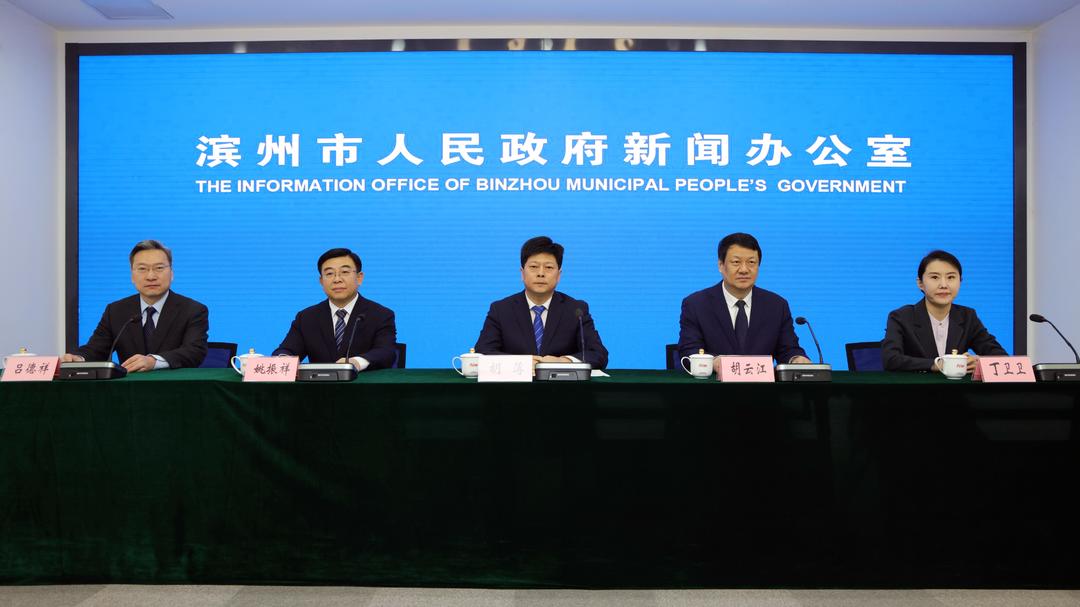
近五年,滨州心安城市塑成品牌,“三保”水平稳居全省前列
Qi Lu Wan Bao· 2025-12-19 08:45
Core Viewpoint - The "14th Five-Year Plan" period is marked by significant achievements and transformative changes in Binzhou, focusing on high-quality development and enhancing various aspects of urban life and economic growth [1]. Economic Growth - The regional GDP is projected to grow from 261.43 billion yuan in 2020 to 340.47 billion yuan in 2024, with an average annual growth rate of 6% [3]. - The revenue from large-scale industries is expected to exceed 1 trillion yuan, while total retail sales of consumer goods and total imports and exports are both anticipated to surpass 100 billion yuan [3]. - General public budget revenue and tax revenue are projected to exceed 30 billion yuan and 20 billion yuan, respectively [3]. Income and Employment - Per capita GDP is expected to rise from 66,600 yuan in 2020 to 87,500 yuan in 2024, with an estimated figure of over 90,000 yuan this year [3]. - The income disparity between urban and rural residents is expected to decrease, with the ratio dropping from 2.09 in 2020 to 1.91 in 2024 [3]. - Urban employment has reached 204,300 new jobs, with social insurance coverage rates for basic pension and medical insurance at 97.26% and 97.5%, respectively [4]. Social Services and Quality of Life - The city has implemented five major projects focusing on safety and well-being, establishing itself as the first "Heart-Safe City" in the country [4]. - Public services have improved significantly, with the "Strong School Expansion" initiative achieving the highest coverage in the province and a total investment of 3.67 billion yuan in healthcare facilities [4]. - The city has been recognized for its cultural initiatives, including the establishment of a national first-class museum and a one-stop conflict resolution service with a 99.8% resolution rate [4]. Urban Development and Environment - Urban infrastructure projects have been initiated, with 548 projects underway, contributing to the development of high-speed rail, technology innovation, and health care areas [5]. - The city has created 137 provincial-level beautiful villages and 16 provincial rural revitalization areas, promoting the "Billion Grain City" experience nationwide [5]. - Binzhou has received recognition as a National Forest City, reflecting significant improvements in ecological quality [5].