汽车

Search documents
转债市场周报:偏债型转债估值明显调整-20260322
Guoxin Securities· 2026-03-22 11:13
Report Industry Investment Rating No information about the report industry investment rating is provided in the given content. Core Viewpoints - Last week, the stock market continued to adjust, with major indices oscillating downward and daily trading volume shrinking to the 2 - 2.4 trillion range. Geopolitical conflicts and weakened Fed rate - cut expectations suppressed risk appetite. The bond market showed a weak and oscillating pattern, with the 10 - year Treasury yield rising. The convertible bond market mostly declined, with the CSI Convertible Bond Index down 3.15% for the week [1][6][7]. - Amid the escalating US - Iran conflict and rising oil prices, market risk - aversion persisted. The Shanghai Composite Index fell below 4000 points, and convertible bonds adjusted with the underlying stocks. The valuation of debt - biased convertible bonds was significantly compressed, while the premium rate of convertible bonds with a par value above 120 yuan rebounded. In the short term, convertible bonds present individual - bond opportunities. It is recommended to focus on sectors such as semiconductors, computing power leasing, energy storage, and defensive sectors [2][17]. Summary by Relevant Catalogs Market Trends (2026/3/16 - 2026/3/20) Stock Market - The overall market continued to adjust, with major indices oscillating downward and daily trading volume shrinking to 2 - 2.4 trillion. Geopolitical conflicts and weakened Fed rate - cut expectations suppressed risk appetite. The technology sector fluctuated more, and upstream resource products showed divergent trends. Defensive sectors were relatively resilient [1][6]. - By industry, most Shenwan primary industries declined. Communications (2.10%), banks (0.36%), and food and beverages (-0.48%) performed relatively well, while non - ferrous metals (-11.82%), basic chemicals (-10.53%), and steel (-10.29%) performed poorly [7]. Bond Market - Despite balanced and loose liquidity, bond yields generally rose due to factors such as improved economic data, inflation pushed up by geopolitical conflicts, and liquidity concerns. The bond market showed a weak and oscillating pattern, and the 10 - year Treasury yield closed at 1.83% on Friday, up 1.56bp from the previous week [1][7]. Convertible Bond Market - Most convertible bond issues declined. The CSI Convertible Bond Index fell 3.15% for the week, the median price dropped 3.31%, and the arithmetic average par value fell 5.54%. The overall conversion premium rate increased by 2.71% compared with the previous week. The arithmetic average conversion premium rates of convertible bonds in the par value ranges of [90,100), [100,110), and [110,120) changed by -3.51%, -4.74%, and -2.68% respectively, and were at the 95%, 91%, and 78% quantiles since 2023 [7]. - By industry, convertible bonds in most industries declined. Banks (-0.72%), commerce and retail (-1.21%), and beauty care (-1.71%) performed relatively well, while petroleum and petrochemicals (-10.05%), social services (-9.69%), and non - ferrous metals (-7.23%) performed poorly [10]. - In terms of individual bonds, Yubang (photovoltaic welding tape), Hongbai (organosilicon), Jinhong (helium), Haiyou (photovoltaic film), and Songlin (smart home) convertible bonds led the gains; Zhongchong Zhuan 2 (pet food), Jize (wind power), Baichuan Zhuan 2 (fine chemicals), Hengyi (chemical fiber), and Hongqiang (concrete admixture) convertible bonds led the losses [1][11]. - The total trading volume of the convertible bond market last week was 316.723 billion yuan, with an average daily trading volume of 6.3345 billion yuan, a decrease from the previous week [15]. Valuation - As of March 20, 2026, for equity - biased convertible bonds, the average conversion premium rates of convertible bonds in the par value ranges of 80 - 90 yuan, 90 - 100 yuan, 100 - 110 yuan, 110 - 120 yuan, 120 - 130 yuan, and above 130 yuan were 49.44%, 41.36%, 28.57%, 19.24%, 16.43%, and 14.53% respectively, at the 97%/96%, 97%/97%, 94%/93%, 87%/81%, 92%/93%, and 97%/95% quantiles since 2010/2021 [18]. - For debt - biased convertible bonds, the average YTM of convertible bonds with a par value below 70 yuan was -2.95%, at the 4%/11% quantiles since 2010/2021 [18]. - The average implied volatility of all convertible bonds was 46.08%, at the 92%/96% quantiles since 2010/2021. The difference between the implied volatility of convertible bonds and the long - term actual volatility of the underlying stocks was 4.55%, at the 88%/88% quantiles since 2010/2021 [18]. Primary Market Tracking Newly Announced Issuances and Listings - Last week (2026/3/16 - 2026/3/20), Shang 26 and Boshi convertible bonds announced issuances, and Tonglian convertible bonds were listed [25]. - As of the announcement on March 20, there were no announcements of convertible bond issuances or listings for the next week (2026/3/23 - 2026/3/27) [29]. Issuance Progress - Last week, Shenergy Co., Ltd. was approved for registration by the exchange. Shengde Xintai, Baotai Co., Ltd., Tonghe Technology, and Huaxiang Co., Ltd. passed the review of the listing committee. Runbei Hangke and Xianfeng Jinke passed the general meeting of shareholders. Shentong Express had a board of directors' plan. There were no newly accepted enterprises by the exchange [29]. - As of now, there are 100 convertible bonds to be issued, with a total scale of 167.22 billion yuan. Among them, 4 have been approved for registration, with a total scale of 6.43 billion yuan; 12 have passed the listing committee, with a total scale of 11.89 billion yuan [29].
吉利汽车(00175):系列点评三十九:2025完美收官,2026出海+高端化
Guolian Minsheng Securities· 2026-03-22 11:05
Investment Rating - The report maintains a "Buy" rating for Geely Automobile [8][13]. Core Views - Geely Automobile achieved total sales of 3.025 million vehicles in 2025, representing a year-on-year increase of 39%. The sales revenue reached 345.23 billion RMB, up 25.1% year-on-year. The net profit attributable to shareholders was 16.85 billion RMB, a slight increase of 0.2% year-on-year, while the core net profit attributable to shareholders rose by 36% to 14.41 billion RMB [3][4]. Revenue and Delivery Performance - In Q4 2025, revenue was 105.76 billion RMB, showing a year-on-year increase of 22.4% and a quarter-on-quarter increase of 18.6%. The total sales volume for Q4 was 854,000 vehicles, up 24.4% year-on-year and 12.3% quarter-on-quarter. New energy vehicle sales reached 520,000 units, a year-on-year increase of 51.9% [4][5]. - The average selling price (ASP) for vehicles in Q4 2025 was 124,000 RMB, reflecting a quarter-on-quarter increase of 7,000 RMB, driven by the higher proportion of premium products [4]. Profitability and Cost Structure - The gross margin in Q4 2025 was 16.9%, a year-on-year decrease of 0.5 percentage points but an increase of 0.3 percentage points quarter-on-quarter. The improvement in product mix and the introduction of high-end products contributed to this trend [5][6]. - R&D expenses in Q4 2025 reached 5.91 billion RMB, a quarter-on-quarter increase of 1.5 billion RMB, with a full-year R&D expense of 17.62 billion RMB, up 29% year-on-year [6]. International Market Expansion - In Q4 2025, Geely's export sales reached 124,000 vehicles, a year-on-year increase of 29.9% and a quarter-on-quarter increase of 10.7%. The total export volume for the year was 420,000 vehicles, up 1.3% year-on-year [7]. Future Outlook - For 2026, Geely aims to achieve export sales of 640,000 vehicles, a year-on-year growth of 52%. The company plans to focus on three major markets: Europe, Eastern Europe, and ASEAN, and aims to expand its overseas channel count to over 2,200 [11]. - Geely is committed to enhancing its high-end and intelligent product offerings, with expectations of selling 300,000 units of its premium brand Zeekr, a 34% increase year-on-year, and 400,000 units of Lynk & Co, a 14% increase year-on-year [12].

宏观周度述评系列:全球资产隐含的定价假设是什么-20260322
GF SECURITIES· 2026-03-22 10:45
Group 1: Global Asset Pricing Assumptions - The report identifies that global assets reflect liquidity shocks, with the Russell 2000 and CSI 200 indices showing declines of 8.2% and 8.3% respectively since the first trading day of March[12] - Concerns about long-term high oil prices are evident, with Brent crude oil futures rising 8.77% to $112.19 per barrel, prompting fears of sustained high pricing[19] - The U.S. PPI data for February exceeded expectations, with a core PPI month-on-month increase of 0.5% and a year-on-year increase of 3.9%, reinforcing constraints on interest rate cuts[12] Group 2: Economic Indicators and Forecasts - The report estimates March's actual GDP year-on-year growth at 4.78% and nominal GDP at 5.99%, with first-quarter actual and nominal GDP expected at 5.06% and 5.48% respectively[12] - The CPI is projected to show slight positive month-on-month growth, while the PPI is expected to exceed 0.6% month-on-month[12] - The report highlights a significant increase in the probability of a 25 basis point rate hike in September to 6.1% as of March 20, indicating a shift in market expectations[22] Group 3: Market Trends and Performance - The MSCI developed markets index fell by 2.1%, while emerging markets saw a slight decline of 0.1%[17] - The S&P 500, NASDAQ, and Dow Jones indices recorded declines of 2.07%, 2.11%, and 1.90% respectively, reflecting a cautious market sentiment amid geopolitical tensions[17] - The report notes that the A-share market showed resilience, with the ChiNext index rising against the trend of declines in other markets[16] Group 4: Commodity and Currency Movements - Gold prices fell by 9.56% to approximately $4,562.55 per ounce, while silver dropped 13.53% to $72.37 per ounce, indicating a significant market reaction to rising interest rates[19] - The U.S. dollar index fluctuated, closing at 99.51, while the euro and pound showed signs of appreciation against the dollar[22] - The report indicates that the copper price fell by 7.1%, averaging $11,834.50 per ton, reflecting a broader trend of declining industrial metals[21]
【广发宏观团队】全球资产隐含的定价假设是什么?
郭磊宏观茶座· 2026-03-22 10:06
Group 1 - The article discusses the implicit pricing assumptions behind global assets, focusing on liquidity shocks, recession risks, and stagflation pricing [1][2][3] - It highlights that the U.S. corporate bond market remains active despite liquidity shocks, while industrial metals like copper and aluminum are declining, indicating economic sensitivity [1] - The article notes that the current market does not fully reflect recession pricing, as evidenced by rising bond yields and the resilience of technology stocks [1][2] Group 2 - The article explains that asset pricing reflects stagflation risks, with oil prices indicating inflation and industrial metals indicating stagnation [2] - It mentions that major equity markets are showing characteristics typical of a "stagflation" environment, with energy and utility sectors leading [2] - The article emphasizes that current market expectations suggest a more significant change in Federal Reserve policy, impacting real interest rates and gold performance [2] Group 3 - The article describes a "repair trade" in the market, where geopolitical conclusions are not seen as fixed, allowing for potential asset recovery [3] - It summarizes that the market is pricing in liquidity shocks as a primary theme, with "micro-stagflation" characteristics and some recession risks included [3] - The article indicates that Chinese assets are showing independent logic amidst global market fluctuations, with A-shares outperforming [4][6] Group 4 - The article details the performance of global equity markets, noting that European markets are under more pressure than U.S. markets, with significant declines in indices like the DAX and FTSE 100 [5] - It highlights that the Japanese market is experiencing the most significant declines among major asset classes, influenced by geopolitical tensions [5] - The article also discusses the divergence in commodity prices, with oil prices rising and precious metals declining, reflecting liquidity shock pricing [6] Group 5 - The article outlines the pressure on global bond markets, with rising yields and increased volatility, particularly in U.S. Treasuries [7] - It notes that the market is pricing in a potential delay in interest rate cuts by the Federal Reserve, with expectations shifting towards maintaining rates [7][12] - The article emphasizes the independent strength of the Chinese yuan amidst global fluctuations, with a stable appreciation trend [8] Group 6 - The article discusses the impact of rising oil prices on Chinese industrial profits, indicating a slight positive contribution to overall profits but with a concentration towards upstream energy sectors [27][34] - It highlights that the petrochemical industry will see varied impacts, with upstream sectors benefiting while downstream sectors face profit erosion [34] - The article concludes that the overall profit distribution will favor upstream energy companies due to rising oil prices [34]



A股策略周报:地缘扰动持续压制市场风偏-20260322
Ping An Securities· 2026-03-22 09:06
Economic Data - In January-February, major economic indicators showed recovery, with industrial added value increasing by 6.3% year-on-year, up from 5.2% in the previous period [4] - Retail sales also improved, with a year-on-year growth of 2.8% in January-February, compared to 0.9% previously [4] - Fixed asset investment saw a year-on-year increase of 1.8%, a significant recovery from a decline of 3.8% in the previous period [4] Market Performance - Global equity markets mostly adjusted, with oil prices leading gains and gold and silver under pressure [5][9] - The S&P 500 and other major U.S. indices fell by 1%-3%, while the A-share market also saw a broad adjustment, with the small-cap index declining by 7.1% [2][5] - The communication sector led gains in the A-share market with a rise of 2.1%, while sectors like non-ferrous metals and chemicals saw declines exceeding 10% [9][10] Policy and Strategy - The report highlights the ongoing geopolitical tensions, particularly the U.S.-Iran conflict, which is impacting global energy supply and inflation expectations [2][3] - The Federal Reserve has maintained a cautious stance, indicating that interest rate cuts will be conservative, with only one expected in 2026-2027 [2][3] - Domestic policies are focusing on financial strength and green energy transition, with initiatives to promote hydrogen energy and energy-efficient equipment [3] Investment Opportunities - The report suggests that in the medium to long term, Chinese assets may benefit from their safe-haven attributes, particularly in sectors supported by policy and with clear growth prospects, such as energy, advanced manufacturing, and hard technology [3] - Attention is drawn to cyclical sectors benefiting from commodity price increases and strategic security needs, as well as advanced manufacturing sectors poised to benefit from global restocking [3]
港股市场速览:汽车与电新行业逆势发力
Guoxin Securities· 2026-03-22 08:47
Investment Rating - The report maintains an "Outperform" rating for the Hong Kong stock market [4] Core Insights - The automotive and new energy sectors are showing resilience against market downturns, with the automotive sector increasing by 2.1% and electric power equipment and new energy rising by 1.9% [1] - The overall market is experiencing a decline, with the Hang Seng Index down by 0.7% and the Hang Seng Composite Index down by 1.7% [1] - Valuation levels have significantly decreased across the market, with the Hang Seng Index's forward P/E ratio dropping to 11.0x and the Hang Seng Composite Index to 10.9x [2] - Earnings expectations have remained relatively stable, with the Hang Seng Index's EPS showing no significant change [3] Summary by Sections Market Performance - The Hang Seng Index decreased by 0.7% this week, while the Hang Seng Composite Index fell by 1.7% [1] - The automotive sector outperformed with a 2.1% increase, while the internet sector saw a decline of 3.0% [1] Valuation Levels - The valuation of the Hang Seng Index decreased by 1.4% to 11.0x, and the Hang Seng Composite Index fell by 2.0% to 10.9x [2] - The automotive sector's valuation increased by 5.9% to 14.4x, indicating a positive trend [2] Earnings Expectations - The EPS for the Hang Seng Index remained stable, with a slight increase of 0.1% [3] - The steel sector saw a notable EPS increase of 4.3%, while the automotive sector experienced a decrease of 1.8% [3]
全球能源安全背景下制造板块机会:能源安全将是主线,光伏引领智能制造
Orient Securities· 2026-03-22 08:43
Macro Changes - The ongoing US-Iran conflict has intensified global energy security concerns, prompting countries to reassess the value of renewable energy for diversifying energy supply [10][18] - Major economies, except China, have been slow to act on the urgency of energy transition highlighted by the Russia-Ukraine conflict, resulting in a decline in global wind power installations and a slower growth rate in solar power installations compared to China [17][18] Strategy Assessment - The safety theme is becoming increasingly prominent, with photovoltaic (PV) technology leading the charge in energy security [3] - The efficiency theme is weakening, as evidenced by the performance of high-efficiency sectors lagging behind low-efficiency sectors since the escalation of geopolitical tensions in 2026 [33][37] - Geopolitical disturbances are a significant catalyst for the strengthening of the safety theme, with a notable shift in market focus towards safety over efficiency [42] Public Utilities - Renewable energy is crucial for China's energy security strategy, with a significant increase in the share of non-fossil energy sources in the energy consumption structure, rising from 15.4% to 19.8% from 2019 to 2024 [53][54] - The share of coal in China's energy consumption is projected to decline from 57.5% in 2019 to 53.2% in 2024, indicating a gradual transition towards renewable energy sources [53][54] Electric New Energy - The report is optimistic about the growth of the renewable energy generation and transmission sectors, driven by the urgent need for energy security amid geopolitical conflicts [4] - The domestic and overseas demand for wind and solar power is expected to surge, with China’s complete supply chain in these sectors poised for significant international expansion [4][30] Automotive - The global push for energy security is expected to accelerate the export of domestic new energy vehicles (NEVs), as countries seek to reduce reliance on traditional energy sources [5] - The cost advantages of NEVs over traditional fuel vehicles will become more pronounced as oil prices rise, leading to increased penetration rates of NEVs in various markets [5] Machinery - Demand for energy equipment and agricultural machinery is anticipated to rise due to geopolitical tensions affecting global energy and coal trade, which will support capital expenditures in coal enterprises and boost demand for coal machinery [6] - The oil service sector is expected to see long-term demand growth as geopolitical conflicts reshape oil and gas supply dynamics [6] Military Industry - The importance of energy security is increasing, leading to heightened demand for marine equipment and information technology related to ocean energy resource development [7] Fund Allocation - The photovoltaic sector is currently underrepresented in fund allocations, with significant room for growth as geopolitical concerns shift market focus back to green energy [11][12]
地缘冲突、高油价下的港股市场应对策略
Zhong Guo Yin He Zheng Quan· 2026-03-22 07:55
Market Performance - The Hong Kong stock market indices all declined during the week from March 16 to March 20, with the Hang Seng Index falling by 0.74% to 25,277.32 points, the Hang Seng Tech Index dropping by 2.12% to 4,872.38 points, and the Hang Seng China Enterprises Index decreasing by 1.12% to 8,574.07 points[4]. - Among the sectors, three industries rose while eight fell, with industrials up 2.54%, financials up 1.71%, and energy up 0.96%. Conversely, materials fell by 10.09%, communication services by 3.7%, and information technology by 3.19%[6]. Liquidity and Fund Flows - The average daily trading volume on the Hong Kong Stock Exchange was HKD 284.51 billion, a decrease of HKD 8.92 billion from the previous week[13]. - Southbound capital experienced a net outflow of HKD 6.329 billion, a significant drop of HKD 58.769 billion compared to the previous week's net inflow[13]. - Over the past week, global active foreign funds saw a net outflow of USD 1.28 million from Hong Kong stocks, while passive foreign funds had a net outflow of USD 2.04 million, both significantly higher than the previous week's net inflows[19]. Valuation and Risk Premium - As of March 20, 2026, the Hang Seng Index had a PE ratio of 12.38 and a PB ratio of 1.27, placing it at the 81% and 63% percentile levels since 2010, respectively[30]. - The risk premium for the Hang Seng Index was calculated at 3.69%, which is -1.82 standard deviations below the 3-year rolling mean, indicating a low-risk environment[34]. Investment Outlook - The market is expected to undergo a three-phase evolution in response to potential long-term conflicts, characterized by short-term emotional shocks, mid-term fundamental transmission, and long-term structural differentiation[58]. - Investment strategies should focus on three main lines: (1) cyclical sectors benefiting from global manufacturing recovery and AI capital expenditure, (2) financial and consumer discretionary sectors at valuation bottoms, and (3) technology sectors with self-sufficient logic, particularly in AI[59]. Risk Factors - Risks include domestic policy effectiveness falling short of expectations, overseas interest rate cuts not materializing, and unstable market sentiment[60].


中国车企全球销量首超日本,比亚迪等6家上榜前20
Mei Ri Jing Ji Xin Wen· 2026-03-22 04:32
Core Viewpoint - Chinese automotive manufacturers have surpassed Japanese automakers in global sales for the first time in over 20 years, marking a significant shift in the global automotive landscape [1] Group 1: Sales Performance - In 2025, Japanese automakers are projected to see a slight decline in global cumulative sales to approximately 25 million vehicles, falling from the top position for the first time since 2000 [1] - Chinese automotive companies achieved nearly 27 million global cumulative sales last year, overtaking Japan to become the world's largest automotive market [1] Group 2: Company Rankings - BYD is expected to surpass Ford in 2025, ranking sixth globally, while Geely is projected to surpass Honda, ranking eighth [1] - In the electric vehicle segment, BYD has overtaken Tesla to become the global leader [1] - Six Chinese automakers are listed among the top 20 global manufacturers, surpassing five Japanese companies, with Chery, Changan, SAIC, and Great Wall also making the list [1] Group 3: Industry Insights - The surpassing of Japanese automakers by Chinese companies is not merely a ranking change but signifies a restructuring of global automotive influence [1] - The rapid development of Chinese automotive companies is attributed to advanced technology, cost advantages, and fast-paced research and development [1] - Japan is urged to reassess its automotive industry's electrification and global strategy in response to this shift [1]


刚刚,马斯克晶圆厂,正式发布
半导体行业观察· 2026-03-22 02:42
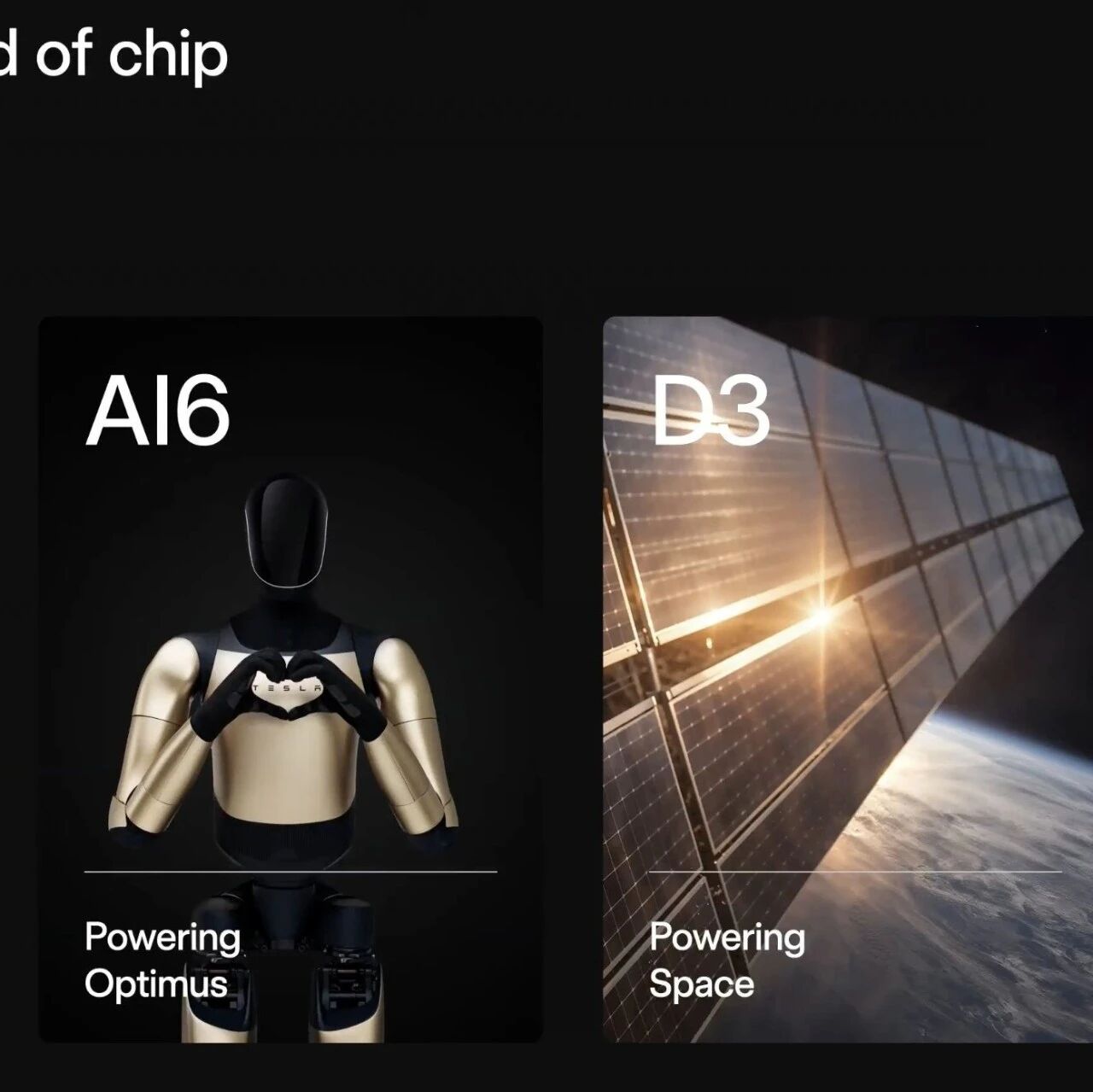
Core Viewpoint - The article discusses Elon Musk's announcement regarding the "TERAFAB" project, which aims to produce over 1 terawatt of computing power annually, with 80% allocated for space applications and 20% for terrestrial uses [2][10]. Group 1: Project Overview - The TERAFAB project will establish a vertically integrated semiconductor manufacturing facility in the U.S., covering logic chips, memory chips, and advanced packaging [3]. - The project is expected to require an investment of approximately $25 billion, surpassing existing super factory scales [4]. Group 2: Chip Development Roadmap - Tesla's chip evolution includes the AI5, AI6, and D3, targeting cutting-edge 2nm process technology with a production goal of 100 to 200 billion custom AI chips annually [4]. - The AI5 chip is designed for Full Self-Driving (FSD) and Optimus, with performance improvements of 40-50 times over the previous generation [7][8]. Group 3: Strategic Goals - The distribution of computing power from TERAFAB reflects ambitious goals, with a focus on creating a distributed interstellar computing network through AI satellites [12]. - Musk emphasizes the need for internal chip production to mitigate geopolitical risks and supply chain vulnerabilities, as existing suppliers like TSMC and Samsung cannot meet Tesla's demands [16][21]. Group 4: Challenges and Considerations - Building the TERAFAB facility presents significant challenges, including high capital costs and the complexity of advanced chip manufacturing processes [19][21]. - The timeline and location for the factory remain uncertain, with Tesla planning to utilize its substantial cash reserves for funding [18].